Christa Pike’s Record Contains Disturbing Violence, but the Viral “No Remorse” Chaplain Tape and Secret Psychiatric Files Are Unverified
Christa Pike’s criminal and prison record contains enough disturbing material without inventing a secret final encounter with a prison chaplain.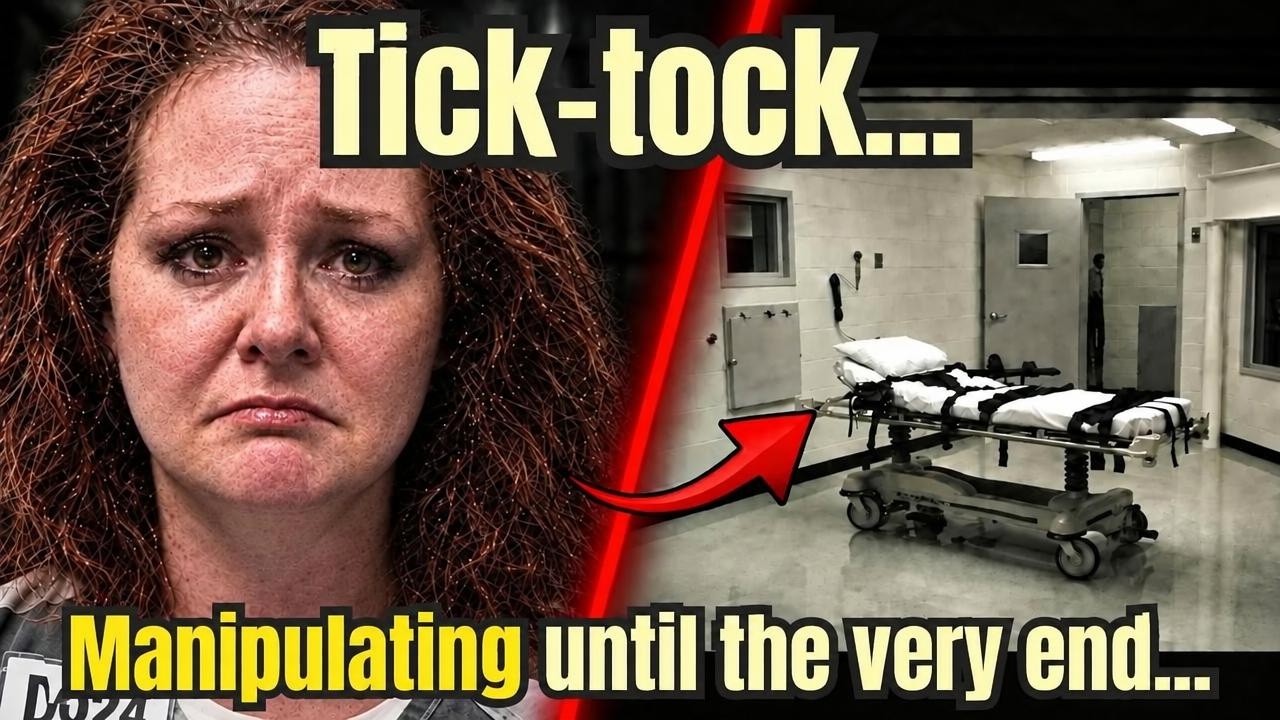
The 1995 killing of 19-year-old Colleen Slemmer was extraordinarily violent.
Pike was 18 at the time of the crime and was convicted the following year of first-degree murder and conspiracy to commit first-degree murder.
She later became one of the youngest women placed on death row in modern American history.
More precisely, Tennessee’s Death Penalty Information Center says Pike became the youngest woman sentenced to death in Tennessee’s modern death-penalty era.
Some current coverage describes her more broadly as the youngest woman on death row in U.S. history.
That formulation appears in contemporary reporting, but “America’s youngest woman sentenced to die” should be used carefully because national historical comparisons depend on how eras and jurisdictions are defined.
The viral story then claims sealed psychiatric evaluations and hidden crime-scene transcripts have suddenly been opened after three decades.
That is misleading.
A substantial amount of Pike’s psychiatric history has been litigated publicly for years.
Tennessee courts considered psychiatric evaluations as early as Pike’s post-conviction proceedings.
In 2002, psychiatrist Dr. William Kenner evaluated Pike’s competency, reviewed psychological records and submitted a written report to the trial court.
More recently, Pike’s attorneys submitted new expert material during her 2026 execution litigation.
One document filed publicly with the United States Supreme Court is an August 4, 2026 forensic psychological addendum from psychologist Bethany Brand.
Brand wrote that Pike had a history of severe abuse and repeated rapes.
She argued that several components of Tennessee’s execution protocol could cause Pike extreme psychological distress.
Those included transferring Pike from a women’s prison to an unfamiliar maximum-security men’s institution, sharply restricting contact in her final hours and physically restraining her on the execution gurney.
Brand’s report is serious psychiatric evidence.
It is not a newly leaked secret file.
It is part of the public Supreme Court record.
The same is true of many legal and factual records surrounding Slemmer’s murder.
Trial testimony, appellate opinions and later post-conviction litigation have preserved substantial portions of the prosecution’s evidence for decades.
The public record has long described the killing as brutal and prolonged.
Pike, her boyfriend Tadaryl Shipp and Shadolla Peterson lured Slemmer to an isolated area near their Knoxville Job Corps program.
Pike and Shipp assaulted Slemmer, and Pike was ultimately convicted of the killing.
The crime later became associated with claims of satanic symbolism because a pentagram was cut into Slemmer’s body.
Modern reporting has noted that the case unfolded during the 1990s “satanic panic,” which sometimes influenced public interpretations of crimes containing occult imagery.
One especially disturbing piece of evidence was a fragment of Slemmer’s skull recovered from clothing linked to Pike.
That evidence has been publicly discussed for years.
It is not emerging from a sealed file in 2026.
The details of the crime remain horrifying.
But “sealed crime-scene transcripts finally cracked open” is not an accurate description of how the historical record became known.
Pike’s prison history also contains documented violence.
Tennessee’s Department of Correction says Pike was convicted of attempted first-degree murder after assaulting fellow inmate Patricia Jones while incarcerated.
The underlying attack occurred in 2001.
Contemporary reporting described Pike using a shoelace in an attempt to strangle Jones.
She later challenged that conviction in court.
That episode is often cited by people who argue Pike continued behaving violently after receiving her death sentence.
It is a legitimate part of her prison record.
So is the 2012 escape plot.
Tennessee officials announced that the Department of Correction and Tennessee Bureau of Investigation had uncovered a plan involving former correctional officer Justin Heflin and New Jersey resident Donald Kohut.
Both men were charged in connection with efforts to facilitate Pike’s escape.
The investigation began after TDOC received information about a planned escape.
Authorities said they obtained evidence confirming a conspiracy to help Pike escape from the Tennessee Prison for Women.
Those incidents provide factual support for saying Pike’s incarceration was not free of serious misconduct.
They do not prove the viral claim that she remained remorseless until her final hours.
That assertion clashes with documented statements Pike has made publicly.
In an August 30, 2023 letter quoted by the Death Penalty Information Center, Pike acknowledged the gravity of what she had done.
She wrote that she had taken “someone’s child, sister, friend” and said thinking about her ability to commit the crime sickened her.
That statement cannot establish what Pike truly felt internally.
No outsider can measure remorse with certainty.
But it is direct evidence contradicting the claim that the public record shows a complete absence of remorse.
Recent reporting has similarly described Pike as expressing regret.
The Guardian reported immediately before her scheduled execution that Pike had expressed deep remorse and that her lawyers argued her mental illnesses and traumatic upbringing were inadequately considered at trial.
The Times also interviewed Pike shortly before the execution attempt.
Its accompanying podcast explicitly says she spoke about her regrets, fears and what it was like waiting for her final hours.
Again, people may disagree about the adequacy or sincerity of her remorse.
Slemmer’s family has every right to interpret Pike’s words differently.
But a factual article should not say Pike demonstrated a “chilling lack of remorse” as though that conclusion were uncontested evidence.
The victim’s mother has publicly remained skeptical of Pike’s claimed transformation.
She opposed clemency and supported carrying out the death sentence.
That perspective is part of the record and deserves recognition.
It is different, however, from an authenticated psychological finding that Pike lacked remorse.
No current psychiatric report reviewed here reaches that simple conclusion.
The viral post adds an even more dramatic element.
It claims a prison chaplain secretly recorded a ten-second final encounter in Pike’s cell.
According to the caption, the audio supposedly captures a frightening final message and proves Pike remained remorseless immediately before entering the death chamber.
I found no credible evidence that this recording exists.
There is genuine evidence that Pike had spiritual support.
A Tennessee vigil organized outside Riverbend identified a spiritual teacher named Mikey as Pike’s chaplain and said he planned to be present with her on September 30.
That makes a chaplain encounter plausible.
It does not authenticate leaked audio.
No current Reuters report identifies a secret chaplain recording.
No Associated Press account says a spiritual adviser released Pike’s confidential final conversation.
No TDOC statement authenticates such a file.
No original recording has been publicly sourced with verifiable metadata.
And no chaplain has publicly confirmed a recording containing the words described in the viral post.
The distinction is crucial.
There was a real chaplain.
There were real final spiritual preparations.
The alleged secret tape remains unverified.
Pike’s actual documented final statement before Tennessee attempted to execute her also contradicts the viral “twisted final message” framing.
Media witnesses reported Pike saying she would leave the world in love and describing herself as being at peace.
She was strapped to the gurney when she delivered those remarks.
That statement is not proof Pike had been morally transformed.
It is simply what witnesses actually heard.
It is therefore far more reliable than an anonymous social-media claim about a hidden chaplain conversation.
And the phrase “before the death chamber doors closed forever” is now factually wrong.
The doors did not close forever.
Pike survived.
Tennessee administered two doses of pentobarbital on September 30.
Witnesses reported that Pike remained alive, breathing and audibly snoring after the drugs were administered.
The Tennessee Department of Correction later issued an official statement confirming that Pike had been transported to an off-site medical facility.
TDOC said officials had followed every step of the state’s execution protocol and that no additional procedure was authorized after what had already been done.
Governor Bill Lee subsequently halted Tennessee’s remaining executions for the year and ordered a third-party review of what happened.
So as of October 1, Pike is alive.
Any caption describing her “legacy” as though her execution was completed is already outdated.
The failed execution attempt is now itself part of the story.
It also makes claims about a supposed final prison encounter even more misleading.
Pike’s final hours turned out not to be final.
Her supposed last statement became not actually her last statement.
Her scheduled death did not occur.
That changes the entire framing.
The psychiatric record also deserves greater nuance than “darkest unreleased evaluations.”
Pike’s lawyers have argued for years that she suffered from serious mental illness and severe developmental trauma.
Recent reporting has cited diagnoses including bipolar disorder and post-traumatic stress disorder.
Her attorneys also argued that modern understanding of adolescent brain development should matter because she was only 18 when Slemmer was killed.
They emphasized that Tennessee has not executed another person in the modern era for a crime committed at such a young age.
Those arguments do not excuse the murder.
They were offered as mitigation against execution.
The distinction between explanation and excuse appears repeatedly in the clemency debate.
Organizations supporting Pike’s clemency said her abuse history did not excuse Slemmer’s death but provided context for understanding how Pike reached that point.
Governor Lee rejected clemency.
He allowed the sentence to stand.
That decision reflected Tennessee’s judgment that Pike’s mitigation evidence did not justify commuting the death sentence.
The failed execution later introduced a completely different legal and ethical question.
It concerned whether Tennessee’s method had functioned as intended.
Those two issues should not be confused.
Pike’s past mental-health history concerns culpability and mitigation.
The September 30 execution failure concerns state procedure.
Both matter.
Neither authenticates the alleged chaplain audio.
The crime itself also should not be sensationalized beyond what reliable records establish.
Pike was convicted of participating in a brutal, intentional killing.
The evidence included her own statements and physical evidence.
That is sufficiently serious without relying on phrases such as “sadistic ritual slaying” unless a source specifically establishes ritual motive.
The occult symbolism in the case was real.
Whether the killing was literally conducted as a religious or occult ritual is a more complicated historical claim.
Modern reporting has specifically warned that the case unfolded amid widespread satanic-panic narratives.
That context makes precision important.
The murder was brutal.
The pentagram was documented.
Those facts do not require broader speculation about supernatural or ritual motives.
The prison record can likewise be stated concretely.
Pike assaulted another inmate and was convicted of attempted first-degree murder.
Verified.
Authorities uncovered an escape conspiracy involving outside accomplices and a former correctional officer.
Verified.
Pike spent decades under highly restrictive conditions, including long periods of solitary confinement.
Verified by her litigation and death-penalty reporting.
Her lawyers documented severe childhood sexual abuse and psychological trauma.
Verified through public court filings.
Psychiatric assessments have been part of her case for decades.
Verified.
Some newer expert evaluations were submitted publicly in 2026.
Verified.
Investigators “finally cracked open” completely secret psychiatric records after thirty years.
Not supported.
Previously sealed crime-scene transcripts suddenly revealed the basic brutality of Slemmer’s murder.
Misleading; those facts have been publicly litigated and reported for decades.
Pike never expressed remorse.
Contradicted by documented statements, although people may debate their sincerity.
A chaplain secretly recorded Pike displaying a total lack of remorse in her cell.
Not verified.
That recording contains a “twisted final message.”
Not verified.
Pike’s death-chamber doors closed forever on September 30.
False.
She survived Tennessee’s execution attempt and was hospitalized.
That last correction is now the most important one.
The viral post treats Pike as a dead inmate whose psychological legacy can be reconstructed after execution.
She is not dead.
Tennessee attempted to execute her and failed.
The state has now halted further executions while reviewing what went wrong.
That means the legal and factual story is still developing.
Pike’s future custody status may generate additional litigation.
Questions about whether Tennessee can constitutionally attempt another execution may arise.
The independent investigation may produce new information about the lethal-injection procedure.
None of those questions has been finally resolved.
The historical record, however, is already substantial.
Pike committed a brutal murder at 18.
She was sentenced to death.
She later committed another serious act of violence in prison.
Authorities uncovered an escape conspiracy connected to her.
She also accumulated decades of psychiatric and trauma evidence that her attorneys used to argue against execution.
And she later publicly expressed regret for taking Slemmer’s life.
Those facts can coexist.
A person can commit horrific acts and still later express remorse.
A documented trauma history can be relevant without erasing responsibility.
A violent prison incident can be real without proving every later story about a person’s character.
That complexity is lost when a viral caption turns the record into a single hidden tape supposedly revealing a “true monster.”
No authenticated tape currently does that.
The real evidence is less cinematic and more substantial.
Court records document Pike’s psychiatric history.
Corrections records document her prison misconduct.
Her own writings document at least some expression of remorse.
Witnesses documented her intended final statement.
TDOC documented that she survived the execution attempt.
And Tennessee’s governor documented the need for an independent review afterward.
As of October 1, those are the facts that define the case.
The brutal crime was real.
The violent prison history was real.
The psychiatric evaluations were real and largely litigated publicly.
The claimed absence of remorse is disputed by Pike’s own documented statements.
The alleged chaplain recording remains unverified.
And Christa Pike’s “final encounter” was not final at all, because Tennessee attempted to execute her and she survived.


