The hearing began with a routine plea.
It ended with a life sentence.
Savannah Geller stood before a Florida judge and first resolved a separate felony grand-theft case involving an animal or aquaculture property. Minutes later, the same courtroom turned to the far more serious matter that would determine the rest of her life.
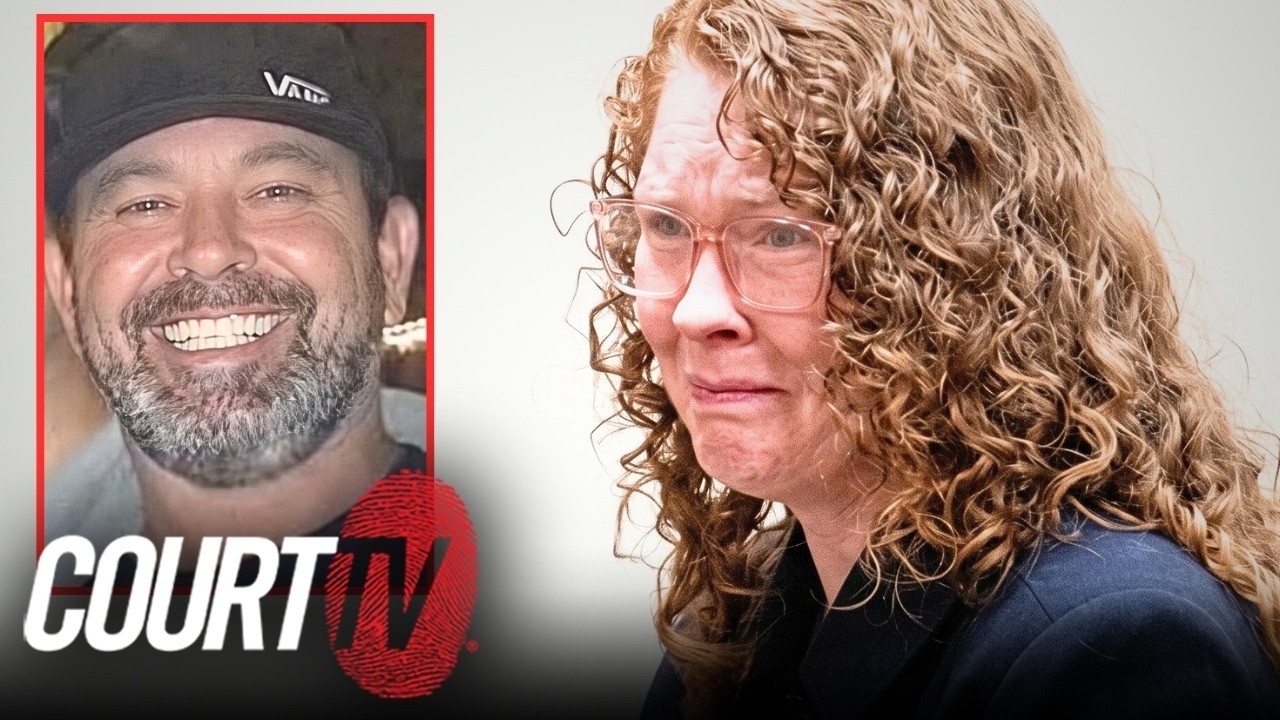
A jury had already found Geller guilty of first-degree murder.
The judge formally adjudicated her guilty and sentenced her to life in prison.
Additional prison terms for two counts of tampering with physical evidence were ordered to run concurrently with that life sentence.
The transcript offers almost no detail about the killing itself.
There is no description of the victim, the circumstances of the homicide, the prosecution’s theory, the defense case, or the evidence that led the jury to convict.
What it does provide is the final courtroom mechanics of a case that had already passed through trial.
Geller was no longer standing before the court as a defendant awaiting a verdict.
A jury had already spoken.
The judge’s task was sentencing.
But before reaching the murder case, the court addressed another criminal matter.
Geller was sworn in and identified before the judge discussed case number 2024 CF 1038.
In that case, she was charged with grand theft involving an animal or aquaculture property, described by the judge as a third-degree felony carrying exposure of up to five years in prison.
The judge also explained why the charge was treated as a felony.
Under the court’s description, theft offenses can become enhanced when a defendant has multiple prior theft-related convictions.
The judge told Geller that when a person has two or more qualifying theft convictions, a subsequent theft can be elevated, increasing potential punishment from county-jail exposure to as much as five years in prison.
Geller was represented by counsel.
Her attorneys told the court she wished to enter a plea of no contest.
Before accepting that plea, the judge conducted the standard questioning designed to determine whether Geller understood what she was doing.
Geller confirmed that she had signed the plea form.
The judge noted that the paperwork indicated she had approximately 13 years of education or the equivalent.
Geller said she could read, write, and understand English.
She also confirmed that her attorney had reviewed the form with her and answered her questions.
The judge then walked through the constitutional rights Geller would surrender by entering the plea.
Geller acknowledged that she was giving up the right to confront and cross-examine witnesses in that grand-theft case.
She acknowledged giving up the right to call witnesses in her own defense.
She also acknowledged that she was surrendering the right to force the state to prove her guilt beyond a reasonable doubt at trial.
The judge asked whether anyone had threatened or forced her to enter the plea.
Geller said no.
Asked whether she was doing so because she believed it was in her best interest, she said yes.
She also denied being under the influence of drugs or alcohol that would impair her ability to understand the proceedings.
She denied suffering from a mental-health condition that prevented her from understanding the plea.
The court therefore concluded that the no-contest plea was being entered freely and intelligently.
Defense counsel stipulated, for purposes of the plea, that a sufficient factual basis existed.
The state did not identify additional exculpatory evidence during that exchange.
The judge accepted Geller’s plea of no contest to the grand-theft charge and adjudicated her guilty.
Under the negotiated resolution, however, Geller did not receive a new lengthy prison term in that case.
The court sentenced her to time already served.
The judge also imposed standard felony fines and court costs, along with stipulated prosecution and investigative costs.
Restitution was ordered, with the court reserving jurisdiction to determine the final amount later.
That case, viewed by itself, might have ended with Geller leaving the courtroom after receiving credit for time already spent in custody.
But it was not the case that defined the hearing.
The court then turned to the murder prosecution.
Defense counsel briefly told the judge that Geller had two siblings present in the courtroom.
The attorney said the siblings had considered making statements but were nervous.
After conferring with them, counsel informed the court that they would not speak.
The hearing then moved toward sentencing.
There was some discussion about jail credit.
The transcript becomes difficult to follow in that portion.
The court referenced Geller being held since a November arrest and also discussed time connected to Volusia County.
The exact final credit figure is garbled in the transcript, so the safest conclusion is simply that the judge awarded credit for time already served on the additional prison counts.
The court then addressed the jury verdict directly.
“A jury of your peers” had found Geller responsible for the offenses listed in the amended indictment, the judge stated.
Count one was first-degree murder.
The judge adjudicated Geller guilty.
The sentence was life imprisonment.
There was no lengthy speech before the punishment.
No extended moral commentary.
No dramatic exchange.
The sentence followed directly from the jury’s finding and the governing punishment.
Life.
The court then moved to count two.
That charge involved tampering with physical evidence in connection with an investigation of a capital felony.
The judge adjudicated Geller guilty and imposed a 15-year sentence in the Department of Corrections.
Because that term runs concurrently, it does not extend the life sentence.
Count three was another charge of tampering with physical evidence.
The judge imposed five years in the Department of Corrections.
That sentence was also ordered to run concurrently.
The structure therefore left Geller facing one controlling punishment.
Life in prison for first-degree murder.
The separate 15-year and five-year terms exist as additional convictions and sentences but are served at the same time rather than added consecutively.
The judge also imposed standard felony court costs and fines.
The parties stipulated to $100 in prosecution costs and $100 in investigative costs.
Those financial obligations, along with costs in the related cases, were converted to judgment.
Geller was advised that she had 30 days to appeal any legal errors.
The court also ordered fingerprinting.
Then the judge asked whether either side had anything further.
The prosecution said no.
The defense said no.
The hearing was over.
What makes the transcript striking is its contrast.
The first portion is procedural and almost ordinary.
Questions about a no-contest plea.
Education.
English comprehension.
Rights being waived.
Costs.
Restitution.
Time served.
Then the proceeding shifts abruptly into a murder sentence carrying the most serious punishment imposed anywhere in the hearing.
That contrast reveals something about criminal courtrooms.
Not every life sentence arrives after a dramatic speech.
Sometimes the drama has already happened elsewhere.
At trial.
In the evidence.
During jury deliberations.
By the time sentencing arrives, the legal work may be reduced to a few sentences.
A jury found the defendant guilty.
The judge adjudicates.
Life.
The supplied transcript does not explain what Geller did to produce that verdict.
It does not identify the murder victim.
It does not state when or where the homicide occurred.
It does not describe the alleged motive.
It does not explain what physical evidence Geller was convicted of tampering with.
And it does not recount the testimony jurors heard.
Those gaps should not be filled with assumptions.
The transcript supports only a narrow but significant conclusion.
Geller was convicted by a jury of first-degree murder and two evidence-tampering offenses.
The judge sentenced her to life for murder, 15 years for one tampering conviction, and five years for the other, all to run concurrently.
Separately, she entered a no-contest plea to a felony grand-theft charge involving an animal or aquaculture matter and received time served.
That separate plea also shows the breadth of legal exposure she carried into court.
The grand-theft charge was not merged into the murder case.
It was handled independently.
The judge specifically advised her of rights tied to that charge and accepted a negotiated plea before turning to the jury verdict in the homicide prosecution.
The distinction matters because a no-contest plea is not the same procedural event as a jury conviction.
In the theft case, Geller chose not to contest the charge and accepted the negotiated outcome.
In the murder case, the state had already taken the case to trial and persuaded a jury to convict.
Those are very different paths to judgment.
Yet they converged in the same courtroom.
The grand-theft case ended with time served.
The murder case ended with life.
The transcript also reflects the quiet presence of Geller’s family.
Her attorney told the judge that two siblings were there.
They considered speaking.
They decided not to.
That detail is brief, but it carries emotional weight.
Sentencing hearings do not affect only defendants and victims.
Families sit behind them.
Some speak.
Some cannot.
Some prepare statements and decide at the last moment that the words will not come.
The transcript gives no indication what Geller’s siblings wanted to say.
Their silence should not be interpreted.
They may have wanted to support her.
They may have wanted to express grief.
They may simply have been overwhelmed.
The only supported fact is that they were present, they considered speaking, and they chose not to.
Geller herself also did not deliver a long sentencing statement in the portion provided.
The hearing was dominated by the judge’s formal rulings rather than emotional testimony.
That makes the final words unusually stark.
First-degree murder.
Life.
Tampering with physical evidence.
Fifteen years.
Another tampering conviction.
Five years.
Concurrent.
Thirty days to appeal legal errors.
Fingerprinting.
Nothing further from the state.
Nothing further from the defense.
Thank you.
For the court, the hearing concluded.
For Geller, the life sentence began.
And because the transcript contains so little about the underlying homicide, the most responsible account must stop where the record stops.
A jury convicted Savannah Geller of first-degree murder.
The judge sentenced her to life.
Whatever story produced that verdict lies outside the testimony provided here.


