For decades, Jane Fonda and Robert Redford represented one of Hollywood’s most enduring examples of effortless romantic chemistry.
Their collaborations created an unusually durable screen partnership, stretching from youthful Hollywood stardom into their later years as established legends.
Yet Fonda’s own recollections reveal that the warmth audiences witnessed onscreen did not always continue between individual takes.
That reality has recently been repackaged online into darker claims about hostility, secret footage, and an alleged decades-long emotional feud.
The documented story, however, is considerably more nuanced, involving infatuation, insecurity, professional distance, affection, and ultimately lasting mutual respect.
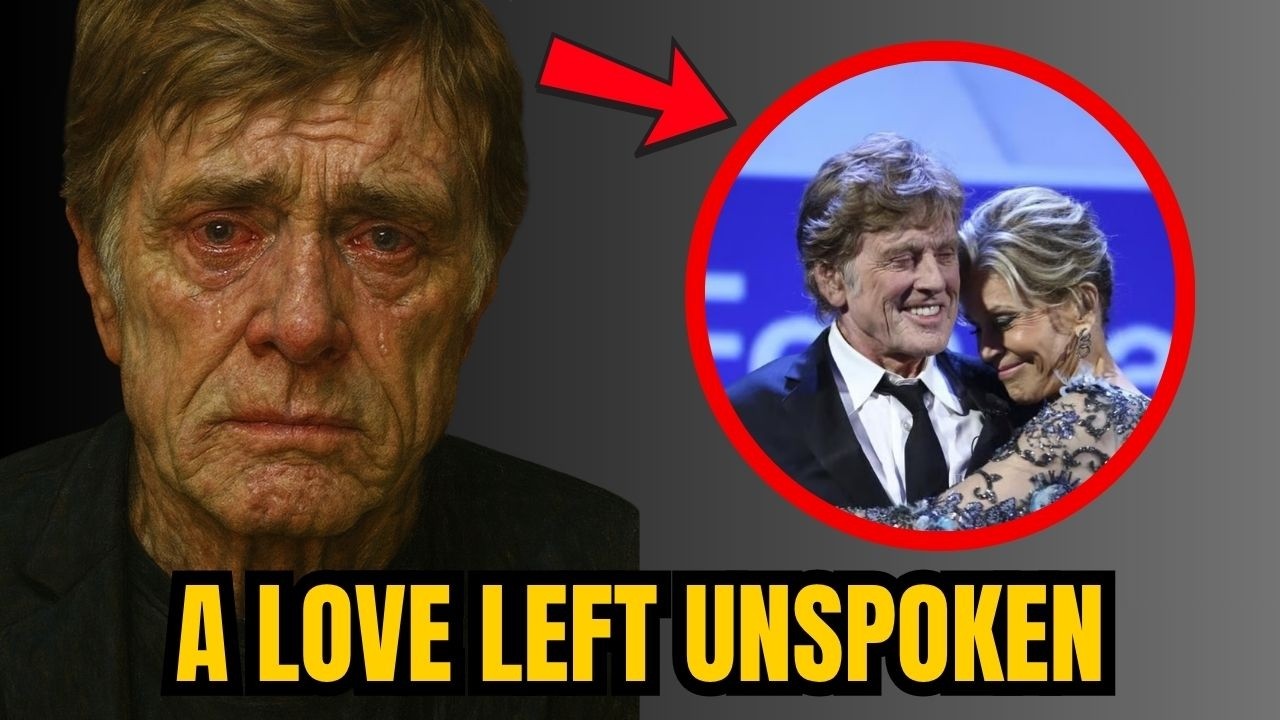
Fonda publicly acknowledged years ago that Redford sometimes went entire working days without speaking with her outside their scripted performances.
Because Fonda had developed strong feelings toward her co-star, she initially interpreted his silence as evidence she had offended him.
She remembered wondering whether Redford disliked her or whether something she had done had caused his withdrawn behavior.
Those recollections provide a fascinating counterpoint to the apparently effortless intimacy audiences watched whenever cameras captured the actors together.
But they do not substantiate more dramatic claims involving locked trailers, twelve-hour punishments, or deliberately orchestrated psychological mistreatment by Redford.
No credible reporting reviewed for this article establishes the supposed leaked set footage currently promised by sensational social-media promotions.
Nor does reliable documentation establish that Redford immediately dropped Fonda’s hand after every take before disappearing into deliberate isolation.
What Fonda actually described was an emotionally complicated dynamic intensified substantially by her own acknowledged attraction toward her famous co-star.
She told Ellen DeGeneres in 2017 that she had fallen in love with Redford during their earlier movies together.
Nothing romantic ultimately happened between them, according to Fonda, despite her repeatedly expressed admiration for Redford’s looks and kissing ability.
That distinction significantly changes how their periods of silence should be understood within the available historical and journalistic evidence.
Fonda was not describing decades of hatred concealed behind fabricated chemistry when she discussed those experiences publicly years later.
Instead, she described being emotionally invested enough that Redford’s withdrawn moments could trigger insecurity about how he perceived her.
Age eventually changed that dynamic, giving Fonda considerably more confidence when the actors reunited decades after their earliest collaborations.
During their later work together, she said she could directly challenge Redford whenever he became quiet rather than internalizing everything personally.
That evolution became particularly visible surrounding their fourth movie together, Netflix’s understated 2017 romance “Our Souls at Night.”
The film reunited two performers whose screen partnership had begun more than half a century earlier during very different Hollywood careers.
Their first collaboration came with Arthur Penn’s “The Chase,” released in 1966 alongside Marlon Brando and an extensive ensemble cast.
Redford himself later remembered that early collaboration positively, saying he and Fonda developed an excellent connection while working together.
That assessment matters because it comes directly from Redford and complicates portrayals suggesting he secretly could not tolerate Fonda personally.
Their next collaboration, “Barefoot in the Park,” transformed their natural contrast into one of the era’s recognizable romantic screen pairings.
Fonda played spontaneous newlywed Corie Bratter opposite Redford’s comparatively restrained Paul, allowing their different energies to drive Neil Simon’s comedy.
The combination proved memorable partly because their characters required precisely the tension their real personalities could apparently produce so naturally.
Fonda remembered being intensely attracted to Redford during production, describing herself years afterward as completely smitten with her co-star.
She particularly anticipated their intimate scenes, an amusing contrast with Redford’s apparently less enthusiastic attitude toward performing romantic material.
Fonda repeatedly said Redford disliked doing love scenes, something she jokingly described as the primary disadvantage of working alongside him.
That documented comment appears to underlie some exaggerated online claims suggesting Redford specifically refused romantic rehearsals because he disliked Fonda.
The available evidence supports no such conclusion, and Fonda’s own affectionate descriptions repeatedly point toward a substantially different interpretation.
Indeed, Fonda enthusiastically described Redford as an excellent kisser and publicly wished their later romantic scenes had lasted considerably longer.
Those statements hardly resemble retrospective testimony from someone revealing that their entire celebrated partnership had secretly been an unbearable deception.
Instead, they suggest professional differences existing alongside genuine admiration, longstanding familiarity, and Fonda’s unusually candid sense of humor.
Their contrasting personalities may actually help explain why audiences consistently perceived such powerful chemistry whenever the pair appeared together onscreen.
Redford frequently projected restraint, privacy, and emotional reserve, while Fonda brought openness, energy, vulnerability, and unusually direct emotional expression.
Those characteristics became useful dramatic ingredients when filmmakers positioned the performers as romantic opposites gradually moving toward emotional connection.
The resulting chemistry was therefore not necessarily evidence that their private interactions perfectly mirrored their characters’ affection between individual scenes.
Screen chemistry frequently emerges from controlled tension, contrasting performance styles, direction, editing, cinematography, dialogue, and carefully designed physical blocking.
Hollywood history contains numerous partnerships where extraordinary fictional intimacy existed alongside considerably more complicated off-camera professional relationships between performers.
Fonda and Redford offer a particularly compelling example because their professional connection survived enormous cultural and personal transformations across five decades.
After “Barefoot in the Park,” their lives and careers moved through radically different chapters before eventually crossing onscreen repeatedly again.
They reunited for “The Electric Horseman” in 1979, once again deploying their contrasting energies inside a romantic dramatic framework.
By then, Fonda had become not merely a movie star but one of America’s most controversial politically engaged celebrities.
Redford was simultaneously consolidating his identity as actor, filmmaker, environmental advocate, and eventually a central figure behind independent American cinema.
Their professional trajectories therefore expanded far beyond the romantic-star personas audiences associated with their earliest appearances opposite each other.
Yet Fonda continued describing Redford with extraordinary warmth whenever interviewers asked about actors she particularly hoped to work alongside again.
In a Vanity Fair interview, she answered Redford immediately when asked which former co-star she wanted another opportunity to collaborate with.
Her reasoning was straightforward and affectionate: despite their differences, she repeatedly emphasized how deeply she cared about her longtime colleague.
That desire eventually became reality when “Our Souls at Night” reunited them for an unusually gentle examination of companionship and aging.
The production itself provides another contradiction to claims that Redford categorically refused meaningful rehearsal or personal interaction with Fonda.
Fonda told Vanity Fair that she, Redford, and director Ritesh Batra rehearsed together for approximately one week before filming.
That documented rehearsal period directly challenges sweeping claims that Redford maintained some absolute refusal to rehearse alongside his longtime co-star.
It remains possible that particular intimate scenes were approached differently, but available reporting does not justify broader sensational conclusions.
Fonda instead described the process of returning to romantic material with Redford as comfortable because of their longstanding familiarity together.
She said knowing someone so well made humor easier during potentially awkward love scenes involving performers approaching their eighties.
Her comments from the Venice Film Festival went even further, presenting their reunion with obvious affection rather than buried resentment.
Fonda joked that she practically lived for romantic scenes with Redford and again praised his abilities as an onscreen kisser.
She also complained humorously that Batra had ended their intimate sequence sooner than she personally would have preferred.
Redford, meanwhile, publicly characterized their relationship as containing affection and connection while emphasizing compatible attitudes toward work and life.
Those remarks cannot establish that every interaction between them was harmonious throughout five decades of intermittent professional contact.
They do demonstrate why claims of a concealed fifty-year hatred require substantially stronger evidence than currently accompanies viral promotional posts.
Fonda’s own testimony acknowledges difficulty, but the difficulty appears rooted partly in personality differences and her youthful emotional vulnerability.
When Redford became withdrawn during earlier productions, Fonda’s crush made his silence feel considerably more consequential than it otherwise might.
She interpreted his behavior through the perspective of someone hoping intensely that an admired colleague personally liked her in return.
Years later, maturity allowed her to reinterpret similar behavior without immediately assuming she had somehow caused Redford’s temporary withdrawal.
That psychological evolution was something Fonda herself emphasized when discussing how differently she handled Redford during their eventual screen reunion.
Rather than quietly worrying, she could confront his moodiness directly and demand engagement when she wanted an answer from him.
The anecdote reveals something recognizably human about workplace relationships rather than establishing evidence of some hidden Hollywood conspiracy.
It also illustrates how celebrity mythology can flatten complicated personal dynamics into narratives that become progressively more dramatic through repetition.
A star admits her colleague occasionally ignored her, and the anecdote gradually transforms into claims of systematic twelve-hour silent punishment.
A performer says her co-star disliked romantic scenes, and the statement becomes an alleged refusal to rehearse specifically because of her.
An emotionally sensitive crush becomes evidence of psychological torment, while ordinary production privacy becomes a supposedly locked-trailer campaign of intimidation.
None of those transformations should be accepted without corroborating interviews, production records, authenticated footage, or reliable contemporaneous reporting.
That evidentiary standard becomes especially important following Redford’s death, because sensational allegations can circulate without receiving his direct response.
Robert Redford died in September 2025, ending an extraordinary career spanning acting, directing, producing, environmental activism, and independent filmmaking advocacy.
His death naturally renewed public interest in famous collaborations, including his long professional association and friendship with Jane Fonda.
Fonda has continued discussing Redford since his death with the complicated affection characteristic of her earlier recollections about their relationship.
In April 2026, she again reminisced publicly about their films together and acknowledged the painful intensity of her youthful crush.
That contemporary reflection remained consistent with her longstanding public account rather than revealing some newly discovered dark explanation for everything.
The historical record therefore presents continuity: Fonda adored Redford, sometimes struggled with his reserve, and eventually understood him differently.
Their personalities did not always align seamlessly, yet those differences apparently never prevented them from repeatedly choosing professional collaboration.
That point becomes especially important when assessing claims that Redford fundamentally could not tolerate being physically near Fonda off-camera.
If such extreme hostility existed throughout their relationship, their voluntary reunion decades later would require considerable explanation and supporting documentation.
Instead, the available record shows Fonda actively wanting another collaboration and Redford ultimately joining her for precisely that project.
Their later film was not simply another studio assignment imposed upon young actors lacking meaningful control over their professional choices.
Both performers were internationally respected veterans with sufficient influence to decline projects or collaborators they genuinely wished to avoid.
Their decision to reunite therefore carries meaningful weight when reconstructing the character of their relationship from publicly available evidence.
“Our Souls at Night” also intentionally traded upon the history audiences already associated with Redford and Fonda as romantic performers.
The story follows two older neighbors seeking companionship, gradually allowing vulnerability and affection to complicate their initially practical arrangement.
For longtime viewers, the casting transformed the movie into an implicit conversation between their younger and older cinematic identities.
Fonda recognized those parallels immediately, while Redford apparently approached them with somewhat less sentimental interest during the production itself.
She noticed echoes between their elderly characters checking into accommodations together and their newlywed characters decades earlier in “Barefoot.”
That awareness apparently gave Fonda a strong emotional connection to the unusual experience of revisiting screen romance across fifty years.
Redford’s less sentimental response fits the reserved personality Fonda had already spent decades describing publicly in interviews about him.
Different emotional styles, however, are not equivalent to hatred, abuse, deliberate cruelty, or an undisclosed campaign against a colleague.
Fonda’s description of Redford occasionally becoming silent should consequently remain attached to the context she herself supplied around those memories.
She had been deeply infatuated, she took his moods personally, and she later recognized that her interpretation had changed substantially.
There is another revealing dimension to Fonda’s recollections: she never attempted to conceal her attraction after becoming an established star.
She repeatedly told interviewers that Redford’s appearance could remain distracting enough to interfere with remembering dialogue during their later collaboration.
That self-deprecating observation became part of their public mythology because Fonda delivered it with characteristic candor and comic timing.
Her willingness to discuss romantic attraction did not imply Redford shared those feelings or behaved identically toward their professional intimacy.
Instead, their asymmetry appears central to understanding why certain moments affected Fonda much more intensely during their younger working years.
She wanted warmth and reassurance from someone she admired, while Redford could apparently retreat into himself without recognizing her interpretation.
That imbalance provides sufficient explanation for Fonda’s insecurity without requiring an invented secret motive supposedly uncovered five decades afterward.
The claim that Redford had a generalized “problem with women” likewise requires careful context rather than presentation as established fact.
Broad character judgments about deceased public figures should not be reconstructed from isolated remarks without identifying their original wording and circumstances.
Redford worked repeatedly with prominent actresses throughout his career, producing some of Hollywood’s most recognizable romantic and dramatic screen partnerships.
Those collaborations included Barbra Streisand, Meryl Streep, Faye Dunaway, Mia Farrow, Glenn Close, Natalie Wood, and eventually Fonda repeatedly.
A list of collaborators cannot prove anything definitive about someone’s private attitudes, but neither can an unsupported viral characterization.
Responsible reporting instead distinguishes documented behavior, an individual’s interpretation of that behavior, and later speculation about underlying motives.
In Fonda’s case, the documented behavior includes periods when Redford apparently communicated little with her outside scripted dialogue.
The documented interpretation includes Fonda admitting that she once worried those periods meant Redford disliked her personally or felt offended.
The broader documented record includes affection, repeated collaboration, mutual professional respect, comfortable intimacy, and her continuing attraction toward him.
What remains undocumented is the sensational explanation promising audiences some sinister revelation about why Redford supposedly could not tolerate Fonda.
No reliable source reviewed here establishes authenticated leaked footage demonstrating such a revelation or an estate effort to erase evidence.
Claims that Redford’s estate is “scrubbing the internet” similarly require evidence before they can responsibly appear as factual reporting.
Estates can protect intellectual property and manage archives, but ordinary rights enforcement would not establish suppression of damaging historical evidence.
The internet increasingly rewards narratives promising forbidden footage, deleted recordings, secret contracts, or evidence supposedly disappearing within hours.
Such framing creates urgency, encouraging audiences to click immediately rather than examine whether the promised evidence has identifiable provenance.
Celebrity history becomes particularly vulnerable because decades-old anecdotes can be detached from their original interviews and repackaged dramatically.
Fonda’s comments provide an excellent case study because her actual statements are colorful enough to become sensational without outright fabrication.
She genuinely said Redford sometimes would not speak with her except when required by their work during earlier collaborations.
She genuinely admitted that this behavior once caused her to wonder whether she had somehow done something wrong herself.
She genuinely complained that Redford disliked performing love scenes, despite her own enthusiastic enjoyment of romantic scenes alongside him.
Those authentic remarks provide enough dramatic material that invented additions can easily appear believable when blended into social-media storytelling.
Yet the same interviews contain information fundamentally inconsistent with portraying their entire relationship as a concealed nightmare for Fonda.
She repeatedly said she loved Redford, wanted another collaboration, enjoyed kissing him, and remained comfortable performing intimate material together.
Redford likewise recalled an excellent connection beginning with their earliest work and later described affection between the longtime collaborators.
The most compelling interpretation therefore requires neither idealizing their relationship nor transforming ordinary complexity into a sinister conspiracy.
They were two very different performers whose professional chemistry survived periods of emotional mismatch, distance, affection, admiration, and aging.
Fonda appears to have wanted more emotional engagement from Redford during moments when he naturally preferred withdrawal or professional concentration.
Her youthful infatuation amplified that mismatch until his silence could make her question whether she had personally disappointed him somehow.
Decades later, she possessed enough confidence to recognize the pattern, confront him directly, and continue working without internalizing everything.
That development transforms the story from one about hidden hatred into something arguably more interesting about confidence and emotional maturity.
Their final major screen collaboration consequently became a fitting bookend to the romantic comedy that helped establish their legendary partnership.
In youth, Fonda remembered becoming emotionally overwhelmed by Redford’s beauty and worrying intensely whenever his attention suddenly disappeared from her.
In later life, she could tease him, challenge his moods, perform intimate scenes comfortably, and openly discuss their complicated history.
The contrast reveals how much Fonda herself changed across the decades separating “Barefoot in the Park” from “Our Souls at Night.”
It also demonstrates why celebrity recollections should be read as evolving personal memories rather than frozen courtroom testimony about relationships.
Memory inevitably carries emotion, interpretation, humor, hindsight, and the perspective someone possesses when recounting experiences many years afterward.
Fonda’s comments are valuable precisely because she rarely attempted to sanitize the awkwardness contained within her affection for Redford.
She could acknowledge feeling hurt by his silence while simultaneously expressing enormous admiration and continuing to describe him lovingly afterward.
She could complain about his dislike of love scenes while enthusiastically praising the experience of kissing him across multiple generations.
She could remember insecurity without retroactively declaring every difficult interaction evidence that their famous partnership had always been fraudulent.
That complexity is easily lost when social-media posts compress five decades of history into one supposedly devastating secret explanation.
Hollywood undoubtedly manufactures illusions, and onscreen romance rarely provides reliable evidence regarding performers’ actual relationships behind the camera.
But acknowledging that reality does not require inventing cruelty where surviving evidence instead describes something substantially more ambiguous and human.
Fonda and Redford apparently were never simply the romantic couple audiences imagined when watching their most memorable films together.
They were colleagues with contrasting temperaments, genuine affection, professional chemistry, occasional emotional friction, and an unusually enduring cinematic connection.
Fonda’s crush made their earlier working relationship more emotionally consequential for her than Redford may have understood at the time.
Redford’s reserve could therefore hurt her without necessarily representing the deliberate rejection later viral narratives attempt to portray.
Their later reunion suggests that whatever frustrations existed never erased Fonda’s desire to share the screen with him again.
That is perhaps the most revealing evidence available when examining whether their legendary chemistry concealed some previously unknown lifelong feud.
The surviving interviews reveal imperfections rather than a shattered illusion, and complexity rather than the definitive betrayal promised by sensational headlines.
There is no verified dark confession explaining why Redford secretly “couldn’t stand” being near Jane Fonda away from cameras.
There is also no authenticated leaked set footage currently establishing the extraordinary trailer behavior described by the circulating promotional narrative.
What exists instead is Fonda’s remarkably candid account of loving a colleague whose emotional distance sometimes left her questioning herself.
Five decades later, she understood that distance differently, and their final collaboration demonstrated how dramatically her relationship with it had changed.
The real story is therefore not that Hollywood’s greatest romantic illusion suddenly collapsed beneath an explosive newly uncovered secret.
It is that extraordinary screen chemistry can coexist with mismatched personalities, private insecurity, awkward silence, friendship, admiration, and enduring affection.
Jane Fonda spent decades saying versions of that publicly, making the truth considerably less hidden than today’s viral framing suggests.
And perhaps that contradiction explains why Redford and Fonda remain fascinating long after their famous fictional romances reached their closing credits.


