A dramatic new Michael Jackson story is circulating online, claiming that previously unknown audio from his final hours has surfaced.
The allegation centers on an unidentified former security guard who supposedly possessed an encrypted hard drive containing Jackson’s final telephone conversation.
According to the viral narrative, that recording captures extraordinary financial activity unfolding around Jackson shortly before emergency responders reached his home.
The story alleges members of Jackson’s management operation were deleting private servers and freezing offshore financial accounts during his final moments.
It further claims Jackson began identifying powerful entertainment executives before his telephone connection suddenly disappeared during the purported secret conversation.
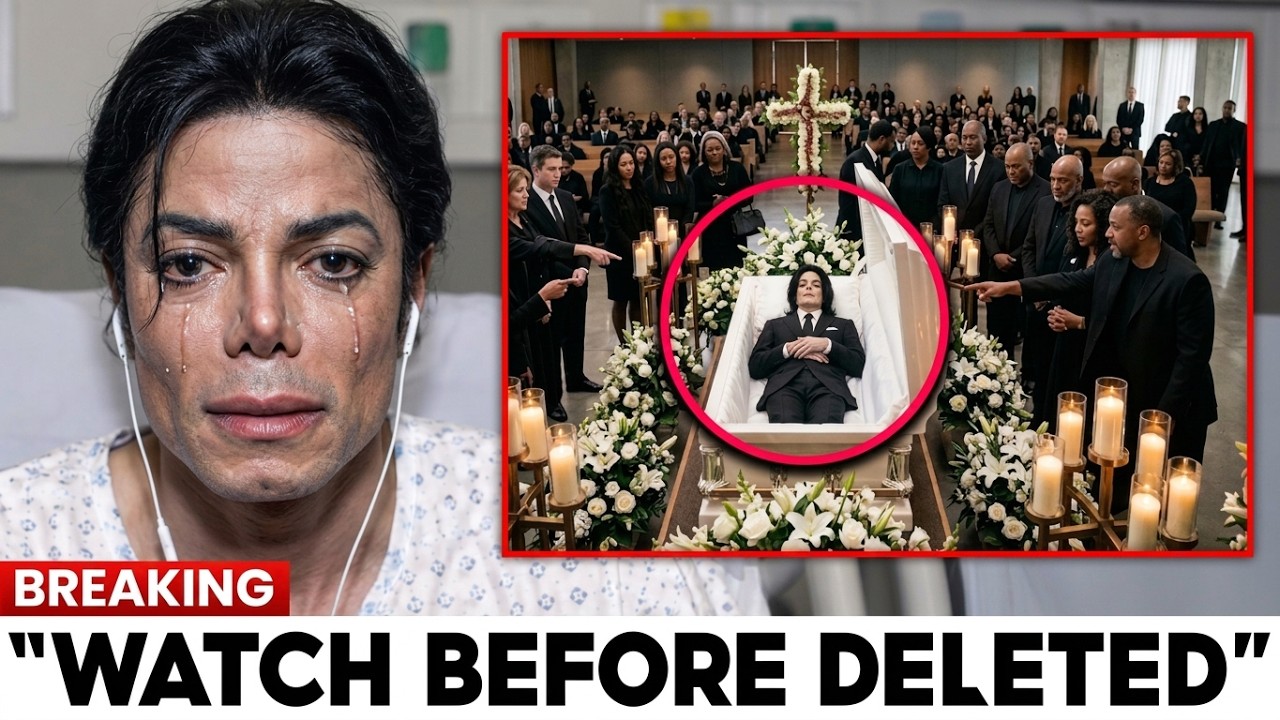
Those allegations would represent an extraordinary development if authenticated, potentially reopening questions surrounding Jackson’s finances, management relationships, and final hours.
However, searches of current reporting and established records produced no credible authentication of this supposed newly leaked final telephone recording.
No reliable evidence reviewed establishes the existence of the described encrypted hard drive, secret security-guard upload, or alleged executive names.
Likewise, no authenticated evidence currently demonstrates that Jackson’s private servers were deliberately erased while he remained inside his Los Angeles residence.
Claims involving supposedly hidden flight logs and unnamed entertainment executives also remain unsupported by the documented evidence surrounding Jackson’s death investigation.
That distinction is crucial because genuine recordings connected with Jackson’s final months and death have previously entered the public record.
One particularly important recording was recovered from the iPhone belonging to Jackson’s personal physician, Dr. Conrad Murray, during the investigation.
That recording was created on May 10, 2009, approximately six weeks before Jackson died, according to forensic testimony. Los Angeles Times
Jurors eventually heard Jackson speaking slowly and indistinctly while discussing his ambitions, childhood experiences, and hopes for his legacy.
The recording became significant evidence during Murray’s involuntary-manslaughter trial because prosecutors used it when presenting Jackson’s condition before death. Los Angeles Times
But that documented recording is fundamentally different from the sensational “final phone call” now described across viral social-media posts.
There is also an authentic emergency recording connected directly to Jackson’s final moments: the 911 call requesting an ambulance.
That call documented a desperate attempt to obtain emergency assistance after Jackson had stopped breathing and was not responding normally. Los Angeles Times
Security guard Alberto Alvarez made that emergency call while Murray was present and attempts were being made to revive Jackson.
The call was later played for jurors during Murray’s trial, becoming part of the extensively documented chronology surrounding Jackson’s death. Los Angeles Times
Court evidence additionally revealed substantial telephone activity involving Murray during the period immediately preceding Jackson’s medical emergency.
Phone records showed Murray making and receiving numerous calls while prosecutors argued Jackson required continuous monitoring after receiving powerful medications. Los Angeles Times
Investigators reconstructed those communications through cellphone records rather than through any mysterious final landline conversation attributed directly to Jackson.
The documented timeline therefore contains extensive telecommunications evidence, but it does not establish the extraordinary conversation described by the viral claim.
Jackson died on June 25, 2009, while preparing for his highly anticipated “This Is It” series of London concerts.
His death immediately triggered worldwide attention, intensive law-enforcement scrutiny, forensic examinations, litigation, and eventually Murray’s criminal prosecution.
The Los Angeles County coroner determined Jackson died from acute propofol intoxication, with benzodiazepine effects contributing to his death. Los Angeles Times
The coroner classified the death as a homicide, a medical-legal classification that ultimately became central to prosecutors’ case against Murray. Los Angeles Times
Propofol is a powerful anesthetic ordinarily administered in carefully monitored medical environments rather than as a routine household sleep treatment.
Murray acknowledged administering medications to Jackson during the singer’s final hours, according to investigative records and subsequent courtroom evidence. Los Angeles Times
Those established circumstances already generated substantial controversy without requiring additional theories involving erased servers or secret international financial operations.
Investigative documents reconstructed Jackson’s final night as an extended struggle with insomnia while Murray attempted different medications to induce sleep.
Murray told investigators Jackson remained unable to sleep despite receiving several sedatives throughout the night and early morning hours. Los Angeles Times
According to the investigative account, Murray eventually administered propofol after Jackson repeatedly requested the medication because he desperately wanted sleep.
The exact chronology subsequently became heavily contested as investigators compared Murray’s statements against telephone records, toxicology evidence, and witness testimony.
Murray reportedly told detectives he left Jackson briefly before returning and discovering that the singer was no longer breathing normally.
Phone records complicated portions of that account because they documented extensive communications during periods requiring close medical observation, prosecutors argued. Los Angeles Times
Records presented during trial showed Murray spending significant time communicating with patients, associates, family members, and other contacts that morning.
One conversation reportedly ended abruptly around noon, near the period prosecutors believed Murray recognized Jackson’s catastrophic medical condition. Los Angeles Times
These details matter because they demonstrate how extensively Jackson’s final hours were examined through contemporaneous electronic and physical evidence.
Investigators did not rely solely upon recollections gathered months later; they examined telephones, medications, forensic evidence, interviews, and communication records.
That makes an alleged newly discovered recording particularly consequential, but also means authentication would require substantially more than anonymous online assertions.
Any genuine recording could potentially be examined through metadata, device provenance, audio analysis, chain-of-custody evidence, and corroborating telecommunications records.
Without those elements, an audio file circulating online would not automatically establish when it was created or whether voices were authentic.
Modern audio manipulation creates an additional authentication challenge that was considerably less prominent when Jackson died seventeen years ago.
Artificial-intelligence voice generation can now produce remarkably convincing simulations of recognizable public figures using relatively limited source material.
That technological environment makes sensational celebrity “leaks” particularly vulnerable to fabrication, alteration, mislabeling, selective editing, or complete synthetic generation.
A purported Jackson recording therefore requires unusually rigorous verification before its contents can responsibly be characterized as genuine historical evidence.
The claim involving a former security guard also raises immediate questions concerning identity, provenance, possession, and the alleged nondisclosure agreement.
A credible report would ordinarily identify who possessed the recording, explain its origin, and establish how investigators overlooked it previously.
Journalists would additionally seek independent confirmation from Jackson’s estate, former employees, attorneys, law-enforcement sources, and telecommunications specialists.
None of those evidentiary components currently establishes the sensational scenario described in the viral post supplied for this story.
There is, however, documented testimony involving a Jackson security guard and activity occurring around the bedroom before emergency services were contacted.
Alvarez testified that Murray instructed him to gather medical items, including vials and an intravenous bag near Jackson’s bedside. Los Angeles Times
Alvarez described an IV bag containing a milky substance, testimony prosecutors connected with the anesthetic propofol central to Jackson’s death. Los Angeles Times
Investigators later recovered additional medical materials, including multiple propofol bottles, according to testimony presented during Murray’s criminal proceedings. Los Angeles Times
This authentic security-guard testimony may partly explain why new stories involving unnamed guards can appear plausible to casual audiences.
Real events become especially powerful ingredients for misinformation when mixed carefully with invented details that audiences cannot easily distinguish.
A genuine security employee existed, genuine disputed activity occurred, and genuine electronic evidence played important roles throughout the subsequent investigation.
Adding an encrypted hard drive and secret final recording therefore creates a narrative that superficially resembles established facts without actually matching them.
The financial allegations deserve equivalent scrutiny because Jackson’s finances were undeniably complex during the final years preceding his death.
Jackson controlled enormously valuable intellectual-property interests while simultaneously confronting debts, expenses, contractual pressures, and an ambitious planned concert comeback.
Those circumstances generated years of reporting and litigation concerning assets, creditors, business relationships, and eventually administration of Jackson’s estate.
Yet complicated finances alone provide no evidence that unidentified managers were secretly freezing offshore accounts during Jackson’s medical emergency.
Nor does financial complexity establish that computer servers were being deliberately erased while emergency events unfolded inside Jackson’s residence.
Those claims require specific evidence such as banking documentation, server logs, sworn testimony, correspondence, or authenticated contemporaneous communications.
Without supporting documentation, dramatic financial language risks transforming ordinary uncertainty into an elaborate conspiracy narrative unsupported by verifiable evidence.
The same evidentiary standard applies to the claim concerning prominent executives supposedly connected with unspecified hidden flight records.
No responsible account can supply those names merely because a viral narrative promises that an alleged recording contains them.
Doing so could falsely associate identifiable individuals with misconduct without documentation establishing either the recording’s authenticity or underlying allegations.
The documented investigation instead concentrated heavily upon Jackson’s medical treatment and Murray’s decisions during the singer’s final hours.
Authorities examined how propofol entered Jackson’s treatment regimen and whether appropriate safeguards existed when the anesthetic was administered outside hospitals.
The coroner’s findings became especially important because toxicological evidence identified propofol alongside benzodiazepines when determining Jackson’s cause of death. Los Angeles Times
Prosecutors subsequently charged Murray with involuntary manslaughter, focusing substantially upon his administration and monitoring of the powerful anesthetic. Los Angeles Times
Court proceedings generated extensive evidence concerning medications, medical equipment, telephone activity, resuscitation efforts, and events surrounding the emergency response.
Those proceedings also exposed inconsistencies and disputes over precisely when Jackson stopped breathing and when Murray recognized the emergency.
Such uncertainties naturally created an environment where alternative explanations and conspiracy theories could continue developing long after Murray’s criminal case concluded.
Celebrity deaths frequently produce persistent alternative narratives, particularly when the individual possessed Jackson’s extraordinary cultural significance and complicated business history.
Every newly discovered document, recording, interview, or recollection can consequently receive enormous attention regardless of its actual evidentiary importance.
Social-media economics intensifies that phenomenon because algorithms frequently reward emotional engagement rather than careful distinctions between allegation and verification.
The purported tape narrative contains virtually every ingredient required for exceptionally strong viral performance across contemporary social-media platforms.
It promises exclusive evidence, powerful unnamed figures, hidden money, deleted records, a mysterious whistleblower, and an interrupted final revelation.
Most importantly, the story deliberately stops immediately before supposedly revealing the names audiences have been conditioned to seek.
That unresolved structure creates an information gap encouraging comments, shares, direct-message requests, and continued engagement with the originating account.
The instruction to comment “TAPE” therefore functions as an engagement mechanism rather than evidence supporting the recording’s authenticity.
Similarly, claims that Jackson’s estate might immediately erase material can discourage audiences from waiting for verification before sharing the alleged leak.
Urgency becomes part of the persuasion strategy because viewers are told evidence could disappear before traditional reporting catches up.
Yet genuine digital evidence rarely becomes impossible to preserve simply because one rights holder requests removal from a particular social platform.
Copies, metadata, independent downloads, forensic images, court filings, journalist archives, and mirrored files can preserve material once legitimately released publicly.
A truly consequential Jackson recording would also attract rapid scrutiny from major entertainment organizations and established international news outlets.
Audio specialists would examine whether the voice matched Jackson while journalists investigated timestamps, telephone records, and the alleged source’s background.
Attorneys representing relevant parties would likely respond quickly if the recording contained potentially defamatory allegations involving identifiable entertainment executives.
The Jackson estate would also become an obvious source for confirmation, denial, authentication questions, or potential intellectual-property concerns surrounding recordings.
Without that broader verification ecosystem, audiences should be cautious about treating an anonymous purported upload as established historical documentation.
There is another important distinction between previously disclosed Jackson recordings and the alleged tape described in the viral narrative.
The documented May recording was discovered on Murray’s own iPhone and introduced during criminal proceedings under evidentiary scrutiny. Los Angeles Times
Its provenance therefore differed fundamentally from an anonymously uploaded file whose alleged owner, device history, and chain-of-custody remain unexplained.
That does not mean previously unknown Jackson material can never emerge, because private archives regularly surface years after major celebrities die.
It means extraordinary new evidence should be evaluated through the same authentication methods applied to other consequential historical discoveries.
Provenance comes first: investigators need to establish where the recording originated and how the source obtained legitimate possession.
Metadata comes next, potentially establishing creation dates, encoding histories, device information, modifications, and other clues concerning the file’s development.
Telecommunications evidence could then determine whether Jackson’s telephone actually participated in the alleged conversation during the claimed time period.
Voice authentication would provide another layer, although sophisticated manipulation means vocal similarity alone can no longer establish definitive authenticity.
Finally, the recording’s factual assertions would require independent corroboration rather than becoming automatically true simply because Jackson allegedly voiced them.
People can misunderstand events, repeat rumors, speculate, exaggerate, or receive inaccurate information even inside completely authentic recorded conversations.
An authentic tape and accurate allegations are therefore separate evidentiary questions requiring different forms of corroboration and journalistic examination.
That principle becomes particularly important when alleged recordings accuse unnamed or identifiable individuals of serious financial or criminal misconduct.
The historical record surrounding Jackson’s final hours remains substantial despite lingering disagreements over individual details and broader responsibility.
Jackson returned from rehearsal before spending much of the night struggling to sleep while Murray attempted various pharmaceutical interventions.
Murray’s account described administering several sedatives before eventually giving Jackson propofol during the morning hours of June 25. Los Angeles Times
Prosecutors later argued Murray failed to provide the monitoring required for a patient receiving such a powerful anesthetic medication.
Telephone records became particularly damaging because they suggested Murray was engaged elsewhere while Jackson required continuous medical supervision. Los Angeles Times
The subsequent emergency response was also scrutinized, including CPR procedures, the timing of the 911 call, and medical-item handling.
Alvarez’s testimony provided jurors with an eyewitness account of chaotic events occurring before paramedics entered Jackson’s residence that afternoon. Los Angeles Times
That documented story remains disturbing without adding claims that cannot currently be verified through reliable contemporary or historical sources.
Jackson’s death was eventually ruled a homicide by the coroner, with acute propofol intoxication identified as the primary cause. Los Angeles Times
Murray was later prosecuted for involuntary manslaughter, turning Jackson’s medical treatment into the central question before a criminal jury.
The available evidence therefore supports serious conclusions about medical treatment and supervision without supporting the newly circulating financial conspiracy allegations.
Publicly released FBI records concerning Michael Jackson also remain accessible, providing another body of primary documentation for researchers examining historical claims. FBI
Their existence demonstrates an important difference between genuine archival material and vaguely described documents supposedly available only through social-media engagement.
Authentic government records contain provenance, identifiable custodians, document structures, dates, investigative context, and mechanisms allowing independent researchers to inspect them.
Anonymous claims about encrypted drives require precisely the opposite response: verification first, amplification only after supporting evidence becomes independently accessible.
The Jackson story demonstrates why this distinction matters beyond one celebrity or one particularly sensational social-media post.
Digital misinformation increasingly combines authentic historical fragments with fictional connective material, producing stories that feel researched despite lacking essential evidence.
Jackson’s documented final months provide abundant raw material for this technique because recordings, telephone logs, medications, and security testimony genuinely exist.
A fabricated narrative does not need to invent everything; it needs only to rearrange authentic ingredients around one unsupported central allegation.
That structure makes sophisticated misinformation considerably harder to identify than completely fictional stories containing obviously impossible claims or invented people.
Readers encountering future Jackson “leaks” should therefore examine whether established outlets independently authenticated the material rather than merely repeating social posts.
They should also determine whether original evidence is actually accessible instead of hidden behind comments, subscriptions, private messages, or engagement requirements.
A legitimate source should ideally provide enough provenance for independent investigators to determine whether the material deserves serious consideration.
Forensic authentication becomes particularly essential whenever purported evidence emerges decades after an event and implicates living individuals in wrongdoing.
Until that happens here, there is no factual basis for publishing supposed executive names or completing the viral post’s unfinished accusation.
There is similarly no verified “uncensored tape” available through credible sources that establishes the described server deletion and account-freezing operation.
What exists instead is an extensively documented medical and criminal record surrounding Jackson’s death, including authentic recordings and telecommunications evidence.
That record establishes Jackson received propofol and other medications before suffering the medical crisis that ultimately ended his life. Los Angeles Times
It establishes Murray’s telephone activity became important evidence because prosecutors argued Jackson was inadequately monitored during a medically dangerous period. Los Angeles Times
It establishes a security guard called 911 and later testified about Murray instructing him to collect medical materials. Los Angeles Times
It establishes investigators recovered a separate recording of Jackson from Murray’s phone dating approximately six weeks before his death. Los Angeles Times
None of those established facts authenticates the newly described final call, encrypted hard drive, deleted servers, or frozen offshore accounts.
The gap between those two categories represents the difference between documented history and an allegation engineered for maximum online suspense.
That does not prevent legitimate new evidence from emerging eventually, nor should credible new material automatically be dismissed because it appears late.
But genuine evidence should survive independent examination rather than depend upon urgency, secrecy, or promises delivered through direct-message engagement.
If an authenticated recording eventually surfaces, its provenance and complete contents should be examined before drawing conclusions about Jackson’s final hours.
Until then, the strongest available evidence remains the forensic, telecommunications, courtroom, and medical record developed after his June 2009 death.
That evidence tells an already extraordinary story involving dangerous medication, inadequate monitoring, delayed emergency intervention, and years of legal consequences.
The alleged secret final tape tells something considerably more explosive, but explosion and evidence remain two very different journalistic standards.
For now, there is no verified basis for claiming Michael Jackson exposed entertainment executives immediately before an interrupted final telephone conversation.
There is also no credible evidence currently establishing that his management simultaneously erased servers or froze secret offshore accounts.
Those details should therefore remain clearly labeled as unsupported viral allegations unless independently authenticated documentation changes the evidentiary record.
Seventeen years after Jackson’s death, the fascination surrounding his final hours remains powerful enough to make almost any “leak” instantly combustible.
But the more extraordinary the promised revelation becomes, the more important verification becomes before rumor transforms into accepted historical fact.


