Caitlin Clark Locker Rumor Explodes Before Fever Playoffs, But Verified Record Tells A Different Story
A sensational claim involving Caitlin Clark and the Indiana Fever began circulating just as the franchise entered postseason preparations.
The story alleged Clark had quietly emptied her locker overnight, supposedly signaling an extraordinary rupture inside Indiana’s organization.
It also claimed arena security documented movers arriving around 3 A.M. while head coach Stephanie White watched nearby.
According to the viral narrative, Clark supposedly left only a team playbook behind at center court with handwritten words.
Those details create an irresistible social-media cliffhanger, but available evidence currently provides no verification that this episode occurred.
That distinction matters because Indiana is entering the most consequential portion of its season, beginning the WNBA playoffs Sunday.
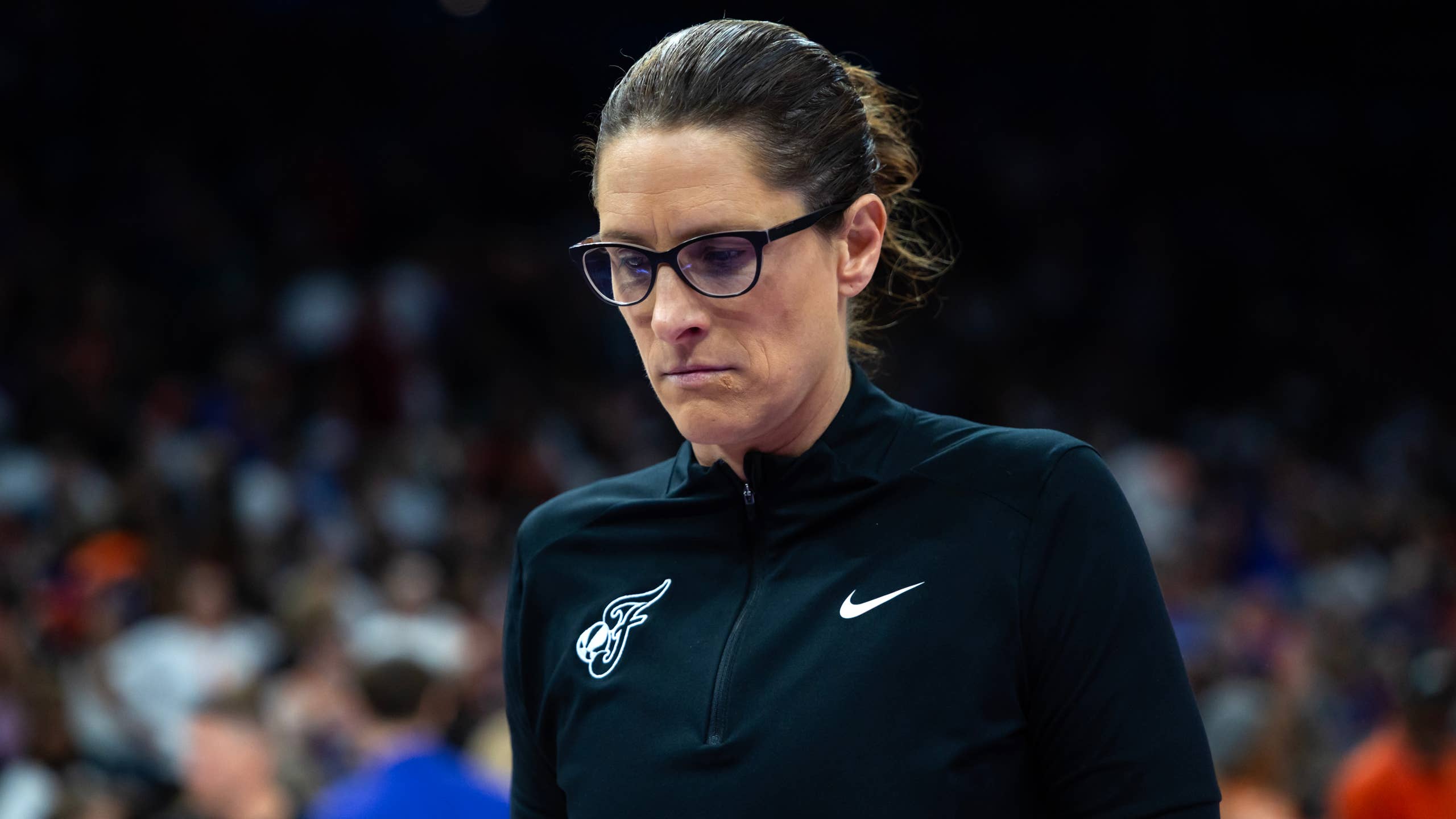
Official Fever materials published Friday showed Clark and White appearing together during postgame media availability following Thursday’s Minnesota loss.

Indiana’s own website simultaneously promoted its upcoming playoff series, with Clark remaining central to the franchise’s postseason coverage.
No official Fever announcement reviewed Saturday indicated Clark had departed, cleared her locker, or separated from the organization.
Likewise, no verified security log or authenticated photograph establishing the alleged overnight locker removal has publicly surfaced through credible sources.
Instead, the documented basketball reality is considerably less mysterious, although potentially more consequential for Indiana’s immediate championship ambitions.
The Fever finished their regular season Thursday with an 86-66 road defeat against the top-seeded Minnesota Lynx.
Indiana ended the regular season 28-16, sliding into the sixth seed after dropping two of its final three.
Clark endured an unusually difficult finale, scoring two points while making only one of twelve field-goal attempts against Minnesota.
That performance followed Indiana’s impressive 96-77 home victory over Minnesota only two nights earlier in Indianapolis.
The dramatic reversal naturally created questions about momentum, consistency, and Indiana’s readiness for another demanding postseason matchup against Las Vegas.
Yet those basketball questions are materially different from evidence that Clark has abandoned the Fever or emptied her locker.
The official postseason bracket has Indiana facing defending champion Las Vegas in a best-of-three opening-round series beginning September 27.

Game One is scheduled in Las Vegas, while Game Two moves to Indiana on September 29, according to WNBA information.
A deciding third game, if necessary, would return to Las Vegas on October 1 under the league’s postseason format.
That schedule leaves Indiana almost no time for distractions before confronting one of professional basketball’s most accomplished modern franchises.
Las Vegas enters the playoffs at 31-13 after closing its regular season with seven consecutive victories and substantial offensive momentum.
Indiana nevertheless owns meaningful evidence that this matchup could become considerably more competitive than the respective seeds initially suggest.
The Fever won two of three regular-season meetings against Las Vegas, including victories by sixteen and thirty-four points.
Las Vegas captured the third meeting 86-84 in overtime, demonstrating how narrow the separation can become between these offenses.
Indiana also enters postseason play possessing what the WNBA describes as the most explosive offense in league history.
The Fever averaged a record 96 points per game during the regular season, creating extraordinary pressure through pace and shooting.
Clark and Kelsey Mitchell became the league’s highest-scoring backcourt combination, averaging 47 combined points throughout the regular-season campaign.
Mitchell finished at 24.7 points per game, while Clark contributed 22.3, according to the league’s playoff preview.
Those numbers explain why any rumor involving Clark’s future immediately carries consequences extending well beyond ordinary professional-sports speculation.
Clark has become simultaneously a basketball centerpiece, commercial attraction, television draw, and enormous engagement engine surrounding the Fever franchise.
Her presence consequently magnifies every disagreement, sideline exchange, injury update, roster decision, and ambiguous social-media development involving Indiana.
That environment creates ideal conditions for unsupported claims to travel significantly faster than traditional reporting can authenticate their underlying details.
The specific locker-room narrative contains several characteristics commonly associated with viral sports storytelling rather than independently documented breaking news.
There is a precise overnight hour, supposedly secret security documentation, a silent coach, an abandoned object, and mysterious handwriting.
Each element raises the emotional stakes while withholding the supposedly decisive evidence needed to establish what actually happened.
The invitation to comment for access to a leaked photograph creates another reason audiences should separate engagement mechanics from reporting.
A genuine transaction involving a player of Clark’s stature would ordinarily generate extensive verification efforts across national and local outlets.
Reporters would seek confirmation from representatives, teammates, league officials, arena personnel, team executives, and other independently positioned sources.
Until such verification emerges, describing the alleged locker clearing as established fact would go beyond currently available public evidence.
There has certainly been visible competitive tension around Indiana, particularly after uneven performances during the closing portion of the season.
Clark and White have previously attracted attention for animated sideline exchanges, fueling recurring speculation regarding their professional relationship.
However, Clark publicly pushed back against interpretations that one such exchange demonstrated a deteriorating relationship with her head coach.
Associated Press reporting in June quoted Clark saying she enjoyed playing for White and rejected contrary interpretations of their interaction.
White similarly expressed appreciation for coaching Clark, making the public record more complicated than persistent feud narratives often suggest.
More recently, Clark and White continued appearing together in official team media surrounding Indiana’s late-season games and playoff push.
They appeared alongside Myisha Hines-Allen following Thursday’s regular-season finale, directly preceding the weekend’s first-round preparations.
That appearance does not establish what happens privately, but it represents verified evidence against unsupported claims of immediate disappearance.
The timing of the rumor is particularly notable because uncertainty and heightened emotions traditionally intensify immediately before postseason competition begins.
Indiana’s ugly Minnesota loss supplied fertile material for speculation after Clark produced her lowest-scoring performance of the regular season.
The Fever fell behind 25-4 during the opening quarter and never recovered from Minnesota’s overwhelming early offensive surge.
Minnesota eventually built a 36-point advantage, while Indiana recorded season lows in scoring and field-goal percentage during defeat.
For a team built around explosive scoring, that collapse offered a jarring contrast to Indiana’s offensive identity throughout 2026.
The Fever’s postseason concerns also extend beyond Clark’s difficult shooting night and whatever narratives develop around her relationship with White.
Aliyah Boston suffered a leg injury during the Minnesota finale, creating uncertainty surrounding another essential component of Indiana’s core.
Guard Ty Harris also sustained an ankle injury after landing awkwardly during a drive and required assistance leaving the court.
Those health questions could have substantially greater immediate competitive significance than social-media speculation surrounding Clark’s locker or playbook.
Boston averaged 16.1 points and eight rebounds this season, completing Indiana’s formidable three-player offensive foundation alongside Clark and Mitchell.
Losing or limiting Boston against Las Vegas would dramatically alter Indiana’s interior scoring, rebounding, defensive versatility, and lineup balance.
The matchup becomes especially challenging because Las Vegas enters postseason competition playing its strongest basketball at precisely the right moment.
The Aces concluded Thursday by defeating Phoenix 100-82, extending their winning streak to seven games entering the postseason.
A’ja Wilson scored 34 points with nine rebounds during that victory, continuing another remarkable individual campaign for Las Vegas.
Wilson finished the regular season averaging 26.2 points, leading the WNBA in scoring for a third consecutive season.
Indiana therefore cannot afford prolonged offensive stagnation resembling Thursday’s opening quarter when its first-round series begins in Las Vegas.
Clark’s playmaking becomes particularly important because Las Vegas possesses veteran defenders capable of punishing careless possessions and disrupted half-court execution.
Chelsea Gray, Jackie Young, Jewell Loyd, and Wilson provide Las Vegas with extensive postseason experience surrounding multiple championship runs.
The Aces also scored 100 points during their regular-season finale, illustrating the offensive punishment awaiting opponents allowing transition opportunities.
Still, Indiana’s regular-season success against Las Vegas offers a legitimate tactical counterweight to assumptions that seeding determines this matchup.
The Fever defeated Las Vegas 84-68 on July 5 before producing a stunning 109-75 victory one week later.
Those performances demonstrated Indiana’s ceiling when Clark, Mitchell, Boston, and the supporting rotation collectively establish rhythm and defensive pressure.
Las Vegas answered in August, winning 86-84 during overtime and preventing Indiana from completing a regular-season series sweep.
The resulting 2-1 Fever advantage makes this opening round more strategically intriguing than sixth-versus-third seeding alone might indicate.
It also creates a stronger factual storyline than an unsupported claim involving mysterious movers and an abandoned center-court playbook.
Indiana and Las Vegas already share postseason history after meeting during last year’s semifinals in another closely contested series.
The Aces ultimately survived Game Five in overtime before continuing toward another championship, according to the WNBA’s postseason preview.
That history gives Indiana a clear competitive motivation without requiring invented locker-room ultimatums or anonymously attributed dramatic confrontations.
For Clark individually, the series provides another opportunity to demonstrate how her rapidly developing professional game translates under postseason pressure.
Her regular season included elite scoring and playmaking stretches while Indiana evolved into an historically productive offensive team.
Clark’s two-point performance Thursday should therefore be interpreted within a substantially larger statistical sample rather than treated independently.
Even elite scorers experience severe shooting variance, particularly against sophisticated defenses during compressed late-season schedules and difficult road environments.
What matters now is whether Indiana can restore spacing, tempo, ball movement, and transition creation against Las Vegas immediately.
The Fever’s offensive architecture functions differently when Clark pushes pace before opposing defenses can establish their preferred half-court matchups.
Her passing range forces defenders to protect areas rarely threatened by conventional guards, opening opportunities for teammates across multiple actions.
Mitchell provides the complementary scoring pressure needed to punish opponents when defensive coverage tilts aggressively toward Clark’s creation responsibilities.
Boston then gives Indiana a highly efficient interior option while creating additional possibilities through screening, rebounding, and short-roll decisions.
When those pieces operate cohesively, Indiana’s record-setting scoring average becomes understandable rather than merely an artifact of increased league pace.
When synchronization disappears, however, the Fever can look dramatically more vulnerable, particularly against disciplined teams capable of disrupting transition offense.
Thursday’s Minnesota defeat illustrated that downside in unusually stark fashion, especially during the disastrous first-half defensive and offensive sequences.
That volatility offers legitimate analytical material for assessing Indiana’s postseason outlook without manufacturing evidence of internal organizational collapse.
The business dimension surrounding Clark also explains why unsupported departure narratives attract extraordinary attention compared with typical player speculation.
WNBA television audiences have expanded significantly, with ESPN reporting its most-watched regular season ever across its networks during 2026.
Twenty-nine games across ESPN networks averaged approximately 1.37 million viewers, representing a seventeen-percent increase from the previous season.
That broader growth cannot reasonably be attributed to one athlete, but Clark remains among the league’s biggest audience attractions.
Her games generate substantial digital conversation, national television interest, ticket demand, merchandise visibility, and secondary-market attention across markets.
Consequently, even an unsupported suggestion that Clark might leave Indiana can rapidly become commercially significant online content.
The incentive structure surrounding social platforms rewards emotional certainty, exclusive framing, unresolved mysteries, and immediate calls for audience participation.
A story claiming Clark simply attended practice would struggle against one involving secret movers arriving during darkness before management awakens.
Adding a handwritten note introduces another curiosity mechanism because audiences naturally want to discover the supposedly hidden final message.
Yet compelling narrative construction cannot substitute for source verification, especially when allegations concern identifiable athletes, coaches, and professional organizations.
Authentic reporting requires determining who witnessed the event, whether documentation exists, and whether independent sources corroborate the underlying account.
No credible report reviewed for this article has established those elements regarding the purported overnight removal of Clark’s belongings.
Official Fever channels instead remained focused Saturday on postseason preparation and the forthcoming first-round matchup against defending champion Las Vegas.
The WNBA likewise lists Clark among Indiana’s central offensive leaders while previewing the Fever-Aces series beginning Sunday afternoon.
Those sources could eventually be superseded by genuine breaking developments, but currently they represent the strongest available documented information.
Sports situations can change quickly, particularly around postseason elimination, free agency, coaching decisions, injuries, and organizational restructuring.
That reality makes careful language more important, not less important, when viral posts claim extraordinary developments without independently accessible evidence.
If Clark eventually addresses her future, her own comments would immediately become critical evidence for evaluating Indiana’s longer-term direction.
Statements from White, Fever executives, Clark’s representatives, or the WNBA could similarly clarify any substantive organizational dispute if one exists.
Until then, audiences should distinguish emotional interpretations of visible frustration from verified evidence of a player preparing to depart.
Competitive frustration after a 20-point loss immediately before the playoffs would hardly be extraordinary within professional basketball environments.
Nor would players removing personal items automatically prove departure, particularly around travel, season transitions, renovations, or ordinary equipment procedures.
Context determines meaning, and the viral claim currently supplies dramatic context without providing independently authenticated evidence supporting that interpretation.
Indiana’s immediate reality remains a postseason matchup requiring its full attention against an opponent arriving with seven consecutive victories.
Game One places the Fever inside Michelob ULTRA Arena, where Las Vegas will possess home-court advantage and substantial postseason experience.
The Aces’ offensive form makes Indiana’s defensive transition discipline particularly important following Thursday’s inability to slow Minnesota’s opening surge.
Las Vegas scored 65 first-half points against Phoenix Thursday, demonstrating how quickly the defending champions can overwhelm disorganized defensive possessions.
Wilson produced 17 first-quarter points during that victory as Las Vegas opened with an immediate 14-0 scoring run.
Indiana cannot replicate its Minnesota opening, when the Fever surrendered 32 first-quarter points while scoring only thirteen themselves.
Clark will also need dramatically improved efficiency after Minnesota successfully prevented her from establishing normal scoring rhythm throughout Thursday.
Her season-low two points represented an extreme departure from the 22.3-point regular-season average highlighted by the league’s postseason preview.
That statistical contrast provides the most meaningful Clark storyline entering Sunday, because it directly influences Indiana’s actual championship prospects.
Another concerns Indiana’s ability to protect possessions while maintaining the aggressive pace responsible for its record-setting offensive production.
Playoff defenses traditionally devote greater preparation toward removing preferred actions, forcing secondary creators into increasingly important decision-making responsibilities.
Indiana’s supporting players therefore become critical whenever Las Vegas traps Clark, denies Mitchell, or crowds Boston around the paint.
The Fever must generate productive possessions without allowing defensive pressure to transform aggression into turnovers and rushed perimeter attempts.
Las Vegas faces its own strategic challenges because Indiana demonstrated twice this season that its offense can overwhelm championship-level personnel.
The Aces cannot simply assume Thursday’s poor Clark performance will repeat against a completely different defensive scheme and opponent.
They must also account for Mitchell, whose scoring production exceeded Clark’s and ranked among the league’s strongest individual outputs.
Wilson nevertheless provides Las Vegas with the series’ most dominant interior presence and perhaps its most difficult tactical matchup for Indiana.
Her combination of scoring, rebounding, rim protection, mobility, and experience creates pressure extending across nearly every possession type.
The contrast between Indiana’s explosive perimeter creation and Las Vegas’ multidimensional veteran core should dominate legitimate discussion entering Game One.
Meanwhile, the supposed locker-clearing episode remains precisely what it began as: an extraordinary allegation requiring extraordinary verification before publication.
There is currently no responsible basis for supplying the alleged sticky-note wording because no authenticated message has been publicly established.
Inventing that sentence would transform an unverified viral claim into fabricated evidence attributed directly to a real professional athlete.
That would obscure the genuinely fascinating story unfolding around Clark, White, and Indiana at the most important moment possible.
Indiana has reached the postseason behind historically productive offense while simultaneously carrying injuries, inconsistency, and significant expectations into Las Vegas.
Clark is coming off her poorest scoring game of 2026 immediately before facing the defending champions on their home floor.
White must quickly determine how to restore Indiana’s offensive rhythm while managing health questions involving crucial pieces around Clark.
Las Vegas arrives surging, Wilson arrives dominant, and the Fever must rediscover the form that twice overwhelmed this opponent.
Those verified circumstances already provide enough tension for a postseason series capable of generating enormous national attention throughout its duration.
The commercial backdrop amplifies everything because the WNBA enters these playoffs after another significant increase in national television audiences.
ESPN’s reported seventeen-percent year-over-year regular-season audience growth establishes a broader context for the league’s expanding cultural and economic footprint.
Clark’s postseason presence adds another major attraction as broadcasters, sponsors, teams, and fans converge around the opening-round schedule.
A prolonged Indiana run would naturally create additional nationally televised inventory around one of women’s basketball’s most recognizable young stars.
An early elimination would instead shift attention quickly toward roster construction, injuries, coaching evaluation, and longer-term championship planning.
Either outcome could produce legitimate questions about Indiana’s future without retroactively validating unsupported claims circulating before the postseason begins.
The next meaningful evidence will therefore arrive publicly, not through mysterious social-media promises requiring comments to unlock hidden photographs.
Sunday’s game will reveal whether Clark responds competitively after Thursday’s shooting collapse and whether Indiana can challenge Las Vegas again.
It may also provide clues about Boston’s health, Indiana’s rotation, White’s adjustments, and the Fever’s broader postseason resilience.
None of those developments requires audiences to believe an unverified story about movers operating secretly inside an arena overnight.
For now, the documentary record shows Clark with the Fever, White beside her, and Indiana preparing for postseason competition.
The WNBA’s official preview identifies Clark as one half of Indiana’s record-setting scoring combination alongside Kelsey Mitchell.
The league’s playoff bracket lists Indiana against Las Vegas beginning September 27, with Indianapolis hosting the second game September 29.
Those are confirmed developments; the alleged 3 A.M. locker evacuation and handwritten farewell message currently are not.
That difference between verification and virality becomes especially important when narratives can affect reputations across players, coaches, and organizations.
Clark’s future will remain a powerful subject because her trajectory carries substantial competitive and commercial consequences throughout professional basketball.
But responsible analysis begins with evidence, particularly when a story claims a franchise-altering rupture occurred behind closed doors overnight.
Until credible documentation emerges, Indiana’s real drama remains on the basketball court, where considerably more consequential answers arrive Sunday.
Clark, White, and the Fever now face Las Vegas with their season at stake and almost no recovery margin.
That postseason reality requires no mysterious sticky note to become compelling, because Indiana’s next chapter will soon be publicly visible.


