Ashley Flynn’s Family Confronts Caleb Flynn Before Judge Imposes Life Without Parole for Murder Sentence
The courtroom in Troy, Ohio, had already heard Caleb Flynn cry before Ashley Flynn’s family stepped forward to speak.
But the tears did not change what a jury had decided.
They did not erase the bedroom where Ashley was shot to death.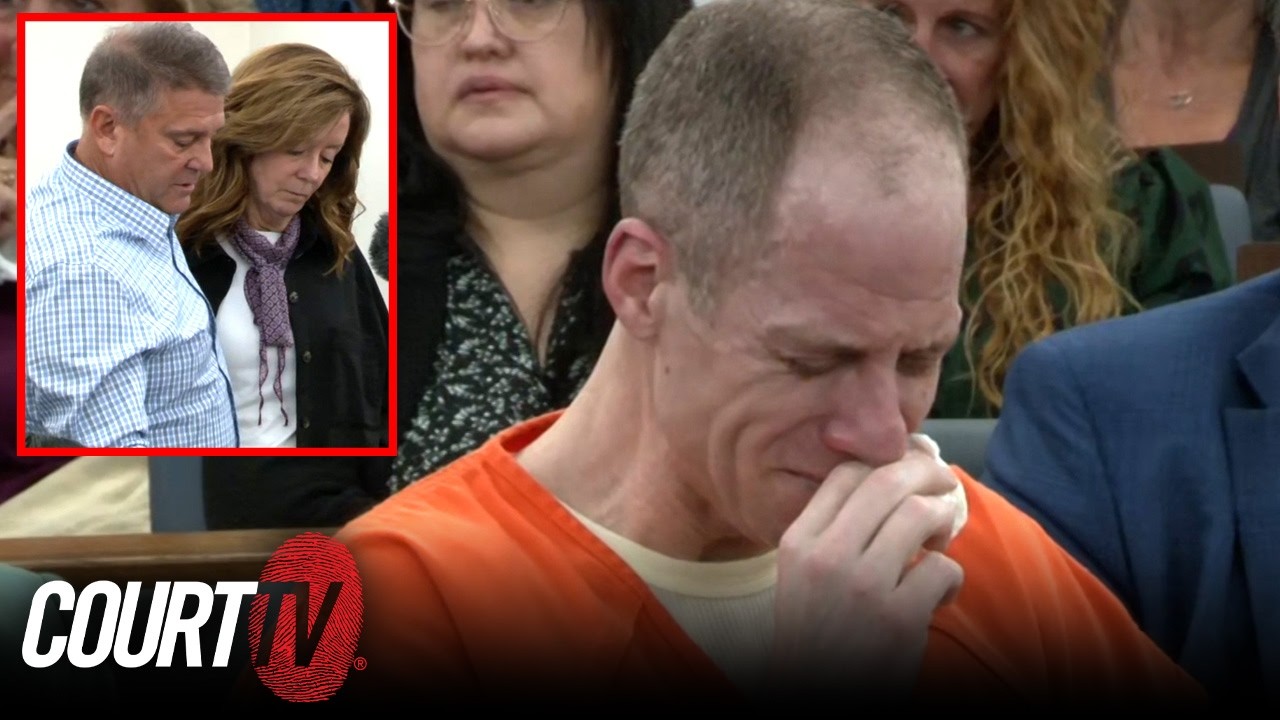
They did not undo months of deception prosecutors said followed the killing.
And they could not return a mother to the two daughters whose statements would soon become some of the most devastating words heard during Flynn’s sentencing.
On October 5, 2026, Judge Jeannine Pratt sentenced Caleb Flynn, 40, to life in prison without the possibility of parole for murdering his 37-year-old wife Ashley inside their Tipp City home.
The former music pastor and brief “American Idol” contestant had been convicted days earlier on nine counts, including aggravated murder, murder, felonious assault and tampering with evidence.
His sentencing hearing became much more than the formal conclusion of a criminal trial.
It became Ashley’s family’s opportunity to explain what his actions had destroyed.
Before the victim-impact statements began, Flynn stood and delivered a prepared statement.
He apologized to his daughters, his parents, his brother, Ashley’s family and members of the church community affected by the case.
He acknowledged failing the vows he had made to Ashley.
With tears rolling down his face, he said he loved his daughters and regretted missing the lives they would now build without him.
Yet Flynn stopped short of accepting responsibility for Ashley’s murder.
He maintained that he did not kill his wife.
He ended his remarks with scripture.
That contradiction became central to what followed.
Flynn was asking his family for forgiveness while still rejecting the jury’s determination that he had murdered Ashley.
Judge Pratt later addressed that directly.
According to Court TV, she told Flynn that the layers of deceit, manipulation and cruelty demonstrated in the case were extraordinarily disturbing.
The prosecution’s case had portrayed Ashley’s killing as the culmination of an increasingly destructive double life.
Flynn was having an affair with Alleigha Botner, a young woman he met when she was an intern at his church.
Botner testified that the relationship lasted more than a year and that Flynn repeatedly spoke negatively about Ashley.
The night before Ashley was killed, prosecutors presented a message Flynn sent Botner declaring that he chose her, was free, and that “actions will come tomorrow.”
Hours later, Ashley was dead.
She was shot while sleeping in the family’s home on February 16.
Flynn initially told investigators that an intruder had entered the house and killed her.
Prosecutors argued that the supposed burglary was staged.
Digital evidence showed activity from Flynn’s devices that conflicted with his claim that he had been asleep when the shooting occurred.
Investigators never recovered the murder weapon, but the jury ultimately accepted the prosecution’s circumstantial, forensic and digital evidence.
After deliberating for a little more than two hours, jurors convicted Flynn on all nine counts.
The evidence presented at trial also revealed how deeply the crime reached into the lives of the couple’s children.
Ashley and Caleb’s daughters were home when their mother was killed.
They were children suddenly forced into the center of a murder investigation involving their own father.
Prosecutors later said Flynn attempted to influence what they told investigators.
People reported that Flynn told the grieving girls that what they said could affect whether he lived or died, while instructing them to provide information favorable to him.
The daughters nevertheless gave investigators accounts that contributed to the case against their father.
Those children eventually became some of the most powerful voices at sentencing.
Their statements were read in court by relatives.
Flynn sat at the defense table listening.
Ava’s statement centered on the mother she had lost.
She remembered Ashley as loving and nearly perfect in her eyes.
Then she asked the question no child should ever have to ask a parent convicted of murdering the other one:
What could Ashley possibly have done to make him hate her so much?
Flynn broke down.
The Washington Post reported that he sobbed intensely while the statement was being read, with tissues accumulating on the defense table.
At one point, his physical reaction appeared so severe that he seemed close to collapsing.
But Ava’s pain did not end with grief over Ashley.
The daughters had effectively lost both parents in a single night.
Their mother was dead.
Their father was the man convicted of killing her.
That reality shaped every word brought into the courtroom.
Alyssa’s statement was equally direct.
She questioned whether Flynn had considered the suffering his choices would inflict upon his own children.
She reminded him that Ashley had been one of the greatest gifts in his life.
Then she addressed the affair that prosecutors said helped explain his motive.
She wrote that he had thrown away what she believed was an extraordinary family life for another woman.
Alyssa ultimately made clear that she had no intention of visiting him in prison.
The statements cut through Flynn’s courtroom apology because they addressed the consequences that no expression of regret could reverse.
His daughters were not discussing an abstract criminal conviction.
They were describing childhoods permanently divided into before and after.
Before their mother was murdered.
And after.
Ashley’s sister, Kayla Keyt, also addressed Flynn directly.
She described the damage spreading far beyond the immediate family.
According to the Washington Post, Keyt said the case had affected their church community so deeply that children had begun running into their parents’ bedrooms to make sure their fathers had not killed their mothers.
That image captured the wider trauma surrounding the case.
Ashley had been a teacher.
She coached volleyball.
She participated in her church.
She was a mother whose life touched students, relatives, friends and families around her.
Her death therefore produced consequences that could not be contained inside one courtroom.
Her brother-in-law also spoke.
Then Ashley’s parents addressed Flynn.
One family member after another described what Ashley’s absence meant and what her daughters would have to carry into adulthood.
The family asked Judge Pratt to impose the strongest punishment available.
At the same time, several relatives spoke about forgiveness.
That did not mean asking the court for leniency.
It meant refusing to allow hatred of Flynn to consume what remained of their lives.
The family could forgive within the framework of their faith while still insisting that Flynn spend the rest of his life in prison.
That distinction became one of the most striking elements of the hearing.
Forgiveness did not erase accountability.
Compassion did not require pretending the crime had not occurred.
And faith did not require Ashley’s relatives to accept Flynn’s continued denial.
The family asked for the fullest measure of punishment under Ohio law.
Judge Pratt agreed.
Her sentencing remarks focused heavily on manipulation.
Flynn had been a church leader.
Faith was part of his public identity.
He quoted scripture during sentencing.
But Pratt said the evidence demonstrated that he had used religion in ways that manipulated other people rather than honoring the values he publicly professed.
She also found his lack of genuine responsibility significant.
The court imposed life without the possibility of parole.
Additional consecutive prison terms were attached to firearm specifications and other convictions.
The sentence means Flynn will not have a future parole hearing where Ashley’s daughters must return decades later and argue again that he should remain incarcerated.
Barring a successful appeal or other extraordinary legal development, he will spend the rest of his life in prison.
His attorneys have said they intend to appeal.
Flynn continues to maintain his innocence despite the verdict.
That continued denial is important when evaluating claims that he displayed complete remorse at sentencing.
Flynn certainly cried.
He apologized for lies and failures.
He told his daughters he loved them.
He apologized for not being there to watch them grow up.
But he simultaneously denied killing Ashley.
Calling those tears “fake” or “crocodile tears” is an interpretation rather than a proven fact.
Ashley’s relatives and the judge were entitled to question the meaning of Flynn’s remorse.
The public evidence establishes the contradiction.
He expressed regret while refusing responsibility for the central crime for which the jury convicted him.
That contradiction was enough to make the sentencing extraordinarily emotional without inventing hidden courtroom confrontations.
The same caution applies to claims about secret victim-impact recordings.
The victim-impact statements were not hidden.
Reporters attended the proceeding.
Video from the courtroom circulated publicly.
News organizations quoted extensively from the daughters’ statements and from Ashley’s relatives.
Fox News published video of Kayla Keyt addressing Flynn.
Court TV reported directly from the sentencing.
WHIO provided live updates while the hearing was taking place.
There is therefore no need to rely on an alleged secret or “unredacted” audio archive to understand what happened.
The most consequential words are already public.
The daughters asked why their father had destroyed their family.
Ashley’s relatives described the damage he had caused.
They asked for the maximum sentence.
Flynn cried.
He apologized.
Then he maintained his innocence.
And the judge sentenced him to die in prison.
The trial itself had already exposed how dramatically Flynn’s public image contrasted with prosecutors’ account of his private life.
He had served as a music pastor.
He briefly appeared on “American Idol” in 2013.
Ashley had encouraged his musical ambitions.
Years later, prosecutors introduced messages documenting an affair and discussions in which Flynn expressed hostility toward his wife.
Botner testified about the relationship and about statements Flynn made concerning Ashley’s death.
Prosecutors also showed jurors AI-assisted love songs Flynn created for Botner.
The digital record became central to reconstructing the months before Ashley’s killing.
More than 100,000 messages between Flynn and Botner were referenced in reporting about the case.
Those communications presented a private life sharply different from the husband-and-father image Flynn had projected publicly.
According to prosecutors, the final step was murder.
Ashley was shot twice in the head as she slept.
Flynn then attempted to make the scene appear consistent with an intruder entering the house.
He placed the 911 call that initially presented himself as a surviving husband discovering an unimaginable crime.
Investigators eventually concluded that the intruder did not exist.
The jury agreed.
Perhaps the most disturbing evidence involved what happened afterward.
Rather than allowing his daughters simply to grieve their mother, prosecutors said Flynn attempted to shape what they told authorities.
People reported that he placed enormous emotional pressure on the girls by suggesting their words could determine whether he survived.
The children were already trying to understand their mother’s violent death.
Now they were being placed in a position where they could feel responsible for their father’s fate as well.
Judge Pratt specifically considered Flynn’s manipulation when determining punishment.
The case therefore was not only about how Ashley died.
It was also about what Flynn did before and after the killing.
His affair.
The messages.
The alleged staging of the scene.
The false intruder story.
The effort to influence his daughters.
And his continued denial even after conviction.
Each layer increased the significance of the victim-impact statements.
Ashley’s family was responding not merely to one violent act but to what they saw as a prolonged campaign of deception surrounding that act.
That helps explain why their sentencing statements carried such intensity.
They were not trying to solve the crime anymore.
A jury had already done that.
They were describing its cost.
Ashley would not attend another volleyball game.
She would not watch her daughters graduate.
She would not see their weddings or possible grandchildren.
She would not continue teaching.
Every milestone her daughters reached would now contain an absence.
And their father, according to the jury, was responsible for creating it.
Flynn’s own future was therefore placed beside the future he had taken from Ashley.
He would live.
He would grow older.
He could write letters.
He could think about his daughters.
He could continue insisting that the jury was wrong.
But he would do those things from prison.
Ashley received no comparable future.
That imbalance stood at the heart of the family’s demand for life without parole.
The October 5 hearing also showed why victim-impact statements matter in American criminal sentencing.
A trial tends to focus on evidence.
Timelines.
Phone records.
Forensics.
Witness credibility.
Legal instructions.
Elements of offenses.
A victim-impact hearing changes the perspective.
It asks what the crime did to actual human beings.
In Flynn’s case, the answer came from two daughters who had lost their mother and then watched their father become the defendant accused of killing her.
It came from Ashley’s sister.
Her parents.
Her brother-in-law.
People who now had to raise children through trauma they never created.
Their testimony transformed Ashley from a name in an indictment back into the person they knew.
Teacher.
Coach.
Mother.
Sister.
Daughter.
Friend.
That was the person the sentencing hearing placed back at the center of the case.
Flynn’s courtroom tears attracted attention because cameras could capture them.
But Ashley’s family repeatedly redirected attention toward the person who could no longer speak.
The strongest verified account of the hearing is therefore already devastating.
Caleb Flynn cried.
He apologized to his daughters.
He admitted failing Ashley as a husband.
Then he said he did not murder her.
His daughters answered through letters describing betrayal and unbearable grief.
One questioned how he could hate their mother enough to kill her.
Another told him she did not plan to visit him in prison.
Ashley’s sister described a community traumatized by the case.
Her family offered forgiveness without requesting mercy.
And Judge Jeannine Pratt concluded that Flynn’s manipulation, deceit and cruelty warranted the harshest available punishment.
Life without parole.
There is no need for a hidden “unredacted” confrontation to make that scene powerful.
The confrontation happened openly.
It happened on the record.
And its most painful voices belonged to two children forced to tell their father what his conviction had taken from them.
Flynn may continue fighting the verdict through an appeal.
He may continue insisting that he did not pull the trigger.
But the sentence now reflects the conclusion reached by the jury and the court.
Ashley Flynn was murdered.
Caleb Flynn was convicted of killing her.
And on October 5, surrounded by the relatives whose lives were permanently altered by that crime, he was sentenced to spend the rest of his life behind bars.


