America remembers John F. Kennedy as a charismatic president whose brief administration inspired an enduring vision of national possibility.
Behind that carefully cultivated public image existed a private life that historians continue examining through memoirs and documents.
His relationships with women raised questions about personal conduct, presidential authority, national security, and the protection of political reputations.
Some encounters are supported by firsthand testimony, while others remain surrounded by allegations, contradictions, and sensational conspiracy theories.
Understanding the difference is essential to reconstructing the Kennedy presidency without confusing documented misconduct with unsupported criminal accusations.
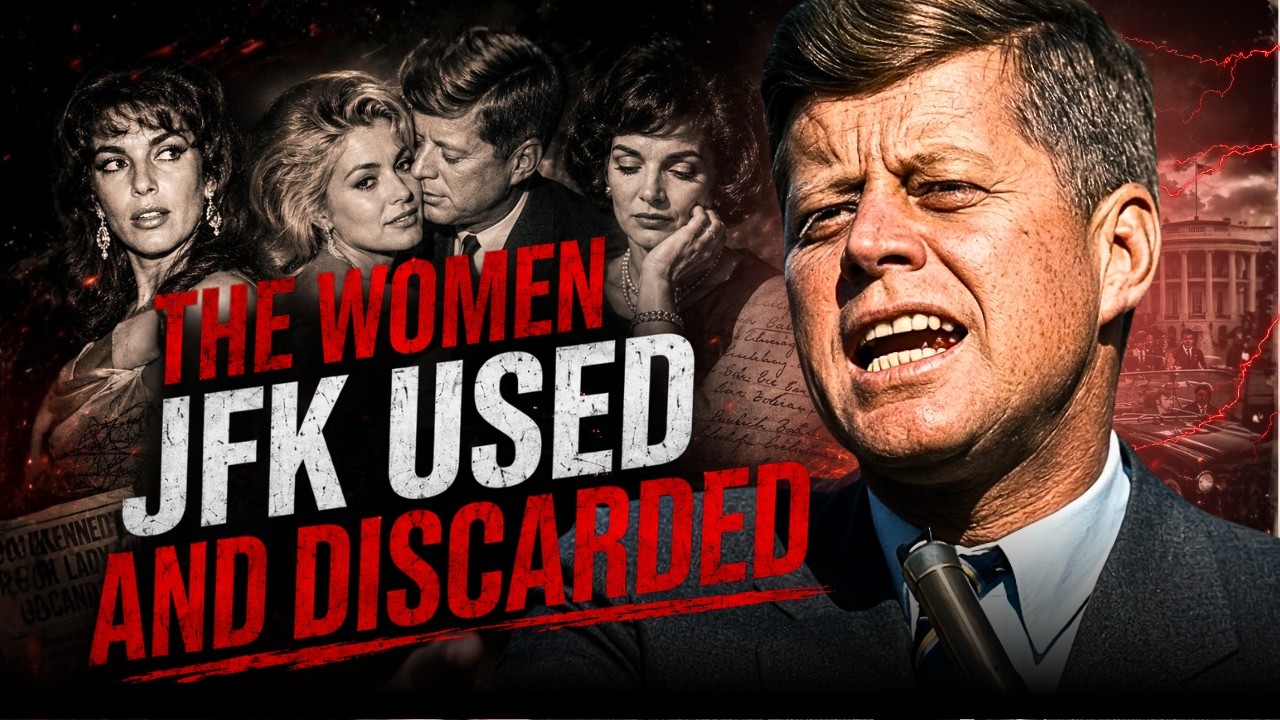
The central issue extends beyond marital infidelity into the responsibilities carried by America’s most powerful elected official during office.
Kennedy occupied a position granting extraordinary access to government personnel, intelligence information, security resources, and influential social networks nationwide.
Those advantages also created profound imbalances whenever personal relationships involved younger employees or individuals dependent upon presidential favor.
The White House of the early 1960s operated within a political culture markedly different from contemporary expectations regarding accountability.
Journalists frequently maintained closer personal relationships with politicians, and reporting on private conduct followed less consistent professional standards.
Public discussion of presidential health, marriage, and intimate relationships remained limited despite the growing influence of television journalism.
Kennedy benefited from that environment while cultivating an image of youthful confidence, family stability, and energetic national leadership.
His presidency unfolded against extraordinary geopolitical tensions involving nuclear weapons, Soviet expansion, Cuba, Berlin, and America’s global alliances.
The contrast between public responsibility and private conduct would eventually become central to reassessments of his historical legacy.
One of the most consequential firsthand accounts emerged decades after his assassination from a former White House intern.
Mimi Alford entered the presidential workplace as a young woman whose experience illustrated the extraordinary authority surrounding the office.
Her later memoir, Once Upon a Secret, described an intimate relationship beginning when she was nineteen years old.
The account challenged idealized portrayals of Kennedy by emphasizing the imbalance between a president and an inexperienced employee.
Alford described being invited to swim at the White House before an encounter in the presidential residence followed.
Her recollections presented the experience as confusing and emotionally complicated rather than a conventional romance between equal partners.
The president’s status mattered because refusing or questioning his attention could feel exceptionally difficult for someone so young.
Modern workplace standards recognize that apparent participation does not necessarily eliminate concerns about coercion or unequal professional power.
Yet historical analysis must also preserve Alford’s own descriptions rather than imposing claims she did not explicitly make.
Her testimony provides important evidence about her experiences, but it cannot independently establish every detail alleged by later commentators.
The relationship reportedly continued intermittently during Kennedy’s presidency, leaving Alford with memories she struggled to discuss for decades.
She eventually wrote publicly about the experience, offering a perspective largely absent from earlier accounts of the administration.
Her story is particularly significant because it came directly from a participant rather than anonymous political gossip sources.
It also revealed how secrecy could impose lasting emotional consequences even without a formal legal or public proceeding.
The Kennedy administration’s reputation for sophistication made such accounts especially difficult to reconcile with its celebrated public identity.
Photographs of the president with Jacqueline Kennedy and their children reinforced a powerful image of domestic happiness nationally.
Television appearances presented a polished family whose elegance seemed to symbolize a confident new generation of American leadership.
The public narrative became associated with Camelot, a romanticized description that grew especially influential after Kennedy’s death afterward.
That symbolism offered emotional reassurance during national mourning, but it also encouraged selective remembrance of complicated personal realities.
The distance between image and reality was not unique to Kennedy or to the political era itself.
American presidents have long managed competing expectations involving personal character, public leadership, and the preservation of institutional authority.
What distinguished Kennedy was the extraordinary intensity of his celebrity and the tragic circumstances surrounding his assassination.
His private behavior consequently became entangled with arguments about national mythology, journalistic responsibility, and political accountability for generations.
The president’s health further complicated perceptions of the vigorous young leader presented to the American electorate and world.
Kennedy experienced serious medical difficulties, including Addison’s disease and chronic back problems that required extensive medical treatment.
His physical condition was considerably more complicated than the athletic image projected during campaign appearances and official events.
He underwent medical interventions and used medications while fulfilling responsibilities that demanded extraordinary concentration and physical endurance daily.
Those medical facts are historically relevant, but they do not establish a psychological explanation for his intimate relationships.
Claims that sexual behavior directly compensated for illness remain interpretations rather than conclusions supported by definitive clinical evidence.
His health challenges should therefore be considered separately from documented decisions concerning relationships, security, and workplace conduct during office.
The temptation to construct a single psychological explanation can obscure the distinct evidence surrounding individual encounters and events.
Kennedy’s relationship with Alford raises concerns because presidential power transformed an ostensibly private interaction into an institutional question.
A government employee interacting with the president occupied a fundamentally different position from an independent social acquaintance or partner.
Even informal invitations carried the weight of an office whose authority extended across the entire federal executive branch.
The administration’s internal culture also placed considerable importance on loyalty, discretion, and protecting the president from political embarrassment.
Such expectations could discourage employees from reporting experiences or questioning behavior that appeared inconsistent with professional responsibilities internally.
Alford’s account suggests that these pressures shaped her understanding of what she could disclose about the relationship afterward.
Her later reflections also demonstrate how public silence can emerge from personal confusion rather than an organized conspiracy.
The distinction matters because silence alone cannot establish that security officials or government agencies coordinated unlawful concealment activities.
Historical evidence must identify particular individuals, actions, and records before assigning responsibility for institutional misconduct or wrongdoing conclusively.
Alford’s memoir nevertheless forces an uncomfortable reassessment of how presidential authority operated within the private White House environment.
It asks whether the standards applied to ordinary government supervisors should also govern the nation’s highest executive official.
That question remains relevant whenever powerful leaders maintain intimate relationships with employees or individuals lacking comparable institutional influence.
The consequences extend beyond personal reputation because misconduct can undermine public confidence in administrative integrity and judgment.
Kennedy’s relationships also attracted attention because some acquaintances maintained connections to figures under federal criminal investigation at the time.
Among the most controversial was Judith Campbell Exner, whose associations linked the president’s social circle with organized crime.
Exner became acquainted with Kennedy during the period surrounding his presidential campaign and subsequently described their relationship publicly.
She also knew Chicago organized crime figure Sam Giancana, creating a potentially serious concern for presidential security personnel.
The existence of overlapping personal associations does not automatically establish that Kennedy knowingly participated in criminal activities himself.
Nevertheless, such connections could expose a president to surveillance, manipulation, embarrassment, or attempts to obtain sensitive information improperly.
The danger becomes especially apparent when considering the administration’s simultaneous efforts to investigate organized crime and its influence.
Attorney General Robert F. Kennedy pursued aggressive federal action against criminal organizations, making the family connections particularly controversial.
The Justice Department’s enforcement priorities placed organized crime figures under pressure during a period of substantial political scrutiny.
That campaign contrasted sharply with allegations that the president maintained personal contact with someone associated with Giancana.
Exner later claimed she carried messages or materials between Kennedy and organized crime figures during their relationship together.
Those assertions attracted considerable attention, but important details have remained disputed among historians and congressional investigators alike.
Investigations established that intelligence agencies explored relationships with organized crime figures in efforts directed against Fidel Castro.
They did not conclusively establish every allegation that Exner made concerning Kennedy’s personal knowledge or operational involvement.
The distinction is fundamental because confirmed CIA misconduct does not automatically demonstrate presidential authorization of specific criminal schemes.
During the Cold War, American intelligence officials pursued covert activities against Cuba following the revolution led by Castro.
Some efforts involved contacts with organized crime figures who possessed their own interests in removing Cuba’s communist government.
These activities reflected an ethically troubling convergence of national security objectives and criminal networks operating outside democratic accountability.
Congressional investigations during the 1970s exposed significant intelligence abuses and helped clarify aspects of these covert operations.
The findings demonstrated the risks of clandestine programs operating without adequate oversight, documentation, or clear legal constraints internally.
Yet they did not establish that Kennedy personally directed every operation later attributed to his administration by commentators.
Exner’s testimony must therefore be evaluated alongside official records rather than treated as independently verified proof of presidential wrongdoing.
Her experience also illustrates the personal dangers associated with relationships involving powerful officials and individuals under criminal investigation.
Women situated between influential networks could face public exposure while possessing limited control over how their stories emerged.
That imbalance was intensified by intelligence surveillance, political secrecy, and the reputational consequences of alleged intimate associations publicly.
The FBI’s interest in organized crime provided additional opportunities to collect information about individuals connected to prominent officials.
J. Edgar Hoover directed an agency with extensive investigative capabilities and a longstanding reputation for accumulating politically sensitive information.
His relationship with the Kennedy administration was complicated by disagreements over authority, law enforcement priorities, and institutional independence.
The possibility of presidential vulnerability to blackmail represented a legitimate national security concern for federal investigators at the time.
However, claims that Hoover definitively controlled Kennedy through threatened exposure require stronger documentation than dramatic reconstructions typically provide.
Meetings, memoranda, and surveillance records may establish awareness of concerns without proving a specific blackmail agreement or ultimatum.
The source narrative presents an alleged confrontation as a decisive moment when Hoover forced Kennedy to abandon Exner.
That interpretation should remain qualified unless contemporary evidence establishes the precise conversation and its alleged consequences beyond dispute.
Historical accounts often transform coincidental chronology into causation, especially when private meetings lack comprehensive transcripts or recordings.
A change in communication patterns may be significant without proving the exact motivation attributed to the participants involved.
The wider significance of the Exner controversy concerns the vulnerability created when private relationships intersect with sensitive governmental responsibilities.
Such relationships can complicate security screening, expose officials to surveillance, and undermine confidence in official decision-making processes nationally.
They also create reputational risks when the public cannot distinguish personal misconduct from alleged abuse of governmental authority.
The Kennedy administration faced those concerns while navigating an international environment already marked by extraordinary uncertainty and danger.
The Cuban Missile Crisis in October 1962 brought the United States and Soviet Union close to nuclear confrontation.
American intelligence discovered Soviet missile installations in Cuba, prompting intense deliberations over military and diplomatic responses from Washington.
Kennedy ultimately pursued a naval quarantine and negotiated a resolution that avoided immediate armed conflict between superpowers then.
The crisis remains a central subject of presidential leadership studies because decisions carried potentially catastrophic global consequences.
Private accounts of Kennedy’s relationships during this period can illuminate personal circumstances without explaining his national security decisions.
It would be irresponsible to claim that intimate encounters determined his nuclear strategy without substantial supporting documentary evidence.
Likewise, speculative statements about his emotional condition cannot replace the extensive record of deliberations among senior government advisers.
The administration’s decision-making involved military intelligence, diplomatic communications, strategic calculations, and disagreements among experienced officials and advisers.
Kennedy’s private life formed part of his biography, but it was not the sole determinant of presidential behavior.
Another woman frequently associated with Kennedy was Marlene Dietrich, the internationally celebrated actress whose career spanned several decades.
Accounts of a private encounter between Dietrich and Kennedy have circulated through biographical recollections and interviews over time.
Those stories often emphasize the contrast between presidential prestige and the actress’s established independence and international celebrity status.
However, later recollections should not automatically be converted into exact dialogue or definitive descriptions of private motivations involved.
Dietrich’s personal history included relationships with prominent figures, making her an appealing subject for sensational Kennedy biographies later.
Some accounts also connect her romantically with Joseph P. Kennedy Sr., although particular claims require careful source evaluation.
The suggestion that John Kennedy pursued Dietrich to compete psychologically with his father remains especially speculative and unverified.
Such interpretations may provide dramatic storytelling, but they cannot substitute for evidence documenting the president’s actual intentions directly.
The broader issue concerns the treatment of famous women as supporting characters within narratives centered on powerful men.
Dietrich possessed a substantial artistic identity independent of any alleged encounter with the American president during her career.
Reducing her life to a presidential anecdote overlooks her achievements in cinema, music, and public political expression internationally.
The same problem affects historical discussions of other actresses whose names appear in accounts of Kennedy’s relationships frequently.
Inga Arvad, a Danish journalist, was romantically associated with Kennedy during his earlier years in military service abroad.
Her background attracted security attention because she had previously interviewed Adolf Hitler before the Second World War began.
That association did not establish that she was a Nazi intelligence operative or had engaged in espionage herself.
American security concerns surrounding her relationship with Kennedy reflected the atmosphere of suspicion prevailing during wartime intelligence investigations.
Claims that Joseph Kennedy deliberately engineered every consequence of their separation require careful examination of contemporary evidence and chronology.
Their relationship nevertheless illustrates how personal attachments could become entangled with security assessments and influential family expectations then.
Other women, including Hollywood actresses, have been connected to Kennedy through accounts of varying reliability and specificity historically.
Some relationships are documented through credible testimony, while others depend heavily on retrospective gossip or uncorroborated assertions alone.
Responsible reporting must distinguish between those categories rather than treating every widely repeated anecdote as established historical fact.
The president’s reputation for romantic encounters does not independently verify the details of each alleged individual relationship reported.
Nor does the existence of multiple affairs establish that an organized governmental apparatus systematically recruited women for exploitation.
That broader allegation requires evidence of coordinated planning, official authorization, specific participants, and identifiable institutional misconduct or abuse.
Without such documentation, the narrative risks transforming separate private events into a conspiracy unsupported by the historical record.
The issue becomes particularly sensitive when discussing Ellen Rometsch, whose circumstances generated concern during the Kennedy administration itself.
Rometsch was a German woman living in Washington whose social connections attracted scrutiny amid Cold War espionage fears.
Her background and reported associations prompted speculation about whether she presented a security vulnerability to prominent American officials.
The controversy developed during a period when British politics was already confronting the consequences of the Profumo affair.
John Profumo, Britain’s secretary of state for war, became embroiled in scandal involving Christine Keeler and security concerns.
The British case demonstrated how personal relationships could damage public confidence when combined with misleading statements and intelligence questions.
American officials understandably recognized the political dangers of a comparable scandal involving figures connected to the White House.
Rometsch subsequently returned to Germany, but claims about her precise relationships and intelligence activities remain disputed historically today.
The source describes a coordinated deportation and secret financial payments as established elements of a government cover-up operation.
Those allegations require independent corroboration before they can responsibly be presented as verified abuses of executive authority here.
An individual’s departure from the United States does not alone prove unlawful expulsion, covert payments, or espionage involvement.
Similarly, being born in East Germany cannot establish that someone worked for Soviet intelligence or possessed classified information.
Cold War suspicions frequently rested on association, nationality, or personal relationships rather than independently verified clandestine conduct alone.
That historical environment makes it especially important to avoid repeating allegations that were never substantiated by reliable evidence.
The Rometsch episode nevertheless demonstrates how fears of sexual scandal and espionage could become intertwined in political Washington.
Those fears reflected legitimate security vulnerabilities alongside an institutional tendency to prioritize reputation and discretion over transparency sometimes.
The most enduring and sensational allegations concerning Kennedy’s private life involve the actress Marilyn Monroe and her death.
Monroe was an internationally recognized performer whose career and personal struggles attracted extraordinary media attention during her lifetime.
Her performance of Happy Birthday at a presidential birthday celebration in May 1962 became an enduring cultural image.
The event is well documented, but it does not establish the full nature of her private relationship with Kennedy.
Biographical accounts have long alleged an intimate encounter between Monroe and the president, although details remain contested historically.
Claims that she maintained an extensive affair with both Kennedy brothers are considerably more difficult to substantiate reliably.
The source portrays Monroe as expecting marriage and subsequently threatening to expose confidential national security information publicly afterward.
It also describes a supposed red diary containing sensitive material about Cuba, nuclear weapons, and secret aerospace programs.
These claims appear in conspiracy narratives, but the transcript does not establish the diary’s existence through verifiable records.
Nor does it provide credible documentation showing that Monroe possessed classified information capable of compromising the Kennedy administration directly.
Her personal difficulties and medical history should not be used as proof of allegations about relationships or conspiracies.
Monroe died in Los Angeles in August 1962, and authorities classified her death as a probable suicide then.
Her death generated decades of speculation concerning medication, personal relationships, and the conduct of officials investigating the circumstances.
Some theories alleged that Robert Kennedy visited her home shortly before her death and participated in concealing evidence.
Others claimed federal intelligence personnel removed documents or manipulated the scene to protect the president from political scandal.
These allegations have not been established by reliable evidence sufficient to overturn the official conclusions about her death.
The existence of conflicting recollections does not demonstrate that a coordinated federal operation occurred at the residence afterward.
Claims about missing diaries, secret agents, or classified aerospace programs require independently authenticated records and corroborating testimony first.
Without that evidence, presenting Monroe’s death as a proven political killing would be misleading and deeply irresponsible journalism.
Her life deserves examination beyond speculative claims that reduce her final months to a presidential intelligence operation alone.
She was an accomplished performer who faced professional pressures, medical difficulties, and an intensely intrusive celebrity culture throughout adulthood.
Her death was tragic regardless of whether later conspiracy narratives can sustain their extraordinary allegations under scrutiny today.
The tendency to reinterpret every aspect of her biography through Kennedy mythology can obscure her independent artistic achievements.
It can also unfairly assign criminal responsibility to individuals without evidence meeting the standards of credible historical investigation.
The distinction between suspicion and proof becomes equally important in examining the murder of Mary Pinchot Meyer later.
Meyer was an artist and prominent Washington social figure whose relationships connected her with influential political and intelligence circles.
Her former husband, Cord Meyer, worked for the Central Intelligence Agency, placing her near important institutional networks socially.
Accounts of her relationship with John Kennedy have appeared in biographies and recollections from people within their circle.
Some sources suggest they discussed political ideas and the administration’s approach to Cold War tensions during private meetings.
However, claims that Meyer decisively redirected Kennedy’s nuclear strategy or controlled major diplomatic initiatives are not established historically.
Presidential policy emerged through complex processes involving advisers, intelligence assessments, foreign governments, and evolving strategic conditions globally.
Attributing major diplomatic decisions to one private relationship oversimplifies that record and minimizes the documented institutional process involved.
Meyer was murdered in October 1964 while walking along the Chesapeake and Ohio Canal towpath in Washington.
Her killing occurred after Kennedy’s assassination and became the subject of intense speculation about intelligence involvement for decades.
Ray Crump Jr. was prosecuted in connection with the crime but ultimately acquitted after the case proceeded to trial.
The acquittal meant prosecutors failed to secure a conviction, leaving the murder unresolved in the historical record afterward.
It did not establish that intelligence officials ordered the killing or that a particular alternative suspect was responsible.
Later accounts focused heavily on Meyer’s personal diary and the involvement of CIA counterintelligence official James Jesus Angleton.
Ben Bradlee’s recollections contributed to public interest in efforts to locate her private writings after her death.
Those circumstances raised questions about privacy, intelligence culture, and the handling of sensitive personal information by influential acquaintances.
Nevertheless, disputed accounts concerning the diary do not prove that the CIA arranged Meyer’s murder or destroyed evidence.
Claims about precisely what the diary contained also require caution because the underlying document is not publicly available.
Without authenticated contents, assertions about classified nuclear plans or presidential secrets remain speculative rather than demonstrable historical findings.
The source presents the diary episode as proof of a broader operation eliminating women who threatened presidential reputations.
That conclusion goes substantially beyond the evidence supplied and improperly connects separate events through an unverified conspiracy theory.
Meyer’s murder was a serious crime whose unresolved nature deserves careful reporting rather than sensational claims of certainty.
Her identity as an artist and independent thinker also deserves recognition beyond her reported relationship with Kennedy himself.
The investigation illustrates how unresolved crimes can become magnets for competing narratives involving intelligence agencies and political figures.
When documentary gaps remain, later storytellers may fill them with elaborate explanations that cannot withstand independent verification standards.
The absence of definitive evidence is frustrating, but it does not authorize journalists to manufacture a coherent conspiracy.
This principle applies across the allegations involving Monroe, Meyer, Rometsch, Exner, and other women connected with Kennedy.
Their circumstances differed significantly, making it misleading to treat every encounter as part of one centrally directed operation.
Some women described relationships in their own words, while others became subjects of allegations made after their deaths.
Some controversies involved genuine security concerns, while others developed primarily through gossip, retrospective interpretation, or sensational publishing.
The historical challenge lies in preserving those distinctions while examining the broader culture that enabled presidential secrecy then.
Kennedy’s relationships with younger women remain relevant to contemporary discussions of consent, professional hierarchy, and institutional accountability today.
His encounters with individuals connected to organized crime raise separate concerns involving judgment, access, and national security exposure.
His carefully managed public image illustrates how political communication can conceal aspects of a leader’s private conduct effectively.
The conduct of journalists and government employees also deserves scrutiny when discretion becomes indistinguishable from avoiding legitimate accountability.
Yet criticism of institutional secrecy should not become an excuse for presenting unproven criminal allegations as established facts.
The strongest evidence supports a complicated picture of personal misconduct, reputational protection, and inconsistent historical documentation over time.
It does not support every claim that intelligence agencies orchestrated killings or maintained an elaborate presidential exploitation network.
A responsible account can recognize serious ethical failures without accepting the most extreme interpretations advanced by conspiracy literature.
That approach also better respects the women whose experiences are too often overshadowed by speculation about powerful men.
Mimi Alford’s testimony matters because she publicly described her own relationship and its complicated emotional consequences afterward personally.
Judith Campbell Exner’s statements matter because they raised questions about presidential access and potentially dangerous organized crime connections.
Marilyn Monroe’s life matters because she was an accomplished individual whose death deserves factual treatment and dignity always.
Mary Pinchot Meyer’s murder matters because a woman lost her life and the case remains historically unresolved today.
Their stories should not be flattened into identical narratives of victimhood when their experiences and available evidence differ substantially.
Nor should their names be used merely to sustain an entertaining theory about hidden forces controlling American history.
The institutional questions surrounding Kennedy remain important because executive power depends upon public confidence and effective constitutional oversight.
A president’s private decisions can become matters of public concern when they create security risks or involve employees.
Personal secrecy can also compromise official judgment if individuals fear exposure or become vulnerable to improper influence afterward.
Those risks exist independently of whether particular allegations of blackmail, espionage, or criminal conspiracy are ultimately proven true.
The federal government’s responsibility includes protecting sensitive information while ensuring that public authority serves legitimate governmental purposes exclusively.
Officials who use public resources to facilitate private misconduct can undermine both professional standards and democratic accountability directly.
However, proving misuse requires evidence identifying the resources, responsible individuals, and actions that allegedly violated applicable obligations legally.
General assertions about loyal aides or discreet security arrangements do not establish every claimed act of wrongdoing independently.
The historical record surrounding Kennedy contains enough documented controversy to justify serious scrutiny without adding unsupported accusations unnecessarily.
His presidency also cannot be understood solely through intimate relationships, however consequential those relationships were to participants personally.
The administration confronted civil rights conflicts, nuclear danger, economic policy challenges, and major changes in American society nationally.
Kennedy advocated tax reductions intended to stimulate economic growth, proposals that influenced legislation enacted after his assassination afterward.
His administration also operated during an economic expansion shaped by industrial investment, consumer demand, and Cold War spending.
The Federal Reserve navigated monetary policy under conditions substantially different from today’s floating exchange rate system and markets.
Bretton Woods arrangements linked major currencies to the dollar, while the dollar maintained an official relationship with gold.
Treasury yields, inflation expectations, and capital flows therefore reflected institutional conditions distinct from contemporary financial market dynamics today.
Those economic circumstances influenced presidential decisions and international negotiations but cannot explain the details of Kennedy’s relationships alone.
Similarly, movements in the Dow Jones Industrial Average during his administration cannot establish the credibility of personal allegations.
Market performance measures investor expectations and economic conditions, not the private morality or criminal responsibility of political leaders.
The broader financial lesson concerns institutional trust, which can influence markets when political scandals threaten governance or stability.
Serious allegations against executive officials may create uncertainty about policy continuity, leadership effectiveness, and the credibility of institutions.
Yet evaluating that uncertainty requires specific evidence rather than hypothetical claims that an administration would inevitably have collapsed.
The source speculates that Kennedy might have faced impeachment had he survived the assassination in Dallas in 1963.
Such a counterfactual cannot be established because no completed impeachment process or subsequent political history exists to examine.
Public attitudes, congressional priorities, media behavior, and the availability of evidence could all have changed unpredictably afterward.
Historical analysis should therefore identify plausible risks without treating imagined political outcomes as events that were certain beforehand.
Kennedy’s assassination on November 22, 1963, abruptly ended his presidency and transformed his place in national memory.
The shock of his death encouraged an idealized public remembrance that emphasized youth, promise, sacrifice, and unfinished ambition.
Jacqueline Kennedy played an important role in shaping the cultural symbolism that became associated with the administration afterward.
The resulting Camelot narrative reflected genuine national grief while also simplifying the complexities of presidential leadership and character.
Over subsequent decades, released records, memoirs, and scholarly biographies introduced more complicated perspectives on the Kennedy presidency itself.
Those developments did not erase his political achievements, but they challenged the assumption that public image reflected private reality.
Alford’s memoir became particularly significant because it introduced firsthand testimony from someone previously absent from dominant historical narratives.
Her decision to speak publicly also raised questions about why women often carry the burden of protecting powerful reputations.
Such silence can result from embarrassment, loyalty, fear of disbelief, or the emotional difficulty of revisiting past experiences.
It can also reflect social expectations that discourage individuals from discussing intimate matters involving admired national figures publicly.
The effects may continue long after the original relationship ends, particularly when the other participant becomes historically celebrated.
Alford’s later reflections illustrate the challenge of reclaiming personal identity after years of being defined by secrecy alone.
Her experience should be considered on its own terms rather than converted into proof of every related allegation.
That respect for firsthand testimony must coexist with the obligation to evaluate memory, chronology, and corroboration carefully always.
Memoirs can reveal experiences unavailable in official documents while remaining subject to ordinary limitations of retrospective recollection themselves.
The passage of decades can complicate precise dialogue, emotional interpretation, and the reconstruction of individual events from memory.
Those limitations do not justify dismissing witnesses, but they do require distinguishing recollection from independently verified fact consistently.
The same standard applies to allegations advanced by former officials, political associates, journalists, and intelligence personnel over time.
Anonymous testimony may provide investigative leads, but extraordinary accusations require stronger evidence before publication as established conclusions.
This is especially important when allegations involve murder, espionage, blackmail, or deliberate criminal conduct by identifiable individuals historically.
The enduring fascination with Kennedy’s private life reflects the unusual intersection of celebrity, political power, and national tragedy.
His presidency occupied a moment when television was transforming political communication and expanding the emotional reach of leadership.
The White House family became part of America’s shared visual culture through photographs, broadcasts, and carefully managed appearances.
That intimacy created a public sense of familiarity that did not necessarily correspond to knowledge of private circumstances.
When later revelations contradicted the image, the resulting disillusionment encouraged increasingly dramatic explanations of what remained hidden afterward.
Conspiracy theories prospered partly because legitimate secrecy and documented misconduct made other allegations appear more plausible to audiences.
Yet plausibility is not proof, and one confirmed deception cannot establish the truth of unrelated accusations automatically afterward.
The strongest historical writing resists that progression by examining each claim according to its own documentary foundation carefully.
Kennedy’s personal conduct deserves criticism where credible evidence establishes abuse of authority or serious ethical failings clearly.
His administration’s security practices deserve examination where personal relationships created vulnerabilities or raised legitimate concerns about official judgment.
His associates’ actions deserve scrutiny when evidence indicates that government resources may have supported inappropriate private arrangements or secrecy.
But the record must not be expanded through invented conversations, unsupported motives, or allegations of coordinated killings without proof.
Such embellishment ultimately weakens legitimate criticism by making well-supported concerns appear inseparable from sensational and unverifiable claims altogether.
It also risks exploiting the memories of women whose lives were more complicated than their presidential associations suggest.
The women connected with Kennedy were individuals with careers, relationships, ambitions, and experiences extending beyond the president’s attention.
Their personal agency should not be erased, even while recognizing the enormous inequalities surrounding some of those relationships.
Some spoke publicly about their experiences, while others left records that remain incomplete or difficult to interpret confidently.
The appropriate response is neither unquestioning acceptance of every allegation nor automatic protection of a celebrated president’s reputation.
It is a commitment to evidence, proportion, and the careful examination of how power influenced individual lives historically.
That approach reveals a presidency whose private contradictions were substantial enough without inventing an all-encompassing machinery of exploitation.
It also demonstrates why democratic societies need institutions capable of investigating powerful officials without becoming instruments of personal protection.
Independent journalism, congressional oversight, professional security practices, and transparent records all contribute to maintaining public accountability over time.
Their effectiveness depends upon applying consistent standards regardless of a leader’s popularity, political affiliation, or historical significance afterward.
The Kennedy years offer enduring lessons about the consequences of separating public charisma from private responsibility and conduct.
They also show how political mythology can survive long after the underlying historical record becomes more complicated and contested.
The public Kennedy and the private Kennedy were not identical, but neither can be reconstructed through speculation alone today.
His relationships exposed weaknesses in the boundaries between presidential privilege, personal discretion, and professional obligations within government institutions.
Some women experienced consequences that became visible only when they chose to describe their experiences decades later publicly.
Other women became subjects of claims that remain unproven, sometimes obscuring the very lives those narratives purportedly defend.
The responsibility of historical journalism is to preserve their stories without transforming uncertainty into a marketable certainty for audiences.
That means acknowledging credible firsthand accounts, recognizing legitimate security concerns, and rejecting allegations unsupported by reliable corroborating evidence.
The true significance of Kennedy’s private life lies in those difficult distinctions rather than the sensationalism surrounding them.
His legacy remains a combination of political achievement, personal contradiction, national tragedy, and unresolved historical questions for scholars.
The women associated with his life deserve more than a supporting role in an endlessly repeated presidential legend.
They deserve accurate representation, careful treatment of testimony, and recognition as people whose experiences carried independent human significance.
Ultimately, the Kennedy story is not simply about what the public never saw during the Camelot years themselves.
It is about what power concealed, what witnesses later revealed, and what the surviving evidence still cannot establish.
Those boundaries between fact, memory, and allegation define the most responsible account of the president behind Camelot today.


