CHRISTA PIKE SURVIVED TWO LETHAL INJECTION DOSES — NOW TENNESSEE FACES A CONSTITUTIONAL CRISIS
Nearly three decades after her death sentence, Christa Pike survived Tennessee’s attempt to execute her. Now, as she recovers in a hospital, a question with no easy answer looms over the case: Can the state legally try to kill her again?
On September 30, 2026, Tennessee began carrying out the death sentence of Christa Pike, expecting a lethal injection to bring a decades-long criminal case to its final chapter, but what unfolded inside the execution chamber would instead raise unprecedented questions about the limits of state power, the meaning of constitutional protections, and the legal consequences of an execution that failed to kill its intended recipient.
According to Pike’s attorneys and the account presented in the legal analysis, the state administered two full doses of pentobarbital during an attempt that involved at least seven needles over approximately an hour, yet Pike remained alive, and witnesses reportedly heard her snoring even after the procedure had continued far longer than expected.
The first dose failed to kill her, and the second did not produce the intended result either, leaving Tennessee confronting a situation its execution protocol had not adequately anticipated: a condemned prisoner who had received lethal injection drugs and survived.
Pike’s lawyers immediately sought emergency judicial intervention, arguing that she was still alive and had endured unnecessary suffering, and that the state could not simply continue treating the procedure as an ordinary execution after witnesses reported that the drugs had failed to kill her.
An emergency hearing began that evening, but before the court could resolve the dispute, an ambulance was called, and Pike was transferred to a hospital, where she was placed on a ventilator.
On October 6, according to the account, Pike regained consciousness, although her recovery remained uncertain and her legal status was far from resolved.
The court treated the immediate emergency request as moot because the execution attempt had ended, but the larger controversy was only beginning, because Pike remained under a death sentence while Tennessee considered what had gone wrong and whether another execution could legally be scheduled.
A murder committed at 18 — and a death sentence that followed her for decades
Christa Pike was 18 in January 1995 when she and two other Job Corps students killed 19-year-old Colleen Slemmer in Knoxville, Tennessee, according to the case history described in the analysis.
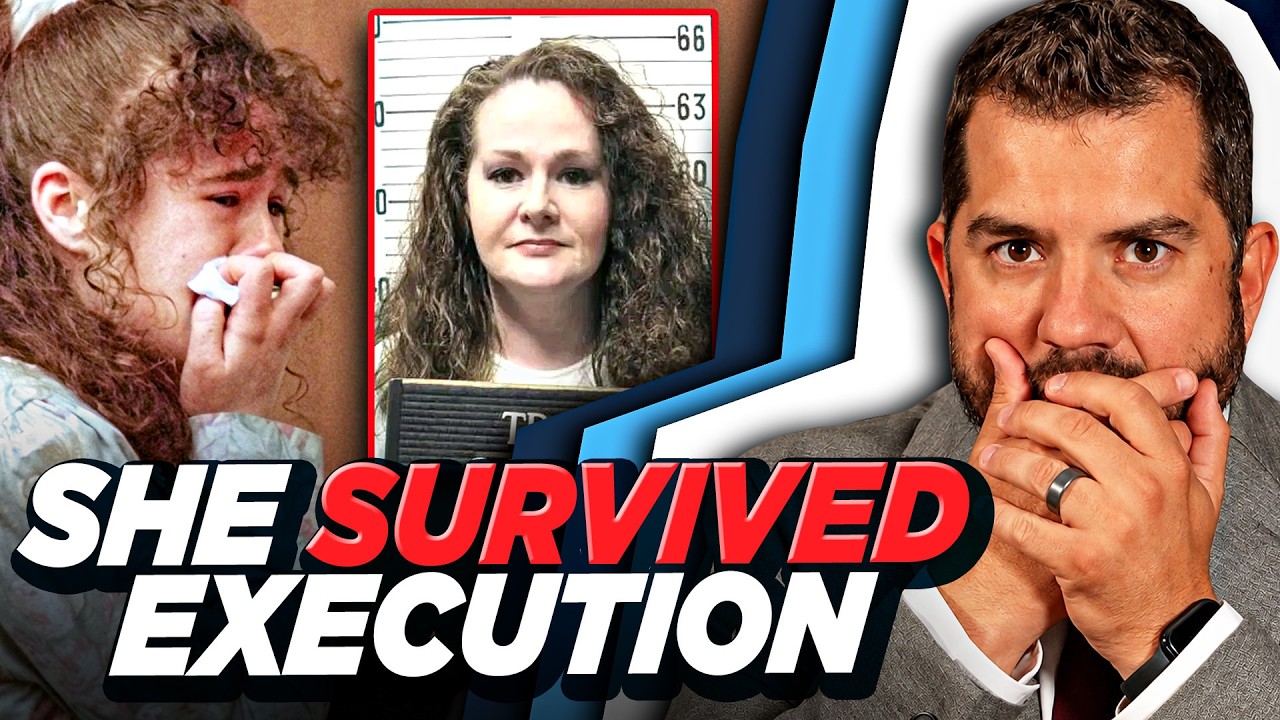
Pike was convicted of first-degree murder and conspiracy to commit first-degree murder in March 1996, and she was sentenced to death later that month, beginning a lengthy period of appeals and post-conviction litigation that would stretch across decades.
Her lawyers argued over the years that her trial attorneys had failed to adequately investigate and present evidence involving severe childhood abuse, mental illness, and brain damage, issues they maintained were important to determining whether death was an appropriate punishment for her.
Those challenges did not overturn her sentence, and Tennessee eventually scheduled her execution for September 30, 2026.
Her age at the time of the crime also became part of the broader constitutional discussion surrounding the case.
In Roper v. Simmons, decided in 2005, the U.S. Supreme Court held that the Constitution prohibits executing people for crimes committed before they turn 18, but Pike was already 18 when Slemmer was killed.
Pike’s boyfriend and co-defendant, who was 17 at the time, received a life sentence with the possibility of parole, although his parole request was denied in the previous year described by the source, with another hearing scheduled for 2031.
When the Sixth Circuit rejected Pike’s appeal in 2019, one judge wrote separately that scientific evidence about adolescent brain development raised questions about the legal boundary between juveniles and adults, even though the Supreme Court had not extended its prohibition on juvenile executions beyond crimes committed before age 18.
That distinction illustrates the difficult questions surrounding capital sentencing, where a difference of only a few months in age can determine whether a defendant is constitutionally eligible for execution.
The legal battle over how Tennessee could execute her
Before the failed execution, Pike challenged Tennessee’s lethal injection protocol under the Eighth Amendment’s prohibition against cruel and unusual punishment, arguing that her medical condition, including thrombocytosis, could create serious complications when officials attempted to establish intravenous access.
Thrombocytosis involves an elevated platelet count and can be associated with abnormal clotting, although the medical evidence presented during Pike’s litigation did not establish that an IV attempt would necessarily cause serious harm.
A special master reviewed evidence over three days, examining Pike’s medical condition and proposed alternatives to Tennessee’s execution method.
Her experts warned that an IV catheter could be difficult to establish or might not remain functional, but neither expert had personally examined her, and her medical records included a history of blood draws that generally had been completed without repeated attempts.
The state’s hematologist testified that Pike’s condition presented a relatively low risk, pointing to platelet counts near the upper end of the normal range and evidence that her clotting function was normal.
The special master ultimately concluded that Pike had demonstrated possibilities of harm rather than the level of likelihood required under the applicable legal standard.
Her attorneys initially proposed hanging and a smaller butterfly needle as alternatives, later replacing the needle proposal with a central line, but the special master found that the evidence did not establish that either hanging or a central line would significantly reduce the risk of severe pain compared with Tennessee’s existing protocol.
Pike also challenged the absence of a contingency plan for an execution that failed, arguing that the lack of provisions for emergency treatment or resuscitation created an unconstitutional risk of prolonged suffering.
The Tennessee Supreme Court rejected that argument before the execution, reasoning that the state was not required to plan for revival after an execution attempt and describing the possibility of survival as too speculative.
The court relied in part on the historical use of pentobarbital in executions without the type of failure Pike’s lawyers feared.
One week later, the event that had been treated as speculative became the central fact of her case.
A last-minute court battle before the execution
On the morning of September 30, Pike was still fighting to reopen an earlier federal habeas judgment, relying on a legal procedure reserved for extraordinary circumstances that make enforcement of a final judgment profoundly unjust.
Her attorneys argued that Tennessee’s treatment of evidence concerning her childhood sexual abuse had changed, and that the state had previously characterized portions of her history as fabricated before later acknowledging that the abuse was real.
The argument did not dispute Pike’s responsibility for Slemmer’s murder; instead, it concerned whether evidence of severe abuse had been adequately considered during the separate process of deciding whether she should receive a death sentence.
In capital cases, that distinction matters because a jury’s determination that a defendant committed murder is separate from the decision about whether death is the appropriate punishment for that particular person.
At approximately 8:17 a.m. Central time, the Sixth Circuit temporarily stayed Pike’s execution to consider her arguments, less than two hours before the scheduled 10 a.m. execution.
Tennessee then sought intervention from the U.S. Supreme Court, which vacated the stay that evening in a brief order that offered no explanation, while Justices Sonia Sotomayor, Elena Kagan, and Ketanji Brown Jackson dissented.
The execution subsequently began at approximately 7:27 p.m.
Witnesses reportedly saw Pike strapped to the execution gurney as she delivered her final statement, and the execution team began administering pentobarbital at around 7:37 p.m.
According to the account, Pike remained conscious and complained that her arm hurt, while the first dose failed to kill her.
Her lawyer, Randy Spivey, sought access to a telephone at approximately 8:22 p.m. to contact the rest of her legal team, and witnesses reported that a second dose was administered around 8:26 p.m.
The second dose also failed to produce the intended result, prompting Pike’s attorneys to file an emergency motion seeking intervention on the grounds that she remained alive and was suffering.
By the time the court reconvened shortly after 9 p.m., an ambulance had been called, and Pike was being taken to the hospital.
The protocol had contemplated one failed dose followed by a second, but it had not established what officials should do if that second attempt also failed.
Can Tennessee legally try again?
The answer is not settled, and the distinction between a death sentence and the physical act of carrying it out lies at the heart of the dispute.
Tennessee law provides that a death sentence remains in force when a person has not been executed for any reason, giving the state a substantial argument that the failed attempt did not erase Pike’s sentence.
But state law cannot override the federal Constitution, and Pike’s attorneys could challenge a future execution under at least three constitutional theories: double jeopardy, the prohibition against cruel and unusual punishment, and due process.
The double-jeopardy question draws attention to a case decided in 1947, Louisiana ex rel. Francis v. Resweber, involving Willie Francis, a teenager whose execution by electric chair failed because of an equipment malfunction.
Louisiana sought to execute Francis again, and the Supreme Court permitted the second attempt, reasoning that the first had failed to carry out the death sentence.
Francis was ultimately executed later that year.
That precedent presents a serious obstacle for Pike, but the legal analysis identifies an important distinction: Tennessee administered lethal injection drugs to Pike twice, whereas several other failed execution attempts involved officials being unable to establish an IV or administer the lethal drugs at all.
In the case of Romell Broom, for example, Ohio execution personnel spent roughly two hours trying unsuccessfully to establish IV access in 2009 before abandoning the attempt.
The Sixth Circuit later rejected Broom’s federal challenge to a second execution, but its decision did not establish that every subsequent execution attempt after a failed procedure would necessarily be constitutional.
Pike’s lawyers could argue that her situation is materially different because drugs were administered, witnesses reported that she remained conscious, and she required emergency hospitalization afterward.
Tennessee, meanwhile, would likely argue that the death sentence has not been carried out because Pike survived, and that a second attempt would be an effort to complete the original sentence rather than impose a new punishment.
The Supreme Court has not definitively resolved the precise constitutional question presented by Pike’s circumstances.
The Eighth Amendment argument may now look very different
Pike’s attorneys could also argue that another execution would violate the Eighth Amendment, particularly if the state attempted to repeat a procedure that had already caused her serious harm.
The Constitution prohibits cruel and unusual punishment, but Supreme Court precedent has made challenges to execution methods difficult by requiring prisoners to identify a known and available alternative that would significantly reduce the risk of severe pain.
That standard emerged from Glossip v. Gross, a 2015 decision concerning Oklahoma’s lethal injection protocol, and subsequent cases have shaped how prisoners must challenge the methods states use to carry out death sentences.
Before September 30, Pike’s lawyers had to argue that the protocol posed a sufficiently serious risk of harm based on medical evidence and expert testimony.
After the failed execution, they could point to an actual event involving two administered doses, multiple needles, emergency medical treatment, and a survival outcome that the state’s earlier legal arguments had characterized as too speculative.
That does not automatically establish that another attempt would be unconstitutional, nor does it determine which execution method a court might permit, but it changes the factual record on which future arguments would be evaluated.
Tennessee could respond that an investigation will identify a correctable technical or medical problem, allowing officials to argue that a future attempt would not repeat the same failure.
The result of that investigation will therefore matter enormously.
If the state cannot explain what happened, or if evidence shows that the procedure exposed Pike to foreseeable and preventable suffering, her lawyers would have stronger grounds to challenge a repeat attempt.
If Tennessee identifies a specific failure and proposes changes, the dispute would likely return to the courts, where Pike would still face the demanding legal standards governing execution-method challenges.
Due process and the warnings Tennessee had received
A third possible argument involves due process, which can prohibit government conduct that violates fundamental principles of justice.
The Supreme Court’s fractured decision in Resweber included a separate opinion suggesting that a single accidental failure might be treated differently from repeated failures or a deliberately cruel procedure.
Pike’s attorneys could argue that Tennessee’s circumstances deserve closer scrutiny because officials had been warned about potential complications involving IV access and because the state had not developed a comprehensive contingency plan for a second failure.
The source also describes earlier problems during another Tennessee execution attempt, along with concerns raised by Pike’s lawyers about medical personnel and the risks associated with her own condition.
Those details do not independently prove that officials acted unlawfully, but they could become important if an investigation establishes that the state ignored foreseeable dangers or failed to respond appropriately when the procedure went wrong.
A court might nevertheless conclude that the Eighth Amendment, rather than a general due process claim, provides the principal constitutional framework for evaluating the alleged suffering.
Even so, the due process argument could allow Pike’s lawyers to scrutinize not merely the outcome of the failed execution, but also the decisions officials made before and during it.
Tennessee pauses executions as the investigation begins
The failed attempt has already triggered significant consequences within Tennessee’s corrections system.
Governor Bill Lee described the incident as deeply disturbing and ordered an independent review, while postponing Pike’s execution and another execution that had been scheduled for later in 2026.
Frank Strada, Tennessee’s commissioner of correction, announced his resignation days after the incident, and the state’s attorney general’s office brought in a former U.S. attorney to conduct the review.
The investigation is expected to be central to determining what happened inside the execution chamber,


