A sensational headline claims Lexie Hull signed a $52 million Jordan Brand contract during a violently disrupted press conference.
The story also alleges Hull handed Caitlin Clark an ownership stake before furious WNBA veterans triggered a frightening riot.
According to the viral description, heavily armed security entered the building while broadcasters immediately terminated their live television coverage.
Those allegations create an unforgettable spectacle, but no credible reporting currently confirms that the extraordinary incident ever happened.
No verified announcement from Jordan Brand, Nike, Hull, Clark, Indiana, or the WNBA supports the supposed agreement.
There is no authenticated contract, identified press conference, named venue, police report, federal statement, or complete broadcast recording.
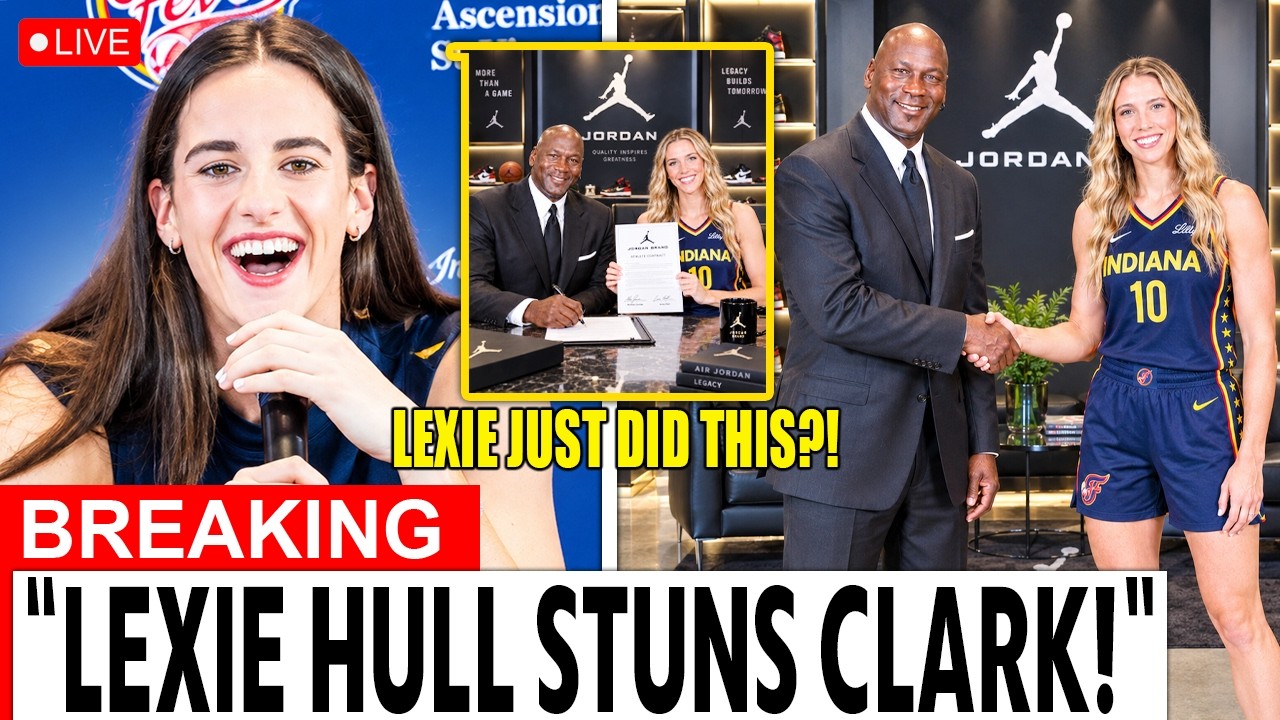
There is also no evidence showing Hull possessed a company ownership stake that she could legally transfer to Clark.
As of September 21, 2026, the viral narrative appears to combine real basketball relationships with unsupported commercial allegations.
That distinction matters because a $52 million endorsement would immediately place Hull among women’s basketball’s most valuable commercial athletes.
Such an agreement would generate coverage from sports-business reporters, footwear publications, financial outlets, and mainstream national news organizations.
Jordan Brand would likely promote the signing through professional photography, product announcements, executive statements, and official social-media channels.
Hull’s representatives would probably discuss the partnership’s duration, signature products, community initiatives, bonuses, and broader marketing objectives.
Instead, searches for the alleged contract produce no official announcement establishing that Hull signed any comparable Jordan Brand agreement.
The absence becomes especially striking because the claimed amount dramatically exceeds most publicly discussed WNBA endorsement arrangements outside superstars.
A genuine $52 million partnership would reshape Hull’s commercial profile and attract immediate attention throughout international basketball markets.
It could not realistically remain hidden behind one anonymous caption promising an uncensored video beneath a social-media post.
The verified Hull news from 2026 concerns her professional commitment to Indiana rather than a blockbuster Jordan Brand signing.
Indiana re-signed Hull as a restricted free agent in April, although the organization did not disclose financial terms.
Hull said Indiana had become her home and emphasized unfinished business alongside the Fever’s developing competitive core.
The Fever described retaining Hull as a major priority because of her valuable contributions on both ends.
That announcement involved a real contract, identifiable executives, direct quotations, and confirmation from the team and player.
It provides an important contrast with the supposed footwear deal, which lacks every comparable element of professional verification.
Hull originally entered the WNBA as Indiana’s sixth overall selection after completing a highly successful Stanford collegiate career.
Her professional reputation developed through defensive effort, perimeter shooting, intelligent movement, and willingness to accept difficult assignments.
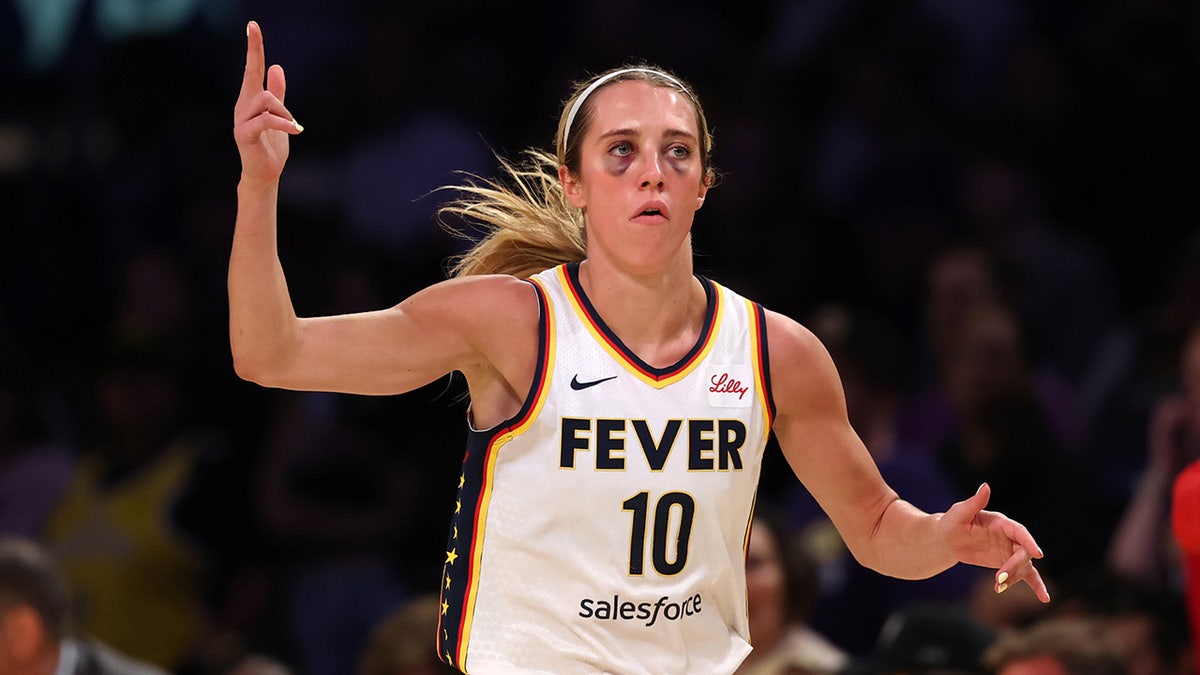
She became particularly valuable beside Clark because her spacing and defensive versatility complement Indiana’s aggressive offensive approach.
Clark attracts multiple defenders, allowing Hull opportunities to cut behind coverage or receive passes near the three-point line.
Hull’s ability to punish those rotations forces opponents to reconsider how aggressively they pressure Clark during half-court possessions.
That relationship creates authentic basketball value, but it does not prove a secret financial partnership between the teammates.
The viral story exploits their visible friendship because audiences already recognize Hull and Clark as close Indiana teammates.
Their chemistry has appeared during games, interviews, team activities, humorous videos, and shared public appearances throughout recent seasons.
TIME previously documented Hull joining Clark during an interview discussing fame, security concerns, and Indiana’s changing public environment.
That authentic friendship makes an imagined generosity story emotionally appealing, especially to supporters celebrating loyalty around Clark.
However, friendship cannot establish that Hull transferred millions of dollars or company ownership through a public press conference.
The phrase “ownership stake” introduces another major problem because endorsement compensation and corporate equity represent fundamentally different arrangements.
An endorsement agreement typically pays an athlete for appearances, advertising, product promotion, licensing rights, or performance-related obligations.
An ownership stake represents equity in a company, giving its holder defined economic interests and potentially additional legal rights.
Athletes occasionally receive equity from emerging companies, but such transfers require documentation, valuation, approvals, and securities compliance.
Hull could not simply announce a massive Jordan Brand ownership gift unless she legally possessed transferable equity beforehand.
Jordan Brand also operates within Nike’s corporate structure rather than functioning like an independent startup distributing informal ownership percentages.
Therefore, any meaningful Nike ownership transfer would involve considerably more complexity than the viral description acknowledges.
The story never explains who granted Hull equity, how much she supposedly owned, or what percentage Clark received.
It does not identify share classes, vesting requirements, transfer restrictions, tax consequences, or corporate approvals attached to the gift.
Those missing details suggest “ownership stake” functions as dramatic language rather than a report describing an authentic transaction.
Clark already maintains an important relationship with Nike, making the supposed Jordan transfer even more commercially complicated.
Her widely reported Nike agreement was valued around $28 million across eight years when finalized during 2024.
TIME referenced that landmark arrangement while documenting Clark’s growing influence across professional basketball and American popular culture.

Nike subsequently developed Clark’s signature footwear platform, giving her an individual product identity within the company’s basketball portfolio.
A separate ownership arrangement tied to Jordan Brand would require careful coordination with her existing endorsement and licensing obligations.
It would also raise questions about competing product strategies, signature footwear placement, marketing rights, and contractual exclusivity provisions.
None of those obvious business questions appears within the headline’s simplified version of the supposedly historic announcement.
The imagined transaction instead serves one narrative purpose: presenting Hull as publicly rewarding Clark despite institutional opposition.
That structure is effective engagement bait because it combines friendship, money, rebellion, jealousy, and a powerful corporate brand.
It encourages audiences to react emotionally before questioning whether any named participant has confirmed the basic event.
The supposed “violent hijacking” of a press conference presents an even more serious allegation requiring independent and persuasive evidence.
If Hull forcibly seized control of a media event, reporters inside the room would publish eyewitness descriptions almost immediately.
Video would circulate from numerous phones, network cameras, team photographers, journalists, venue employees, and audience members.
The complete footage would identify who organized the event, what Hull actually said, and how officials responded.
Instead, the viral caption promises an uncensored broadcast while withholding the network, date, location, and original recording.
That omission prevents viewers from locating the complete event and comparing it against potentially manipulated excerpts or narration.
A real press conference cannot be responsibly authenticated through unrelated footage placed beneath an anonymous storyteller’s dramatic voice-over.
Videos can combine genuine Hull interviews with stock security images, artificial crowd noises, and digitally created television graphics.
Editing can make ordinary pauses appear threatening while captions assign fictional motives to people reacting about something entirely different.
Artificially generated voices can also imitate broadcasters and athletes, producing dialogue that never appeared within the source recording.
Viewers should therefore seek complete footage from an official team, league, network, or credentialed journalist before accepting extraordinary claims.
The alleged WNBA riot would produce an even larger evidence trail than the supposed press-conference interruption.
A riot generally involves substantial public disorder, multiple participants, safety dangers, police involvement, arrests, injuries, or property damage.
If WNBA veterans violently disrupted an event, their identities and actions would become matters of immediate reporting and discipline.
Teams might issue statements, the players’ union could respond, and the league would face significant safety questions.
Law enforcement would document the response, while witnesses would post independent footage showing the disturbance from several perspectives.
No such evidence currently accompanies this claim, despite its description of heavily armed personnel confronting professional basketball players.
The phrase “furious WNBA veterans” also conceals identities, allowing an entire player group to be accused without naming anyone.
That framing encourages fans to project existing rivalries and resentments onto whichever athletes they already distrust.
It exploits genuine debates surrounding Clark’s popularity while avoiding responsibility for making a specific, testable accusation.
Some established players have disagreed with Clark-centered narratives, but disagreement does not establish jealousy, violence, or organized retaliation.
Women athletes should not automatically be characterized as emotionally unstable whenever another player secures money or public attention.
The WNBA includes competitors with differing perspectives, commercial interests, personalities, and opinions about the league’s direction.
Those differences can create tension, but real tension must be documented rather than expanded into an imaginary physical uprising.
The “federal lockdown” phrase creates another warning sign because federal lockdown is not a standard description for venue security.
A federal agency responding to an incident would possess a name, jurisdiction, official role, and identifiable reason for intervention.
Possible agencies might include the FBI, United States Marshals Service, or federal protective organizations under particular circumstances.
However, a private endorsement announcement would ordinarily involve venue security or local law enforcement if disruption occurred.
Nothing in the alleged deal explains why federal authorities would assume command of a footwear press conference.
The word “federal” apparently increases dramatic stakes without offering the jurisdictional facts a credible news report would require.
Similarly, heavily armed security would attract extensive public attention, especially when entering a room occupied by famous athletes.
Independent recordings would show uniforms, agency markings, evacuation procedures, commands, and the physical layout of the venue.
The absence of those materials leaves only emotionally intense language describing an event that cannot presently be located.
Calling something an uncensored broadcast does not authenticate it when the original broadcast source remains unidentified or unavailable.
The supposed decision to cut the feed is another familiar device used throughout fabricated celebrity and sports stories.
Creators often claim a network suppressed footage because that explanation conveniently accounts for the absence of genuine evidence.
Yet modern live events are recorded simultaneously by television systems, social platforms, mobile phones, and credentialed media organizations.
Erasing every copy would be nearly impossible, particularly after a disturbance involving Clark, Hull, and multiple professional players.
The more publicly dramatic an alleged event becomes, the larger and more diverse its expected evidence trail becomes.
Therefore, the complete lack of credible documentation weighs strongly against the viral version rather than supporting a conspiracy.
The real story surrounding Hull remains compelling without inventing contracts, riots, lockdowns, or secret ownership transfers.
Her 2026 return demonstrated Indiana’s belief that championship contention requires valuable role players alongside its heavily promoted stars.
Fever management praised Hull’s heart, defensive impact, and importance during the team’s previous postseason run.
Those qualities rarely command the attention granted to scoring records, signature shoes, or massive endorsement announcements.
Nevertheless, championship teams depend upon defenders willing to chase elite scorers and maintain spacing without dominating possession.
Hull performs precisely that demanding role while remaining capable of changing games through timely shooting and energetic transition play.
Her growing popularity shows that audiences increasingly recognize contributions extending beyond simple scoring averages and highlight compilations.
A real Jordan partnership could make strategic sense if the company wanted to spotlight that competitive identity.
Hull possesses a recognizable collegiate background, an expanding fan base, strong teammate relationships, and a respected professional reputation.
Those attributes could eventually attract meaningful endorsement opportunities within footwear, fitness, lifestyle, or athletic-performance categories.
Still, potential marketing logic does not transform an unsupported $52 million claim into authenticated business news.
Figures of that size require confirmation because they shape public perceptions about the athlete’s wealth and commercial standing.
They may also influence negotiations involving agents, sponsors, teams, media partners, and other athletes seeking comparable agreements.
Inventing contract values can therefore create reputational and professional consequences far beyond harmless fan speculation.
The Clark component carries similar risks because ownership claims can misrepresent her finances and existing corporate relationships.
Clark’s genuine endorsement power is already extraordinary, reflecting her unprecedented college audiences and immediate professional visibility.
Her presence helped Indiana gain increased national exposure, ticket demand, merchandise interest, and attention throughout opposing markets.
The Associated Press documented enormous Indianapolis excitement when Clark joined Indiana as the 2024 first overall selection.
Those measurable developments explain why brands value association with Clark without requiring a fictional ownership gift from Hull.
Clark’s commercial influence also creates resentment narratives that routinely appear whenever teammates or competitors receive major opportunities.
Online stories frequently depict veterans as furious because conflict generates stronger engagement than cooperation or ordinary business success.
Yet Hull has demonstrated that relationships across women’s basketball are often more complicated than hostile viral narratives suggest.
While competing in Unrivaled, she publicly praised Angel Reese’s energy and support despite constant Clark-Reese rivalry framing.
That example shows Hull can maintain respect for multiple competitors without participating in the tribal hostility assigned by social media.
It also undermines the assumption that every WNBA veteran would react violently to a teammate’s successful endorsement agreement.
Professional players generally understand that individual deals can expand visibility and create future opportunities across the entire sport.
They may privately question unequal marketing, but such concerns differ radically from rioting inside a press conference.
A responsible article could examine why some athletes secure enormous endorsements while equally accomplished players receive less commercial recognition.
It could analyze audience size, social reach, performance, personality, market positioning, demographics, and corporate promotional strategies.
Those issues generate legitimate disagreements about fairness, representation, opportunity, and which athletes brands consider commercially valuable.
They deserve serious discussion rather than fictional images of angry women being restrained by heavily armed security officers.
The viral headline also calls Hull’s supposed actions “ruthless,” although generosity toward Clark would not normally fit that description.
That contradiction reveals how sensational vocabulary is chosen for emotional intensity rather than accurate meaning or logical consistency.
Hull supposedly gives Clark valuable equity, yet the act is framed like an attack against unrelated veteran players.
No explanation establishes why other athletes would possess authority over a private commercial agreement between adults and corporate representatives.
The outrage exists mainly because the story needs antagonists capable of transforming an endorsement announcement into a frightening emergency.
Clark then functions as the silent beneficiary whose success allegedly exposes jealousy throughout the surrounding professional league.
This familiar structure flatters Clark supporters but ultimately weakens legitimate advocacy by relying upon events that cannot be verified.
When fabricated stories are exposed, critics may use them to dismiss authentic concerns about officiating, safety, or media treatment.
Supporters should therefore demand stronger evidence precisely because they want serious Clark-related issues treated with appropriate credibility.
The same principle protects Hull, whose real accomplishments should not become secondary to invented corporate numbers and confrontations.
She earned her continuing Indiana role through years of development rather than through a fictional presentation-stage spectacle.
Hull’s loyalty statement after re-signing emphasized home, unfinished business, and building upon Indiana’s previous accomplishments.
That documented message offers a more credible understanding of her current priorities than any anonymous $52 million rumor.
She appears focused upon helping Indiana compete, supporting teammates, and strengthening the two-way impact valued by Fever management.
Clark likewise remains connected to Indiana’s competitive ambitions while developing her game and expanding her signature business platform.
Their genuine partnership appears rooted in trust, humor, basketball compatibility, and shared experience navigating dramatically increased attention.
That relationship can be celebrated without assigning either player nonexistent corporate equity or manufactured enemies around the league.
If Jordan Brand eventually announces Hull, the official release should identify campaign goals and product responsibilities clearly.
If ownership becomes part of any agreement, credible business reporting should explain the company, valuation, and equity structure.
If Clark receives a legitimate stake, confirmation should come from her representatives, the relevant corporation, or regulatory documentation.
If a disturbance occurs, independent video and statements should establish what happened before blame is assigned publicly.
Until those evidentiary standards are satisfied, the alleged deal and riot should remain categorized as unverified internet claims.
Readers encountering screenshots should examine fonts, logos, dates, signatures, spelling, and whether contact information matches official channels.
They should search quoted sentences exactly and determine whether trustworthy outlets published them before viral entertainment pages appeared.
They should inspect videos for inconsistent microphones, disappearing objects, mismatched lip movements, and abrupt background changes.
They should also distinguish crowd noise from the actual room’s audio because manufactured sound can create imaginary chaos.
A cropped clip beginning after supposed provocation cannot establish context, intent, or whether the described confrontation occurred.
Responsible verification requires original recordings, named witnesses, primary documentation, and confirmation independent from the first viral uploader.
This process may feel slower than instantly sharing dramatic content, but it prevents ordinary interviews becoming fictional criminal episodes.
It also preserves the distinction between creative fan entertainment and journalism claiming to report events involving real people.
The most accurate six-word verdict currently remains: No Jordan Deal Or Riot Was Verified.
Hull has not been shown receiving $52 million, transferring ownership, or violently taking control of any press conference.
Clark has not been shown accepting corporate equity from Hull during an emergency requiring armed intervention.
No identified WNBA veterans have been shown rioting because of Hull’s supposed endorsement or generosity toward Clark.
No credible outlet has confirmed that broadcasters terminated coverage to hide a frightening on-stage confrontation.
No federal agency has announced a lockdown connected with Hull, Clark, Jordan Brand, or the Indiana Fever.
What can be confirmed is that Hull remains an important member of Indiana’s carefully constructed competitive foundation.
What can also be confirmed is that Clark possesses enormous commercial value and a significant existing Nike relationship.
Their friendship and basketball chemistry provide authentic material for compelling coverage without manufactured violence or financial deception.
Hull’s journey from Stanford standout to valued Fever defender deserves attention grounded in performance and professional growth.
Clark’s impact deserves analysis based upon measurable audience growth, record-setting playmaking, and unprecedented commercial visibility.
The Fever’s future deserves coverage focused upon basketball questions rather than invented federal responses to imaginary footwear announcements.
Can Indiana convert its talented core into a sustained championship contender during an increasingly competitive WNBA era?
Can Hull expand her offensive consistency while continuing to accept the most difficult perimeter defensive assignments?
Can Clark balance scoring aggression with the creative passing that makes every teammate significantly more dangerous?
Those real questions contain uncertainty, pressure, conflict, and meaningful consequences without accusing unnamed players of violent behavior.
A future endorsement announcement might eventually provide Hull another major platform, but today’s $52 million figure remains unsubstantiated.
A future business partnership might involve Clark, but today’s alleged ownership transfer has not been credibly demonstrated.
A future press conference might produce controversy, but today’s supposed riot lacks witnesses, records, and authenticated footage.
Fans should celebrate Hull and Clark while refusing content that transforms their friendship into unsupported financial and criminal claims.
Their real success is powerful enough without imaginary handovers, armed confrontations, or a vanished uncensored television broadcast.
Watch the verified Hull and Clark interviews below before believing the alleged $52 million Jordan lockdown story. 👇


