An Independence Day boating trip to a remote Mississippi island was supposed to be a summer celebration. Instead, it ended with an 18-year-old dead, a family demanding answers, and a growing national controversy over how authorities investigate unexplained deaths.
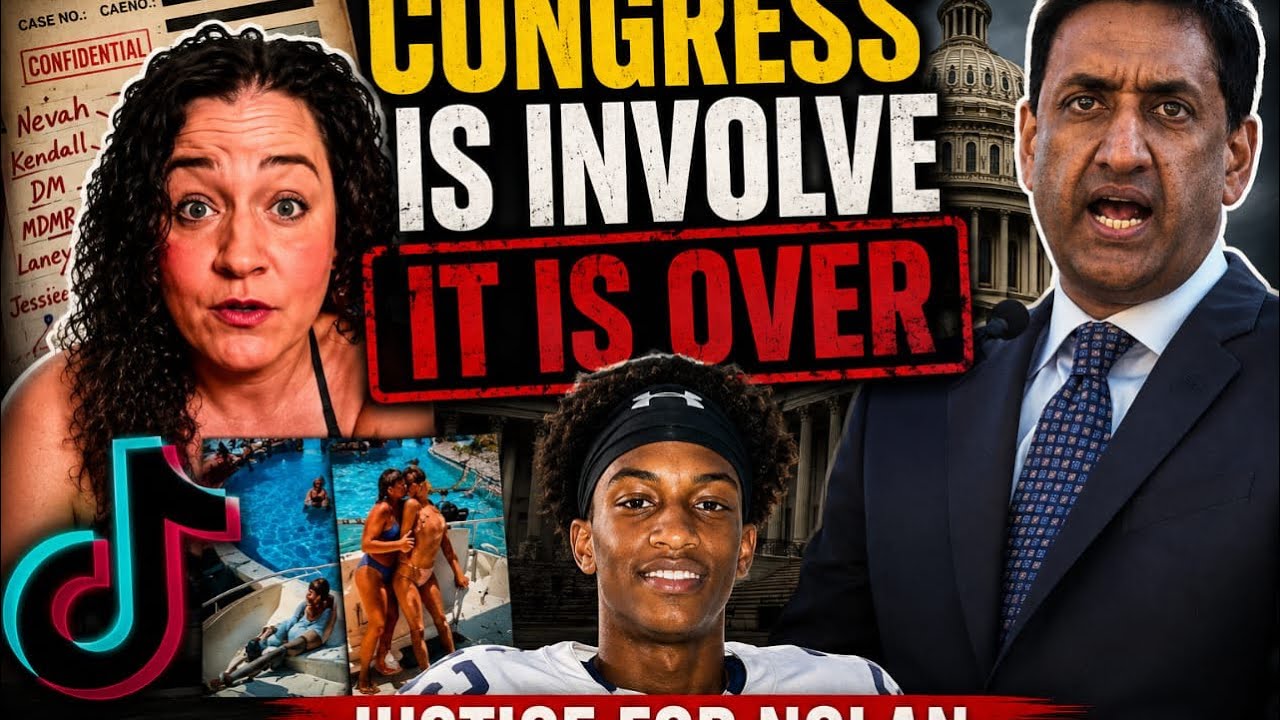
Nolan Wells traveled to Horn Island on July 4, 2026, with a group of friends. According to accounts described in an investigative documentary, the group spent the afternoon near the barrier island before several boats departed for the mainland.
Nolan did not leave with them.
Two days later, search crews discovered his body.
Authorities initially indicated that accidental drowning appeared likely and that they did not suspect foul play. But Nolan’s family questioned how investigators could reach that preliminary assessment before the autopsy and toxicology findings were complete.
What began as a local missing-person investigation soon attracted the attention of civil rights advocates, independent forensic experts, online researchers, and eventually a member of Congress.
California Representative Ro Khanna publicly called for answers and transparency.
Meanwhile, a second autopsy raised questions about an unexplained area of discoloration on the back of Nolan’s head and anatomical structures that were unavailable for examination.
Online investigators also circulated footage of a boat behind a marina fence, suggesting it might be connected to the case.
But authorities had not confirmed that connection.
The controversy now centers on a difficult distinction: what investigators have actually established, what remains unexplained, and what has been amplified through social media without supporting evidence.
For Nolan’s parents, the most important question remains painfully simple.
What happened to their son after the boats left Horn Island?
A Fourth of July Trip That Ended in Tragedy
Horn Island lies off Mississippi’s Gulf Coast, roughly 10 miles from the mainland.
The barrier island is accessible by boat and attracts visitors seeking beaches, fishing, and recreational activities.
On July 4, Nolan joined friends for a holiday outing.
Several boats were reportedly anchored near one another offshore.
The gathering appeared to be an ordinary Independence Day celebration.
According to the documentary, Nolan’s friends later began preparing to return to the mainland.
They said they encouraged him to leave with them.
But Nolan remained behind.
The precise circumstances surrounding that decision have become one of the most disputed parts of the case.
The friends’ account suggests that Nolan chose to stay.
His family has questioned whether the available information adequately explains why he was left on the island.
Those competing concerns do not independently establish wrongdoing.
They do, however, identify a critical period that investigators must reconstruct.
The Boat Named Triton Became a Key Part of the Timeline
One vessel mentioned in the investigative account was a boat named Triton.
According to the documentary’s description of an investigative report, Triton was anchored alongside two other boats during the afternoon.
At approximately 4:31 p.m., the vessel departed Horn Island.
Nolan reportedly was not aboard.
That departure time is significant because it helps establish when Nolan may have become separated from the group.
However, the transcript does not reproduce the underlying investigative report.
The timing and vessel details therefore remain attributed to the documentary rather than independently authenticated in this article.
Even if the departure occurred exactly as described, it would not establish what happened afterward.
Investigators would still need to determine whether Nolan remained on the island, entered the water, encountered other people, or experienced a medical emergency.
The period following the boats’ departure remains central to the case.
Nolan’s Mother Learned He Had Not Returned
According to the account, Nolan’s mother, Christine, did not immediately know that her son had remained behind.
She learned later that evening that he had not returned with the other members of the group.
Concerned about his whereabouts, she contacted authorities.
A search began around Horn Island and the surrounding waters.
Crews reportedly used boats, aircraft, and personnel searching on foot.
The effort continued over the following two days.
For Nolan’s family, those hours brought growing fear.
The uncertainty ended on July 6 when searchers discovered his body.
But the discovery did not answer how he died.
Instead, it marked the beginning of another investigation.
Authorities Initially Suggested Accidental Drowning
Shortly after Nolan’s body was found, the local sheriff’s office reportedly indicated that accidental drowning was the likely explanation.
Authorities also said they did not initially suspect foul play.
Those statements became a major source of concern for the family.
At that stage, according to the documentary, a complete autopsy had not yet been released.
Toxicology findings were also outstanding.
Nolan’s relatives questioned whether investigators had enough information to make a reliable assessment.
An initial statement that drowning appears likely is not the same as a final medical determination.
Investigators may develop preliminary theories based on the recovery location and available circumstances.
But the cause and manner of death ordinarily require examination of the complete evidence.
The family’s objection focused on whether the early public statements had created the impression that the case was effectively resolved.
Nolan’s Parents Demanded a More Thorough Investigation
Christine and Nolan’s father began publicly requesting additional information.
Their concern was not limited to the initial drowning theory.
They wanted to understand the sequence of events on July 4, the actions taken during the search, and the evidence supporting the authorities’ conclusions.
The family retained legal representation.
They also arranged for an independent autopsy.
Their decision reflected a loss of confidence in the investigation as it had been explained to them.
According to the documentary, Christine repeatedly emphasized that she wanted answers rather than an unsupported accusation against a particular person.
The distinction is important.
A family’s dissatisfaction with an investigation does not establish that a crime occurred.
But families can reasonably request clear explanations of how conclusions were reached.
In an unexplained death, transparency can be essential to public trust.
A Second Autopsy Raised New Questions
The independent examination became one of the most significant developments in the case.
According to the documentary, the family retained an experienced forensic pathologist who had previously served as chief medical examiner for Washington, D.C.
The examination reportedly identified an unexplained area of discoloration on the back of Nolan’s head.
The pathologist could not determine its cause from the available evidence.
That finding attracted attention because an injury to the head could potentially be relevant to reconstructing the circumstances of death.
But discoloration alone does not establish that someone was struck or assaulted.
It may have multiple explanations.
The transcript does not provide the complete pathology findings necessary to distinguish among them.
Consequently, the reported observation should be treated as an unresolved medical question rather than proof of violence.
Missing Anatomical Structures Complicated the Examination
The second autopsy also encountered another limitation.
According to the account, certain neck structures were not available when the independent pathologist examined Nolan’s body.
That reportedly prevented the examiner from fully assessing whether an injury involving that region could have contributed to his death.
The finding generated speculation about the handling of evidence during the original autopsy.
But forensic experts have cautioned that retaining anatomical structures for additional testing can be a legitimate part of standard autopsy procedures.
Their absence during a second examination does not automatically indicate concealment or misconduct.
The important questions concern why the structures were retained, whether they were properly documented, and whether they remained available for further examination.
The transcript does not establish the answers.
Without the complete records, accusations of evidence tampering would be premature.
The Official Cause of Death Remained Undetermined in the Account
More than a month after Nolan’s body was recovered, the documentary described his official cause and manner of death as undetermined.
It also stated that toxicology results were still pending.
The original examination had reportedly been submitted for grand jury review.
The transcript does not include a completed medical examiner’s report or final toxicology findings.
That means the source does not establish a definitive cause of death.
It also does not establish that Nolan was murdered.
The possibility of accidental drowning remained under discussion, but the family wanted the conclusion supported by a complete investigation.
The distinction between an unresolved death and a confirmed homicide is essential.
Until sufficient evidence is available, neither explanation should be presented as proven.
Congressman Ro Khanna Brought National Attention to the Case
The controversy expanded when California Representative Ro Khanna publicly addressed Nolan’s death.
According to the documentary, Khanna released a video statement during the third week of August.
He said Nolan’s family was demanding answers and transparency.
He also connected their concerns to a broader discussion about unexplained deaths involving Black Americans.
Khanna’s intervention moved the case beyond Mississippi.
Civil rights advocates and national commentators began discussing whether authorities had adequately investigated the circumstances.
The congressman’s statement did not establish that Nolan had been murdered.
Rather, it called attention to the family’s concerns and the importance of thorough investigations.
That distinction became central to the political debate that followed.
Khanna Connected Nolan’s Death to Other Cases
In his statement, Khanna reportedly discussed two additional deaths.
One involved a 16-year-old girl found hanging from a tree in a North Carolina churchyard.
Another involved a 29-year-old mother of four found hanging behind her Mississippi home.
The documentary identified the women as Juliana Umba Nazida and Tasia Fortune, although those names and case details require independent verification before publication as established facts.
Khanna’s broader argument concerned the importance of investigating suspicious or unexplained deaths thoroughly.
He also invoked the historical significance of racial violence against Black Americans.
The comparison generated a strong response.
Supporters argued that his remarks highlighted longstanding concerns about institutional accountability.
Critics questioned whether deaths involving different circumstances should be presented together.
The Comparison Sparked a Political Debate
Nolan was reportedly found after a boating trip.
The other cases involved people discovered hanging from trees.
Critics argued that combining these cases risked implying a shared cause without evidence.
They warned that the comparison could distract from the specific facts of Nolan’s death.
Some commentators accused Khanna of using a family’s tragedy to advance a political argument.
Supporters rejected that interpretation.
They argued that the central issue was not whether the cases were identical.
It was whether families received thorough investigations and transparent explanations.
Both perspectives address legitimate questions.
Historical patterns of racial violence deserve serious consideration.
At the same time, individual deaths must be evaluated according to their own evidence.
A broader political concern cannot substitute for findings in a specific investigation.
The History of Racial Violence Added Emotional Weight
The discovery of Black Americans hanging from trees carries particular historical significance in the United States.
Lynching was used for generations as an instrument of racial terror.
Its legacy remains deeply embedded in American history.
That history helps explain why certain unexplained deaths generate immediate public concern.
Families and civil rights organizations may question whether investigators have adequately considered possible violence.
But historical context alone cannot determine the cause of an individual death.
Each case requires medical findings, witness testimony, physical evidence, and careful reconstruction.
In Nolan’s case, the documentary does not establish that his death involved a lynching or a racially motivated attack.
The broader historical discussion should therefore remain distinct from the unresolved facts surrounding his final hours.
A Mysterious Boat Behind a Fence Fueled Online Speculation
As national attention increased, another theory spread through online true-crime communities.
A video reportedly showed two amateur investigators walking through a marina near the Mississippi coast.
They stopped near a fenced area.
Behind the fence was a boat.
Online commentators began suggesting that the vessel might be connected to Nolan’s July 4 trip.
Some speculated that it had been seized or held as evidence.
Others suggested that its location indicated investigators were pursuing a new lead.
But the documentary explicitly acknowledged that no law enforcement agency had confirmed the boat’s connection to Nolan’s death.
The footage did not establish the vessel’s identity.
It did not prove that police had seized it.
And it did not show that a crime occurred.
The theory remained unverified.
Social Media Turned an Unconfirmed Lead Into a Viral Mystery
The boat footage spread rapidly.
Screenshots circulated across social media.
Some posts described the discovery as a potential breakthrough.
Others presented it as evidence that authorities were withholding information.
The documentary warned that repetition can make an unsupported theory appear credible.
A claim shared by many accounts may seem independently corroborated even when every post originates from the same unverified source.
That process can be especially harmful in an active death investigation.
It may encourage people to accuse individuals without evidence.
It can also distract attention from documented facts.
In Nolan’s case, the identity and significance of the boat behind the fence remained unknown.
Another Online Theory Focused on a Young Woman
A separate theory emerged from interpretations of an early wildlife and fisheries report.
According to the documentary, independent researchers claimed that investigators had sought to identify or speak with a young woman connected to Nolan’s wider social circle.
Online users began examining photographs and social media relationships.
They compared clothing, mutual friends, and older vacation pictures.
Some circulated names.
Others suggested that particular people knew more than they had publicly disclosed.
But the transcript states that no major news organization or official agency had verified those interpretations.
The existence of a photograph or mutual acquaintance does not establish involvement in a death.
Nor does a request to interview someone make that person a suspect.
For those reasons, unverified names and allegations should not be amplified.
The Investigation Must Reconstruct Nolan’s Final Hours
The most important unresolved period begins after the boats reportedly left Horn Island.
Investigators need to determine where Nolan was last seen.
They also need to establish whether he had access to a telephone, whether he attempted to contact anyone, and whether other people remained nearby.
Weather and water conditions could be relevant.
So could witness accounts concerning his physical condition and activities that afternoon.
The documentary does not provide complete evidence on those subjects.
It also does not establish how Nolan entered the water or what happened before his body was discovered.
A reliable timeline would need to integrate witness statements, vessel movements, available electronic records, and forensic findings.
The central objective is not to prove a predetermined theory.
It is to determine what the evidence supports.
The Grand Jury Review Added Another Layer of Uncertainty
The documentary reported that findings from the original examination had been submitted for grand jury consideration.
Grand jury proceedings are generally confidential.
That confidentiality can limit what the public knows about an ongoing investigation.
However, the transcript does not establish what evidence the grand jury reviewed.
It also does not report a final decision.
The presence of a grand jury does not independently establish that a crime occurred.
It may reflect an effort to evaluate evidence and determine whether further legal action is warranted.
Until official findings are released, the significance of the review remains uncertain.
Why Toxicology Could Matter
Toxicology testing may help identify substances present in a person’s body.
In an unexplained death, those findings can provide information relevant to medical interpretation.
But toxicology results do not automatically explain every circumstance.
Even when substances are detected, investigators must consider concentrations, timing, medical history, and other evidence.
The transcript does not provide Nolan’s toxicology results.
It would therefore be inappropriate to speculate about what those tests might reveal.
Their importance lies in helping complete the medical assessment.
Nolan’s Family Has Asked for Answers, Not Internet Accusations
One of the most important details in the documentary concerns the family’s public position.
Christine reportedly emphasized that she wanted a credible investigation.
She did not claim to know exactly what happened.
The family retained an attorney and sought a second autopsy because they believed important questions remained unanswered.
Their actions reflected a desire for accountability and transparency.
But the documentary also shows how quickly a family’s search for information can become a national spectacle.
Online investigators developed theories.
Political commentators debated the case.
Social media users scrutinized people who may have had little or no involvement.
The family’s original request risked becoming overshadowed by speculation.
The Difference Between an Unexplained Death and a Cover-Up
A delayed or incomplete investigation can understandably create frustration.
Families may interpret limited communication as a sign that authorities are not taking their concerns seriously.
But a lack of publicly available information does not automatically establish a cover-up.
Investigators may withhold details while awaiting laboratory findings or reviewing witness statements.
That does not eliminate the need for accountability.
Authorities should explain their procedures and conclusions when legally appropriate.
But accusations of deliberate concealment require evidence.
In Nolan’s case, the documentary does not establish that officials intentionally suppressed evidence.
It documents the family’s concerns and the public controversy surrounding the investigation.
Those are significant facts, but they are not the same as proof of misconduct.
What Is Known and What Remains Unverified
The documentary presents a timeline in which Nolan traveled to Horn Island on July 4 and did not return with the group.
His body was reportedly recovered on July 6.
Authorities initially considered accidental drowning likely.
His family challenged the preliminary assessment and arranged an independent autopsy.
A congressman later called for answers.
Online theories involving a marina boat and a young woman circulated without official confirmation.
The source does not establish a final cause of death.
It does not identify a confirmed suspect.
It does not prove that Nolan was assaulted, murdered, or deliberately abandoned.
And it does not substantiate the claim that the marina boat was connected to the investigation.
Those limitations are essential to understanding the case responsibly.
A Family’s Search for Truth Became a National Conversation
The controversy surrounding Nolan Wells has expanded far beyond a single Mississippi community.
It now involves questions about investigative transparency, public trust, racial history, and the influence of social media on unresolved deaths.
Representative Ro Khanna’s intervention brought national attention.
The family’s independent autopsy raised additional questions.
Online theories intensified scrutiny.
But none of those developments has established what happened after Nolan remained on Horn Island.
For his parents, the political debate cannot replace a reliable explanation.
They want to know how their son died.
They want to understand what evidence supports the official conclusions.
And they want confidence that every reasonable lead has been examined.
The answer may ultimately support an accidental explanation.
It may reveal circumstances that require further investigation.
The transcript does not provide enough evidence to determine which outcome is correct.
The Central Mystery Remains Nolan’s Final Hours
Nolan Wells was 18 years old when he joined friends for a Fourth of July outing.
According to the documentary, he remained on Horn Island after the boats departed.
Two days later, he was found dead.
His family’s questions have continued.
The independent autopsy reportedly identified findings that required further explanation.
A congressional statement brought national attention.
And online speculation introduced theories that remain unsupported by official evidence.
The case now illustrates a broader challenge in modern investigations.
Families deserve answers.
Authorities must be accountable.
But public pressure cannot replace forensic evidence.
For Nolan’s family, the most meaningful resolution will not come from a viral video or a political argument.
It will come from a credible reconstruction of the final hours of his life.
Until that reconstruction is supported by reliable evidence, the most important question remains unanswered.
What happened to Nolan Wells after the boats left Horn Island?


