The legendary 1951 production united Hollywood royalty, distinguished British performers, Italian stars, and unforgettable supporting actors.
Together, they created a cinematic world filled with imperial cruelty, forbidden romance, religious persecution, and extraordinary human courage.
But behind the magnificent costumes and towering Roman architecture were performers whose real lives followed dramatically different paths.
Some enjoyed decades of international recognition, while others died unexpectedly young or gradually withdrew from public attention.
By 2026, the principal actors featured in this retrospective have all died, leaving their performances preserved on film.
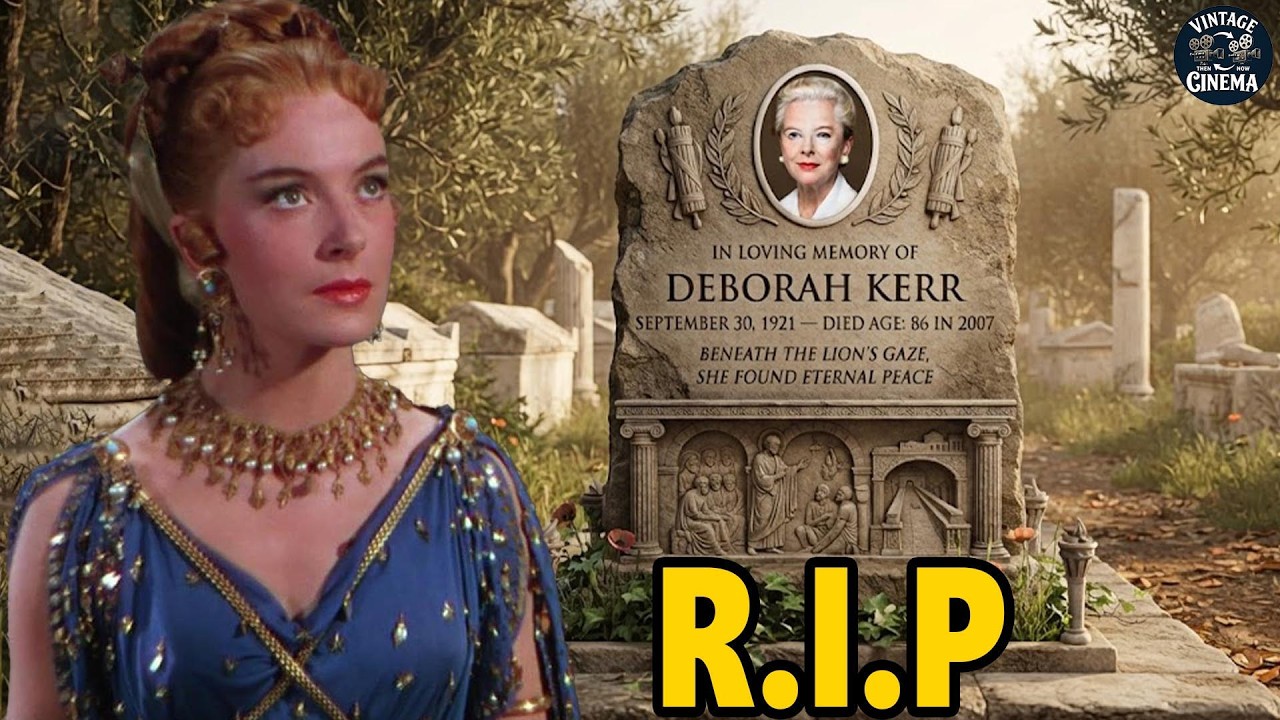
Their stories reveal something far more complicated than the glamour audiences witnessed during Hollywood’s celebrated golden age.
For many, Quo Vadis represented a career milestone, while others were already approaching their final professional chapters.
The film itself emerged during a period when Hollywood studios competed to create increasingly ambitious historical spectacles.
Metro-Goldwyn-Mayer committed enormous resources to the production, hoping that ancient Rome could deliver an unforgettable theatrical experience.
Filming in Italy provided access to large locations, extensive sets, international talent, and thousands of background performers.
The project required exceptional coordination, combining elaborate costumes, massive crowd scenes, demanding physical performances, and ambitious cinematography.
Its story adapted Henryk Sienkiewicz’s celebrated novel, examining the collision between imperial power and early Christian belief.
At the center stood Marcus Vinicius, a Roman commander whose encounter with Lygia challenged his understanding of authority.
Their relationship unfolded against the increasingly dangerous rule of Emperor Nero, whose vanity threatened everyone surrounding him.
The contrast between personal conviction and political tyranny gave the spectacle its emotional and philosophical foundation.
Yet the film’s lasting power depended on actors capable of making enormous historical events feel intensely personal.
Robert Taylor carried the production as Marcus Vinicius, portraying a soldier accustomed to unquestioned obedience and military privilege.
Born on August 5, 1911, in Filley, Nebraska, Taylor became one of MGM’s most recognizable leading men.
His polished appearance and controlled screen presence made him a natural choice for Hollywood’s romantic and adventurous productions.
Before Quo Vadis, he had already established himself through successful films that strengthened his association with classical stardom.
But Marcus required more than conventional romantic appeal, demanding a transformation from arrogance toward emotional and moral understanding.
Initially, the commander approaches Lygia as someone whose affection can be obtained through status, persistence, and power.
He struggles to understand why she rejects the assumptions governing his privileged position within Roman society.
Taylor gradually reveals the uncertainty beneath Marcus’s confidence as his encounters with Christians challenge familiar imperial values.
The performance depends on making that transformation believable without abandoning the character’s background as a disciplined soldier.
His relationship with Lygia becomes the emotional thread connecting palace intrigue, religious persecution, and the film’s spectacular climax.
As Nero’s cruelty intensifies, Marcus discovers that loyalty to Rome may conflict with loyalty to his conscience.
The realization forces him to confront a question more dangerous than any enemy encountered during military service.
Could a celebrated Roman officer reject the political system that had given him wealth, recognition, and authority?
Taylor’s restrained performance provides the answer gradually, allowing personal affection to develop into a larger moral awakening.
His commanding presence helped sustain the film through scenes involving immense crowds, elaborate ceremonies, and dramatic confrontation.
After Quo Vadis, Taylor continued acting in Westerns, historical dramas, and other productions throughout the following years.
However, his life ended far earlier than many admirers could have anticipated during his Hollywood prime.
Robert Taylor died on June 8, 1969, at fifty-seven, following a battle with lung cancer.
His death removed one of the studio era’s most recognizable leading men from the American entertainment landscape.
Today, Marcus remains among his most memorable roles because the character’s greatest victory is ultimately moral rather than military.
Opposite Taylor stood Deborah Kerr, whose portrayal of Lygia gave the film its most important emotional counterweight.
Born on September 30, 1921, in Scotland, Kerr developed her professional reputation through British theater and cinema.
Her performances frequently emphasized intelligence, composure, emotional restraint, and a remarkable ability to communicate feelings through silence.
By the time she joined Quo Vadis, Kerr had already attracted attention for her sophisticated dramatic abilities.
Lygia presented an unusual challenge because the character needed strength without the conventional instruments of political power.
She possesses neither military authority nor imperial wealth, yet her convictions repeatedly challenge the people controlling her circumstances.
Raised within a Roman household sympathetic to Christianity, she represents values fundamentally opposed to Nero’s increasingly brutal court.
Her refusal to surrender her beliefs gradually transforms Marcus’s understanding of love, courage, and personal responsibility.
Kerr avoids portraying Lygia as merely passive, instead giving her quiet decisions considerable emotional and moral weight.
Her performance establishes a contrast between physical vulnerability and the strength required to resist an oppressive political order.
The film’s arena sequence places that contrast under extraordinary pressure as Lygia faces an apparently inescapable death.
Bound before thousands of spectators, she becomes the intended victim of a spectacle designed to demonstrate imperial dominance.
The danger intensifies when a charging bull enters the arena, forcing her protector Ursus into desperate action.
Kerr’s expressions ensure that the sequence remains emotionally focused despite the enormous scale of its physical spectacle.
Her vulnerability makes the audience understand what is at stake beyond the excitement of the staged confrontation.
Quo Vadis strengthened Kerr’s international profile before an extraordinary series of acclaimed Hollywood performances followed.
She later appeared in From Here to Eternity, The King and I, and An Affair to Remember.
Those productions demonstrated her versatility across romantic drama, musical performance, and emotionally complex character studies.
Kerr accumulated six Academy Award nominations for acting, although she never received a competitive Oscar.
The Academy eventually recognized her extraordinary career with an honorary award celebrating her contributions to cinema.
In her later years, Kerr lived with Parkinson’s disease, a condition that affected her health and mobility.
She died on October 16, 2007, at eighty-six, leaving behind one of classical cinema’s most distinguished legacies.
For Quo Vadis audiences, Lygia remains unforgettable because her apparent helplessness conceals the story’s deepest source of strength.
But neither Taylor nor Kerr could have created the film’s distinctive atmosphere without its extraordinary portrayal of Nero.
Peter Ustinov transformed the emperor into a terrifying mixture of childish vanity, theatrical excess, insecurity, and political cruelty.
Born on April 16, 1921, in London, Ustinov developed an unusually wide-ranging career as an actor and writer.
His talents extended into directing, comedy, literature, public speaking, and international humanitarian activities throughout his professional life.
When he portrayed Nero, he was only thirty, yet his performance demonstrated extraordinary confidence and artistic control.
Rather than presenting the emperor as a conventional villain, Ustinov emphasized his desperate need for admiration and applause.
Nero believes himself a brilliant artist, demanding appreciation from courtiers whose survival depends upon flattering his delusions.
His performances within the palace become disturbing because artistic vanity is supported by almost unlimited political authority.
Ustinov repeatedly shifts between humor and menace, making Nero unpredictable even during apparently harmless conversations.
A wounded expression can suddenly become an accusation, while an exaggerated complaint can produce consequences for innocent people.
The character’s instability becomes especially dangerous because those surrounding him possess little freedom to challenge his decisions.
Ustinov makes the emperor simultaneously ridiculous and frightening, exposing the deadly consequences of unchecked personal power.
His performance also creates a sharp contrast with the spiritual conviction displayed by Rome’s persecuted Christians.
Nero demands public devotion, while the believers resist the assumption that political authority can command their conscience.
The burning of Rome provides the film’s most spectacular demonstration of the emperor’s destructive leadership.
Within the movie’s narrative, Nero’s vanity and political desperation contribute to persecution directed against Christians.
The screenplay’s depiction of these events belongs to historical fiction and should not be mistaken for established ancient history.
Ancient accounts of Nero’s reign contain disputed claims, including the emperor’s responsibility for Rome’s devastating fire.
Ustinov nevertheless captures the dramatic interpretation central to the film’s exploration of tyranny and public manipulation.
His performance earned an Academy Award nomination for Best Supporting Actor, confirming its exceptional contemporary impact.
He subsequently achieved further recognition through performances in Spartacus, Topkapi, and numerous international productions.
Ustinov won two competitive Academy Awards, demonstrating that his portrayal of Nero was only one major achievement.
His later humanitarian work included extensive involvement with UNICEF, reflecting interests beyond artistic recognition and celebrity.
Peter Ustinov died on March 28, 2004, at eighty-two, after a career of remarkable international influence.
His Nero remains one of cinema’s most memorable portrayals of a ruler whose insecurity becomes a national catastrophe.
Standing near Nero’s throne was Petronius, portrayed by Leo Genn with intelligence, elegance, and devastatingly controlled irony.
Genn was born on August 9, 1905, in London and developed a distinguished career across theater and cinema.
His legal education and wartime military service contributed to an unusually varied background before international film recognition.
Petronius occupies a dangerous position as an aristocrat whose sophisticated judgment repeatedly exposes Nero’s artistic incompetence.
He understands the emperor’s vanity but recognizes that open criticism could result in immediate destruction.
Genn communicates this dilemma through measured expressions, carefully chosen words, and an appearance of effortless aristocratic confidence.
His character survives by balancing flattery with private contempt, demonstrating the moral compromises demanded by authoritarian power.
Unlike Marcus, Petronius understands Nero’s court intimately and recognizes its corruption long before others acknowledge the danger.
His wit becomes both a protective weapon and a source of considerable personal risk.
The relationship with Eunice, portrayed by Marina Berti, gradually reveals emotional depth beneath his polished cynicism.
Their affection offers an alternative to the manipulation and cruelty dominating the imperial palace.
As Nero’s rule becomes increasingly dangerous, Petronius confronts the limits of accommodation with a tyrant.
His final decision transforms intellectual defiance into an irreversible personal statement about dignity and freedom.
Genn’s performance earned an Academy Award nomination for Best Supporting Actor, matching Ustinov’s recognition in the same category.
The nomination reflected his ability to command attention without competing directly with the emperor’s flamboyant behavior.
Genn continued working across film and television after Quo Vadis, maintaining his reputation for sophisticated character portrayals.
He died on January 26, 1978, at seventy-two, leaving a substantial legacy of dramatic performances.
Petronius remains unforgettable because he understands that survival can become meaningless when purchased through complete moral surrender.
Marina Berti gave Eunice a contrasting emotional sincerity that softened the cynical atmosphere surrounding Petronius.
Born on September 29, 1924, in London, Berti became associated with Italian cinema during its international expansion.
Her screen presence combined elegance with emotional accessibility, making her effective within large historical and romantic productions.
As Eunice, she portrays a woman whose devotion to Petronius develops beyond the unequal circumstances of their relationship.
Her character exists within a social hierarchy where slavery makes personal freedom deeply uncertain.
Yet Berti gives Eunice emotional independence through her expressions of affection, loyalty, and concern.
The relationship becomes increasingly significant as Petronius confronts the danger posed by Nero’s deteriorating judgment.
Their final scenes create one of the film’s most intimate tragedies amid its enormous historical spectacle.
Berti’s performance demonstrates that quiet emotional commitment can rival elaborate action sequences in dramatic importance.
Her career continued through Italian and international productions, including other historical dramas and major studio films.
She appeared in Ben-Hur, another celebrated epic that expanded Hollywood’s fascination with the ancient Mediterranean world.
Marina Berti died on October 29, 2002, at seventy-eight, following a career spanning several decades.
Her Eunice remains associated with a romance whose tragic conclusion exposes the cruelty of imperial power.
Another unforgettable supporting performer was Buddy Baer, whose extraordinary physical presence made Ursus a cinematic symbol of protection.
Born on June 11, 1915, in Omaha, Nebraska, Baer came from a family associated with professional boxing.
His older brother, Max Baer, had achieved international fame as a heavyweight boxing champion.
Buddy also competed professionally, developing the imposing physique that later attracted the attention of Hollywood filmmakers.
Standing approximately six feet six inches tall, he possessed a physical presence difficult to reproduce through ordinary casting.
Ursus serves as Lygia’s devoted protector, combining extraordinary strength with unwavering loyalty and religious conviction.
The role requires relatively little dialogue because Baer’s physical performance communicates the character’s protective determination.
His most famous sequence unfolds inside Nero’s arena, where Lygia faces a charging bull.
Ursus confronts the animal in a desperate struggle that became one of the production’s defining spectacles.
The sequence combines athletic performance, careful staging, and filmmaking techniques intended to create overwhelming visual excitement.
Baer’s background in professional boxing helped make his character’s physical strength convincing to contemporary audiences.
Yet Ursus represents more than muscular power because his courage is directed toward protecting another person’s life.
The contrast challenges the imperial assumption that strength exists primarily to dominate weaker individuals.
After Quo Vadis, Baer continued appearing in film and television, often portraying physically imposing characters.
Buddy Baer died on July 18, 1986, at seventy-one, leaving behind an unusually distinctive screen legacy.
His Ursus remains memorable because the character’s greatest achievement comes through loyalty rather than conquest.
The film’s moral foundation also depended on two distinguished performers portraying central figures of early Christianity.
Finlay Currie appeared as the Apostle Peter, bringing extraordinary gravity to one of the story’s most important roles.
Born on January 20, 1878, in Edinburgh, Scotland, Currie developed his career through decades of theatrical performance.
By the time Quo Vadis reached theaters, he was already in his seventies.
His weathered appearance and commanding voice gave Peter the authority of a man shaped by profound spiritual experience.
Within the film, Peter offers guidance to believers threatened by Nero’s increasingly violent persecution.
His presence contrasts sharply with the emperor’s theatrical excess, emphasizing conviction rather than worldly authority.
One of the story’s most significant moments occurs when Peter considers leaving Rome to escape danger.
He experiences a vision of Christ and asks the question that gives the film its title.
The Latin phrase Quo vadis, Domine? means, in English, “Where are you going, Lord?”
The encounter persuades Peter to return toward Rome despite the prospect of persecution and martyrdom.
Currie’s performance gives that decision emotional weight through restraint rather than elaborate physical expression.
His portrayal presents courage as a willingness to accept suffering rather than abandon responsibility toward others.
Currie continued appearing in important productions, including Ben-Hur, where he portrayed the wise man Balthasar.
He died on May 9, 1968, at ninety, following an exceptionally long professional career.
His Peter remains central to the film’s exploration of conviction under overwhelming political pressure.
Abraham Sofaer portrayed Paul of Tarsus, providing another essential spiritual presence within the persecuted Christian community.
Born on October 1, 1896, in Rangoon, British Burma, Sofaer developed his reputation through stage and screen.
His professional career included extensive theatrical work, where vocal authority and disciplined delivery became distinctive strengths.
As Paul, he portrays a leader whose conviction contrasts with the insecurity and cruelty of Nero’s court.
Sofaer’s measured performance emphasizes intellectual clarity and spiritual confidence without relying on exaggerated emotional displays.
His character helps explain the beliefs that gradually challenge Marcus’s assumptions about power and social hierarchy.
The scenes involving Paul and Peter provide a moral counterweight to the imperial spectacle surrounding them.
Rather than commanding armies, these figures influence others through teaching, personal example, and religious commitment.
Sofaer continued appearing in television and film productions, developing a long career in character acting.
He died on January 21, 1988, at ninety-one, after decades of distinguished professional work.
His portrayal of Paul remains associated with the quiet authority that anchors the film’s spiritual storyline.
Felix Aylmer brought comparable dignity to Aulus Plautius, the Roman general whose household shelters Lygia.
Born on February 21, 1889, in Corsham, England, Aylmer established himself as a distinguished theatrical performer.
His extensive stage experience included classical roles requiring disciplined movement, vocal control, and psychological precision.
As Plautius, he portrays a respected Roman figure whose private convictions differ from the values dominating Nero’s court.
His household becomes an important setting for Marcus’s first meaningful encounters with Lygia and her beliefs.
Aylmer communicates moral authority through stillness, avoiding the theatrical extravagance associated with the emperor’s palace.
The performance suggests that courage can emerge through domestic loyalty and principled resistance rather than military confrontation.
His character’s social position also demonstrates the complexity of religious belief within the film’s Roman aristocracy.
Not everyone occupying a privileged position accepts the brutality practiced by the imperial government.
Aylmer continued working in film and television, bringing his distinctive presence to numerous historical and dramatic productions.
He died on September 2, 1979, at ninety, following a career extending across several entertainment generations.
His portrayal of Plautius remains a quiet but important element of Marcus’s gradual moral transformation.
Norah Swinburn portrayed Pomponia Graecina, Plautius’s wife and the maternal figure helping protect Lygia.
Born on July 24, 1902, in Bath, England, Swinburn became an accomplished stage and screen actress.
Her professional reputation rested on refined performances that frequently emphasized intelligence, composure, and emotional discipline.
Pomponia represents the private courage of people who maintain their beliefs despite the threat of persecution.
She helps create a household defined by compassion rather than the suspicion surrounding Nero’s political circle.
Swinburn’s restrained portrayal gives the character authority without making her appear emotionally distant or unapproachable.
Her relationship with Lygia provides maternal warmth within a story otherwise dominated by danger and political manipulation.
The character also demonstrates that the film’s conflict extends beyond rulers, soldiers, and prominent religious leaders.
Ordinary family relationships become threatened when imperial power attempts to control individual conscience and belief.
Swinburn continued performing across theater and screen, maintaining a respected career over several decades.
She died on May 1, 2000, at ninety-seven, after a long life associated with British dramatic performance.
Her Pomponia remains important because the character’s quiet convictions influence the people who eventually challenge Nero’s authority.
Patricia Laffan created another striking contrast through her portrayal of Poppaea Sabina, Nero’s jealous and calculating empress.
Born on March 19, 1919, in London, Laffan developed her acting career through British cinema and television.
Her screen presence combined elegance with an ability to portray characters whose charm concealed dangerous personal motives.
As Poppaea, she inhabits a world where political influence and personal jealousy can become instruments of destruction.
The empress views Lygia as a rival, allowing resentment to intensify the dangers surrounding the young woman.
Laffan avoids reducing the character to uncontrolled rage, instead emphasizing calculation through measured expressions and controlled speech.
Her performance complements Ustinov’s Nero by showing how imperial cruelty can emerge through different personalities.
Where Nero demands applause, Poppaea manipulates relationships and status within the dangerous hierarchy of the court.
Her elaborate costumes and commanding presence reinforce the contrast between imperial luxury and the suffering outside the palace.
Laffan later became familiar to science-fiction audiences through the British film Devil Girl from Mars.
That performance demonstrated her ability to portray intimidating authority within a very different cinematic environment.
Patricia Laffan died on March 10, 2014, shortly before her ninety-fifth birthday.
Her Poppaea remains memorable because the character’s elegance makes her willingness to harm others more unsettling.
Ralph Truman portrayed Tigellinus, the ruthless commander whose obedience transforms Nero’s impulses into organized repression.
Born on May 7, 1900, in London, Truman established a career portraying authoritative figures across British productions.
His commanding voice and disciplined physical presence made him particularly effective in roles involving military or political power.
Tigellinus serves the emperor with a chilling willingness to carry out orders regardless of their human consequences.
The character illustrates an important distinction between a tyrant’s intentions and the machinery required to enforce them.
Nero’s vanity becomes genuinely dangerous because powerful officials remain prepared to implement his destructive commands.
Truman portrays this obedience without excessive theatricality, making Tigellinus colder than the emperor he serves.
His scenes reinforce the film’s argument that institutional complicity can sustain even the most unstable ruler.
The performance also provides a counterweight to Petronius, whose intelligence allows him to recognize the court’s corruption.
Truman continued working across film and television, appearing in numerous productions requiring experienced character actors.
He died on October 15, 1977, at seventy-seven, leaving a substantial body of screen work.
His Tigellinus remains a disturbing reminder that cruelty often depends on disciplined individuals willing to obey.
Norman Wooland portrayed Nerva, another Roman figure navigating the uncertain politics surrounding Nero’s increasingly unstable court.
Born on March 16, 1910, in Düsseldorf, Germany, Wooland developed a distinguished career within British theater and cinema.
He appeared as Horatio in Laurence Olivier’s celebrated 1948 adaptation of Hamlet, demonstrating his classical dramatic abilities.
That experience prepared him for the formal language and elaborate historical setting of Quo Vadis.
As Nerva, Wooland contributes to the atmosphere of an aristocracy constantly measuring the emperor’s unpredictable moods.
His controlled performance suggests the caution required to survive within a court governed by personal insecurity.
The role is comparatively small, but such supporting figures make the fictional political environment feel more convincing.
Wooland continued appearing in major productions, including historical dramas and other British screen projects.
He died on April 3, 1989, at seventy-nine, after a long and respected professional career.
His Nerva remains part of the intricate ensemble that gives the imperial palace its atmosphere of unease.
Rosalie Crutchley portrayed Acte, a woman whose earlier relationship with Nero provides insight into his private personality.
Born on January 4, 1920, in London, Crutchley developed a reputation for psychologically detailed character performances.
Her theatrical background prepared her to communicate complicated emotions without relying on extensive dialogue or dramatic gestures.
Acte occupies an unusual position because she understands the emperor’s insecurities from a perspective unavailable to most courtiers.
Her scenes suggest familiarity with the vulnerable personality concealed beneath Nero’s theatrical claims of superiority.
Unlike Poppaea, Acte does not depend on overt displays of jealousy or political ambition.
Crutchley’s restrained performance gives her character an unsettling awareness of the danger surrounding the imperial household.
Her presence adds psychological complexity to a story otherwise dominated by large-scale spectacle and public violence.
Crutchley continued appearing in British television and film, often portraying emotionally complicated or formidable women.
She died on July 28, 1997, at seventy-seven, leaving behind an extensive record of distinguished performances.
Her Acte remains memorable because understanding a tyrant’s weaknesses does not necessarily provide protection against his power.
Peter Miles portrayed Nazarius, the young Christian whose presence makes Nero’s persecution feel especially personal.
Born on April 1, 1938, Miles had already begun working professionally as a child performer.
He appeared in several productions during the late 1940s before joining MGM’s enormous historical spectacle.
As Nazarius, he represents a generation whose lives are threatened by conflicts they did not create.
His association with the Apostle Peter connects the film’s religious themes with the vulnerability of ordinary families.
Miles brings youthful sincerity to scenes otherwise populated by experienced actors portraying powerful or spiritually authoritative figures.
The contrast emphasizes that persecution reaches children and families rather than only prominent leaders or political opponents.
His character accompanies Peter during important moments, including the journey associated with the film’s title.
Miles continued working beyond his childhood roles, although his later career remained less publicly prominent.
He died on August 3, 2002, at sixty-four, after a life that began with early screen recognition.
Nazarius remains a reminder that the human consequences of political violence extend across every generation.
Elspeth March portrayed Miriam, the mother of Nazarius and another member of Rome’s threatened Christian community.
Born on March 5, 1911, in London, March developed her reputation through British theater and screen performance.
Her character occupies a smaller narrative position than the film’s leading romantic and political figures.
Nevertheless, Miriam gives the persecution storyline a recognizable maternal dimension that strengthens its emotional impact.
She represents parents struggling to protect their children while remaining faithful to beliefs condemned by imperial authorities.
March communicates this conflict through restrained expressions and an understated sense of personal responsibility.
Her performance demonstrates how supporting actors can give enormous historical events an intimate human scale.
The film’s spectacular violence becomes more disturbing when audiences recognize the ordinary families exposed to its consequences.
March continued her career across stage and screen, contributing to numerous dramatic productions over several decades.
She died on April 5, 1999, at eighty-eight, leaving a legacy of respected character performances.
Her Miriam remains associated with the courage of families who refuse to abandon their convictions under threat.
William Tubbs portrayed Anaxander, one of the supporting Roman figures contributing to the film’s elaborate social world.
Born on May 10, 1907, in Milwaukee, Wisconsin, Tubbs developed much of his career in European cinema.
His professional background made him a suitable addition to MGM’s international production filmed extensively in Italy.
Although his role was comparatively small, he contributed to the ensemble that made the ancient setting believable.
Historical epics depend on performers capable of giving individual personality to scenes involving enormous crowds and elaborate architecture.
Tubbs belonged to that essential group of character actors whose contributions often receive less attention than leading performances.
His career included European productions, reflecting the international opportunities available to American performers working abroad.
Tragically, Tubbs died on January 25, 1953, at forty-five, less than two years after the film’s release.
His death was among the earliest losses experienced by the ensemble assembled for Quo Vadis.
The surviving film preserves his contribution to a production whose scale depended on many relatively unfamiliar performers.
Looking across these seventeen careers reveals the extraordinary diversity of talent assembled for MGM’s Roman spectacle.
Some performers entered the production with international celebrity, while others contributed decades of specialized theatrical experience.
Robert Taylor and Deborah Kerr supplied the romantic foundation, while Peter Ustinov created its unforgettable imperial antagonist.
Leo Genn and Marina Berti added sophistication and tragedy through a relationship threatened by Nero’s political instability.
Buddy Baer transformed physical strength into protective heroism, creating one of the film’s most memorable action sequences.
Finlay Currie and Abraham Sofaer provided the spiritual authority central to the story’s religious conflict.
Felix Aylmer and Norah Swinburn represented the courage of private conviction within the Roman aristocracy.
Patricia Laffan and Ralph Truman demonstrated different mechanisms through which authoritarian power becomes dangerous to ordinary people.
Norman Wooland and Rosalie Crutchley contributed psychological complexity to the elaborate political environment surrounding Nero.
Peter Miles and Elspeth March gave the persecuted Christian community a recognizable connection to childhood and family.
William Tubbs represented the supporting performers whose professionalism helped transform expensive sets into a convincing fictional society.
Together, their work created a historical epic whose emotional ambitions extended far beyond lavish costumes and spectacular architecture.
The production’s enormous scale reflected Hollywood’s determination to compete through visual experiences unavailable to contemporary television audiences.
MGM invested heavily in elaborate Roman settings, crowd coordination, and the logistical demands of international filmmaking.
The film became one of the studio’s major commercial achievements and received substantial Academy Award recognition.
It earned eight Oscar nominations, including Best Picture, although it ultimately won none of those awards.
Ustinov and Genn both received supporting actor nominations, demonstrating the strength of the film’s ensemble performances.
Its technical achievements also contributed to Hollywood’s growing interest in increasingly elaborate biblical and ancient-world spectacles.
Later productions such as Ben-Hur continued developing the commercial possibilities of historical narratives filmed on enormous scales.
But Quo Vadis remains distinctive because its spectacle repeatedly returns to the conflict between power and conscience.
The burning city represents political catastrophe, while the arena transforms human suffering into public entertainment.
Nero’s palace displays extraordinary wealth, yet its inhabitants remain vulnerable to jealousy, suspicion, and arbitrary punishment.
The Christian households possess far fewer material resources but demonstrate a different understanding of personal strength.
Marcus’s transformation connects these competing worlds, forcing him to reconsider the values that once defined his identity.
Lygia’s convictions provide the emotional foundation for that change without requiring her to command armies or institutions.
Petronius offers another response to tyranny, using intelligence and irony before ultimately rejecting continued submission.
Ursus represents physical courage directed toward protection, while Peter and Paul emphasize the authority of religious belief.
These contrasting characters allow the film to examine courage through multiple forms of resistance and personal sacrifice.
Its dramatic interpretation of Nero’s reign should nevertheless be distinguished from the uncertainties surrounding actual Roman history.
The screenplay adapts a historical novel rather than presenting a documentary reconstruction of first-century political events.
Ancient accounts of Nero contain disputed allegations, and historians continue debating the accuracy of surviving narratives.
The film’s religious storyline likewise reflects literary traditions and dramatic interpretation rather than uniformly established historical documentation.
Recognizing those limitations does not diminish the artistic achievements of the performers who brought the story to life.
Instead, it clarifies the difference between cinematic storytelling and the historical evidence available about imperial Rome.
For audiences in 1951, the movie offered an overwhelming combination of spectacle, romance, violence, and moral confrontation.
For viewers in 2026, it also serves as a remarkable record of performers whose careers have ended.
The passage of seventy-five years gives their appearances an emotional significance impossible to anticipate during the original production.
Taylor remains forever forty on screen, even though his real life ended before his sixtieth birthday.
Kerr’s Lygia continues confronting danger, while the actress’s later achievements and final illness belong to another era.
Ustinov’s Nero still demands applause, despite the actor’s long subsequent career and eventual death in 2004.
Genn’s Petronius continues delivering elegant criticism, while the performer behind him has been gone for decades.
Baer’s Ursus remains physically unstoppable, although the former heavyweight boxer died in 1986.
The older actors who portrayed Christian leaders have long since passed away, leaving their voices preserved through cinema.
Even the film’s youngest performers have died, demonstrating how thoroughly time has transformed the original ensemble.
That contrast is among the most powerful aspects of revisiting historical films from Hollywood’s golden age.
The characters continue inhabiting an imagined ancient world, untouched by the real passage of years.
Their performers experienced aging, changing professional opportunities, personal relationships, illness, and the eventual end of life.
Cinema preserves a moment of their artistic achievement while concealing the decades that followed the original production.
The result can feel both comforting and unsettling to audiences who grew up watching these familiar faces.
A favorite scene remains unchanged, but knowledge of the actors’ lives alters the emotions surrounding it.
The arena still produces suspense, although the performer portraying Ursus has been dead for nearly forty years.
Nero’s theatrical excess remains entertaining, despite the knowledge that Ustinov’s extraordinary creative career eventually reached its conclusion.
The romance between Marcus and Lygia continues unfolding, even though Taylor and Kerr died decades apart.
Their performances have acquired an afterlife independent of the circumstances that shaped their original creation.
That endurance reflects the unusual ability of cinema to preserve expressions, gestures, and voices across generations.
The actors could not have known how their work would be interpreted by audiences seventy-five years later.
Nor could they have anticipated how advances in home entertainment and digital distribution would extend the film’s visibility.
New generations can now discover Quo Vadis without experiencing the original theatrical excitement surrounding its premiere.
They may approach its pacing, acting styles, and visual effects differently from audiences accustomed to modern filmmaking.
Yet the central performances remain accessible because their conflicts involve recognizable questions about power, loyalty, and human dignity.
The film asks whether authority deserves obedience when its demands violate fundamental personal convictions.
It examines how private relationships can become dangerous under governments that treat disagreement as a threat.
It also considers whether courage requires physical victory or can emerge through sacrifice and principled resistance.
Those questions explain why the story remains meaningful even when its historical reconstruction invites scholarly criticism.
The cast’s real-life history adds another dimension, reminding audiences that artistic achievements emerge from temporary human collaborations.
For a limited period, performers from different countries and professional traditions gathered to create a single cinematic world.
Their individual contributions became inseparable through editing, music, dialogue, costume design, and the shared demands of production.
After filming ended, their lives diverged into new roles, professional challenges, personal commitments, and different forms of recognition.
Some continued working for decades, while others died before their potential could be fully realized.
The film remained, preserving a collaboration that no longer exists outside the images captured during production.
That is the deeper significance of examining the cast seventy-five years after Quo Vadis first reached theaters.
It is not simply a comparison between youthful photographs and the final years of familiar performers.
It is a record of how an extraordinary group of artists contributed to a story that outlived them.
Their performances remain connected through a cinematic Rome built from ambition, discipline, imagination, and enormous financial investment.
The studio sought commercial success, but the finished work acquired a legacy extending far beyond its original release.
For Taylor, it became a defining historical role within an already celebrated career as a Hollywood leading man.
For Kerr, it helped strengthen the transition toward the extraordinary international recognition that followed.
For Ustinov, it demonstrated the remarkable power of combining theatrical humor with genuinely disturbing dramatic characterization.
For Genn, it brought Academy recognition to a performance defined by intelligence rather than flamboyance.
For Baer, it created an enduring image of heroic strength that overshadowed many of his other appearances.
For the supporting performers, it preserved moments of professional accomplishment within one of cinema’s most ambitious productions.
Their individual careers may have differed enormously, but their contributions remain united through the film’s enduring reputation.
By 2026, all seventeen performers discussed here have died, making the surviving images especially poignant.
Their absence does not diminish the excitement of the arena, the grandeur of Rome, or the intimacy of its romances.
Instead, it adds the awareness that the people who created those moments belonged to a vanished entertainment generation.
The costumes remain magnificent, the imperial palace remains imposing, and Nero’s unsettling laughter continues echoing across the decades.
Marcus still confronts the limitations of military power, while Lygia continues defending the convictions that define her.
Petronius still challenges imperial vanity, and Ursus still risks everything to protect the woman entrusted to him.
Peter and Paul continue offering guidance to a community threatened by persecution and political violence.
The performers are gone, but their characters remain suspended within the extraordinary world they helped create.
Seventy-five years after its premiere, Quo Vadis stands as both a Hollywood spectacle and a cinematic memorial.
Its greatest achievement may be the way it transforms ancient history into an enduring exploration of human courage.
And its most emotional legacy lies in the faces of actors whose work continues long after their final farewell.


