THE REAL AIR FORCE ONE THAT CARRIED JFK’S COFFIN HOME STILL EXISTS — AND ITS JOURNEY AFTER DALLAS IS INCREDIBLE
On the afternoon of November 22, 1963, a blue-and-white Boeing 707 sat on the tarmac at Love Field in Dallas, its engines running as a grieving widow stood beside a newly sworn-in president.
Jacqueline Kennedy was still wearing the pink suit stained by her husband’s blood, while Lyndon B. Johnson raised his right hand and took the oath of office in the cramped cabin of Air Force One.
Just a few feet away, behind a hastily cleared section of the passenger cabin, rested the casket containing the body of President John F. Kennedy.
The airplane that carried the 35th president to Dallas that morning would carry him home that evening, transforming an ordinary presidential journey into one of the most haunting flights in American history.
But that was not the end of its story.
The aircraft, known by its military designation SAM 26000, would go on to carry eight American presidents, transport senior officials on secret diplomatic missions, visit troops in Vietnam, and play a role in some of the most consequential moments of the Cold War.
Today, the real Air Force One associated with Kennedy’s final journey is preserved at the National Museum of the United States Air Force in Dayton, Ohio.
The aircraft displayed at the Ronald Reagan Presidential Library in California is a different Boeing 707, SAM 27000, which entered presidential service after Kennedy’s death.
That distinction matters because the original aircraft from Dallas survived decades of service, quietly accumulating stories that extend far beyond the assassination that made it famous.
And at the center of its history stands a veteran pilot whose wartime experiences prepared him for the day he had to bring a fallen president home.
His name was Colonel James B. Swindal, widely known as Jim Swindle in the account that inspired this story.
THE AIRPLANE BUILT FOR THE PRESIDENT
In the fall of 1962, the United States Air Force took delivery of a new Boeing 707 designed for presidential transportation.
Its military designation was SAM 26000, with SAM standing for Special Air Mission.
The aircraft represented a major step forward in presidential travel.
Unlike earlier aircraft, the jet could cross oceans without stopping and carried advanced communications equipment that enabled the president to remain connected to the government while airborne.
During the Cold War, that capability was about more than convenience.
The president needed to be able to communicate with military commanders and government officials even while traveling thousands of feet above the ground.
The aircraft also introduced a distinctive visual identity that would become familiar around the world.
President Kennedy worked with industrial designer Raymond Loewy on the presidential aircraft’s blue-and-white appearance, the placement of the words “United States of America,” and the presidential seal.
The result was elegant but unmistakable.
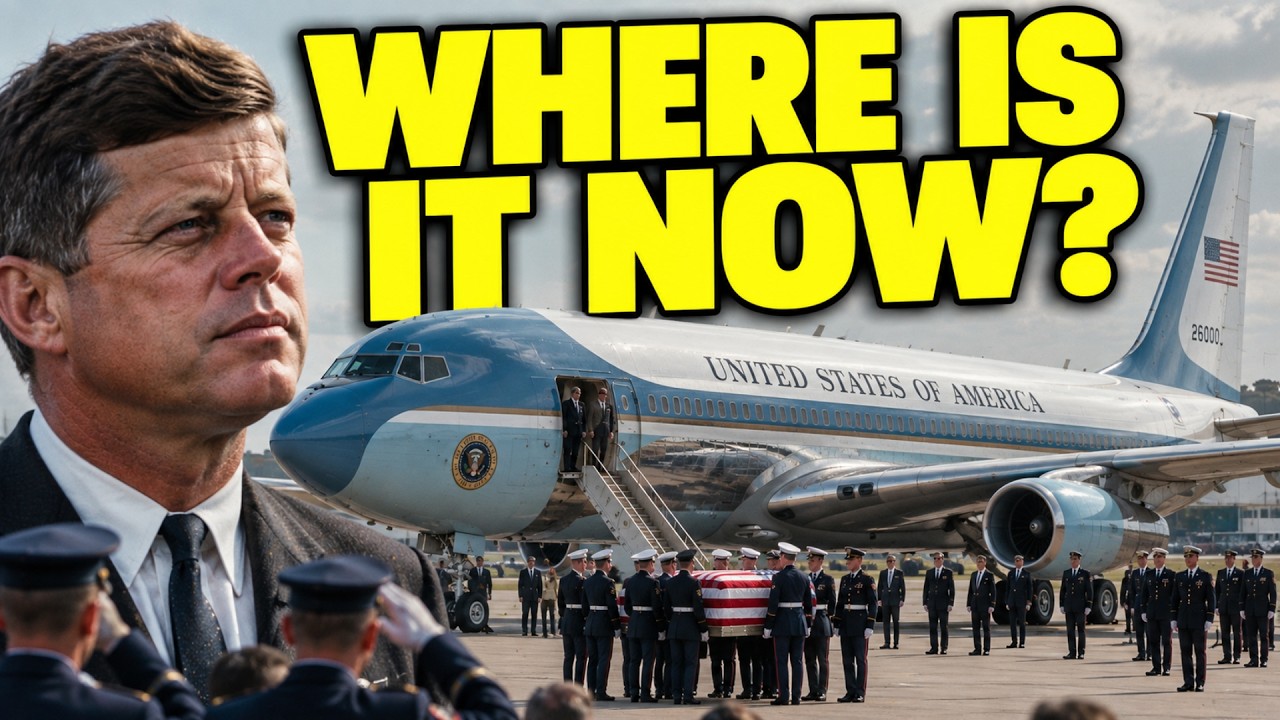
For generations of Americans, that design would become synonymous with presidential authority.
Yet an aircraft is more than its paint, its communications systems, or its place in history.
It is also the people who operate it, maintain it, and trust it to carry them safely through extraordinary circumstances.
For SAM 26000, one of those people was Jim Swindle.
THE PILOT WHO HAD ALREADY FLOWN THROUGH HELL
Swindle was born in 1917 in West Blocton, Alabama, a small coal-mining community southwest of Birmingham.
Before entering military service, he worked as a crane operator at a cast-iron pipe plant.
His life followed a path familiar to many Americans of his generation: ordinary work, family responsibilities, and a world transformed by war.
After the attack on Pearl Harbor, Swindle enlisted in the Army Air Forces in February 1942 and began training as an aviation cadet.
His wartime service took him to the China-Burma-India Theater, where transport pilots flew supplies across the Himalayas along a route known as “the Hump.”
The mission was exceptionally dangerous.
Aircraft crews faced severe turbulence, icing, unpredictable weather, and mountainous terrain that left little room for error.
Planes disappeared along the route, and some crews were never recovered.
Swindle survived those missions and continued his military career after the war.
During the Berlin Airlift of 1948–1949, he helped transport essential supplies into a city whose land routes had been cut off by the Soviet blockade.
The experience demanded discipline, precision, and the ability to operate under pressure.
When Kennedy needed a personal pilot during his presidential years, Swindle brought that experience with him.
He was not a celebrity seeking attention.
He was a professional aviator who had already spent years flying through some of the most challenging conditions of his generation.
According to the account, he also kept a Bible aboard the presidential aircraft, a gift from a Baptist church in Alabama in 1946.
That small detail offers a glimpse of the man behind the controls: a veteran whose career had taken him from a working-class Southern community to the cockpit of the most recognizable aircraft in the world.
A PRESIDENT WHO UNDERSTOOD THE COST OF WAR
Kennedy’s relationship with military aviation was deeply personal.
In August 1943, while serving as a young naval officer in the Pacific, he commanded the patrol torpedo boat PT-109.
A Japanese destroyer struck the boat during a nighttime operation, splitting it apart and killing two members of its crew.
Kennedy helped lead the surviving sailors through the water toward safety.
One crewman, Patrick McMahon, had suffered severe burns and could not swim effectively.
Kennedy reportedly towed him by gripping the strap of his life jacket between his teeth.
The incident became one of the defining stories of Kennedy’s wartime service.
It also came at a time when his family was experiencing its own devastating losses.
In August 1944, his older brother, Joseph P. Kennedy Jr., died while participating in a dangerous wartime bombing mission over England.
His aircraft, carrying explosives for a special operation, exploded before he could escape.
Joe Jr.’s death ended his prospects of becoming the family’s leading political figure and placed an enormous burden of expectation on his younger brother.
By the time Kennedy became president, he understood that military service involved more than medals, speeches, and ceremonial appearances.
It involved lives lost, families left behind, and responsibilities that could never be separated from their human consequences.
In June 1963, Swindle flew Kennedy to West Berlin, where the president delivered his famous declaration of solidarity with the people of the divided city.
For the pilot, the journey carried its own historical significance.
He had helped keep Berlin supplied during the airlift years earlier.
Now he was bringing the American president to a city that had become one of the defining front lines of the Cold War.
Five months later, he would fly Kennedy to Texas.
NOVEMBER 22, 1963: THE FLIGHT THAT CHANGED EVERYTHING
On the morning of November 22, SAM 26000 made a short flight from Carswell Air Force Base near Fort Worth to Love Field in Dallas.
The journey lasted approximately 13 minutes.
Kennedy and Jacqueline Kennedy arrived in Texas to attend political events and meet local supporters.
After landing, the presidential couple greeted people gathered near the airport fence before heading into Dallas.
The aircraft remained on the ground while the presidential motorcade traveled through the city.
Then came the gunfire in Dealey Plaza.
News of Kennedy’s assassination reached Swindle and the crew as reports spread across the airport and television broadcasts.
The routine preparations for the return flight suddenly became part of a national emergency.
The crew now faced a question that had never confronted them in quite this way before.
How could the president’s body be brought home?
The aircraft’s normal arrangements did not include a dedicated space for a casket in the passenger cabin.
The cargo hold was an obvious possibility, but Swindle and the crew did not want the fallen commander-in-chief transported as freight.
According to Swindle’s later account, the crew worked to remove a partition and two rows of seats near the rear of the cabin.
Their efforts created space for Kennedy’s casket.
The solution was practical, improvised, and profoundly symbolic.
The president would travel home inside the aircraft that had carried him to Dallas, surrounded by the people who had served him.
Jacqueline Kennedy remained beside the casket.
She had refused to change out of the pink suit she wore when her husband was shot, despite suggestions that she should do so.
The stained clothing became one of the most enduring visual symbols of the assassination.
Inside the aircraft, another historic event was about to unfold.
THE OATH TAKEN BESIDE A PRESIDENT’S CASKET
Vice President Lyndon B. Johnson had been in Dallas when Kennedy was killed.
The government needed a clear transfer of presidential authority before the aircraft departed for Washington.
Federal District Judge Sarah T. Hughes, whom Johnson knew, was brought to Love Field to administer the oath.
At approximately 2:38 p.m. Central Time, Johnson raised his right hand and became the 36th president of the United States.
Jacqueline Kennedy stood beside him.
The ceremony took place in the narrow cabin of SAM 26000, with Kennedy’s casket nearby and the aircraft preparing for departure.
The image captured the abrupt transition from one presidency to another.
There was no elaborate ceremony, no grand hall, and no carefully staged celebration.
Instead, the new president took the oath amid grief, uncertainty, and the urgent need to keep the federal government functioning.
Swindle remained in the cockpit, focused on preparing the aircraft for takeoff.
At approximately 2:47 p.m., SAM 26000 lifted off from Love Field and began its journey back to the Washington area.
The flight took the presidential party east, carrying a nation’s grief alongside its new head of state.
Jacqueline Kennedy remained close to her husband’s casket.
Johnson began making calls and dealing with the immediate responsibilities of his new office.
The aircraft that had once represented technological progress and presidential prestige had become a vessel of national mourning.
When it landed at Andrews Air Force Base that evening, it had completed one of the most emotionally charged journeys in American aviation history.
THE FINAL SALUTE OVER ARLINGTON
Kennedy’s funeral took place three days later, on November 25, 1963.
The ceremony drew enormous attention, with military units, foreign dignitaries, and mourners gathering to pay their respects.
Aircraft participated in the solemn procession.
SAM 26000 flew over Arlington National Cemetery as part of the aerial tribute.
According to the account, Swindle dipped the aircraft’s wings as he passed over the cemetery.
For a pilot, it was a gesture that required no speech.
He had flown the president to Texas and brought him home after his death.
Now, from the cockpit, he could offer one final salute.
The moment became a quiet conclusion to the aircraft’s most famous mission.
But the story of SAM 26000 was far from over.
The airplane would continue to serve the presidency through years of political conflict, war, diplomacy, and dramatic changes in American foreign policy.
THE SAME AIRCRAFT CARRIED AMERICAN TROOPS’ COMMANDER-IN-CHIEF TO VIETNAM
By the mid-1960s, the United States had committed hundreds of thousands of service members to the war in Vietnam.
Many were young men far from home, facing conditions that few civilians could fully understand.
In October 1966, President Johnson traveled to Cam Ranh Bay in South Vietnam following a summit in Manila.
The visit allowed him to meet American service members in person.
He addressed troops, thanked them for their service, and presented medals.
A little more than a year later, in December 1967, Johnson made another unannounced stop at Cam Ranh Bay while returning from Australia.
The visit came shortly before Christmas.
He spoke with service members and visited wounded troops in a military hospital, shaking hands and presenting Purple Hearts.
For soldiers recovering far from their families, a presidential visit could become a moment they remembered for the rest of their lives.
The aircraft that transported Johnson was part of the infrastructure that made such visits possible.
SAM 26000, the same aircraft that had carried Kennedy’s casket away from Dallas, continued flying missions in support of the presidency.
Its history connected two very different experiences of national service: the grief of a presidential assassination and the lives of Americans fighting a war overseas.
For veterans who served in Vietnam, the story also recalls the distance between the battlefield and home.
Many returned to a country divided over the war.
Some received little public recognition for what they had endured.
Remembering the aircraft’s missions cannot capture every individual experience, but it offers a way to recognize the people who served and the work required to sustain them.
THE SECRET MISSIONS THAT HELPED CHANGE THE COLD WAR
When Richard Nixon became president in 1969, SAM 26000 continued its presidential duties.
Some of its most significant missions involved diplomacy conducted far from public view.
Beginning in 1970, National Security Adviser Henry Kissinger undertook secret diplomatic trips connected to negotiations with North Vietnamese representatives near Paris.
The effort was intended to find a path toward ending the Vietnam War and bringing American service members home.
The meetings were conducted with extraordinary secrecy.
The participants included officials whose involvement was not always disclosed to other senior figures in the government.
An aircraft such as SAM 26000 offered the mobility necessary for sensitive diplomatic travel, although the secrecy of the missions depended on more than the airplane itself.
Flight planning, scheduling, security, and the handling of information all played important roles.
The negotiations eventually contributed to the diplomatic process that produced the Paris Peace Accords in January 1973.
The aircraft was not responsible for the negotiations’ outcome, but it was part of the presidential aviation system that supported the officials involved.
In 1971, Nixon gave the aircraft the name “Spirit of ’76” in anticipation of the United States Bicentennial.
The name celebrated the nation’s founding and reflected the aircraft’s prominent place in American public life.
Yet SAM 26000 was soon to take part in another landmark diplomatic journey.
THE FLIGHT THAT OPENED THE DOOR TO CHINA
In February 1972, Nixon traveled to China in a visit that transformed the international political landscape.
The trip marked the first visit to mainland China by a sitting American president.
The journey included stops in Hawaii and Guam before continuing to Shanghai and Beijing.
When Nixon arrived, the world watched as the American president met Chinese leaders and began a process of diplomatic engagement between two countries that had been deeply estranged.
The visit was a defining moment in the Cold War.
It reshaped international relationships and created new possibilities for diplomacy in Asia.
SAM 26000 was part of the aircraft story associated with Nixon’s presidential travel, although the precise aircraft used for particular legs should be checked against official flight records before attributing every stop to the same airframe.
The important historical point remains that presidential aviation had become an essential tool of American diplomacy.
The aircraft that had carried Kennedy to Dallas and returned his body to Washington had continued to serve a presidency that was now pursuing a radically different international strategy.
History had moved from national tragedy to an attempt at reshaping the global balance of power, while the same generation of presidential aircraft remained in service.
REPLACED, BUT NEVER FORGOTTEN
In 1972, the Air Force introduced a newer Boeing 707, SAM 27000.
The new aircraft eventually took over as the primary presidential airplane, and the name “Spirit of ’76” transferred to it.
SAM 26000 became a backup aircraft.
But being the backup did not mean its work was finished.
It continued transporting vice presidents, senior government officials, and diplomatic delegations for years.
In January 1973, it carried Lyndon Johnson’s body to Washington after his death at his Texas ranch and later returned him to Texas for burial.
Johnson had become president aboard SAM 26000 after Kennedy’s assassination.
Now the aircraft helped bring him home after his own death.
The journey offered another connection between the airplane and the history of the men who had used it.
In 1981, after Egyptian President Anwar Sadat was assassinated, SAM 26000 carried former presidents Richard Nixon, Gerald Ford, and Jimmy Carter to his funeral in Cairo.
The trip brought three former American presidents together for a solemn international event.
The aircraft also served as a platform for testing some communication technologies associated with the next generation of presidential aircraft.
By the time its active service ended, eight presidents had flown aboard it: Kennedy, Johnson, Nixon, Ford, Carter, Reagan, George H. W. Bush, and Bill Clinton.
Over approximately 36 years of service, the aircraft accumulated more than 13,000 flight hours.
Its history was no longer defined by a single event.
It had become a record of presidential travel across generations.
THE FINAL FLIGHT TO DAYTON
On May 20, 1998, SAM 26000 made its final flight.
The aircraft traveled to Wright-Patterson Air Force Base near Dayton, Ohio, home of the National Museum of the United States Air Force.
Its arrival marked the end of a remarkable operational career.
The jet that had once crossed oceans carrying presidents and senior officials would no longer fly.
After landing, it was moved into the museum’s care, where it could be preserved for future generations.
The aircraft’s former pilot, Jim Swindle, later visited it.
He was approximately 80 years old and had retired from the Air Force in 1971.
According to the account, he climbed aboard and returned to the cockpit where he had once sat as the pilot responsible for transporting presidents.
No one can know precisely what memories came back to him.
But his career had encompassed the dangerous supply flights over the Himalayas, the Berlin Airlift, Kennedy’s journey to Dallas, the return flight after the assassination, and years of presidential service.
The cockpit held a place in history that few working spaces ever achieve.
Swindle died in April 2006 at the age of 88.
His story remains a reminder that the history of Air Force One is not only the history of presidents.
It is also the history of pilots, flight engineers, stewards, maintainers, and other service members whose work made those journeys possible.
WHERE IS THE REAL AIR FORCE ONE TODAY?
The question that began this story has a straightforward answer.
The aircraft that carried John F. Kennedy to Dallas and returned his body to Washington is SAM 26000, preserved at the National Museum of the United States Air Force in Dayton, Ohio.
The Boeing 707 displayed at the Ronald Reagan Presidential Library in Simi Valley, California, is SAM 27000, a different aircraft that served later presidents.
Both airplanes are historically significant, but only SAM 26000 is associated with Kennedy’s final flight from Dallas.
In June 2016, the Air Force museum opened its fourth building, a large gallery that expanded its ability to display historic aircraft.
SAM 26000 was moved into the presidential aircraft gallery, where visitors can see it up close and, under the museum’s visitor arrangements, walk through the aircraft.
The experience offers a physical connection to the events of November 22, 1963.
Visitors can look down the aisle, see the cabin’s layout, and imagine the extraordinary circumstances under which Johnson took the oath of office.
The rear section recalls the crew’s efforts to make room for Kennedy’s casket.
The cockpit recalls the professionals responsible for bringing the aircraft safely home.
The museum’s admission and visitor arrangements should be checked before traveling, as opening hours, access, and aircraft availability can change.
But for anyone interested in American history, presidential aviation, or military service, the aircraft offers a rare opportunity to encounter a piece of the past that is usually experienced only through photographs and film.
THE MEN BEHIND THE MACHINE
The story of SAM 26000 is extraordinary because it links moments that might otherwise seem unrelated.
It carried Kennedy into a political tragedy that changed the nation.
It transported Johnson to meet American troops fighting in Vietnam.
It supported presidential travel during secret diplomacy and the opening of relations with China.
It carried former presidents to an international funeral and remained in service long after newer aircraft took over the primary presidential role.
Yet the airplane’s most enduring significance may lie in the people who depended on it.
Kennedy knew the cost of war through his own service and the loss of his brother.
The troops Johnson visited in Vietnam faced the uncertainty of a distant conflict.
Jim Swindle had flown dangerous wartime missions before becoming responsible for one of the most recognizable aircraft in the world.
These were different experiences, but each was part of a broader history of duty, sacrifice, and public service.
The president who rode home from Dallas in the back of SAM 26000 was buried at Arlington National Cemetery beneath the eternal flame.
The pilot who brought him home is gone, too.
But the aircraft remains in Dayton, preserved as a witness to a turbulent era.
Its significance is not limited to the famous photographs of Jacqueline Kennedy and Lyndon Johnson inside the cabin.
It also lies in the quiet work of the people who kept it flying, the troops it carried their leaders to visit, and the diplomatic missions it helped make possible.
SAM 26000 was built to transport presidents.
History gave it a far greater role.
And today, when visitors walk through the aircraft, they can encounter not just a famous airplane, but a physical link to the people and events that shaped modern America.


