Thirty-nine years after Star Trek: The Next Generation premiered, the Enterprise crew remains one of television’s most unforgettable families.
For seven seasons, viewers followed extraordinary characters who explored distant worlds while confronting deeply recognizable human conflicts.
Their adventures combined futuristic technology with questions about morality, prejudice, identity, sacrifice, friendship, and the meaning of leadership.
But behind the uniforms and elaborate alien makeup stood actors whose real lives were considerably more complicated than fiction.
Some became international celebrities, while others struggled with professional uncertainty, exhausting schedules, and the unexpected consequences of fame.
Several returned to the franchise decades later, discovering that their characters had acquired an emotional importance beyond anything anticipated.
The passage of time has also brought loss, although many principal cast members remain alive as of 2026.
Understanding their journeys requires separating the deaths of fictional characters from the actual lives of the performers portraying them.
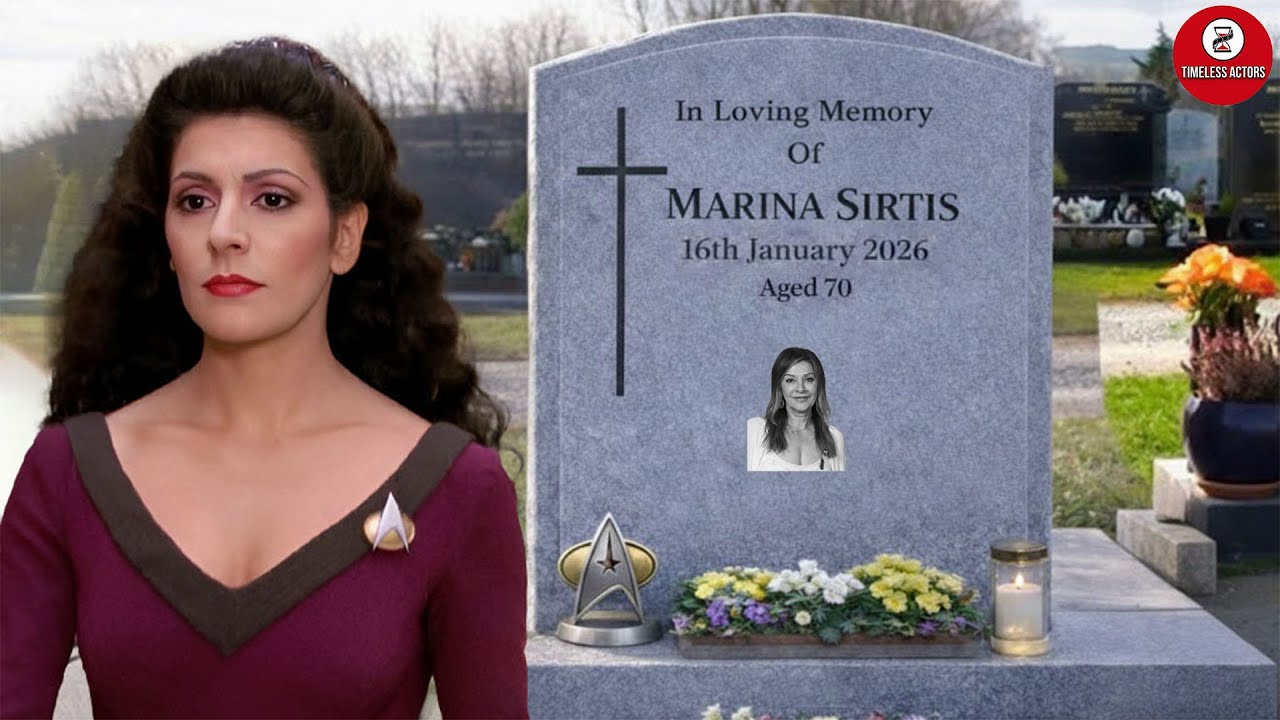
That distinction is especially important for a franchise whose stories repeatedly explored mortality, resurrection, memory, and second chances.
When the series debuted in September 1987, its creators faced an extraordinary challenge inherited from an earlier television generation.
The original Star Trek had established a devoted following around Captain James T. Kirk and his pioneering crew.
Replacing those beloved characters with an unfamiliar ensemble risked alienating fans who considered the original performers irreplaceable cultural figures.
Creator Gene Roddenberry nevertheless envisioned a future in which humanity had progressed beyond many destructive contemporary social divisions.
His new Enterprise would operate within a more optimistic civilization, where cooperation and diplomacy often mattered more than violence.
The concept required performers capable of making philosophical arguments feel emotionally compelling rather than merely delivering futuristic speeches.
It also demanded chemistry among actors portraying people from radically different backgrounds, cultures, species, and professional responsibilities aboard ship.
The resulting ensemble gradually transformed a risky television revival into one of science fiction’s most influential productions ever.
At the center stood Patrick Stewart, whose portrayal of Captain Jean-Luc Picard fundamentally changed expectations of televised heroism.
Stewart was born on July 13, 1940, in Mirfield, Yorkshire, England, far from the glamorous world of Hollywood.
His early life unfolded in a working-class household, where family difficulties helped shape his understanding of vulnerability and authority.
He later spoke publicly about domestic violence in his childhood and its lasting influence on his personal commitments.
Acting offered an avenue toward artistic expression, eventually leading him into the demanding traditions of classical British theater.
Stewart joined the Royal Shakespeare Company and developed an extensive repertoire of performances requiring extraordinary discipline and verbal precision.
Before Star Trek, audiences could recognize him through productions including I, Claudius and other respected dramatic work.
Yet American television executives did not initially regard a middle-aged, balding Shakespearean actor as an obvious futuristic action hero.
That skepticism became one of the most remarkable miscalculations in the history of the franchise’s casting process.
Stewart approached Picard with a seriousness that initially contrasted with the more relaxed atmosphere surrounding his younger colleagues.
He reportedly expected professional discipline on set, sometimes finding the cast’s humor difficult to reconcile with his working habits.
Over time, however, the ensemble developed stronger relationships, and Stewart became increasingly comfortable with their collaborative approach.
Picard’s authority emerged through intellectual curiosity, ethical judgment, emotional restraint, and a willingness to confront difficult decisions.
Unlike Kirk’s more impulsive command style, Picard frequently relied on negotiation before considering the use of force.
That distinction gave the series a recognizable philosophical identity while allowing Stewart to showcase his theatrical training.
Episodes such as The Measure of a Man placed Picard at the center of arguments about personhood and individual rights.
The Best of Both Worlds confronted him with the terrifying loss of autonomy after assimilation by the Borg.
The Inner Light explored memory, identity, grief, and the possibility of experiencing an entire lifetime through extraordinary circumstances.
These stories demonstrated how science fiction could investigate profound emotional questions without abandoning its futuristic adventure framework.
Stewart’s performance gradually earned him international recognition and opportunities beyond the Enterprise’s familiar command bridge.
He later portrayed Professor Charles Xavier in the X-Men films, becoming central to another enormously successful franchise.
His return to Picard through Star Trek: Picard demonstrated the character’s continuing significance decades after the original series.
The later production explored aging, regret, reconciliation, and the emotional consequences of decisions made across a lifetime.
In 2026, Stewart remains one of the most recognizable surviving performers associated with the franchise’s modern history.
His career illustrates how a role initially regarded as an unlikely casting choice can become a defining artistic achievement.
Beside Picard stood Commander William T. Riker, portrayed by Jonathan Frakes with confidence, humor, and unmistakable personal charm.
Frakes was born on August 19, 1952, in Bellefonte, Pennsylvania, and developed his interests through education and performance.
He studied theater before establishing himself through television appearances and the historical miniseries North and South during the 1980s.
When he joined The Next Generation, his character initially appeared positioned as the Enterprise’s more conventional adventurous leading man.
Riker possessed physical confidence, romantic appeal, and an instinctive willingness to confront danger on behalf of his crew.
But Frakes gradually developed the character beyond those familiar heroic qualities, emphasizing loyalty, judgment, and personal growth.
His relationship with Picard became one of the series’ most important professional partnerships, built on trust and disagreement.
Riker could challenge his captain without undermining the authority necessary to maintain discipline aboard a Starfleet vessel.
His romantic history with Counselor Deanna Troi also introduced an enduring emotional storyline across multiple seasons and films.
The relationship developed through uncertainty, friendship, separation, and eventual commitment, giving both characters a meaningful personal history.
Frakes became famous among fans for Riker’s distinctive way of sitting, frequently stepping over chairs before settling down.
The physical habit became an affectionate piece of franchise folklore, although its significance was primarily stylistic and practical.
Behind the camera, Frakes discovered another professional direction that would eventually become central to his entertainment career.
He began directing episodes of The Next Generation, demonstrating an aptitude for balancing performances with demanding technical requirements.
His directorial work later expanded into Star Trek: First Contact, one of the franchise’s best-regarded feature films.
He also directed Star Trek: Insurrection and television productions beyond the franchise, establishing a substantial second career.
His experience on Roswell, Leverage, and later Star Trek productions reinforced his reputation as a dependable television director.
In 2026, Frakes remains strongly associated with both Riker’s enduring popularity and his extensive contributions behind the camera.
His journey demonstrates that a successful acting role can provide the foundation for an entirely different creative identity.
Brent Spiner faced perhaps the most technically demanding acting challenge among the Enterprise’s principal original crew members.
As Lieutenant Commander Data, he portrayed an android whose intellectual capabilities exceeded those of humans around him.
Yet Data’s defining ambition was not technological superiority, but an almost childlike desire to understand humanity itself.
Spiner was born on February 2, 1949, in Houston, Texas, and developed his craft through theater and performance.
His professional experience included Broadway productions, where he cultivated the precise timing that later became essential to Data.
The android’s distinctive appearance required elaborate makeup, pale skin, and unusual eyes that immediately distinguished him from crewmates.
But the physical transformation was only one element of a performance built around carefully controlled emotional expression.
Spiner needed to communicate curiosity, confusion, humor, and longing while maintaining the character’s supposed inability to experience emotion.
That contradiction became one of the show’s richest dramatic resources, allowing audiences to recognize humanity within artificial intelligence.
Data’s friendship with Geordi La Forge offered an especially important connection, emphasizing trust across differences in experience.
His interactions with Picard explored moral responsibility and whether consciousness should determine an individual’s fundamental legal rights.
The character also developed interests in painting, music, theater, and companionship, transforming abstract philosophical questions into recognizable behavior.
Spiner’s restrained performance made small gestures meaningful, giving Data an emotional presence despite his apparently mechanical personality.
The role required considerable endurance because makeup preparation and lengthy production schedules consumed substantial portions of his working life.
Outside Star Trek, Spiner demonstrated a more openly comic personality through appearances in films and other television productions.
His role in Independence Day offered a memorable contrast, portraying an eccentric scientist within a blockbuster alien invasion story.
He also appeared in Night Court and other projects that showcased his distinctive comedic instincts and versatility.
Spiner returned to the franchise through multiple productions, portraying Data and other characters connected with the android’s origins.
His appearances in Star Trek: Picard provided opportunities to revisit questions about mortality and artificial consciousness decades later.
In 2026, he remains celebrated for creating a character whose search for humanity resonated across generations of viewers.
Data’s enduring appeal reflects the paradox that an artificial being often displayed greater compassion than supposedly sophisticated humans.
Michael Dorn brought an entirely different emotional intensity to the bridge through his portrayal of Lieutenant Worf.
Born on December 9, 1952, in Luling, Texas, Dorn developed professional interests that eventually led him toward acting.
Before his breakthrough, he worked in television and appeared in productions including the popular police drama CHiPs.
Worf introduced audiences to a Klingon officer serving within Starfleet, creating immediate tension between different cultural traditions.
The character struggled to reconcile Klingon concepts of honor with the Federation’s emphasis on diplomacy and cooperation.
Dorn’s performance depended on physical discipline, restrained anger, and the ability to communicate complex emotions beneath elaborate makeup.
The transformation into Worf required lengthy preparation, including prosthetics that substantially altered his facial appearance and expressions.
Yet Dorn avoided portraying the Klingon merely as a threatening warrior defined by aggression and physical strength.
Instead, Worf became a figure shaped by family loss, cultural displacement, personal responsibility, and difficult moral choices.
His upbringing among humans complicated his relationship with Klingon traditions, making identity a central element of his story.
That tension gave the character emotional depth while challenging simplistic assumptions about cultural authenticity and belonging.
Worf’s relationships with fellow officers gradually revealed humor, vulnerability, affection, and a capacity for profound personal loyalty.
After The Next Generation, Dorn joined Star Trek: Deep Space Nine, substantially expanding the character’s narrative development.
The transition allowed Worf to confront new political conflicts, personal relationships, and the responsibilities of command.
His extensive franchise appearances made him one of the most enduring figures within the broader Star Trek universe.
Dorn also developed a successful career in voice acting, bringing his distinctive voice to animated productions and games.
His continuing association with Worf demonstrates the durability of characters whose conflicts remain relevant beyond their original setting.
In 2026, Dorn remains closely connected to the role that transformed his professional life and science-fiction history.
LeVar Burton entered the Enterprise as Geordi La Forge, a character whose intelligence helped redefine technological heroism.
Burton was born on February 16, 1957, in Landstuhl, West Germany, while his father served in the military.
He grew up in California and pursued acting after developing interests in performance, literature, and education during his youth.
His major breakthrough came through the television adaptation of Roots, where he portrayed the young Kunta Kinte.
The production became a landmark cultural event, confronting American audiences with the history and human consequences of slavery.
Burton’s performance earned widespread recognition and established him as a significant young actor before his Starfleet assignment.
He later became the familiar host of Reading Rainbow, encouraging children to discover literature and develop intellectual curiosity.
That educational work created a public identity closely associated with literacy, learning, and the transformative possibilities of storytelling.
When Burton joined The Next Generation, he brought those associations into a futuristic world built around scientific exploration.
Geordi initially served as the Enterprise’s helmsman before becoming chief engineer, responsible for maintaining its complex systems.
His distinctive VISOR allowed him to perceive information through electromagnetic signals, compensating for blindness through advanced technology.
The character’s visual difference became part of his identity without preventing professional achievement or meaningful relationships aboard ship.
Geordi frequently solved emergencies through technical ingenuity, patience, teamwork, and the ability to recognize unconventional solutions.
His friendship with Data became one of the show’s most recognizable examples of mutual respect and intellectual companionship.
Their conversations explored the difference between understanding human behavior intellectually and experiencing relationships through emotion.
Burton also directed episodes within the franchise, expanding his professional responsibilities beyond his familiar role as an engineer.
His later work continued to include educational initiatives, storytelling projects, and advocacy for literacy and intellectual engagement.
In Star Trek: Picard, Geordi returned as an older character whose family responsibilities had transformed his priorities.
That development allowed Burton to explore how professional confidence and parental concern could coexist within the same individual.
In 2026, Burton remains an influential figure whose contributions extend well beyond his celebrated science-fiction performances.
His career connects two enduring cultural missions: imagining a better future and encouraging young people to read.
Gates McFadden portrayed Dr. Beverly Crusher, the Enterprise’s chief medical officer and one of its central emotional anchors.
Born on June 2, 1949, in Ohio, McFadden pursued extensive training in movement, dance, theater, and performance.
Her background included study in Paris and professional choreography, providing unusual physical discipline for her later acting career.
She worked on productions associated with filmmaker Jim Henson, including choreography connected with the fantasy film Labyrinth.
That experience demonstrated creative abilities extending beyond conventional dramatic performance and into complex collaborative visual storytelling.
As Beverly Crusher, McFadden portrayed a physician whose professional judgment could challenge even Captain Picard’s authority.
Crusher combined scientific expertise with compassion, frequently confronting difficult questions involving medical ethics and personal responsibility.
Her relationship with her son Wesley added another dimension, balancing demanding professional duties with the responsibilities of motherhood.
The character’s longstanding connection with Picard also created a romantic tension that developed gradually across the series.
McFadden’s departure after the first season became one of the production’s most discussed early casting changes.
The circumstances surrounding that decision have been described differently across interviews and retrospective accounts over the years.
Rather than reducing the situation to an unsupported personal accusation, the documented outcome provides the clearest historical foundation.
McFadden returned for the third season, restoring Crusher to the Enterprise’s principal medical position and ensemble.
Her comeback demonstrated the character’s importance to the show’s emotional balance and continuing narrative development.
Crusher’s medical authority offered a counterweight to the military structure surrounding Starfleet command and shipboard discipline.
She frequently advocated for vulnerable individuals, emphasizing that technological capability did not eliminate moral obligations toward patients.
McFadden later returned in Star Trek: Picard, where Beverly’s personal history received substantial new dramatic attention.
The storyline explored motherhood, secrecy, emotional distance, and the consequences of decisions made over many years.
Her return also reunited audiences with a performer whose original character had become central to the franchise’s identity.
In 2026, McFadden remains recognized for combining intellectual authority with emotional warmth in a demanding television role.
Marina Sirtis brought another essential dimension to the Enterprise through her portrayal of Counselor Deanna Troi.
Sirtis was born on March 29, 1955, in London, England, and trained at the Guildhall School of Music and Drama.
Her early career included theater and screen appearances before she secured the role that would define her international recognition.
Troi possessed empathic abilities that allowed her to sense emotional states, making interpersonal understanding part of Starfleet operations.
The character’s professional function distinguished her from officers whose responsibilities focused primarily on technology or military command.
She frequently advised Picard during negotiations, helping interpret motives and emotional tensions that conventional sensors could not detect.
Her role demonstrated that emotional intelligence could be as strategically important as technical knowledge or physical courage.
But Sirtis also confronted limitations in how television writers initially developed the character’s dramatic possibilities.
Some early storylines emphasized Troi’s appearance or romantic vulnerability more strongly than her professional expertise and judgment.
Over time, the character gained greater authority and opportunities to demonstrate competence beyond her empathic abilities alone.
Her relationship with Riker provided a continuing emotional narrative, complicated by professional responsibilities and unresolved romantic history.
Troi also developed friendships with other officers, particularly Beverly Crusher, whose conversations revealed ordinary personal concerns.
Those relationships helped make the Enterprise feel like a community rather than simply a technologically sophisticated military vessel.
Sirtis brought humor and directness to public appearances, contrasting with Troi’s frequently measured and therapeutic screen persona.
She returned to the franchise through feature films and later television appearances, maintaining a close association with fans.
Her appearances in Star Trek: Picard revisited Troi’s marriage, motherhood, grief, and continuing professional responsibilities.
The later storyline allowed Sirtis to portray a more experienced character confronting emotional challenges without abandoning compassion.
In 2026, her performance remains an important example of how science fiction can elevate empathy into genuine leadership.
Whoopi Goldberg entered The Next Generation with an established reputation that differed from those of many regular cast members.
Born on November 13, 1955, in New York City, Goldberg developed her career through comedy, theater, and film.
Her breakthrough performance in The Color Purple earned major critical acclaim and an Academy Award nomination.
She subsequently became one of the entertainment industry’s most recognizable personalities through performances across multiple genres.
Goldberg’s connection to Star Trek was unusually personal, reflecting the influence of the original television series.
She has discussed the significance of seeing Nichelle Nichols portray Lieutenant Uhura, a Black woman occupying a professional role.
That representation challenged the limited opportunities historically available to Black actresses in mainstream American television at the time.
Goldberg later sought involvement in The Next Generation, eventually joining the series as the mysterious Guinan.
Guinan served as bartender in Ten Forward, where she offered advice that frequently extended beyond ordinary conversation.
Her extraordinary lifespan and unexplained experiences suggested knowledge of history and reality unavailable to most Enterprise officers.
Yet Goldberg played the character with restraint, allowing silence and careful observation to communicate unusual authority.
Guinan’s friendship with Picard became one of the show’s most intriguing relationships, shaped by mutual respect and trust.
She frequently recognized emotional truths that more technologically sophisticated characters struggled to understand or acknowledge openly.
Her encounters with Q also suggested a complicated history beyond the audience’s immediate understanding of either character.
Goldberg’s participation brought additional cultural visibility to the franchise while strengthening its connection to earlier television representation.
She later achieved the rare distinction of winning major awards across television, recording, film, and theater.
Her career also included extensive work as a television personality, commentator, producer, and public advocate.
Goldberg returned as Guinan in Star Trek: Picard, reconnecting with a character she had helped make unforgettable.
In 2026, she remains among the most recognizable performers associated with the Enterprise’s extended television history.
John de Lancie brought an entirely different energy to the series through his portrayal of the enigmatic Q.
Born on March 20, 1948, in Philadelphia, Pennsylvania, de Lancie developed his career through theater and television performance.
His classical training provided the verbal precision necessary for a character who frequently dominated scenes through language.
Q possessed extraordinary powers, allowing him to manipulate reality while testing the judgment of Captain Picard and humanity.
His first appearance helped establish the show’s central philosophical question about whether humanity deserved continued cosmic advancement.
Unlike conventional villains, Q frequently appeared motivated by curiosity, amusement, and an ambiguous fascination with human behavior.
His elaborate theatricality contrasted with Picard’s controlled professionalism, creating some of the franchise’s most entertaining confrontations.
De Lancie understood that Q’s apparent arrogance could become more compelling when mixed with intelligence and unexpected vulnerability.
The character’s interventions sometimes threatened the Enterprise, but they also forced its crew to confront uncomfortable truths.
Episodes featuring Q explored responsibility, mortality, moral development, and the limitations of supposedly superior civilizations.
De Lancie’s performance transformed what might have been an exaggerated antagonist into a recurring figure of philosophical significance.
Outside Star Trek, he continued acting across television, film, theater, and voice performance in numerous productions.
His voice work introduced him to younger audiences through animation and other projects beyond the science-fiction franchise.
He later returned as Q in Star Trek: Picard, reconnecting the character with his most important adversarial friendship.
The renewed storyline explored the meaning of finality for a being previously associated with seemingly unlimited power.
In 2026, de Lancie remains celebrated for a character whose unpredictability made him impossible to classify as simply evil.
Wil Wheaton joined the series as Wesley Crusher, a young prodigy whose presence created unusual opportunities and pressures.
Born on July 29, 1972, in Burbank, California, Wheaton began acting professionally during his childhood years.
He achieved early recognition through Stand by Me, portraying a sensitive teenager within a critically acclaimed coming-of-age story.
That success preceded his casting as Wesley, the gifted son of Dr. Beverly Crusher aboard the Enterprise.
The character offered younger viewers a potential point of identification within a television world dominated by experienced adults.
Wesley’s intelligence frequently allowed him to recognize technical solutions that more senior officers had initially overlooked.
But the writing sometimes positioned him in ways that provoked criticism among portions of the show’s audience.
Wheaton later discussed the emotional consequences of growing up under public scrutiny and facing harsh reactions from viewers.
His experiences reflected broader challenges confronting child actors whose professional identities become entangled with audience expectations.
The pressure of fame could complicate personal development, especially when creative decisions were controlled by adults around him.
Wheaton eventually moved away from regular participation in the series while exploring other professional and personal interests.
He developed a substantial career as a writer, voice performer, commentator, and influential figure within online fandom communities.
His public discussions of mental health and childhood experiences offered perspectives far removed from Wesley’s optimistic fictional adventures.
He also appeared as a fictionalized version of himself in The Big Bang Theory, demonstrating comic self-awareness.
Later franchise appearances allowed Wheaton to revisit Wesley through a more mature understanding of the character’s unusual journey.
In 2026, he remains closely connected to science-fiction audiences while maintaining an identity beyond his childhood television role.
Denise Crosby portrayed Lieutenant Natasha Yar, whose departure became one of the earliest dramatic shocks of the series.
Born on November 24, 1957, in Hollywood, California, Crosby entered entertainment with connections to a prominent musical family.
Her grandfather was Bing Crosby, although her professional career developed through her own acting ambitions and opportunities.
Tasha Yar served as the Enterprise’s security chief, presenting a strong and disciplined presence during the first season.
Her background involved childhood hardship, giving the character a perspective shaped by survival and personal resilience.
Crosby’s portrayal emphasized professionalism and determination, even when early scripts offered limited opportunities for deeper character development.
She eventually left the production during its first season, a decision that generated considerable discussion among fans.
The character was killed in Skin of Evil, an episode whose abrupt ending challenged expectations of safety.
Yar’s death demonstrated that the Enterprise crew was not necessarily protected from irreversible consequences during dangerous missions.
Crosby later returned through alternate timelines and related characters, allowing the franchise to revisit her contribution creatively.
The episode Yesterday’s Enterprise provided one of the most acclaimed opportunities to reconsider Tasha Yar’s unrealized potential.
Its alternate history explored sacrifice, duty, and the possibility that different choices might produce profoundly different outcomes.
Crosby also portrayed Sela, a Romulan character whose history connected directly with Yar’s unusual narrative legacy.
Outside the franchise, she appeared in Pet Sematary, Deep Impact, and other film and television productions.
She later helped document the franchise’s fan culture through Trekkies, exploring the devotion surrounding Star Trek communities.
Her work demonstrated that leaving a major television series did not necessarily end a performer’s relationship with audiences.
In 2026, Crosby remains associated with one of the franchise’s most memorable early departures and subsequent returns.
Colm Meaney portrayed Miles O’Brien, a character whose understated professionalism gradually became central to the franchise’s emotional realism.
Born on May 30, 1953, in Dublin, Ireland, Meaney developed his acting career through theater and screen work.
His early performances included Excalibur, while his later film career expanded through acclaimed Irish and international productions.
O’Brien initially appeared as a comparatively minor Enterprise officer before becoming the familiar operator of the transporter system.
His practical approach contrasted with the more philosophical language frequently employed by the ship’s senior command officers.
Meaney portrayed him as a dependable working professional whose competence rarely required dramatic speeches or displays of authority.
That quality gave the Enterprise a recognizable everyday dimension within its otherwise extraordinary technological environment.
The character’s relationship with Keiko Ishikawa introduced marriage and family responsibilities into the show’s broader ensemble storytelling.
O’Brien eventually became a major character in Star Trek: Deep Space Nine, where his experiences grew more demanding.
The series explored his work as an engineer, his friendships, and the emotional consequences of repeated danger.
Meaney’s performance emphasized resilience without suggesting that professional responsibility eliminated fear, frustration, or personal vulnerability.
His later film work included The Commitments, The Snapper, and The Van, demonstrating considerable dramatic range.
He also appeared in major international productions, maintaining a substantial career beyond his association with the franchise.
In 2026, Meaney remains remembered for giving futuristic engineering the recognizable dignity of ordinary skilled labor.
Diana Muldaur entered The Next Generation during its second season as Dr. Katherine Pulaski, replacing Beverly Crusher temporarily.
Born on August 19, 1938, in Brooklyn, New York, Muldaur had established a substantial acting career before joining.
Her earlier credits included major television dramas and appearances within the original Star Trek series itself.
That connection made her arrival especially interesting because she already understood the franchise’s distinctive approach to science fiction.
Pulaski brought a more skeptical personality to the Enterprise, frequently questioning assumptions accepted by her colleagues.
Her interactions with Data created tension because she initially struggled to regard him as equivalent to human officers.
Those disagreements echoed the relationship between Dr. McCoy and Spock in the original television series.
But the dynamic also raised important questions about prejudice, personhood, and the recognition of unfamiliar forms of intelligence.
Muldaur portrayed Pulaski as an experienced physician whose confidence could sometimes appear confrontational or emotionally distant.
The character offered a different interpretation of medical authority from Beverly Crusher’s more openly compassionate approach.
Her presence also demonstrated how replacing a familiar performer could alter the emotional balance of an established ensemble.
Pulaski departed after one season, and McFadden returned to the series as Crusher for the third.
Muldaur’s wider career included acclaimed work on L.A. Law, where she portrayed attorney Rosalind Shays.
That role became associated with one of television drama’s most memorable and unexpected character departures.
Her performances reflected a willingness to portray formidable women whose personalities challenged conventional expectations of warmth or likability.
Although her time aboard the Enterprise was brief, Pulaski remains an important figure in the show’s history.
As of 2026, Muldaur’s legacy extends across decades of television, well beyond her single season in Starfleet.
The thirteen performers featured in this retrospective represent different chapters of the franchise’s extraordinary creative development.
Some joined the Enterprise from classical theater, while others arrived through film, childhood acting, or established television careers.
Their contrasting experiences helped create an ensemble that could sustain both intimate drama and ambitious science-fiction storytelling.
The series also depended on writers, directors, designers, makeup artists, composers, and technical specialists whose contributions remain essential.
Its visual identity required elaborate sets, futuristic costumes, prosthetics, practical effects, and increasingly sophisticated television production techniques.
Those resources helped audiences believe in a fictional future whose ethical questions remained connected to contemporary concerns.
The Enterprise became a setting where disagreements could be resolved through dialogue without denying the existence of conflict.
Its characters confronted discrimination, authoritarianism, environmental destruction, artificial intelligence, warfare, and the consequences of technological power.
These themes allowed the series to remain relevant even as the real world changed dramatically after 1987.
The end of the Cold War altered international politics, while the internet transformed communication and public access to information.
Advances in artificial intelligence made Data’s questions about consciousness and personhood seem increasingly connected to real technological debates.
Medical innovations similarly gave new relevance to stories involving Crusher, Pulaski, and the ethical responsibilities of advanced science.
The show’s interest in diversity and cooperation continued to resonate amid persistent social divisions and political disagreement.
Its optimism was never entirely uncomplicated, because many episodes questioned whether humanity had truly overcome its destructive instincts.
That tension helped distinguish The Next Generation from simpler futuristic adventures centered primarily on technology or spectacle.
The actors’ performances gave those philosophical questions emotional consequences that audiences could recognize within their own lives.
Picard’s decisions reflected the burdens of leadership, while Riker’s loyalty demonstrated the importance of professional trust.
Data’s search for belonging raised questions about identity, and Worf’s conflicts explored the complexity of cultural heritage.
Geordi represented technical intelligence joined with friendship, while Crusher embodied the moral responsibilities of scientific expertise.
Troi elevated empathy, Guinan emphasized wisdom, and Q challenged humanity’s assumptions about its own moral progress.
Wesley represented youthful potential, Yar demonstrated sacrifice, and O’Brien gave ordinary professional competence extraordinary dignity.
Pulaski’s skepticism offered another perspective, reminding viewers that experience could generate both wisdom and uncomfortable limitations.
Together, these characters created a fictional community whose members often disagreed while remaining committed to shared principles.
That collective identity became increasingly important as the actors developed friendships and professional relationships beyond the television set.
Their public convention appearances later demonstrated how deeply audiences associated the performers with the Enterprise’s fictional family.
Fans attended gatherings to revisit favorite episodes, discuss personal experiences, and connect with others sharing similar interests.
For some viewers, the series provided comfort during illness, grief, loneliness, or periods of significant personal uncertainty.
Its messages about cooperation and dignity offered reassurance without requiring audiences to ignore the existence of suffering.
The cast gradually recognized that their performances had acquired emotional significance extending beyond ordinary television entertainment.
This realization helped explain the enthusiasm surrounding reunions, anniversary events, and later franchise appearances involving familiar characters.
The release of Star Trek: Picard offered another opportunity to explore the passage of time within the fictional universe.
Characters who once represented the confident future returned as older individuals carrying memories, disappointments, and unresolved relationships.
The contrast allowed audiences to reconsider earlier adventures through the emotional experiences accumulated over several decades.
It also provided performers with opportunities to approach familiar roles using the maturity developed throughout their own lives.
Stewart’s Picard became more openly reflective, while Riker and Troi confronted challenges associated with marriage and family.
Crusher’s return introduced unresolved personal decisions, and Geordi’s storyline emphasized the responsibilities of fatherhood and protection.
Data’s continuing presence renewed questions about identity, memory, and the possibility of a meaningful ending.
Worf returned with a changed perspective, suggesting that even deeply established cultural identities could evolve through experience.
The reunion demonstrated that nostalgia could become a foundation for new storytelling rather than merely repeating familiar scenes.
Yet the passage of time also makes accurate reporting about the cast’s personal lives increasingly important.
A character’s fictional death must not be confused with the death of the actor who portrayed that character.
Data’s dramatic storylines do not mean Brent Spiner has died, just as Tasha Yar’s fate does not establish Crosby’s.
Likewise, the age of a television production does not justify assuming that its surviving performers are no longer alive.
The thirteen actors discussed here are not a list of deceased stars, despite the retrospective’s emotional framing.
As of 2026, the principal performers featured in the source remain living figures with distinct professional histories.
The broader Star Trek family has experienced genuine losses, including important performers from its earlier and later productions.
Nichelle Nichols, Leonard Nimoy, DeForest Kelley, and James Doohan are among the original-series figures who have died.
Their contributions remain essential to understanding the cultural foundation inherited by The Next Generation and subsequent productions.
The franchise also lost creator Gene Roddenberry in 1991, while the newer series was still in production.
His death marked a major turning point for a television universe built around his optimistic vision of humanity.
Later creative teams continued developing that vision, sometimes challenging its assumptions while preserving its central commitment to exploration.
Other performers associated with the extended franchise have also died, leaving important gaps within its creative history.
But honoring those losses requires naming the individuals accurately rather than turning surviving actors into subjects of premature memorials.
The emotional weight of thirty-nine years comes from both remembrance and the continued presence of the original ensemble.
Their survival allows audiences to hear firsthand accounts of production challenges, creative disagreements, friendships, and changing personal perspectives.
Such testimony provides valuable context, although retrospective interviews can reflect imperfect memories and differing interpretations of events.
No single actor’s recollections can fully explain the decisions made throughout a production involving hundreds of creative professionals.
Nevertheless, the cast’s stories reveal how a demanding television schedule could produce lasting professional and personal relationships.
The Enterprise’s fictional unity emerged from real performers learning to collaborate under pressure and adapt to evolving scripts.
Their early uncertainties gradually gave way to confidence as the series developed stronger writing and a clearer identity.
By its later seasons, The Next Generation had become a major television success with an exceptionally devoted audience.
Its 1994 finale, All Good Things…, brought the original television journey to a widely celebrated conclusion.
The story returned to questions about time, possibility, leadership, and the unpredictable consequences of human decisions.
Its final scenes emphasized the relationships among the crew rather than technological spectacle or military triumph alone.
That emphasis reflected the series’ deepest strength: viewers cared about the people inhabiting its imagined future.
The franchise subsequently continued through feature films, new television series, and generations of performers inspired by its example.
Some later productions adopted darker themes, while others emphasized the optimism associated with Roddenberry’s original creative philosophy.
The continuing debate demonstrates how strongly audiences remain invested in what Star Trek should represent culturally.
For the original Next Generation cast, that legacy created opportunities but also the challenge of professional typecasting.
An actor closely identified with a beloved character may struggle to escape audience expectations in unrelated productions.
Stewart successfully expanded into major film franchises, while Frakes developed an extensive career as a director.
Spiner explored comedy and other screen roles, while Dorn built a substantial voice-acting portfolio beyond Worf.
Burton remained influential through education and literacy, demonstrating a professional identity extending beyond science-fiction entertainment.
McFadden continued working creatively, while Sirtis maintained her association with performance and the franchise’s devoted fan community.
Goldberg sustained a major entertainment career, and de Lancie continued appearing across multiple genres and media.
Wheaton developed new opportunities through writing and digital culture, while Crosby pursued independent film and documentary projects.
Meaney maintained a distinguished international acting career, and Muldaur’s achievements remained connected with decades of television history.
These different trajectories challenge the assumption that a successful ensemble must produce identical forms of celebrity afterward.
Some performers achieved their greatest recognition outside Star Trek, while others remained most closely associated with their original roles.
Neither outcome diminishes the importance of their contribution to a television series that changed popular science fiction.
Their careers also demonstrate that professional reinvention can occur at almost any stage of an actor’s life.
A performer may become a director, writer, educator, producer, advocate, or voice actor after achieving initial recognition.
The ability to adapt becomes especially important within an entertainment industry shaped by changing technology and audience habits.
Since 1987, television has evolved from scheduled network broadcasting into a global ecosystem of streaming platforms and digital communities.
Fans can now revisit episodes immediately, compare performances, and participate in discussions spanning multiple generations and countries.
That accessibility has helped preserve the series’ cultural relevance long after its original weekly broadcasts ended.
Younger viewers encounter its philosophical questions without necessarily sharing the historical circumstances surrounding its first television premiere.
Older audiences return with different experiences, discovering emotional meanings that may have escaped them during their first viewing.
A story about family separation can feel different after parenthood, while episodes about mortality gain resonance with age.
The performers’ aging similarly changes how viewers understand the characters who once seemed permanently young within fictional history.
The reunion productions made that passage visible, allowing audiences to confront the difference between remembered characters and living people.
For many fans, seeing the Enterprise crew together again carried the emotional force of reconnecting with old friends.
Their faces had changed, but familiar voices and relationships preserved connections established during the original television run.
That experience illustrates how long-running fiction can become intertwined with personal memories across decades of ordinary life.
The show did not merely entertain viewers; it accompanied them through childhood, adulthood, and changing social circumstances.
Its most powerful legacy may therefore lie in the relationship between imagined futures and the real passage of time.
The Enterprise promised that humanity could improve, even when the present offered reasons to doubt such optimism.
Its crew demonstrated that intelligence and courage were strengthened through compassion, diversity, and mutual respect rather than diminished.
Its stories acknowledged suffering without insisting that tragedy made hope meaningless or progress impossible for future generations.
Those themes remain central to the emotional connection between the surviving cast and their audiences in 2026.
Thirty-nine years after the premiere, Patrick Stewart’s Picard still represents thoughtful leadership grounded in moral responsibility.
Jonathan Frakes’s Riker remains a symbol of loyalty, confidence, and the importance of trusted professional relationships.
Brent Spiner’s Data continues asking questions about consciousness and belonging that modern technology makes increasingly relevant today.
Michael Dorn’s Worf embodies the struggle to reconcile cultural expectations with personal judgment and individual growth.
LeVar Burton’s Geordi demonstrates how curiosity and technical knowledge can become instruments of cooperation and understanding.
Gates McFadden’s Crusher reminds viewers that advanced medicine must remain connected with compassion and ethical responsibility.
Marina Sirtis’s Troi preserves the idea that empathy can be essential to effective decision-making and leadership.
Whoopi Goldberg’s Guinan represents wisdom developed through experience, while John de Lancie’s Q challenges human complacency.
Wil Wheaton’s Wesley reflects youthful uncertainty, and Denise Crosby’s Yar demonstrates the enduring significance of sacrifice.
Colm Meaney’s O’Brien celebrates ordinary competence, while Diana Muldaur’s Pulaski illustrates the complexity of professional conviction.
These characters remain recognizable because their conflicts extend beyond the technology and imaginary civilizations surrounding them.
The actors who portrayed them have experienced real changes, professional reinventions, private challenges, and the passing of decades.
Their journeys cannot be reduced to sentimental claims that time has already taken them all from their audiences.
Instead, their continuing presence offers an opportunity to celebrate living achievements while remembering those elsewhere in the franchise who died.
The distinction makes the anniversary more meaningful because remembrance should never come at the expense of historical accuracy.
Star Trek: The Next Generation was ultimately a story about people learning to understand one another across extraordinary differences.
Its performers transformed that ideal into relationships that viewers could believe in, revisit, and carry through their lives.
Thirty-nine years later, the Enterprise’s mission continues through new stories, surviving artists, and generations of devoted viewers.
The stars may change, but the questions about humanity, courage, and belonging remain as powerful as ever.
And the crew’s greatest achievement may be that its imagined future still inspires people living in the present.


