At 8:50 on the morning of August 11, 2026, a 911 dispatcher in Winfield, Kansas, answered a call that would become the beginning of one of the community’s most devastating investigations.
The caller identified himself as Ronald H. Williams Sr., a 53-year-old father living in a rented home on West Ninth Street.
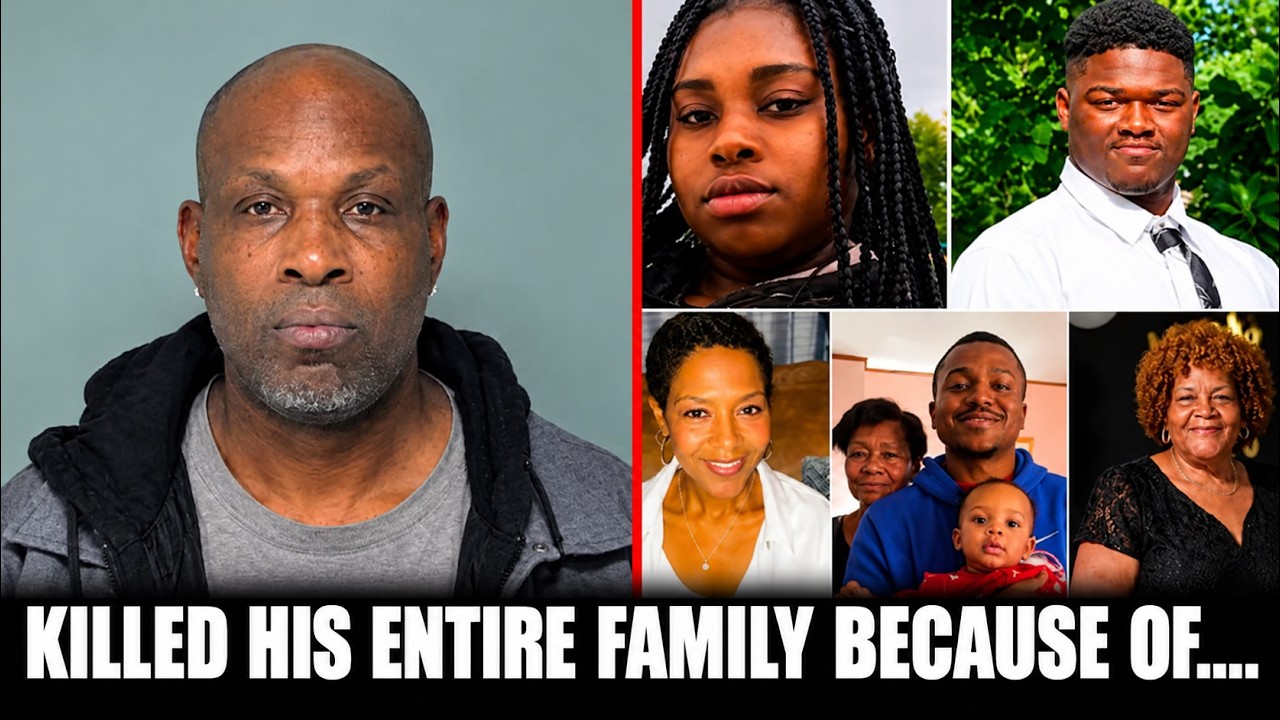
According to the account of the police response, Williams told the dispatcher that he had killed his family and intended to take his own life.
Officers were dispatched immediately.
As one of the first officers approached the house, a gunshot sounded from inside.
Police withdrew, established a perimeter, and treated the situation as a possible armed barricade.
For nearly two hours, officers waited outside without knowing whether anyone inside could still be rescued.
At approximately 10:57 a.m., they breached the front door.
Inside, they discovered six people dead.
Williams was among them.
The others were 44-year-old Kelly L. George and four children: nine-year-old Carol A. Williams, seven-year-old Ronald H. Williams Jr., five-year-old Sarah K. Williams, and three-year-old Kelly M. McGee-Williams.
The tragedy immediately shocked Winfield, a small community in Cowley County near the Oklahoma border.
Initially, authorities described the case as a man killing his partner and children before taking his own life.
But three days later, investigators announced a finding that substantially changed the public understanding of what had happened.
According to the Kansas Bureau of Investigation, evidence suggested that both Williams and George had participated in planning the children’s deaths and their own suicides.
That announcement transformed a terrible family tragedy into an even more disturbing investigation.
It also raised questions about the warnings that police, neighbors, schools, and child welfare officials had reportedly encountered during the preceding two years.
A Quiet Kansas Town Confronts an Unthinkable Crime
Winfield is a community of approximately 11,000 residents in southern Kansas.
Located along the Walnut River, it is known for its historic downtown, educational institutions, churches, and connections to the surrounding agricultural region.
For many residents, the events of August 11 represented a shocking rupture in ordinary community life.
The family had moved into a rental home on West Ninth Street in 2024, according to the supplied account.
Williams and George lived there with four young children.
From the outside, their household might initially have appeared ordinary.
The children attended local schools for at least part of their time in Winfield.
They had classmates, teachers, and neighbors who encountered them in everyday life.
But the family’s relationship with the surrounding community reportedly became increasingly troubled.
Neighbors described frequent shouting and confrontations.
Police records reportedly documented repeated calls involving the address.
State child welfare personnel had also experienced alarming encounters with Williams.
Those incidents would receive renewed attention after the deaths.
The 911 Call That Sent Officers Racing Toward West Ninth Street
According to the transcript, Williams contacted emergency services shortly before 9 a.m.
He reportedly identified himself and stated that he had killed his family.
He then indicated that he intended to kill himself.
Officers were already working another incident nearby and responded quickly.
Dispatch warned them that the caller might be armed and dangerous.
As an officer approached the residence, a single gunshot was heard.
At that moment, the responding officers could not know who had fired the weapon or whether the caller remained alive.
They also lacked reliable information about the condition of the other people inside.
Police therefore withdrew and established a perimeter.
Emergency medical personnel were instructed to remain available.
The street was secured while officers assessed the situation.
The police chief later explained that the department treated the incident as an armed barricade because the available information suggested a potentially dangerous person remained inside.
Shortly before 11 a.m., officers entered.
They discovered the six bodies and requested medical assistance.
The Kansas Bureau of Investigation was called to assist with the investigation.
Four Children Were Among the Dead
The victims included four children whose ages ranged from three to nine.
Carol A. Williams was nine years old.
Ronald H. Williams Jr. was seven.
Sarah K. Williams was five.
Kelly M. McGee-Williams, the youngest, was three.
Their deaths became the emotional center of the tragedy.
The children had no control over the decisions made by the adults responsible for their care.
They depended on their parents and the surrounding community for protection.
Their names and ages also underscored the scale of the loss.
One child was approaching adolescence.
Another was beginning the early years of elementary school.
The younger children were still at ages when their daily lives depended heavily on adult supervision.
The public record described in the supplied account contains limited information about their individual personalities.
It would be inappropriate to invent details about their interests or experiences.
What is clear is that four young lives ended inside a home where they should have been safe.
The Family’s History Drew Scrutiny After the Deaths
In the days following the shooting, reporters reportedly examined Williams’s criminal history.
According to the supplied account, he had been convicted in Wyandotte County in 1998 of attempted indecent liberties with a child.
The case involved an incident from 1997 concerning a 15-year-old girl.
The conviction placed him on the Kansas sex offender registry.
The transcript also describes a criminal history extending across several Kansas counties.
Reported charges included drug offenses, battery, burglary, assault, attempted rape, and kidnapping.
However, charges and convictions are not interchangeable.
Not every accusation described in a criminal record establishes that the accused committed the alleged offense.
The account identifies convictions including theft, battery, aggravated battery, and violation of a protection-from-abuse order.
It also describes a 2005 case involving allegations that Williams confined a woman inside a residence and threatened violence.
Those records became relevant to questions about his history of aggression.
But a criminal record alone cannot establish why a later tragedy occurred.
Investigators still had to examine the circumstances of the August 2026 deaths.
More Than 20 Police Reports Raised Questions About Earlier Intervention
One of the most troubling details in the supplied report concerned the number of police contacts involving the household.
Winfield’s police chief reportedly acknowledged approximately 20 to 22 reports associated with the family.
Many calls came from Williams or George themselves.
The complaints included allegations involving medical records, supposed fraudulent activities, and people allegedly targeting the household.
Officers reportedly described some statements as confusing or nonsensical.
The couple also made repeated complaints about activity around their property.
According to the transcript, police records reflected concern about possible mental health problems or substance use.
Those observations were not established medical diagnoses.
Unusual statements or beliefs cannot, by themselves, prove that a person has a particular psychiatric condition.
Nevertheless, the frequency of police contacts became a significant issue after the deaths.
Each incident had been addressed individually.
The question was whether the cumulative pattern should have prompted a broader assessment of the children’s safety.
A Delivery Driver Reportedly Encountered Williams With a Gun
The transcript describes an incident involving a FedEx driver who used the family’s driveway to turn around.
According to the driver’s account, Williams confronted him with a firearm.
When officers responded, Williams reportedly denied possessing a gun.
The driver did not pursue charges.
The incident became one of several examples cited by those questioning whether the household presented an escalating danger.
A single reported confrontation does not establish all the circumstances surrounding an encounter.
But allegations involving firearms can become especially important when authorities later investigate a shooting.
The transcript also describes neighbors reporting gunfire or threatening behavior associated with the property.
Those claims deserve careful examination against official records.
They cannot all be treated as proven events solely because they appeared in retrospective reporting.
The larger concern was whether the authorities had enough information to recognize a pattern of potential risk.
Child Welfare Officials Had Reported Alarming Encounters
The Kansas Department for Children and Families, commonly known as DCF, also appeared in the history described by the transcript.
According to the account, the agency confirmed two incidents involving Williams.
The first occurred in 2024.
Williams allegedly made threatening statements involving agency personnel.
Around the same period, police reportedly received a complaint concerning aggressive behavior by Williams and George at a DCF office.
The second incident occurred in June 2026.
Williams allegedly caused a disturbance at the Winfield DCF office.
Staff reportedly locked the building’s doors temporarily.
Police responded and instructed him to leave.
According to the transcript, agency leadership considered whether he should be barred from the office.
These incidents raised questions about the relationship between the household and the agency responsible for protecting children.
But the publicly described encounters did not establish what assessments DCF conducted regarding the children.
Nor did they establish whether agency workers had legal grounds to remove them from the home.
Those questions would require access to additional records.
Schools and Neighbors Reportedly Observed Other Warning Signs
The children’s school experiences also became part of the broader investigation.
According to the supplied account, Williams and George made complaints involving school personnel and events affecting their children.
Some allegations involved bullying or inappropriate conduct.
Other complaints concerned incidents whose precise circumstances were not publicly explained.
The transcript does not establish whether the allegations were substantiated.
Neighbors, meanwhile, described confrontations and disturbing behavior around the home.
One resident reportedly shared video showing Williams shouting angrily.
Others said they had contacted police repeatedly.
After the deaths, some residents expressed frustration that the earlier incidents had not produced more substantial intervention.
Those reactions were understandable in a community trying to make sense of an extraordinary loss.
However, hindsight can make separate warning signs appear more conclusive than they were at the time.
Determining whether authorities missed a legally actionable threat requires examining what each agency knew, when it knew it, and what options were available.
Investigators Initially Believed Williams Had Acted Alone
The first public account of the deaths centered on Williams’s 911 confession.
He had reportedly said he killed his family and intended to kill himself.
Officers heard a gunshot as they approached.
They later found him dead alongside George and the children.
That sequence supported the initial description of a murder-suicide committed by the father.
The police chief acknowledged previous contacts with Williams and reports of erratic behavior.
But he reportedly said those encounters had not indicated that such a tragedy was imminent.
The Kansas Bureau of Investigation continued examining the evidence.
Agents processed the scene, reviewed records, and interviewed people connected to the family.
Then the investigation took an unexpected turn.
Three Days Later, Authorities Announced a Dramatic New Finding
On August 14, 2026, the Kansas Bureau of Investigation and Winfield Police Department reportedly issued an update.
According to the transcript, investigators no longer believed the deaths had resulted from an argument or spontaneous physical confrontation.
Instead, they concluded that Williams and George had jointly participated in planning the children’s killings and their own deaths.
The announcement fundamentally changed the narrative.
George had initially been described as one of the people killed by Williams.
The new investigative finding alleged that she had shared responsibility for the plan.
This was an investigative conclusion rather than a criminal conviction.
Neither adult could stand trial because both had died.
The public account also did not provide the full evidence supporting the agency’s determination.
That limitation is important.
Investigators may have reached their conclusion through evidence unavailable to the public, but the transcript does not establish the complete reasoning.
A Revolver Purchased by George Became a Key Detail
The August 14 update reportedly identified a Taurus .38 Special revolver recovered at the scene.
According to the supplied account, investigators found documentation showing that George purchased the firearm in February 2025.
The purchase preceded the deaths by approximately 18 months.
The detail attracted attention because Williams had a substantial criminal record.
Questions arose about whether he could lawfully possess a firearm.
But the fact that George purchased the weapon does not independently establish how the final plan developed or who performed each act.
Those questions depend on the complete forensic investigation.
The transcript states that investigators found no evidence suggesting anyone outside the two adults was responsible.
It also indicates that the agency planned to submit a completed report to the Cowley County Attorney.
Until that evidence is publicly available, significant questions remain.
The Finding About Both Parents Changed the Case’s Central Question
The possibility that both adults participated in planning the deaths created a particularly disturbing implication.
The four children may have had no protective adult within their household.
In many dangerous family situations, one caregiver may seek help from relatives, law enforcement, or social services.
The investigators’ reported finding suggested a different situation.
Both adults were alleged to have participated in the same fatal plan.
The transcript also described both parents making unusual complaints and becoming involved in disputes with agencies and neighbors.
That overlap raised questions about whether they shared certain fears or beliefs.
But it would be speculative to assign them a psychiatric diagnosis or conclude that their mental states were identical.
The evidence described publicly does not support those claims.
What the reported investigative finding does suggest is that the children faced danger from the very adults responsible for their safety.
Why Repeated Warning Signs Do Not Always Produce Intervention
After the deaths, public attention turned toward the legal and practical limitations faced by police and child welfare agencies.
Officers can respond to threats, investigate suspected crimes, and take action when legal standards are met.
But unusual beliefs, angry speech, or repeated complaints do not automatically authorize arrest or involuntary psychiatric detention.
Child welfare agencies also operate under legal requirements governing investigations, access to records, and removal of children.
Removing a child from a home is a serious intervention requiring an appropriate legal basis.
Those safeguards exist to protect families against unjustified state action.
At the same time, repeated incidents can indicate risks that may not be apparent from a single report.
The challenge is recognizing when separate observations form a pattern requiring additional attention.
The transcript suggests that police, school personnel, child welfare staff, and neighbors each encountered different aspects of the family’s difficulties.
What remains unclear is whether those observations were combined into a comprehensive safety assessment.
The Child Welfare Records Became Another Source of Controversy
Following the shooting, news organizations reportedly requested records from the Kansas Department for Children and Families.
They sought information about the agency’s involvement with the family.
Questions included when DCF first became aware of the household, whether it had assessed the children’s safety, and what actions it had taken.
According to the supplied account, DCF denied certain requests on August 21, 2026.
The agency reportedly cited restrictions under Kansas law concerning disclosure of records following a child’s death.
The transcript describes the agency’s position as depending partly on whether a qualifying abuse or neglect finding had been made or criminal charges had been filed.
Because both adults were dead, no criminal charges could be brought against them.
That situation created an unusual transparency problem.
The absence of criminal proceedings did not mean the deaths were unimportant.
But it potentially limited the mechanisms through which records could become public.
The supplied account does not establish whether subsequent reviews, legal challenges, or disclosures changed that position.
The Firearm Question Remained Unresolved
Another concern involved access to the revolver recovered from the home.
Williams’s criminal history raised questions about whether he was legally permitted to possess firearms.
Federal and Kansas laws impose restrictions on firearm possession for certain people with criminal convictions.
However, the precise legal consequences depend on the offenses, relevant statutes, and other circumstances.
The transcript reports that the firearm was purchased by George.
It does not establish whether that purchase violated any law.
Nor does it establish precisely how Williams accessed the weapon before the deaths.
Investigators would need to examine ownership records, possession, and the circumstances of the shooting.
The case nevertheless raised questions about whether earlier reports involving firearms had been adequately investigated.
The Community Built a Memorial for the Children
In the days following the tragedy, residents gathered outside the home on West Ninth Street.
According to the transcript, flowers, stuffed animals, angel figurines, and other memorial objects appeared near the porch.
Some visitors had known the family.
Others had never met the children but wanted to acknowledge their deaths.
The memorial became a place for grief and reflection.
Residents expressed sympathy for the children and frustration over the circumstances preceding the tragedy.
Donations reportedly came from people beyond Kansas.
Community members also organized support for emergency responders who had entered the home.
The Kansas Bureau of Investigation had acknowledged the emotional impact on its personnel and arranged peer support.
The case affected not only the victims’ relatives and neighbors but also officers, medical personnel, investigators, and others involved in the response.
The Investigation Left Questions That May Never Be Fully Answered
Because both adults died, the case would not proceed through an ordinary criminal trial.
There would be no courtroom testimony from either parent.
No jury would assess their individual responsibility.
No defense attorneys would cross-examine the investigators on behalf of the deceased.
That absence makes the quality and transparency of the investigative record especially important.
The transcript identifies several unresolved questions.
What evidence led investigators to conclude that both adults planned the killings?
What did child welfare officials know about the children’s circumstances?
Were police reports reviewed collectively?
Did schools or neighbors communicate concerns that warranted additional action?
Were there opportunities for intervention that were not recognized at the time?
The supplied account does not provide definitive answers.
It describes an ongoing investigation and a community seeking a fuller explanation.
Remembering Carol, Ronald Jr., Sarah, and Kelly
The circumstances of the deaths are shocking.
The criminal history, police calls, investigative findings, and agency records raise difficult questions.
But those issues should not overshadow the four children.
Carol was nine.
Ronald Jr. was seven.
Sarah was five.
Kelly was three.
They had barely begun their lives.
Their deaths were not inevitable simply because warning signs existed.
Nor can the available information establish exactly what intervention might have prevented the tragedy.
What remains clear is that the children depended on adults to protect them.
The reported investigative finding suggests that the people closest to them instead became responsible for their deaths.
The community’s memorial reflected a determination that their lives should not be reduced to an incident number or a police report.
What the Winfield Tragedy Reveals About Child Protection
The case illustrates the difficulty of identifying serious risks when information is scattered across institutions.
Police may encounter threatening behavior.
Schools may observe family conflict.
Child welfare agencies may receive reports involving the household.
Neighbors may witness disturbances.
But no single person or agency necessarily possesses a complete picture.
The challenge is determining when information should be shared, how it should be evaluated, and what intervention is legally justified.
Those questions cannot be answered by assuming that every unusual behavior predicts violence.
Most people experiencing psychological distress do not commit violent crimes.
A criminal history also does not make every later accusation true.
Effective prevention requires specific evidence, appropriate assessments, and coordinated responses.
The Winfield case may provide an opportunity to examine whether existing procedures were sufficient.
But meaningful conclusions require access to reliable records rather than speculation.
Six Deaths, Four Lost Childhoods, and a Town Still Waiting for Answers
The events of August 11, 2026, left Winfield confronting a tragedy of extraordinary scale.
A father called emergency services and reportedly confessed to killing his family.
Police arrived and heard a gunshot.
After entering the home, they discovered six people dead.
Three days later, investigators announced that both adults were believed to have participated in planning the deaths.
That finding transformed the investigation and intensified questions about the family’s earlier contacts with public agencies.
More than 20 police reports, alarming encounters involving child welfare personnel, and concerns raised by neighbors became part of the public discussion.
Yet the complete investigative record described in the transcript had not been released.
The tragedy therefore remains both a story of devastating violence and a story of unanswered institutional questions.
For the community, the most important issue is not simply whether warning signs existed.
It is whether those signs could have been recognized, evaluated, and acted upon in a way that protected the children.
That question deserves careful examination rather than easy conclusions.
And while the investigation continues to shape public debate, the names at the center of the tragedy should remain visible.
Carol A. Williams.
Ronald H. Williams Jr.
Sarah K. Williams.
Kelly M. McGee-Williams.
Four children whose lives ended far too soon.
Whatever additional evidence emerges, their deaths remain the lasting loss behind the tragedy on West Ninth Street.


