On November 21, 1963, President John F. Kennedy arrived in Texas expecting a demanding but politically important visit.
He was forty-six years old, approaching another presidential campaign, and confronting divisions within his own political coalition nationwide.
Yet behind his confident public appearances, Kennedy carried a private awareness that his presidency could end through violence.
According to later recollections, he discussed the possibility of assassination during the final morning of his life in Fort Worth.
The conversation would acquire extraordinary significance after the gunfire that struck his presidential limousine in Dallas hours later.
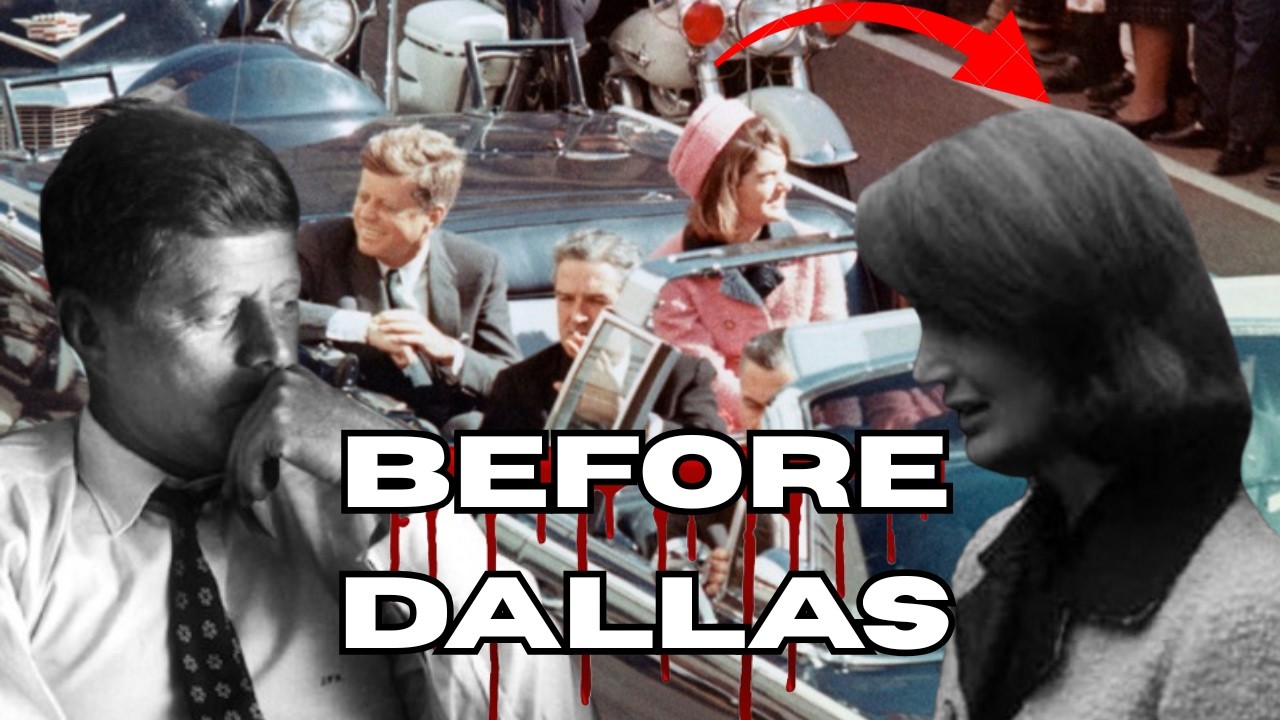
What makes the account especially haunting is not evidence of supernatural foresight, but Kennedy’s unusually clear understanding of vulnerability.
He had spent years living with illness, personal loss, political hostility, and the knowledge that protection had limits.
The final Texas journey brought those experiences together against a backdrop of enthusiastic crowds and unresolved political tensions.
To understand the significance of his reported remarks, the story must begin with the political stakes of Texas.
Kennedy’s advisers were already preparing for the 1964 election, when the president would seek another four-year term in office.
Texas had been essential to his narrow 1960 victory, but the state’s Democratic coalition was becoming increasingly unstable.
Governor John Connally represented the party’s conservative establishment, while Senator Ralph Yarborough spoke for its more liberal faction.
Their rivalry had become an embarrassment for national Democrats and threatened to undermine the president’s future electoral prospects.
Vice President Lyndon Johnson, himself a Texan, was caught within a conflict involving longstanding loyalties and competing ambitions.
Kennedy hoped that appearing alongside these political figures might encourage unity before their disagreements became more damaging publicly.
The trip was therefore more than a ceremonial visit designed to generate favorable photographs and enthusiastic newspaper coverage.
It was an effort to protect a politically valuable state while demonstrating presidential authority across competing Democratic constituencies.
The underlying challenge extended beyond personalities because Texas was undergoing substantial economic, demographic, and political transformation during this period.
Defense production, aerospace research, petroleum, agriculture, and industrial development were reshaping the state’s relationship with the federal government.
Kennedy understood that federal investment could generate employment and strengthen regional economies while advancing national security priorities simultaneously.
His speeches in Texas repeatedly emphasized these connections, presenting military preparedness and technological progress as engines of prosperity.
For Fort Worth, aircraft manufacturing and defense contracts were particularly important components of the local economy and workforce.
Houston’s expanding space industry likewise illustrated how federal research programs could transform a city’s economic prospects and identity.
Kennedy’s political message therefore combined Cold War security arguments with promises of continued technological and industrial advancement nationally.
But economic opportunity did not eliminate the hostility directed toward his administration by certain influential Texas political groups.
Dallas had developed a reputation for particularly aggressive opposition to Kennedy among some conservative activists and newspaper commentators.
Only weeks earlier, United Nations Ambassador Adlai Stevenson had encountered an angry demonstration during a visit to Dallas.
Protesters shouted accusations, and Stevenson was struck during the confrontation, producing concern about the city’s political atmosphere.
The incident demonstrated that hostility toward administration officials could move beyond ordinary criticism into physical intimidation and violence.
Warnings about Dallas subsequently reached people associated with the White House, although their practical implications remained difficult to assess.
A threatening political environment did not necessarily mean that a specific assassination plot had been identified or confirmed.
That distinction matters because later interpretations frequently treat generalized hostility as evidence of knowledge about an impending attack.
Kennedy’s advisers were dealing with a recognizable political problem, not a documented warning identifying the eventual assassin beforehand.
Nevertheless, the atmosphere created a troubling backdrop for a president whose public appearances required close contact with strangers.
Kennedy was familiar with danger long before he entered the White House or encountered the political divisions of Texas.
His older brother, Joseph Kennedy Jr., had died during a dangerous military aviation mission in August 1944 overseas.
His sister Kathleen died in a plane crash in 1948, adding another devastating loss to the family’s history.
Kennedy himself experienced serious medical emergencies that brought him repeatedly close to death during his earlier adult years.
Chronic back problems caused significant pain, while Addison’s disease complicated his health and required continuing medical management throughout life.
These difficulties contrasted sharply with the youthful vitality that became central to his carefully cultivated public presidential image.
Kennedy had also endured the loss of children, experiences that deeply affected his marriage to Jacqueline Kennedy personally.
Their daughter was stillborn in 1956, while their premature son Patrick died shortly after birth in August 1963.
The death of Patrick occurred less than three months before the Texas trip, leaving both parents grieving privately.
Jacqueline’s participation in the visit represented a significant return to public presidential duties following that painful family tragedy.
Kennedy therefore arrived in Texas carrying personal experiences that complicated the confidence visible in his public appearances there.
His familiarity with mortality may help explain why later associates remembered him discussing assassination with unsettling emotional detachment.
Accounts of these remarks appear in memoirs and historical narratives compiled after his death, requiring careful interpretation today.
They illuminate how people remembered Kennedy, but they cannot always establish the exact wording of private conversations beforehand.
That limitation becomes especially important when recollections appear almost prophetic because subsequent events have given them extraordinary meaning.
Kennedy’s reported fatalism was not necessarily an expectation that he would die during this particular Texas journey.
Rather, it reflected a broader recognition that political prominence exposed public officials to dangers no security arrangement could eliminate.
On November 21, the presidential party began its Texas appearances in San Antonio before continuing to Houston later.
At Brooks Air Force Base, Kennedy participated in ceremonies highlighting aerospace medicine and the nation’s ambitious space program.
The subject brought together scientific research, military preparedness, and the administration’s vision of technological leadership during the Cold War.
Kennedy had made space exploration a defining national priority, connecting scientific achievement with American confidence and international prestige.
His administration supported the effort to land astronauts on the Moon before the decade reached its conclusion successfully.
The Texas aerospace industry stood to benefit substantially from that commitment through research, employment, and expanding federal contracts.
In San Antonio, Kennedy’s remarks celebrated the willingness to confront uncertainty through science rather than retreat from difficult challenges.
The theme of advancing into the unknown would later acquire a painful resonance when historians reconstructed his final day.
But the speech was fundamentally forward-looking, concerned with scientific progress rather than any prediction of his personal fate.
The crowds greeting Kennedy appeared enthusiastic, offering a warmer reception than the state’s political divisions might have suggested.
From San Antonio, the president traveled to Houston, where the schedule combined political outreach with ceremonial recognition events.
Kennedy and Jacqueline appeared at a gathering of the League of United Latin American Citizens at the Rice Hotel.
The organization had played an important role in political engagement among Mexican American communities and other Latino constituencies.
Jacqueline addressed the gathering in Spanish, demonstrating the linguistic abilities that had already enhanced her international public appeal.
Her appearance produced an enthusiastic response and reinforced the administration’s efforts to communicate with diverse American voting communities.
Kennedy recognized that his wife’s popularity could reach audiences beyond those normally engaged by conventional presidential campaign speeches.
Her presence also gave the Texas trip a personal dimension that newspaper photographs and television coverage could emphasize.
Later that evening, the couple attended a dinner honoring Representative Albert Thomas at Houston’s Sam Houston Coliseum.
Thomas had helped advance federal support for the space program and its expanding presence in the Houston area.
The dinner drew a large audience, reflecting both the congressman’s local importance and the president’s national celebrity status.
Kennedy praised Thomas while emphasizing the economic transformation taking place across Texas through technology and industrial development.
The speech linked federal policy with local opportunity, a message designed to resonate with business leaders and workers.
Houston’s aerospace expansion offered a particularly compelling example of Washington’s influence over regional employment and economic growth patterns.
For Kennedy, such projects represented national investments whose benefits extended beyond the immediate requirements of military competition abroad.
His administration believed scientific advancement could strengthen American prosperity while reinforcing the country’s international strategic position overall.
The president’s performance that evening suggested a politician comfortable explaining complicated national priorities through familiar regional examples.
Yet behind the speeches, disagreements among Texas Democrats remained unresolved despite efforts to encourage public cooperation and unity.
Yarborough’s resistance to Johnson and Connally illustrated how difficult it would be to reconcile the party’s competing factions.
Kennedy could command national attention, but he could not simply eliminate the longstanding resentments dividing powerful Texas politicians.
Those frustrations formed part of the ordinary political burden accompanying the president throughout his final full day alive.
After the Houston dinner, the presidential party continued toward Fort Worth for an overnight stay at Hotel Texas.
The schedule had been exhausting, involving speeches, receptions, motorcades, political conversations, and repeated encounters with enthusiastic crowds throughout Texas.
Air Force One reached Carswell Air Force Base late that evening, where thousands had gathered despite the hour.
Their presence was remarkable because the arrival occurred near midnight, after an exceptionally long day of presidential travel.
Fort Worth had prepared an elaborate welcome, including illuminated downtown buildings that transformed the skyline for the visit.
The glowing city offered a striking contrast with the darkness surrounding the aircraft’s arrival at the military base.
Crowds also appeared along portions of the motorcade route, hoping to glimpse the president and first lady together.
The welcoming atmosphere demonstrated that political hostility in Texas was far from universal, even during this contentious period.
Many residents regarded the presidential visit as a civic occasion worthy of extraordinary hospitality and enthusiastic public participation.
For the Kennedys, however, the most unusual expression of that hospitality awaited them inside their assigned hotel suite.
Hotel Texas had reserved Suite 850, a relatively modest arrangement selected partly for presidential security considerations that evening.
The rooms lacked the grandeur some visitors might have expected for the president of the United States himself.
But a group of local art enthusiasts had quietly transformed the suite into an extraordinary temporary private exhibition.
The project originated with Fort Worth art critic Owen Day, who recognized an opportunity to showcase the city’s culture.
Day contacted local arts patron Samuel Benton Cantey III, helping organize an ambitious effort under severe time constraints.
Ruth Carter Johnson, associated with the Amon Carter Museum of American Art, became another important supporter of the installation.
She was the daughter of newspaper publisher Amon G. Carter and belonged to a prominent Texas family circle.
Although her political preferences differed from Kennedy’s, she supported the effort as an expression of civic hospitality and pride.
The organizers assembled paintings and sculptures from museum collections and private lenders, arranging transportation and installation within days.
Their choices reflected the Kennedys’ documented interests in art, history, and the cultural achievements of different artistic traditions.
Works associated with Vincent van Gogh, Pablo Picasso, Claude Monet, and Thomas Eakins appeared within the temporary display.
The selection also included modern sculpture and American works, presenting a broader cultural identity than conventional hotel decoration.
Kennedy’s bedroom featured Eakins’s painting Swimming, while Jacqueline’s surroundings included works chosen to appeal to her artistic preferences.
A printed catalog explained the objects, providing the presidential guests with information about the collection assembled for them.
The gesture was extraordinary because valuable original artworks had been installed in a hotel suite for one night.
It required trust among lenders, careful logistical coordination, and the willingness to accept considerable responsibility for borrowed objects.
The collection represented a deliberate attempt to impress visitors through cultural generosity rather than conventional political ceremony alone.
Yet the Kennedys were reportedly too exhausted to appreciate the full significance of the installation upon arrival.
After hours of public appearances, their immediate priority was rest before another demanding morning of presidential engagements began.
Accounts suggest that Jacqueline initially assumed some of the paintings were reproductions rather than valuable original works of art.
The couple retired without fully examining the catalog, leaving the collection’s importance to be discovered the following morning.
Kennedy spent his final night beneath an important American painting, surrounded by art assembled through extraordinary local effort.
The detail would later become one of the most poignant elements of the entire Texas presidential visit afterward.
But another event associated with Suite 850 would acquire a far darker significance in accounts published after the assassination.
Kennedy reportedly discussed how easily an attacker might have struck during the previous evening’s crowded motorcade in Fort Worth.
The conversation was later described by Kenneth O’Donnell, a trusted political aide who traveled closely with the president.
O’Donnell’s recollections appeared in Johnny, We Hardly Knew Ye, the memoir he produced with David Powers in 1972.
William Manchester’s The Death of a President also presented an account of Kennedy’s disturbing reflections about assassination risks.
According to these retrospective narratives, Kennedy considered the nighttime motorcade an especially vulnerable situation for presidential security personnel.
The darkness, crowds, movement, and confusion could have allowed an armed attacker to approach without attracting immediate attention.
He reportedly imagined a concealed pistol and an assailant disappearing into the crowd after firing at the president.
The scenario was chilling because it described an ordinary security vulnerability rather than an elaborate or improbable conspiracy.
O’Donnell remembered Kennedy speaking with seriousness, explaining how the conditions might allow an attacker to escape detection afterward.
The president reportedly illustrated the hypothetical attack through gestures, emphasizing the speed with which violence could occur unexpectedly.
His observations were not evidence that he knew someone intended to kill him in Dallas later that day.
They demonstrated an awareness that public office required exposure to dangers beyond the complete control of security officers.
The precise wording and timing remain dependent on accounts recorded after the assassination, rather than a contemporaneous transcript.
That evidentiary distinction is essential because recollections can change when witnesses reinterpret ordinary conversations through subsequent traumatic events.
Nevertheless, the broader subject fits Kennedy’s reported habit of acknowledging the possibility of sudden and violent death.
He understood that even highly trained agents could not guarantee protection against every conceivable method of attack whatsoever.
The hypothetical Fort Worth scenario concerned an attacker close to the motorcade, concealed among people gathered along streets.
Other recollections attributed to Kennedy acknowledged the danger of distant gunfire from buildings overlooking a presidential motorcade route.
Those remarks would later seem especially haunting because the assassination involved shots fired from an elevated building position.
But similarity between a hypothetical danger and a subsequent event does not establish foreknowledge of that event itself.
Political leaders and security officials had long recognized that public appearances exposed presidents to potentially lethal threats everywhere.
Kennedy’s remarks therefore belong within the history of presidential vulnerability rather than claims of supernatural prediction or certainty.
The next morning, November 22, Kennedy resumed his schedule with an outdoor appearance in downtown Fort Worth before breakfast.
Rain had fallen, but thousands gathered near the hotel to hear the president speak despite uncomfortable weather conditions.
Kennedy appeared without a hat or overcoat, projecting the familiar youthful confidence that had become his political trademark.
He thanked the audience for waiting in the rain and acknowledged their willingness to attend despite difficult conditions.
His opening humor also turned attention toward Jacqueline, whose preparation for public appearances occasionally required additional time that morning.
The audience laughed as Kennedy suggested that his wife ultimately looked considerably better than the men accompanying her.
The remark demonstrated his ability to transform a routine scheduling delay into an affectionate moment of public connection.
Nothing in his outward performance suggested that the previous night’s reported conversation had unsettled his determination to continue.
Instead, he discussed national defense, economic progress, and Fort Worth’s role in producing important American military aircraft.
General Dynamics operated a major aircraft facility in the area, providing employment tied closely to federal defense spending.
Kennedy understood that national security policy carried direct economic consequences for the people standing before him that morning.
His administration’s military commitments supported industrial production while imposing substantial demands on the federal government’s annual budget resources.
The president presented these expenditures as necessary investments in freedom and American strategic strength during Cold War competition.
He also emphasized continued progress, using the language of forward movement to connect local industry with national purpose.
The speech reflected an administration determined to project confidence despite international tensions and domestic political disagreements across America.
Kennedy then greeted members of the crowd, continuing the personal interactions that had characterized his Texas appearances throughout.
For Secret Service personnel, such encounters represented a difficult balance between presidential accessibility and the requirements of physical protection.
Kennedy’s political appeal depended partly on his willingness to approach voters rather than remain distant behind protective barriers.
Yet every close encounter created additional opportunities for unpredictability, particularly in crowded spaces with limited visibility around him.
The tension between democratic openness and presidential security had become a defining challenge of modern political life already.
Kennedy accepted that tension as part of his public role, although his private remarks suggested awareness of its dangers.
Later that morning, the president attended a breakfast organized by the Fort Worth Chamber of Commerce at Hotel Texas.
The gathering brought together business executives, political leaders, labor representatives, and influential figures from the surrounding community there.
Johnson, Connally, Yarborough, and Congressman Jim Wright were among the prominent political figures associated with the event itself.
The breakfast offered another opportunity for Kennedy to emphasize federal investment, national defense, and economic development in Texas.
He also returned to the subject of Jacqueline’s popularity, drawing laughter by comparing the visit with Paris earlier.
During the 1961 trip to France, he had jokingly presented himself as the man accompanying his celebrated wife.
The Fort Worth audience responded enthusiastically to the familiar joke, which acknowledged Jacqueline’s exceptional international public appeal openly.
Kennedy also joked that nobody seemed particularly interested in what he and Vice President Johnson were wearing themselves.
The humor reinforced an image of a president comfortable sharing public attention with his wife during official appearances.
When Jacqueline entered the ballroom, the audience welcomed her warmly, demonstrating the popularity Kennedy had just described publicly.
Her presence carried additional emotional significance because she was returning to demanding public duties after Patrick’s death recently.
The couple appeared composed and engaged, providing the kind of reassuring image political advisers valued during presidential travel.
Kennedy’s formal remarks then turned toward defense preparedness and the strategic responsibilities confronting the United States abroad continually.
He emphasized the cost of maintaining military strength while arguing that national security justified substantial public investment annually.
Fort Worth’s aircraft industry gave those arguments immediate relevance to the livelihoods of many people attending the breakfast.
Federal contracts supported skilled workers, local suppliers, transportation services, and businesses connected to the aerospace manufacturing sector regionally.
The economic consequences extended beyond factory employment because defense spending generated additional demand throughout surrounding communities and industries.
Kennedy’s remarks therefore connected the administration’s geopolitical objectives with practical concerns about employment and industrial competitiveness at home.
He sought to reassure business leaders that American strength required continued technological development and disciplined national commitment abroad.
The message was designed to bridge partisan divisions through shared interests in security, prosperity, and industrial opportunity nationwide.
By the conclusion, Kennedy had delivered another confident performance despite the political tensions surrounding his Texas itinerary overall.
After the breakfast, the presidential party prepared for departure, with Dallas representing the next major destination that morning.
Before leaving, however, the Kennedys finally recognized the extraordinary collection assembled inside their hotel suite for them.
Jacqueline reportedly examined the catalog and discovered that the paintings were originals rather than reproductions as initially assumed.
The realization transformed what had seemed like elegant decoration into a remarkable expression of generosity from Fort Worth residents.
Kennedy was reportedly moved by the gesture and wanted to acknowledge those responsible before departing the city altogether.
Accounts associated with the Hotel Texas art exhibition describe his telephone conversation with organizer Ruth Carter Johnson afterward.
The president thanked her for arranging the collection, recognizing the effort required to assemble such significant artworks overnight.
Jacqueline also reportedly spoke with Johnson, expressing admiration for the display and regret that their visit was ending.
The exchange offered a rare moment of quiet cultural appreciation within an otherwise tightly scheduled presidential itinerary that morning.
It also crossed political boundaries, since Johnson had supported the exhibition despite her opposition to Kennedy’s presidency politically.
Her participation demonstrated how civic pride and artistic generosity could transcend partisan disagreements during a contentious national period.
The telephone call later acquired additional significance because some accounts identify it among Kennedy’s final calls before Dallas.
Whether it was definitively his last telephone conversation remains difficult to establish from the available retrospective narratives alone.
What matters is the documented historical connection between the presidential visit and the remarkable Fort Worth art installation.
The collection became a symbol of hospitality remembered through an event that nobody involved could have anticipated that morning.
A further ceremonial moment involved a large cowboy hat presented to Kennedy by local representatives before his departure.
Kennedy accepted the gift but reportedly declined to wear it immediately, maintaining his familiar resistance to certain political photographs.
He suggested that he would put it on later, once he had returned to Washington after the trip.
That promise became another detail transformed by the assassination into an unfinished gesture from the president’s final morning.
The presidential party departed Fort Worth for Carswell Air Force Base, where aircraft awaited the short flight to Dallas.
Meanwhile, workers began removing the paintings from Suite 850, carefully returning them to their respective lenders and collections.
The temporary exhibition had served its purpose, and the organizers expected the objects to resume their ordinary institutional lives.
No one dismantling the display could have understood how profoundly the significance of that hotel room would soon change.
The flight to Dallas was brief, carrying the president toward the final public appearance of his life.
By then, the morning rain had cleared, improving visibility and encouraging expectations of an enthusiastic outdoor motorcade reception.
Later accounts attributed additional comments about assassination risks to Kennedy during the journey toward Dallas that morning.
Some recollections describe him acknowledging that a determined rifleman firing from a building could defeat ordinary protective arrangements.
The reported comments resemble the security concerns discussed in Fort Worth, although their exact wording remains historically uncertain.
Such remarks should not be combined into a single definitive quotation without acknowledging differences among the surviving accounts.
The underlying theme, however, remained consistent: Kennedy recognized the impossibility of guaranteeing complete security during public appearances.
The presidential limousine’s removable transparent roof was another issue later subjected to extensive scrutiny after the assassination occurred.
The covering was not bulletproof, and its absence should not be treated as proof of deliberate security sabotage.
Clear weather made an open vehicle more appealing for public visibility, consistent with the political objectives of the visit.
Yet the open limousine also exposed its occupants, highlighting the difficult choices surrounding presidential security practices in 1963.
Air Force One landed at Dallas Love Field shortly before noon, where large crowds greeted the presidential party.
Jacqueline emerged wearing the pink suit that would later become one of the assassination’s most recognizable visual symbols.
She received red roses, an elegant gesture that contrasted painfully with the violence awaiting the motorcade later that day.
The president and first lady approached spectators along the airport fence, shaking hands and acknowledging enthusiastic supporters nearby.
Their reception challenged the idea that Dallas was uniformly hostile to Kennedy or his administration at that moment.
The city’s political tensions were real, but thousands of residents welcomed the president with genuine excitement and admiration.
That contrast between organized hostility and popular enthusiasm would become central to later interpretations of the Dallas visit.
Kennedy entered the presidential limousine alongside Jacqueline, with Governor Connally and his wife Nellie seated ahead of them.
The motorcade began moving through Dallas streets toward the scheduled luncheon at the Dallas Trade Mart that afternoon.
Crowds lined the route, producing scenes of excitement similar to those Kennedy had encountered elsewhere in Texas recently.
The president responded with waves and smiles, continuing the public engagement that had defined the entire journey thus far.
For approximately half an hour, the procession appeared to confirm the administration’s hopes for a successful political visit.
Dallas residents cheered, waved, and reached toward the passing vehicles as the presidential party traveled through downtown streets.
Nellie Connally later recalled commenting on the warmth of the reception as the limousine approached Dealey Plaza that day.
Kennedy reportedly agreed that the crowd had demonstrated considerable friendliness, a remark remembered among his final spoken words.
The precise final exchange has been reconstructed through testimony and recollections, rather than a complete contemporaneous audio recording.
Nevertheless, the remembered conversation captures the extraordinary contrast between the welcoming crowds and the violence moments away ahead.
At approximately 12:30 p.m., gunfire struck the presidential limousine as it passed through Dealey Plaza in Dallas.
Kennedy sustained fatal injuries, while Governor Connally was also wounded during the attack that shocked the nation instantly.
The limousine rushed toward Parkland Memorial Hospital, where doctors attempted emergency treatment under extraordinarily difficult circumstances that afternoon.
President Kennedy was pronounced dead at approximately 1 p.m., ending a presidency that had lasted less than three years.
Jacqueline remained at the center of the unfolding tragedy, confronting the loss of her husband before the nation.
The events that followed would become among the most extensively investigated and debated episodes in modern American history.
Official investigations examined the shooting, the circumstances surrounding Lee Harvey Oswald, and the performance of presidential security personnel.
The Warren Commission concluded that Oswald fired the shots that killed Kennedy from the Texas School Book Depository.
Subsequent investigations and public debate challenged aspects of the official narrative, sustaining intense interest across later generations.
Those controversies remain separate from the historical question of what Kennedy said during his final hours in Texas.
The Fort Worth conversation cannot independently establish the existence of a conspiracy or identify any additional participants involved.
It instead reveals the president’s reported awareness that his position exposed him to risks no protection could eliminate.
His observations about vulnerability became haunting because the assassination demonstrated those limits with devastating and irreversible consequences afterward.
Meanwhile, the Hotel Texas art exhibition had already been dismantled, returning its borrowed masterpieces to their ordinary destinations.
The objects that had surrounded Kennedy during his final night resumed their existence as paintings and sculptures elsewhere.
Their departure created a striking historical contrast between the permanence of artistic achievement and the fragility of political life.
The room itself remained an ordinary hotel space, despite becoming associated with the last night of Kennedy’s presidency.
Even its key later attracted historical interest as an artifact connected with the president’s final overnight accommodation.
The object’s simplicity underscored how ordinary possessions can acquire extraordinary significance through their association with national tragedy afterward.
A hotel key, a printed art catalog, and a borrowed painting became witnesses to history without recording conversations.
Their historical value came from the circumstances surrounding them, not from any hidden knowledge they could independently reveal.
The temporary exhibition itself received renewed attention decades later as historians and museums revisited the Fort Worth visit.
In 2013, the Dallas Museum of Art organized an exhibition examining the collection assembled for the Kennedys.
The project reunited works associated with the original installation and explored the extraordinary circumstances of their temporary display.
It offered visitors an opportunity to reconsider Kennedy’s final night through art rather than assassination imagery alone again.
The paintings had been selected to reflect the couple’s cultural interests and the ambitions of Fort Worth patrons.
Their presence demonstrated the city’s desire to present itself as sophisticated, generous, and nationally significant during presidential travel.
The organizers had not intended to create a memorial, but subsequent events transformed their hospitality into historical testimony.
Thomas Eakins’s Swimming acquired particular symbolic resonance because the painting had reportedly hung in Kennedy’s bedroom that night.
The work depicts male figures gathered around water, offering themes of physical movement, companionship, and artistic observation together.
Later interpretations connected its imagery with transition and uncertainty, although such symbolism should remain an interpretation rather than fact.
The painting did not predict Kennedy’s death, and its placement carried no documented supernatural or prophetic significance whatsoever.
Its power arose from the knowledge that Kennedy slept beneath it only hours before his assassination in Dallas.
The same applies to the reported conversation about danger, whose emotional force depends upon what happened afterward historically.
Had Kennedy completed his Texas visit safely, the remarks might have remained another example of presidential dark humor.
His fatalism would still have been noteworthy, but it would not have acquired the same enduring historical prominence.
The assassination transformed ordinary recollections into apparent warnings, encouraging audiences to search backward for signs of impending disaster.
This retrospective process is common after traumatic events, particularly when witnesses attempt to understand a sudden and shocking loss.
Memories become organized around the outcome, giving earlier conversations an emotional significance they may not originally have carried.
Responsible historical writing must recognize that process without dismissing the genuine experiences remembered by those closest to Kennedy.
O’Donnell and Powers knew the president intimately, making their accounts valuable sources for understanding his private personality overall.
But their recollections were shaped by grief and published after the assassination had changed their understanding of events.
Manchester also conducted extensive interviews, producing a detailed narrative that influenced how Americans remembered the president’s final hours.
His work remains important, but it should be considered alongside contemporary records and the limitations of retrospective testimony.
The most secure historical foundation comes from documented schedules, recorded speeches, photographs, institutional archives, and official investigative materials together.
Those records establish the itinerary, the public events, the Fort Worth visit, and the assassination’s essential chronology clearly.
They also provide context for evaluating recollections that cannot be verified through recordings or documents created at the time.
Kennedy’s speeches demonstrate a president focused on defense, scientific progress, economic development, and the practical demands of governing.
The surviving images show a politician comfortable with crowds and a first lady attracting extraordinary public admiration throughout Texas.
The hotel exhibition documents a remarkable civic effort to honor the presidential couple through original works of art.
The memoirs add the more intimate dimension of Kennedy’s reported reflections on danger during his final hours alive.
Together, these materials reveal a man simultaneously engaged with national responsibilities and conscious of his personal vulnerability throughout.
His political agenda extended far beyond the immediate challenge of reconciling rival Democratic factions in Texas that week.
The administration faced the Soviet Union, the unresolved future of Berlin, and continuing tensions over nuclear weapons policy.
The Cuban Missile Crisis had demonstrated how quickly international confrontation could threaten catastrophic consequences for the United States.
Kennedy’s commitment to military readiness reflected those experiences, even as he pursued negotiations intended to reduce nuclear danger.
His support for space exploration likewise combined scientific ambition with concerns about American prestige and strategic competition abroad.
At home, civil rights struggles were forcing the administration to confront the country’s deeply entrenched racial inequalities directly.
Economic policy involved debates over taxation, federal spending, industrial investment, and the relationship between growth and national security.
Kennedy advocated substantial tax reductions intended to stimulate economic activity, proposals that remained under congressional consideration during 1963.
His death occurred before the resulting legislation became law under President Johnson the following year in Washington.
These policy debates provide important context because Kennedy was traveling through Texas as an active governing president still.
He was not merely participating in ceremonial appearances or contemplating personal danger during his final journey across Texas.
He was seeking political unity while explaining why federal programs mattered to communities whose economies depended on them.
Fort Worth’s aircraft industry illustrated how national defense priorities translated into jobs, investment, and regional industrial development patterns.
Houston’s space facilities demonstrated the economic opportunities created when government research supported ambitious technological projects over time nationally.
The president’s speeches linked these developments to an argument about American leadership in a competitive international environment overall.
His public message was therefore one of confidence and progress, even amid substantial uncertainty about future political challenges.
The contrast with his reported private conversation makes the final morning particularly compelling for modern readers and historians.
Kennedy could discuss the possibility of assassination while continuing to pursue the political responsibilities expected of his office.
He could recognize serious danger without allowing it to dominate his behavior or prevent ordinary presidential engagements afterward.
He could acknowledge personal vulnerability while projecting national confidence before business leaders and citizens gathered in Texas.
That combination does not require romanticizing his courage or overlooking the security consequences of presidential exposure to crowds.
It instead reveals the difficult balance between political accessibility and the need to protect the nation’s elected leader.
In 1963, the president’s public image depended heavily on appearing approachable, energetic, and personally connected with ordinary Americans.
Kennedy’s willingness to engage crowds strengthened that image but complicated the practical work of his protective security detail.
The assassination exposed weaknesses that would reshape presidential protection, motorcade planning, and public appearances in subsequent decades profoundly.
Yet those later reforms cannot erase the circumstances under which Kennedy and his advisers made decisions in 1963.
Historical judgment requires understanding what was known then rather than assuming that every later danger was obvious beforehand.
The warnings about political hostility were meaningful, but they did not establish that a particular attack would occur.
The reported remarks about assassination were disturbing, but they did not provide actionable information about an identified threat.
The absence of a protective roof reflected security practices and weather considerations, not established knowledge of impending violence.
And the enthusiasm of the Dallas crowds demonstrated why the president’s political team valued visible public accessibility so highly.
These distinctions preserve the difference between documented history and the powerful narratives created after an event of national trauma.
For Jacqueline Kennedy, the Fort Worth visit became part of a final sequence of memories with her husband.
The artistic surroundings, enthusiastic audiences, and shared public appearances followed months of profound personal grief over their infant son.
Her presence in Texas reflected renewed participation in presidential duties, even as the couple continued mourning privately together.
The contrast between their final public appearances and the events in Dallas would define much of her subsequent life.
Jacqueline later helped shape the public memory of Kennedy’s presidency through funeral arrangements and the celebrated Camelot metaphor afterward.
But the final night in Fort Worth offers a different perspective, centered on ordinary experiences before tragedy intervened.
It shows a president receiving hospitality, expressing gratitude, navigating political disagreements, and preparing for another demanding public appearance.
It shows a first lady whose cultural interests inspired a city to assemble an extraordinary private art collection.
And it includes recollections of a man who understood that public admiration could not guarantee personal safety forever.
The final telephone conversation associated with the exhibition provides one of the story’s most affecting human details today.
Kennedy reportedly took time to thank someone whose generosity crossed political boundaries during an intensely partisan national period.
The gesture was modest compared with the responsibilities of his office, but it reflected attention to individual kindness.
It also demonstrated how civic generosity could interrupt the relentless schedule of presidential travel for a brief moment.
The organizers had wanted to show Fort Worth at its best, without knowing what history would soon bring.
Their effort succeeded, at least according to the accounts describing the Kennedys’ reaction to the paintings that morning.
The president reportedly appreciated the gesture enough to make a personal call before departing for Dallas later that day.
Within hours, that ordinary expression of gratitude became associated with the final morning of an American presidency forever.
The significance lies not in predicting the assassination, but in preserving the human experiences preceding it so closely.
History often reduces November 22 to the motorcade, the gunfire, and the devastating scenes at Parkland Memorial Hospital.
Those events deserve careful study, but they can overwhelm the ordinary political and personal experiences immediately preceding them entirely.
November 21 reveals Kennedy as a working president confronting difficult decisions rather than merely a future assassination victim.
He pursued party unity, celebrated scientific achievement, acknowledged local industry, and addressed Americans who hoped to see him.
He experienced the exhaustion of travel and the unexpected generosity of people who admired his cultural interests deeply.
He also reportedly reflected upon dangers that had shadowed his public career long before his arrival in Texas.
The account’s enduring force comes from the coexistence of these ordinary and extraordinary elements during his final journey.
The president who spoke about national progress was also a man aware that his life could end suddenly.
The first lady who admired paintings in a hotel room would soon become an enduring symbol of national mourning.
The art collectors who offered hospitality would discover that their temporary exhibition had become part of presidential history.
And the crowds that cheered Kennedy in Texas would be remembered alongside the violence that ended his life.
The most haunting question is not whether Kennedy somehow knew precisely what would happen to him in Dallas.
There is no reliable evidence that his remarks amounted to a specific prediction of the assassination itself beforehand.
The more consequential reality is that he understood the vulnerability of the presidency and continued fulfilling its responsibilities.
His reported observations expose the limitations of security, the uncertainty of public life, and the unpredictability of violence.
They also remind historians that memory becomes especially complicated when private conversations acquire meaning through subsequent national tragedy.
The final Texas journey deserves attention not because every detail contains a hidden warning or mysterious symbolic message.
It matters because the surviving record reveals the extraordinary demands and ordinary humanity of a president still governing.
On his last full day, Kennedy was negotiating political divisions, celebrating American industry, and receiving unexpected cultural hospitality.
He was grieving a child, traveling beside his wife, and carrying memories of serious illness and family loss.
He was also looking toward another election and speaking publicly about the country’s future with unmistakable political confidence.
By the following afternoon, those ambitions would be interrupted, and the nation would begin confronting an unimaginable presidential loss.
The conversation remembered by O’Donnell remains haunting precisely because Kennedy’s concerns were plausible, practical, and ultimately impossible to dismiss.
He did not need to foresee the future to recognize the dangers inherent in the office he held.
What happened in Dallas gave those concerns their devastating historical significance, transforming recollection into one of the presidency’s darkest echoes.
And behind that echo remains the quieter story of Fort Worth, where Kennedy spent his final night alive.
He slept among borrowed masterpieces, greeted citizens in the rain, praised American progress, and thanked a generous stranger.
Those moments reveal something the assassination footage cannot: a president fully occupied with life before history abruptly intervened.


