America remembers Jacqueline Kennedy standing beside her husband’s coffin, composed beneath a black veil as the nation mourned.
But behind that unforgettable image stood a woman who understood publicity, political power, and the dangers of exposure.
Her marriage to John F. Kennedy combined genuine affection with infidelity, financial dependence, family expectations, and extraordinary personal suffering.
The glamorous photographs concealed a relationship shaped by private negotiations that neither spouse could entirely control or escape.
Jacqueline’s later transformation into Camelot’s guardian was neither accidental nor evidence that her grief lacked genuine emotional depth.
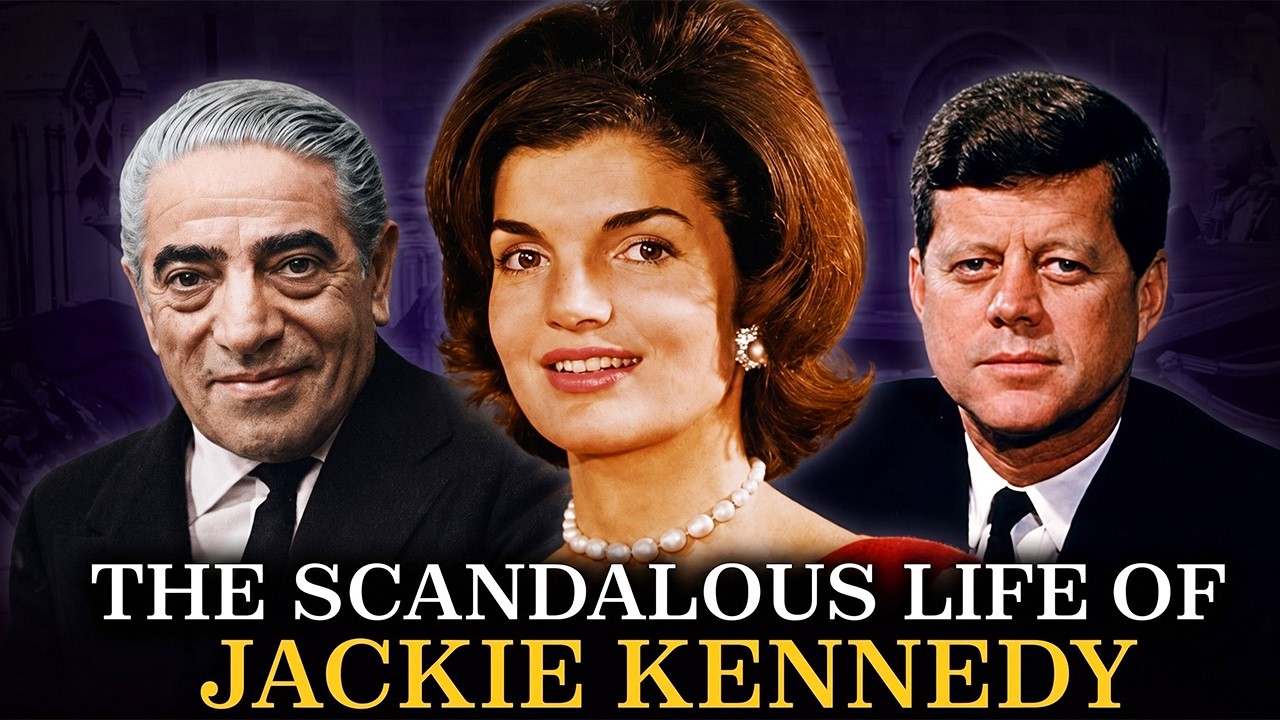
It reflected decades of experience watching wealthy families protect reputations, manage information, and determine which stories survived publicly.
The most revealing evidence begins not in Washington, but inside the troubled household where Jacqueline spent her childhood.
Born in 1929, Jacqueline Lee Bouvier entered a privileged New York family already vulnerable to financial and marital instability.
Her father, John Vernou Bouvier III, possessed considerable charm, social confidence, and a reputation for romantic indiscretions.
Known as Black Jack, he cultivated the pleasures of elite society even as his financial position gradually deteriorated.
Jacqueline adored her father, making his personal failures considerably more complicated than a straightforward lesson about male betrayal.
Her mother, Janet Lee Bouvier, confronted a marriage in which affection, money, and public reputation became inseparable.
Their divorce in 1940 exposed the family’s difficulties to newspaper readers and introduced Jacqueline to publicity’s destructive possibilities.
She was eleven, old enough to recognize that private relationships could become public narratives controlled by competing interests.
The experience did not extinguish her affection for her father, whose attention remained emotionally important throughout her youth.
Instead, it established an enduring contradiction between personal loyalty and the painful consequences of another person’s conduct.
Janet’s subsequent marriage to wealthy businessman Hugh Auchincloss brought Jacqueline into a more financially secure household and environment.
The family’s residences included Merrywood in Virginia and Hammersmith Farm in Newport, both symbols of established American privilege.
Yet their impressive surroundings did not mean Jacqueline possessed independent ownership of the wealth supporting her privileged lifestyle.
Her stepfather controlled substantial resources, while her mother’s social and financial position remained closely connected to their marriage.
Jacqueline therefore encountered wealth as both a source of extraordinary opportunity and a structure of personal dependence.
She attended prestigious schools, developed sophisticated cultural interests, and became especially passionate about literature, history, and European art.
Her education included Vassar College, study in France, and George Washington University, where she completed her undergraduate degree.
Paris offered intellectual freedom and cultural experiences that remained central to her understanding of herself as an adult.
In 1951, she won a Vogue writing competition, demonstrating professional abilities often overshadowed by her later celebrity.
The opportunity suggested a possible career in publishing, but she ultimately pursued a different professional route in Washington.
Accounts of her decision emphasize family expectations, particularly the belief that marriage should take priority over career ambitions.
Whatever the precise balance of influences, Jacqueline’s writing abilities did not disappear when her professional plans changed direction.
She joined the Washington Times-Herald, working as its Inquiring Camera Girl and developing practical experience interviewing public figures.
Her assignments required approaching strangers, asking concise questions, taking photographs, and translating brief encounters into engaging newspaper features.
The position offered a remarkably useful education in the mechanics of publicity, presentation, and the framing of personalities.
A carefully selected photograph could make a person appear charming, foolish, authoritative, vulnerable, or unexpectedly revealing to readers.
A few sentences could establish an impression that endured long after the original encounter had faded from memory.
These professional skills later became significant when Jacqueline occupied one of the world’s most intensely photographed public positions.
Before that transformation, however, her romantic life reflected the competing influences of personal attraction and social expectation around her.
She became engaged to banker John Husted in 1952, but the engagement ended before the couple married.
Later accounts suggest that financial considerations and family opinions contributed to the decision, although individual recollections vary considerably.
The episode reinforced a recurring theme: romantic choices were rarely separated from the economic realities surrounding wealthy American families.
Jacqueline subsequently encountered John Fitzgerald Kennedy, a rising politician whose personal magnetism was matched by considerable family ambition.
Their introduction occurred through mutual friends in Washington, including journalist Charles Bartlett and his wife, Martha, during 1952.
Kennedy was handsome, intelligent, wealthy, politically connected, and already developing a reputation as an unusually promising national figure.
He also possessed characteristics that complicated the prospect of a stable marriage, including serious illness and romantic restlessness.
His chronic back problems caused considerable suffering, while Addison’s disease required treatment and created potentially dangerous medical complications.
The Kennedy family’s public presentation emphasized physical vitality, concealing much of the medical vulnerability affecting its most promising politician.
His reputation for relationships with women was another complication that people within Washington’s social circles had already recognized.
Jacqueline’s attraction to Kennedy therefore developed alongside reasons to question whether marriage would provide the security she wanted.
Letters she wrote to Irish priest Joseph Leonard provide unusually valuable contemporary evidence of her personal reflections and uncertainties.
Their reported contents suggest that Jacqueline recognized similarities between Kennedy’s charm and the qualities she admired in her father.
That comparison was significant because she understood how her father’s romantic behavior had contributed to her parents’ separation.
The correspondence does not establish that Jacqueline predicted every future difficulty, but it challenges portrayals of complete romantic innocence.
She entered the relationship with considerable awareness of its attractions and at least some of its potential dangers.
Kennedy’s father, Joseph P. Kennedy Sr., also had powerful reasons to welcome the possibility of this particular marriage.
His family’s political ambitions depended partly on presenting John as a serious candidate for increasingly influential national offices.
Jacqueline offered intelligence, Catholic identity, social refinement, and familiarity with cultural environments beyond the family’s traditional political networks.
Her presence could broaden Kennedy’s appeal while reinforcing an image of maturity and personal stability before American voters.
The relationship nevertheless involved more than political calculation, as friends described genuine attraction, humor, and intellectual compatibility between them.
They shared interests in history, international affairs, literature, and the personalities shaping Washington’s unusually competitive political environment then.
Their engagement was announced in June 1953, following Kennedy’s successful election to the United States Senate the previous November.
The wedding that followed became an elaborate public event, considerably larger than the intimate celebration Jacqueline reportedly preferred.
On September 12, 1953, hundreds attended their ceremony at St. Mary’s Church in Newport, Rhode Island, amid enormous attention.
Thousands more gathered around the wedding festivities, reflecting the extraordinary public interest surrounding the young senator and his bride.
The event functioned simultaneously as a marriage celebration and a highly visible introduction to the Kennedy family’s ambitions.
Even Jacqueline’s wedding dress illustrated the distance between polished public appearances and the complicated realities behind their creation.
Designer Ann Lowe, a talented Black American couturier, produced the celebrated gown under difficult circumstances and considerable professional pressure.
A flood damaged her workshop shortly before the ceremony, forcing her team to recreate garments under severe deadlines.
The finished dress became internationally recognizable, while Lowe’s contribution received far less contemporary acknowledgment than her craftsmanship deserved.
The wedding also brought Jacqueline a deeply personal disappointment when her father failed to escort her down the aisle.
Accounts describe Black Jack’s drinking and the family’s decision to prevent him from appearing at the ceremony that morning.
Her stepfather accompanied her instead, creating a painful contrast between the public celebration and her private emotional attachments.
The photographs preserved an elegant bride, but they could not reveal everything she felt about her father’s absence.
The episode reflected a familiar pattern in Jacqueline’s life: family embarrassment was managed through careful public presentation and silence.
Marriage introduced another demanding environment, because the Kennedy family operated according to expectations unlike those Jacqueline had previously experienced.
Its gatherings emphasized competitive sports, energetic conversation, political discussion, and an almost relentless celebration of personal achievement and ambition.
Jacqueline preferred quieter activities, including reading, painting, horseback riding, and conversations that allowed more room for reflection and observation.
Her differences did not prevent affection, but they made complete assimilation into the Kennedy family culture difficult at times.
The financial structure surrounding her new marriage also complicated conventional assumptions about the freedom provided by enormous wealth.
Much of John Kennedy’s financial security came through family trusts established under the influence of his powerful father.
The arrangement supported extraordinary privilege, but it also preserved significant family influence over the younger generation’s financial circumstances.
Jacqueline had entered an affluent marriage without necessarily acquiring the unrestricted personal independence that such wealth might outwardly suggest.
Her husband’s political commitments created additional pressures, often requiring travel, prolonged absences, and constant attention to electoral strategy nationwide.
Within a year, however, his health became a more immediate concern than the ordinary demands of political life.
In 1954, Kennedy underwent dangerous back surgery complicated by the medical condition his family had worked to conceal.
He experienced serious postoperative difficulties, and his recovery required extensive care over an unusually prolonged and frightening period afterward.
Jacqueline remained involved throughout his illness, confronting the possibility that her young husband might not survive his medical crisis.
The experience exposed the vulnerability beneath Kennedy’s carefully cultivated image of confidence, youth, athleticism, and masculine political energy.
During his recovery, work continued on the book eventually published under the title Profiles in Courage in 1956.
Jacqueline assisted with aspects of the project, while Theodore Sorensen played a substantial role in developing the manuscript.
The book won the Pulitzer Prize for Biography, strengthening Kennedy’s national reputation and reinforcing his image as an intellectual.
Questions about Sorensen’s contribution subsequently became controversial, particularly after columnist Drew Pearson publicly challenged Kennedy’s authorship in 1957.
The Kennedy family responded aggressively, demonstrating its willingness to use legal pressure and public relations to defend reputations.
The controversy also foreshadowed Jacqueline’s later efforts to influence published accounts of her husband’s presidency and assassination itself.
For the moment, however, the marriage faced a more intimate crisis involving Jacqueline’s attempts to become a mother.
After an earlier pregnancy loss, she became pregnant again in 1956 while Kennedy’s political ambitions continued expanding rapidly.
That summer, Kennedy pursued the Democratic vice-presidential nomination before traveling overseas after his unsuccessful convention effort in Chicago.
Jacqueline remained in Newport, where she developed serious pregnancy complications requiring emergency medical treatment during the late summer.
She delivered a stillborn daughter, later remembered within the family as Arabella, in an experience of devastating grief.
Kennedy was abroad when the emergency occurred, and his delayed return became a deeply painful episode in their marriage.
Later recollections describe friends urging him to return, emphasizing both his wife’s suffering and the political consequences of absence.
The precise details of those conversations remain difficult to establish, but the underlying family tragedy is beyond dispute.
Jacqueline had lost a child while her husband was away, exposing serious weaknesses in their relationship’s emotional support.
Accounts of marital tension afterward have circulated extensively, including suggestions that the couple considered separation during that difficult period.
A frequently repeated allegation claims Joseph Kennedy offered Jacqueline substantial money to remain married, but reliable documentation remains lacking.
The story should not be presented as established fact simply because later biographies and popular narratives repeated it.
More concrete pressures already existed, including Catholic expectations, family influence, political ambition, and Jacqueline’s limited independent financial resources.
Those circumstances could make leaving a troubled marriage extraordinarily difficult without requiring a documented financial bargain or explicit ultimatum.
Yet describing Jacqueline solely as trapped would also overlook the affection and shared experiences that helped sustain the relationship.
In November 1957, the birth of Caroline Kennedy brought the couple happiness after years marked by medical uncertainty.
Friends later remembered moments of warmth and humor in the family’s Georgetown home, alongside Kennedy’s evident affection for Caroline.
The marriage contained enough genuine companionship to resist any simplistic characterization as an entirely loveless arrangement of convenience.
Jacqueline also demonstrated growing political effectiveness as Kennedy prepared for his 1958 Senate reelection campaign and future ambitions.
Her public appearances attracted attention, while her intelligence and composure strengthened the couple’s appeal among politically interested Americans.
The same qualities that made her an effective political partner would eventually give her considerable independent public influence.
Meanwhile, Kennedy’s relationships outside the marriage remained a recurring subject of private discussion and later historical investigation afterward.
Accounts involving women in Washington society suggest a pattern of infidelity that historians have examined through uneven surviving evidence.
Some relationships are substantially documented, while others depend on retrospective testimony, disputed recollections, or allegations that resist independent confirmation.
This distinction matters because sensational stories can obscure the better-supported realities of the Kennedy marriage and its tensions.
One particularly controversial connection involved Pamela Turnure, a woman associated with Kennedy before becoming Jacqueline’s White House press secretary.
Reports concerning Kennedy and Turnure circulated in Washington, including efforts by private individuals to publicize alleged meetings between them.
Jacqueline subsequently employed Turnure, creating an arrangement that later commentators interpreted as evidence of unusual calculation or emotional discipline.
Some biographers have suggested that Jacqueline deliberately kept a potential rival within her own professional orbit and supervision.
That interpretation remains speculative, because the surviving evidence cannot conclusively establish her private reasons for approving the appointment.
What matters historically is the contrast between the first lady’s polished public role and the complicated private environment.
The 1960 presidential campaign intensified that contrast by turning the Kennedy marriage into an important element of national political messaging.
Jacqueline was pregnant during much of the campaign, limiting her travel while creating opportunities for carefully organized outreach efforts.
She contributed through correspondence, interviews, and campaign communications, including material designed to appeal to Spanish-speaking American voters directly.
Kennedy narrowly defeated Richard Nixon, becoming the youngest person elected president and the first Catholic to hold office.
Three weeks after the election, Jacqueline delivered John F. Kennedy Jr., bringing another child into their increasingly visible family.
The premature birth created medical concerns, but Kennedy returned to support his wife during the difficult period afterward.
By January 1961, the Kennedys occupied the White House and represented a striking generational contrast with previous administrations.
Their youth, appearance, children, and cultural sophistication generated an enormous appetite for photographs, interviews, and stories about domestic life.
Jacqueline quickly recognized that the presidential residence offered opportunities extending beyond conventional ceremonial duties expected of first ladies.
She launched an ambitious restoration intended to recover historically significant furnishings and improve the White House’s cultural presentation.
The undertaking required expertise, fundraising, negotiations, institutional cooperation, and sustained attention to architectural and decorative historical details nationwide.
She worked with specialists and supporters to establish arrangements that would preserve important objects as national historical property.
The White House Historical Association and related fundraising efforts became important components of the restoration’s long-term institutional legacy.
Jacqueline also understood that public participation could make historical preservation more appealing and financially sustainable over time nationally.
The White House guidebook helped connect visitors with the residence’s history while supporting restoration and preservation activities financially.
Her project therefore combined aesthetic judgment with organizational skill, public communication, and an unusually sophisticated understanding of institutional influence.
In February 1962, her televised White House tour introduced millions of Americans to the results of her efforts.
The broadcast showcased a first lady whose historical knowledge and confident presentation extended well beyond fashionable public appearances alone.
Its success demonstrated that Jacqueline could attract a national audience through her own expertise rather than marital status.
She had developed a recognizable public identity, giving her influence within an administration otherwise dominated by male political figures.
That independence, however, did not eliminate the private difficulties associated with her husband’s behavior and demanding political schedule.
Kennedy’s extramarital relationships remained a significant part of his personal history, notwithstanding the administration’s idealized family presentation publicly.
For Jacqueline, the resulting tension involved reputation, religion, children, privacy, and the emotional realities of remaining married together.
Her public restraint cannot establish precisely what she knew about each relationship or how she responded privately afterward.
Nor should her continued marriage be interpreted as evidence that betrayal caused no pain or emotional conflict whatsoever.
The available evidence supports a more complicated interpretation involving loyalty, affection, personal calculation, and the constraints of her circumstances.
Jacqueline preserved independent interests through travel, horseback riding, friendships, and time spent outside the constant Washington political environment.
Her Virginia retreats provided distance from the presidency’s demands and opportunities to shape domestic surroundings according to personal preferences.
The Wexford property, developed during the final year of Kennedy’s life, reflected her desire for greater private space.
The residence also symbolized a persistent contradiction: extraordinary family wealth did not guarantee a conventional shared domestic existence.
Jacqueline could create beautiful surroundings, but presidential obligations and marital tensions often limited the time they spent together.
The White House years nevertheless contained moments of genuine companionship, especially through their children and shared interest in history.
Kennedy admired Jacqueline’s cultural abilities, while her international popularity provided the administration with valuable diplomatic advantages abroad.
Her travels to India and Pakistan demonstrated a capacity to attract attention independently of the president’s physical presence.
Foreign leaders and international audiences responded to her sophistication, reinforcing the broader cultural appeal of the Kennedy administration.
She became an influential representative of American culture even while privately resisting aspects of political celebrity and exposure.
In August 1963, the marriage endured another devastating loss when Jacqueline went into premature labor in Massachusetts unexpectedly.
Their son, Patrick Bouvier Kennedy, was born with severe respiratory difficulties and required urgent specialized medical treatment immediately.
Despite doctors’ efforts, Patrick died after approximately thirty-nine hours, leaving both parents confronting another overwhelming family tragedy together.
Kennedy’s visible grief marked a painful contrast with the emotionally distant behavior described during the earlier pregnancy loss.
People close to the couple subsequently recalled increased tenderness and affection during the months following their son’s death.
Those observations suggest a period of renewed closeness, although they cannot establish how the marriage might eventually have developed.
The loss was profound, and both parents faced memories of the daughter they had already lost years earlier.
Jacqueline later traveled aboard Aristotle Onassis’s yacht, seeking respite after an exceptionally difficult period of personal grief and exhaustion.
The journey attracted criticism because Onassis was a controversial international businessman whose associations raised political and reputational concerns.
The trip nevertheless reflected Jacqueline’s longstanding need for distance from Washington and its relentless demands for public appearances.
Kennedy reportedly had reservations, illustrating continuing tensions between his political responsibilities and his wife’s desire for personal autonomy.
By November, the couple was preparing for a Texas visit intended to address divisions within the Democratic Party.
Jacqueline agreed to accompany the president, bringing her popularity and visual appeal to an important political journey together.
Their appearance in Dallas on November 22 projected confidence, elegance, and unity before cheering crowds along the motorcade route.
Within moments, gunfire destroyed that public image and ended a marriage whose future had remained deeply uncertain until then.
Kennedy was fatally wounded while Jacqueline sat beside him, confronting an event of almost unimaginable personal violence and shock.
The assassination transformed her from first lady into presidential widow while forcing immediate decisions under extraordinary psychological pressure afterward.
Her bloodstained pink suit became one of the defining visual symbols of the tragedy and its national consequences.
She declined to change clothing before standing beside Lyndon Johnson during his presidential oath aboard Air Force One.
The resulting photograph conveyed constitutional continuity while exposing the brutality of the event that had made succession necessary.
Jacqueline’s refusal has often been interpreted as a deliberate decision to preserve visible evidence of her husband’s murder.
That interpretation is supported by recollections, although exact quotations attributed to her vary across different eyewitness accounts and publications.
Her awareness of the suit’s symbolic significance did not make her grief theatrical, artificial, or emotionally less genuine.
Instead, it revealed a woman capable of recognizing public meaning even while experiencing an overwhelming private catastrophe herself.
The funeral arrangements further demonstrated her historical knowledge and ability to organize national symbolism under extraordinary emotional circumstances.
Jacqueline drew upon ceremonies associated with Abraham Lincoln, whose assassination had likewise transformed presidential death into national mourning.
The procession, ceremonial details, and military honors connected Kennedy’s funeral with earlier moments of American political trauma and remembrance.
She supported the use of an eternal flame at Arlington National Cemetery, creating a lasting memorial symbol there.
The sight of young John saluting his father’s coffin became another image permanently embedded in American memory afterward.
Jacqueline’s influence over the funeral was substantial, but describing every element as personally choreographed would exaggerate the evidence.
Military officials, advisers, relatives, and security personnel also participated in planning an event of extraordinary logistical complexity nationwide.
Her choices nevertheless helped establish the visual vocabulary through which Americans would remember the assassination for generations afterward.
Only days later, she undertook another consequential act of historical interpretation through a conversation with journalist Theodore White.
The interview took place on November 29, 1963, while the country remained immersed in mourning and political uncertainty.
Jacqueline invoked the Broadway musical Camelot, associating her husband’s presidency with the memory of a brief, shining moment.
The metaphor offered Americans a comforting narrative about youthful idealism, cultural elegance, and a promising political future interrupted.
It also transformed an administration marked by Cold War crises and domestic conflicts into a more unified legend.
White recognized the emotional power of Jacqueline’s comparison and incorporated it into his influential Life magazine account afterward.
His later reflections acknowledged the tension between reporting historical reality and allowing a grieving widow to shape interpretation.
The resulting narrative became so influential that Camelot eventually seemed inseparable from Kennedy’s presidency and personal legacy altogether.
Yet the metaphor concealed contradictions Jacqueline herself understood better than nearly anyone who encountered the public story afterward.
She knew the medical crises, marital betrayals, family tragedies, and political pressures that elegant photographs could never reveal.
She also knew Kennedy’s humor, intelligence, affection for their children, and the ambitions that had animated their partnership.
Her historical intervention therefore reflected selective emphasis rather than proof that the entire marriage had been an elaborate deception.
The distinction matters because memorial narratives frequently simplify complicated lives without necessarily being invented from nothing at all.
Jacqueline emphasized what she considered meaningful while leaving much of the private suffering outside the public historical frame.
Her subsequent actions demonstrated that the management of Kennedy’s legacy would remain a central concern throughout her widowhood thereafter.
In 1964, she recorded extensive interviews with historian Arthur Schlesinger Jr., discussing the administration and its political personalities.
Those recordings remained unavailable publicly for decades before their release in 2011, revealing her unusually candid private judgments.
The interviews presented a woman far more politically observant and opinionated than her deliberately modest public persona suggested.
Her recollections included sharp assessments of individuals and events, challenging the assumption that she had merely observed presidential politics.
She understood personalities, institutional rivalries, and the emotional forces shaping decisions within her husband’s administration at close range.
The decision to restrict the recordings also reflected her determination to influence when personal recollections entered public discussion.
An even more contentious struggle emerged over William Manchester’s account of the assassination, The Death of a President.
Jacqueline initially cooperated with Manchester, whose project received support from figures associated with the Kennedy family and legacy.
Disagreements developed over the treatment of private material and the boundaries between historical investigation and personal exposure afterward.
In 1966, she pursued legal action seeking to prevent publication of material she considered objectionable or improperly disclosed.
The dispute attracted national attention because it involved competing claims of historical importance, contractual rights, and family privacy.
A settlement resulted in revisions, demonstrating Jacqueline’s willingness to use legal mechanisms when persuasion alone appeared insufficient publicly.
Her approach resembled the Kennedy family’s broader determination to protect reputations, although the legal circumstances were different here.
She was defending private interests while simultaneously influencing the historical record of an event of enormous national significance.
Critics viewed the litigation as an attempt to control history, while supporters emphasized her legitimate concerns about privacy.
Both interpretations illuminate the tension between public accountability and the personal rights of individuals affected by historical catastrophe.
The Kennedy assassination belonged to American history, but its intimate consequences remained part of Jacqueline’s private family life.
No simple principle could eliminate that conflict, especially when the surviving widow was herself an important historical participant.
Jacqueline’s efforts to influence published narratives therefore deserve examination without assuming that every restriction concealed scandalous information or misconduct.
The same caution applies to archives, where restrictions may reflect donor agreements, privacy concerns, or institutional arrangements over time.
Some private Kennedy materials remain subject to access conditions, but those restrictions do not establish sensational claims about contents.
Historical researchers must distinguish documented limitations on access from speculation about what inaccessible documents might eventually reveal to them.
Jacqueline’s later life also challenged the idea that her identity existed only through her first husband’s political legacy.
In June 1968, Robert Kennedy was assassinated while campaigning for the Democratic presidential nomination in California that year.
The killing renewed Jacqueline’s fears about the safety of her children and the dangers surrounding Kennedy family visibility.
Four months later, she married Aristotle Onassis, the Greek shipping magnate whose wealth offered extraordinary independence and security.
The decision shocked Americans who had invested deeply in the Camelot image and its association with presidential widowhood.
Critics accused her of abandoning the Kennedy legacy, while others recognized her desire to escape relentless public exposure.
The marriage represented a dramatic break from the expectations that had shaped much of her adult life until then.
Onassis possessed immense resources and an international lifestyle, allowing Jacqueline greater distance from the political world of Washington.
Their relationship was complicated and eventually strained, demonstrating that financial independence alone could not guarantee personal fulfillment either.
When Onassis died in 1975, Jacqueline faced another transition and gradually established a more independent professional existence afterward.
She entered publishing, first at Viking Press and later at Doubleday, returning to interests cultivated during her youth.
Her editorial work involved manuscripts, authors, historical subjects, photography, and cultural projects requiring serious judgment and sustained attention.
The career challenged the assumption that Jacqueline had always preferred ceremonial celebrity to demanding intellectual and professional work.
She had once won a writing competition and worked in journalism before marrying a rising American politician then.
Decades later, she was participating directly in the production of books rather than merely appearing within their pages.
Her work provided a professional identity separate from both Kennedy mythology and the immense fortune associated with Onassis.
Colleagues described her commitment to authors and editorial projects, revealing a sustained interest in the practical craft involved.
The transformation also gave retrospective significance to her early newspaper experience and her lifelong fascination with historical presentation.
She understood how words could preserve reputations, challenge assumptions, and shape the emotional meaning of public events over time.
Her refusal to publish a comprehensive personal memoir preserved another boundary between the life she lived and public curiosity.
A memoir could have generated enormous commercial interest, especially through revelations about Kennedy’s private behavior and political relationships.
Instead, she allowed selected interviews, documents, and recollections to contribute to a historical record she never fully surrendered.
That choice frustrated some historians while protecting aspects of her personal life from further public examination and speculation.
It also meant that subsequent accounts depended heavily on testimony from relatives, friends, aides, and biographers with differing perspectives.
Some witnesses emphasized the marriage’s warmth, while others concentrated on infidelity, financial pressures, and periods of emotional estrangement.
The resulting contradictions cannot always be resolved, particularly when private conversations survive only through recollections recorded decades afterward.
Sensational narratives frequently present uncertainty as proof of conspiracy, but responsible historical analysis must resist that temptation consistently.
The most disturbing aspects of Jacqueline’s marriage do not require invented secrets or unsupported claims about hidden financial arrangements.
They emerge from documented contradictions between extraordinary privilege and the limits placed upon a woman’s personal independence then.
Jacqueline possessed education, intelligence, cultural authority, and public admiration, yet her position remained tied to powerful family structures.
She could influence national ceremonies while struggling to control the conditions governing her own marriage and domestic life.
She could protect her husband’s reputation while experiencing conduct that threatened the emotional stability of their relationship repeatedly.
She could create a national image of youthful happiness while privately mourning children who had died before adulthood.
And she could become internationally admired while repeatedly seeking physical distance from the attention accompanying that public admiration.
Those contradictions are more revealing than the simplistic argument that the marriage was either romantic perfection or calculated fraud.
The evidence supports genuine affection, serious difficulties, shared grief, and periods of emotional connection within an unequal relationship.
Kennedy’s infidelity was significant, but it did not erase every positive experience the couple shared during their marriage.
Jacqueline’s loyalty was consequential, but it did not require her to accept every aspect of his conduct willingly.
Their financial privilege provided remarkable opportunities, but it also reinforced family hierarchies that complicated personal autonomy and choice.
Their public prominence gave Jacqueline influence, but it also subjected her private life to intense scrutiny and expectation.
The assassination ended their relationship before the consequences of renewed closeness after Patrick’s death could become clear fully.
Historians cannot establish whether Kennedy would have changed his behavior or whether their marriage would have grown stronger.
Nor can they determine how Jacqueline’s independent interests might have developed during a second presidential term or afterward.
The future was interrupted, leaving photographs and recollections to carry questions the couple never had time to answer.
That uncertainty partly explains why Camelot became so powerful in the national imagination following Kennedy’s death in Dallas.
A presidency ending suddenly can be remembered through unrealized possibilities rather than the compromises of a completed political career.
Jacqueline recognized the emotional appeal of those possibilities and supplied a metaphor that gave them enduring cultural form.
Her role in shaping memory was substantial, but it did not give her complete control over historical investigation afterward.
Subsequent scholarship examined Kennedy’s medical history, political decisions, extramarital relationships, and the administration’s conduct during major international crises.
The Cuban Missile Crisis, civil rights struggles, and escalating American involvement in Vietnam complicated the idea of uncomplicated idealism.
So did revelations about presidential secrecy, intelligence operations, and relationships that could raise legitimate questions about security vulnerabilities.
These developments did not eliminate Kennedy’s accomplishments, but they exposed the limitations of the original Camelot framework for historians.
The administration’s economic record also belongs to that broader context, although it cannot explain Jacqueline’s private marital decisions.
Kennedy pursued tax reductions and policies intended to strengthen growth during an era of significant Cold War competition.
Those initiatives influenced subsequent fiscal debates, but their economic significance should not be confused with evidence about marital motivations.
Similarly, later movements in equities, Treasury yields, inflation, or Federal Reserve policy cannot illuminate private conversations from 1953.
Applying contemporary market indicators to Jacqueline’s marriage would create misleading connections unsupported by the historical source material itself today.
The more relevant financial questions concern inherited wealth, household dependence, publishing careers, and the economic power of families.
Joseph Kennedy’s fortune created opportunities that ordinary Americans could scarcely imagine, while also strengthening his influence over relatives.
Jacqueline’s lack of equivalent independent resources affected the range of choices available during the marriage’s most difficult periods.
Her later professional career demonstrated that financial security and personal identity were related but not necessarily identical objectives.
Publishing offered meaningful work, intellectual independence, and an identity beyond the ceremonial roles she had occupied for decades.
That achievement should not be overshadowed by the continuing fascination with her husbands’ wealth or her public appearance alone.
Jacqueline died on May 19, 1994, after being diagnosed with non-Hodgkin lymphoma, ending an extraordinarily visible American life.
She was buried beside John F. Kennedy at Arlington National Cemetery, near the children they had lost.
The gravesite reflects both the national importance of a presidency and the private tragedies endured by its family.
Her famous pink suit remained preserved under archival arrangements designed to respect historical significance and family concerns together.
The garment is associated with access restrictions extending into the next century, reflecting unusual sensitivities surrounding its display publicly.
Those conditions demonstrate the continuing tension between historical preservation and the Kennedy family’s desire to control traumatic imagery.
They do not establish that the preserved clothing contains some undisclosed explanation for the assassination or marriage itself.
Its power comes from what is already known: Jacqueline wore it while witnessing the violent destruction of her world.
The stains became part of the historical record because she refused to conceal the physical consequences of Dallas.
That decision illustrates the complex relationship between personal grief and public symbolism that defined much of her life.
She had watched publicity damage her parents’ marriage, then learned professionally how photographs and captions shaped public understanding.
She married into a family that recognized political image management as an essential instrument of power and influence nationally.
She endured a marriage whose private realities repeatedly contradicted the reassuring images distributed to the American public throughout.
And after her husband’s assassination, she helped create a narrative that gave national grief an enduring symbolic language.
The story was selective, but selectivity alone does not prove dishonesty, especially in the immediate aftermath of trauma.
Jacqueline emphasized the aspects of Kennedy’s presidency she believed deserved remembrance while leaving painful contradictions largely unspoken publicly.
That decision influenced historical memory for generations, even as researchers gradually uncovered the complexities the metaphor concealed afterward.
The most revealing conclusion is therefore neither that Jacqueline invented everything nor that she simply endured everything passively.
She was an active participant in a marriage, a political family, and a struggle over public historical memory.
Her choices were shaped by privilege and limitation, affection and disappointment, grief and an extraordinary instinct for presentation.
She understood that images could preserve love while concealing the complicated circumstances in which that love had existed.
America inherited Camelot, but Jacqueline had lived through the illness, betrayals, bereavements, and uncertainty behind its beautiful appearance.
The lasting disturbance lies in that distance between a nation’s cherished image and the human experiences beneath it.
Her marriage was not merely a fairy tale shattered by assassination, nor simply a calculated partnership without genuine affection.
It was an extraordinary relationship shaped by unequal power, mutual attachment, public ambition, private suffering, and unfinished possibilities.
Jacqueline Kennedy’s greatest influence may have been her ability to transform those contradictions into a story America could remember.
But understanding her life requires looking beyond the legend and recognizing the formidable, vulnerable woman who helped create it.


