Christa Pike Is Eating and Taking Her First Steps After Tennessee’s Failed Execution—But Her Fight Is Far From Over
Christa Pike was supposed to be dead, but more than a week after Tennessee attempted to execute her by lethal injection, reports of her recovery are raising extraordinary questions about her health, her legal rights, and whether the state will ever try to carry out her death sentence again.
In a dramatic update reported during a Thursday livestream, Pike had reportedly begun eating for the first time since the September 30 execution attempt, taken her first assisted steps, and regained enough consciousness to communicate, even as her attorneys described continuing memory problems and significant psychological trauma.
The latest developments have transformed a failed execution into a rapidly evolving legal and medical story, with every new report seemingly raising more questions than it answers.
Yet behind the startling headlines about Pike’s recovery lies a more complicated reality: the available information remains incomplete, her long-term prognosis is uncertain, and the legal consequences of surviving an execution attempt have not been definitively resolved.
A Recovery Nobody Expected to Witness
The livestream began with its host discussing another execution before turning to the extraordinary developments surrounding Pike, whose condition had reportedly changed dramatically over several days.
The host described the case as unlike anything he had previously encountered, comparing Pike’s unexpected awakening to a second chance at life while acknowledging that the situation was far more serious than the dramatic comparisons might suggest.
Earlier reports had indicated that Pike’s attorneys feared she could be brain dead, based on information reportedly relayed to them about her medical condition.
Those reports created the impression that her recovery might be impossible, but subsequent accounts described a woman who was regaining consciousness and asking questions about where she was and what had happened.
The distinction matters because the initial reports were not necessarily based on a definitive diagnosis of brain death, and the livestream itself acknowledged that much of the information was being communicated indirectly through medical personnel and other sources.
By Thursday evening, the situation had reportedly progressed further, with Pike eating again and beginning to move around with assistance.
According to a statement attributed to her attorney and reported by the Associated Press, Pike had managed to eat for the first time since the execution attempt.
The livestream also cited reports that she had taken her first assisted steps on Wednesday, although her movement remained limited.
For a woman whose life was expected to end inside Tennessee’s execution chamber, those developments represented a striking reversal of the immediate crisis.
However, reports of walking and eating do not necessarily mean that Pike has made a full recovery, and the available information does not establish that her injuries will resolve without lasting consequences.
Her legal team reportedly said she continued to experience problems with concentration and memory, while doctors had not yet determined whether those difficulties would be permanent.
Pike was also said to be experiencing significant psychological trauma following the failed execution, adding another dimension to a recovery that extends beyond physical injuries.
The livestream host reacted with astonishment, repeatedly questioning how someone who had reportedly been unable to swallow could now be eating, or how someone whose condition had appeared so grave could begin walking.
But those developments are not necessarily contradictory: a patient’s condition can change over time, and improvements in one function do not prove that every medical complication has disappeared.
The central question is no longer simply whether Pike survived the execution attempt, but what kind of life and recovery she will face in the days, weeks, and months ahead.
The First Meal After More Than a Week
Among the most striking updates was the report that Pike had finally begun eating again.
The livestream described the announcement as breaking news, explaining that the information had arrived during the broadcast through a statement attributed to Pike’s attorney and reported by the Associated Press.
The host wondered what her first meal might have been after such a prolonged period without food, although no specific meal was identified in the account.
That detail may seem small compared with the constitutional and medical questions surrounding the case, but it illustrates the extraordinary nature of Pike’s reported recovery.
Eating requires more than simply being awake; it depends on a person’s ability to swallow safely and tolerate food, which had reportedly been a concern during her hospitalization.
Earlier reports had suggested that Pike was having difficulty swallowing and had experienced respiratory complications, including pneumonia.
The livestream questioned whether those problems had improved enough to allow her to eat, but it did not provide a medical explanation confirming the precise reason for the change.
It also raised concerns about the possible consequences of pneumonia, noting that the condition can be serious, particularly for someone recovering from a major medical emergency.
However, the available account does not establish that pneumonia was the immediate cause of any particular symptom or that it would determine Pike’s ultimate prognosis.
The important development is that she was reportedly able to eat again, while doctors continued evaluating her condition.
That improvement offers a sign of progress, but it should not be mistaken for proof that the danger has passed.
Reports of Severe Arm Injuries Remain a Major Concern
While Pike’s ability to eat and walk has attracted attention, reports about her arms have continued to raise serious questions.
The livestream referenced information attributed to another journalist who had reportedly spoken with doctors and Pike’s legal representatives in Tennessee.
According to the account relayed during the broadcast, Pike’s arms had sustained substantial injuries associated with difficulties establishing IV access during the execution attempt.
The discussion described severe swelling and bruising, with her hands reportedly appearing extremely swollen.
It also referenced a possible risk of amputation, although the livestream did not establish that doctors had confirmed such an outcome was likely or that a decision about amputation had been made.
That distinction is crucial because a serious possible complication is not the same as a confirmed medical prognosis.
The host struggled to reconcile the reported swelling with Pike’s reported ability to stand and walk, but the two developments concern different aspects of her physical condition.
Someone may be able to take assisted steps while still suffering significant injuries to their arms or hands.
Likewise, walking does not establish that a person has regained normal hand function, recovered from tissue damage, or escaped the possibility of long-term disability.
The available account does not provide a detailed medical examination, imaging results, or a definitive diagnosis explaining the extent of Pike’s arm injuries.
Consequently, the precise nature of the damage, the likelihood of permanent impairment, and the possibility of additional procedures remain unresolved.
The livestream also questioned whether Pike could use a tablet if her hands were as badly injured as some reports suggested.
That question illustrates the uncertainty surrounding her current abilities, but it cannot be answered reliably without direct medical information about her mobility and hand function.
For now, the reported arm injuries remain one of the most serious unresolved aspects of her recovery.
Memory Problems and Psychological Trauma Complicate the Picture
Pike’s reported physical progress has not eliminated concerns about her cognitive and psychological condition.
According to the information discussed during the livestream, her attorneys said she was continuing to experience difficulty concentrating and remembering things.
Doctors reportedly had not yet determined whether these problems would be permanent.
That uncertainty may have important consequences for both her treatment and her legal future, particularly if questions arise about whether she has returned to her previous level of cognitive functioning.
The livestream also cited the legal team’s description of significant psychological trauma following the execution attempt.
Such a traumatic experience could leave a person struggling to process what happened, even while physical functions gradually improve.
However, the account did not provide a formal psychiatric diagnosis or a detailed clinical assessment of Pike’s psychological state.
It therefore remains unclear how her symptoms are being evaluated, how long they might continue, or what treatment she may require.
The host speculated about the emotional impact of waking up after believing that death was imminent, suggesting that Pike could be experiencing confusion, anger, relief, or a mixture of emotions.
Those reactions are possibilities rather than confirmed descriptions of Pike’s private feelings.
The livestream also repeated reports that Pike had become angry and demanded to know where she was and what had happened to her.
But the host acknowledged that the reports came through different sources and that the details of her first moments of consciousness were not entirely consistent.
That uncertainty makes it difficult to reconstruct precisely what Pike experienced or how she understood the situation immediately after waking.
What is clearer from the latest reported updates is that her recovery remains incomplete, with memory difficulties and psychological trauma still being described as concerns by her legal team.
The medical team’s eventual findings may become central to determining what happens next.
Why Access to Her Lawyers Has Become Another Question
The livestream raised a separate concern about Pike’s access to her attorneys while she remains hospitalized under correctional supervision.
The host said her legal team had reportedly been receiving information through medical personnel rather than communicating with her directly.
According to the account, the reason for the limited access had not been fully clarified, with her medical status and the circumstances of her hospitalization potentially affecting the arrangements.
The host questioned when Pike would be treated as a living prisoner who could communicate with legal counsel rather than simply as a patient recovering from an execution attempt.
That concern points to an important issue, although the livestream did not establish that Pike had been formally denied all access to counsel under a court ruling.
The exact restrictions, their legal basis, and any medical justification would need to be clarified before reaching conclusions about whether her rights had been violated.
Nevertheless, direct communication with her lawyers could become especially important as the defense investigates the execution attempt and prepares potential constitutional challenges.
Pike’s attorneys may need to understand her recollections, assess her current capacity to participate in legal decisions, and determine what legal action should be pursued.
At the same time, medical staff must manage her care and evaluate whether she is physically and psychologically ready for particular activities.
Balancing those considerations could become more complicated if Pike’s recovery remains unstable or if officials believe certain restrictions are necessary for security or medical reasons.
The livestream’s central concern was that the legal process cannot remain indefinitely suspended while Pike’s condition changes.
If she is capable of communicating, the circumstances governing access to counsel will likely attract further scrutiny as the case develops.
Whether those arrangements change, and how quickly they do so, remains unclear from the information available in the broadcast.
Could Tennessee Attempt to Execute Her Again?
The biggest unresolved question remains whether Tennessee will try to carry out Pike’s death sentence a second time.
The livestream host suggested that another attempt was possible, especially if Pike eventually regains her previous cognitive and physical functions.
But that is speculation about what state officials might pursue, not confirmation that another execution has been scheduled or formally approved.
Pike’s attorneys are expected to examine whether the failed procedure and its consequences support a constitutional challenge under the Eighth Amendment, which prohibits cruel and unusual punishment.
The defense could argue that another attempt would expose Pike to further suffering after the first procedure reportedly left her with serious medical complications.
The state, on the other hand, could argue that the original sentence remains legally enforceable, depending on the applicable law and the decisions of the courts.
Neither position can be treated as the final answer at this stage.
The legal questions may depend on the facts established through the investigation, the extent of Pike’s injuries, and whether the courts conclude that another attempt would violate constitutional protections.
Her cognitive condition could also matter if questions arise about whether she understands the punishment imposed or is competent to be executed under the relevant legal standards.
The livestream compared the present situation with earlier botched executions and questioned whether the legal landscape had changed enough to produce a different result.
Historical cases may provide context, but the outcome of Pike’s case cannot be predicted simply by assuming that an earlier legal challenge succeeded or failed under similar circumstances.
The current case involves its own facts, medical evidence, procedural history, and legal arguments.
The possibility of prolonged litigation remains significant, particularly if either the state or Pike’s defense challenges an unfavorable ruling.
However, the broadcast did not establish that the United States Supreme Court has agreed to hear the case or that a specific future ruling is inevitable.
For now, the question of another execution remains open, with Pike’s recovery and the legal proceedings likely to shape what happens next.
The Victim Must Not Disappear From the Story
As public attention has increasingly focused on Pike’s survival, the livestream host also acknowledged the danger that the victim, Colleen Slemmer, could become an afterthought.
Slemmer was murdered in 1995, and Pike was convicted in connection with the brutal crime.
The host emphasized that Slemmer and her family remain central to the story, even as the failed execution has generated new sympathy and debate surrounding Pike.
Slemmer’s mother, May Martinez, has been associated with the long wait for the sentence to be carried out, and the latest developments may bring renewed uncertainty after decades of waiting.
For people who believe the death sentence should be enforced, Pike’s survival may feel like another interruption in a case that has already stretched across generations.
Others may see the failed execution as evidence that capital punishment carries unacceptable risks or that the state should consider a different outcome.
The livestream reflected that divide without resolving it, with the host acknowledging that people can approach the same case from very different moral and political positions.
The debate also touched on Pike’s more than three decades in prison and reports that she spent many years in solitary confinement.
The host questioned whether the length and conditions of her incarceration should influence how people think about the punishment she has already endured.
That question remains a matter of public and legal debate, and the broadcast did not establish that her time in prison legally substitutes for the death sentence.
Nor does the discussion of Pike’s incarceration erase the seriousness of Slemmer’s murder or the suffering experienced by her family.
Both realities must remain part of an honest account: the original crime and its consequences, and the constitutional questions raised by what happened during the execution attempt.
The public debate will likely continue to intensify as more information becomes available about Pike’s condition and the state’s next steps.
A Second Chance at Life—or the Beginning of Another Legal Battle?
The livestream’s host repeatedly described Pike’s survival as a kind of rebirth, imagining what it might feel like to awaken after believing that death was imminent.
The comparison was dramatic, but it captured the central strangeness of the situation: Pike was reportedly returning to ordinary activities while facing the possibility that the state could eventually seek to execute her again.
Eating, walking with assistance, communicating, and asking for personal belongings are routine aspects of everyday life, yet in this case each reported development has become a significant update.
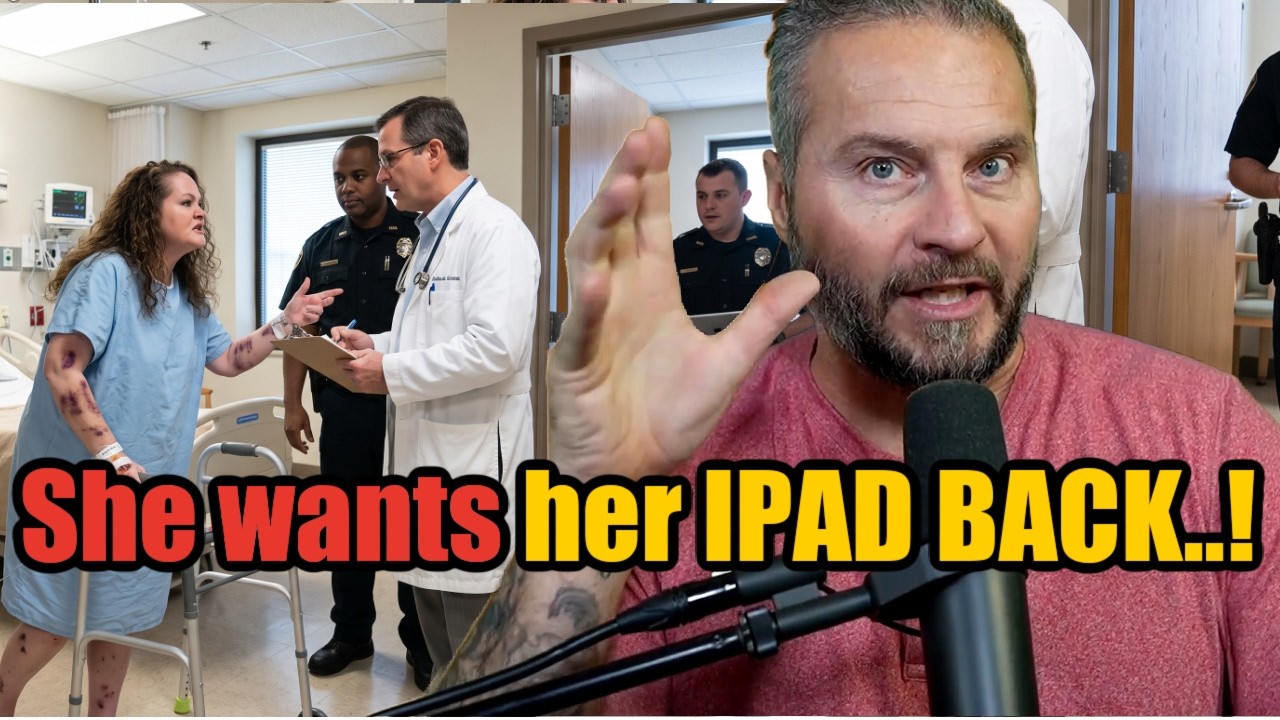
The host also joked about the possibility of Pike receiving her tablet back and reconnecting with the outside world, while acknowledging that the actual circumstances surrounding her access to personal devices remained uncertain.
Such details have fueled intense online interest, but they should not distract from the serious medical questions still facing Pike.
Her reported ability to eat and take assisted steps is encouraging, but it does not prove that she will recover fully or that her memory problems will disappear.
Likewise, reports of severe arm injuries and psychological trauma do not establish that her condition will necessarily deteriorate.
The medical outlook remains uncertain, and further updates from her attorneys or treating physicians will be important in clarifying the situation.
Meanwhile, the legal system must confront the consequences of a death sentence that has not resulted in death despite an attempt to carry it out.
Evidence from the execution attempt may help establish what went wrong, while future court proceedings could determine how the state is permitted to respond.
Those decisions could affect Pike directly and potentially influence broader questions about execution procedures, transparency, and constitutional protections.
For now, no definitive answer has emerged about whether Tennessee will attempt another execution, whether Pike will recover completely, or whether the case will ultimately reach the Supreme Court.
What is clear is that her survival has opened a new chapter in a case that once appeared to be approaching its final moment.
The next developments may come from the hospital, from investigators examining the failed procedure, or from courts considering the limits of the state’s authority.
Until then, Christa Pike’s recovery remains a story of extraordinary uncertainty—one in which every reported step forward carries consequences far beyond the hospital room.


