They were young, attractive, wealthy, and engaged to be married. He was the son of an assassinated American president, a man whose life had been documented by photographers since infancy. She was a successful fashion executive whose elegance and striking personal style had already attracted the attention of the New York press.
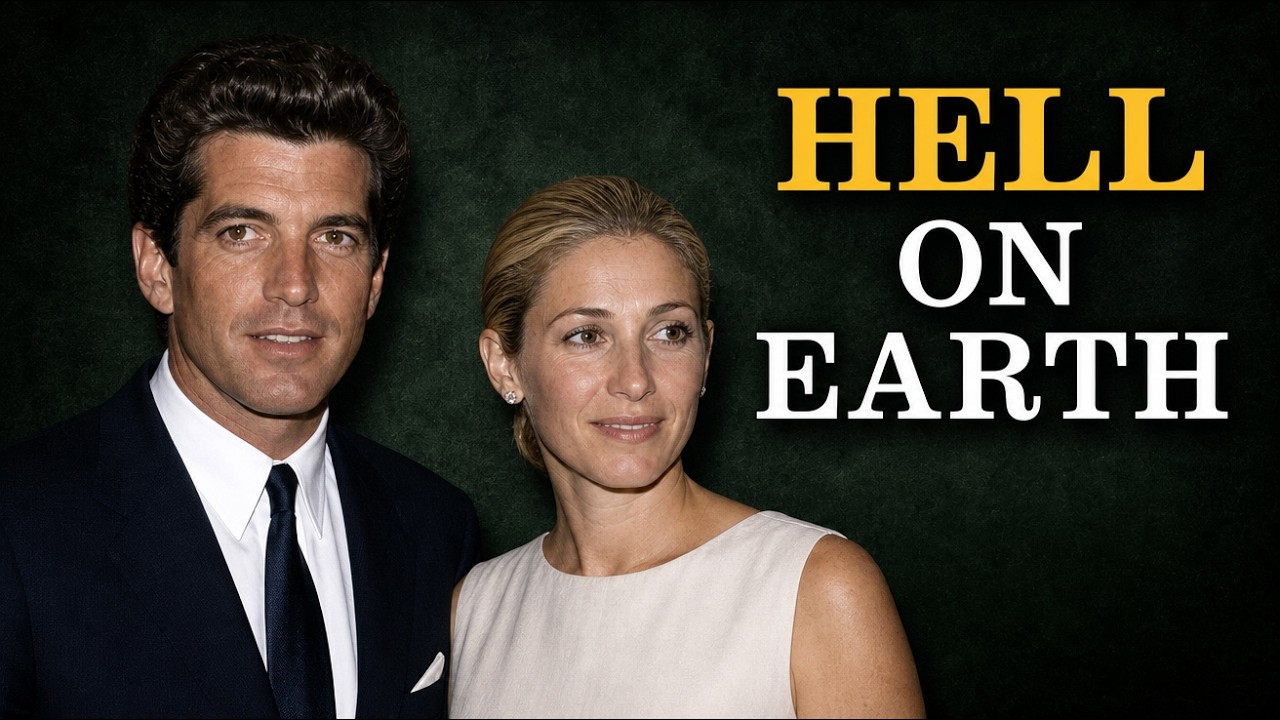
Together, they appeared to embody a modern American fairy tale.
But that afternoon, the fairy tale fell apart in public.
Photographers captured the couple arguing, struggling over an engagement ring, and displaying emotions rarely visible in their carefully photographed appearances. Images from the confrontation circulated through newspapers and tabloids, exposing a private disagreement to millions of strangers.
Kennedy later dismissed the incident as an ordinary argument.
But the photographs suggested something more complicated than the romantic image the public had constructed around them.
They showed two people who could become angry, frustrated, and deeply upset with one another. More importantly, they demonstrated how little privacy the couple could expect, even during moments when they were clearly distressed.
For Carolyn, the experience foreshadowed one of the defining struggles of her marriage.
She had spent years working in the fashion industry, where she understood how publicity could create an image, establish a reputation, and transform an ordinary person into an object of public fascination.
Now she was discovering what happened when that machinery turned against her.
She could no longer choose when she would be photographed.
She could no longer assume that a disagreement with her partner would remain private.
And she could no longer separate her identity from the famous family she was preparing to join.
Three years later, on July 16, 1999, John and Carolyn died in a plane crash off the coast of Martha’s Vineyard. Carolyn’s older sister, Lauren Bessette, was also killed.
The tragedy immediately transformed the couple into enduring symbols of beauty, privilege, romance, and lost promise.
Photographs of them walking through Manhattan became images of a vanished era.
Their secret wedding on a remote Georgia island became a symbol of extraordinary devotion.
Their early deaths invited comparisons with the tragedies that had repeatedly struck the Kennedy family.
But behind those images was a marriage that had experienced real difficulties.
Friends and biographers later described disagreements about privacy, children, public responsibilities, and the overwhelming pressures of fame.
Several accounts indicate that the couple sought marriage counseling during their final year.
Some people close to them believed they were struggling seriously.
Others remembered affection, commitment, and efforts to repair their relationship.
Those accounts do not produce a simple verdict.
They reveal something more human: a couple attempting to sustain a marriage while living under conditions that made ordinary disagreements extraordinarily difficult.
To understand what happened, it is necessary to look beyond the famous photographs and begin with the woman Carolyn Bessette was before she became Carolyn Bessette-Kennedy.
Carolyn Jeanne Bessette was born on January 7, 1966, in White Plains, New York.
She grew up primarily in Connecticut, where her family emphasized education, achievement, and professional ambition.
Her parents divorced when she was young, and her mother later remarried.
Carolyn and her sisters, Lisa and Lauren, grew up in a household that combined professional stability with high expectations.
Her mother worked in education, and her stepfather was an orthopedic surgeon.
Carolyn attended Greenwich High School, where she developed a reputation for being attractive, socially confident, and popular among her classmates.
She was not born into the extraordinary wealth or political influence associated with the Kennedys.
Her upbringing was comfortable, but her later professional achievements were the result of her own efforts.
She attended Boston University, studying elementary education.
During college, she became known for her striking appearance and strong personality.
Friends remembered someone who could attract attention without appearing to seek it.
She had a distinctive sense of style, but she was also funny, sociable, and capable of forming close relationships.
The glamorous public image that emerged later would capture only part of her personality.
People who knew Carolyn described a woman with warmth, humor, ambition, and insecurities that rarely appeared in photographs.
After college, she moved toward a career in fashion.
She began working for Calvin Klein, initially in retail.
Her talent for understanding customers, presenting clothing, and communicating with influential clients attracted attention within the company.
She advanced through increasingly important positions.
Eventually, she became involved in publicity and relationships with high-profile clients.
Her work placed her in contact with celebrities, executives, journalists, and prominent figures in New York society.
She understood the importance of presentation.
In the fashion industry, an image was not merely a photograph.
It could represent an entire commercial identity.
Clothing, lighting, public appearances, and carefully chosen associations could influence how people understood a brand.
Carolyn became skilled at navigating that world.
Her professional success also gave her financial independence and a sense of identity separate from marriage.
She had a career.
She had colleagues and friends.
She had earned the respect of people within a competitive industry.
That independence would become especially important when she entered the Kennedy family’s orbit.
John Fitzgerald Kennedy Jr. was born on November 25, 1960.
He was the son of President John F. Kennedy and Jacqueline Kennedy.
Before he could understand the significance of his father’s position, he was already one of the most recognizable children in the United States.
His childhood unfolded under extraordinary circumstances.
On November 22, 1963, his father was assassinated in Dallas.
Three days later, on John’s third birthday, photographers captured him saluting his father’s coffin during the funeral procession.
The image became one of the most powerful symbols of national mourning in American history.
For the rest of his life, John lived with the consequences of that photograph.
He was not simply a private citizen whose father had been famous.
He was a living connection to a presidency that had become part of American mythology.
The public watched him grow up.
His school years, friendships, romantic relationships, professional choices, and public appearances attracted attention.
His mother attempted to provide a relatively private upbringing for John and his sister, Caroline.
But complete privacy was impossible.
As John became an adult, his appearance and family history made him a celebrity.
In 1988, People magazine named him its Sexiest Man Alive.
The title reinforced his image as one of America’s most eligible bachelors.
He was handsome, athletic, socially confident, and associated with extraordinary privilege.
But John also wanted a professional identity beyond his family name.
He attended Brown University and later earned a law degree from New York University.
After initially failing the New York bar examination, he eventually passed and worked as a prosecutor in Manhattan.
He became known for moving through New York with a degree of informality that contrasted with the ceremonial image of the Kennedy family.
He rode his bicycle, visited restaurants, socialized with friends, and attempted to experience ordinary city life.
Yet photographers followed him constantly.
His romantic relationships became subjects of national interest.
He dated actress Daryl Hannah, and their relationship attracted extensive coverage.
By the early 1990s, John was searching for a balance between independence and the public expectations attached to his name.
Then he met Carolyn Bessette.
Accounts differ about the precise circumstances of their first encounter.
Several biographies place their meeting around 1992, when John visited Calvin Klein and Carolyn was working with important clients.
Other recollections suggest they may have crossed paths in New York before that introduction.
What is clear is that their relationship developed during a period when John was still connected romantically to Daryl Hannah.
Carolyn was not simply waiting to become part of a famous family.
She had her own career, friendships, and romantic history.
Their early interactions were reportedly inconsistent.
John was attracted to her, but the relationship did not immediately become a stable partnership.
Carolyn could be cautious and independent.
She was not necessarily impressed by celebrity in the way outsiders might have expected.
Some later accounts describe tensions during their early courtship, including disagreements and periods when communication between them stopped.
Biographers have also discussed Carolyn’s previous relationship with model Michael Bergin.
Bergin later published a memoir containing claims about the relationship and its continuation.
Those claims remain disputed and should not be accepted as established facts merely because they appeared in a published book.
The broader historical record supports a more restrained conclusion: Carolyn and John entered their relationship with complicated personal histories, and their courtship was not entirely smooth.
By 1994, however, they were seriously involved.
The timing was significant.
Jacqueline Kennedy Onassis died in May 1994 after a battle with cancer.
Her death deeply affected John.
His mother had been the central protective figure in his life.
She understood the burdens of public fascination better than almost anyone.
She had spent decades defending her privacy while remaining one of the most photographed women in the world.
Her absence would become especially meaningful as Carolyn’s relationship with John developed.
The two women were frequently compared.
Both were tall, elegant, and associated with understated fashion.
Both valued privacy.
Both appeared uncomfortable with the idea that public curiosity entitled strangers to unlimited access to their personal lives.
But Carolyn never had the opportunity to develop a close relationship with Jacqueline.
The woman who might have offered unique guidance about life inside the Kennedy family was gone.
Carolyn would have to navigate those pressures largely through her own judgment and the support of people around her.
John’s relationship with Carolyn became increasingly serious.
He was drawn to her independence, intelligence, and distinctive personality.
Friends later described the couple as sharing humor and genuine affection.
They enjoyed spending time together away from formal social occasions.
But their differences were already becoming visible.
John had lived his entire life under public scrutiny.
He was accustomed to photographers and often appeared capable of ignoring them.
Carolyn had experienced professional publicity, but she had not grown up as a national symbol.
The distinction was enormous.
For John, being photographed was a familiar inconvenience.
For Carolyn, it could feel like an invasion.
Their relationship therefore brought together two people who had very different experiences of fame.
John had developed methods of living with attention.
Carolyn wanted boundaries that the attention often refused to respect.
In July 1995, John proposed to Carolyn during a trip near Martha’s Vineyard.
Accounts describe him presenting the engagement ring aboard a boat.
She reportedly did not accept immediately.
Some biographies suggest that she took time to consider the proposal.
The hesitation has been interpreted in different ways.
It may have reflected uncertainty about marriage, concern over the Kennedy family’s public identity, or ordinary caution about a major personal decision.
No surviving account can establish every thought that passed through her mind.
But the larger issue was clear.
Marrying John would change her life permanently.
She would no longer be known primarily as a successful Calvin Klein executive.
She would become the wife of one of America’s most famous men.
Every aspect of her appearance and behavior would invite public interpretation.
Her clothes would be analyzed.
Her expressions would be photographed.
Her relationships with relatives would become subjects of gossip.
Even ordinary marital disagreements could become national stories.
Carolyn eventually accepted the proposal.
But the pressures surrounding their engagement soon became unmistakable.
The confrontation in Washington Square Park in February 1996 became one of the most public examples.
The photographs showed a heated disagreement.
Reports described the couple struggling over Carolyn’s engagement ring.
The images were embarrassing precisely because they contradicted the romantic ideal surrounding them.
John was often presented as charming and relaxed.
Carolyn was portrayed as cool and sophisticated.
The photographs showed anger, distress, and emotional vulnerability.
The incident became profitable material for newspapers and tabloids.
A private argument was transformed into public entertainment.
The fact that photographers had captured the scene without the couple intending to share it was central to the experience.
Their worst moments could be recorded and distributed without their consent.
John attempted to minimize the episode publicly.
But for Carolyn, it demonstrated how little control she would possess over the presentation of her relationship.
The argument also illustrated a deeper incompatibility.
John’s fame had become part of his professional identity.
Carolyn increasingly experienced that same fame as a threat to her independence.
Those competing needs would become even more important after the wedding.
On September 21, 1996, John and Carolyn married on Cumberland Island, Georgia.
The location was deliberately remote.
Cumberland Island was accessible primarily by boat, making it easier to limit unwanted visitors and photographers.
The ceremony took place at the First African Baptist Church, a small historic chapel.
The wedding was intimate, candlelit, and attended by a relatively small group of family members and friends.
It was almost the opposite of the elaborate society wedding that had united John’s parents in 1953.
Jacqueline Bouvier and John F. Kennedy had married before enormous crowds and extensive press attention.
John Jr. and Carolyn chose secrecy.
The difference reflected the couple’s desire to preserve a private moment.
They did not want their wedding transformed into a media spectacle.
Carolyn wore a simple silk dress designed by Narciso Rodriguez.
The gown became one of the most influential bridal designs of the decade.
Its clean lines and understated elegance reflected the personal style for which she was already admired.
Yet the dress’s later fame created another irony.
A woman who wanted a private wedding became an international fashion reference because of the photographs eventually released.
The ceremony included close family members.
John’s sister, Caroline Kennedy, and her children participated in the celebration.
The event was remembered by guests as emotional and intimate.
For a brief period, the couple achieved something unusual.
They married without allowing the public to witness every moment.
But secrecy did not eliminate curiosity.
Once news of the wedding emerged, interest intensified.
Carolyn was now officially Carolyn Bessette-Kennedy.
Her life would never again be entirely her own.
After the wedding, she left her position at Calvin Klein.
The decision changed her daily life.
She had spent years developing professional skills and establishing a reputation within the fashion industry.
Now she was primarily identified through her marriage.
The public admired her clothes and appearance, but rarely discussed her previous career with the same seriousness.
The transformation created an uncomfortable contradiction.
Carolyn had been professionally successful because she understood image management.
But she now found herself inside a public image she could not fully control.
She and John lived in a loft in Tribeca, Manhattan.
The neighborhood offered a degree of distance from the ceremonial world associated with the Kennedy family.
They could walk through the city, visit friends, and attempt to maintain ordinary routines.
But photographers frequently waited outside their home.
Their movements attracted attention.
Simple activities such as walking the dog or visiting a restaurant could become photographic opportunities.
The pressure was relentless.
John had grown accustomed to public curiosity.
He could sometimes respond with humor or indifference.
Carolyn found the experience much more difficult.
Friends later described her frustration with the constant presence of photographers.
She disliked being pursued and resented the assumption that marriage to a famous man had eliminated her right to privacy.
The contrast between their responses created tension.
John could not easily abandon public life.
His identity and professional ambitions were closely connected to his celebrity.
Carolyn wanted protection from that celebrity.
The difference became particularly significant because of John’s magazine.
In September 1995, he had launched George, a glossy publication that attempted to combine politics, celebrity culture, and popular journalism.
The magazine represented his desire to establish an independent career.
He wanted to create something that reflected his interests rather than simply rely on the Kennedy name.
But the publication also depended heavily on his public recognition.
His image attracted attention.
His interviews and appearances generated publicity.
The same media environment that made Carolyn uncomfortable helped sustain John’s professional venture.
That conflict was not easily resolved.
John needed to remain visible.
Carolyn wanted to withdraw from public scrutiny.
Neither position was necessarily unreasonable.
But the two desires could pull their marriage in opposite directions.
Carolyn’s discomfort intensified as the tabloids became increasingly aggressive.
Photographers followed her through New York.
Gossip columns speculated about her mood, her clothing, her marriage, and her relationships with members of the Kennedy family.
A serious expression could be interpreted as evidence of marital unhappiness.
An appearance without John could become a story about separation.
A disagreement could be presented as proof that the marriage was collapsing.
The coverage created a cycle.
Public curiosity encouraged more intrusive reporting.
The intrusive reporting increased Carolyn’s anxiety.
Her discomfort then became another subject of speculation.
The more she withdrew, the more mysterious she appeared.
And the more mysterious she appeared, the more valuable her photographs became.
That cycle helped create the image of Carolyn as an aloof, difficult, or unhappy woman.
But people who knew her personally described a more complicated individual.
She could be affectionate, funny, and generous with friends.
She also became guarded around strangers and photographers.
The difference between public behavior and private personality was substantial.
Her reluctance to perform for cameras was often interpreted as evidence of arrogance.
Yet it could also be understood as an attempt to preserve boundaries.
Carolyn did not believe that marrying John required her to surrender every aspect of her personal life.
The press frequently behaved as though it did.
The death of Diana, Princess of Wales, in August 1997 made the situation especially frightening.
Diana died in Paris after a car crash involving a vehicle pursued by photographers.
The tragedy prompted international debate about paparazzi behavior and the treatment of famous women.
For Carolyn, the parallels were difficult to ignore.
Diana had been one of the most photographed women in the world.
Her personal relationships, clothing, movements, and emotional struggles had become subjects of relentless media attention.
Carolyn was experiencing a smaller but still intense version of that scrutiny.
Biographers and friends later described Diana’s death as deeply unsettling to her.
It demonstrated that aggressive celebrity photography could involve consequences far more serious than embarrassment.
The comparison was not exact.
Diana’s circumstances were unique, and the causes of the Paris crash involved several factors.
Nevertheless, the event intensified public discussion about the responsibilities of photographers and the vulnerability of people pursued by them.
Carolyn’s desire for privacy became more understandable in that context.
She had not sought elected office.
She was not a public official.
Her professional work at Calvin Klein had not required her to reveal intimate details of her personal life.
Yet marriage to John placed her under a level of scrutiny normally reserved for major celebrities.
The situation also complicated her relationship with the Kennedy family.
The Kennedys had decades of experience managing publicity.
Family members understood the importance of maintaining public composure.
They had survived political controversies, personal scandals, assassinations, and constant media attention.
For some relatives, public scrutiny was an unavoidable part of the family identity.
Carolyn did not necessarily share that acceptance.
Accounts of her relationships with members of the family vary.
Some describe warmth and affection.
Others emphasize tension and disagreements about expectations.
Biographer J. Randy Taraborrelli has discussed family conversations concerning Carolyn’s public behavior.
Such accounts should be understood as recollections filtered through individual perspectives rather than complete transcripts of private events.
But they suggest that Carolyn sometimes felt pressure to adapt to standards established long before she joined the family.
The Kennedy name carried extraordinary symbolic importance.
Its public image had been cultivated across generations.
Carolyn was entering a world where private actions could be interpreted as reflections on the entire family.
That expectation could be burdensome.
She had married John.
She had not necessarily agreed to become a permanent representative of an American political dynasty.
The distinction was difficult to maintain.
The couple also faced ordinary marital questions that became more complicated because of their circumstances.
One involved children.
John wanted to become a father.
He had grown up in a family that placed enormous importance on children, siblings, cousins, and extended family relationships.
Despite the tragedies of his childhood, he valued family life.
Carolyn’s feelings about parenthood were more complicated.
Several accounts suggest that she worried about raising children under relentless public attention.
Her concerns were not necessarily about motherhood itself.
They involved the environment into which a child would be born.
She had seen how photographers followed John.
She understood that a Kennedy child could attract public fascination from birth.
John’s own childhood demonstrated the problem.
His famous salute at his father’s funeral had become a permanent part of American visual history.
He had not chosen to become a national symbol.
The public had assigned that role to him.
Carolyn could reasonably fear that their children would experience something similar.
Disagreements about timing and readiness for parenthood therefore carried unusual emotional weight.
John may have viewed children as a natural next step in marriage.
Carolyn may have viewed the prospect through the lens of privacy, security, and personal independence.
Both positions could coexist with genuine love.
But they required difficult conversations and compromise.
Another source of tension involved Carolyn’s professional identity.
Leaving Calvin Klein had removed a major source of structure from her life.
Her career had given her responsibilities, accomplishments, colleagues, and a place where her abilities mattered.
After marriage, the public often treated her primarily as a fashion icon.
Her clothes received more attention than her professional experience.
Her silence became more famous than her opinions.
That transformation could be deeply frustrating for someone accustomed to working independently.
It also meant that John’s professional ambitions continued while hers became less visible.
He worked on George, attended meetings, cultivated business relationships, and participated in public events.
Carolyn’s daily life increasingly revolved around managing unwanted attention.
The imbalance created another challenge.
A marriage can become strained when one partner’s career expands while the other’s sense of identity contracts.
The problem does not necessarily involve deliberate cruelty.
It can arise from circumstances, expectations, and incompatible needs.
In the Kennedys’ case, celebrity magnified the consequences.
Carolyn could not simply return to an ordinary professional life without attracting attention.
Any new project would be interpreted through her marriage.
Her choices had become public property.
The strain also affected John’s relationships with friends and colleagues.
He was known as sociable and energetic.
He enjoyed sports, travel, and time with people he had known for years.
Carolyn valued close friendships but was increasingly uncomfortable with public social situations.
As their marriage developed, those differences sometimes created friction.
Accounts from friends suggest that both partners could become frustrated.
John could feel constrained by Carolyn’s discomfort with publicity.
Carolyn could feel unsupported when John continued participating in activities that exposed them to attention.
Neither experience automatically establishes that one person was responsible for the marriage’s difficulties.
Relationships involve patterns that develop through repeated interactions.
The Kennedy marriage was no exception.
Unfortunately, the public rarely received such nuanced explanations.
Tabloid coverage often reduced Carolyn to a stereotype.
She was portrayed as cold, demanding, jealous, or unstable.
John was frequently presented as the charming husband struggling with a difficult wife.
That framing reflected familiar celebrity narratives in which a famous man’s spouse becomes responsible for any visible unhappiness.
But the available historical evidence does not justify treating those characterizations as established facts.
Some of the most sensational claims about the marriage appeared after both John and Carolyn were dead.
That timing matters.
Neither could respond.
Neither could correct errors.
Neither could explain private disagreements in their own words.
In 2003, Edward Klein published The Kennedy Curse, a book containing highly damaging allegations about Carolyn and the marriage.
The claims included drug use, volatile behavior, and serious marital conflict.
The book attracted attention because its descriptions were dramatic.
But other Kennedy biographers and people close to the couple challenged aspects of its sourcing and conclusions.
The existence of a published allegation does not establish its truth.
Especially when the subject is deceased, anonymous claims about addiction, abuse, or intimate behavior require careful scrutiny.
The most responsible approach is to distinguish between broadly corroborated marital difficulties and sensational accusations that remain disputed.
There is credible evidence that John and Carolyn experienced strain.
There is evidence that they sought help.
There are accounts of disagreements about privacy and children.
But those facts do not establish every lurid story that appeared in later books.
The same caution applies to Michael Bergin’s memoir, The Other Man, published in 2004.
Bergin described his relationship with Carolyn and made claims about its continuation.
People close to Carolyn disputed aspects of his account.
Because the claims involved private behavior and were published after her death, they cannot be treated as uncontested historical fact.
The controversy illustrates a broader problem.
Carolyn rarely spoke publicly.
She did not give the kind of extensive interviews that might have created a record of her own perspective.
After her death, other people became the primary narrators of her life.
Some were close friends with firsthand knowledge.
Others had commercial or personal interests in the stories they told.
The result was a public image shaped by competing accounts.
For years, the loudest narratives were often the most sensational.
Carolyn’s reluctance to speak publicly made those narratives difficult to challenge.
But silence does not establish guilt, unhappiness, or instability.
It establishes only that she chose not to share her private life through conventional celebrity interviews.
Her decision was consistent with her desire for privacy.
It was also consistent with her professional understanding of how publicity could distort a person’s identity.
By 1998 and 1999, the marriage was experiencing significant difficulties.
Several biographers describe the couple as struggling with communication and competing expectations.
Some accounts indicate that they spent periods apart.
Friends offered differing interpretations of their relationship.
Certain observers believed the marriage was approaching a crisis.
Others remembered affectionate interactions and signs of renewed commitment.
The conflicting accounts are important.
A couple can experience serious disagreements while continuing to love each other.
They can discuss separation while also hoping to reconcile.
They can appear happy during one gathering and argue intensely the following day.
Private relationships rarely develop in a straight line.
The public desire for a definitive story can obscure that reality.
In the Kennedys’ case, the final months have been interpreted through the knowledge that both partners would soon die.
Every disagreement becomes a possible warning.
Every affectionate photograph becomes evidence of reconciliation.
Every conversation with a friend becomes a clue to what might have happened next.
But no surviving source can establish with certainty whether the marriage would have ended, improved, or continued through further periods of difficulty.
The couple did not live long enough to make those choices.
One of the most significant details about their final year is that they reportedly attended marriage counseling.
Biographer Elizabeth Beller, whose work drew upon interviews with people who knew Carolyn, has discussed accounts of the couple seeking professional help.
That information complicates both the romantic and sensational versions of their story.
Marriage counseling can indicate serious problems.
But it can also demonstrate a willingness to address those problems.
Seeking help is not proof that a relationship has failed.
It may reflect a desire to preserve it.
The couple’s willingness to participate in counseling suggests that at least some of their difficulties were being confronted rather than ignored.
Their disagreements were real.
So was the possibility of change.
Some accounts describe the counselor encouraging time apart.
Others emphasize that the couple remained emotionally connected.
The details are not fully established.
But the broader picture is one of a relationship under pressure, with both partners attempting to determine what their future should look like.
The strain was intensified by another painful situation.
John’s cousin and close friend Anthony Radziwill was seriously ill with cancer.
Anthony was the son of Jacqueline Kennedy’s sister, Lee Radziwill.
He had grown up within the extended family and shared a close bond with John.
Anthony’s wife, Carole Radziwill, was also part of the couple’s intimate social circle.
As Anthony’s condition worsened, the emotional atmosphere surrounding John and Carolyn became increasingly difficult.
They were watching someone they loved face a life-threatening illness.
For John, the experience revived the painful history of loss that had shaped his family.
He had lost his father as a child.
He had lost his mother in 1994.
He had witnessed repeated tragedies involving relatives and friends.
Now someone close to him was dying.
Carolyn shared that grief.
Their marriage was therefore struggling during a period when both were dealing with serious emotional burdens outside the relationship.
The combination mattered.
Marital disagreements do not occur in isolation.
Illness, grief, work pressures, and public scrutiny can reduce the emotional energy available to resolve conflict.
A disagreement that might otherwise be manageable can become overwhelming when several crises occur simultaneously.
By the summer of 1999, John and Carolyn faced all of those pressures.
Their marriage had become a subject of constant speculation.
His magazine faced business challenges.
Anthony’s illness was progressing.
They continued confronting questions about privacy, children, and their future together.
Yet there were also indications that they were trying to move forward.
Some accounts describe the couple considering a quieter home outside Manhattan.
A residence away from the city’s constant photographers might have provided greater privacy.
It could also have offered a different environment for raising a family.
The possibility reflected an important reality.
Their problems were not necessarily beyond resolution.
Some involved circumstances that might have changed.
A different home, clearer boundaries, renewed professional independence, or continued counseling could have altered their relationship.
But those possibilities remained hypothetical.
The final weeks of their lives generated conflicting recollections.
Some friends later described John as deeply frustrated and uncertain about the marriage.
Others recalled that he and Carolyn appeared affectionate and committed.
Biographical accounts differ over whether they had discussed a separation and how seriously those conversations should be interpreted.
It is possible that John expressed frustration to certain friends while appearing optimistic to others.
It is possible that the couple was experiencing both conflict and reconciliation.
The available evidence does not permit a definitive reconstruction of every private conversation.
What can be established is that the marriage remained unfinished.
Its future was not yet settled.
On July 16, 1999, John prepared to fly a small aircraft from New Jersey toward Martha’s Vineyard.
The plane was a Piper Saratoga.
Carolyn and her sister Lauren were passengers.
The trip was connected to a family wedding scheduled for the following day.
Lauren planned to continue to another destination after a stop.
John was an enthusiastic pilot, but he did not hold an instrument rating.
The flight took place at night over water under conditions that reduced visual references.
The aircraft disappeared during the journey.
Search efforts followed.
The country waited anxiously for news.
The Kennedy family had already endured extraordinary tragedy, and the possibility of another loss captured national attention.
Eventually, the wreckage was located.
John, Carolyn, and Lauren had died.
John was 38 years old.
Carolyn was 33.
Lauren was 34.
The National Transportation Safety Board investigated the crash.
Its findings identified the probable cause as the pilot’s failure to maintain control of the aircraft during a descent over water at night, resulting from spatial disorientation.
The investigation also considered the conditions of the flight and the pilot’s experience.
Spatial disorientation occurs when a pilot loses reliable awareness of the aircraft’s position and movement.
At night, especially over water, the absence of a clear horizon can make visual orientation difficult.
Pilots trained to rely on instruments can compensate for those conditions.
Without adequate instrument proficiency, the situation can become extremely dangerous.
The tragedy ended three lives.
It also ended a marriage before its unresolved questions could be answered.
That fact is essential.
The crash did not prove that John and Carolyn were destined to remain together.
It did not prove that they were about to separate.
It did not establish that their counseling would succeed or fail.
It simply prevented them from making those decisions.
The public, however, quickly transformed their deaths into another chapter of the Kennedy legend.
Photographs of the couple appeared everywhere.
Their secret wedding was remembered as an extraordinarily romantic event.
Their stylish appearances in Manhattan became symbols of youthful glamour.
John was described as America’s prince.
Carolyn was remembered as the beautiful, mysterious woman who had married him.
The story seemed to echo the tragedy of John’s parents.
A charismatic Kennedy man had died young.
A woman associated with elegance and beauty had become part of a national narrative of loss.
But the comparison had limits.
Jacqueline Kennedy survived her husband’s assassination and spent decades influencing how his life would be remembered.
Carolyn died alongside John.
She had no opportunity to tell her own story afterward.
She could not explain the marriage’s difficulties.
She could not describe what she loved about her husband.
She could not clarify her feelings about fame, family, or motherhood.
The people who survived became responsible for reconstructing those details.
Even the arrangements following the crash reflected the competing needs of family privacy and public mourning.
The Kennedy and Bessette families faced painful decisions about how to honor John, Carolyn, and Lauren.
Accounts describe discussions concerning memorial arrangements and the desire to keep the three together.
Ultimately, all three were cremated.
Their ashes were scattered at sea from a United States Navy vessel near Martha’s Vineyard.
The ceremony took place on July 22, 1999.
A private memorial service was also held in New York.
The arrangements offered the families a degree of privacy during an intensely public tragedy.
They also meant that there would be no conventional gravesite for the three victims.
For admirers who had followed John and Carolyn through photographs, the absence of a grave reinforced the sense that their lives had ended abruptly and mysteriously.
But for their families, the decision was a personal act of mourning.
It should not be reduced to a symbolic statement about celebrity or public image.
The death of Lauren Bessette also deserves particular attention.
Public narratives often focus almost entirely on John and Carolyn.
Yet Lauren was a successful professional with her own life, career, family relationships, and future.
She was not merely a supporting figure in the Kennedy story.
Her death was an independent tragedy.
Her family lost two daughters in the same accident.
That loss should remain central to any account of the crash.
In the years afterward, the public image of Carolyn became increasingly contested.
Some books portrayed her sympathetically as an intelligent woman overwhelmed by fame.
Others emphasized allegations of drug use, conflict, and personal instability.
The resulting narratives often reflected the priorities of the authors as much as the surviving evidence.
Carolyn’s own silence made the problem more pronounced.
She had rarely given interviews.
She had not published a memoir.
She had not created a public archive of explanations about her marriage.
Photographs preserved her appearance but not the full complexity of her personality.
People could study her clothing, hairstyle, and expressions.
They could not easily know what she thought.
That imbalance helped create the image of Carolyn as a mystery.
She became a fashion icon whose personal life was endlessly interpreted by strangers.
Her understated wardrobe influenced designers and fashion enthusiasts.
Her long coats, simple dresses, tailored trousers, and minimalist accessories became reference points for an entire aesthetic.
Decades after her death, photographs of her walking through Manhattan continued circulating.
Her style appeared remarkably contemporary.
But the fascination with her clothing sometimes obscured her professional accomplishments and emotional experiences.
She had been a capable fashion executive before marrying John.
She had friends who remembered her humor and generosity.
She had relationships and interests that existed independently of the Kennedy family.
Those details mattered because they restored individuality to a woman often reduced to a photograph.
Later biographers attempted to provide a fuller portrait.
RoseMarie Terenzio, who worked closely with John Kennedy Jr., contributed recollections about his life and the people surrounding him.
Historian Steven M. Gillon examined John’s career, personality, and relationships.
Other writers, including J. Randy Taraborrelli, explored the pressures associated with the Kennedy family.
Elizabeth Beller’s 2024 biography, Once Upon a Time: The Captivating Life of Carolyn Bessette-Kennedy, placed particular emphasis on Carolyn’s experiences and the recollections of people who knew her.
The book challenged the idea that she was simply a cold, unhappy woman who had married a famous man.
It presented a more complex portrait of someone whose personal qualities were often concealed by the demands of celebrity.
The broader reconsideration of Carolyn’s life reflects a change in how audiences understand public figures.
In the 1990s, celebrity journalism frequently treated intrusive photography and speculation as ordinary entertainment.
The private lives of famous people were commercial products.
Women connected to powerful men were often judged through their appearance, behavior, and willingness to satisfy public expectations.
A woman who smiled for photographers could be praised as charming.
A woman who refused could be labeled difficult.
Carolyn’s public image developed within that environment.
Her reluctance to participate in the celebrity economy became one of the qualities most frequently used against her.
But later audiences have been more willing to consider the emotional consequences of constant surveillance.
The public reassessment of Diana’s treatment by the press contributed to that shift.
So did broader conversations about privacy, harassment, and the psychological pressures of fame.
Carolyn’s experience now appears less like an inexplicable rejection of privilege and more like a recognizable struggle to preserve personal boundaries.
She did not choose to become a political figure.
She did not seek national celebrity as a profession.
She fell in love with a man whose identity made public attention unavoidable.
The marriage then placed her at the center of a media environment she could not control.
That conflict was central to her story.
It also complicated the way people understood John.
He was not simply a passive participant in his wife’s suffering.
He had his own ambitions, frustrations, and limitations.
He wanted to build a professional life.
He wanted to remain connected to friends and family.
He valued activities that gave him independence from the Kennedy legacy.
And he wanted a marriage that could accommodate those goals.
But his experience with fame was fundamentally different from Carolyn’s.
He had never known a world in which strangers were entirely uninterested in him.
She had.
That difference may have made it difficult for him to appreciate the full emotional impact of the attention she experienced.
It also meant that solutions which seemed reasonable to one partner might appear inadequate to the other.
John could regard photographers as an annoyance.
Carolyn could experience them as a threat to ordinary life.
John could view public appearances as necessary for his career.
Carolyn could regard them as another surrender of privacy.
Neither difference required a villain.
But both created real problems.
The same applies to their disagreements about children.
Wanting to become a parent is a legitimate aspiration.
Wanting to protect future children from intrusive publicity is also legitimate.
The difficulty lies in reconciling those desires when the couple cannot agree on timing or circumstances.
Marriage counseling may have offered a way to explore those issues.
The fact that they reportedly sought help suggests that their relationship contained both difficulties and a willingness to address them.
It would be unfair to interpret counseling as proof of inevitable failure.
It would also be unrealistic to interpret it as evidence that all their problems were being resolved.
The future remained uncertain.
The crash made that uncertainty permanent.
One of the most persistent problems in retrospective accounts of the marriage is the tendency to treat its final months as though the ending were already written.
Because John and Carolyn died in July 1999, every earlier conflict can appear ominous.
Their public argument in 1996 becomes a warning.
Their disagreements about privacy become evidence of incompatibility.
Their counseling becomes a sign of impending collapse.
But people who survive difficult periods often remember them differently.
A couple may argue intensely and later reconcile.
They may discuss separation and then decide to remain together.
They may seek counseling, struggle, improve, and struggle again.
Nothing about those possibilities is unusual.
What was unusual about John and Carolyn was that millions of people believed they had a right to observe the process.
The public watched their relationship through fragments.
Photographs showed them walking together.
Tabloid stories described alleged arguments.
Friends later remembered conversations.
Biographers assembled those pieces into narratives.
But fragments cannot reveal the complete reality of a marriage.
A photograph cannot establish what happened before or after it was taken.
A friend’s recollection cannot reproduce every private conversation.
A tabloid headline cannot reliably explain the emotional condition of two people.
And a tragic death cannot determine what the future would have held.
The most responsible historical interpretation recognizes those limits.
John and Carolyn loved each other enough to marry.
They experienced serious disagreements.
They struggled with publicity and conflicting expectations.
They reportedly sought professional help.
They also shared friendships, family connections, and moments of genuine affection.
Their relationship ended before its future could be determined.
That conclusion may be less sensational than claims of a secret nightmare or a perfect romance.
But it is more consistent with the complexity of real relationships.
Carolyn’s life also offers a broader lesson about the cost of becoming a symbol.
Before meeting John, she was an individual with a career and an independent social identity.
After their marriage, she became a public representation of glamour, beauty, and the continuation of the Kennedy legacy.
The transformation was not entirely voluntary.
She could influence her appearance.
She could refuse interviews.
She could attempt to avoid photographers.
But she could not control the stories strangers constructed around her.
That loss of control became one of the central tensions of her adult life.
It is especially striking because of her professional background.
Carolyn understood how fashion campaigns and public images were created.
She knew that carefully selected photographs could communicate elegance, confidence, or mystery.
Yet her own public image emerged largely from photographs she had not chosen.
The paparazzi documented her walking, shopping, arguing, and leaving home.
The images were then assigned meanings by editors, columnists, and audiences.
A neutral expression could become evidence of sadness.
A moment of irritation could become proof of cruelty.
A private disagreement could become a national scandal.
Her professional knowledge did not protect her from that process.
If anything, it may have made her more aware of how little control she possessed.
Her refusal to participate in extensive public interviews therefore becomes an important part of the story.
It preserved a boundary.
But it also created a vacuum that other people filled.
That paradox continues shaping her legacy.
The less she revealed, the more the public speculated.
The more the public speculated, the more fiercely she appeared to protect her privacy.
After her death, the speculation continued.
Yet over time, a more sympathetic understanding emerged.
Friends described her personality.
Biographers reconsidered the evidence.
Audiences began questioning the assumptions behind earlier portrayals.
The woman once described as an icy socialite became recognizable as a person struggling with circumstances that might have overwhelmed many others.
Her experience also invites a reassessment of the Kennedy family mythology.
The public often imagined the Kennedys as an American royal family.
Their wealth, political influence, and history made them seem separate from ordinary life.
John Jr. inherited that mythology.
He was admired not only for his appearance and personality but also because he represented a connection to his father’s presidency.
His marriage to Carolyn seemed to offer a new chapter.
A young Kennedy had found a beautiful, sophisticated partner.
Their wedding suggested romance without excessive ceremony.
Their Manhattan lifestyle suggested modern independence.
Their photographs appeared to promise a happier ending than the tragedies of previous generations.
But those expectations imposed an enormous burden.
The couple was not simply expected to be married.
They were expected to symbolize hope, continuity, and national nostalgia.
That was a role no ordinary relationship could reliably sustain.
The public wanted an ideal.
John and Carolyn were human beings.
They had disagreements, frustrations, ambitions, and fears.
They sometimes behaved imperfectly.
They sometimes struggled to understand each other.
And they were forced to navigate those difficulties while strangers evaluated their every movement.
Their marriage became a collision between private reality and public fantasy.
The fantasy required beauty and harmony.
The reality involved work.
That contrast is perhaps the most important part of their story.
For all the extraordinary circumstances surrounding them, many of their difficulties were recognizable.
They struggled with competing professional priorities.
They disagreed about the future.
They experienced pressure from relatives and friends.
They confronted grief and uncertainty.
They sought help.
They considered changes to their living arrangements.
Those are experiences shared by countless couples.
What made their situation unusual was the absence of privacy.
An ordinary couple could argue in a park and return home without appearing in national newspapers.
John and Carolyn could not.
An ordinary couple could seek marriage counseling without the public interpreting it as evidence of catastrophe.
Their counseling became part of a historical debate.
An ordinary couple could discuss children privately.
Their disagreements became material for books and magazine articles.
The public attention did not necessarily create every problem.
But it could intensify problems that already existed.
That distinction is essential.
It would be inaccurate to blame every difficulty on the paparazzi.
John and Carolyn had their own personalities and differences.
But it would be equally inaccurate to ignore the pressures created by constant scrutiny.
Their marriage unfolded inside a system that rewarded intrusion.
Photographers could profit from moments of distress.
Tabloids could sell stories about alleged conflict.
Authors could publish sensational claims after the couple’s death.
The public could consume those stories without knowing how reliable they were.
Carolyn bore a disproportionate share of the resulting judgment.
Her silence made her easier to define through other people’s words.
Her beauty made her commercially valuable.
Her marriage made her famous.
And her reluctance to embrace fame made her vulnerable to criticism.
The combination was deeply unfair.
It also helps explain why later reconsiderations of her life have resonated with audiences.
They offer a chance to see her as more than a supporting character in the Kennedy story.
She was a woman with her own history before John.
She had ambitions, friendships, professional accomplishments, and personal preferences.
She made choices.
Some may have been difficult.
Some may have been imperfect.
But they belonged to her.
The same complexity applies to John.
He was more than the child saluting his father’s coffin.
He was a man attempting to build a career, maintain friendships, and create a family.
He carried the expectations attached to his father’s name while trying to establish his own identity.
His marriage to Carolyn was part of that effort.
Their relationship brought happiness and conflict.
It did not resolve every problem in either person’s life.
Nor should it have been expected to.
The tragedy of July 1999 lies partly in the fact that they were still attempting to determine what their future would become.
They had not completed the process.
They had not reached a final, publicly established decision about the marriage.
They had not lived long enough to discover whether counseling, changes in their circumstances, or renewed commitment would alter their relationship.
The plane crash ended those possibilities.
It also froze their public image.
For more than a quarter of a century, photographs of John and Carolyn have continued circulating as representations of lost beauty and romance.
Their wedding remains an iconic event in fashion history.
Their Manhattan appearances remain references for minimalist style.
Their deaths remain part of the larger history of Kennedy family tragedy.
But those images tell only part of the story.
The couple behind them experienced a marriage that was neither an uncomplicated fairy tale nor a proven nightmare.
It was a relationship between two people with different needs, different experiences of fame, and a shared desire to build a life together.
They struggled.
They sometimes hurt each other.
They faced pressures that few couples encounter.
And they attempted to address at least some of their difficulties before their lives ended.
That is a more meaningful story than the mythology surrounding them.
It recognizes the affection without denying the conflict.
It acknowledges the public pressure without eliminating personal responsibility.
It treats Carolyn as a full human being rather than an accessory to a famous man.
And it recognizes that John’s life was shaped by both extraordinary privilege and extraordinary loss.
In 2026, the fascination with Carolyn Bessette-Kennedy remains strong.
Her photographs continue inspiring fashion trends.
Her marriage continues attracting books, documentaries, and dramatizations.
Her personality continues to be debated by people who never met her.
Yet perhaps the most revealing detail is how little she chose to say publicly.
She did not build a celebrity career around her marriage.
She did not regularly explain herself to magazines.
She did not offer strangers a running commentary on her relationship.
She attempted to preserve a private identity in circumstances that made privacy increasingly difficult.
That choice did not protect her from speculation.
But it remains central to understanding who she was.
Carolyn did not owe the public an explanation of every argument, every disappointment, or every intimate decision.
Her marriage was important to her life.
It was not the entirety of her identity.
The final tragedy is that the public has often treated the moment of her death as the moment her story became complete.
In reality, she was only 33 years old.
She had already built a successful career.
She had married a man she loved.
She had experienced extraordinary public pressure.
And she was still navigating the complicated questions that shape adult life.
John was only 38.
He, too, had ambitions and possibilities that remained unrealized.
Lauren was 34, with a life and future entirely her own.
The crash ended all three stories.
It did not explain them.
The photographs remain beautiful because they preserve moments of youth, affection, and style.
But they should not be mistaken for complete biographies.
Behind every carefully remembered image was a person whose private experiences were far more complicated than the public could see.
That is the enduring truth about Carolyn Bessette-Kennedy’s marriage.
The fairy tale was never the whole story.
Neither were the cruelest tabloid accusations.
The reality was a difficult, unfinished relationship between two people who loved each other, struggled with extraordinary circumstances, and were still searching for a way forward.
America remembers them walking together through Manhattan, elegant and seemingly untouchable.
History remembers the plane that disappeared into the darkness over the Atlantic.
But between those images existed the life they were actually living: arguments, affection, work, grief, uncertainty, and attempts at reconciliation.
They were not characters in a romance written for public consumption.
They were people whose marriage was still being shaped by choices they had not finished making.
And that is what makes their story so haunting.
Not that the perfect marriage secretly concealed a monstrous truth, but that the public’s demand for a perfect story obscured a real relationship that deserved the privacy, complexity, and unfinished future every marriage should be allowed to have.


