On November 22, 1963, Jacqueline Kennedy sat beside her husband in a presidential limousine as it traveled through downtown Dallas. Within moments, the life she had spent a decade building was shattered. President John F. Kennedy was fatally wounded, and the young first lady found herself at the center of one of the most traumatic events in American history.
Hours later, aboard Air Force One, she stood beside Lyndon B. Johnson as he took the presidential oath of office. She was still wearing the pink suit stained with her husband’s blood.
People urged her to change.
She refused.
Her decision became one of the most powerful images of the twentieth century. To millions of Americans, it represented grief, courage, and a widow’s refusal to conceal the brutality of what had happened.
But that moment also revealed something important about Jacqueline Kennedy herself. She understood the power of images, the importance of public memory, and the difference between what people witnessed and what they would eventually remember.
Only days later, she helped create the language through which an entire generation would understand her husband’s presidency.
The word was Camelot.
It suggested a vanished golden age, a brief period of elegance, idealism, and extraordinary promise. It transformed the Kennedy White House into something approaching an American legend.
Yet behind that legend was a marriage marked by infidelity, serious illness, family pressure, devastating pregnancy losses, political ambition, and a woman who struggled to preserve her independence inside one of the country’s most powerful families.
Jacqueline Kennedy was not simply the beautiful wife of a charismatic president. She was an educated, ambitious, emotionally complex woman who understood the social and political world around her with unusual precision.
And her marriage to John F. Kennedy was neither the perfect romance celebrated in popular memory nor merely a cynical arrangement between two wealthy families.
It contained genuine affection and painful betrayals.
It offered extraordinary privilege while imposing severe personal restrictions.
It brought Jacqueline international admiration while repeatedly exposing her to private humiliation.
Perhaps most tragically, there is evidence that the couple had begun to experience a period of renewed closeness shortly before Kennedy’s assassination.
To understand that marriage, however, the story must begin long before the White House.
Jacqueline Lee Bouvier was born on July 28, 1929, in Southampton, New York, into a socially prominent family.
Her father, John Vernou Bouvier III, was a stockbroker known as “Black Jack.” He was charming, handsome, socially confident, and deeply attached to the pleasures of fashionable society.
He was also known for his financial difficulties and relationships outside his marriage.
Jacqueline adored him.
Their relationship became one of the defining emotional attachments of her childhood.
Her mother, Janet Lee Bouvier, was determined to preserve the family’s social position and provide her daughters with the security she believed their father could not reliably offer.
The marriage deteriorated, and Jacqueline’s parents divorced in 1940.
She was eleven years old.
For a young girl growing up in a world where family reputation mattered enormously, the separation was painful.
It also exposed her to an uncomfortable reality: charm, wealth, and social prestige did not necessarily guarantee a stable marriage.
Her father could be affectionate and captivating, yet his behavior had contributed to the destruction of the family.
Her mother, meanwhile, emphasized discipline, financial security, and the importance of marrying well.
Those contrasting influences would follow Jacqueline into adulthood.
In 1942, Janet married Hugh D. Auchincloss, a wealthy businessman whose family possessed substantial financial resources and important social connections.
The marriage brought Jacqueline and her younger sister, Lee, into an even more privileged environment.
They spent time at Merrywood, the Auchincloss estate near Washington, and Hammersmith Farm in Newport, Rhode Island.
These residences were beautiful and luxurious.
But they also belonged to a family structure in which Jacqueline and Lee were stepchildren rather than direct heirs to everything surrounding them.
The distinction did not mean they were deprived. They enjoyed exceptional educational and social opportunities.
Nevertheless, Jacqueline grew up observing how wealth, marriage, and family relationships shaped a woman’s security.
She also developed a strong sense of personal style and independence.
She loved horses, literature, art, history, and foreign languages.
Her education included prestigious schools and studies in the United States and France.
She attended Vassar College before transferring to George Washington University, where she completed her degree.
Her time abroad strengthened her interest in European culture and contributed to the sophisticated public image she later developed.
But Jacqueline was more than a young woman preparing for marriage.
She wanted to write.
She wanted to travel.
And she wanted to participate in the world rather than simply observe it from the drawing rooms of wealthy families.
In 1951, she won a writing competition sponsored by Vogue magazine.
The achievement demonstrated her talent and ambition.
The opportunity connected to the competition included the possibility of working abroad, but she did not pursue that path.
Instead, she entered journalism in Washington.
She became the “Inquiring Camera Girl” for the Washington Times-Herald, a position that required her to approach people, ask questions, take photographs, and create newspaper features.
The job was modest compared with the social world in which she had grown up.
Yet it gave her practical experience with an instrument that would later become central to her public life: the camera.
Jacqueline learned that a photograph could shape the way readers understood a person.
She learned how questions could influence answers.
And she learned that the person controlling a story’s presentation possessed considerable power.
Those skills would eventually become invaluable in the White House.
At the time, however, she was still a young journalist navigating Washington society.
Before becoming involved with John F. Kennedy, she was briefly engaged to a stockbroker named John Husted.
The engagement ended in 1952.
Biographical accounts offer different explanations for the breakup, including concerns about compatibility, finances, and family expectations.
The episode nevertheless demonstrated the continuing influence of marriage and social position over Jacqueline’s future.
Then she encountered a young politician whose ambition would change her life.
John Fitzgerald Kennedy was born on May 29, 1917, into a wealthy and politically ambitious Massachusetts family.
His father, Joseph P. Kennedy Sr., had accumulated a fortune and developed powerful connections in business, politics, and international affairs.
The Kennedy family was energetic, competitive, and intensely focused on achievement.
Its members participated in sports, politics, public service, and social life with extraordinary determination.
John Kennedy, known as Jack, had already developed a reputation as an intelligent, charismatic, and ambitious young politician.
He had served in the Navy during World War II and became a congressman before winning election to the United States Senate in 1952.
He also had a reputation for romantic relationships that extended beyond conventional expectations of fidelity.
Jacqueline and Kennedy met socially through mutual friends, including journalist Charles Bartlett and his wife, Martha.
Their courtship developed gradually.
It was not the uninterrupted romance that later photographs might suggest.
Kennedy’s political responsibilities kept him busy, and his personal habits were not those of a man who devoted every waking moment to courtship.
Jacqueline, meanwhile, had her own interests and social connections.
Yet there was genuine attraction.
Kennedy admired her intelligence, elegance, cultural sophistication, and ability to move comfortably through different social environments.
Jacqueline was drawn to his humor, confidence, intelligence, and political ambition.
They also shared interests in history and international affairs.
Their relationship offered something valuable to both of them.
For Kennedy, Jacqueline represented a socially accomplished and highly educated partner whose presence could strengthen his public image.
For Jacqueline, Kennedy offered a life connected to national politics, intellectual excitement, and extraordinary opportunity.
But marriage to a Kennedy also meant entering a family whose expectations could be overwhelming.
Joseph Kennedy Sr. had invested enormous energy in advancing his sons’ political careers.
He understood the importance of public presentation.
A senator with presidential ambitions benefited from a stable marriage and an admired wife.
Jacqueline was exceptionally well suited to that role.
She was Catholic, educated, stylish, and comfortable among influential people.
Her presence helped soften the image of a family sometimes criticized for its aggressive ambition and immense wealth.
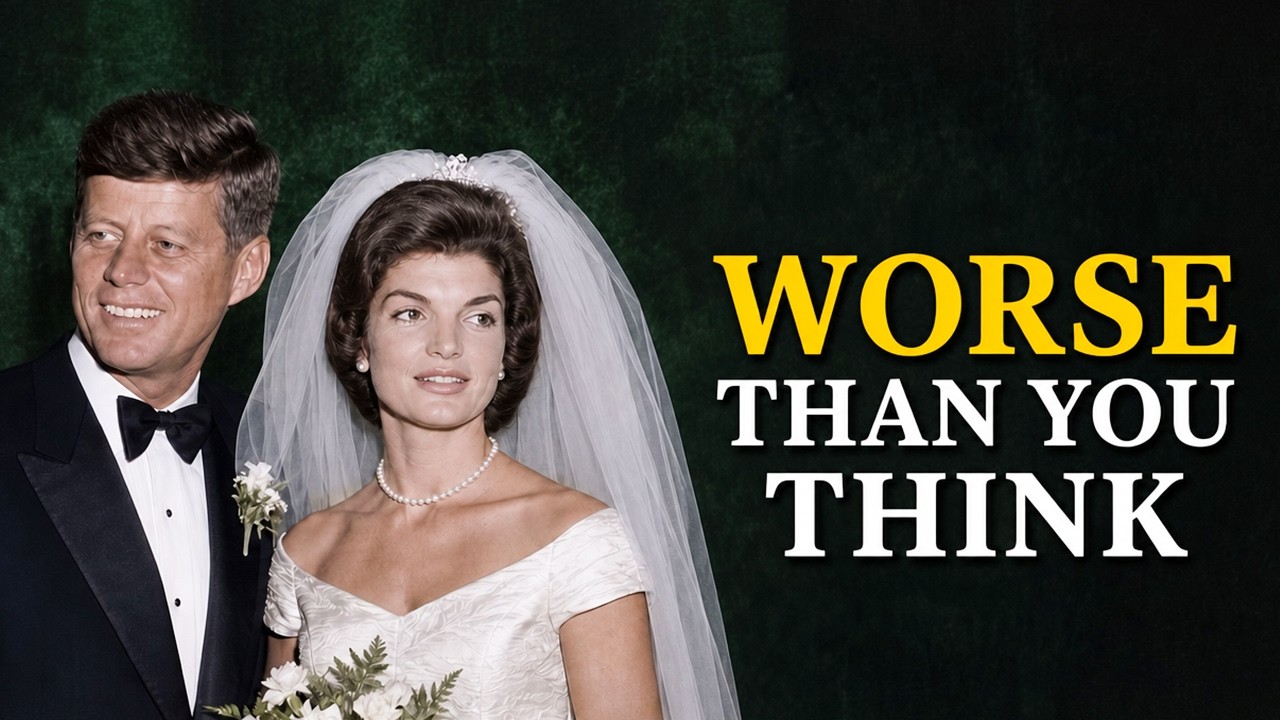
The engagement was announced in June 1953.
Their wedding took place on September 12, 1953, at St. Mary’s Church in Newport, Rhode Island.
It was one of the most celebrated society


