Sixty years ago, a television series about a starship traveling through space introduced audiences to a future that seemed almost impossible.
It was a future where humanity had survived its greatest divisions, where people from different nations worked together, and where exploration offered something more meaningful than conquest.
When Star Trek premiered on September 8, 1966, few could have predicted that its characters would become some of the most recognizable figures in science-fiction history.
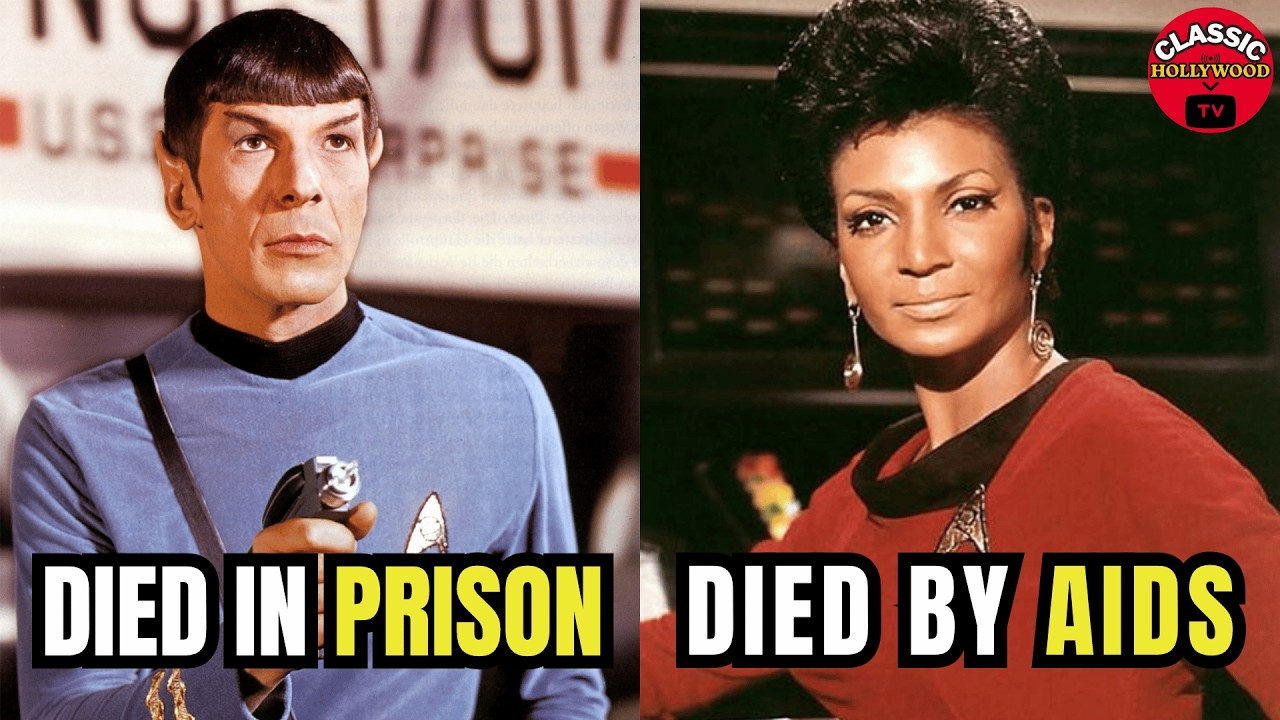
Captain James T. Kirk brought courage and determination. Mr. Spock offered logic and intellectual discipline. Dr. Leonard McCoy represented compassion and human emotion. Scotty kept the Enterprise running against impossible odds, while Uhura, Sulu, and Chekov helped present a vision of international cooperation that was remarkable for its time.
But behind those unforgettable characters were real performers whose lives extended far beyond the bridge of the USS Enterprise.
Some became international icons. Others worked quietly in supporting roles, helping make the fictional starship feel like a functioning community.
Several experienced extraordinary personal challenges, including war, discrimination, addiction, and serious illness.
And many of the actors who helped create the original series have since died.
By 2026, the show’s 60th anniversary had become both a celebration and an emotional reminder of how much time had passed.
William Shatner, George Takei, Walter Koenig, and several supporting performers remained living connections to the original production. Others, including Leonard Nimoy, DeForest Kelley, James Doohan, Nichelle Nichols, and Majel Barrett, had left behind legacies that continued to shape the franchise.
Their stories reveal how a television series that lasted only three seasons became an enduring cultural phenomenon.
William Shatner: Captain James T. Kirk, the Commander Who Defined Starfleet
William Shatner was born in Montreal, Canada, on March 22, 1931.
He was 35 when Star Trek premiered in 1966.
As Captain James T. Kirk, Shatner became the face of the original Enterprise.
Kirk was adventurous, charismatic, impulsive, and deeply committed to his crew.
He faced hostile civilizations, unfamiliar technologies, dangerous creatures, and moral dilemmas that frequently challenged Starfleet regulations.
But Kirk’s greatest strength was not his ability to defeat enemies.
It was his willingness to accept responsibility when no decision offered an easy solution.
Shatner portrayed Kirk with a distinctive combination of physical energy and theatrical confidence.
His dramatic pauses, expressive delivery, and commanding presence became instantly recognizable.
Yet the character also possessed vulnerability.
Kirk could be uncertain, lonely, and troubled by the consequences of his decisions.
His relationships with Spock and McCoy formed the emotional center of the series.
Spock approached problems through logic.
McCoy emphasized human feeling and compassion.
Kirk frequently found himself balancing those competing perspectives.
That dynamic helped make the Enterprise’s adventures more than conventional science-fiction stories.
After the original series ended, Shatner continued portraying Kirk in the feature films.
His career also extended beyond the franchise.
He starred in T.J. Hooker and later won widespread recognition for portraying Denny Crane in Boston Legal.
He also worked as an author, recording artist, and television personality.
In 2021, Shatner traveled aboard a Blue Origin spacecraft, becoming the oldest person at that time to reach space.
The journey created an extraordinary connection between the fictional captain and the real exploration that Star Trek had helped popularize.
By October 2026, Shatner was 95.
His longevity made him one of the most remarkable surviving links to the original series.
Captain Kirk remains unforgettable because Shatner portrayed leadership as something deeply human.
Courage did not mean the absence of fear.
It meant accepting responsibility despite uncertainty.
Leonard Nimoy: Mr. Spock, the Character Who Became a Cultural Icon
Leonard Nimoy was born in Boston, Massachusetts, on March 26, 1931.
He was 35 when Star Trek premiered.
As Mr. Spock, Nimoy created one of the most recognizable characters in television history.
Spock was half-Vulcan and half-human.
He embraced logic and emotional discipline, yet constantly confronted feelings he could not completely eliminate.
That internal conflict made the character extraordinary.
Spock was neither entirely human nor entirely Vulcan.
He existed between two identities, often struggling to reconcile the expectations associated with each.
Nimoy understood that restraint could communicate enormous emotional depth.
A raised eyebrow, a slight hesitation, or an unusually personal remark could reveal more than an elaborate speech.
His performances gave Spock a quiet intensity.
The character’s friendship with Kirk became one of the franchise’s defining relationships.
Their loyalty was tested repeatedly by danger, sacrifice, and conflicting responsibilities.
Spock’s philosophical disagreements with McCoy also became essential to the series.
Their conversations explored the relationship between reason and emotion.
After the original television run, Nimoy continued portraying Spock in films and later franchise productions.
He also worked as a director.
His directing credits included Star Trek III: The Search for Spock and Star Trek IV: The Voyage Home.
Outside acting, Nimoy pursued photography, writing, music, and other artistic interests.
He published books reflecting on his complicated relationship with the character who made him famous.
Nimoy died on February 27, 2015, at the age of 83.
His death was attributed to complications of chronic obstructive pulmonary disease.
The loss was deeply felt by fans around the world.
Spock’s famous Vulcan greeting, “Live long and prosper,” remains one of science fiction’s most enduring expressions.
Nimoy’s greatest achievement was making a character devoted to logic profoundly emotional.
DeForest Kelley: Dr. Leonard McCoy, the Heart of the Enterprise
DeForest Kelley was born in Toccoa, Georgia, in 1920.
He was 46 when the original series premiered.
As Dr. Leonard “Bones” McCoy, Kelley brought warmth, frustration, humor, and compassion to the Enterprise.
McCoy was the ship’s chief medical officer.
He frequently complained about dangerous missions, unfamiliar technologies, and Spock’s reliance on logic.
His arguments with the Vulcan became some of the show’s most entertaining moments.
But McCoy’s irritation concealed a deeply compassionate personality.
He cared about his patients and worried about the people around him.
Kelley portrayed him as an old-fashioned physician living in an extraordinary technological future.
Despite the advanced equipment available in sickbay, McCoy remained convinced that medicine required personal concern.
His friendship with Kirk gave the captain someone willing to challenge difficult decisions.
His disagreements with Spock created a philosophical balance that strengthened the entire series.
Before Star Trek, Kelley had appeared in numerous films and television productions.
He was particularly associated with Westerns.
After the series ended, he continued portraying McCoy in the feature films.
He also became a familiar presence at fan conventions.
Kelley died in 1999 at the age of 79.
His death marked one of the earliest major losses among the original Enterprise’s principal performers.
McCoy remains beloved because he represented the humanity that technology could never replace.
James Doohan: Montgomery Scott, the Engineer Who Never Gave Up
James Doohan was born in Vancouver, Canada, in 1920.
He was 46 when Star Trek premiered.
As Lieutenant Commander Montgomery “Scotty” Scott, Doohan became one of the franchise’s most beloved performers.
Scotty was the Enterprise’s chief engineer.
He was responsible for keeping the ship functioning through battles, mechanical failures, and dangerous missions.
His greatest talent was finding solutions when circumstances appeared hopeless.
Scotty frequently protested that the captain’s demands were impossible.
Then he found a way to accomplish them.
Doohan gave the character humor, warmth, technical confidence, and unmistakable pride.
Scotty’s relationship with the Enterprise felt almost personal.
He did not simply operate the engines.
He loved the ship.
Doohan’s own life included extraordinary experiences long before Hollywood fame.
He served during the Second World War and participated in the Normandy campaign.
He was wounded during military service.
That background added another dimension to his portrayal of a man who remained dependable under pressure.
Doohan continued appearing in the Star Trek feature films and became a beloved figure among fans.
He died in 2005 at the age of 85.
His later years included serious health difficulties, including Alzheimer’s disease.
Scotty remains unforgettable because Doohan made technical expertise feel heroic.
When the Enterprise was in danger, audiences knew that someone in engineering was still fighting to bring everyone home.
Nichelle Nichols: Lieutenant Uhura, the Woman Who Helped Change Television
Nichelle Nichols was born in Robbins, Illinois, in 1932.
She was 33 when Star Trek premiered.
As Lieutenant Nyota Uhura, Nichols became one of the most historically important performers associated with the series.
Uhura served as the Enterprise’s communications officer.
She was intelligent, professional, composed, and trusted by the senior crew.
Her presence carried enormous significance during the civil rights era.
A Black woman was shown serving as an officer aboard humanity’s flagship spacecraft.
She was not portrayed as a servant or a marginal figure.
She belonged at the center of the mission.
Nichols brought elegance, warmth, and confidence to the character.
Her performance helped challenge established expectations about representation on American television.
The importance of her role extended beyond entertainment.
Nichols later worked with NASA to encourage women and people from underrepresented communities to pursue opportunities in the space program.
Her advocacy became an important part of her public legacy.
She also continued portraying Uhura in the Star Trek films.
Nichols died in 2022 at the age of 89.
Her passing prompted tributes from fans, fellow performers, and people connected to science and space exploration.
Uhura remains a symbol of possibility.
Nichols helped audiences imagine a future where talent and responsibility mattered more than prejudice.
George Takei: Hikaru Sulu and a Lifetime of Advocacy
George Takei was born in Los Angeles, California, in 1937.
He was 29 when Star Trek premiered.
As Hikaru Sulu, Takei portrayed one of the Enterprise’s most dependable officers.
Sulu served at the helm and demonstrated calm professionalism during dangerous missions.
He was curious, intelligent, and capable of maintaining composure when the ship faced extraordinary threats.
His presence was particularly significant during an era still shaped by the consequences of the Second World War.
An Asian-American officer was shown helping guide a multinational crew into the future.
Takei’s personal history made that representation especially meaningful.
During his childhood, he and his family were incarcerated in camps established for Japanese Americans during World War II.
The experience later became central to his advocacy for civil rights and historical remembrance.
Takei continued portraying Sulu in the original cast films.
His character eventually became captain of the USS Excelsior.
Beyond acting, Takei became a prominent author, public speaker, and activist.
He also helped bring the story of Japanese-American incarceration to the stage through the musical Allegiance.
By October 2026, Takei was 89.
His life represents a remarkable connection between science fiction’s vision of equality and the real struggle to achieve it.
Sulu remains important because the Enterprise treated diversity as an ordinary part of humanity’s future.
Walter Koenig: Pavel Chekov and the Hope of a United Future
Walter Koenig was born in Chicago, Illinois, in 1936.
He joined Star Trek during its second season in 1967.
As Ensign Pavel Chekov, Koenig brought youthful enthusiasm and humor to the bridge.
Chekov was proud of his Russian heritage.
He frequently suggested that important discoveries or achievements had originated in Russia.
Those jokes became a recognizable part of his personality.
But the character’s significance extended beyond comedy.
During the Cold War, the presence of a Russian officer aboard an American television starship carried a message of international cooperation.
The series imagined a future where former geopolitical rivals could work together.
Koenig portrayed Chekov as eager, intelligent, impulsive, and occasionally inexperienced.
His youthful personality contrasted with the more established officers around him.
After the original series, Koenig returned for the feature films.
He later became known for portraying Alfred Bester in Babylon 5.
He also pursued writing and other creative work.
By October 2026, Koenig was 90.
Chekov remains an important symbol of the optimism that distinguished the original series.
Majel Barrett: Christine Chapel and the First Lady of Star Trek
Majel Barrett was born in Cleveland, Ohio, in 1932.
She became one of the most enduring creative presences in the Star Trek franchise.
Before the original series reached television, Barrett portrayed Number One in the pilot episode The Cage.
That character was a highly capable female officer serving directly beneath Captain Christopher Pike.
When the series was reworked, Barrett returned as Nurse Christine Chapel.
Chapel served in sickbay and worked closely with Dr. McCoy.
She was professional, compassionate, and emotionally vulnerable.
Her unreturned affection for Spock became one of her most recognizable storylines.
Barrett portrayed Chapel with restraint, allowing personal feeling to coexist with professional responsibility.
Her connection to Star Trek extended far beyond that character.
She later portrayed Lwaxana Troi in Star Trek: The Next Generation and Star Trek: Deep Space Nine.
She also provided the voice of Starfleet computers across multiple productions.
Barrett married series creator Gene Roddenberry.
Her extensive involvement earned her the affectionate title “First Lady of Star Trek.”
She died in 2008 at the age of 76 from leukemia.
Her voice remains one of the most recognizable sounds associated with the franchise.
Grace Lee Whitney: Janice Rand and the Remarkable Story of Recovery
Grace Lee Whitney was born in Michigan in 1930.
She was 36 when Star Trek premiered.
As Yeoman Janice Rand, Whitney became one of the original series’ early recurring performers.
Rand worked closely with Captain Kirk and handled important responsibilities aboard the Enterprise.
She was capable, professional, and occasionally placed in dangerous situations.
Her relationship with Kirk suggested complicated personal feelings constrained by their professional roles.
Whitney left the series after appearing in eight episodes during the first season.
Her departure became one of the unfinished stories associated with the original cast.
Later in life, Whitney spoke publicly about struggles with addiction.
She also discussed her recovery and efforts to help others facing similar difficulties.
Her connection to Star Trek eventually resumed.
She returned as Rand in several feature films and later appeared in Star Trek: Voyager.
Whitney died in 2015 at the age of 85.
Her family reported that she died of natural causes.
Her story became one of personal survival and return.
For many fans, her later appearances carried emotional significance because they restored a character who had disappeared so early.
Eddie Paskey: Lieutenant Leslie, the Familiar Face Behind the Heroes
Eddie Paskey was born in Delaware in 1939.
He became one of the original series’ most recognizable recurring background performers.
As Lieutenant Leslie, Paskey appeared in numerous episodes.
He could be seen at bridge stations, serving in security, or participating in ordinary shipboard duties.
His presence helped establish the Enterprise as a functioning vessel.
The ship was not operated exclusively by Kirk, Spock, and the other principal characters.
It required an entire crew.
Paskey also worked as William Shatner’s stand-in during production.
That responsibility made him a consistent presence behind the scenes.
Leslie became particularly memorable to attentive fans because he seemed to return despite dangerous situations and apparent continuity contradictions.
Paskey died in 2021 at the age of 81.
His character remains an example of how supporting performers helped make the Enterprise feel real.
John Winston: Lieutenant Kyle, the Dependable Transporter Officer
John Winston was born in 1927.
He portrayed Lieutenant Kyle, a recurring Enterprise officer.
Kyle was frequently associated with transporter operations and bridge duties.
His role was rarely central to an episode’s dramatic conflict.
But his presence contributed to the credibility of Starfleet.
Transporter operations required precision and reliability.
A mistake could place lives in danger.
Winston portrayed Kyle with professional calm.
He later returned to the franchise in Star Trek II: The Wrath of Khan.
That appearance provided a connection between the original television crew and the later feature films.
Winston died in 2019 at the age of 91.
Kyle remains a familiar figure to viewers who remember the supporting officers who helped keep the Enterprise functioning.
David L. Ross: Lieutenant Galloway and the Risks of Exploration
David L. Ross was born in 1939.
He portrayed Lieutenant Galloway, a recurring Enterprise security officer.
Galloway frequently participated in dangerous missions and landing-party assignments.
His responsibilities placed him close to the risks associated with exploring unfamiliar planets.
Ross also appeared in other minor roles during the original series.
His recurring presence helped establish the impression of a larger working crew.
Decades later, he returned to the franchise through Star Trek: Deep Space Nine.
The anniversary episode Trials and Tribble-ations connected the newer series with the original television production.
The supplied retrospective places Ross at approximately 87 in 2026.
His contribution illustrates the importance of the supporting officers whose work made exploration possible.
Bart LaRue: The Mysterious Voice of the Guardian of Forever
Bart LaRue was born in Texas in 1932.
He became associated with several memorable voice performances in the original series.
His most famous contribution was the Guardian of Forever in The City on the Edge of Forever.
The Guardian was a mysterious entity connected to a portal through time.
Its voice needed to sound ancient, powerful, and detached from ordinary human experience.
LaRue’s deep delivery gave the character that extraordinary presence.
He also provided voices for other beings and broadcasts during the series.
These included characters and announcements associated with episodes such as The Squire of Gothos and Bread and Circuses.
LaRue died in 1990 at the age of 57.
His voice remained so recognizable that later franchise productions revisited the Guardian of Forever.
His work demonstrates how a performer could leave a lasting impression without appearing physically on screen.
Barbara Babcock: The Actress Behind Several Star Trek Characters
Barbara Babcock was born in Kansas in 1937.
She contributed to the original series through several appearances and voice performances.
Her roles included Mea 3 in A Taste of Armageddon and Philana in Plato’s Stepchildren.
She also provided the voice of the Beta 5 computer in Assignment: Earth.
Her ability to portray different characters made her valuable to a series that regularly introduced unfamiliar civilizations.
Babcock continued building a successful television career after Star Trek.
She earned an Emmy Award for her work on Hill Street Blues.
She later became widely recognized for portraying Dorothy Jennings in Dr. Quinn, Medicine Woman.
By October 2026, Babcock was 89.
Her career demonstrates how the original series benefited from experienced supporting performers who could bring credibility to multiple roles.
Sean Kenney: Christopher Pike and One of Star Trek’s Most Tragic Images
Sean Kenney was born in 1944.
He portrayed the severely injured Fleet Captain Christopher Pike in the two-part episode The Menagerie.
Pike had originally been portrayed by Jeffrey Hunter in the pilot The Cage.
For The Menagerie, Kenney appeared beneath extensive makeup as the older, physically incapacitated officer.
The character was confined to a specialized chair and communicated through a flashing light.
His condition created one of the original series’ most haunting images.
The storyline explored dignity, sacrifice, loyalty, and the meaning of compassion.
Spock’s determination to help Pike became the emotional center of the episode.
Kenney later appeared as Lieutenant DePaul.
His acting career eventually gave way to other interests, including photography.
By October 2026, he was 82.
His performance as Pike remains memorable because it required communicating tragedy through extreme physical restraint.
Vic Perrin: The Voice of the Metron in Arena
Vic Perrin was born in Wisconsin in 1916.
He provided the voice of the Metron in the original series episode Arena.
The episode featured Captain Kirk fighting a Gorn captain under the observation of a powerful alien civilization.
The Metron appeared as a seemingly youthful being whose calm authority contrasted with the violence of the conflict.
Perrin’s voice gave the character an almost supernatural detachment.
His delivery helped transform the episode from a physical confrontation into a moral examination.
Kirk’s decision to spare his defeated opponent demonstrated compassion in a situation where revenge might have seemed justified.
Perrin was already known for voice work, including his association with The Outer Limits.
He died in 1989 at the age of 73.
His contribution remains important because the Metron’s judgment helped establish one of Star Trek‘s central themes: moral progress matters more than physical superiority.
Janos Prohaska: The Performer Who Brought Alien Creatures to Life
Janos Prohaska was born in Hungary in 1919.
He became known for creature performances requiring unusual physical skill.
In an era before computer-generated imagery, science-fiction productions depended on performers who could make elaborate costumes appear alive.
Prohaska specialized in movement, animal imitation, and creature characterization.
His contributions to Star Trek included the Horta, the Mugato, and other unusual beings.
He also appeared in material filmed for The Cage.
His performances required imagination and precise physical control.
The Horta, in particular, became one of the original series’ most memorable alien creatures.
Its storyline challenged assumptions about intelligence and communication.
Prohaska died in 1974 at the age of 54.
He and his son were killed in a plane crash.
His work remains an important example of the practical performance techniques that helped early science fiction create convincing alien worlds.
Grant Woods: Lieutenant Kelowitz and a Career Cut Short
Grant Woods was born in Colorado in 1932.
He portrayed Lieutenant Kelowitz in three first-season episodes.
His appearances included The Galileo Seven, Arena, and This Side of Paradise.
Kelowitz served in Starfleet’s sciences division.
He participated in missions that required officers to confront unfamiliar environments and potentially dangerous situations.
Woods portrayed the character with quiet professionalism.
Although Kelowitz was not a major recurring figure, his appearances helped establish the Enterprise as a vessel staffed by many capable officers.
Woods died in 1968 at the age of 36 following a motorcycle accident.
His death occurred shortly after the original series began attracting its devoted audience.
His brief contribution remains part of the show’s early history.
Barbara Baldavin: Angela Martine and the Tragedy of Balance of Terror
Barbara Baldavin was born in Massachusetts in 1938.
She portrayed Angela Martine, an Enterprise officer whose storyline became particularly memorable in Balance of Terror.
Angela was preparing to marry Lieutenant Robert Tomlinson.
Their wedding ceremony was interrupted when the Enterprise went to battle stations.
The interruption transformed a personal celebration into a reminder of military duty.
Tomlinson was later killed during the confrontation with the Romulans.
Angela’s grief gave the episode an emotional consequence beyond the strategic conflict.
Baldavin later appeared again in the original series and eventually worked in casting.
She died in 2024 at the age of 85.
Her portrayal of Angela remains significant because it demonstrated that even a technologically advanced future could not eliminate loss.
Jim Goodwin: Lieutenant Farrell and the Everyday Life of the Enterprise
Jim Goodwin was born in Boston in 1929.
He portrayed Lieutenant Farrell, a recurring officer during the original series’ first season.
Farrell appeared in episodes including The Enemy Within, Mudd’s Women, and Miri.
His duties involved navigation and other bridge responsibilities.
Goodwin portrayed the character with understated professionalism.
His presence helped make the Enterprise feel like a working environment rather than a stage occupied only by principal characters.
He died in 1980 at the age of 50.
Although his role was relatively small, Farrell remains recognizable to dedicated viewers.
The Original Star Trek Cast Members We Have Lost
By the show’s 60th anniversary in 2026, many of its best-known performers had died.
Leonard Nimoy died in 2015 at 83.
DeForest Kelley died in 1999 at 79.
James Doohan died in 2005 at 85.
Nichelle Nichols died in 2022 at 89.
Majel Barrett died in 2008 at 76.
Grace Lee Whitney died in 2015 at 85.
Eddie Paskey died in 2021 at 81.
John Winston died in 2019 at 91.
Bart LaRue died in 1990 at 57.
Vic Perrin died in 1989 at 73.
Janos Prohaska died in 1974 at 54.
Grant Woods died in 1968 at 36.
Barbara Baldavin died in 2024 at 85.
Jim Goodwin died in 1980 at 50.
These losses represent many different lives and careers.
Some performers lived long enough to witness the franchise become an international phenomenon.
Others died before its cultural influence had fully developed.
But their performances remain preserved in the original episodes.
The Surviving Stars Who Still Connect Us to 1966
As of October 2026, several performers from the original series remained living connections to its earliest years.
William Shatner was 95.
George Takei was 89.
Walter Koenig was 90.
Barbara Babcock was 89.
Sean Kenney was 82.
David L. Ross was approximately 87, according to the supplied retrospective.
Their continued connection to the series gave the 60th anniversary special emotional significance.
For longtime fans, these performers represented more than nostalgia.
They were witnesses to the creation of a fictional universe that became part of global popular culture.
How Star Trek Changed Science Fiction Forever
The original series was not an immediate ratings phenomenon.
It lasted three seasons before cancellation in 1969.
Yet its influence grew through reruns, fan communities, conventions, and later productions.
Its fictional technology inspired generations of scientists, engineers, and designers.
Its multicultural crew presented a hopeful vision during a period marked by political conflict.
Its stories explored war, prejudice, responsibility, artificial intelligence, personal identity, and the ethical limits of power.
The series also challenged the idea that science fiction existed only to showcase strange creatures or futuristic machinery.
Its most memorable episodes frequently centered on moral choices.
Could compassion be more important than victory?
Could logic coexist with emotion?
Could former enemies eventually cooperate?
Could humanity become better without losing what made it human?
Those questions gave the series a depth that helped it survive long after its original cancellation.
The Enterprise Was More Than Its Famous Officers
The enduring appeal of the original Star Trek cast extends beyond the principal characters.
Supporting performers helped create the impression of a functioning starship.
Eddie Paskey’s Lieutenant Leslie returned repeatedly.
John Winston’s Lieutenant Kyle operated essential equipment.
David L. Ross’s Lieutenant Galloway participated in dangerous missions.
Grant Woods’s Lieutenant Kelowitz represented the officers whose responsibilities often placed them at risk.
Jim Goodwin’s Lieutenant Farrell contributed to the everyday operation of the bridge.
Voice performers such as Bart LaRue and Vic Perrin gave extraordinary beings their distinctive personalities.
Creature specialists such as Janos Prohaska made alien life physically convincing.
Together, these performers expanded the universe beyond its central heroes.
The Enterprise became believable because it seemed populated by people with responsibilities that continued even when the camera was focused elsewhere.
Sixty Years Later, the Mission Continues
In 2026, the original Star Trek series stands as one of the most influential television productions ever created.
Its characters have become cultural symbols.
Captain Kirk represents courage and responsibility.
Spock represents the struggle between logic and emotion.
McCoy represents compassion.
Scotty represents determination and technical ingenuity.
Uhura represents inclusion and opportunity.
Sulu and Chekov represent international cooperation.
And the many supporting officers, aliens, and recurring characters helped transform a television production into an expansive fictional universe.
The actors’ lives followed very different paths.
Some achieved extraordinary fame.
Others continued working quietly.
Several became advocates for important social causes.
Many have died.
But their performances remain part of a story that continues to reach new generations.
The original Enterprise may have completed its televised mission decades ago.
Yet its crew still invites audiences to imagine a better future.
The bridge lights remain familiar.
The transporter continues to hum.
The engines prepare for another journey.
And somewhere beyond the stars, the voices of Kirk, Spock, McCoy, Scotty, Uhura, Sulu, Chekov, and their fellow officers continue to remind viewers why the voyage mattered.
Sixty years after its first broadcast, Star Trek remains more than science fiction.
It is an enduring expression of curiosity, courage, friendship, and hope.
The performers who created that vision may be growing older, and many have taken their final voyage.
But the mission they began in 1966 has never truly ended.


