How John Gotti Survived a Genovese Mob Murder Plot Before the Teflon Don Legend Exploded
Long before John Gotti became one of America’s most recognizable organized-crime bosses, another powerful Mafia faction was discussing how to kill him.
The plot was real.
The FBI knew about it.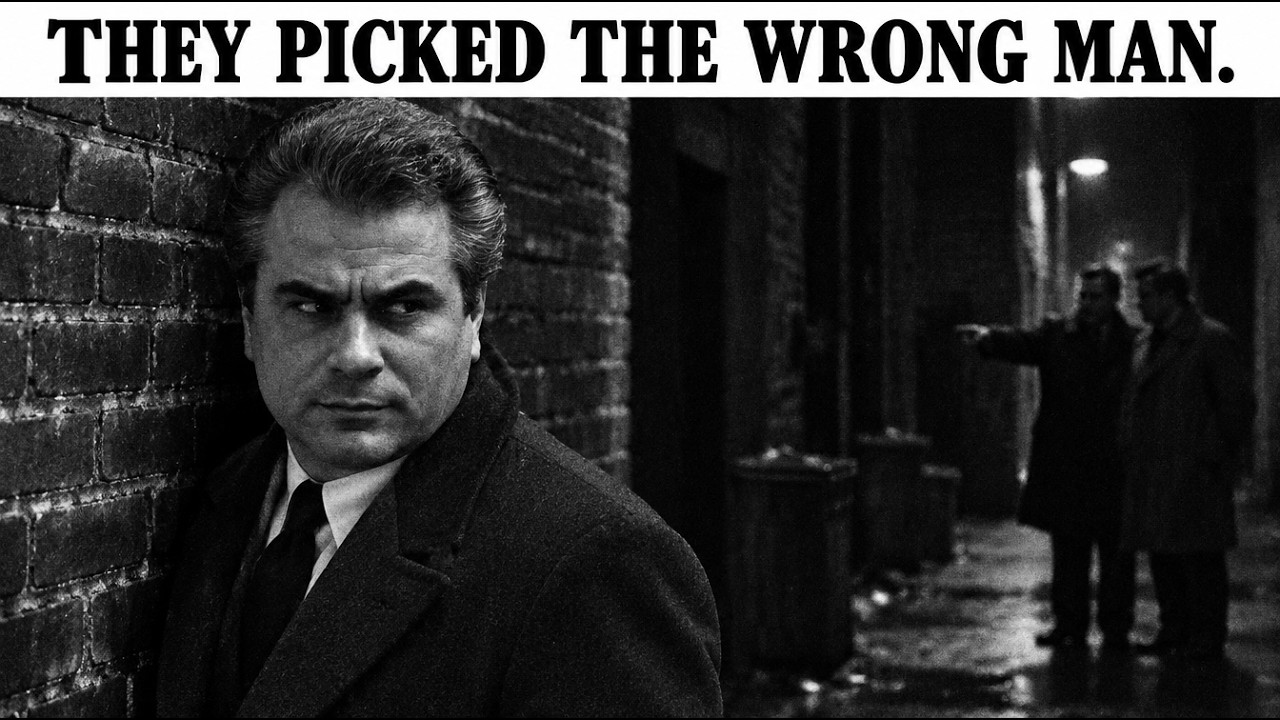
Federal agents secretly recorded conversations concerning the proposed assassination, and one agent later testified that he personally warned Gotti that killers were targeting him.
But the historical record is considerably different from the blood-soaked legend now circulating online.
There is credible evidence that Louis “Bobby” Manna, a senior figure in the Genovese crime family, participated in a conspiracy targeting John Gotti and Gotti’s brother Gene.
There is also courtroom evidence showing that federal investigators intercepted discussions connected to that conspiracy.
What is not supported is the dramatic claim that the man who ordered the assassination was immediately hunted down by Gotti and left dead in a pool of blood after the ambush backfired.
Manna was not killed in such a retaliatory strike.
He was arrested, prosecuted, convicted and sent to federal prison.
The real story is still extraordinary.
It reveals how close Gotti came to becoming a target in a broader Mafia struggle, how the FBI found itself warning one alleged crime boss that another criminal organization wanted him dead, and how electronic surveillance increasingly exposed conversations once believed impossible for law enforcement to penetrate.
The confrontation took place during one of the most unstable periods in New York Mafia history.
Gotti’s rise had already shattered traditional underworld protocol.
On December 16, 1985, Gambino boss Paul Castellano and underboss Thomas Bilotti were shot dead outside Sparks Steak House in Manhattan.
Federal prosecutors later established that Gotti had helped engineer the assassination.
The FBI’s own historical account says Gotti watched from a nearby vehicle as the murders occurred and later had his driver pass the scene to confirm that the killings had been completed.
The assassination transformed Gotti almost overnight.
Within weeks, he emerged as the dominant figure inside the Gambino family.
But killing a sitting Mafia boss without approval from the governing Commission represented an enormous breach of traditional organized-crime rules.
The murder created enemies.
One of the most important was Vincent “The Chin” Gigante, the influential boss of the Genovese family.
Castellano had maintained close relationships with senior Genovese figures.
Gotti’s coup threatened both longstanding alliances and the broader balance of power among New York’s Five Families.
The danger became obvious in April 1986.
A bomb exploded beneath the car carrying Gotti’s newly appointed underboss, Frank DeCicco.
DeCicco was killed.
Gotti associate Frank Bellino was injured.
Gotti himself had been expected to attend the gathering but was not in the vehicle.
Investigators and organized-crime experts have long connected the bombing to retaliation for Castellano’s assassination.
That was not the last threat.
By the late 1980s, federal investigators were listening to conversations involving Louis “Bobby” Manna, a reputed high-ranking member of the Genovese family’s New Jersey faction.
Manna was no obscure street soldier.
Contemporary prosecutors described him as one of the most influential Genovese figures in New Jersey.
And federal authorities believed his faction was involved in discussions about eliminating Gotti.
The plot became public during Manna’s federal trial.
On April 20, 1989, FBI Special Agent George Gabriel testified that he had personally warned Gotti about an assassination plan.
According to Gabriel, investigators believed members of the Genovese faction intended to gun Gotti down outside his Queens social club.
The warning created one of the strangest scenes imaginable in organized-crime history.
Federal agents who were simultaneously investigating Gotti as a major Mafia figure informed him that another suspected Mafia organization intended to kill him.
Gabriel testified that Gotti displayed little visible reaction when told.
But something apparently changed afterward.
The next time Gabriel saw him near the Bergin Hunt and Fish Club, Gotti was riding in a chauffeur-driven vehicle rather than driving himself as he normally did.
Whether that change resulted directly from the FBI warning cannot be proven.
But the timing was striking.
The prosecution also played secretly recorded conversations for jurors.
One January 1988 discussion contained an ominous reference to Gene Gotti.
“Gene Gotti’s dead,” Manna was heard saying according to the prosecution transcript.
Another man asked when the attack would occur.
Those were not social-media rumors created decades later.
They were evidence introduced during a federal Mafia prosecution.
And eventually the government won.
In June 1989, a federal jury convicted Manna and four other defendants in a racketeering case involving the conspiracy to murder John Gotti.
The Associated Press reported that Manna was convicted of racketeering conspiracy, plotting Gotti’s murder, and arranging another killing.
Authorities said both John and Gene Gotti had been targets.
The assassination never happened.
According to prosecutors, the FBI’s intervention helped disrupt the plan.
That is where the verified story sharply diverges from the viral version.
There is no historical evidence that Manna launched an ambush against Gotti, watched it fail, and was then murdered by Gotti’s crew.
Manna survived the conspiracy case.
His downfall came through federal prosecution rather than a retaliatory street execution.
The viral description appears to blend several genuine Mafia events into one cinematic narrative.
There really was a conspiracy against Gotti.
There really were FBI recordings.
Gotti really had dangerous enemies.
There really had been deadly retaliation following his takeover of the Gambino family.
And people connected to Mafia conflicts really were murdered.
But those separate facts do not prove the specific revenge sequence being claimed.
The confusion becomes easier to understand when Gotti’s violent rise is examined.
Gotti himself had built power through murder.
His most consequential target was Castellano.
Castellano represented an older, more business-oriented wing of the Gambino organization.
Gotti emerged from the street-oriented faction associated with Aniello Dellacroce.
Tension between those camps had existed for years.
The dispute intensified after federal investigators captured conversations suggesting members of Gotti’s crew were involved in narcotics trafficking.
Castellano opposed unsanctioned drug dealing and was reportedly considering severe disciplinary action.
When Dellacroce died in December 1985, Gotti lost the senior figure who had helped protect his position.
The atmosphere became increasingly dangerous.
Gotti eventually decided that Castellano had to be removed.
According to testimony from Salvatore “Sammy the Bull” Gravano, planning meetings were held before the Sparks Steak House murders.
Gravano later became the government’s star witness against Gotti.
He testified that Gotti participated directly in planning Castellano’s assassination.
The attack succeeded.
Castellano and Bilotti were shot repeatedly outside the restaurant.
Gotti then moved rapidly toward leadership of the Gambino family.
The FBI describes that killing as the beginning of Gotti’s ascent to national notoriety.
But power came with extraordinary risk.
Gotti had violated a fundamental Mafia convention.
Traditionally, assassinating a family boss required approval from the Commission, the governing body through which New York’s major Mafia organizations resolved disputes.
Gotti had not received such authorization.
That made him vulnerable.
Several underworld figures reportedly viewed his takeover as illegitimate.
The Genovese organization posed perhaps the greatest threat.
Its leadership had both political and personal reasons to oppose him.
That helps explain why the DeCicco bombing carried such symbolic weight.
It showed that Gotti’s enemies were prepared to answer his coup with violence.
And it helps explain why federal investigators later took the Manna plot seriously.
The proposed attack against Gotti was not occurring in a vacuum.
It belonged to a larger cycle of retaliation.
What made the Manna case unusual was the evidence.
Organized-crime conspiracies historically depended on silence.
Orders were delivered face-to-face.
Participants avoided explicit language.
Murders were disguised through coded terminology.
Victims disappeared.
Witnesses became frightened.
Jurors could be intimidated.
By the 1980s, however, federal investigators had become far more sophisticated.
The FBI increasingly relied on court-authorized electronic surveillance.
Title III wiretaps allowed investigators to listen to conversations that previously would have remained hidden.
The Bureau’s historical account of its Gotti investigation says wiretaps, informants and undercover agents gradually provided increasingly detailed insight into the structure and operations of the Five Families.
Gotti himself eventually became one of electronic surveillance’s most famous victims.
Investigators bugged locations around the Ravenite Social Club in Manhattan’s Little Italy.
Those recordings captured Gotti and other Gambino members discussing internal Mafia business.
Some conversations included references to murders.
Hundreds of pages of FBI transcripts eventually became part of the prosecution case.
The tapes helped destroy the carefully cultivated image that had protected Gotti through earlier trials.
Before his final conviction, Gotti had survived multiple prosecutions.
The media called him the “Teflon Don” because criminal charges repeatedly failed to stick.
That nickname became part of his public mythology.
He wore expensive suits.
He smiled for cameras.
He spoke to reporters.
Crowds sometimes gathered outside his social clubs.
His celebrity became unusual even by Mafia standards.
But behind that public theater was enormous violence.
The FBI describes Gotti as a ruthless criminal who had repeatedly been arrested before reaching the top of the Gambino organization.
The contrast between celebrity and danger was central to his reputation.
The Manna assassination conspiracy illustrates that contradiction.
By the time Gotti became famous enough for television crews to follow him, powerful enemies were already considering his death.
The supposed immunity suggested by “Teflon Don” applied only to courtrooms.
It did not protect him from rival crime families.
Federal authorities understood this.
That is why Gabriel’s warning is so remarkable.
The same government trying to build criminal cases against Gotti also had a responsibility to warn him when credible intelligence indicated that someone planned to murder him.
Law enforcement did not suddenly become Gotti’s protector in any broader sense.
Investigators continued pursuing him aggressively.
But preventing murder remained part of their responsibility regardless of who the intended victim was.
Gotti’s apparent reaction also fits the careful paranoia of organized-crime leadership.
According to Gabriel, Gotti did not dramatically react when informed.
There was no public panic.
No request for police protection.
No cooperation agreement.
Instead, the change the agent noticed was subtle.
Gotti stopped appearing alone behind the wheel and began arriving in a chauffeured vehicle.
For someone operating inside an organization where appearing frightened could weaken authority, such restraint would have been understandable.
Meanwhile, the government continued building its case against Manna.
Federal prosecutors linked his organization not only to the Gotti conspiracy but also to the murder of businessman Irwin Schiff.
Schiff had been shot to death while eating dessert at an upscale Manhattan restaurant in 1987.
Authorities believed his killing was connected to organized-crime financial activity.
The 1989 jury ultimately convicted Manna and four others.
That conviction is an important correction to the viral narrative.
Manna was not the swaggering mob conspirator who ordered Gotti’s death and then immediately ended up murdered in retaliation.
He became another high-ranking organized-crime figure consumed by federal racketeering prosecutions.
Gotti’s own ending followed a similar trajectory.
His enemies never successfully assassinated him.
Law enforcement ultimately accomplished what rival Mafia factions could not.
Federal investigators secretly recorded Gotti discussing crimes.
Then Gravano turned government witness.
Gravano had been deeply embedded in Gotti’s organization and possessed firsthand knowledge of murders, conspiracies and the hierarchy of the Gambino family.
His cooperation was devastating.
During Gotti’s 1992 trial, prosecutors combined Gravano’s testimony with extensive electronic surveillance.
The government argued that the recordings revealed Gotti discussing Mafia murders and organizational decisions.
One tape captured Gotti discussing Robert DiBernardo, a Gambino associate whose killing prosecutors said Gotti authorized.
Gravano supplied details about the Castellano murder.
He testified about planning meetings.
He described how the Gambino leadership functioned.
The combination broke through defenses that had protected Gotti during earlier prosecutions.
On April 2, 1992, the jury convicted him on 13 counts.
Those charges included racketeering and murder-related offenses.
The FBI later celebrated the result by declaring that the supposed Teflon Don had effectively become covered in Velcro because every major charge finally stuck.
Gotti received life imprisonment.
He died in federal custody in 2002.
The Mafia mythology surrounding him continued growing afterward.
Movies, documentaries, books and television programs turned his rise and fall into familiar American crime folklore.
That mythology often compresses separate events.
A bombing becomes an assassination attempt against Gotti personally.
A Genovese conspiracy becomes a dramatic street ambush.
An FBI warning becomes a leaked intelligence dossier.
A convicted conspirator becomes a murdered rival.
A series of Mafia conflicts becomes one perfectly scripted revenge story.
The historical evidence is messier.
And more revealing.
Gotti really was marked for death.
The conspiracy involved powerful organized-crime figures.
Federal surveillance really captured discussions concerning the plot.
The FBI really warned Gotti.
Manna really was prosecuted for planning his murder.
But the planned killing never occurred.
The conspirators did not spring a legendary street ambush from which Gotti miraculously escaped.
And the man convicted of participating in the assassination conspiracy was not subsequently discovered dead in a pool of blood because Gotti turned the tables.
That portion belongs to sensational retelling rather than the established record.
There is another irony.
The same surveillance machinery that helped save Gotti from a potential assassination eventually helped destroy him.
Electronic intelligence exposed threats against him.
Electronic intelligence also recorded his own words.
The government that warned him in the late 1980s continued collecting evidence until his criminal empire collapsed.
That makes the genuine story considerably more interesting than a simple revenge narrative.
Gotti’s survival did not depend solely on being more ruthless than his enemies.
Part of it resulted from law enforcement learning what those enemies were planning.
His downfall came from that same law-enforcement penetration of Mafia secrecy.
The Five Families were becoming increasingly vulnerable to techniques they had once underestimated.
Wiretaps.
Bugs.
Racketeering statutes.
Cooperating witnesses.
Financial investigations.
Long-term surveillance.
The old code of silence was weakening.
Gotti’s charisma could not reverse that trend.
Neither could Manna’s position within the Genovese organization.
Both eventually became prisoners.
The FBI’s long pursuit of Gotti demonstrated how dramatically organized-crime investigations had evolved.
Instead of relying on one murder witness willing to risk retaliation, investigators could build massive conspiracy cases.
One recording could establish hierarchy.
Another could reveal motive.
A cooperating insider could explain coded phrases.
Dozens of separate criminal events could then be connected under federal racketeering law.
Gotti survived bullets, bombs, conspiracies and several prosecutions.
But he could not survive the combination of surveillance and betrayal from inside his own organization.
That is the genuine historical reversal.
The alleged assassin never became the corpse that crowned Gotti king.
Instead, the conspirators targeting Gotti went to court.
And Gotti, after years of cultivating the legend that nobody could touch him, eventually joined them in federal custody.
The documented record therefore separates cleanly.
A Genovese-linked conspiracy to kill John Gotti existed.
Verified.
Louis “Bobby” Manna was accused of helping plan it.
Verified.
Gene Gotti was also discussed as a potential target.
Verified through federal testimony and recordings.
The FBI secretly recorded discussions connected to the plot.
Verified.
An FBI agent personally warned John Gotti.
Verified through sworn testimony.
Gotti apparently altered his transportation habits afterward.
Reported by the same FBI agent.
Manna and several co-defendants were convicted.
Verified.
Gotti later became boss after ordering Paul Castellano’s assassination.
Established through his eventual conviction and FBI history.
What is not established is the viral ending.
There is no credible evidence that Manna’s men launched the “deadliest mob ambush in New York history” against Gotti.
There is no documented episode in which Gotti escaped that ambush and immediately ordered the conspirator murdered.
And there is no authenticated FBI intelligence file describing that supposed rival dying in a bloody retaliatory execution.
The real danger facing John Gotti was genuine.
So were the recordings.
So was the conspiracy.
But the decisive ending came not through a cinematic street revenge killing.
It came through federal investigators listening quietly while Mafia figures discussed murder—and then using those conversations in court.
The underworld wanted John Gotti dead.
The FBI got to the conspiracy first.
And several years later, the same surveillance war that helped expose the threat against the Teflon Don finally helped send him away for life.


