Doctor Calls Lethal Injection a ‘Lie’ After Christa Pike’s Botched Execution as Pneumonia, Paralysis Claims, and Constitutional Questions Emerge
A condemned woman is still alive more than a week after Tennessee attempted to execute her, her legal team is raising alarming concerns about her physical condition, and a medical expert is challenging one of America’s most widely used execution methods with a devastating accusation: the appearance of a peaceful death may conceal something far more disturbing.
The case of Christa Pike has taken another troubling turn following the reported failure of her execution attempt, with new claims about her recovery and a growing legal battle over the procedure that was supposed to end her life.
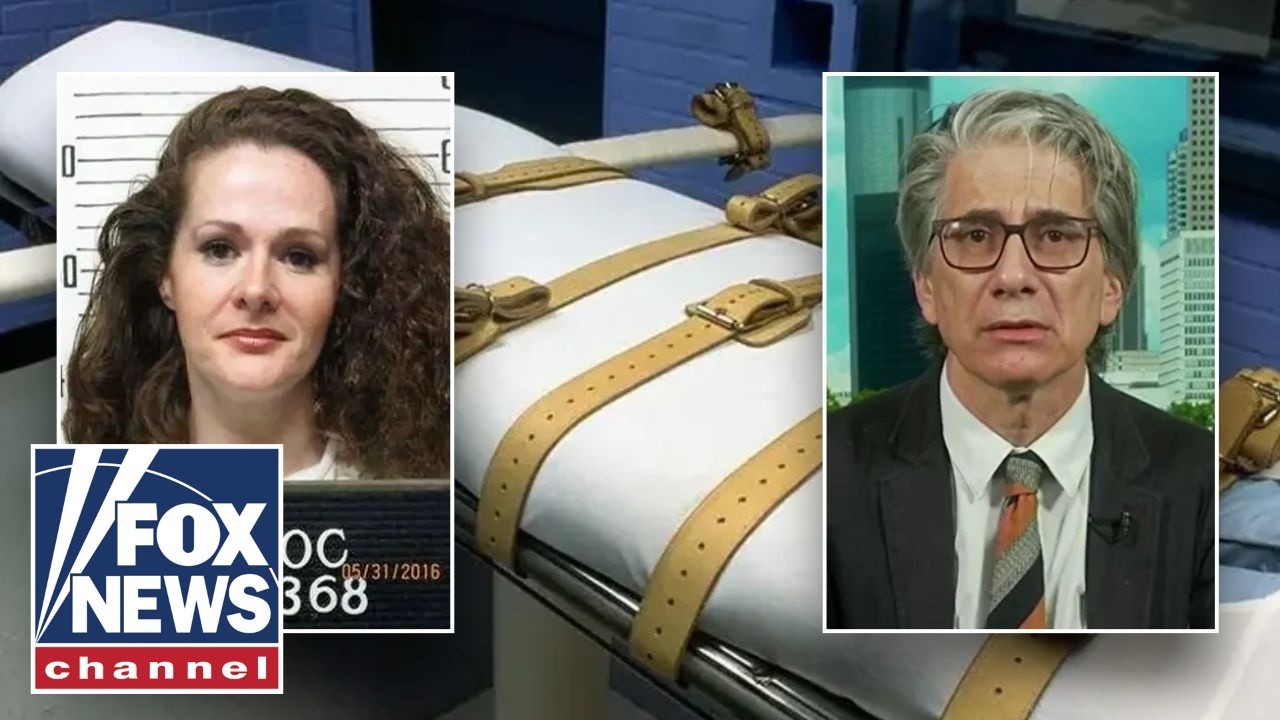
According to a television report discussing the case, Pike’s lawyers say she has developed pneumonia and is unable to move her arms, while a judge has ordered evidence connected to the execution to be preserved.
The developments have intensified questions about what happened during the procedure, what injuries Pike may have suffered, and whether Tennessee can legally attempt to execute her again.
But the most striking moment in the broadcast comes when an anesthesiologist advising Pike’s legal team challenges the underlying premise of lethal injection itself, arguing that the method can conceal signs of suffering that may become apparent only through medical examination.
His criticism goes beyond the complications reported in Pike’s case.
He argues that the outward appearance of a quiet death does not necessarily establish that the person experienced a painless one, raising questions about the constitutional prohibition against cruel and unusual punishment.
The distinction is crucial because lethal injection has often been presented to the public as a controlled medical procedure, even though executions are not ordinary medical treatments and their effects can be difficult to assess from appearances alone.
For Pike, the dispute now involves far more than the original sentence imposed for a brutal murder decades ago.
It concerns her medical condition, the preservation of evidence, the constitutionality of the state’s chosen execution method, and the legal requirements that govern any alternative method she proposes.
And at the center of the controversy is a question that the medical expert insists must not be ignored: What if an execution that looks peaceful from the outside can still cause severe suffering inside the body?
A Botched Execution Leaves Questions That Tennessee Must Answer
The television report opens with the extraordinary fact that Christa Pike remains alive after a failed execution attempt in Tennessee.
The report says the attempt occurred more than a week earlier, leaving Pike hospitalized while officials faced questions about the procedure and its consequences.
Her legal team has raised concerns about the injuries she may have sustained, including claims that she developed pneumonia and could no longer move her arms.
Those claims are serious, although the broadcast does not establish a complete medical diagnosis or provide an independently verified account of every complication Pike may be experiencing.
The medical expert interviewed for the segment makes clear that he has not personally examined Pike.
Instead, he says he has communicated with people familiar with her condition and understands that she has been taken off mechanical ventilation and is now awake and able to respond.
He cautions, however, that being awake does not necessarily mean a patient has recovered sufficiently to be considered medically stable.
Pike reportedly remains in intensive care, and the expert says other medical conditions could affect the speed and extent of her recovery.
He also emphasizes that it is too early to predict what her long-term medical future will look like.
That uncertainty is important because the consequences of a failed execution cannot be understood simply by establishing that the prisoner survived.
A full assessment would need to consider the medical complications, any lasting injuries, the precise events that occurred during the procedure, and whether the drugs were administered as intended.
It would also need to distinguish between what medical professionals have directly observed and what lawyers or other sources have reported about Pike’s condition.
The court’s order preserving execution-related evidence therefore becomes a significant development in the case.
Preservation is not itself a finding that officials committed wrongdoing, nor does it establish what happened during the execution attempt.
It does, however, help ensure that potentially relevant records and other evidence remain available while the parties investigate the circumstances.
Such evidence may be important in determining how the procedure unfolded, what problems occurred, and whether the state’s actions complied with its legal obligations.
Without a reliable record, questions about the execution could remain contested long after the immediate medical crisis has passed.
For Pike’s lawyers, obtaining and preserving evidence may be essential to evaluating the procedure and determining what legal remedies are available.
For the state, a thorough investigation would be necessary to establish what happened and assess whether its execution protocols were followed.
And for the public, the case has raised broader questions about transparency whenever the government carries out a punishment that cannot ordinarily be reversed.
The report does not resolve those questions.
Instead, it shows how the aftermath of a failed execution can open a new phase of litigation, one focused on evidence, medical consequences, and the constitutional limits of punishment.
The Doctor’s Challenge: A Peaceful Appearance May Be Misleading
When the interviewer asks why he opposes lethal injection, the medical expert gives a direct answer.
He says his objection is not limited to Pike’s individual circumstances or the difficulty of administering an intravenous drug to someone with small veins.
He opposes lethal injection as an execution method because he believes it can cause suffering that conflicts with the constitutional prohibition against cruel and unusual punishment.
His position, as presented in the interview, is based partly on his prior review of autopsies involving people executed with pentobarbital.
He says those examinations led him to focus on the drug’s effects on the lungs and the possibility that the outward appearance of an uneventful death can obscure serious internal consequences.
The argument challenges a familiar assumption about lethal injection: that a prisoner who appears motionless and quiet must necessarily be experiencing a peaceful death.
The doctor argues that this appearance can be misleading because some complications may not be visible to observers watching the execution.
In his view, the relevant question is not simply whether the state can cause death.
It is whether the state can carry out a death sentence without inflicting suffering that violates constitutional limits.
That distinction changes the terms of the debate.
Instead of focusing exclusively on the final outcome, the discussion turns toward the process itself: what the condemned person experiences, what happens physiologically, and how reliably those effects can be measured.
The expert uses particularly forceful language, describing the apparent simplicity of lethal injection as a lie when it conceals possible suffering that cannot be readily observed.
His criticism should be understood as an attributed medical and legal argument, rather than a definitive finding about Pike’s individual experience or every execution using the same drug.
The interview does not present a complete scientific review of the relevant research, nor does it establish that every person executed with pentobarbital experiences identical complications.
Nevertheless, the argument raises a serious question about the evidence needed to assess whether an execution method is humane or constitutionally permissible.
If an execution can look calm while producing severe internal effects, observers cannot reliably judge the prisoner’s experience from appearances alone.
That possibility makes medical evidence, autopsy findings, procedural records, and expert testimony central to evaluating claims about suffering.
It also explains why the doctor sees the controversy as larger than the question of whether Tennessee’s execution team encountered a technical problem.
For him, Pike’s case provides an opportunity to examine the underlying method and the possibility that its apparent simplicity conceals a more complicated physiological process.
The constitutional debate, he argues, should focus on what the punishment actually does to the human body—not merely on what witnesses see.
Why the Lungs Are at the Center of the Dispute
The expert’s most specific criticism concerns the lungs.
He tells the interviewer that his concern arises from reviewing autopsies of people who were executed using pentobarbital and examining what he believes the findings reveal about the drug’s effects.
He describes a phenomenon in which lethal injection may cause burning or other harmful effects in the lungs, potentially producing an experience comparable to drowning for the person undergoing the procedure.
That is a serious allegation, and the broadcast presents it as the doctor’s explanation of why he considers the method cruel.
However, the interview does not provide the underlying autopsy reports, detailed physiological measurements, or a comprehensive comparison of findings across different executions.
It therefore cannot independently establish how frequently the described effects occur, how they vary among individuals, or precisely what Pike experienced during her execution attempt.
Those questions would require a closer examination of the medical records, the relevant scientific literature, and expert evidence specific to the case.
Even with those limitations, the doctor’s argument identifies a fundamental problem in evaluating execution methods: a lack of visible distress does not automatically prove an absence of suffering.
In ordinary conversation, a quiet death may be described as peaceful because there is no obvious struggle or visible sign of pain.
But medical assessment requires more than an observer’s impression.
A person’s outward movements, level of responsiveness, and apparent calm may not provide a complete picture of internal physiological processes.
That is why the expert insists that the consequences of lethal injection should be examined through medical evidence rather than inferred from the appearance of the execution.
His criticism also places renewed attention on the role of autopsies in capital punishment litigation.
Postmortem examinations can provide information that is unavailable to people observing an execution as it happens, although the meaning of particular findings must still be interpreted carefully.
When those findings are disputed, courts may have to weigh competing expert opinions and determine whether the available evidence satisfies the relevant constitutional standards.
In Pike’s case, the reported medical complications and the questions surrounding the administration of the drugs may make the evidence especially significant.
The reported blisters and boils on her arms, which the expert references during the interview, are presented as visible signs consistent with a problem involving medication entering surrounding tissue rather than circulating properly.
The precise mechanism and extent of any injury would need to be established through medical records and examination.
Still, the account underscores the difference between a procedure that appears to proceed normally and one that may have produced serious complications outside the view of observers.
The doctor’s central warning is that a method of execution should not be judged humane merely because it looks controlled.
If a prisoner may experience severe pain or physiological distress, that possibility must be considered when assessing the constitutionality of the method.
And if the evidence remains uncertain, the state must confront the question of whether it has demonstrated that its chosen procedure complies with the law.
Texas Executed Another Prisoner, but the Doctor Rejects the Comparison
During the interview, the host raises an obvious challenge to the doctor’s criticism.
The same general execution method, he notes, had reportedly been used in Texas the previous day without any apparent problems.
If another state could carry out an execution without visible complications, why should Tennessee’s case be treated as evidence that lethal injection is fundamentally flawed?
The doctor pushes back against the premise.
He argues that there is a difference between an execution that appears uneventful to the unaided eye and one that can be shown through medical evidence to have caused no constitutionally significant suffering.
His objection is not that every execution produces an obvious crisis.
It is that observers may not be able to detect every relevant complication while the procedure is taking place.
That distinction is at the heart of his criticism of the method’s public image.
A procedure can appear orderly, with the prisoner lying still and witnesses seeing little outward movement, while medical questions remain about the physiological effects of the drugs.
The interview does not establish that the Texas execution involved the same complications alleged in Pike’s case, and the doctor does not offer a detailed case-by-case comparison of the two procedures.
Instead, he challenges the assumption that the absence of visible problems is enough to prove that an execution was humane.
His point is that medical complications cannot always be assessed by comparing what witnesses report seeing.
The relevant evidence may lie in medical examinations, autopsy findings, records of drug administration, and other information that is not immediately apparent during an execution.
That argument does not by itself establish that lethal injection violates the Constitution in every circumstance.
A court considering such a claim would need to examine the applicable legal standard and the evidence supporting the alleged risk of suffering.
But it does raise a difficult question for states that rely on lethal injection as a supposedly controlled means of carrying out death sentences.
How should the government demonstrate that a method is constitutionally permissible if some of its potential harms are not visible to witnesses?
And what degree of uncertainty should be acceptable when the procedure is intended to end a person’s life?
The doctor believes that these questions deserve greater attention than they often receive.
His criticism challenges the assumption that a quiet execution is necessarily a humane one and demands that the state account for what happens beyond the view of the witnesses.
Why Pike Asked to Be Hanged
The conversation then turns to a particularly striking issue: the alternative execution method Pike reportedly requested.
The host asks why she was not allowed to be hanged, especially given the controversy surrounding lethal injection and the possibility that other methods remain available in American law.
The doctor explains that legal challenges to an execution method can involve a difficult requirement.
Under the framework he describes, a prisoner challenging a method of execution may need not only to argue that the existing method creates an unconstitutional risk of cruelty, but also to identify an alternative method that is feasible and readily available to the state.
This creates a complicated legal problem.
A prisoner might argue that a particular procedure creates an unacceptable risk of suffering, but the court may also need to consider whether the proposed alternative can actually be implemented.
The doctor lists several methods that have appeared in American capital punishment debates, including firing squads, the electric chair, hanging, and the gas chamber.
His point is that these methods may become relevant when a prisoner attempts to establish that a different procedure is available.
The interview does not provide a complete explanation of the legal history governing Pike’s request, nor does it establish every reason that her preferred method was not granted.
The precise outcome depends on the applicable Tennessee law, the procedural posture of the case, and the arguments and evidence presented to the courts.
Nevertheless, the discussion reveals an unusual tension in the legal framework surrounding execution methods.
A prisoner may be required to challenge one method while also identifying another method that the state can realistically use.
That can leave condemned prisoners arguing not simply that an execution procedure is cruel, but that a different procedure could be carried out under the relevant legal requirements.
The issue is particularly sensitive because alternative methods may themselves raise serious concerns about suffering, reliability, and constitutional protections.
A firing squad, electric chair, hanging, or gas chamber is not automatically humane merely because it differs from lethal injection.
Each method would need to be evaluated according to the relevant law and the evidence concerning its operation and effects.
The doctor’s comments therefore do not establish that any one alternative should necessarily be adopted.
Instead, they highlight the legal and practical difficulty of challenging an execution method while navigating rules governing available alternatives.
For Pike, the question is no longer theoretical.
Her lawyers are dealing with the aftermath of a failed procedure while the state faces an investigation and the possibility of further litigation.
The legal arguments about alternative methods could become important if officials seek to carry out another execution, but the interview does not establish what Tennessee will ultimately decide.
The Victim’s Family Is Still Waiting for Justice
Amid the medical and constitutional debate, the host raises the perspective of Colleen Slemmer’s family.
He refers to the victim’s mother, who reportedly expressed concern that she was losing hope that justice would ever be served.
The question introduces a painful dimension of the case that cannot be answered solely through discussion of medical procedures or constitutional doctrine.
Slemmer was 19 when she was murdered, and the consequences of her death have extended across decades.
For her family, the criminal proceedings and the sentence imposed on Pike have been part of a long effort to secure accountability for a devastating loss.
The failed execution attempt has introduced another period of uncertainty, with questions about Pike’s condition and the state’s next steps placing the case back in the public spotlight.
That uncertainty may be difficult for relatives who have already spent many years living with the consequences of the murder.
The doctor acknowledges the gravity of the original crime.
He says clearly that Pike committed a terrible offense for which she was convicted, and he emphasizes that he is not appearing to debate whether justice has been served in the broader case.
Instead, he draws a line between the question of guilt and the question of how punishment may lawfully be administered.
His position is that a person can be convicted of a horrific crime and still retain constitutional protections against cruel punishment.
The rights of the condemned, he argues, do not depend on whether the public feels sympathy for them.
That distinction can be emotionally difficult, particularly when a victim’s family believes that an execution is an important part of justice.
But constitutional questions are not resolved simply by measuring the level of public anger or the depth of a family’s suffering.
The legal system must determine whether the punishment complies with the law, even when the crime itself is beyond dispute.
At the same time, recognizing those legal obligations does not require anyone to minimize the victim’s death or dismiss the pain experienced by her loved ones.
The two issues can exist together: Slemmer’s family has a legitimate interest in accountability, and Pike’s punishment remains subject to constitutional limits.
The doctor’s argument is that the state cannot satisfy its obligations to victims by using a method of punishment that violates the Constitution.
He leaves the ultimate question of justice to the courts, while insisting that the execution method itself must be examined.
It is a distinction that may not resolve the emotional conflict surrounding the case, but it clarifies the legal issue he wants the public to consider.
The Eighth Amendment Becomes the Central Battleground
The doctor’s argument repeatedly returns to the Eighth Amendment to the United States Constitution, which prohibits cruel and unusual punishments.
He argues that the amendment’s language must apply to the process by which the government carries out a death sentence, not merely to the final fact that the prisoner dies.
Under his interpretation, a method that causes severe and avoidable suffering may violate constitutional protections even if it successfully accomplishes the state’s intended outcome.
That is why he describes the problem as one of how the government kills rather than whether it can kill.
The distinction places the method of execution itself at the center of the legal debate.
Capital punishment remains a subject of extensive constitutional litigation, and courts have considered claims involving the risks, procedures, and possible suffering associated with different methods.
However, the interview does not supply a judicial ruling establishing that pentobarbital is unconstitutional in all cases, nor does it resolve the legal questions arising from Pike’s particular circumstances.
The doctor’s statements represent his position as an expert advising the defense.
For his argument to determine the outcome in court, the relevant claims would need to be assessed under the governing legal standards and supported by admissible evidence.
That assessment could involve medical testimony, records of the execution attempt, information about the state’s procedures, and arguments concerning whether the alleged risk of suffering meets the constitutional threshold.
The court would also have to consider the procedural requirements governing the challenge and any proposed alternative method.
The legal process is therefore likely to involve more than a simple declaration that the procedure looked disturbing or that the prisoner suffered medical complications.
The evidence must be examined in relation to the specific constitutional claims being made.
Yet the failed execution has given those questions an immediate and deeply personal context.
Pike’s lawyers are seeking answers about what happened, the court has ordered the preservation of evidence, and the medical expert is arguing that the controversy should prompt scrutiny of the execution method itself.
Those developments could shape the next stage of the legal proceedings, although the interview alone cannot establish their ultimate consequences.
For Tennessee officials, the case presents questions about procedural reliability, transparency, and the constitutional obligations that accompany capital punishment.
For Pike’s defense team, the medical evidence and preserved records may be central to determining what legal claims can be pursued.
For the victim’s family, the ongoing uncertainty means that a case already marked by decades of grief remains unresolved in another consequential way.
And for the broader public, the controversy challenges the assumption that a method of execution can be considered humane simply because it appears calm.
What Happens If Tennessee Attempts Another Execution?
The television segment ends without a definitive answer about what Tennessee Governor Bill Lee will do next.
The host acknowledges that the governor’s response remains uncertain, leaving the audience with a case still unfolding and questions that cannot yet be resolved.
The preservation order, the reported medical complications, and the doctor’s criticism of lethal injection all point toward a dispute that may continue beyond the immediate aftermath of the failed procedure.
The state will need to examine the circumstances of the attempt, while Pike’s lawyers may rely on the evidence to pursue further legal challenges.
The exact path will depend on the investigation, the medical facts, the applicable law, and any subsequent court decisions.
It would be premature to conclude from the broadcast alone that Pike will never face another execution attempt or that the courts will rule in her favor.
It would also be premature to treat the doctor’s account as a final medical determination about everything that happened during the procedure.
What the interview does establish is the existence of a serious dispute over the execution method and the importance of determining what occurred.
The doctor argues that the public should not mistake a lack of visible distress for proof of a painless death.
He also argues that constitutional protections require more than the state’s ability to complete a procedure successfully.
The process itself must be evaluated, including the possibility of suffering that cannot be judged from appearances alone.
That position places the state in a difficult position: it must defend its authority to carry out a lawful sentence while addressing evidence and arguments questioning whether the chosen method complies with constitutional limits.
The debate also raises a broader issue about how society understands punishment.
A sentence may be imposed after a conviction, but carrying it out involves additional decisions about procedures, medical risks, and the limits of government authority.
Those decisions remain subject to law, even in cases involving crimes that provoke intense public outrage.
The brutal murder of Colleen Slemmer explains why many people demand the harshest possible punishment for Pike.
It does not, by itself, settle whether every method the state might use to carry out that punishment is constitutionally permissible.
That is the distinction the doctor wants viewers to recognize.
His argument is not that the crime should be forgotten, that the conviction should be ignored, or that accountability no longer matters.
It is that a constitutional system must examine how punishment is administered, particularly when the state intends to impose a sentence that cannot be undone.
For now, Pike’s medical recovery, the evidence surrounding the execution attempt, and the legal challenges remain critical unknowns.
The court’s preservation order may help ensure that the facts can be examined, but it does not predetermine what those facts will show or how judges will rule.
The governor’s next decision also remains uncertain in the account provided by the broadcast.
What is clear is that the controversy has expanded beyond one failed execution into a larger debate over medical evidence, constitutional rights, and the meaning of a humane punishment.
The doctor’s warning is stark: the appearance of a peaceful death should never substitute for a serious examination of what a person actually experiences.
And until the evidence is fully understood, the question hanging over Tennessee is not simply whether the state can execute Christa Pike.
It is whether the state can demonstrate that the method it chooses respects the constitutional limits placed on its power.
If an execution can look peaceful while concealing serious suffering, what evidence should the government be required to provide before it claims that its method of execution is humane?


