Former Mob Boss Michael Franzese Opposes the Death Penalty Even for Christa Pike, Revealing the Terrifying Reason Innocent People Could Die
What happens when a man who once lived inside the violent world of organized crime looks at one of the most horrific murder cases in Tennessee history and reaches a conclusion that many people may find impossible to accept?
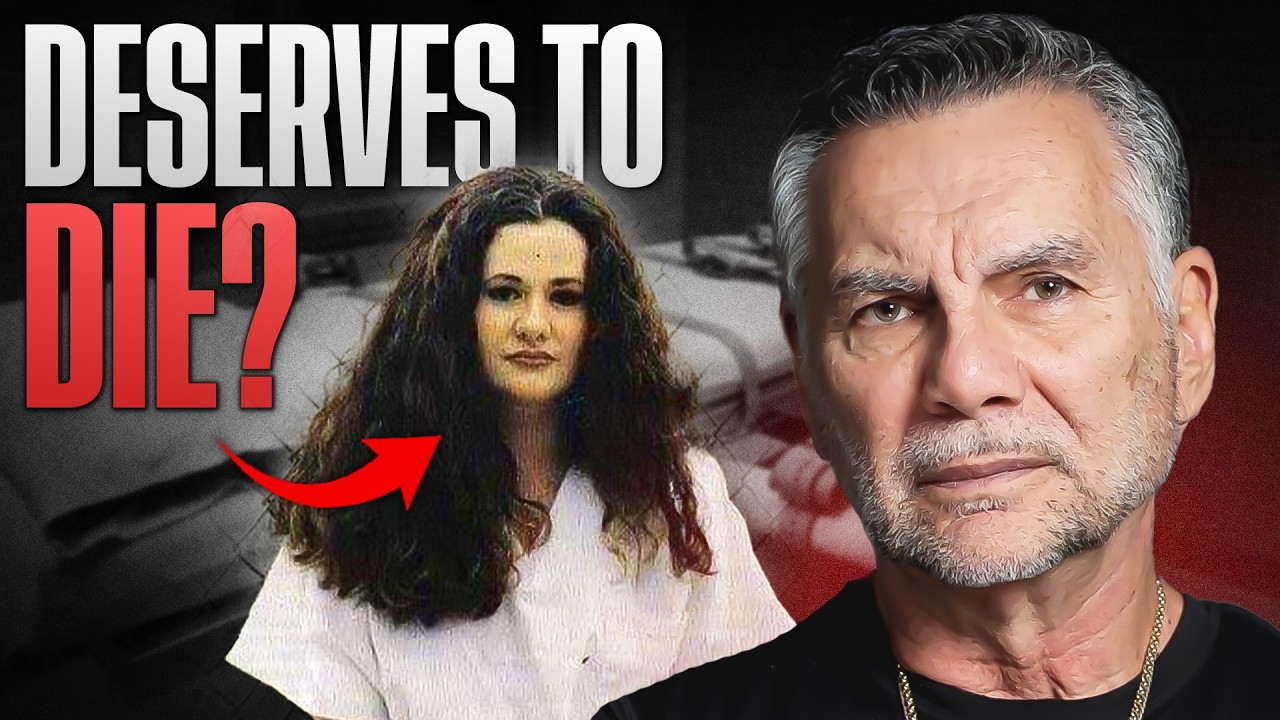
For Michael Franzese, the answer begins with a disturbing contradiction: he believes Christa Pike deserves to face the harshest consequences for the torture and murder of Colleen Slemmer, yet he argues that the government should never execute her.
His position may sound shocking, especially when placed against the brutality of the crime that sent Pike to death row, but Franzese insists that the question is not simply whether one person deserves to die.
Instead, he says, the real question is whether any government should possess the power to execute someone when the justice system has repeatedly demonstrated that it can convict innocent people.
That argument has taken on renewed urgency following the reported botched execution attempt involving Pike in Tennessee, a case that has raised troubling questions about the state’s execution procedures, the treatment of condemned prisoners, and what happens when a punishment intended to be final goes catastrophically wrong.
In his latest sit-down discussion, Franzese confronts the emotional force of Pike’s case before turning to a broader argument about wrongful convictions, prosecutorial misconduct, and the irreversible danger of capital punishment.
His conclusion is not that Pike should be forgiven, released, or allowed to escape accountability.
It is that a justice system designed to serve an entire population cannot safely maintain a punishment that leaves no possibility of correction after an innocent person has been executed.
And to explain why, Franzese begins with the crime itself.
A Murder That Haunted Investigators for Decades
The murder of Colleen Slemmer remains one of the most disturbing cases associated with Knoxville, Tennessee, and the details described by former police chief Phil Keith continue to illustrate why the case provokes such powerful reactions.
Slemmer was 19 years old when she was lured to a park by three people connected to the Knoxville Job Corps Center, a vocational training program for young people facing difficult circumstances.
According to the account Franzese reads during his broadcast, the group used a supposed plan to retrieve marijuana they had hidden near a music store as part of the deception that brought Slemmer to the location.
The victim had no reason to expect that the outing would become a prolonged attack, and the violence that followed would eventually define the case for investigators, prosecutors, and the victim’s loved ones.
Then-18-year-old Christa Pike was identified as the leader of the attack, while two other young people were also involved in the events that ended with Slemmer’s death.
Keith, who served as Knoxville’s police chief from 1988 until 2004, later described the crime scene as something that remained with him long after his years in law enforcement had ended.
Franzese quotes the former chief recalling that he would remember the case for the rest of his life, a statement that captures the lasting psychological impact of investigating extreme violence.
The account describes Slemmer being beaten, cut, restrained, and gagged during an attack that reportedly lasted nearly an hour.
When she attempted to escape, the attackers allegedly prevented her from getting away, and when she begged for her life, the violence continued.
According to the trial account discussed by Franzese, the victim’s skull was crushed against the ground with a piece of broken asphalt.
The brutality did not end there.
Franzese also recounts testimony that Pike kept a fragment of Slemmer’s skull as a trophy and showed it to classmates before her arrest.
Pike’s boyfriend at the time, who was 17 and was also convicted, was described as having carved pentagrams into Slemmer’s chest and face.
Because he was a juvenile at the time, he did not face the death penalty.
During Pike’s trial, an expert reportedly discussed satanic elements associated with the attack and a phenomenon known as collective aggression, in which people within a group become emotionally aroused and participate in increasingly extreme violence.
A university groundskeeper who discovered Slemmer’s remains testified that he initially believed he had found an animal carcass before recognizing the victim’s clothing among the blood.
These details are presented in Franzese’s broadcast as evidence of the extraordinary cruelty involved, not as an attempt to minimize the suffering of the victim or the anguish experienced by those who loved her.
For Franzese, the case is not difficult to condemn.
He openly says that, when considering the nature of the crime in isolation, he understands why people would believe Pike deserves to die.
He even acknowledges that he shares that emotional reaction himself.
Yet he refuses to let that reaction determine his position on the death penalty.
That is where his argument takes an unexpected turn.
Why Franzese Says Pike Deserves Accountability but Should Not Be Executed
Franzese asks viewers to separate two questions that are frequently treated as if they were identical.
The first is whether a person who commits an exceptionally brutal murder deserves severe punishment.
The second is whether the state should have the authority to execute people convicted of murder, knowing that the justice system can make devastating mistakes.
He believes the answer to the first question can be yes while the answer to the second remains no.
In his view, the death penalty cannot be evaluated solely through the circumstances of one notorious case, regardless of how horrifying those circumstances may be.
The law applies across countless cases, involving different defendants, different evidence, different witnesses, and different levels of reliability in the investigations that lead to convictions.
A punishment that appears justified when applied to a particular defendant must still be examined in terms of what happens when the same system gets another case wrong.
Franzese repeatedly emphasizes that the justice system is supposed to protect the public, hold offenders accountable, and establish guilt through a fair legal process.
But the same system is operated by human beings, and human beings can make mistakes, conceal evidence, pursue the wrong suspect, or deliberately violate the rules intended to protect defendants.
When the punishment is imprisonment, a wrongful conviction can still destroy years of someone’s life, but there may be an opportunity to reverse the verdict and release the person.
When the punishment is death, the consequences are fundamentally different.
An executed defendant cannot be brought back after new evidence establishes that the conviction was wrong.
A later court ruling cannot restore the years that person might have spent with family, and a formal declaration of innocence cannot undo the government’s decision to take an innocent life.
That irreversible danger is the foundation of Franzese’s opposition.
He argues that the death penalty is not simply a punishment for the person standing before the court; it is a power exercised by the state under a legal system that must operate fairly for everyone.
If that system cannot guarantee that it will never execute an innocent person, he believes it should not retain the authority to impose an irreversible sentence.
His argument does not depend on proving that Pike herself was wrongfully convicted.
Instead, it depends on the possibility that the same machinery of prosecution, investigation, and judicial decision-making can fail in other cases.
That distinction is central to his message.
Franzese is not claiming that every person sentenced to death is innocent, nor is he suggesting that the suffering of victims should be ignored.
He is arguing that the government cannot justify an irreversible punishment by pointing only to the cases in which the defendant’s guilt appears unmistakable.
The system must also account for the people whose convictions collapse years after their trials, sometimes only after evidence that could have helped them emerges.
And he believes those cases expose a risk that no civilized society should accept.
The 203 People Who Were Exonerated From Death Row
To support his position, Franzese turns to figures attributed in the broadcast to the Death Penalty Information Center, an organization that tracks people exonerated from death row in the United States.
He cites a total of 203 people who had been sentenced to death and were later exonerated since 1973.
The figure becomes the turning point of his argument because it shifts the discussion away from the emotional question of Pike’s guilt and toward the consequences of a system capable of condemning innocent people to death.
Franzese says official misconduct was recorded in 145 of those cases, while DNA evidence played a major role in 34 exonerations.
He also discusses other contributing factors, including perjury or false accusations, misleading forensic evidence, inadequate legal defense, mistaken eyewitness identification, and false confessions.
The figures, as presented in the broadcast, illustrate that wrongful convictions can emerge from multiple failures rather than one isolated mistake.
A witness may identify the wrong person.
A defendant may confess under circumstances that produce an unreliable statement.
Forensic evidence may be misinterpreted or presented in a misleading way.
A defense lawyer may fail to investigate crucial information, while investigators or prosecutors may withhold evidence that could undermine the state’s case.
In some cases, official misconduct can play a decisive role in sending a defendant to death row.
Franzese focuses particularly on that last possibility, arguing that law enforcement officials and prosecutors wield enormous power over people accused of serious crimes.
They have investigative resources, access to evidence, institutional authority, and the ability to bring charges that can determine the course of a person’s life.
Because that power is so significant, he believes the legal system must impose strict limits on how it can be used.
He also argues that misconduct should carry meaningful consequences, rather than ending with little more than a reprimand when an official has violated a defendant’s rights.
The figures he cites do not establish that every exoneration resulted from deliberate framing, and the categories can overlap; however, they underscore the seriousness of errors and misconduct in capital cases.
For Franzese, the central point remains unchanged: even one innocent person executed by the government would represent a failure that could never be repaired.
The fact that hundreds of people have been exonerated from death row makes that concern more than a hypothetical debate.
It demonstrates why the possibility of wrongful conviction must be considered before the state imposes its most final punishment.
Franzese asks viewers to imagine the same situation happening to someone they love.
What if a brother, sister, parent, child, or close friend were convicted because crucial evidence was hidden, an accusation was false, or investigators pursued a case built on unreliable information?
What if that person spent years on death row insisting they had not committed the crime, while the legal process continued toward an execution?
And what if evidence proving their innocence emerged only after the state had already carried out the sentence?
There would be no second chance.
There would be no release from prison, no reunion with family, and no opportunity to rebuild a life outside the walls of a correctional facility.
The state would have taken an innocent person’s life, and any later acknowledgment of the error would come too late.
Franzese believes that possibility outweighs the desire to execute even the most hated defendants.
A Personal History That Shapes His Position
Franzese’s argument is also rooted in his family’s experiences with the criminal justice system.
During the broadcast, he refers to his father being framed and sentenced to 50 years for a crime Franzese says he did not commit.
He rejects the suggestion that a defendant’s alleged involvement in other wrongdoing should justify punishment for a specific offense the government cannot properly prove.
In his view, a criminal trial must focus on the charge before the court, not on a general judgment about whether the defendant is a good person or whether investigators believe the person may have escaped punishment for something else.
That distinction matters because allowing the government to punish people for what they might have done, rather than proving what they are accused of doing, would give prosecutors extraordinary discretion.
Franzese argues that such a principle would undermine the protections that separate a lawful justice system from arbitrary government power.
A defendant should be convicted only when the prosecution establishes the case under the required legal standard, and the severity of the accusation should not excuse a failure to meet that standard.
He draws a parallel with the controversial O.J. Simpson murder case.
Franzese says he personally believes Simpson killed Nicole Brown Simpson and Ronald Goldman, but he also questions whether the prosecution proved its case beyond a reasonable doubt.
His point is that a personal belief about guilt is not the same as a legally sufficient basis for conviction.
A court cannot simply punish someone because the public believes the person committed a crime, or because the accusation seems plausible to observers who have followed the case through news reports.
The burden remains with the prosecution.
If the state fails to meet that burden, Franzese argues, the defendant should be acquitted even when some observers remain convinced of the person’s guilt.
That position can be difficult to accept when a crime has generated intense public anger, but Franzese believes it is precisely in those cases that legal safeguards matter most.
A system that protects defendants only when the public sympathizes with them would offer little protection when fear, outrage, or pressure for punishment overwhelms careful judgment.
For him, the rights of the accused are not rewards for being innocent or likable.
They are safeguards designed to prevent the government from exercising unchecked power.
And when the possible sentence is death, he believes those safeguards become even more important.
The Botched Execution Raises Another Question
The renewed debate over Pike’s case has unfolded against the backdrop of a reported execution attempt in Tennessee that did not proceed as intended.
Franzese describes Pike as having survived the attempt and being hospitalized afterward, with reports indicating that she was becoming more lucid and able to speak.
He also recounts reports that she did not remember the precise sequence of events surrounding the execution procedure, although she reportedly recalled experiencing pain.
These descriptions form part of the broadcast’s account of the incident; the complete medical circumstances and official findings require confirmation through the relevant records and investigation.
The reported failure prompted Tennessee Governor Bill Lee to halt executions while the state examines what happened.
Franzese acknowledges that the investigation could determine whether Pike will face another execution attempt, but he says the uncertainty reinforces the broader questions surrounding capital punishment.
What does it mean when a state attempts to carry out an execution and the procedure fails?
How should officials respond when the process intended to end a prisoner’s life instead leaves that person alive and reportedly suffering medical complications?
And should a failed execution alter the state’s ability to proceed with another attempt, particularly when questions remain about the procedures and safeguards involved?
Those questions are distinct from the issue of whether Pike committed the murder for which she was convicted.
They concern the government’s responsibility when carrying out a sentence, the reliability of the execution process, and the legal consequences of a procedure that does not unfold as intended.
Franzese also discusses the position attributed to Pike’s legal team, which has argued that the botched execution should weigh against another attempt to put her to death.
The precise legal outcome remains uncertain in the broadcast, and Franzese does not claim to know what Tennessee officials or courts will ultimately decide.
Instead, he returns to his central argument: even if the public believes a defendant deserves death, the state must still be judged by the rules it claims to uphold.
A failed execution does not erase a murder conviction, restore the victim’s life, or remove the obligation to impose serious punishment.
But it does create additional questions about whether the government can safely and lawfully continue with the sentence.
For Franzese, those questions belong within a wider examination of whether capital punishment should remain available at all.
Why Life Without Parole Is His Alternative
Franzese’s opposition to the death penalty does not mean he believes people convicted of murder should automatically return to society.
On the contrary, he repeatedly insists that accountability remains essential, particularly when a crime involves deliberate cruelty and the loss of an innocent life.
He argues that life imprisonment without the possibility of parole can impose a severe punishment while avoiding the irreversible risk of executing someone who is later shown to be innocent.
Under that approach, a person convicted of a murder as brutal as Slemmer’s could remain incarcerated for the rest of their life, subject to the applicable legal and correctional rules.
The punishment would not restore the victim or undo the trauma suffered by her family, but it would protect the public from the offender and preserve the possibility of correcting a wrongful conviction if new evidence emerged.
Franzese is particularly emphatic that people who have never experienced incarceration may underestimate how punishing long-term imprisonment can be.
He describes his own experience of being placed in solitary confinement and fearing that he might spend the remainder of his life in a small cell, separated from his family and ordinary human contact.
He says he spent almost three years in solitary confinement and remembers the despair of believing that he might never again experience freedom in the way he once had.
During that period, he recalls wishing that he could fall asleep and never wake up rather than face the prospect of a lifetime in isolation.
His account is personal testimony about his own experience, not proof that every prisoner’s circumstances are identical.
Nevertheless, it explains why he rejects the idea that life imprisonment is an easy alternative to execution.
He describes a life without parole as a severe consequence, one that can remove nearly every possibility of returning to ordinary society.
For Franzese, a convicted murderer can be held accountable without granting the government the power to impose a punishment that cannot be reversed.
The distinction matters because he believes the justice system must balance two responsibilities: protecting society from dangerous offenders and protecting citizens from government mistakes.
He argues that the second responsibility cannot be abandoned simply because the first is emotionally compelling in a particular case.
Even when a defendant’s actions inspire profound disgust, the state must remain constrained by the same legal principles that protect everyone else.
Otherwise, the government risks turning public outrage into a justification for powers that could later be used against innocent people.
Can a Person Change After Committing an Atrocious Crime?
Toward the later part of the discussion, Franzese raises another complicated question: what happens when a person who committed a terrible crime as a teenager grows older and changes?
Pike was 18 when Slemmer was murdered, and decades have passed since the crime.
Franzese wonders whether maturity, reflection, religious conversion, or personal transformation might have altered Pike’s understanding of what she did.
He does not claim to know the full extent of any such transformation, and he does not present redemption as an established fact that erases responsibility.
Instead, he acknowledges that people can change while insisting that change does not eliminate the need for accountability.
A person may come to recognize the cruelty of past actions, express remorse, or develop a different set of beliefs, but those developments do not restore the life that was taken.
For the victim’s family, the passage of time cannot simply undo the loss or require them to accept a perpetrator’s personal transformation as sufficient compensation.
Franzese’s position is that there can be room to recognize human change without pretending that every consequence of a crime should disappear.
In Pike’s case, he believes the severity of the punishment must reflect the severity of the offense, while still rejecting execution as the appropriate instrument of state power.
That is the difficult balance he wants viewers to consider: accountability without an irreversible punishment, and recognition of a victim’s suffering without abandoning the safeguards that protect the accused.
His argument does not demand that people feel sympathy for Pike.
It asks them to examine whether the law should depend on sympathy, hatred, or the public’s emotional response to an individual defendant.
If the death penalty is justified only when the crime is especially horrifying, the system must still determine who decides which crimes qualify and how to protect against mistakes.
If it is justified because a defendant has been convicted, the system must confront the fact that some convictions are later overturned.
And if it is justified because the public demands retribution, the question becomes whether popular anger should determine the limits of government authority.
Franzese believes none of those considerations eliminates the fundamental problem of executing an innocent person.
The Officials Who Misuse Their Power
Another major part of Franzese’s argument concerns the accountability of prosecutors and law enforcement officers.
He asks what should happen when an official knowingly withholds evidence that could clear a defendant or deliberately builds a case around false information.
In his view, misconduct that places an innocent person on death row is not merely a procedural error.
It is an abuse of public authority with consequences that can reach beyond the defendant to spouses, children, parents, and entire families.
A wrongful conviction can separate parents from children, destroy careers, consume a family’s savings, and leave loved ones struggling for years to prove that the accused person did not commit the crime.
When a defendant is ultimately exonerated, those losses do not automatically disappear.
Yet Franzese argues that the officials responsible for serious misconduct may not face consequences proportionate to the damage they caused.
He says that prosecutors and investigators possess extensive resources and institutional advantages, including the power to collect evidence, question witnesses, and bring criminal charges.
Because the government has those advantages, he believes officials should be held to a demanding standard of accuracy and fairness.
If they cannot establish a case properly, he argues, they should not be allowed to substitute suspicion, public pressure, or misleading evidence for proof.
He also believes that a legal system should have meaningful safeguards against deliberate misconduct, rather than relying exclusively on appeals that may take years to resolve.
The prospect of execution makes that responsibility even more urgent.
When an innocent defendant is imprisoned, later exoneration may provide a path to freedom, although it cannot restore lost time.
When an innocent defendant is executed, even a perfect investigation afterward cannot provide that remedy.
That is why Franzese views the death penalty as a uniquely dangerous extension of governmental authority.
He argues that the state should not possess the power to take a person’s life when its own institutions have demonstrated that they can fail to establish guilt reliably in every case.
His position is not that every prosecutor is corrupt or that every police investigation is dishonest.
Rather, he insists that the possibility of misconduct is serious enough to require protections that remain effective even when the public is demanding the harshest possible punishment.
The justice system, he says, is meant to restrain the government as well as punish criminals.
And those restraints are most important when the accused person is someone the public finds easy to condemn.
The Question He Wants America to Answer
As Franzese approaches the end of his discussion, he returns to the dilemma that inspired the entire broadcast.
Should Christa Pike be executed because of the horrific murder of Colleen Slemmer, or should the country reject the death penalty because the same system could execute someone who is innocent?
Franzese believes the answer must be based on the legal consequences of the punishment, not solely on the moral judgment people make about Pike herself.
He understands why viewers may respond to the crime with anger and demand the most severe penalty available.
He does not ask them to forget what happened to Slemmer or to treat the victim’s suffering as secondary to the rights of the person convicted of her murder.
Instead, he asks them to consider whether the government should have the power to impose an irreversible sentence when wrongful convictions remain a documented feature of the criminal justice system.
His cited figure of 203 death-row exonerations becomes the central fact around which he builds that challenge.
For him, the issue is not whether all those defendants were alike, whether every conviction was overturned for the same reason, or whether every accused person is innocent.
It is that the system has demonstrated that it can make errors serious enough to place innocent people on death row.
The question is what a society should do with that knowledge.
One position holds that the death penalty remains justified because some crimes are so brutal that no lesser punishment can adequately express society’s condemnation.
Another argues that life without parole can protect the public and impose severe punishment without creating the possibility of an irreversible execution error.
Franzese comes down firmly on the second side.
He believes that no matter how terrible a crime may be, the state must not be allowed to execute someone when the consequences of a mistaken conviction are beyond repair.
He also believes that defendants should receive the protections guaranteed by law even when public opinion is hostile, because rights that disappear under pressure are not reliable safeguards.
His position leaves room for severe punishment, permanent incarceration, and a demand for accountability.
What it rejects is the idea that the government should be trusted with a power that cannot be corrected after it has been wrongly exercised.
What Happens to Christa Pike Now?
The future of Pike’s case remains tied to the aftermath of the reported failed execution attempt, the investigation into what occurred, and the legal arguments that may follow.
Franzese acknowledges that he cannot predict whether Tennessee will eventually seek another execution or whether the state will face restrictions that prevent it from proceeding.
The investigation may produce further information about the procedure, while the courts may have to consider arguments concerning the execution attempt and the state’s authority to carry out the sentence again.
Those decisions will involve legal questions that cannot be answered solely through public reaction to the original murder.
At the same time, the case has become a focal point for a much larger debate over capital punishment, government accountability, and the possibility of wrongful convictions.
For people who support the death penalty, Pike’s case raises questions about whether the state can deliver the punishment it has imposed and whether a failed attempt should change the legal outcome.
For opponents, the case provides another reason to scrutinize a system in which the intended result is irreversible and the procedures themselves can become the subject of intense controversy.
Franzese’s argument cuts across that divide by insisting that the most important question is not whether Pike is personally deserving of sympathy.
It is whether the government should retain the power to execute any person when the justice system has demonstrated that it can condemn innocent people.
He says that life without parole remains a severe form of accountability, and he argues that society can protect itself without authorizing executions.
His conclusion is deliberately uncomfortable: he can look at the facts of a brutal murder, believe that the person responsible deserves the harshest consequences, and still oppose the state putting that person to death.
That is not a defense of the crime.
It is a rejection of a punishment he believes carries an unacceptable risk for everyone subject to the law.
The case of Christa Pike may ultimately be decided through investigations, court proceedings, and decisions by Tennessee officials, but the debate it has reignited reaches far beyond one prisoner.
It asks whether the justice system can demand trust in its authority while acknowledging that its own mistakes have placed innocent people on death row.
And it asks whether a punishment can be justified when the cost of getting it wrong is a human life that no appeal, new evidence, or later apology can restore.
For Franzese, the answer is clear: hold people accountable, protect the public, and punish even the most serious crimes—but do not give the government the power to execute an innocent person.
Because if the system makes that mistake, there is no correction left to make.
And the final question is one every supporter of capital punishment must confront: if even one innocent person can be executed by mistake, is the death penalty worth that risk?


