Every December, millions of families return to a familiar house in suburban Chicago, where an eight-year-old boy discovers that his entire family has accidentally left him behind. The Christmas lights glow, the snow covers the neighborhood, and two spectacularly incompetent burglars prepare to experience the most painful robbery attempt in movie history.
For more than three decades, Home Alone has been more than a successful comedy. It has become a holiday tradition, a childhood memory, and a film that generations of viewers associate with family gatherings, laughter, and the excitement of Christmas.
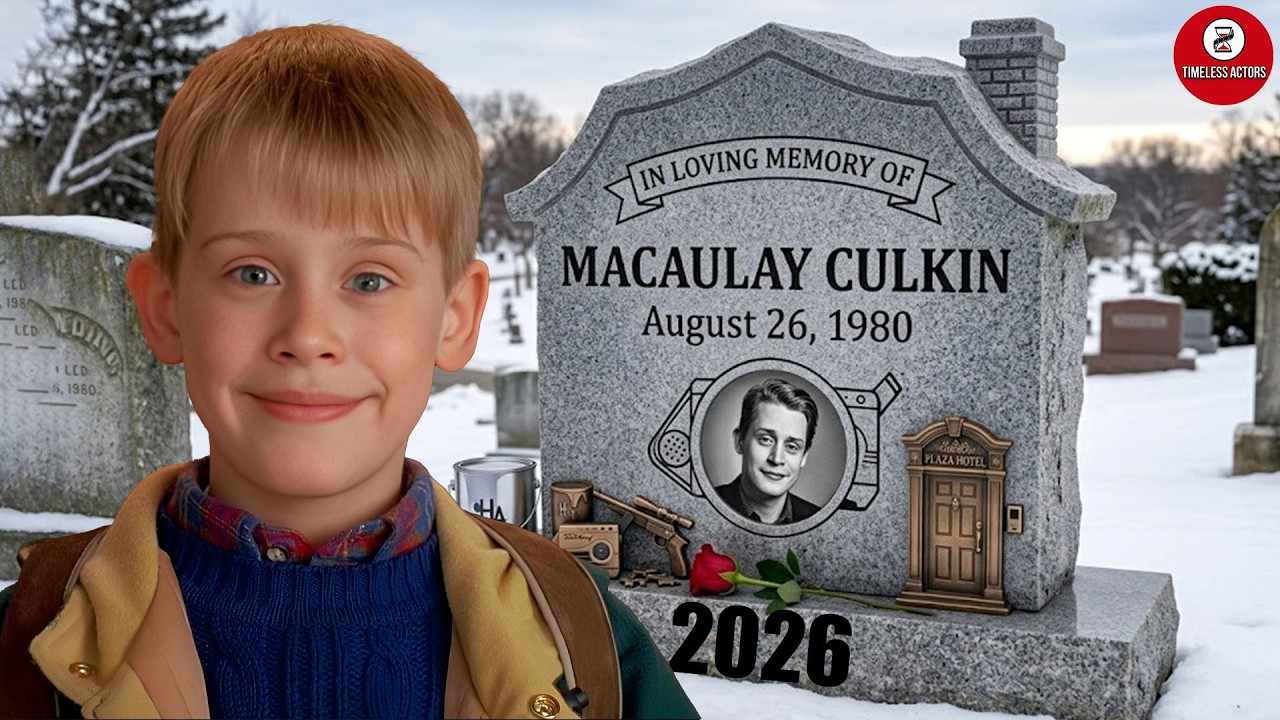
Released in November 1990, the original movie introduced audiences to Kevin McCallister, a clever young boy who must defend his home after his family mistakenly travels to Paris without him. Two years later, Home Alone 2: Lost in New York brought Kevin back for another adventure, this time in Manhattan, where familiar enemies and new characters created another unforgettable holiday story.
But the people behind those beloved characters have experienced extraordinary changes since the films first appeared.
Some became internationally recognized stars. Others left acting entirely, choosing careers that had little connection to Hollywood. Several performers built successful lives behind the camera, while one former child actress went on to represent the United States at the Olympic Games.
And some of the actors whose performances helped make Home Alone unforgettable are no longer alive.
John Candy, whose warmhearted appearance became one of the first film’s emotional highlights, died only a few years after its release. Roberts Blossom, who transformed a frightening neighborhood legend into a touching portrait of loneliness and reconciliation, passed away in 2011. John Heard, who portrayed Kevin’s father, died in 2017.
Their absence gives the movies a different emotional meaning today.
Meanwhile, Macaulay Culkin, once the most recognizable child actor in the world, is now a father in his forties. His younger brother Kieran Culkin, who appeared briefly as Fuller McCallister, grew into one of television and film’s most acclaimed dramatic performers.
Joe Pesci and Daniel Stern, the unforgettable Wet Bandits, followed very different professional paths after spending two Christmas seasons being outsmarted by a child.
Tim Curry, whose suspicious hotel concierge became one of the second movie’s comic highlights, experienced a major health crisis but remains admired for an extraordinary career across stage and screen.
The stories of these performers reveal something that becomes increasingly meaningful with time: while the movies remain unchanged, the lives of the people who made them continue unfolding.
The original Home Alone emerged from a remarkably simple premise conceived by writer and producer John Hughes.
What if a family accidentally left one of its children behind during a holiday trip?
Hughes transformed that idea into a screenplay combining childhood fantasy, family comedy, suspense, and surprisingly emotional moments.
Director Chris Columbus brought the story to life with a visual style that made the McCallister house feel both enormous and intimate.
For Kevin, the house initially represents freedom.
There are no parents to enforce rules, no older siblings to tease him, and nobody to prevent him from eating whatever he wants or watching movies that would normally be forbidden.
But the excitement gradually gives way to loneliness.
The film’s emotional power comes from that transformation.
Kevin begins by wishing his family would disappear. By Christmas morning, he wants nothing more than to see them again.
Macaulay Culkin’s performance made the transformation believable.
Born on August 26, 1980, Culkin was only ten when the first film reached theaters.
He had already appeared in several productions, including Uncle Buck, where his natural comic timing attracted attention.
But nothing could have prepared him for the extraordinary success of Home Alone.
Kevin McCallister required a young actor capable of carrying an entire movie.
For long stretches, Culkin appeared without another principal performer beside him.
He had to communicate excitement, fear, loneliness, determination, and mischief through facial expressions and physical reactions.
His famous shocked expression, with both hands pressed against his cheeks, became one of the most recognizable images in holiday movie history.
Yet his performance involved far more than that single moment.
Culkin made Kevin feel like a real child whose confidence often exceeded his understanding of danger.
When Kevin first realizes that his family is gone, he celebrates.
He enjoys the opportunity to make his own decisions.
But as the days pass, he begins to understand that independence is not the same as happiness.
His conversations with Old Man Marley reveal a growing emotional maturity.
And his determination to protect the house transforms him from a frightened child into an inventive defender.
The film became an enormous commercial success, and Culkin quickly emerged as one of the most famous child stars of his generation.
He returned for Home Alone 2: Lost in New York in 1992, reprising Kevin with even greater confidence.
The sequel moved the adventure from suburban Chicago to New York City.
Kevin once again became separated from his family, this time after boarding the wrong airplane.
His accidental arrival in Manhattan allowed the filmmakers to explore a different fantasy of childhood freedom.
He checked into a luxury hotel, explored famous landmarks, and discovered that a child armed with a credit card could experience an extraordinary holiday adventure.
But the story again returned to loneliness, family, and the importance of human connection.
Following the two films, Culkin appeared in productions including My Girl, The Good Son, and Richie Rich.
His fame, however, came with considerable pressure.
Growing up under intense public attention created challenges that were unusual even by Hollywood standards.
As he became older, Culkin gradually stepped away from the relentless pace of childhood stardom.
He pursued a more selective relationship with acting and developed interests beyond conventional film roles.
His adult career included independent projects, occasional television appearances, music, and creative ventures.
Rather than attempting to recreate the extraordinary fame of his childhood, he developed a more private and unconventional public identity.
In recent years, Culkin has also embraced family life.
He and actress Brenda Song have built a family together, and their relationship has introduced another dimension to the public’s understanding of the former child star.
In December 2023, Culkin received a star on the Hollywood Walk of Fame.
The ceremony became especially memorable when Catherine O’Hara, who played his mother in Home Alone, delivered a heartfelt tribute.
Their reunion reminded audiences of the emotional connection created by the original film.
As of October 2026, Macaulay Culkin is 46 years old.
For millions of viewers, he will always be the mischievous child standing in front of a bathroom mirror.
But his adult life demonstrates that a performer can move beyond an iconic childhood role while still appreciating its place in cultural history.
Kevin’s greatest adversaries were Harry and Marv, the burglars whose attempts to rob the McCallister house produced some of the most elaborate physical comedy of the 1990s.
Harry was played by Joe Pesci, an actor whose career before and after Home Alone was closely associated with intense dramatic performances.
Born on February 9, 1943, Pesci was 47 when the original movie premiered.
He had already earned recognition through collaborations with director Martin Scorsese, including Raging Bull.
His screen persona frequently involved volatile characters capable of shifting from humor to intimidation without warning.
That quality made him an unusual but inspired choice for a family comedy.
Harry needed to be threatening enough for Kevin’s predicament to feel dangerous.
At the same time, he had to become increasingly ridiculous as the boy’s elaborate traps destroyed his confidence.
Pesci achieved that balance through a performance filled with impatience, frustration, and explosive reactions.
Harry considers himself the intelligent member of the criminal partnership.
He plans the robberies, evaluates potential targets, and repeatedly attempts to control Marv’s foolishness.
But his confidence becomes a weakness.
He underestimates Kevin because the boy is young.
Every new trap exposes the difference between Harry’s self-image and his actual competence.
Pesci’s expressions during the film’s physical comedy became almost as memorable as the traps themselves.
His ability to communicate rage without losing the comic rhythm gave the character a distinctive personality.
The role also required him to work within the limitations of a family-friendly movie.
Pesci, famous for playing foul-mouthed criminals, had to adapt his delivery while preserving Harry’s explosive temperament.
The result was a character who seemed perpetually on the verge of saying something much worse.
In 1990, the same year Home Alone was released, Pesci appeared in Scorsese’s Goodfellas.
His portrayal of Tommy DeVito earned him the Academy Award for Best Supporting Actor.
The contrast between the two roles demonstrated his extraordinary range.
In one film, he portrayed a genuinely dangerous criminal.
In the other, he played a burglar whose confidence was systematically destroyed by a child with household supplies.
Pesci returned as Harry in Home Alone 2, where the character endured another series of increasingly outrageous injuries.
Later, Pesci appeared in Casino, My Cousin Vinny, and numerous other productions.
He eventually reduced his acting commitments, choosing to work selectively rather than maintain a constant Hollywood presence.
His return in Scorsese’s The Irishman demonstrated that his dramatic abilities remained formidable.
In October 2026, Pesci is 83 years old.
His career includes some of cinema’s most memorable crime performances, but Harry remains a special part of his legacy.
For audiences who grew up watching Home Alone, Pesci will always be the furious burglar whose elaborate plans collapse the moment he encounters Kevin McCallister.
Harry’s partner Marv was portrayed by Daniel Stern.
Born on August 28, 1957, Stern was 33 when the original movie premiered.
Where Pesci brought tightly controlled anger, Stern supplied physical looseness and comic vulnerability.
Marv was tall, awkward, enthusiastic, and frequently incapable of recognizing obvious danger.
He approached every situation with misplaced confidence.
The contrast between the two burglars was essential.
Harry wanted to maintain control.
Marv seemed capable of destroying any plan simply by participating in it.
Stern’s performance drew upon traditions of physical comedy associated with silent films and classic slapstick.
His expressive face, exaggerated reactions, and willingness to embrace absurd situations made Marv an ideal target for Kevin’s traps.
One of the most memorable sequences involves a tarantula appearing on Marv’s face.
The scene became famous because of Stern’s extraordinary reaction, combining horror, disbelief, and comic exaggeration.
But Marv’s appeal extended beyond individual moments.
Stern portrayed him as a man whose foolishness was almost innocent.
He rarely seemed to understand the consequences of his decisions until disaster had already arrived.
That quality prevented the character from becoming simply unpleasant.
Audiences could laugh at Marv’s suffering because he existed within a heightened comic universe where injuries were exaggerated and consequences rarely lasted.
Stern returned for Home Alone 2, where the physical comedy became even more elaborate.
The sequel pushed Harry and Marv through an extraordinary series of mishaps involving a renovated townhouse in New York.
Although the stunts were carefully staged, the actors’ commitment made the sequences feel chaotic and spontaneous.
Outside Home Alone, Stern enjoyed a varied career.
He appeared in films including Breaking Away and City Slickers.
He also became familiar to television audiences as the adult narrator of The Wonder Years.
That role demonstrated a very different side of his talent.
His warm, reflective narration gave the series a sense of nostalgia and emotional depth.
Stern later worked as a director, writer, and visual artist.
His interests extended beyond acting, allowing him to pursue creative work without remaining permanently tied to Hollywood’s commercial demands.
As of October 2026, Stern is 69 years old.
His portrayal of Marv remains one of the most recognizable examples of physical comedy in modern family cinema.
Together, Pesci and Stern created a partnership that helped transform Home Alone from a simple story about a forgotten child into an unforgettable comic adventure.
Their chemistry depended on contrast.
Harry’s irritation made Marv’s foolishness funnier.
Marv’s optimism made Harry’s frustration more explosive.
And Kevin’s intelligence exposed both men’s weaknesses.
The Wet Bandits became characters audiences wanted to see defeated, but also characters whose return in the sequel felt like a reunion with old acquaintances.
Their performances were central to the franchise’s success.
Yet the emotional heart of the first film belonged to Kevin’s mother, Kate McCallister, portrayed by Catherine O’Hara.
Born on March 4, 1954, O’Hara was 36 when Home Alone premiered.
She had already established herself as a gifted comedian through her work with the Canadian sketch comedy group associated with Second City Television.
Her career included a wide range of film performances, including her unforgettable appearance in Beetlejuice.
But Kate McCallister required a different balance of humor and emotional sincerity.
The character begins the film overwhelmed by the chaos of preparing a large family for an international Christmas trip.
She is managing luggage, children, travel arrangements, and the constant interruptions that accompany a crowded household.
When the family finally boards its flight, she believes the most difficult part of the journey is over.
Then she realizes Kevin is missing.
O’Hara’s performance transforms that realization into one of the movie’s defining moments.
Kate’s fear becomes immediate and overwhelming.
She is willing to do almost anything to return home.
The comedy of her increasingly desperate travel arrangements never undermines the sincerity of her concern.
O’Hara made the character believable because she portrayed a mother whose determination was stronger than embarrassment, exhaustion, or practical obstacles.
Her journey eventually brings her into contact with Gus Polinski, the friendly polka musician played by John Candy.
That encounter becomes one of the film’s most touching examples of unexpected kindness.
O’Hara returned for Home Alone 2, once again portraying a mother whose holiday plans collapse when Kevin becomes separated from the family.
Over the following decades, she continued building one of the most admired careers in comedy.
Her collaborations with filmmaker Christopher Guest demonstrated her extraordinary improvisational abilities.
She appeared in acclaimed ensemble comedies and developed a reputation for creating eccentric characters who remained emotionally recognizable.
Her later portrayal of Moira Rose in Schitt’s Creek introduced her to another generation of viewers.
Moira’s extravagant wardrobe, unusual speech patterns, and theatrical personality made the character a cultural phenomenon.
O’Hara’s performance earned major awards, including a Primetime Emmy for Outstanding Lead Actress in a Comedy Series.
Her career demonstrated that comic performers could remain creatively vital across many decades.
The supplied retrospective reports that O’Hara died on January 30, 2026, at the age of 71, following a pulmonary embolism. That recent biographical claim warrants confirmation against reliable reporting before publication as established fact.
Regardless of the details surrounding her later life, O’Hara’s performance as Kate McCallister remains one of the most emotionally important elements of Home Alone.
The movie’s final reunion works because the audience has witnessed both Kevin’s loneliness and Kate’s determination.
When mother and son finally embrace, the comedy gives way to genuine affection.
It is a moment that continues resonating with families decades after the film’s release.
Kevin’s father, Peter McCallister, was played by John Heard.
Born on March 7, 1946, Heard was 44 when the original movie premiered.
He brought a grounded, understated presence to a film filled with exaggerated personalities.
Peter was not the most demonstrative member of the family.
He appeared responsible, practical, and accustomed to managing the household’s affairs.
But his confidence was challenged by the extraordinary mistake that left Kevin behind.
Heard’s performance helped make the family feel realistic.
While Kate reacted with visible panic, Peter often attempted to approach problems through practical reasoning.
The contrast reflected different ways people respond to a crisis.
Heard had already built a respected acting career before Home Alone.
His film work included Cutter’s Way, Big, and numerous other productions.
He was particularly effective at portraying men whose outward composure concealed complicated emotions.
After Home Alone, he continued working extensively in television and film.
His appearances included The Sopranos, where he portrayed Detective Vin Makazian.
Heard died on July 21, 2017, at the age of 71.
His passing marked another loss for the original cast.
Peter McCallister may not have been the movie’s most flamboyant character, but Heard’s understated performance helped create the believable family environment that made Kevin’s adventure meaningful.
Among the McCallister children, Buzz became one of the most recognizable characters.
Played by Devin Ratray, Buzz was the older brother who seemed to enjoy making Kevin’s life miserable.
Born on January 11, 1977, Ratray was 13 when the first movie premiered.
He portrayed Buzz with a combination of arrogance, sarcasm, and unmistakable older-sibling confidence.
Buzz frequently behaved as though his age gave him the authority to control Kevin.
He mocked his younger brother, claimed privileges, and rarely considered how his behavior affected anyone else.
Ratray made the character believable because Buzz’s cruelty remained grounded in familiar family dynamics.
Many viewers recognized the exaggerated version of sibling rivalry.
Buzz was irritating, but he was also part of the crowded household that Kevin eventually missed.
Ratray returned for Home Alone 2 and later continued working as an actor.
His filmography included dramatic and comedic roles in productions such as Nebraska and Better Call Saul.
He also returned to the franchise’s world through a later appearance connected to the Home Alone series.
In subsequent years, Ratray faced legal controversies that attracted public attention.
Those matters form part of his adult public history, although they should be distinguished from the fictional character audiences remember.
As of October 2026, Ratray is 49 years old.
Buzz remains one of the most recognizable portrayals of an obnoxious older brother in family comedy.
Another McCallister sibling was Linnie, portrayed by Angela Goethals.
Born on May 20, 1977, Goethals was 13 when the original movie premiered.
Linnie was one of the older children whose teasing and impatience contributed to Kevin’s feeling that nobody respected him.
Her role was smaller than those of the central performers, but her reactions helped establish the atmosphere of a large, chaotic family.
Goethals portrayed Linnie with the confidence of an older sibling who rarely questioned her own judgments.
Her performance contributed to the sense that Kevin was surrounded by people who considered him too young to be taken seriously.
After Home Alone, Goethals continued acting.
She appeared in Jerry Maguire and later took on roles in television and independent films.
Her work included the horror-comedy Behind the Mask: The Rise of Leslie Vernon, demonstrating her ability to move beyond family entertainment.
She eventually reduced her involvement in acting and pursued a more private life.
As of October 2026, Goethals is 49 years old.
Her journey illustrates how not every child performer chooses to remain in the entertainment industry indefinitely.
Some discover that the most satisfying adult life exists beyond the constant demands of acting.
Kevin’s brother Jeff was portrayed by Michael C. Maronna.
Born on September 27, 1977, Maronna was 13 when Home Alone premiered.
Jeff was another member of the McCallister household whose casual dismissiveness contributed to Kevin’s frustration.
His performance was deliberately understated.
Unlike Buzz, Jeff did not dominate family interactions through aggressive teasing.
He represented the ordinary indifference that can make a younger child feel invisible.
Maronna later became widely recognized for his role in the Nickelodeon series The Adventures of Pete & Pete.
The program developed a devoted following through its unusual humor, imaginative storytelling, and distinctive portrayal of childhood.
After his early acting career, Maronna increasingly pursued technical work behind the camera.
He became involved in film and television production as an electrician, contributing to the practical craft required to create visual entertainment.
His career offers a fascinating contrast with the public image of child actors.
Rather than spending his entire professional life seeking attention in front of the camera, he found a place within the industry that allowed him to participate in storytelling through technical expertise.
In October 2026, Maronna is 49 years old.
His work demonstrates that the entertainment industry contains many careers beyond acting, and that a former child star can build a meaningful professional identity away from public recognition.
One of the most surprising career transformations belongs to Hillary Wolf, who played Megan McCallister.
Born on February 7, 1977, Wolf was 13 when the original movie premiered.
Megan was one of Kevin’s older sisters, and her role contributed to the lively family interactions that established the movie’s opening chaos.
Wolf also appeared in Home Alone 2, maintaining continuity within the McCallister family.
But her later career moved in a direction almost nobody could have predicted from her childhood acting appearances.
After appearing in additional film projects, including Big Girls Don’t Cry… They Get Even, Wolf pursued competitive judo.
Her commitment to the sport became serious enough to earn her a place on the United States Olympic team.
She represented her country at the 1996 Summer Olympics in Atlanta and again at the 2000 Summer Olympics in Sydney.
The achievement was remarkable.
Competing at the Olympic level requires years of training, discipline, and dedication.
Wolf’s transformation from child actress to international athlete demonstrated an entirely different form of ambition.
She left behind the world of movie sets and auditions to compete against elite athletes.
Her story remains one of the most unusual and inspiring paths followed by a member of the Home Alone cast.
As of October 2026, Wolf is 49 years old.
For viewers who remember her as Megan McCallister, her Olympic career reveals how little a childhood screen appearance can predict about the direction of an adult life.
Perhaps the most striking example of a small childhood role preceding extraordinary adult success is Kieran Culkin.
Born on September 30, 1982, Kieran was only eight when the original Home Alone premiered.
He portrayed Fuller McCallister, the younger cousin whose habit of drinking excessive amounts of soda created anxiety about sleeping arrangements.
Fuller was a minor character, but his expressive reactions and memorable appearance made him recognizable to audiences.
At the time, his older brother Macaulay was becoming one of the world’s most famous child actors.
Kieran’s early career therefore unfolded in the shadow of an extraordinary family phenomenon.
He continued acting in films including Father of the Bride and its sequel.
As he grew older, he developed a reputation for performances that combined vulnerability, sarcasm, and emotional complexity.
His work in Igby Goes Down attracted critical attention and demonstrated his potential as a dramatic leading actor.
But his greatest television breakthrough came with HBO’s Succession.
Playing Roman Roy, one of the children of a powerful media dynasty, Culkin delivered a performance that balanced cruelty, insecurity, humor, and emotional damage.
Roman’s rapid-fire sarcasm concealed a deeply troubled relationship with his family.
Culkin made the character simultaneously frustrating and fascinating.
His performance earned major recognition, including a Primetime Emmy Award and a Golden Globe.
He subsequently expanded his acclaim through film, including an Academy Award-winning performance in A Real Pain.
The contrast between Fuller McCallister and Roman Roy is extraordinary.
One was a small comic role in a Christmas movie.
The other was a complex dramatic character at the center of one of television’s most acclaimed series.
As of October 2026, Kieran Culkin is 44 years old.
His career demonstrates that an actor’s earliest appearance need not define the limits of their future achievements.
The little boy remembered for his oversized glasses and soda habit became an internationally celebrated performer.
While the McCallister children supplied the family chaos, one of the first movie’s most touching characters lived outside their household.
Old Man Marley was portrayed by Roberts Blossom.
Born on March 25, 1924, Blossom was 66 when Home Alone premiered.
Marley was introduced through frightening rumors.
Kevin believed the elderly neighbor might be dangerous, and the stories surrounding him created an atmosphere of mystery.
His quiet appearance and solitary behavior seemed to confirm the child’s fears.
But the truth was very different.
Marley was a lonely man estranged from his family.
His intimidating reputation concealed sadness rather than violence.
The scene in which Kevin encounters him inside a church became one of the movie’s emotional turning points.
The two characters discussed family, fear, and the possibility of reconciliation.
For Kevin, the conversation revealed that adults could experience loneliness and regret just as children could.
For Marley, Kevin’s advice offered a simple but meaningful encouragement to reconnect with his son.
Blossom portrayed the character with extraordinary restraint.
He did not rely on elaborate speeches or exaggerated emotion.
His expressions and quiet delivery communicated the pain of separation.
When Marley later reunited with his family, the moment provided an emotional parallel to Kevin’s own reunion.
Blossom had enjoyed a long career in film and theater before appearing in Home Alone.
His work included Close Encounters of the Third Kind and Christine, as well as numerous character roles.
He was also a poet, reflecting creative interests beyond acting.
Blossom died on July 8, 2011, at the age of 87.
His performance as Old Man Marley remains one of the strongest examples of the film’s ability to combine broad comedy with genuine emotional insight.
The character teaches Kevin that appearances can be misleading and that reconciliation often begins with the courage to make contact.
For many viewers, the church conversation remains one of the most moving scenes in the entire franchise.
Another emotional highlight came through John Candy’s appearance as Gus Polinski.
Born on October 31, 1950, Candy was 40 when Home Alone premiered.
By then, he was already one of the most beloved comedians in North America.
His career had developed through improvisational comedy, television, and a series of successful films.
He was known for portraying characters whose humor emerged from their warmth, vulnerability, and recognizable humanity.
In Home Alone, Candy played the leader of a traveling polka band who offered Kate McCallister a ride toward Chicago.
The character was eccentric, talkative, and cheerful.
Yet his kindness was genuine.
He recognized Kate’s desperation and offered assistance without expecting anything in return.
The scene became memorable because it gave the exhausted mother a moment of unexpected human connection.
Candy’s performance transformed a potentially minor encounter into something emotionally meaningful.
His natural warmth made Gus feel like a person who might genuinely exist outside the movie.
Candy had already starred in films including Planes, Trains and Automobiles and Uncle Buck.
Those performances demonstrated his ability to combine comedy with loneliness, disappointment, and affection.
He could make audiences laugh while also revealing the emotional needs of his characters.
That quality made him especially well suited to the role of Gus Polinski.
Candy died on March 4, 1994, at the age of 43, after suffering a heart attack.
His death came less than four years after Home Alone premiered.
The loss shocked fans who had come to regard him as one of the warmest personalities in comedy.
Today, his brief appearance in Home Alone feels especially precious.
Gus Polinski is remembered not because he performs an elaborate stunt or delivers the movie’s biggest joke, but because he helps someone in need.
Candy made kindness entertaining.
That remains an important part of his legacy.
The film’s crowded family also included Uncle Frank, portrayed by Gerry Bamman.
Born on September 18, 1941, Bamman was 49 when the first movie premiered.
Frank was one of the most openly unpleasant members of the McCallister household.
He was impatient, dismissive, and frequently insensitive toward Kevin.
His behavior contributed to the boy’s belief that his family did not appreciate him.
Bamman portrayed Frank with deliberate exaggeration, creating a relative audiences could immediately recognize and dislike.
The character’s selfishness was especially funny because he seemed entirely unaware of how unreasonable he sounded.
Frank returned in Home Alone 2, continuing his role as one of the family’s most irritating personalities.
Bamman also appeared in numerous other film and television productions.
His career included roles in The Bodyguard and Runaway Jury, along with extensive character work.
Unlike some of the franchise’s younger performers, Bamman had already established a professional acting career before the films appeared.
In October 2026, he is 85 years old.
His portrayal of Uncle Frank remains a memorable example of how an actor can turn a relatively small family role into an unforgettable comic personality.
Another adult member of the family was Aunt Leslie, portrayed by Terrie Snell.
Her appearance helped establish the scale and disorder of the McCallister holiday gathering.
With so many relatives moving through the house, the film needed performers who could make the family feel crowded and believable.
Snell contributed to that atmosphere through a brisk, practical presence.
The character represented the kind of relative who becomes absorbed in managing the immediate demands of a large family event.
Although her role was limited, it helped create the impression of a household overflowing with competing personalities.
The source retrospective describes Snell as having stepped away from regular screen appearances and living privately.
Detailed, current public information about her life is limited, so more specific claims about her circumstances should be treated cautiously.
Her contribution nevertheless belongs to the ensemble work that made the original film’s opening scenes effective.
The McCallister family needed to feel enormous for Kevin’s accidental abandonment to become believable.
Each supporting performer helped establish that environment.
When Home Alone 2: Lost in New York arrived in theaters in November 1992, the filmmakers expanded the story beyond the original house.
New York City provided a spectacular setting for Kevin’s second adventure.
The Plaza Hotel, Central Park, toy stores, and Manhattan streets gave the sequel a distinctive atmosphere.
The film also introduced new characters who became memorable in their own right.
One of the most recognizable was the Plaza Hotel concierge, Mr. Hector, played by Tim Curry.
Born on April 19, 1946, Curry was 46 when the sequel premiered.
He had already built an extraordinary career in theater, film, and music.
His performance as Dr. Frank-N-Furter in The Rocky Horror Picture Show had established him as a cult icon.
He later appeared in productions including Clue and Legend, demonstrating his talent for portraying eccentric, theatrical, and sometimes sinister personalities.
In Home Alone 2, Curry brought those qualities to the suspicious hotel employee who begins questioning Kevin’s unusual circumstances.
Mr. Hector initially appears polished and professional.
But his curiosity gradually develops into an obsession with exposing the young guest’s deception.
Curry’s facial expressions became a central part of the comedy.
His exaggerated smile, narrowed eyes, and increasingly theatrical reactions made the concierge feel like a character from a much larger comic universe.
He could communicate suspicion without speaking.
His scenes with Macaulay Culkin created an entertaining contest between adult authority and childhood improvisation.
Kevin repeatedly outmaneuvered the hotel staff through confidence, cleverness, and the use of recorded dialogue.
Curry made the resulting humiliation especially funny because Mr. Hector took his responsibilities so seriously.
After Home Alone 2, Curry continued appearing in films, television productions, and voice acting roles.
His distinctive voice made him especially valuable in animation and video games.
He portrayed a wide range of characters, often combining elegance with menace.
In 2012, Curry experienced a major stroke that affected his mobility.
The health crisis significantly changed his ability to participate in physically demanding performances.
Nevertheless, he remained connected to entertainment through voice work, public appearances, and interactions with fans.
His career has continued to inspire admiration because of its remarkable versatility.
In October 2026, Curry is 80 years old.
For Home Alone fans, his performance as Mr. Hector remains one of the second movie’s most entertaining supporting roles.
He transformed a suspicious hotel employee into an unforgettable comic antagonist.
The success of the first two films depended on more than individual performances.
They captured a particular moment in American popular culture.
The early 1990s were a period when family comedies could become enormous theatrical events.
Audiences gathered in cinemas to watch stories that combined physical humor, emotional sincerity, and recognizable family situations.
Home Alone offered all three.
Its slapstick sequences recalled classic cartoons and silent comedies.
Its family conflicts reflected everyday experiences.
And its Christmas setting gave the story a seasonal identity that encouraged repeated viewing.
The second film expanded those elements without abandoning the original emotional structure.
Kevin once again enjoyed freedom before discovering that independence could become lonely.
He once again encountered adults who underestimated him.
And he once again learned that kindness and family connection mattered more than material comforts.
The New York setting also introduced the Pigeon Lady, portrayed by Brenda Fricker, whose performance added another emotional dimension to the sequel.
Although she is not covered in the supplied retrospective, her character became an important counterpart to Old Man Marley.
Like Marley, she initially appeared mysterious and intimidating.
Kevin eventually discovered that her isolation concealed emotional pain.
Their friendship reinforced the franchise’s recurring message that appearances do not reveal the whole person.
The original films repeatedly contrasted the way children imagine adults with the complicated realities of adult life.
Kevin initially believed his family was simply an obstacle to his happiness.
He later understood that their presence provided love and security.
He initially feared Marley.
He later discovered a lonely grandfather.
He encountered Gus Polinski as an eccentric stranger.
He discovered a generous man willing to help his mother.
In New York, he initially regarded the Pigeon Lady with suspicion.
He eventually recognized her humanity.
Those emotional patterns gave the films depth beyond their physical comedy.
The passage of time has also transformed the relationship between the actors and the characters they portrayed.
Macaulay Culkin is no longer the child audiences first met in 1990.
He has experienced the unusual pressures of fame, built an adult identity, and become a parent himself.
Kieran Culkin has moved from a tiny supporting role to acclaimed dramatic performances.
Hillary Wolf left Hollywood and became an Olympian.
Michael C. Maronna moved behind the camera.
Angela Goethals pursued a more private life.
Daniel Stern expanded his creative work beyond acting.
Joe Pesci became increasingly selective about his appearances.
Tim Curry adapted his professional life after a serious medical event.
And several members of the original ensemble have died.
Their different paths challenge the assumption that every successful actor must remain constantly visible.
For some performers, success means continued public recognition.
For others, it means developing a satisfying life away from the spotlight.
The careers represented in Home Alone include both possibilities.
They also reveal the unpredictable nature of childhood fame.
A child who becomes internationally recognizable may later struggle to establish an identity beyond a famous role.
Another child with only a few minutes of screen time may eventually become an acclaimed adult performer.
A young actress may discover that her true passion lies in competitive sports.
A former television star may find greater satisfaction working in the technical side of production.
No single pattern explains the lives of the Home Alone cast.
That variety makes their stories compelling.
The films themselves have continued reaching audiences through television broadcasts, home video, streaming services, and seasonal celebrations.
For many families, watching Home Alone has become as familiar as decorating a Christmas tree or preparing a holiday meal.
The movie’s recognizable music, snowy landscapes, and warm interiors create an atmosphere closely associated with the season.
Composer John Williams contributed a musical score that elevated the story’s emotional impact.
The music balanced childhood wonder, comic excitement, and the longing for family reunion.
Its memorable themes became an essential part of the films’ identity.
The visual setting also played an important role.
The McCallister house represented both comfort and vulnerability.
At first, Kevin viewed it as a place where adults imposed restrictions.
Later, he recognized it as something worth protecting.
The elaborate traps transformed familiar household objects into tools of comic defense.
Paint cans, ornaments, toy cars, and other ordinary items became part of Kevin’s imaginative arsenal.
The resulting sequences were outrageous, but they reflected a childhood fantasy of being capable and independent.
Kevin’s victories over Harry and Marv allowed young viewers to imagine overcoming adults through cleverness.
Yet the films never entirely abandoned the need for family.
Kevin could defend himself, but he still wanted his mother to come home.
That emotional contradiction remains central to the franchise.
The films celebrate independence while acknowledging the importance of connection.
The performances of Culkin and O’Hara made that message believable.
Their final reunion in the first film remains one of its most enduring moments.
No elaborate trap or comic injury could replace the emotional satisfaction of seeing mother and son together again.
The deaths of several cast members have made those scenes more poignant.
John Candy’s appearance now recalls a performer whose career ended far too early.
Roberts Blossom’s quiet conversation in the church preserves the work of an actor whose sensitivity gave the movie unexpected depth.
John Heard’s understated portrayal of Peter McCallister remains part of the family atmosphere audiences revisit every year.
Their performances have become lasting records of talent that can no longer be recreated.
That is one of the remarkable qualities of film.
Actors age, retire, and die, but their performances remain available to new generations.
A child watching Home Alone for the first time in 2026 sees Macaulay Culkin exactly as audiences saw him in 1990.
Joe Pesci remains the same furious burglar.
Daniel Stern remains the same hapless partner.
John Candy still offers a ride to a desperate mother.
Roberts Blossom still waits in the church.
And John Heard still stands among the members of the McCallister family.
The audience may know what happened to the performers afterward, but the fictional world remains unchanged.
That permanence creates a powerful form of nostalgia.
The movies preserve a moment when these actors were together, working on a story that none of them could fully predict would become a holiday institution.
For Macaulay Culkin, the role changed his life.
For Joe Pesci, it became an unusual addition to a career defined by intense dramatic performances.
For Daniel Stern, it secured his place in the history of physical comedy.
For Catherine O’Hara, it became one of many beloved performances in an extraordinary comic career.
For Kieran Culkin, it was an early step toward a very different kind of stardom.
For Hillary Wolf, it became a memorable chapter before an athletic career that would take her to the Olympics.
For John Candy, Roberts Blossom, and John Heard, it remains part of the work through which audiences remember them.
Each story adds another layer to the experience of revisiting the films.
By October 2026, the original Home Alone is approaching its thirty-sixth anniversary.
The sequel is approaching thirty-four years since its theatrical release.
Those numbers are remarkable because the movies still feel so closely connected to the holiday season.
Their cultural presence has outlasted changing entertainment trends.
The films have inspired sequels, references, parodies, merchandise, and countless discussions about Kevin’s elaborate traps.
But the original two movies remain the versions most strongly associated with the franchise’s enduring popularity.
Their success was not simply the result of a clever premise.
It came from the combination of John Hughes’s storytelling, Chris Columbus’s direction, John Williams’s music, and an ensemble of performers whose personalities fitted together exceptionally well.
The casting was essential.
Macaulay Culkin possessed the confidence and vulnerability needed to make Kevin believable.
Joe Pesci and Daniel Stern created a comic partnership that could sustain increasingly elaborate slapstick.
Catherine O’Hara supplied the emotional urgency.
John Heard grounded the family.
Roberts Blossom introduced tenderness.
John Candy offered warmth.
And Tim Curry gave the sequel a new source of theatrical comedy.
The younger supporting performers created the believable chaos of a large family.
Their interactions made Kevin’s frustration understandable.
Without that opening family dynamic, his wish to be alone would have lacked meaning.
Without the emotional reunion, his adventure would have felt incomplete.
The films worked because every major comic sequence existed within a larger story about belonging.
That message has not become less relevant with time.
Children still dream of independence.
Families still experience conflict.
People still misunderstand one another.
And the holidays still bring both joy and emotional pressure.
Home Alone turns those familiar experiences into an exaggerated adventure while preserving something recognizable beneath the comedy.
Perhaps that is why the films continue reaching viewers who were not alive when they premiered.
The technology, clothing, and cultural references may belong to an earlier era.
But the emotions remain familiar.
Kevin wants to be respected.
Kate wants her child to be safe.
Marley wants to reconnect with his family.
The Pigeon Lady wants companionship.
And Gus Polinski recognizes that a stranger’s problem deserves compassion.
Those motivations give the films their lasting humanity.
The cast’s real-life journeys now add another dimension.
Some performers have achieved extraordinary success.
Others have endured hardship or loss.
Several have chosen quieter lives.
Their experiences remind us that the people who create our favorite holiday memories are individuals whose lives continue beyond the screen.
They grow older.
They change careers.
They build families.
They confront illness.
They experience success and disappointment.
And eventually, some become part of the history of an industry they helped shape.
Yet every Christmas, the familiar characters return.
Kevin McCallister still races through the house with extraordinary confidence.
Harry still believes he can outsmart a child.
Marv still walks into disaster.
Uncle Frank still complains.
Buzz still teases his younger brother.
Mr. Hector still watches the suspicious hotel guest.
And Gus Polinski still offers kindness when it is needed most.
The world outside the movie has changed dramatically since 1990.
The performers have followed different paths, and some are no longer here to see how beloved their work has become.
But the laughter remains.
So does the music.
So does the excitement of seeing Kevin prepare his defenses.
And so does the emotional satisfaction of watching a family find its way back together.
That is the enduring legacy of Home Alone and Home Alone 2.
They are not simply stories about a clever child and two unlucky burglars.
They are celebrations of imagination, resilience, kindness, and the complicated love that holds families together.
The cast members brought those themes to life through performances that continue entertaining audiences decades later.
For some, the films became career-defining achievements.
For others, they were brief stops along remarkable journeys.
And for those who have passed away, the movies preserve something precious: the ability to make people smile long after their final performance.
Nearly thirty-six years after Kevin McCallister first discovered that he had been left home alone, his adventure remains part of the holiday memories of millions.
The actors have changed.
The years have passed.
But the house, the snow, the music, and the laughter are still waiting whenever the movie begins.
And that is why, in 2026, Home Alone remains more than a Christmas comedy. It remains a timeless reminder that the greatest gift of the season is not freedom, wealth, or even the perfect holiday adventure, but the people we hope will be waiting when we finally come home.


