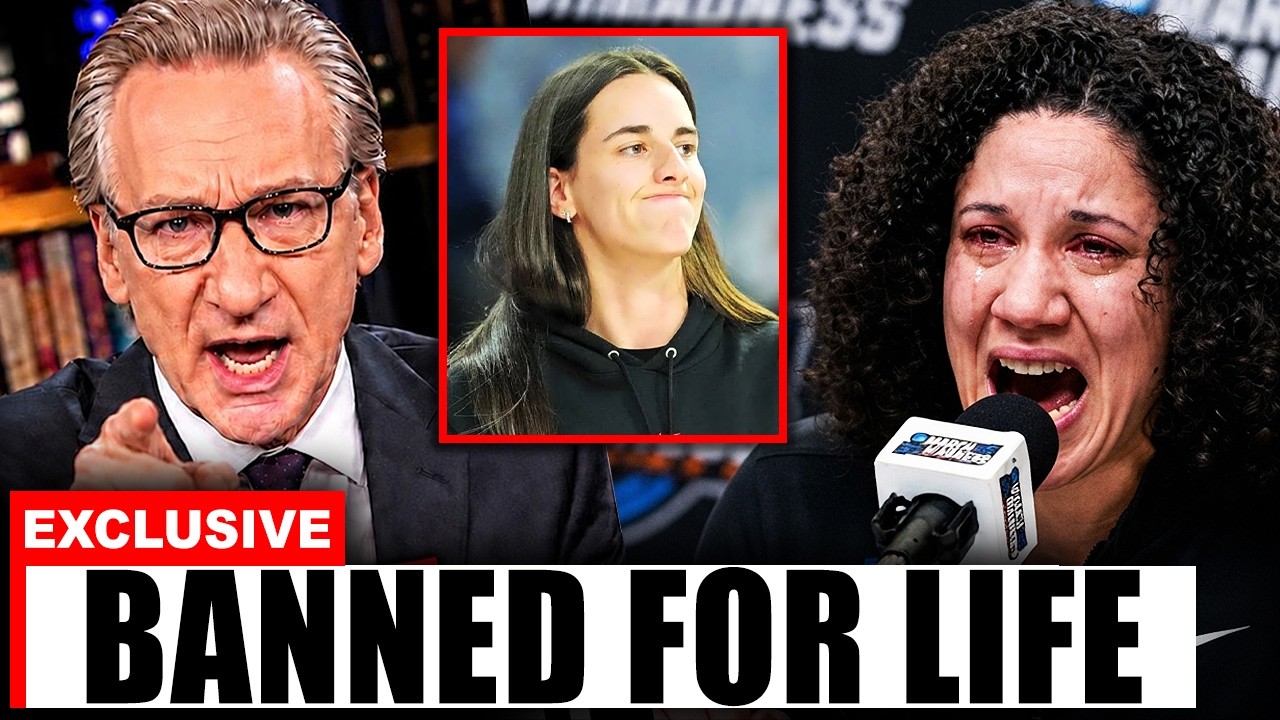
A viral headline claims Bill Maher abandoned network rules and exposed Kara Lawson’s illegal conspiracy against Caitlin Clark.
The story promises forbidden footage, frightened players, federal investigators, and evidence capable of ending Lawson’s basketball career.
Maher supposedly broadcast recordings showing Lawson ordering Team USA players to freeze Clark out during international competition.
He then allegedly transferred the material directly to the FBI while Lawson’s camp descended into complete panic.
The phrase “Enough is enough” is presented as Maher’s explosive declaration before federal authorities entered the controversy.
There is one enormous problem: no authenticated broadcast, federal announcement, or credible report confirms that event happened.
No complete episode of Maher’s program shows him presenting evidence of criminal conduct involving Lawson and Clark.
No verified recording shows Lawson threatening players to ignore Clark, limit her possessions, or sabotage her World Cup performances.
No FBI statement identifies Lawson as the subject of a federal criminal investigation related to USA Basketball.
No Department of Justice filing alleges that Lawson violated federal law while managing the national team’s tournament rotation.
No named player has publicly confirmed receiving threats or illegal instructions intended to damage Clark’s professional legacy.
The dramatic account therefore combines a real commentator, a real coaching controversy, and completely unverified criminal allegations.
That formula makes the story appear believable because every component begins with something audiences already recognize.
Maher has discussed Clark publicly, Lawson genuinely kept Clark outside Team USA’s starting lineup, and fans became furious.
However, combining several true details does not authenticate the invented connection claiming federal crimes and forbidden recordings.
The distinction between commentary and evidence becomes essential when allegations could seriously damage a real person’s reputation.
Maher is known for provocative monologues, combative interviews, and opinions designed to generate strong public reactions.
His reputation makes fabricated quotations believable, especially when the language sounds similar to his confrontational broadcasting style.
In June 2024, Maher criticized how Clark’s Indiana teammates responded after Chennedy Carter forcefully knocked her down.
He argued that teammates should defend one another and described the apparent lack of support through controversial gender commentary.
That authentic segment was widely reported and established Maher as another outspoken public defender of Clark’s treatment.
The documented 2024 remarks explain why audiences might accept newer fabricated claims without requesting original footage.
Maher also criticized a Nike advertisement featuring Clark and several other female athletes during a later television discussion.
Those genuine appearances demonstrate that he discusses Clark, women’s sports, culture, advertising, and perceived institutional contradictions.
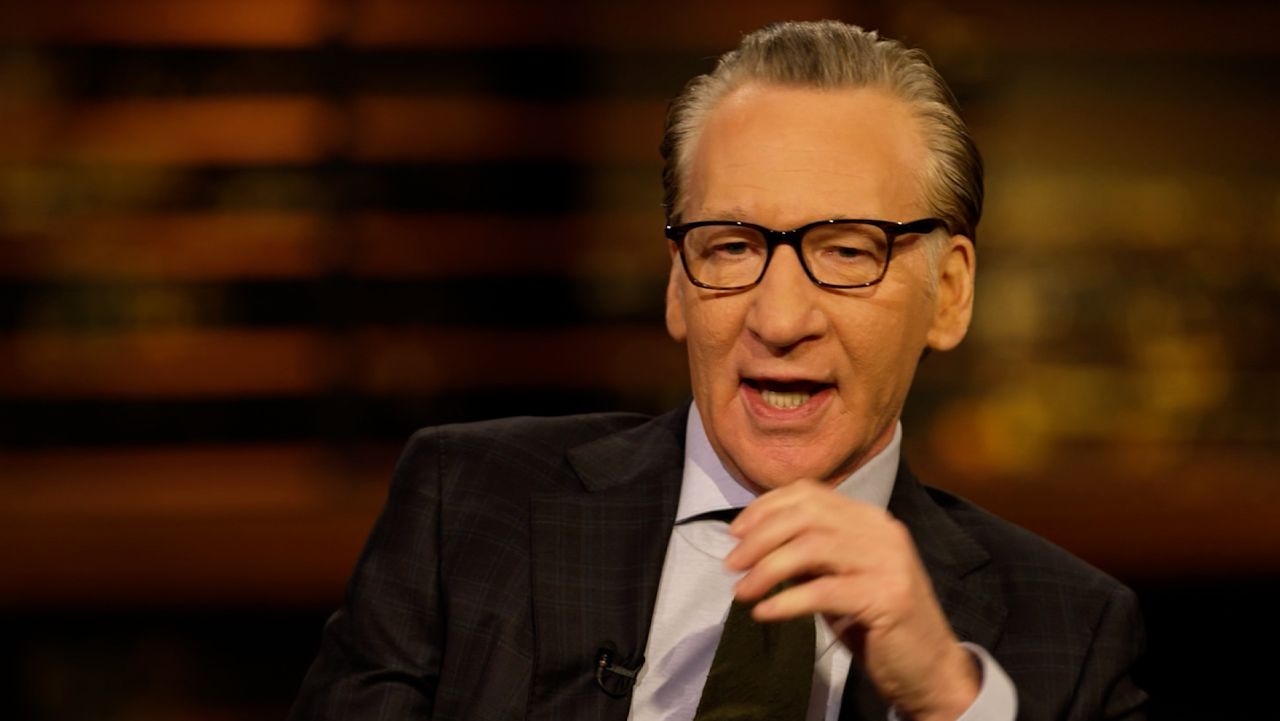
They do not demonstrate he investigated Lawson, obtained backstage recordings, or delivered criminal evidence to federal agents.
The viral narrative exploits this gap by extending Maher’s real opinions into actions nobody has independently verified.
A creator can take authentic Maher footage, remove its original context, and attach narration describing Lawson’s supposed conspiracy.
A familiar studio background then gives unrelated words the appearance of belonging to a new and explosive investigation.
Short reaction shots can be rearranged until laughter becomes outrage, skepticism becomes certainty, and editing becomes evidence.
Without an uninterrupted episode, viewers cannot determine which sentences Maher actually spoke or what subject he addressed.
A credible report would identify the episode date, guest panel, broadcast timestamp, and full segment available through HBO.
It would quote Maher accurately while linking his words directly to Lawson rather than relying upon anonymous narration.
It would also identify who produced the alleged backstage footage and explain how its authenticity was established.
None of those necessary elements accompanies the claim that Maher exposed an illegal plot against Clark.
The word “illegal” carries greater consequences than criticism describing Lawson’s choices as unfair, conservative, or tactically misguided.
A coach can make unpopular lineup decisions without committing any federal offense or violating another person’s legal rights.
Players can dislike their minutes without becoming victims of criminal sabotage orchestrated through secret threats and coercion.
For federal authorities to become involved, investigators would need a potential violation falling within federal jurisdiction.
They would require evidence connecting identifiable conduct with specific statutory elements, not merely fan anger about substitutions.
Even then, an investigation would not establish guilt, because accusations require testing through formal legal proceedings.
The FBI investigates possible federal offenses, while Justice Department prosecutors generally decide whether available evidence supports criminal charges.
Maher could theoretically provide information like any citizen, but that act alone would not validate its contents.
Investigators would examine provenance, completeness, chain of custody, witness credibility, editing, and potential alternative explanations.
A television personality announcing he possessed evidence would never substitute for forensic authentication and independent investigative corroboration.

The viral story skips all those requirements because procedural detail would reduce the speed and emotional intensity.
Instead, Maher displays supposedly decisive footage, declares the conspiracy exposed, and immediately triggers panic among Lawson’s supporters.
That progression resembles entertainment writing rather than verifiable federal reporting involving real investigators and potential defendants.
A genuine FBI development might appear within the agency’s official newsroom or an involved field office’s releases.
Criminal charges would commonly produce identifiable information through the Justice Department newsroom or the responsible federal prosecutor’s office.
As of September 19, 2026, those official sources contain no matching announcement involving Lawson and Clark.
Major national outlets likewise have not reported a raid, subpoena, criminal complaint, indictment, arrest, or verified investigation.
This absence is particularly meaningful because the alleged incident supposedly occurred publicly through a nationally distributed television program.
Hundreds of viewers could preserve the broadcast while journalists, network employees, and guests independently documented the confrontation.
Lawson’s attorneys, Duke University, USA Basketball, HBO, and federal officials would face immediate requests for comment.
Instead, the claim circulates mainly through sensational videos using identical language and unavailable supporting materials.
Multiple channels repeating one unsupported story do not create independent confirmation or transform speculation into documented fact.
Reliable corroboration requires separate sources obtaining matching information directly from records, witnesses, officials, or authenticated original evidence.
The real basketball controversy concerns Lawson’s decision to use Clark as a reserve throughout the 2026 World Cup.
Clark entered every contest from the bench while Chelsea Gray remained the starting point guard for Team USA.
Lawson surrounded Gray with experienced champions including Breanna Stewart, Napheesa Collier, Kahleah Copper, and Jackie Young.
Clark shared reserve responsibilities with talented younger players such as Paige Bueckers, Angel Reese, and Aliyah Boston.
That structure angered supporters who believed Clark’s exceptional passing and shooting deserved immediate starting responsibilities.
Their frustration increased dramatically after Clark produced fourteen points and eleven assists without committing a turnover against China.

FIBA confirmed that her eleven assists established an American record for a player making a Women’s World Cup debut.
Lawson praised Clark publicly afterward, calling her terrific and crediting her with changing America’s tempo and offensive organization.
Those documented remarks contradict the claim that Lawson openly hated Clark or demanded teammates suppress her contributions.
They do not prove every private interaction was perfect, but they weaken accusations requiring evidence of deliberate hostility.
Clark later struggled against Italy, missing every field-goal attempt and finishing with one point across nineteen minutes.
She recovered against the Czech Republic and Hungary, recording sixteen combined assists across those two American victories.
During the semifinal against Spain, Clark again scored one point and missed all three outside attempts.
Lawson relied on veterans while America controlled the fourth quarter and advanced with a 76–66 victory.
Those uneven performances created a legitimate coaching dilemma involving rhythm, experience, defense, shooting consistency, and tournament pressure.
Fans could reasonably believe a larger role would have helped Clark establish confidence through difficult shooting stretches.
Lawson could reasonably prioritize experienced combinations during elimination games offering almost no margin for experimental failure.
Neither position requires players to have been threatened, bribed, coerced, or instructed to freeze Clark out.
The championship final against France intensified the argument because America opened slowly and fell behind by fourteen points.
Clark entered from the bench, increased the tempo, and made a crucial three-pointer before the halftime break.
She finished with twelve points on four-of-five shooting while adding three assists in only thirteen minutes.
Her efficiency prompted supporters to question why Lawson did not provide additional playing time during the tournament’s biggest game.
America ultimately recovered and defeated France 97–79, securing its fifth consecutive Women’s World Cup championship.
Reuters reported the comeback, Clark’s important three-pointer, Stewart’s leadership, and America’s dominant second-half response against France.
That verified final report contains no threats, federal evidence, illegal plot, or Maher intervention.
Lawson completed the tournament undefeated, although repeated slow openings generated valid questions about her preferred starting lineup.
A championship does not make every coaching choice perfect, but it offers a plausible noncriminal explanation for continuity.
Lawson trusted a veteran structure because she believed it created stability during a compressed and unforgiving international tournament.
That judgment can be criticized through game footage, possession analysis, lineup data, and official player statistics.
Clark’s official FIBA profile records 7.8 points and a team-leading 5.3 assists per game.
She averaged 19.3 minutes while shooting 35.9 percent overall and 28 percent from three-point range.
Those numbers reveal meaningful playmaking impact, inconsistent shooting, limited opportunities, and areas requiring further international adjustment.
They do not reveal a criminal scheme because statistics cannot establish hidden threats, agreements, or unlawful intent.
The alleged backstage video therefore becomes essential to the viral story, yet nobody provides a verifiable original recording.
A real recording should contain continuous audio, identifiable participants, contextual conversation, and metadata connecting it with Berlin.
Experts would need to determine whether edits removed responses, altered sequence, or changed the apparent meaning of Lawson’s words.
Voice cloning must also be considered because modern tools can create persuasive speech resembling recognizable public figures.
Lip synchronization, background acoustics, lighting continuity, compression changes, and file history can help identify potential manipulation.
None of that authentication work appears alongside posts declaring the footage forbidden, shocking, or already delivered federally.
The word “forbidden” conveniently explains why viewers cannot find the recording through official Team USA channels.
The phrase “backstage footage” avoids identifying whether the location was an arena, hotel, studio, or training facility.
Claims that Lawson threatened “her own players” avoid naming any player willing to confirm the alleged conversation.
These omissions preserve maximum drama while preventing audiences from testing specific details against real people and locations.
If a Team USA player possessed evidence of threats, credible journalists could seek confirmation while protecting sensitive sources.
An article could explain the nature of the alleged instruction without publishing every confidential or identifying detail.
Instead, the story offers only conclusions and emotional descriptions, leaving no independent evidence available for examination.
The claim that Lawson ordered teammates to freeze Clark out also conflicts with several visible tournament performances.
Clark recorded thirty-two assists across six games, meaning teammates repeatedly converted opportunities she created with the basketball.
She led America in assists despite playing fewer minutes than several established starters throughout the competition.
A successful freeze-out generally would not produce a team-leading assist average and a record-setting international debut.
This does not prove Clark received every possession she deserved, because role limitation differs from deliberate teammate exclusion.
Lawson may have reduced Clark’s ceiling by using her conservatively, but strategic restraint remains distinct from coordinated sabotage.
Confusing those ideas transforms a basketball criticism into a criminal allegation unsupported by observable team behavior.
The word “rookie” creates another misleading impression because Clark was not entering her first professional WNBA season.
She was making her senior World Cup debut, but she had already accumulated significant professional experience and national prominence.
Describing her simply as a rookie intensifies the image of a vulnerable newcomer being abused by powerful veterans.
That framing strengthens emotional engagement while sacrificing accuracy regarding her actual career position during the 2026 tournament.
Clark entered Berlin as an established Fever superstar, influential Nike athlete, and one of basketball’s largest commercial attractions.
Her status made every rotation decision unusually visible, but visibility alone cannot prove that coaches wanted her destroyed.
Lawson also had strong incentives to use Clark effectively because America’s championship expectations allowed almost no tolerance for failure.
A deliberate plan to weaken one of her most dangerous guards would jeopardize her own reputation and national-team future.
For such irrational conduct to become plausible, evidence would need to demonstrate a motive stronger than winning gold.
The viral story supplies none beyond the familiar word “jealousy,” which functions as explanation without requiring documentation.
Jealousy is impossible to measure through substitutions alone because identical decisions can arise from basketball priorities.
A coach might prefer defense, veteran communication, lineup continuity, matchup control, or established international experience.
Observers can disagree with those priorities without confidently diagnosing private emotions or alleging federal criminal intent.
Maher’s authentic history defending Clark makes him a powerful character for converting speculation into apparent external validation.
If an outspoken celebrity agrees with frustrated fans, their suspicions may feel confirmed even without additional evidence.
But an opinion about unfair treatment does not become proof that illegal conduct occurred behind closed doors.
Maher previously criticized Clark’s teammates after a physical WNBA incident because he believed they failed to defend her.
That commentary was controversial and generalized, but it concerned publicly available footage everyone could examine independently.
The Lawson allegation is fundamentally different because it claims secret evidence nobody outside the narrator can supposedly access.
Maher’s name cannot authenticate that evidence unless a complete episode shows him presenting and explaining the actual material.
The slogan “Enough is enough” likewise cannot be attributed to him here without a traceable recording or transcript.
It is a common dramatic phrase easily added through captions, voice imitation, thumbnails, or misleading quotation marks.
Quotation marks create an appearance of precision, but typography does not prove somebody actually spoke the enclosed words.
Responsible reporting would link the quotation with its program, date, transcript, and surrounding discussion for independent review.
Until those materials appear, presenting the phrase as Maher’s verified statement would mislead readers about his conduct.
The supposed federal transfer also requires clarification because providing information to authorities does not automatically create a case.
Agents may receive countless tips that are incomplete, mistaken, exaggerated, fabricated, duplicative, or outside federal jurisdiction.
The existence of a submitted tip does not confirm an investigation, establish probable cause, or validate the accusation.
Claiming “the feds are involved” without identifying any official action exploits public misunderstanding of investigative procedures.
A person can contact the FBI, but that alone does not mean the bureau endorsed or adopted their allegations.
The agency could decline action, refer information elsewhere, request clarification, or determine no credible predicate exists.
No public evidence even establishes that Maher submitted anything concerning Lawson, making the claim doubly unsupported.
The phrase nevertheless generates urgency because audiences associate federal involvement with extraordinary seriousness and imminent punishment.
That emotional association encourages sharing before verification, especially among viewers already convinced Clark received unfair treatment.
The more outrageous the allegation becomes, the more essential it is to demand primary documentation before believing it.
Evidence would include the original broadcast, authenticated backstage recording, official acknowledgment, named witnesses, or a court filing.
Without those materials, the responsible conclusion remains that the criminal narrative has not been substantiated.
There is still an important story involving Clark, Lawson, Maher, media incentives, and the transformation of legitimate criticism.
Maher’s previous Clark commentary created a recognizable persona easily inserted into new fictional confrontations and investigative narratives.
Lawson’s controversial rotations supplied real frustration that creators could amplify into hostility, conspiracy, and imagined federal crimes.
Clark’s enormous fan base guaranteed immediate emotional engagement whenever a headline promised vindication against a perceived enemy.
Recommendation algorithms then rewarded the strongest accusation rather than the most careful analysis of available evidence.
A title describing tactical disagreement competes poorly against claims of forbidden footage and career-ending federal intervention.
Creators consequently escalate from benching criticism to jealousy, sabotage, bribery, lawsuits, arrests, and secret criminal investigations.
Each new headline must appear more devastating than the previous version, even when no supporting evidence ever emerges.
The result is an expanding fictional universe constructed around genuine games, authentic personalities, and invented private events.
Viewers may eventually forget which details were reported and which appeared only through commentary channels seeking engagement.
That confusion harms Lawson by attaching criminal suspicion to a coaching decision and harms Clark through false attribution.
It portrays Clark as secretly supplying damaging evidence despite no verified statement showing she accused Lawson of wrongdoing.
It also misrepresents Maher as conducting a federal investigation rather than producing political and cultural television commentary.
Accurate analysis can still favor Clark strongly without fabricating crimes or pretending Lawson escaped an imaginary prosecution.
Clark demonstrated that her passing could transform America’s offense and that her shooting mattered during the championship comeback.
Her final performance provided legitimate ammunition for critics who believed Lawson restricted her role excessively throughout Berlin.
Her team-leading assist average suggests she deserved serious consideration for greater responsibility before the 2028 Olympics.
Lawson must answer tactical questions about repeated slow starts, limited experimentation, and dependence upon veteran opening units.
Those questions can pressure her professionally because future results will determine whether her conservative philosophy remains sustainable.
If Clark dominates future national-team camps, Lawson may have little choice except expanding her minutes and starting role.
That basketball reality represents genuine accountability, delivered through performance, statistics, competition, and public strategic examination.
It does not require Bill Maher delivering mysterious files to agents or broadcasters violating network rules.
Clark’s most convincing evidence already exists within her passes, shooting gravity, final-game efficiency, and international composure.
Lawson’s strongest defense already exists within America’s undefeated record and another World Cup championship under her leadership.
The continuing disagreement concerns whether the result justified the method or merely concealed weaknesses through overwhelming roster depth.
That question deserves detailed film review rather than fabricated audio telling fans exactly which villain they should hate.
As of September 19, 2026, no credible source confirms a federal criminal case involving Lawson’s treatment of Clark.
No verified Maher episode exposes threats, illegal instructions, covert meetings, or coordinated efforts to suppress Clark.
No authenticated player testimony supports the allegation that Lawson demanded teammates deliberately freeze her out.
No federal announcement establishes that investigators received evidence, opened a case, or identified any potential criminal violation.
No career has been legally destroyed, and no supposed panic can be evaluated without genuine original footage.
The four-word verdict is considerably less sensational but far more defensible than the viral headline.
No Evidence, No Case.
Those words do not excuse every Lawson decision or suggest Clark’s supporters should stop demanding tactical accountability.
They simply prevent legitimate criticism from being transformed into unsupported allegations about federal crimes and personal corruption.
Readers should locate Maher’s complete episode before sharing quotations attached to his name through anonymous video narration.
They should compare Lawson’s alleged voice with official interviews and inspect whether the footage contains unnatural editing transitions.
They should search federal sources for named officials, case numbers, districts, charges, and publicly accessible charging documents.
They should ask why no identifiable Team USA player has confirmed receiving the supposedly terrifying instructions.
They should also separate the emotional satisfaction of vindication from the evidentiary standards required for criminal accusations.
Clark’s legacy does not need fabricated rescuers because her performances provide enough evidence of her transformational basketball impact.
Maher does not need an invented FBI handoff for his genuine commentary about Clark to remain publicly controversial.
Lawson does not become immune from criticism simply because the strongest criminal allegations against her remain unsupported.
The truth is not that nothing happened; the truth is that something different and entirely noncriminal happened.
A coach trusted veterans, a superstar reserve changed important games, and millions fiercely debated whether the strategy was fair.
America won gold, Clark strengthened her future case, and Lawson inherited serious questions before the Los Angeles Olympics.
Everything beyond that requires evidence the viral story has not supplied through footage, records, witnesses, or official action.
Watch the verified broadcasts, inspect the complete World Cup footage, and uncover how criticism became an invented federal scandal below… 👇


