On November 22, 1963, Secret Service agent Clint Hill ran toward a moving presidential limousine in Dallas, Texas, desperately trying to protect President John F. Kennedy and First Lady Jacqueline Kennedy. The distance separating him from the vehicle was relatively small. The time available to cross it was even smaller. Within seconds, the thirty-fifth president of the United States had suffered a fatal gunshot wound, and Hill had become part of one of the most consequential moments in American history.
For the rest of his life, Hill would return to those seconds with extraordinary emotional intensity. He would receive official recognition for his courage, rise through the Secret Service, and protect five American presidents. Yet the professional honors could not erase his private conviction that he might have reached Kennedy sooner.
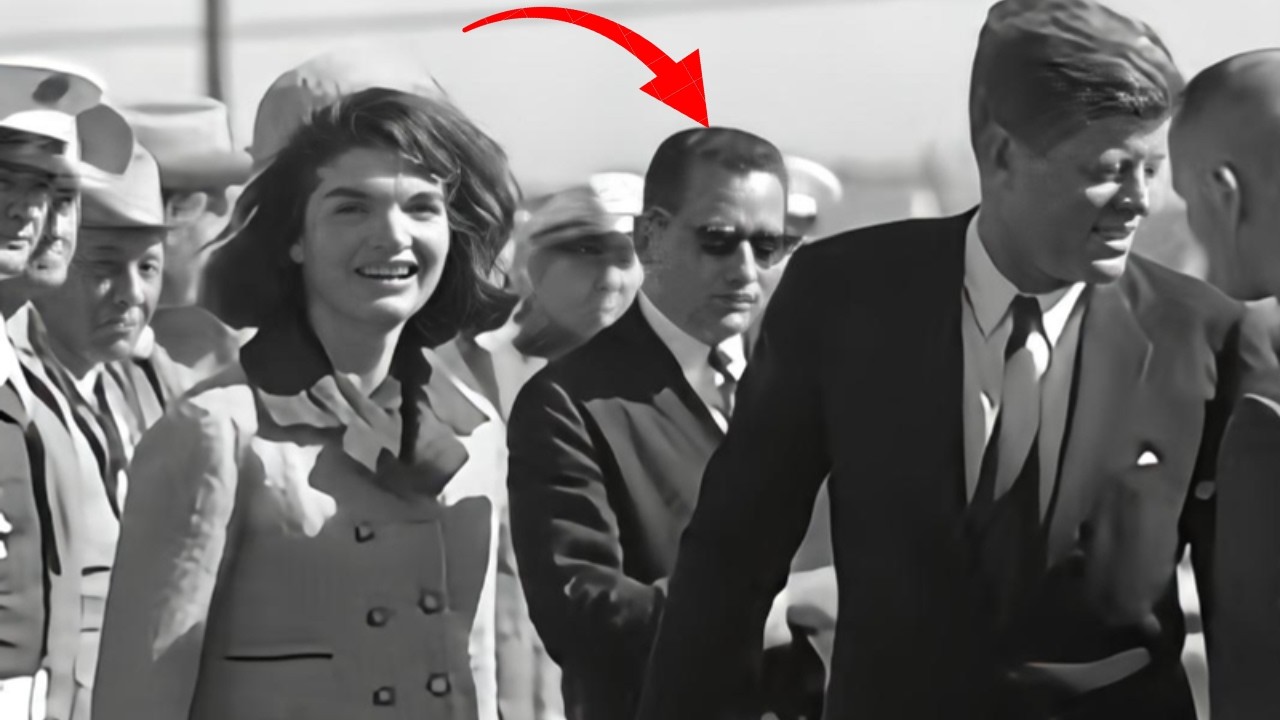
The question was devastatingly simple: Could he have saved the president if he had reacted just a fraction of a second faster?
Hill spent more than six decades confronting that possibility. His struggle contributed to depression, alcohol dependence, personal difficulties, and an early retirement from the agency he had devoted his life to serving. Even as he grew older and came to understand the overwhelming disadvantages confronting the presidential security detail, he continued questioning his own response.
His experience became one of the most poignant personal accounts associated with the Kennedy assassination. Unlike the countless theories that emerged after the tragedy, Hill’s story centered on something intensely human: the difficulty of accepting that extraordinary effort cannot always prevent catastrophe.
Clinton J. Hill was born on January 4, 1932, in Larimore, North Dakota. His early life was shaped by adoption, modest circumstances, and the expectations of a hardworking Midwestern family. After his birth mother placed him in the North Dakota Children’s Home, he was adopted and raised in Washburn, a small community where discipline and responsibility were central values.
Hill later recalled the importance his adoptive father placed on completing an assignment. The lesson was straightforward: when someone entrusted you with a responsibility, you were expected to fulfill it completely. That principle became fundamental to Hill’s professional identity. Decades later, it would also shape the way he judged his actions in Dallas.
After attending Concordia College in Moorhead, Minnesota, Hill served in the United States Army. He subsequently worked for the railroad before joining the United States Secret Service in 1958. His first assignment was in the agency’s Denver field office, where the work involved investigations and other responsibilities far removed from the international attention surrounding presidential protection.
He soon moved into the presidential protective operation, eventually receiving an assignment to Jacqueline Kennedy’s security detail. Initially, Hill had reservations about the position. In his memoir Mrs. Kennedy and Me, published in 2012, he described his uncertainty about serving on the first lady’s detail rather than working directly on presidential protection.
Those reservations faded as he came to know Jacqueline Kennedy.
Hill accompanied her during official travels and private engagements, witnessing the unusual pressures imposed on a young first lady whose family life unfolded under constant public attention. He traveled with her internationally, observed the demands of presidential diplomacy, and developed considerable respect for her determination and composure.
His responsibilities were particularly sensitive because Jacqueline Kennedy sought moments of privacy while living within one of the world’s most closely monitored households. Hill’s role required him to balance her personal wishes against the practical demands of security.
Their professional relationship developed into one characterized by trust.
Hill was also present during a deeply painful period for the Kennedy family. In August 1963, Jacqueline Kennedy gave birth prematurely to Patrick Bouvier Kennedy, who died shortly afterward. The loss devastated the president and first lady. Hill’s proximity to the family during such moments reinforced his understanding that protecting public officials also meant witnessing their private vulnerabilities.
By November 1963, Hill had become a familiar and trusted presence within Jacqueline Kennedy’s security arrangements. His assignment was not to shape national policy or participate in political decisions. It was to protect the first lady, anticipate threats, and respond immediately when danger appeared.
The president’s visit to Texas that November occurred amid political tensions within the state’s Democratic Party. Kennedy hoped to strengthen relationships among competing political factions while preparing for the following year’s presidential election.
The itinerary included San Antonio, Houston, Fort Worth, Dallas, and Austin. Although Dallas had experienced politically hostile demonstrations, large crowds gathered to welcome the presidential party when Air Force One arrived at Love Field on the morning of November 22.
The weather had improved after earlier concerns about rain. The sky was clear enough for the president to travel in an open limousine, allowing spectators to see him more easily.
The presidential vehicle carried Kennedy and Jacqueline Kennedy in the rear seat. Texas Governor John Connally and his wife, Nellie, occupied the seats ahead of them. Secret Service agents traveled in accompanying vehicles, including the follow-up car immediately behind the limousine.
Hill rode on the left running board of that follow-up vehicle.
His position gave him a view of the crowd and allowed him to respond to disturbances or perceived threats. He had already demonstrated his readiness during the motorcade, moving toward the presidential limousine when crowds pressed unusually close.
The arrangement also reflected the security practices of the period. Presidential protection in 1963 differed considerably from the procedures used today. Open motorcades, public access, and the president’s preference for visibility created challenges that later investigations would examine.
Kennedy had expressed a preference against agents routinely standing on the rear steps of his limousine during public appearances. That preference influenced protective arrangements, although it did not remove the agents’ responsibility to intervene when necessary.
The protective bubble top sometimes installed over the presidential limousine was not bulletproof. Its absence therefore did not mean that a bullet-resistant barrier had been removed.
Nevertheless, the open vehicle left the occupants exposed to an attack from a concealed position.
The motorcade departed Love Field and traveled through Dallas toward the Trade Mart, where Kennedy was scheduled to address a luncheon gathering.
Crowds lined the route. For much of the journey, the atmosphere appeared welcoming.
At approximately 12:30 p.m., the motorcade entered Dealey Plaza and turned onto Elm Street.
The Texas School Book Depository stood behind and to the right of the presidential limousine as it proceeded downhill toward the railroad underpass.
Moments earlier, Nellie Connally had commented on the enthusiastic reception the president was receiving. According to her later testimony, she told Kennedy that he could not say Dallas did not love him.
Then gunfire interrupted the motorcade.
Hill later testified that he heard a sound resembling a firecracker. As he turned to identify its source, he noticed movement in the presidential limousine that indicated something was terribly wrong.
He immediately left his position on the follow-up car and ran toward the president’s vehicle.
The Zapruder film, recorded by Dallas resident Abraham Zapruder, captured Hill’s response. The footage shows him moving from the follow-up vehicle toward the limousine as the assassination unfolded.
He reached the rear of the presidential car and climbed aboard.
But the fatal shot had already struck Kennedy.
Hill’s testimony before the Warren Commission in March 1964 described the horrifying injuries he encountered. The president had sustained a catastrophic head wound. Jacqueline Kennedy, covered in blood, had moved toward the rear of the limousine.
Hill helped guide her back into the passenger compartment and positioned himself to shield the occupants as the vehicle accelerated away from Dealey Plaza.
The limousine rushed toward Parkland Memorial Hospital.
In the moments after the shooting, Hill communicated the severity of the situation to agents in the follow-up vehicle. His gestures indicated that the president’s condition was grave.
The immediate priority was reaching medical assistance.
At Parkland, physicians and hospital personnel moved quickly to treat Kennedy and Governor Connally, who had also been wounded.
Hill later recalled that Jacqueline Kennedy initially resisted leaving her husband’s side. She was acutely aware of the severity of his injuries and sought to protect him from public view.
According to Hill’s account, he used his own jacket to cover the president before hospital personnel moved him from the limousine.
The scene reflected the collision of national emergency and private grief. Outside the hospital, security personnel, reporters, and government officials were trying to understand what had happened. Inside, medical teams confronted injuries that would prove unsurvivable.
President Kennedy was pronounced dead at 1:00 p.m. Central Standard Time.
Hill also became involved in communicating the developing emergency.
During the confusion at Parkland, he spoke by telephone with Attorney General Robert F. Kennedy, the president’s younger brother. Hill later recalled the extraordinary difficulty of answering Robert Kennedy’s questions about the president’s condition.
He understood the seriousness of the injuries but did not believe it was his responsibility to deliver the formal notification of death.
His recollections of that conversation became among the most emotionally affecting details of his later interviews.
The tragedy did not end at the hospital.
Jacqueline Kennedy returned to Air Force One, where Lyndon B. Johnson took the presidential oath of office before the aircraft departed Dallas.
Hill remained involved in protecting the first lady during the transfer of presidential authority and the return to Washington.
The photographs from that day became enduring images of American history. Johnson stood beside Jacqueline Kennedy during the oath. She was still wearing the pink suit stained during the assassination.
Hill’s presence during those events placed him at the center of an extraordinary national transition.
Yet his attention remained focused on the woman he had been assigned to protect and the president he had been unable to save.
In later accounts, Hill recalled Jacqueline Kennedy expressing concern for his welfare. The fact that she could think about the agent’s well-being amid her own devastating loss deeply affected him.
It was one of several indications of the trust that had developed between them.
Hill continued serving on Jacqueline Kennedy’s detail after the assassination. He subsequently received other assignments and rose through the Secret Service hierarchy.
His professional record was distinguished.
He eventually became the special agent in charge of presidential protection and later served as an assistant director responsible for protective operations.
Over his career, Hill served during the administrations of Dwight Eisenhower, John Kennedy, Lyndon Johnson, Richard Nixon, and Gerald Ford.
He received recognition for his response in Dallas.
From the outside, his career appeared to represent the highest standards of federal protective service.
But professional advancement concealed a deepening psychological struggle.
Hill repeatedly revisited the moment when he had jumped from the follow-up car.
He remembered the sound that alerted him, the distance to the limousine, and the effort required to reach the moving vehicle.
His mind returned to a counterfactual possibility that no investigation could conclusively resolve: what if he had moved sooner?
The question did not necessarily reflect a reasonable assessment of the physical circumstances. It reflected his emotional understanding of responsibility.
Hill believed he had been entrusted with protecting the president and first lady. One had survived, while the other had been killed.
That outcome became inseparable from his sense of professional duty.
The Warren Commission investigated the assassination and examined the conduct of the Secret Service.
Its 1964 report concluded that Lee Harvey Oswald had fired the shots that killed Kennedy and wounded Connally. The commission also identified shortcomings in protective planning and recommended significant improvements.
Its findings did not establish that Hill had been negligent.
His immediate response to the gunfire was recognized as courageous.
Yet official conclusions offered limited relief from the burden he placed upon himself.
The distinction between institutional responsibility and personal guilt became central to his experience.
An investigation could examine routes, vehicle positions, procedures, and reaction times. It could recommend reforms and determine whether personnel had followed established practices.
But it could not easily change the emotional meaning Hill attached to those seconds.
His struggle was intensified by the public visibility of the assassination.
The Zapruder film preserved his actions in a way that few traumatic events have ever been preserved.
Unlike most people who experience a sudden tragedy, Hill could see himself responding to it.
The film showed him running toward the limousine.
It showed the position of the vehicles and the extraordinary speed with which events unfolded.
It also preserved the terrible fact that he arrived after the fatal injury.
For observers, the footage demonstrated his courage.
For Hill, it became a record of the distance he had been unable to overcome.
That contrast would define his public and private understanding of Dallas for decades.
During the years after the assassination, Hill became increasingly withdrawn.
He later discussed struggles with depression, intrusive memories, and alcohol dependence.
His personal relationships suffered, and his professional responsibilities became more difficult to sustain.
The Secret Service culture of the period did not encourage agents to discuss emotional distress openly. Protective work emphasized composure, discretion, and the ability to function under pressure.
Hill had been trained to suppress fear and respond decisively.
Those habits helped him during emergencies but made it difficult to confront the emotional consequences afterward.
By 1975, his health and personal circumstances had deteriorated enough that retirement became necessary.
He left the Secret Service at forty-three, after approximately seventeen years of service.
That same year, Hill appeared in a televised interview with journalist Mike Wallace on 60 Minutes.
The interview became a defining moment in his public life.
For years, Hill had largely avoided discussing the assassination in emotional terms. His testimony and professional statements had described events with the precision expected of a federal agent.
But Wallace asked him directly about his belief that he could have acted differently.
Hill became visibly emotional.
He acknowledged that he continued thinking about whether a faster reaction might have changed the outcome.
His words conveyed a sense of responsibility that remained overwhelming more than a decade after the assassination.
The interview exposed a painful reality: a man publicly celebrated for bravery privately believed he had failed.
It also revealed the limitations of reassurance.
Others could tell Hill that he had done everything possible. Investigators could conclude that his actions were appropriate. Colleagues could praise his dedication.
But Hill’s own judgment remained harsher.
The emotional impact of the interview extended beyond the television audience.
Viewers sent letters expressing sympathy, gratitude, and admiration.
Many recognized that Hill had placed himself in danger while trying to protect the president and first lady.
Some wrote to reassure him that the assassination was not his fault.
Yet Hill was not immediately ready to absorb those messages.
Decades later, he and his wife, author Lisa McCubbin Hill, discovered correspondence that had remained largely unread for many years.
The letters represented an extraordinary record of public compassion.
They also illustrated how long Hill had struggled to accept the support offered to him.
His experience became a powerful example of survivor’s guilt.
Survivor’s guilt can emerge when someone lives through a traumatic event while others die, particularly when the survivor believes there was an opportunity to intervene.
The belief does not require evidence that the person could actually have prevented the outcome.
It can arise from the psychological need to impose a sense of control on an event that was sudden, chaotic, and devastating.
Hill’s professional training made that process especially difficult.
He had spent his adult life learning to anticipate danger and act decisively.
The assassination confronted him with circumstances in which determination and courage were insufficient.
His actions had been immediate.
The available time had been extraordinarily limited.
The attacker had occupied an elevated position overlooking a moving vehicle.
Yet Hill continued measuring his response against an imagined possibility of perfect timing.
His return to Dallas in 1990 marked an important stage in his effort to understand the event.
For twenty-seven years, he had avoided revisiting the location where Kennedy was assassinated.
When he finally returned, he examined Dealey Plaza and the former Texas School Book Depository, which had become the site of the Sixth Floor Museum.
Standing in the building associated with the shooting, Hill considered the physical circumstances from a different perspective.
He examined the view toward Elm Street, the relative positions of the vehicles, and the advantages available to an attacker firing from concealment.
The experience helped him recognize how little warning the protective detail had received.
He began to understand that the conditions had been overwhelmingly favorable to the gunman.
The agents had no advance knowledge of the immediate attack.
They were responding to gunfire from an elevated position while the motorcade was moving.
Even a rapid response required time to recognize the threat, leave the follow-up vehicle, cross the distance, and reach the president.
Those physical realities did not erase Hill’s memories.
But they helped him develop a more compassionate interpretation of his own actions.
He had not stood still.
He had not ignored danger.
He had run toward it.
The distinction was important because Hill had spent years evaluating himself primarily through the outcome rather than through the actions he took.
In later interviews, he increasingly acknowledged the extraordinary disadvantages facing the protective detail.
His reflections did not eliminate uncertainty, but they demonstrated a gradual movement away from absolute self-condemnation.
Hill also began sharing his experiences through writing.
In 2012, he published Mrs. Kennedy and Me, written with Lisa McCubbin.
The memoir described his years protecting Jacqueline Kennedy and offered an intimate perspective on the Kennedy family.
Rather than focusing exclusively on the assassination, it explored the daily responsibilities, travels, and personal encounters that defined his assignment.
The book introduced readers to a side of Jacqueline Kennedy that Hill had witnessed directly.
She appeared not simply as a national icon but as a young mother, a grieving parent, a diplomatic figure, and a woman navigating extraordinary public scrutiny.
Hill’s recollections revealed the trust required between protective agents and the people they guarded.
His account also demonstrated that the relationship between security personnel and public officials can become deeply personal without losing its professional foundation.
The memoir became a bestseller and encouraged Hill to continue documenting his experiences.
In 2013, he published Five Days in November, a detailed account of the period surrounding Kennedy’s assassination.
The book reconstructed the final days of the president’s life from Hill’s perspective.
It also described the confusion, grief, and responsibility that followed the shooting.
In 2016, Hill published Five Presidents, examining his broader career in the Secret Service.
The book placed the Kennedy years within a longer history of presidential protection.
It described the differences among the presidents he served and the evolving demands of protecting national leaders.
Through these works, Hill transformed private memories into historical testimony.
His books provided information about security practices, presidential personalities, and the emotional realities of protective service.
They also allowed him to explain his experiences in his own words rather than leaving them entirely to investigators, filmmakers, and commentators.
That distinction mattered because Hill’s story had long been interpreted through the images of the assassination.
The Zapruder film showed what he did.
His memoirs explained what he remembered, feared, and believed.
Together, those sources offered a more complete understanding of his experience.
Hill’s account also resonated with the fictional portrayal of presidential protection in popular culture.
The 1993 film In the Line of Fire, starring Clint Eastwood, featured a Secret Service agent haunted by his inability to prevent a presidential assassination.
Although the film was a fictional thriller, its central theme reflected the psychological burden associated with Hill’s experience.
The character’s struggle illustrated how professional responsibility can become inseparable from unresolved trauma.
Hill’s real life, however, was far more complicated than a Hollywood narrative.
There was no final confrontation that could reverse the past.
No successful mission could bring Kennedy back.
No official commendation could fully answer the question that troubled him.
His recovery was gradual and incomplete.
He continued speaking publicly about Dallas, sometimes with greater perspective and sometimes with lingering uncertainty.
That honesty became one of the most distinctive aspects of his later life.
Hill did not present himself as someone who had achieved a simple emotional resolution.
He acknowledged that the event continued affecting him.
He also recognized that his understanding had changed.
The passing decades gave him distance from the immediate horror, but they did not remove the emotional significance of what he had witnessed.
His relationship with Jacqueline Kennedy remained central to those memories.
He recalled her concern for others even during her own grief.
He also described private moments following the assassination that revealed the extraordinary intimacy of the tragedy.
Among those recollections was an account of helping Jacqueline Kennedy obtain scissors so she could preserve a lock of her husband’s hair before his burial.
The detail was small compared with the national events unfolding around them.
Yet it revealed the deeply personal nature of the loss.
Kennedy’s death was a constitutional and political crisis, but it was also the death of a husband and father.
Hill witnessed both dimensions.
He saw the machinery of government respond to an assassination.
He also saw a widow confronting the destruction of her family life.
That dual perspective distinguished his testimony from many other accounts of November 22.
Hill’s later public appearances emphasized the importance of remembering the human beings behind historical events.
He did not deny the significance of investigations or security reforms.
But his own experience demonstrated that the consequences of political violence extend far beyond immediate casualties.
Families, witnesses, first responders, and protective personnel may carry the effects for decades.
The assassination changed national politics, public trust, and presidential security.
It also changed the life of a thirty-one-year-old agent who had expected to complete another routine assignment.
Hill’s story is therefore inseparable from the broader history of the Secret Service.
The agency underwent significant changes after Kennedy’s death.
Protective planning, coordination, intelligence gathering, and motorcade procedures received increased attention.
The assassination exposed vulnerabilities that demanded institutional reform.
Modern presidential protection operates within a far more extensive security framework.
Yet even the most sophisticated protective arrangements cannot eliminate every threat.
The central challenge remains the same: agents must anticipate danger while recognizing that attacks can develop faster than any human response.
Hill’s actions in Dallas became an enduring example of that dilemma.
He moved toward danger immediately.
He placed himself in a position to protect Jacqueline Kennedy.
He remained with the presidential vehicle during the emergency evacuation.
His conduct demonstrated the willingness to risk his own life that protective service requires.
But the attack had already inflicted a fatal injury.
The difference between courageous action and successful prevention was not one Hill could easily accept.
For much of his life, he interpreted that difference as personal failure.
Others saw it as evidence of the limits of human intervention.
Both perspectives existed within his story, but they did not carry equal emotional weight for him.
In his later years, Hill continued discussing the assassination with journalists and historians.
His interviews became increasingly reflective.
He described the professional standards that had guided him, the relationships he had formed, and the emotional consequences of witnessing Kennedy’s death.
He also spoke about the difficulty of accepting that he could not change the outcome.
His comments revealed a man who had spent decades examining the same moment from different angles.
He considered his position on the follow-up car.
He remembered the first indication of gunfire.
He reconstructed the distance between the vehicles.
He thought about the speed of his reaction.
And he confronted the fact that the fatal shot occurred before he could reach the president.
Those details remained vivid because they formed the center of his traumatic memory.
But as he grew older, his account increasingly included recognition of the circumstances beyond his control.
The attacker had the advantage of surprise.
The agents were responding without advance warning.
The interval between recognizing danger and the fatal injury was extremely brief.
Hill had acted, but he had not possessed the power to reverse what was already happening.
That realization was essential to understanding his later reflections.
It did not mean the assassination ceased to trouble him.
It meant he could sometimes distinguish responsibility from the impossible expectation of preventing every outcome.
The difference is important beyond the history of presidential protection.
Emergency responders, military personnel, medical professionals, and ordinary witnesses can experience similar struggles after traumatic events.
They may remember what they did not accomplish more intensely than what they did.
They may construct alternative sequences in which a faster decision or different movement would have changed everything.
Those imagined possibilities can become emotionally persuasive even when the available evidence offers little support.
Hill’s experience demonstrates how powerful that process can be.
He possessed professional knowledge of protective procedures.
He understood the limitations of reaction time.
He had received official recognition.
Yet he continued questioning himself.
The persistence of that guilt did not prove that he was responsible for Kennedy’s death.
It revealed how deeply he had internalized his assignment.
His sense of duty was so strong that he struggled to separate an unsuccessful outcome from a failure of personal responsibility.
That distinction shaped the tragedy of his later life.
Hill died on February 21, 2025, at his home in Belvedere, California.
He was ninety-three years old.
His wife, Lisa McCubbin Hill, announced his death and described his final moments as peaceful.
The United States Secret Service honored his service and acknowledged the courage he demonstrated throughout his career.
His death closed a remarkable chapter in the history of presidential protection.
He had served five presidents.
He had witnessed major events of the Cold War era.
He had accompanied Jacqueline Kennedy during some of the most significant moments of her life.
He had risen to senior leadership within the agency.
And he had spent decades explaining the assassination that defined his public identity.
Yet the most enduring image associated with Clint Hill remains the same.
A Secret Service agent jumps from a moving vehicle and runs toward the presidential limousine.
The moment lasts only seconds.
It has been examined by historians, investigators, journalists, filmmakers, and generations of viewers.
For Hill, those seconds lasted a lifetime.
His death also highlighted the importance of preserving firsthand accounts of the Kennedy assassination.
As the surviving witnesses of November 22, 1963, have grown older and died, their testimony has become increasingly valuable.
Hill’s interviews, memoirs, and Warren Commission testimony provide a direct record of the assassination’s immediate aftermath.
They also preserve the emotional perspective of someone whose actions were captured in one of the most closely studied pieces of film in history.
The public record contains many competing interpretations of Kennedy’s assassination.
Questions about investigative conclusions, intelligence failures, and the broader political circumstances have remained subjects of debate.
Hill’s personal experience, however, does not depend upon resolving every controversy.
His actions during the shooting are visible in historical footage.
His testimony is preserved in official records.
His later reflections are documented in published interviews and memoirs.
Together, they reveal the extraordinary burden carried by a man who responded to a national tragedy from only a few feet away.
The assassination is often remembered through famous images: the presidential limousine, the crowds in Dealey Plaza, the Texas School Book Depository, Parkland Hospital, and the swearing-in aboard Air Force One.
Hill appears within that history as a figure in motion.
He is not delivering a speech or making a political decision.
He is running.
That simple action became the defining image of his life.
To many Americans, it represented courage under unimaginable pressure.
To Hill, it represented a race he believed he had lost.
The difference between those interpretations explains why his story remains so affecting.
A nation could honor him.
The Secret Service could recognize his service.
Jacqueline Kennedy could express gratitude.
But none of those responses could entirely change the way he remembered the moment.
His experience demonstrates that public heroism and private suffering can exist together.
A person may act bravely and still experience overwhelming regret.
An individual may understand intellectually that an outcome was beyond their control while continuing to feel emotionally responsible.
Hill lived within that contradiction for more than sixty years.
His later writings and interviews did not offer a simple ending.
Instead, they revealed the slow and difficult process of living with uncertainty.
He could acknowledge the advantages possessed by the attacker.
He could recognize that the available time was extremely limited.
He could understand that his response had been immediate.
But he could not entirely silence the question of whether something different might have happened.
That uncertainty became part of his legacy.
It also made his testimony unusually human.
Historical figures are often remembered through simplified descriptions.
They become heroes, villains, witnesses, or symbols.
Hill resisted such simplicity because his own experience did not fit neatly into any one category.
He was a highly trained professional who responded courageously.
He was also a traumatized witness who struggled with guilt.
He was a respected public servant whose career ended earlier than expected.
He was a husband, father, author, and survivor who spent much of his life trying to understand an event he could not undo.
His story is therefore about more than the assassination of John F. Kennedy.
It is about the psychological cost of responsibility.
It is about the limits of human control during sudden violence.
It is about the difference between what a person actually does and what that person later believes should have been possible.
And it is about the extraordinary persistence of memory.
The most important lesson of Hill’s experience may be that courage does not guarantee success.
People can respond with exceptional speed and determination while confronting circumstances that cannot be overcome.
The outcome does not automatically determine the value of their actions.
Hill’s response in Dallas demonstrated his commitment to protecting the president and first lady.
The assassination demonstrated the terrible vulnerability of even the most carefully guarded public figures.
Both facts can be true.
For decades, Hill found it difficult to accept them together.
His life after Dallas became a long effort to reconcile that contradiction.
He sought understanding through professional service, private reflection, historical investigation, public interviews, and writing.
He returned to the place where the tragedy occurred.
He examined the physical evidence.
He revisited the memories he had tried to avoid.
He shared his experiences with readers who had not yet been born when Kennedy was assassinated.
And he gradually helped the public understand the emotional reality behind a famous historical image.
Clint Hill did not save President Kennedy.
But he acted when danger appeared, moved toward gunfire, and protected Jacqueline Kennedy during the desperate escape from Dealey Plaza.
Those actions remain part of the historical record.
His lifelong regret does not diminish them.
Instead, it reveals the extraordinary weight he placed upon his responsibility.
When Hill died in 2025, the final chapter of that struggle came to an end.
The assassination remained part of American history.
The footage remained preserved.
The official testimony remained available.
And the image of a young Secret Service agent running toward a moving limousine remained unchanged.
But behind that image was a man who had spent more than six decades asking whether he could have done more.
He never found an answer that completely erased the question.
What his life ultimately revealed was something more complicated than failure or heroism alone.
It revealed the human cost of trying to protect another life when history changes faster than anyone can respond.
Clint Hill ran toward danger on November 22, 1963.
He continued carrying the memory of that run until his death.
And his story endures as one of the most moving reminders that the deepest wounds of a national tragedy are not always visible in the photographs that record it.


