In October 1990, British television audiences were introduced to a woman who believed that social respectability was something to be pursued at almost any cost. She had an immaculate home, carefully arranged flowers, a telephone voice designed to impress strangers, and an extraordinary ability to turn the simplest social occasion into a catastrophe.
Her name was Hyacinth Bucket.
But there was one detail she insisted everyone understand.
Her surname was pronounced “Bouquet.”
For five series, Keeping Up Appearances transformed Hyacinth’s relentless pursuit of social status into one of the most successful British sitcoms of its era. Her candlelight suppers, elaborate invitations, nervous acquaintances, and endless attempts to impress supposedly important people created a comic world that audiences immediately recognized.
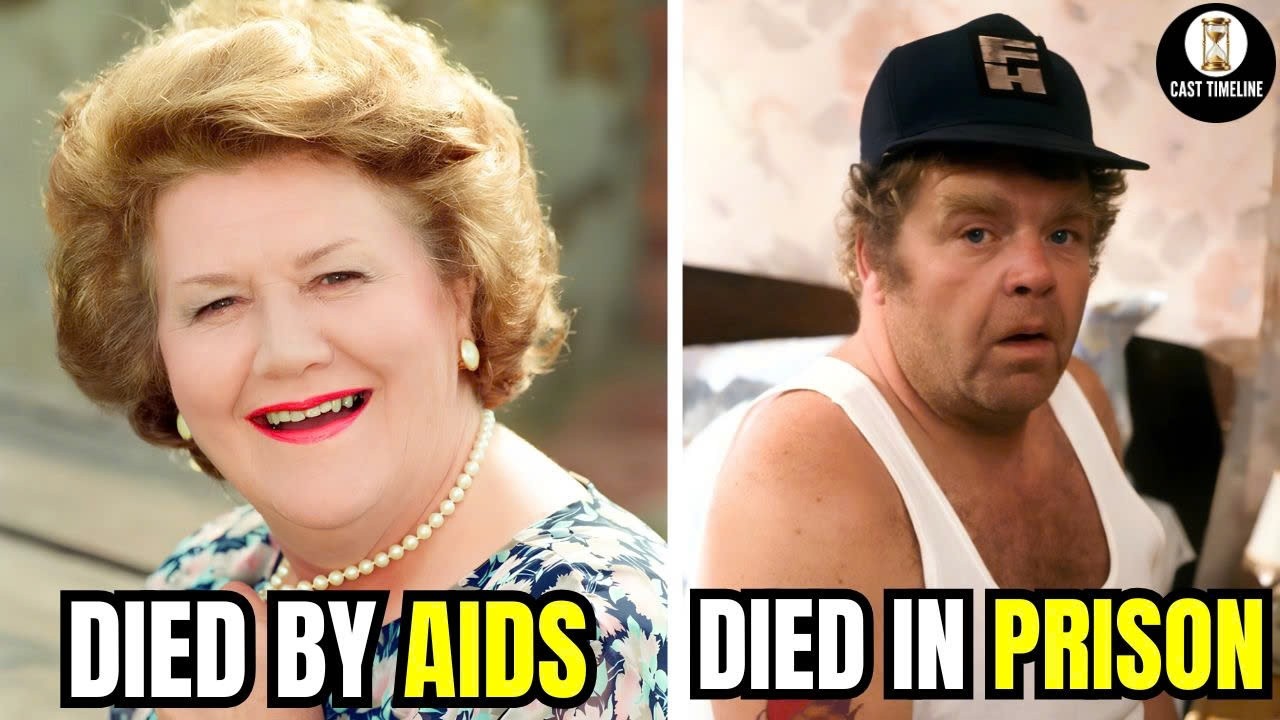
Yet the brilliance of the program came from more than its central character.
Hyacinth was surrounded by people whose reactions made her behavior even funnier. Her husband, Richard, had mastered the art of surviving embarrassment. Her neighbor Elizabeth lived in fear of breaking another piece of Hyacinth’s china. Her sisters represented everything she wanted either to celebrate or conceal. And almost every stranger who encountered her became an unwilling participant in another social disaster.
The series ran from 1990 to 1995, producing 44 regular episodes and several specials. Created and written by Roy Clarke, it became a major international success and remained popular through decades of repeats.
But more than three decades after its original run, the lives of the performers who created this extraordinary comedy have changed dramatically.
Some became legends of British television. Others built distinguished careers in theater, film, and radio. Several found success in completely different roles, while many have since died.
The losses include the show’s leading actress, Patricia Routledge, whose death in 2025 marked the end of an extraordinary chapter in British entertainment.
Looking back in 2026 reveals not only the remarkable careers of the performers but also the enduring appeal of a comedy built around the universal fear of social embarrassment.
Clive Swift portrayed Richard Bucket, Hyacinth’s endlessly patient husband and perhaps the most sympathetic character in the entire series.
Born on February 9, 1936, in Liverpool, England, Swift was fifty-four when Keeping Up Appearances premiered.
Richard was a man who wanted very little from life beyond peace, comfort, and the occasional opportunity to relax without being given another impossible assignment.
Unfortunately, he was married to Hyacinth.
His days were filled with unwanted social visits, elaborate dinner preparations, carefully planned excursions, and instructions that often made absolutely no sense.
He was expected to maintain the appearance of a distinguished household while quietly managing the chaos created by his wife’s ambitions.
Swift made Richard’s exhaustion hilarious without turning him into a bitter or unpleasant character.
His comedy often depended on silence.
A weary glance, a nervous hesitation, or a slight change in facial expression could communicate more than a lengthy speech.
Richard knew that correcting Hyacinth was usually pointless.
He also understood that resisting her plans often produced more trouble than simply cooperating.
That resignation became one of the show’s funniest recurring elements.
But Swift was far more than a sitcom performer.
Before joining Keeping Up Appearances, he had developed a distinguished career in classical theater.
He worked with the Royal Shakespeare Company and appeared in numerous stage productions.
His film credits included Excalibur and A Passage to India.
He also appeared in Doctor Who and other British television dramas.
His theatrical experience gave him exceptional control over timing, movement, and understated emotion.
Richard Bucket was funny because Swift understood exactly how much frustration to reveal and how much to conceal.
After the sitcom ended, he continued working in television, theater, and radio.
He remained closely associated with Richard, even though his career included a wide variety of serious dramatic roles.
Swift died on February 1, 2019, at the age of eighty-two.
His performance remains one of British television’s finest examples of the long-suffering sitcom husband.
Josephine Tewson played Elizabeth Warden, Hyacinth’s nervous neighbor and one of the show’s most beloved supporting characters.
Born on February 26, 1931, in Hampstead, London, Tewson was fifty-nine when the series premiered.
Elizabeth was kind, polite, and almost painfully anxious whenever Hyacinth invited her for coffee.
She knew that an ordinary visit could become a disaster.
Hyacinth’s carefully arranged cups, expensive-looking ornaments, and obsessive concern with appearances made Elizabeth terrified of making a mistake.
The result was some of the show’s most memorable physical comedy.
Elizabeth might approach a coffee cup with extraordinary caution, only to spill it because she was trying so desperately not to.
Tewson’s performance was a masterclass in comic restraint.
Her nervous expressions, hesitant movements, and perfectly timed reactions created enormous laughter.
She rarely needed to exaggerate.
The audience understood her fear immediately.
Before Keeping Up Appearances, Tewson had enjoyed a long career in British comedy.
She worked with Ronnie Barker and Ronnie Corbett and appeared in numerous television programs, including Shelley.
She also maintained an extensive theatrical career.
Later, she joined Last of the Summer Wine, another long-running British comedy created by Roy Clarke.
Her professional life extended across more than six decades.
Tewson died on August 18, 2022, at the age of ninety-one.
Elizabeth remains one of the most recognizable characters in the series because Tewson made ordinary social anxiety irresistibly funny.
Mary Millar portrayed Rose, Hyacinth’s romantically adventurous younger sister, from the second series onward.
Born on July 26, 1936, in Doncaster, England, Millar was fifty-five when she joined the sitcom in 1991.
Rose was everything Hyacinth wished her family would not be.
She was emotional, flirtatious, impulsive, and constantly pursuing romantic excitement.
Her clothing, behavior, and relationships frequently threatened Hyacinth’s carefully maintained image of respectability.
But Rose was also lively and affectionate.
She embraced life with an enthusiasm that contrasted sharply with her older sister’s obsession with social judgment.
Millar brought theatrical energy to the character.
Her expressive reactions and comic confidence made Rose a source of constant amusement.
Before joining the sitcom, Millar had already established herself as a successful stage performer.
She appeared in numerous musicals and West End productions.
One of her most important theatrical achievements was portraying Madame Giry in the original London production of The Phantom of the Opera.
Her musical background gave her a strong understanding of timing and performance.
Rose’s exaggerated emotions were never random.
Millar used them to create a character who was both ridiculous and strangely lovable.
She continued working despite serious illness in her later years.
Millar died on November 10, 1998, at the age of sixty-two, following ovarian cancer.
Her death came only a few years after Keeping Up Appearances ended.
For many fans, her portrayal remains the definitive version of Rose.
Nigel Davenport appeared as the Commodore, one of the distinguished gentlemen whose status immediately attracted Hyacinth’s attention.
Born on May 23, 1928, in Cambridgeshire, England, Davenport was in his sixties when he appeared in the series.
The Commodore possessed the polished appearance and commanding manner that Hyacinth admired.
His presence gave her another opportunity to demonstrate her supposed familiarity with respectable society.
Davenport was particularly effective because he played the character with complete seriousness.
The humor came from Hyacinth’s reaction to him.
She viewed people with impressive titles as opportunities to improve her social standing.
Davenport’s distinguished appearance made that obsession even funnier.
His career extended far beyond the sitcom.
He appeared in A Man for All Seasons, A High Wind in Jamaica, and Chariots of Fire.
He was also associated with important developments in British theater, including the English Stage Company at the Royal Court.
He later served as president of the actors’ union Equity.
Davenport died on October 25, 2013, at the age of eighty-five.
His brief appearance in Keeping Up Appearances was only a small part of a distinguished career in British entertainment.
Helen Christie portrayed the Registrar, a composed official whose professional manner contrasted with the social confusion surrounding Hyacinth.
Born in 1914 in British India, Christie was in her seventies when she appeared in the sitcom.
Her character was calm, formal, and determined to carry out her duties.
That seriousness made her a perfect participant in the show’s comedy.
Hyacinth frequently turned ordinary administrative situations into elaborate social performances.
The people around her were often left trying to maintain their dignity.
Christie understood how to make a restrained reaction funny.
She had enjoyed a long career in British theater, film, and television.
Her credits included The Beggar’s Opera, Rasputin: The Mad Monk, and The Queen of Spades.
She worked across several decades, often portraying authoritative or distinguished women.
Christie died in 1995, at approximately eighty years old.
Her performance as the Registrar demonstrated how even a small role could contribute to the show’s comic world.
George Webb played Daddy, Hyacinth’s elderly father and one of the most unpredictable characters in the series.
Born on March 6, 1912, in London, Webb was seventy-eight when Keeping Up Appearances premiered.
Daddy was elderly, mischievous, and frequently determined to escape the supervision of his family.
His adventures often involved romantic pursuits or unexpected disappearances.
These situations were particularly embarrassing for Hyacinth.
She wanted everyone to believe that her family was dignified and respectable.
Daddy seemed completely uninterested in cooperating.
Webb portrayed the character with warmth and innocence.
Daddy’s behavior was troublesome, but it rarely seemed malicious.
He simply followed his own impulses.
His unpredictable adventures provided a continuing source of comic disruption.
Webb had worked in British television before joining the sitcom.
His credits included The Wednesday Play and The Troubleshooters.
But Daddy became his most recognizable role.
Webb died on December 30, 1998, at the age of eighty-six.
His performance helped make Hyacinth’s family life a constant threat to her carefully constructed social image.
Shirley Stelfox portrayed Rose during the first series.
Born on April 11, 1941, in Dukinfield, Cheshire, Stelfox was forty-nine when Keeping Up Appearances premiered.
Her version of Rose was energetic, outspoken, and unapologetically flirtatious.
She established the character as one of Hyacinth’s greatest sources of embarrassment.
Rose had little interest in maintaining the kind of respectability her sister valued.
She preferred romance, excitement, and personal freedom.
Stelfox brought a sharper, earthier comic style to the character.
Although she played Rose for only one series, her performance helped define the role.
After leaving Keeping Up Appearances, she continued building a substantial television career.
She appeared in EastEnders, Brookside, and other British dramas.
Her most famous later role was Edna Birch in Emmerdale.
The character became a familiar presence to millions of viewers.
Stelfox died on December 7, 2015, at the age of seventy-four, following cancer.
Her career demonstrated the versatility of a performer equally comfortable in comedy and serious drama.
Peter Cellier played Major Wilton-Smythe, an elderly gentleman whose social standing made him particularly attractive to Hyacinth.
Born on July 12, 1928, in Hendon, London, Cellier was in his sixties when he appeared in the series.
The Major possessed an air of old-fashioned authority.
He seemed to belong to the respectable social world Hyacinth desperately wanted to enter.
But his behavior was not always as respectable as she imagined.
Cellier made the character amusing through understated delivery and polished manners.
His performance relied upon the contrast between outward dignity and less dignified intentions.
Cellier had enjoyed a distinguished career in theater, film, and television.
His credits included Yes Minister, A Room with a View, and The Remains of the Day.
He was particularly effective at portraying establishment figures.
His refined manner made him an ideal choice for Major Wilton-Smythe.
Cellier died on September 18, 2019, at the age of ninety-one.
His appearance in Keeping Up Appearances remains a memorable example of the show’s ability to find comedy in exaggerated respectability.
Charmian May portrayed Councillor Mrs. Nugent, a socially prominent acquaintance whom Hyacinth was eager to impress.
Born on June 16, 1937, in Hampshire, England, May was fifty-three when the sitcom premiered.
Mrs. Nugent represented the kind of social recognition Hyacinth constantly pursued.
Her approval seemed enormously important.
Hyacinth’s behavior around her became increasingly elaborate as she attempted to demonstrate refinement and good taste.
May played the character with polished authority.
Her dignified manner made Hyacinth’s desperate attempts at social advancement appear even more ridiculous.
May had enjoyed a varied career in theater, film, and television.
Her credits included The Good Life, The Upper Hand, and Bridget Jones’s Diary.
She also appeared in numerous stage productions.
May died on October 24, 2002, at the age of sixty-five, following cancer.
Her portrayal of Mrs. Nugent remains a reminder that Hyacinth’s comedy depended upon the respectable people she was determined to impress.
Leo Dolan portrayed Michael the Postman during the first series.
Born in 1943 in London, Dolan was in his late forties when the sitcom premiered.
The postman was one of the ordinary neighborhood figures who frequently became trapped in Hyacinth’s elaborate conversations.
Delivering the mail should have been a simple task.
But encountering Hyacinth could transform an ordinary visit into an uncomfortable social obligation.
Dolan brought an easy, working-class naturalness to the character.
His performance helped establish the contrast between Hyacinth’s pretensions and the everyday world around her.
Dolan had worked extensively in British film and television.
His credits included The Long Good Friday and The Bill.
He was particularly effective at portraying ordinary men caught in complicated situations.
Dolan died in 2003, at approximately sixty years old.
His brief contribution helped establish one of the sitcom’s recurring comic situations.
Anna Dawson portrayed Violet, Hyacinth’s wealthy sister.
Born on July 27, 1937, in Bolton, Lancashire, Dawson was in her late fifties when Violet became a regular on-screen presence.
For years, Violet had been one of Hyacinth’s favorite subjects of conversation.
Hyacinth constantly reminded acquaintances that her sister possessed a Mercedes, a sauna, and enough space for a pony.
Violet represented the family connection that Hyacinth believed could elevate her social standing.
But when Violet finally appeared, the audience discovered that wealth did not guarantee happiness.
Her marriage was complicated, her emotions were frequently unsettled, and her domestic life was far less perfect than Hyacinth’s descriptions suggested.
Dawson played Violet with a mixture of sophistication, vulnerability, and theatrical energy.
The character’s emotional difficulties created an amusing contrast with Hyacinth’s idealized image of her.
Before joining the sitcom, Dawson had worked in West End musicals and television comedy.
Her credits included The Benny Hill Show and The New Statesman.
Her performance as Violet demonstrated how effectively the series could undermine Hyacinth’s social assumptions.
Dawson died in 2026 at the age of eighty-eight.
Her death added another loss to the show’s extended cast.
Trevor Bannister appeared as a salesman, bringing the familiar comic style of a veteran British sitcom performer to a small role.
Born on August 14, 1934, in Durrington, Wiltshire, Bannister was around sixty when he appeared in Keeping Up Appearances.
His character was polite, professional, and accustomed to dealing with demanding customers.
That experience was particularly useful when encountering Hyacinth.
Bannister had already achieved considerable fame through Are You Being Served?
He portrayed Mr. Lucas, the cheeky young salesman whose flirtatious behavior and sarcastic comments became a major part of the department-store comedy.
The role established him as one of Britain’s most recognizable sitcom actors.
After leaving Are You Being Served?, he continued working in television and theater.
He later appeared in Last of the Summer Wine.
Bannister died on April 14, 2011, at the age of seventy-six, following a heart attack.
His appearance in Keeping Up Appearances offered viewers another opportunity to enjoy his familiar comic timing.
Michael Bilton portrayed His Lordship, an aristocratic figure whose presence naturally excited Hyacinth.
Born on December 14, 1919, in Cottingham, England, Bilton was around seventy when the series began.
His Lordship represented the social world Hyacinth admired most.
His title and dignified appearance were enough to convince her that an encounter with him was an important event.
Bilton’s performance was restrained and understated.
He did not need exaggerated dialogue to make the scene funny.
Hyacinth supplied the exaggeration herself.
Bilton had enjoyed a long career in British film and television.
His credits included The Prisoner, The Avengers, To the Manor Born, and Waiting for God.
He became particularly recognizable for portraying elderly gentlemen and authority figures.
Bilton died on November 5, 1993, at the age of seventy-three.
His performance remains one of the show’s many memorable encounters between Hyacinth and the supposedly distinguished people she admired.
Jean Anderson played Mrs. Fortescue, an elegant woman whose social position made her particularly important to Hyacinth.
Born on December 12, 1907, in Eastbourne, England, Anderson was in her eighties when she appeared in the series.
Mrs. Fortescue possessed the calm confidence of someone accustomed to respect.
Hyacinth responded with excessive enthusiasm.
Her attempts to impress Mrs. Fortescue became increasingly desperate, creating the familiar comedy of social ambition.
Anderson was already a highly respected character actress.
Her credits included The Railway Children, The Lady Vanishes, and Tenko.
She frequently portrayed formidable women with strong personalities.
Her clear delivery and dignified manner made her especially effective in roles involving authority.
Anderson died on April 1, 2001, at the age of ninety-three.
Her appearance in Keeping Up Appearances was brief, but her distinguished presence helped make Hyacinth’s behavior even funnier.
John Arnatt portrayed Sir Edward, another gentleman whose title immediately attracted Hyacinth’s attention.
Born on May 9, 1917, in Petrograd, Russia, Arnatt was in his seventies when he appeared in the sitcom.
Sir Edward possessed the polished manners and confident authority that Hyacinth associated with social importance.
His presence offered another opportunity for her to demonstrate her supposed refinement.
Arnatt had spent decades working in British theater, film, and television.
His credits included Doctor Who, Lovejoy, and House of Cards.
He frequently portrayed policemen, doctors, lawyers, and officials.
His commanding voice made him particularly effective in authoritative roles.
Arnatt died on December 21, 1999, at the age of eighty-two.
His appearance as Sir Edward was another example of how the sitcom used distinguished guest performers to expose Hyacinth’s obsession with status.
Gretchen Franklin portrayed Daddy’s fiancée, a woman whose unexpected romantic intentions created enormous embarrassment for Hyacinth.
Born on July 7, 1911, in London, Franklin was in her eighties when she appeared in the series.
Her character was determined, cheerful, and apparently unconcerned about Hyacinth’s objections.
The situation was especially uncomfortable because Hyacinth preferred to imagine her elderly father as a dignified family figure.
His romantic adventures constantly threatened that image.
Franklin brought warmth and mischievous humor to the role.
She had already enjoyed a long career in theater, variety entertainment, film, and television.
She later became especially famous as Ethel Skinner in EastEnders.
The character made her one of the soap opera’s most beloved performers.
Franklin died on July 11, 2005, at the age of ninety-four.
Her brief appearance in Keeping Up Appearances remains a delightful example of the show’s ability to turn family embarrassment into comedy.
John Barrard portrayed a homeowner whose ordinary life was unexpectedly disrupted by Hyacinth.
Born on September 12, 1924, in Cape Town, South Africa, Barrard was in his late sixties when he appeared in the sitcom.
His character was an ordinary man who suddenly found himself confronted by someone treating a simple domestic encounter as a major social occasion.
Barrard played the situation with natural confusion.
The comedy depended upon the contrast between his ordinary behavior and Hyacinth’s elaborate expectations.
Barrard was a familiar British character actor.
His credits included The Avengers, Doctor Who, One Foot in the Grave, Minder, and The Bill.
He also appeared in Santa Claus: The Movie.
His career demonstrated the importance of performers capable of making small roles convincing.
Barrard died on October 13, 2013, at the age of eighty-nine.
His contribution to Keeping Up Appearances reflected the show’s talent for turning encounters with ordinary strangers into memorable comic scenes.
Gerald Sim portrayed a vicar in the series.
Born on June 4, 1925, in Liverpool, England, Sim was sixty-five when Keeping Up Appearances premiered.
The vicar was polite, respectable, and understandably cautious around Hyacinth.
His religious position made him another person she was eager to impress.
But his attempts to remain courteous often placed him in uncomfortable situations.
Sim portrayed the character with quiet restraint.
His expressions suggested a man who had learned that confronting Hyacinth directly was rarely productive.
Sim had worked extensively in British film and television.
His credits included The Avengers, To the Manor Born, A Bridge Too Far, and Gandhi.
He frequently portrayed doctors, clergymen, and officials.
Sim died on December 11, 2014, at the age of eighty-nine.
His appearance in Keeping Up Appearances was one of many examples of his dependable character acting.
Judy Cornwell played Daisy, Hyacinth’s affectionate and untidy sister.
Born on February 22, 1940, in Hammersmith, London, Cornwell was fifty when the sitcom premiered.
Daisy was one of the show’s most lovable characters.
She lived with her husband, Onslow, in a household that represented everything Hyacinth found socially embarrassing.
Their home was cluttered, their lifestyle was relaxed, and their priorities had very little to do with respectability.
But Daisy was happy to be herself.
She loved Onslow despite his apparent lack of ambition.
She frequently attempted to persuade him to show more romantic affection.
Her enthusiasm was usually met with his familiar reluctance.
Cornwell made Daisy warm, funny, and emotionally genuine.
Unlike Hyacinth, Daisy did not spend her life worrying about what strangers thought.
Her happiness came from affection and familiarity rather than social recognition.
Before the sitcom, Cornwell had appeared in numerous British television and film productions.
Her credits included Santa Claus: The Movie.
She also worked extensively in theater.
Later, she portrayed Miss Marple on stage, demonstrating her ability to move beyond the comic personality of Daisy.
As of October 2026, Judy Cornwell is eighty-six years old.
She has largely stepped away from regular public performances.
Daisy remains one of the show’s most beloved characters because she represents an alternative to Hyacinth’s endless pursuit of status.
Marion Barron portrayed the vicar’s wife, a woman who understood Hyacinth’s personality better than many of the people around her.
Born on March 28, 1958, in what was then British Nigeria, Barron grew up in Scotland.
She was thirty-two when Keeping Up Appearances premiered.
The vicar’s wife was polite but observant.
She understood that Hyacinth’s apparent generosity often concealed another attempt to gain social recognition.
Her reactions frequently suggested that she knew exactly what was happening.
Barron played the character with subtle humor.
A raised eyebrow or a carefully timed glance could communicate enormous skepticism.
She rarely needed to confront Hyacinth directly.
Her expressions were enough.
Barron’s other television credits included Don’t Wait Up, The Bill, Screen Two, and We Hunt Together.
Her career demonstrated an ability to portray intelligent, understated characters.
As of October 2026, Marion Barron is sixty-eight years old.
Her performance remains a reminder that the sitcom’s comedy often depended upon what characters chose not to say.
David Griffin played Emmet Hawksworth, Elizabeth’s brother and one of Hyacinth’s most reluctant acquaintances.
Born on July 19, 1943, in Richmond, Surrey, Griffin was in his late forties when he joined the series.
Emmet was cultured, musically knowledgeable, and increasingly terrified of Hyacinth’s singing ambitions.
He worked in musical theater and therefore represented exactly the kind of artistic connection Hyacinth wanted.
Unfortunately for him, she believed that he might help develop her singing career.
Whenever Hyacinth approached, Emmet seemed to anticipate another unwanted performance.
His nervous expressions became one of the show’s funniest recurring jokes.
Griffin played the character with extraordinary restraint.
He could communicate panic while remaining outwardly polite.
His attempts to avoid Hyacinth often made his situation worse.
Before joining the sitcom, Griffin had enjoyed a successful career in theater and television.
He was especially recognizable for his role in Hi-de-Hi!
He also appeared in numerous stage productions.
As of October 2026, Griffin is eighty-three years old.
His portrayal of Emmet remains one of the finest examples of understated comic panic in British television.
Jeremy Gittins played Michael, the vicar who frequently found himself drawn into Hyacinth’s social plans.
Born on January 30, 1956, in Manchester, England, Gittins was thirty-four when the sitcom premiered.
Michael was polite, patient, and generally determined to maintain good relations with his parishioners.
Unfortunately, Hyacinth interpreted that politeness as encouragement.
She repeatedly attempted to involve him in elaborate social activities.
The vicar often found himself unable to escape without appearing rude.
Gittins made the character’s discomfort extremely funny.
His calm expressions frequently concealed obvious frustration.
He understood that Hyacinth’s enthusiasm could transform even a routine church-related activity into an exhausting ordeal.
Gittins had worked in theater and television before joining the series.
His other credits included Doctor Who and EastEnders.
As of October 2026, he is seventy years old.
His portrayal of Michael remains one of the show’s most recognizable supporting performances.
David Janson portrayed Michael the Postman in later episodes.
Born on March 30, 1950, in London, Janson was in his early forties when he joined the series.
The postman was another ordinary neighborhood figure who regularly encountered Hyacinth’s unusual social behavior.
He wanted to deliver the mail and continue his route.
Hyacinth often had other plans.
Janson brought a relaxed, believable quality to the character.
His performance emphasized the contrast between everyday working life and Hyacinth’s exaggerated sense of importance.
Janson had been involved in entertainment since childhood.
He appeared in the Beatles film A Hard Day’s Night and later worked in television productions including Get Some In! and Minder.
He continued acting across several decades.
As of October 2026, David Janson is seventy-six years old.
His portrayal of the postman helped maintain one of the show’s most familiar neighborhood relationships.
At the center of the entire series stood Patricia Routledge, the extraordinary actress who transformed Hyacinth Bucket into a British comedy legend.
Born on February 17, 1929, in Birkenhead, England, Routledge was sixty-one when Keeping Up Appearances premiered.
By that time, she had already enjoyed a distinguished career in theater, musical performance, and television.
She was not an unknown performer suddenly discovering success.
She was an experienced actress with exceptional comic and dramatic abilities.
Her stage achievements included a Tony Award for her performance in the Broadway musical Darling of the Day.
She also received an Olivier Award for her work in Candide.
Her career included important theatrical productions and performances with leading British companies.
But Hyacinth Bucket introduced her to an international audience on an entirely different scale.
Hyacinth was ambitious, demanding, snobbish, and frequently exhausting.
She was obsessed with appearing socially superior.
She corrected the pronunciation of her surname.
She spoke in an exaggerated telephone voice.
She constantly reminded acquaintances of Violet’s wealth.
She organized candlelight suppers and elaborate gatherings designed to impress people who often had no desire to attend.
In less capable hands, the character might have become unbearable.
Routledge made her irresistible.
She understood that Hyacinth was ridiculous but not entirely without humanity.
Beneath the pretension was a woman who desperately wanted recognition.
She feared embarrassment.
She worried about being judged.
And she believed that the appearance of success could protect her from social rejection.
Those anxieties made Hyacinth more complicated than a simple snob.
Routledge’s performance combined extraordinary vocal control with precise physical comedy.
Her telephone voice became instantly recognizable.
Her expressions could shift from confidence to panic in a fraction of a second.
Her movements reflected a woman constantly attempting to control her surroundings.
When things went wrong, the contrast between her intended dignity and the resulting chaos created enormous laughter.
One of the show’s greatest achievements was its ability to make audiences both laugh at Hyacinth and occasionally sympathize with her.
She could be selfish and demanding.
But she was also vulnerable to embarrassment and disappointment.
Her attempts to impress others frequently ended in humiliation.
Routledge allowed viewers to recognize the insecurity beneath the character’s elaborate manners.
After Keeping Up Appearances, she continued working in television and theater.
She became especially recognizable for portraying the amateur detective in Hetty Wainthropp Investigates.
The role demonstrated her ability to create a completely different leading character.
She also appeared in Alan Bennett’s Talking Heads, revealing the emotional depth of her dramatic work.
Her performances across comedy, musical theater, and drama established her as one of Britain’s most versatile actresses.
Routledge received numerous honors during her career.
She was appointed a Dame Commander of the Order of the British Empire in recognition of her services to theater and charity.
Despite her enormous popularity, she remained closely associated with the discipline and professionalism of classical performance.
She never needed celebrity spectacle to maintain her reputation.
Her work spoke for itself.
Patricia Routledge died on October 3, 2025, at the age of ninety-six.
Her death prompted widespread tributes from admirers of British television and theater.
For many viewers, it marked the loss of the woman whose voice and expressions had defined one of the country’s most beloved sitcoms.
Yet Hyacinth Bucket remains as vivid as ever.
Her telephone calls, candlelight suppers, and attempts at social advancement continue to entertain audiences around the world.
Geoffrey Hughes portrayed Onslow, Daisy’s husband and perhaps the character least interested in Hyacinth’s idea of respectability.
Born on February 2, 1944, in Wallasey, England, Hughes was forty-six when the series premiered.
Onslow was relaxed, untidy, and completely unconcerned about social status.
He frequently appeared wearing a vest, sitting in front of the television, and enjoying the simple pleasures of life.
His car was unreliable.
His home was cluttered.
His behavior was everything Hyacinth considered embarrassing.
But Onslow possessed a quiet confidence that made him one of the show’s most appealing characters.
He did not need expensive possessions or important acquaintances to feel comfortable with himself.
He understood Hyacinth’s pretensions and frequently responded with amused indifference.
Hughes gave Onslow warmth and intelligence beneath his rough appearance.
The character was not simply lazy or foolish.
He often understood people more clearly than Hyacinth did.
His relaxed attitude allowed him to observe the social chaos without becoming emotionally involved.
Before joining Keeping Up Appearances, Hughes had already become familiar to British audiences through Coronation Street.
He portrayed Eddie Yeats, a popular character whose humor and charm made him a favorite among viewers.
He later appeared in Heartbeat and The Royle Family.
His performances frequently involved working-class characters with distinctive personalities.
Hughes had a talent for making rough-edged men sympathetic.
He understood how to reveal warmth beneath apparently careless behavior.
Hughes died on July 27, 2012, at the age of sixty-eight, following prostate cancer.
His portrayal of Onslow remains one of the sitcom’s greatest achievements.
The character provided the perfect contrast to Hyacinth.
She spent her life trying to impress others.
He was perfectly content without their approval.
That contrast captured the central joke of Keeping Up Appearances.
The series was not simply about a woman with an exaggerated sense of social importance.
It was about the difference between appearance and reality.
Hyacinth believed that respectability depended upon possessions, titles, manners, and influential acquaintances.
But the people she considered socially inferior were often more relaxed, affectionate, and emotionally secure than she was.
Daisy and Onslow might have lived in a cluttered house, but their relationship contained genuine affection.
Richard might have endured endless embarrassment, but he remained loyal to his wife.
Elizabeth might have been terrified of Hyacinth’s coffee cups, but she continued visiting because she was fundamentally kind.
Emmet might have feared another unwanted singing performance, but he remained courteous.
The comedy came from the collision between Hyacinth’s elaborate social ambitions and the ordinary human realities surrounding her.
Roy Clarke’s writing made that conflict endlessly renewable.
A simple telephone call could become a performance.
An ordinary visit could become a test of social dignity.
A church event could become an opportunity for self-promotion.
And a family gathering could threaten to expose everything Hyacinth wanted to conceal.
The characters’ reactions were essential.
Clive Swift’s weary expressions gave Richard emotional credibility.
Josephine Tewson’s nervous movements made Elizabeth’s anxiety hilarious.
David Griffin’s restrained panic turned Emmet into one of the show’s most memorable characters.
Judy Cornwell and Geoffrey Hughes created a household that offered an alternative to Hyacinth’s obsession with status.
Mary Millar and Shirley Stelfox made Rose an unpredictable source of embarrassment.
Anna Dawson gave Violet a life far more complicated than Hyacinth’s boasts suggested.
George Webb made Daddy’s adventures a continuing threat to family respectability.
Together, these performers created a comic world that felt both exaggerated and recognizable.
The show also depended upon a particularly British understanding of class and social behavior.
Hyacinth’s obsession with titles, formal invitations, and respectable acquaintances reflected anxieties about social position.
She believed that association with wealthy or important people could elevate her own standing.
But the program repeatedly exposed the absurdity of that belief.
The people she admired were often indifferent to her efforts.
Some were confused by her behavior.
Others were simply trying to escape.
The more desperately she attempted to impress them, the more embarrassing the situation became.
That pattern created comedy through repetition, but the performances kept it entertaining.
Audiences knew that another candlelight supper would probably end badly.
They knew that Richard would be forced into another uncomfortable situation.
They knew that Elizabeth might spill her coffee.
And they knew that Hyacinth would somehow remain convinced that her social standing was improving.
The familiarity became part of the pleasure.
Like many successful sitcoms, Keeping Up Appearances created characters whose reactions viewers could anticipate.
The humor came from watching those familiar personalities encounter new situations.
The show’s international success demonstrated that its themes were not limited to Britain.
Social ambition, embarrassment, family tension, and the desire to impress others are recognizable experiences in many cultures.
Hyacinth’s exaggerated behavior allowed audiences to laugh at anxieties that might otherwise feel uncomfortable.
Most people have encountered someone who cares too much about appearances.
Many have experienced the embarrassment of being trapped in an unwanted conversation.
Others recognize Richard’s exhausted patience or Elizabeth’s nervous politeness.
Those familiar emotions helped the sitcom travel far beyond its original audience.
By 2026, Keeping Up Appearances had become a lasting part of British television history.
Its stars represented several generations of performers.
Some, such as Jean Anderson and Burt Mustin’s contemporaries in British entertainment, belonged to an era when theater and radio dominated professional acting.
Others began their careers during the expansion of television in the 1950s and 1960s.
The younger supporting performers developed careers during the modern age of television drama.
Their professional histories reflected the changing entertainment industry.
Nigel Davenport represented classical stage and film acting.
Trevor Bannister brought experience from one of Britain’s most famous workplace sitcoms.
Gretchen Franklin became beloved through soap opera.
Shirley Stelfox developed a major later career in Emmerdale.
Geoffrey Hughes moved between comedy and drama with remarkable ease.
Patricia Routledge combined musical theater, classical performance, television comedy, and serious dramatic work.
Their achievements extended far beyond Keeping Up Appearances.
But the sitcom brought them together in a way that remains especially memorable.
The passage of time has given the series a new emotional dimension.
Many of its performers have died.
Clive Swift, Josephine Tewson, Mary Millar, Nigel Davenport, George Webb, Shirley Stelfox, Peter Cellier, Charmian May, Trevor Bannister, Michael Bilton, Jean Anderson, John Arnatt, Gretchen Franklin, John Barrard, Gerald Sim, and Geoffrey Hughes are among the familiar faces no longer with us.
Patricia Routledge’s death in 2025 was especially significant because Hyacinth had been the center of the show’s identity.
But the surviving performers also carry the program’s legacy.
Judy Cornwell, Marion Barron, David Griffin, Jeremy Gittins, and David Janson remain associated with characters who continue to entertain viewers.
Their careers and lives demonstrate how a successful sitcom can become part of an actor’s public identity for decades.
The characters remain fixed in time even as the performers grow older.
Richard is still standing beside Hyacinth, hoping that the next social occasion will not end in disaster.
Elizabeth is still approaching a coffee cup with visible apprehension.
Emmet is still searching for a way to avoid another musical performance.
The vicar is still attempting to remain polite.
Daisy is still trying to persuade Onslow to show some romantic enthusiasm.
And Onslow is still watching television, apparently unconcerned about the chaos unfolding around him.
Those images have become part of British comedy history.
They preserve the work of actors whose timing, expressions, and relationships made the series successful.
The humor remains recognizable because the characters’ emotions remain recognizable.
People still worry about social embarrassment.
They still attempt to impress others.
They still exaggerate their achievements.
And they still find themselves trapped in uncomfortable situations because politeness prevents them from leaving.
Hyacinth Bucket took those ordinary anxieties and transformed them into comic extravagance.
Her elaborate manners were a defense against insecurity.
Her obsession with titles reflected a desire for recognition.
Her determination to organize perfect social occasions concealed an inability to accept that ordinary life was often messy and unpredictable.
The surrounding characters exposed those contradictions.
Richard wanted peace.
Elizabeth wanted to avoid embarrassment.
Emmet wanted freedom from unwanted singing.
Daisy wanted affection.
Onslow wanted comfort.
Hyacinth wanted status.
That simple collection of conflicting desires created an extraordinary amount of comedy.
The series also offered a gentle reminder that social appearances can be misleading.
Hyacinth’s supposedly embarrassing relatives often possessed qualities she failed to appreciate.
Onslow’s indifference to status gave him a freedom she lacked.
Daisy’s affection made her emotionally generous.
Richard’s patience demonstrated loyalty.
Elizabeth’s nervousness reflected genuine kindness.
Even Rose’s chaotic romantic life suggested a willingness to embrace experiences rather than hide behind respectability.
Hyacinth frequently overlooked those qualities because she was too concerned about what other people might think.
That irony gave the sitcom more depth than its exaggerated situations initially suggested.
The comedy was broad, but its observations about human behavior were often sharp.
And the actors understood those observations.
They did not simply deliver jokes.
They created personalities whose reactions made the jokes believable.
That is why the series continues to attract viewers decades after its final episode.
The original cast may no longer be together, but their performances remain preserved.
The familiar suburban streets are still there.
The Bucket household remains immaculate.
The telephone still rings.
And somewhere in that fictional world, Hyacinth is preparing another invitation that everyone else desperately hopes to avoid.
For longtime viewers, revisiting Keeping Up Appearances can now bring both laughter and sadness.
The laughter comes from remembering the extraordinary comic talent of the performers.
The sadness comes from knowing how many of them have died.
But the program itself remains a celebration of their work.
Every nervous glance from Richard, every spilled cup from Elizabeth, every exasperated expression from Emmet, and every amused reaction from Onslow reflects the skill of actors who understood their characters completely.
Patricia Routledge’s Hyacinth stands at the center of that achievement.
Few television performers have created a character so immediately recognizable through voice, posture, and personality.
Her insistence that Bucket be pronounced “Bouquet” became more than a recurring joke.
It represented the entire comic world of the series.
Hyacinth wanted reality to conform to her preferred image.
Reality consistently refused.
And audiences laughed because they understood the impossibility of her ambition.
More than thirty years after the final regular episode, Keeping Up Appearances remains one of Britain’s most beloved sitcoms.
Its cast members followed different paths, achieved different forms of success, and experienced the inevitable challenges of growing older.
Many are gone.
Others have retired from public life.
But the characters they created remain part of television history.
The doors of the Bucket household may have closed long ago, but the comedy continues.
Richard is still exhausted.
Elizabeth is still nervous.
Onslow is still unimpressed.
And Hyacinth Bucket is still determined to convince the world that she belongs among the finest people in society.
Nearly four decades after the character first appeared, that determination remains as gloriously ridiculous as ever.
The performers may have taken their final bows, but their laughter-filled legacy lives on in every episode.
And somewhere, in the timeless world of British television comedy, Hyacinth is still preparing for another candlelight supper.


