Nearly four decades after its release, Dirty Dancing remains one of the most beloved romantic dramas in Hollywood history. The unforgettable music, passionate performances, emotional storytelling, and spectacular final dance have helped the film maintain an extraordinary connection with audiences across generations.
Released in 1987 and set during the summer of 1963, the film transported viewers to Kellerman’s, a fictional vacation resort in New York’s Catskill Mountains. There, a sheltered teenager named Frances “Baby” Houseman discovered a world of romance, independence, class divisions, and personal responsibility.
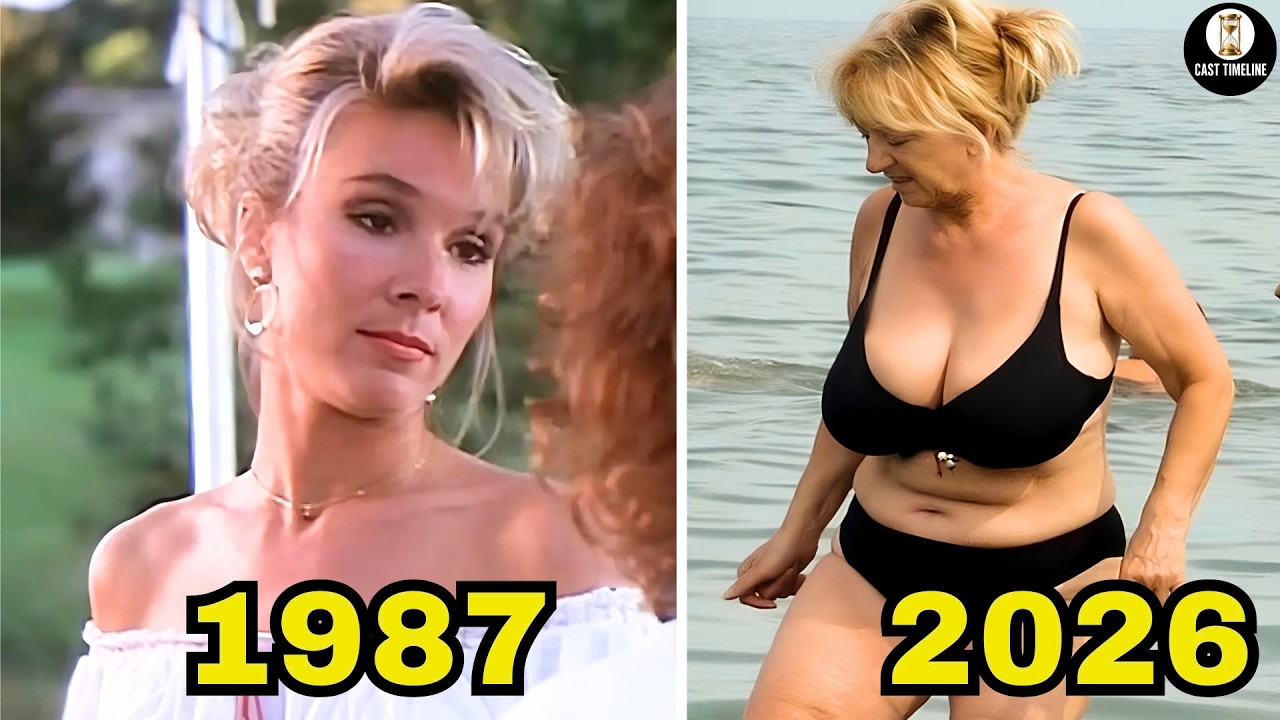
At the center of the story were Jennifer Grey and Patrick Swayze, whose performances as Baby and Johnny Castle created one of cinema’s most memorable romantic partnerships.
But the film’s success depended on far more than its two leading stars.
The supporting cast included accomplished Broadway performers, veteran character actors, professional dancers, television personalities, and entertainers whose careers stretched across several decades.
Some went on to become household names in television and film. Others found success behind the camera, on Broadway, or in entirely different professions.
And several beloved members of the cast have since passed away, leaving behind performances that continue to bring joy to millions.
As Dirty Dancing approaches its fortieth anniversary, the stories of its performers reveal a remarkable mixture of enduring fame, personal reinvention, professional achievement, and heartbreaking loss.
The film itself became a cultural phenomenon that few people involved could have fully anticipated.
Directed by Emile Ardolino and written by Eleanor Bergstein, Dirty Dancing was produced on a relatively modest budget.
Its story combined a coming-of-age romance with themes of social inequality, family expectations, and the changing values of early-1960s America.
The music became inseparable from its success.
Songs such as “(I’ve Had) The Time of My Life,” “Hungry Eyes,” and “She’s Like the Wind” helped create the film’s emotional identity.
The soundtrack achieved enormous commercial popularity, while the climactic dance sequence became one of the most recognizable moments in romantic cinema.
Yet behind those unforgettable scenes were actors and dancers whose personal journeys continued long after the summer at Kellerman’s ended.
One of the most important figures in the film was Jerry Orbach, who portrayed Dr. Jake Houseman, Baby’s protective father.
Born on October 20, 1935, in the Bronx, New York, Orbach was fifty-one when Dirty Dancing reached theaters.
His character represented the respectable, established world in which Baby had been raised.
Jake Houseman was a physician, a devoted father, and a man who believed he understood what was best for his daughters.
He valued education, responsibility, and social respectability.
But those values also contributed to his mistaken judgment of Johnny Castle.
When Jake believed Johnny had behaved irresponsibly toward Penny Johnson, he reacted with anger and disappointment.
His relationship with Baby became strained as she challenged his assumptions.
The conflict gave the film much of its emotional depth.
Baby’s transformation was not simply about falling in love.
It was also about learning to question the judgments of someone she loved and respected.
Orbach delivered the role with quiet authority.
His performance made Jake’s eventual change of heart believable.
During the final dance, the father’s recognition that he had misjudged Johnny became an essential part of the story’s resolution.
Long before Dirty Dancing, Orbach had established himself as an exceptional stage performer.
He became a major figure on Broadway and won a Tony Award for his performance in Promises, Promises.
His theatrical career demonstrated a remarkable ability to combine musical talent, dramatic intensity, and natural charisma.
He later reached an entirely new audience as the voice of Lumière in Disney’s animated classic Beauty and the Beast.
His performance gave the charming candlestick personality, humor, and warmth.
But television ultimately brought him his most enduring mainstream recognition.
As Detective Lennie Briscoe on Law & Order, Orbach became one of the most familiar faces in American crime drama.
His dry humor, world-weary expressions, and unmistakable New York delivery helped define the character.
Orbach died on December 28, 2004, at the age of sixty-nine after battling prostate cancer.
His death was a major loss to Broadway, television, and film.
For Dirty Dancing fans, however, he remains the father whose final moment of understanding helped bring Baby’s emotional journey full circle.
Another unforgettable veteran performer was Jack Weston, who played Max Kellerman, the owner of the resort.
Weston was born on August 21, 1924, in Cleveland, Ohio.
He was sixty-two when Dirty Dancing premiered in August 1987, turning sixty-three shortly afterward.
His character appeared friendly and welcoming, but he also represented the strict social hierarchy governing life at Kellerman’s.
The resort catered to wealthy vacationers who expected entertainment, comfort, and attentive service.
Behind the scenes, however, the employees lived under very different rules.
College students working at the resort were treated differently from the professional dancers.
Johnny and his colleagues were expected to entertain guests while remaining conscious of their lower social status.
Max Kellerman helped establish those divisions.
Weston’s performance gave the character a believable mixture of charm, authority, and self-interest.
He seemed like the kind of resort owner who could greet guests warmly while keeping a close watch on every employee.
Before appearing in Dirty Dancing, Weston had enjoyed a long and varied acting career.
He served in the United States Army during the Second World War and later developed his talents in theater and television.
His film credits included the suspense classic Wait Until Dark, in which he appeared alongside Audrey Hepburn.
He also demonstrated his comedic abilities in Cactus Flower, The Ritz, and The Four Seasons.
Weston had a special gift for playing characters who appeared ordinary but possessed unexpected intensity.
His performances could move from humor to menace without losing credibility.
He died on May 3, 1996, at the age of seventy-one, after suffering from lymphoma.
His career remains a reminder of how much a skilled supporting actor can contribute to a film’s atmosphere.
In Dirty Dancing, Max Kellerman was not the central character, but the resort would have felt far less authentic without him.
Kelly Bishop brought warmth and sophistication to the role of Marjorie Houseman, Baby’s mother.
Born on February 28, 1944, in Colorado Springs, Colorado, Bishop was forty-three when the film was released.
Her character provided a gentler contrast to Jake Houseman’s strict approach to parenting.
Marjorie often observed her daughters with patience and understanding.
She recognized their personalities and allowed them room to develop.
Although she was not at the center of the film’s major conflicts, her presence helped create the emotional atmosphere of the Houseman family.
During the final dance, her delighted reaction to Baby’s performance became a small but memorable detail.
Bishop’s own background made her particularly well suited to a film built around dance.
She trained as a dancer before establishing herself as a major Broadway performer.
In 1976, she won a Tony Award for her performance in the original production of A Chorus Line.
Her stage career demonstrated the same discipline and expressive precision that later defined her screen performances.
Years after Dirty Dancing, Bishop experienced another major career breakthrough.
She became internationally recognized as Emily Gilmore on the television series Gilmore Girls.
Emily was sharp, demanding, wealthy, and often hilariously difficult.
Bishop transformed the character into one of the show’s most memorable personalities.
Her delivery of sarcastic remarks and her ability to communicate emotion through a single expression became essential to the series.
She later returned to the role in Gilmore Girls: A Year in the Life.
Away from the screen, Bishop was married to television personality Lee Leonard until his death in 2018.
In 2024, she published her memoir, The Third Gilmore Girl, reflecting on her life, relationships, and extraordinary career.
As of October 2026, Kelly Bishop is eighty-two years old and remains one of the surviving members of the original Dirty Dancing cast.
Her career is particularly remarkable because she became associated with three very different worlds: Broadway dance, the Houseman family, and the complicated emotional universe of Gilmore Girls.
Another surviving performer is Lonny Price, who portrayed Neil Kellerman, the resort owner’s ambitious grandson.
Born on March 9, 1959, in New York City, Price was twenty-eight when Dirty Dancing premiered.
Neil was a privileged young man who seemed convinced that his future at the resort was already secure.
He enjoyed discussing the business and imagining himself as an important figure in its management.
His attempts to impress Baby were awkward and often unsuccessful.
The contrast between Neil and Johnny Castle helped clarify the film’s social divisions.
Neil possessed status, money, and opportunity.
Johnny possessed talent, passion, and a powerful sense of personal dignity.
Baby’s growing attraction to Johnny represented a rejection of the conventional expectations surrounding her.
Price played Neil with just enough self-importance to make the character amusing without turning him into a complete caricature.
His career outside Dirty Dancing became far more substantial than the role might suggest.
He was part of the original Broadway production of Stephen Sondheim’s Merrily We Roll Along, portraying Charley Kringas.
Although the musical’s original run was unsuccessful, it later became one of Sondheim’s most admired works.
Price eventually moved increasingly toward directing.
He developed a distinguished career in theater, concert productions, and television specials.
His work frequently involved musical performance and the interpretation of major theatrical compositions.
He also directed the documentary Best Worst Thing That Ever Could Have Happened, which examined the original production of Merrily We Roll Along and the lasting impact it had on its young cast.
The documentary transformed a painful theatrical disappointment into a moving reflection on ambition, friendship, and the passage of time.
In 2026, Lonny Price is sixty-seven years old.
Although Neil Kellerman never won Baby’s heart, Price built a lasting career in the theatrical world he loved.
At the center of Dirty Dancing was Patrick Swayze, whose performance as Johnny Castle became one of the defining romantic roles of the 1980s.
Swayze was born on August 18, 1952, in Houston, Texas.
He had just turned thirty-five when the film premiered.
Johnny Castle was a professional dance instructor working at Kellerman’s.
He was charismatic, physically confident, and accustomed to being judged by wealthy guests who considered him socially inferior.
Behind his confident appearance was a man struggling with class prejudice and limited opportunities.
His relationship with Baby challenged both characters.
Baby learned to recognize injustice beyond the comfortable world of her family.
Johnny discovered that someone from a privileged background could respect him without treating him as an object of entertainment.
Swayze’s performance depended upon an unusual combination of physical discipline and emotional vulnerability.
He could move with extraordinary precision.
His dance training gave Johnny an authenticity that would have been difficult to reproduce through acting alone.
But Swayze also made the character’s insecurity believable.
Johnny’s anger, pride, and fear of humiliation gave emotional meaning to the dance sequences.
The famous final performance became a celebration of both romance and personal dignity.
When Johnny returned to Kellerman’s and brought Baby onto the dance floor, the moment represented a rejection of the social restrictions that had shaped their relationship.
The spectacular lift at the end became one of the most recognizable images in movie history.
Swayze had trained in dance from an early age.
His mother, Patsy Swayze, was a dance instructor and choreographer.
He developed the physical control and athletic ability that later distinguished his screen career.
Before Dirty Dancing, he appeared in films including The Outsiders and Red Dawn.
The success of Dirty Dancing transformed him into an international star.
He subsequently appeared in Ghost in 1990, opposite Demi Moore and Whoopi Goldberg.
The film became another major romantic success and demonstrated his ability to portray emotional vulnerability.
In 1991, he starred in Point Break, playing the charismatic surfer and criminal Bodhi.
The role revealed another side of his screen personality.
He could be romantic, dangerous, philosophical, and physically commanding.
Swayze continued acting in a variety of films and television productions.
His personal life was closely connected to dance.
He married Lisa Niemi in 1975, and the couple remained together until his death.
Their shared background in dance became an important part of their relationship.
In 2008, Swayze publicly revealed that he had been diagnosed with pancreatic cancer.
He continued working despite his illness.
His determination attracted widespread admiration.
Patrick Swayze died on September 14, 2009, at the age of fifty-seven.
His death devastated fans who remembered him as one of the most charismatic leading men of his generation.
Yet Johnny Castle remains permanently associated with his legacy.
For millions of viewers, Swayze will always be the man who returned to the dance floor, challenged the rules, and lifted Baby into one of cinema’s most unforgettable moments.
Wayne Knight appeared in Dirty Dancing as Stan, a member of Kellerman’s entertainment staff.
Knight was born on August 7, 1955, in New York City.
He was thirty-two when the film premiered.
Stan was not a major character, but he contributed to the resort’s busy atmosphere.
Kellerman’s was filled with entertainment, rehearsals, organized activities, and constant interaction between employees and guests.
Small supporting performances helped create the impression of a functioning vacation resort.
Knight’s role was part of that larger world.
At the time, few viewers could have predicted how recognizable he would become.
His career changed dramatically when he began portraying Newman on the television comedy Seinfeld.
Newman became one of the show’s most memorable recurring characters.
His rivalry with Jerry Seinfeld, elaborate schemes, and exaggerated expressions made him a favorite among audiences.
Knight’s comic timing allowed him to turn even brief appearances into memorable scenes.
He later appeared as Dennis Nedry in Steven Spielberg’s Jurassic Park.
Nedry was the computer programmer whose sabotage contributed to the catastrophic failure of the dinosaur park’s security systems.
The role became another defining performance.
Knight demonstrated an extraordinary ability to portray characters whose flaws made them both entertaining and dangerous.
He also developed an extensive career in voice acting.
His animated performances and television appearances introduced him to younger audiences.
As of October 2026, Wayne Knight is seventy-one years old.
His appearance in Dirty Dancing may have been small, but his later success made him one of the most recognizable supporting actors of his generation.
Jennifer Grey gave the film its emotional center as Frances “Baby” Houseman.
Grey was born on March 26, 1960, in New York City.
She was twenty-seven when Dirty Dancing premiered.
Baby was a seventeen-year-old girl spending the summer with her family before beginning the next stage of her life.
She was idealistic, intelligent, and eager to make a positive difference in the world.
At the beginning of the film, she trusted the moral authority of her father and the social assumptions surrounding her family.
But her experiences at Kellerman’s forced her to reconsider those beliefs.
Through Johnny, Penny, and the resort’s working-class employees, Baby encountered problems that had previously remained outside her comfortable world.
Her growing independence became inseparable from her romantic awakening.
Grey’s performance made the transformation convincing.
She portrayed Baby as awkward, curious, impulsive, and determined.
Her lack of confidence during the early dance rehearsals made the later performances more satisfying.
The final lift became a visual expression of the confidence she had developed.
Grey had already attracted attention before Dirty Dancing.
She appeared in Ferris Bueller’s Day Off in 1986, portraying Jeanie Bueller.
The role demonstrated her ability to combine comedy with emotional frustration.
But Dirty Dancing made her an international star.
Her chemistry with Patrick Swayze became one of the film’s defining strengths.
The pair had previously worked together on Red Dawn.
Their relationship during production was not always effortless, but their performances created an extraordinary romantic connection on screen.
Following the success of Dirty Dancing, Grey’s career took a more complicated path.
She underwent rhinoplasty procedures that significantly changed her appearance.
She later discussed how the transformation affected her public recognition and professional opportunities.
For an actress whose distinctive appearance had become part of her identity, the experience was difficult.
Grey continued working in film and television, but she did not immediately reproduce the enormous commercial success of Dirty Dancing.
In 2010, she returned to the spotlight by competing on Dancing with the Stars.
Her performances reminded audiences of her ability as a dancer.
She won the competition, creating a memorable new chapter in her career.
The victory carried emotional significance because Patrick Swayze had died the previous year.
Grey later reflected on her life and career in her memoir Out of the Corner.
As of October 2026, Jennifer Grey is sixty-six years old.
She remains one of the film’s most important surviving stars.
Her life after Dirty Dancing has included professional uncertainty, personal transformation, and renewed success.
But Baby Houseman remains the role that secured her place in cinema history.
Jane Brucker portrayed Lisa Houseman, Baby’s older sister.
Born on May 14, 1958, in Falls Church, Virginia, Brucker was twenty-nine when the film premiered.
Lisa was outgoing, socially confident, and primarily interested in enjoying her summer vacation.
Unlike Baby, she did not spend much time questioning the resort’s social hierarchy.
She was more concerned with romance, entertainment, and the activities expected of a young woman at Kellerman’s.
Her personality provided a comic contrast to Baby’s seriousness.
One of Lisa’s most memorable moments came during the resort talent show.
Her enthusiastic performance of “Hula Hana” became an amusing highlight.
The scene worked because Lisa approached the performance with complete confidence, regardless of how awkward the result appeared.
Brucker brought warmth and humor to the character.
After Dirty Dancing, she continued acting for a period.
Her credits included Stealing Home and Bloodhounds of Broadway.
But she eventually moved away from the demands of mainstream Hollywood.
She devoted more attention to writing, teaching, and family life.
Over the years, she remained connected to Dirty Dancing through interviews and anniversary events.
Her reflections helped preserve memories of the production and its unexpected success.
In 2026, Jane Brucker is sixty-eight years old.
Her character may not have experienced Baby’s dramatic transformation, but Lisa remains an important part of the Houseman family dynamic.
Neil Jones portrayed Billy Kostecki, Johnny’s cousin and one of the resort employees.
Jones was born in 1960 in Wichita, Kansas.
He was approximately twenty-seven when the film was released.
Billy played an important role in connecting Baby to the world of the professional dancers.
He was friendly, approachable, and loyal.
Unlike some of the other characters, he did not appear interested in impressing wealthy guests or advancing his social status.
He helped Baby understand the difficulties facing Penny and Johnny.
His presence made the transition between the resort’s privileged guests and working-class staff feel natural.
Jones approached the role with understated sincerity.
Billy did not need dramatic speeches or elaborate emotional scenes.
His importance came from the trust he established with the other characters.
After Dirty Dancing, Jones continued acting in supporting roles.
His film credits included The Devil’s Advocate and In America.
He also worked in television and theater.
His career demonstrated the value of character actors who could make relatively small roles feel authentic.
As of 2026, Jones is approximately sixty-six years old.
Although Billy was never the center of the film’s romance, his character helped make Baby’s journey possible.
Miranda Garrison portrayed Vivian Pressman, one of Kellerman’s wealthy guests.
Born in 1950, Garrison was approximately thirty-seven when the film premiered.
Vivian was confident, privileged, and accustomed to getting what she wanted.
Her interest in Johnny created a dangerous situation for him.
She viewed the resort’s professional dancers through the lens of wealth and status.
Johnny’s refusal to satisfy her expectations contributed to the conflict that eventually threatened his employment.
Vivian’s actions demonstrated how easily a wealthy guest could influence the lives of resort employees.
The character played an important role in exposing the power imbalance beneath Kellerman’s cheerful appearance.
Garrison was an accomplished dancer whose professional experience extended far beyond acting.
She worked in dance performance and choreography.
Her understanding of movement made her a natural fit for a film in which dance was central to storytelling.
After Dirty Dancing, she continued working in choreography and other dance-related productions.
Her behind-the-scenes contributions reflected a career devoted to the craft of movement.
As of 2026, Miranda Garrison is approximately seventy-six years old.
Although Vivian Pressman remains one of the film’s less sympathetic characters, Garrison’s professional legacy is rooted in the world of dance.
Max Cantor portrayed Robbie Gould, the medical student whose respectable appearance concealed deeply irresponsible behavior.
Cantor was born on May 15, 1959, in New York City.
He was twenty-eight when Dirty Dancing premiered.
Robbie initially appeared to represent the kind of young man Jake Houseman considered suitable.
He was educated, confident, and socially acceptable.
But the truth about his treatment of Penny exposed the difference between outward respectability and genuine character.
Robbie had made Penny pregnant and refused to accept responsibility.
His behavior contributed to the crisis that brought Baby into Johnny’s world.
The contrast between Robbie and Johnny was central to the film’s moral argument.
Johnny was judged harshly because of his social position.
Robbie was initially trusted because of his education and status.
Yet their actions revealed that those judgments were deeply mistaken.
Cantor gave Robbie the confidence and arrogance necessary to make the character believable.
His own life after Dirty Dancing followed a very different path.
He had connections to the theater and entertainment industry but became increasingly interested in journalism and writing.
He investigated difficult subjects, including drug use and addiction.
His work brought him into contact with dangerous environments.
Tragically, Cantor developed serious problems involving heroin.
He died on October 3, 1991, at the age of thirty-two.
His death from a heroin overdose was one of the earliest tragedies associated with the film’s cast.
Cantor’s life ended before he had the opportunity to fully develop his talents as an actor and writer.
For Dirty Dancing fans, Robbie Gould remains a memorable example of the film’s warning against judging people by wealth, education, or social appearance.
Charles “Honi” Coles portrayed Tito Suarez, the veteran bandleader whose presence helped establish the musical atmosphere of Kellerman’s.
Coles was born on April 2, 1911, in Philadelphia, Pennsylvania.
He was seventy-six when the film premiered.
Tito represented the resort’s older musical traditions.
He belonged to a generation of entertainers who had spent decades performing for live audiences.
His calm manner and professional authority helped connect the younger dancers to a broader history of American music.
But Coles was far more than a supporting actor.
He was one of the most respected tap dancers of the twentieth century.
His performances were celebrated for their elegance, precision, and extraordinary musicality.
He developed a famous professional partnership with Charles “Cholly” Atkins.
Together, they helped advance tap dancing as a sophisticated theatrical art.
Coles also performed with major musical artists and appeared on Broadway.
In 1983, he won a Tony Award for his performance in My One and Only.
The achievement came when he was already in his seventies.
It demonstrated the enduring power of his talent.
Younger performers, including Gregory Hines, admired his contributions to tap dancing.
His influence extended across generations.
Coles died on November 12, 1992, at the age of eighty-one.
His death represented the loss of a performer who had helped shape American dance history.
His appearance in Dirty Dancing preserved a small part of that legacy for movie audiences.
Bruce Morrow, better known as Cousin Brucie, appeared in the film as a resort magician.
Born on October 13, 1935, in Brooklyn, New York, Morrow was fifty-one when Dirty Dancing premiered, just weeks before his fifty-second birthday.
His appearance was brief, but his connection to the film extended beyond the cameo.
Morrow was already a legendary radio personality whose career had helped define the sound of American popular music.
During the 1960s, his broadcasts introduced listeners to major rock-and-roll performers and emerging musical trends.
He became especially associated with New York radio and the excitement surrounding Beatlemania.
His energetic personality made him one of the most recognizable voices in popular broadcasting.
The world of Dirty Dancing was set during the same period in which Morrow had become a radio star.
His participation therefore helped connect the film to the authentic musical atmosphere of the early 1960s.
He continued working in radio for decades.
His enthusiasm for classic popular music remained central to his career.
As of October 9, 2026, Bruce Morrow is ninety years old, approaching his ninety-first birthday.
His legacy reaches far beyond his brief appearance in Dirty Dancing.
He helped shape the musical memories of the generation whose youth the film celebrates.
Paula Trueman portrayed Mrs. Schumacher, the elderly resort guest who initially appeared harmless.
Trueman was born on April 25, 1897, in New York City.
She was ninety years old when Dirty Dancing premiered.
Her character became important to one of the film’s smaller mysteries.
When wallets began disappearing, suspicion eventually fell upon Johnny.
But Mrs. Schumacher was revealed to be responsible for the thefts.
The discovery exposed another example of mistaken judgment.
Johnny’s social position made him vulnerable to accusation.
Meanwhile, an elderly guest escaped suspicion because she appeared respectable and harmless.
Trueman played the character with understated comic skill.
Her long career had prepared her for exactly that kind of supporting role.
She had worked in theater, film, and television for decades.
Her credits included The Outlaw Josey Wales, Annie Hall, and Zelig.
Even at an advanced age, she continued performing.
Her appearance in Dirty Dancing demonstrated remarkable professional longevity.
Trueman died on March 23, 1994, at the age of ninety-six.
Her career stretched across an extraordinary period of entertainment history.
She had been born in the nineteenth century and continued appearing in major films during the late twentieth century.
Her performance as Mrs. Schumacher remains a charming example of her ability to make a small role memorable.
Garry Goodrow portrayed Moe Pressman, Vivian’s wealthy husband.
Goodrow was born on November 4, 1933, in Malone, New York.
He was fifty-three when the film premiered.
Moe Pressman was not a central character, but his presence helped establish the social world surrounding Vivian.
The Pressmans represented wealthy guests whose money gave them considerable influence within the resort.
Their lifestyle contrasted sharply with the working conditions of Johnny and the other professional dancers.
Goodrow’s career outside the film was varied and unconventional.
He was associated with experimental theater and improvisational comedy.
He became a founding member of the influential San Francisco improvisational group The Committee.
The organization helped shape a style of political and social satire that influenced later comedy performers.
Goodrow also appeared in films including The Connection, Invasion of the Body Snatchers, and Escape from Alcatraz.
His work reflected a willingness to explore unconventional material.
He moved between comedy, drama, theater, and independent productions.
Goodrow died on July 22, 2014, at the age of eighty.
His contribution to improvisational theater remains an important part of his legacy.
Heather Lea Gerdes appeared among the professional dancers who brought Kellerman’s staff parties to life.
Born in 1959, Gerdes was approximately twenty-eight when the film premiered.
Her role did not involve the kind of dramatic dialogue associated with the principal characters.
But the background dancers were essential to the film’s atmosphere.
The staff parties represented a world of energy, freedom, and physical expression.
They contrasted with the carefully organized entertainment offered to the resort’s wealthy guests.
Baby’s attraction to that world was central to her transformation.
The dance sequences therefore needed performers who could make the environment feel spontaneous and authentic.
Gerdes brought professional experience to those scenes.
Her background included ballet training and stage performance.
She worked in major theatrical productions, including West Side Story, Dancin’, and Cats.
Her career also included choreography and dance instruction.
She later shared her experience with students and performers through teaching.
As of 2026, she is approximately sixty-seven years old.
Her work illustrates how much Dirty Dancing depended upon talented professionals whose names were less familiar to general audiences.
The dancers helped create the excitement that made the film unforgettable.
Behind the camera, director Emile Ardolino played a decisive role in shaping the movie’s success.
Ardolino was born on May 9, 1943, in New York City.
He was forty-four when Dirty Dancing premiered.
His background in dance filmmaking made him particularly well suited to the project.
He understood that movement could communicate character, conflict, and emotion.
Before directing Dirty Dancing, he had established himself through documentary work.
His film He Makes Me Feel Like Dancin’ won the Academy Award for Best Documentary Feature.
The documentary demonstrated his ability to capture the discipline and expressive power of professional dance.
Those skills became central to Dirty Dancing.
The film required more than attractive choreography.
Its dance sequences needed to advance the story.
Baby’s early awkwardness had to evolve into confidence.
Johnny’s professional skill had to reveal his personality.
Penny’s performances had to demonstrate both her talent and the physical demands of her work.
Ardolino balanced these elements with the film’s romantic and dramatic scenes.
He allowed the characters’ emotional relationships to develop through movement.
The final dance became the culmination of the entire story rather than simply an elaborate musical number.
After Dirty Dancing, Ardolino directed additional mainstream films.
His credits included Three Men and a Little Lady and Sister Act.
The latter became a major commercial success and demonstrated his ability to combine music, comedy, and emotional storytelling.
Tragically, Ardolino’s career was cut short.
He died on November 20, 1993, at the age of fifty, from complications associated with AIDS.
His death deprived Hollywood of a director whose understanding of performance and music had already produced several memorable films.
His legacy remains closely connected to Dirty Dancing.
The film continues to demonstrate his remarkable ability to transform choreography into emotional storytelling.
Cynthia Rhodes portrayed Penny Johnson, Johnny’s professional dance partner.
Rhodes was born on November 21, 1956, in Nashville, Tennessee.
She was thirty when Dirty Dancing premiered.
Penny was one of the most important supporting characters in the film.
Her extraordinary dancing ability helped establish the professional world Johnny inhabited.
But her personal crisis also introduced Baby to the consequences of inequality and limited choices.
Penny became pregnant after a relationship with Robbie Gould.
When Robbie refused to help her, she faced a difficult and dangerous situation.
Baby’s efforts to assist Penny became a turning point in her moral development.
The storyline introduced serious themes beneath the film’s romantic surface.
It challenged the assumption that the wealthy guests were necessarily more responsible or honorable than the resort employees.
Rhodes gave Penny a mixture of strength, vulnerability, and determination.
Her dancing was particularly impressive.
She possessed the technical ability to perform alongside Patrick Swayze convincingly.
Their professional partnership appeared natural because both performers had extensive dance experience.
Before Dirty Dancing, Rhodes had already appeared in major dance-related films.
She performed in Xanadu and Flashdance.
She also appeared in Staying Alive, portraying Jackie opposite John Travolta.
Her screen career was closely associated with physically demanding musical and dance performances.
Rhodes later chose to step away from acting.
She married singer Richard Marx in 1989.
The couple had three sons and eventually divorced in 2014.
Rhodes spent much of her later life outside the Hollywood spotlight.
Her decision reflected a preference for family life and privacy rather than continued pursuit of major film roles.
As of October 2026, Cynthia Rhodes is sixty-nine years old, approaching her seventieth birthday.
Her portrayal of Penny remains one of the film’s most emotionally important performances.
Penny’s story helped give Dirty Dancing a seriousness that distinguished it from a conventional summer romance.
Looking back at the cast in 2026 reveals how extraordinary the film’s ensemble truly was.
Jennifer Grey and Patrick Swayze became the central romantic figures.
But the surrounding performers brought decades of experience from Broadway, dance, radio, film, and television.
Jerry Orbach contributed theatrical authority and emotional depth.
Kelly Bishop brought the experience of a Tony Award-winning dancer and actress.
Jack Weston and Paula Trueman represented generations of accomplished character performers.
Honi Coles connected the film to the history of American tap dancing.
Bruce Morrow provided a link to the musical culture of the early 1960s.
And Emile Ardolino brought a director’s understanding of how movement could tell a story.
The result was a film whose supporting characters felt like real people inhabiting a recognizable social world.
Kellerman’s was not simply a backdrop for romance.
It was a community divided by wealth, opportunity, and expectations.
The resort’s employees and guests occupied different positions within that world.
Those divisions shaped the characters’ relationships.
Baby’s romance with Johnny became meaningful because it challenged the assumptions surrounding both of them.
Her father initially trusted Robbie because he appeared respectable.
He distrusted Johnny because of his occupation and social position.
The story ultimately exposed the weakness of those judgments.
It suggested that integrity mattered more than wealth or status.
That message helped give the film lasting emotional appeal.
The dance sequences were equally important.
They allowed the characters to express feelings that could not always be communicated through dialogue.
Johnny’s confidence emerged through movement.
Baby’s growth became visible through her improving technique.
Penny’s professionalism demonstrated the physical discipline behind the glamour of performance.
The final dance united those elements in one unforgettable scene.
Its emotional impact came from everything the characters had experienced before stepping onto the floor.
Nearly forty years later, audiences still respond to that moment.
The film’s soundtrack has remained popular.
Its dialogue continues to be quoted.
The final lift has been recreated in countless performances, celebrations, and television programs.
The story has also inspired stage adaptations and other productions.
Its cultural influence extends far beyond its original theatrical release.
But the passage of time has brought sadness.
Patrick Swayze, Jerry Orbach, Jack Weston, Max Cantor, Honi Coles, Paula Trueman, Garry Goodrow, and Emile Ardolino are no longer alive.
Each left behind a different professional legacy.
Swayze became a defining romantic star.
Orbach achieved extraordinary success on Broadway and television.
Weston built a long career as a versatile character actor.
Cantor’s promising life ended tragically young.
Coles helped shape the history of tap dancing.
Trueman represented an earlier generation of stage and screen performers.
Goodrow contributed to improvisational comedy and independent theater.
Ardolino created films that combined movement, music, and emotion.
Their deaths remind audiences that even the most joyful movies are preserved through the work of people whose lives eventually come to an end.
At the same time, many members of the cast remain alive.
Jennifer Grey continues to be celebrated for her portrayal of Baby.
Kelly Bishop remains admired for her work in theater and television.
Wayne Knight became a major comedy personality.
Lonny Price established himself as a respected director.
Jane Brucker pursued a quieter life while maintaining her connection to the film.
Neil Jones continued working as a character actor.
Miranda Garrison remained connected to dance.
Cynthia Rhodes chose a more private path.
Bruce Morrow sustained an extraordinary broadcasting career.
Their lives demonstrate that success after a famous film can take many different forms.
Some performers seek another major starring role.
Others find fulfillment in theater, teaching, writing, directing, or family life.
A beloved movie may become the most recognizable part of an actor’s career without defining the entirety of that person’s existence.
That distinction is particularly important when discussing Dirty Dancing.
The film’s characters remain frozen in the summer of 1963.
Baby is forever seventeen.
Johnny remains the charismatic dance instructor who challenges the resort’s rules.
Jake Houseman is still the protective father learning to reconsider his judgments.
Penny remains the talented dancer whose crisis changes Baby’s understanding of the world.
But the actors who portrayed them continued living.
They grew older.
They experienced success and disappointment.
They changed careers.
They raised families.
Some faced serious illness.
Others died unexpectedly.
Their personal histories became far more complicated than the fictional summer that made them famous.
That contrast gives cast retrospectives their emotional power.
Audiences revisit the characters as though no time has passed.
But the performers’ real lives reveal the passage of nearly four decades.
In 1987, Jennifer Grey and Patrick Swayze were young stars experiencing a major career breakthrough.
By 2026, Grey is sixty-six, and Swayze has been gone for seventeen years.
Jerry Orbach’s later television success became part of American popular culture before his death in 2004.
Kelly Bishop achieved renewed fame through Gilmore Girls.
Wayne Knight became unforgettable as Newman and Dennis Nedry.
Lonny Price developed a career directing major theatrical productions.
Cynthia Rhodes stepped away from the screen.
Each journey followed a different path.
And yet all of those lives remain connected through one film.
The continued popularity of Dirty Dancing also reflects the universality of its central themes.
It is a story about first love, but also about growing up.
It explores the moment when a young person begins questioning inherited assumptions.
It examines the difference between social respectability and genuine moral character.
It celebrates dance as a form of freedom and personal expression.
And it recognizes the courage required to stand beside someone when others disapprove.
Those themes have allowed the film to remain meaningful to viewers who were not even born when it premiered.
The music may evoke the late 1950s and early 1960s.
The hairstyles and clothing may reflect another era.
But the emotional conflicts remain recognizable.
Young people still struggle with family expectations.
Social divisions continue to influence relationships.
People still face difficult choices between conformity and independence.
And audiences still respond to stories in which love becomes an expression of courage.
The cast brought those ideas to life through performances that balanced sincerity with entertainment.
Without that sincerity, the film might have become a simple collection of dance sequences.
Instead, it developed a lasting emotional identity.
The actors made viewers care about what happened to the characters.
That connection explains why the film remains so powerful nearly forty years later.
It also explains why the deaths of cast members continue to affect fans.
When Patrick Swayze died in 2009, many viewers remembered Johnny Castle as though they had lost someone personally familiar.
His performances had become part of their memories.
The same emotional connection surrounded Jerry Orbach, whose career extended across several generations of entertainment.
Honi Coles and Emile Ardolino left behind work that continues influencing dance and musical filmmaking.
Their contributions remain visible every time the movie is watched.
In October 2026, Dirty Dancing stands as both a nostalgic classic and a record of extraordinary talent.
Its surviving stars continue to carry memories of a production that became much larger than anyone expected.
Its departed performers remain present through their recorded performances.
And the film itself continues introducing new audiences to the romance of Baby and Johnny.
The final dance remains the perfect expression of that legacy.
As the music rises, Johnny returns to the room that once rejected him.
Baby steps forward with confidence.
The people who underestimated them watch as the two dancers take control of the floor.
Then comes the lift.
For a few unforgettable seconds, everything seems possible.
The moment belongs to Jennifer Grey and Patrick Swayze, but it also represents the collective achievement of the entire cast and creative team.
Nearly four decades have passed since audiences first experienced that scene.
Some of the people who created it are now gone.
Others have grown older and built entirely different lives.
But on screen, the summer at Kellerman’s never ends.
The music continues.
The dancers remain young.
And Johnny Castle still lifts Baby into the air.
That is the enduring magic of Dirty Dancing.
The lives of its stars have changed forever, but the film preserves a moment when romance, music, and movement came together to create something audiences would never forget.


