Olivia Miles Sparks Caitlin Clark Defense Debate, but Tracy McGrady’s Alleged Brutal Takedown Remains Unverified
Olivia Miles has become one of the biggest stories of the 2026 WNBA season, but a rapidly spreading claim that Tracy McGrady brutally humiliated her over a Caitlin Clark comparison goes far beyond what the available evidence supports.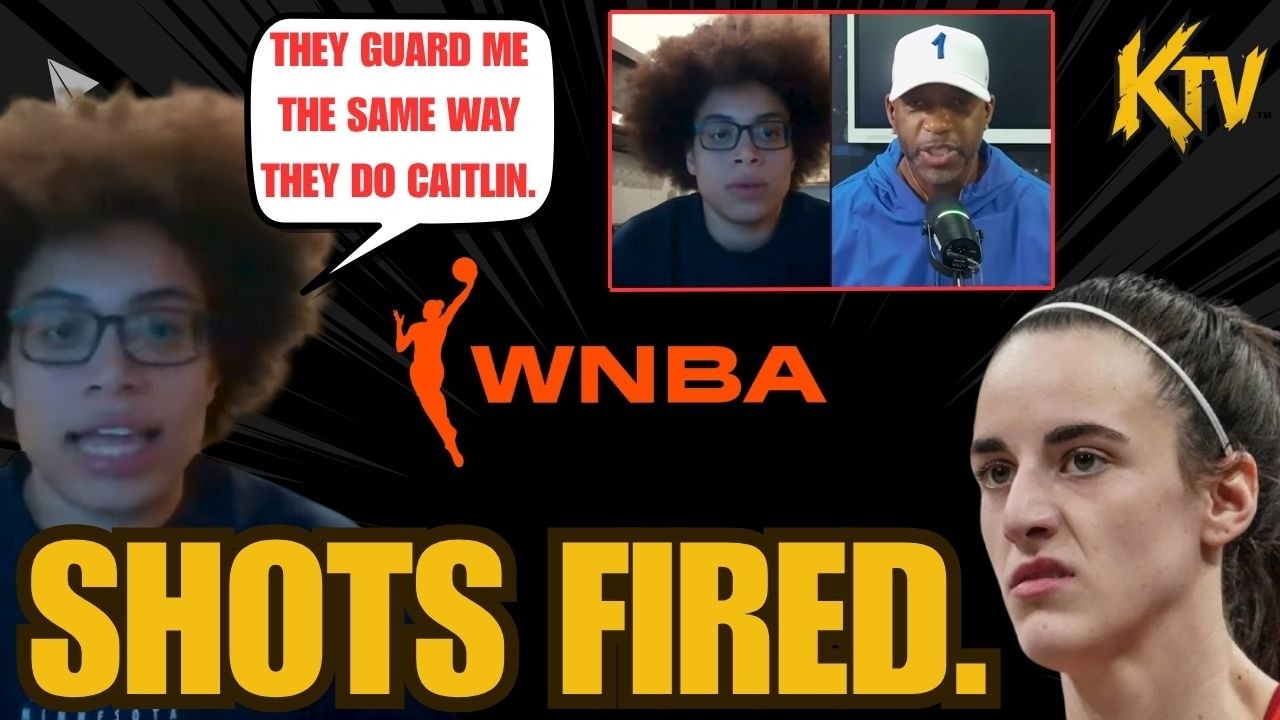
Miles really did address criticism claiming opponents do not defend her as aggressively as they defend Clark.
She really did appear on the Cousins podcast hosted by NBA legends Vince Carter and Tracy McGrady on September 9.
She really did push back against the idea that defenders simply leave her alone.
And the comments immediately fueled another round of Clark-versus-Miles arguments across social media.
What has not been authenticated is the much more explosive story now circulating online.
There is no credible evidence McGrady subsequently erupted at Miles on a live microphone.
There is no verified recording of him saying she should “stay in her lane.”
There is no authenticated clip in which he calls her comparison disrespectful.
There is no reliable report showing him declaring a “massive talent gap” between Miles and Clark.
And no credible source currently identifies the supposed leaked ten-second audio promised in viral posts.
The actual story is more nuanced.
Miles appeared on Carter and McGrady’s Cousins podcast following a spectacular rookie season with Minnesota.
The episode focused heavily on her adaptation to professional basketball, her style as a point guard, her unusual pace, the WNBA’s growth, her All-Star recognition and the challenge of preparing for the playoffs.
During the conversation, Miles addressed a narrative that had become increasingly common among Clark supporters.
Some fans argued defenders were giving Miles significantly more space than Clark routinely receives.
Miles rejected the broad claim that nobody guarded her.
She explained that her deliberate pace could create the appearance of open space because defenders sometimes struggled to dictate her rhythm.
Miles said there were narratives suggesting “no one guards me,” but argued that controlling tempo can make defensive pressure look different.
That statement became the spark.
Clark supporters immediately interpreted Miles’ comments as a comparison between the defensive treatment she receives and the extraordinary attention Clark often attracts.
But Miles did not explicitly say that opponents defend her exactly like Clark.
That distinction is crucial.
Saying “defenders guard me” is not the same as saying “I receive the same defensive coverage Caitlin Clark receives.”
Those are two very different claims.
Miles was defending the legitimacy of her own production.
She was not necessarily declaring that the two guards encounter identical defensive schemes.
The difference quickly disappeared online.
Within hours, social media arguments transformed the discussion into a direct competition.
One side argued Miles was attempting to diminish Clark’s unique defensive gravity.
Another argued Clark fans were dismissing Miles’ accomplishments because another elite young guard had emerged.
The basketball question underneath the noise is legitimate.
Clark’s offensive profile is unusual.
Her shooting range stretches defenses several feet beyond the three-point line.
Teams can pick her up near half court.
Defenders frequently attempt to deny her the ball.
Ball-screen coverages can bring a second defender aggressively toward her.
Her passing ability then punishes those traps.
That combination can completely reshape how opponents guard Indiana.
Miles operates differently.
Her game relies heavily on rhythm, hesitation, manipulation of pace and efficient movement through the defense.
She often appears less hurried than Clark.
That does not mean she is unguarded.
It means the defensive problem she creates is different.
That nuance matters when comparing statistics.
Clark averaged 22.3 points and 8.3 assists during the 2026 regular season.
Miles averaged 19.8 points and 6.0 assists while shooting efficiently during her tremendous rookie campaign.
Miles also became one of the fastest rookies in league history to accumulate points, rebounds and assists.
She broke multiple rookie records and ultimately became the unanimous Rookie of the Year.
Those achievements are substantial.
They do not require Miles to be considered identical to Clark.
Nor does acknowledging Clark’s unusual defensive attention diminish Miles’ season.
The controversy grew later in September when defenses began becoming noticeably more physical with Miles.
After games against Golden State, Atlanta and New York, she acknowledged that opponents were applying increased pressure.
Miles described the physicality as frustrating.
She questioned whether games were being called differently than earlier in the year.
But she also accepted responsibility.
She said she needed to manage the pressure better, protect the basketball and improve her decision-making.
She promised she would adjust.
That response is important because viral commentary often portrays Miles as complaining that she deserves special treatment.
Her actual comments were considerably more measured.
She acknowledged the defensive pressure.
She acknowledged that it affected her.
Then she said she needed to become better at handling it.
That is a normal developmental challenge for a rookie point guard.
Opposing teams accumulate film throughout the season.
They discover tendencies.
They identify preferred passing lanes.
They learn which hand a player wants to use.
They recognize where pressure can create turnovers.
By September, Miles was no longer an unknown rookie.
She was one of the league’s most productive guards.
Teams naturally adjusted.
The postseason numbers demonstrated how difficult that adjustment could become.
Miles struggled in her two playoff appearances, averaging only eight points while shooting 20 percent from the field.
That does not invalidate her regular season.
It does show what happens when elite defenses target a rookie with increasingly detailed scouting.
Clark experienced a similar learning process during her first professional season, although the specific coverages surrounding her were often especially aggressive because of her shooting range and enormous offensive responsibility.
That context produced the latest viral narrative.
Posts began claiming McGrady had finally had enough of Miles comparing herself with Clark.
According to the sensational version, T-Mac supposedly “annihilated” Miles.
The story says he exposed a massive difference in talent.
It says he accused Miles of disrespecting Clark.
It says he warned her to stay in her lane.
And it claims the confrontation was captured on a hidden live microphone.
None of those details currently appears in the authenticated record.
The September 9 Cousins episode does not resemble a hostile interrogation.
Its official description presents Miles as a featured guest discussing her successful rookie year, basketball influences, WNBA growth, Team USA experience, playoff preparation and life away from basketball.
McGrady and Carter offered advice.
Miles discussed players she studied growing up.
The episode lasted nearly an hour.
Nothing in its official presentation indicates McGrady humiliated her.
The available episode listings also do not describe a confrontation.
Apple Podcasts describes Miles talking about her development, All-Star experience, WNBA growth and playoff preparation.
There is no reference to McGrady attacking her over Clark.
The supposed leaked recording presents an even bigger authentication problem.
No original audio file has been identified.
No date for the alleged confrontation has been independently confirmed.
No producer has verified it.
No network has acknowledged it.
No complete transcript has surfaced.
No reputable basketball reporter has reported hearing McGrady make the alleged remarks.
And no credible source has published the phrase “stay in your lane” as a verified T-Mac quote directed toward Miles.
That matters.
McGrady remains one of basketball’s most recognizable retired stars.
A genuine recording of him publicly humiliating the reigning WNBA Rookie of the Year over Caitlin Clark would almost certainly become national basketball news.
Major sports networks would discuss it.
NBA reporters would circulate the clip.
WNBA journalists would ask Miles to respond.
McGrady would likely be asked whether he stood behind the remarks.
None of that reporting trail currently exists.
Instead, the verified story shows Miles appearing comfortably on McGrady’s own podcast.
The viral claim also misrepresents Miles’ original position.
She did not say she was better than Clark.
She did not say Clark was overrated.
She did not say defenders treat them identically.
She did not demand to be viewed as the league’s biggest phenomenon.
She challenged the claim that she was simply being left open.
That is much narrower.
Miles’ argument centered on pace.
Her point was that a guard who controls tempo can make defenders appear less aggressive because she prevents them from dictating the possession.
That is a recognizable basketball concept.
Players such as Luka Dončić, Steve Nash and Jason Kidd—several of whom Miles has cited as influences—often manipulate rhythm rather than simply outrunning defenders.
A defender can be fully engaged and still appear passive when the offensive player dictates spacing.
Clark’s threat is different.
She can punish opponents from extraordinary distance.
That forces defenses to extend farther from the basket.
Once a defender moves that far out, Clark can attack behind them or use screens to create rotations.
Her passing then creates opportunities for teammates.
This is why Clark frequently generates defensive attention that appears more dramatic on television.
Miles can still be heavily defended without producing the same visual picture.
Statistics reinforce that the two players had different offensive responsibilities during 2026.
Clark averaged 22.3 points and 8.3 assists with significantly higher usage.
Miles averaged 19.8 points and six assists while shooting nearly 49 percent from the floor.
Miles also committed fewer turnovers.
Clark created more assists and operated with greater offensive volume.
Each profile reflects a different role.
Directly declaring a “massive talent gap” based solely on those numbers would oversimplify the comparison.
Clark is already an established professional superstar.
Miles had one elite rookie season.
Their careers are at different stages.
Clark’s impact also extends far beyond traditional statistics.
Her presence changes ticket demand, television audiences and defensive strategy.
That does not mean Miles must remain silent whenever people discuss how she is guarded.
Young players are allowed to defend their own accomplishments.
The online response nevertheless became harsh.
Clark supporters argued that Miles had finally begun experiencing the type of physical pressure Clark had endured for years.
Some fans said Miles’ efficiency immediately declined when defenses intensified.
Others mocked her comments and argued that she was discovering how difficult Clark’s role actually was.
Those reactions are genuine examples of fan sentiment.
They are not McGrady’s words.
That distinction is essential because social-media commentary frequently gets repackaged as celebrity commentary.
A fan says Miles should “stay in her lane.”
A commentator says Clark sees tougher defense.
Another host argues Miles struggled once teams became physical.
Several days later, the ideas are merged into a supposed McGrady hot-mic explosion.
The narrative sounds believable because every individual ingredient already exists somewhere in the broader debate.
But believable is not the same as verified.
The same caution applies to claims that analysts were “stunned.”
No broadcast has been identified where analysts reacted in shock to McGrady attacking Miles.
No WNBA official has publicly responded.
No discipline has been reported.
Miles herself has not publicly accused McGrady of disrespect.
Nothing indicates a relationship rupture between the rookie and the Hall of Famer.
In fact, the September episode presented Miles as a welcome guest.
The conversation highlighted her accomplishments rather than attacking them.
The true basketball debate remains interesting without fabricated audio.
Was Miles defended as aggressively as Clark throughout the entire season?
Probably not in precisely the same ways.
Clark’s range, passing and usage generate uncommon coverage.
Was Miles nevertheless defended seriously?
Yes.
She was one of Minnesota’s primary offensive threats, an All-Star starter and eventually the Rookie of the Year.
No professional defense simply ignores a player producing nearly 20 points per game.
Did increased physicality create problems for Miles later in the season?
Yes.
She acknowledged it herself.
Did she respond by claiming persecution?
No.
She emphasized that she had to improve.
Did Miles say she was equivalent to Clark?
Not in the comments currently available.
Did Tracy McGrady brutally destroy her comparison?
No authenticated evidence shows that.
Did he tell her to stay in her lane?
No verified source currently supports that quote.
Did a leaked ten-second microphone capture him screaming about a talent gap?
No authenticated recording has surfaced.
Those distinctions create a much more accurate story.
Miles had a historic rookie season.
Clark remained one of the league’s defining offensive forces.
Their different playing styles naturally produced debates about defensive attention.
Miles defended herself against claims she was not being guarded.
Fans converted those remarks into another Clark-versus-Miles argument.
But McGrady’s supposed viral takedown remains unsupported.
The comparison itself will probably continue because Miles and Clark are young, productive guards representing the next generation of the WNBA.
Miles has already demonstrated unusual efficiency and creativity.
Clark has established herself as one of basketball’s most dangerous passers and long-range shooters.
That should create compelling basketball discussion.
What it should not create is fabricated dialogue.
If McGrady eventually criticizes Miles publicly, that criticism can be reported from the actual recording.
If he believes Clark faces more difficult defensive schemes, he can say so.
If Miles wants to argue that her pace makes defenders look less aggressive, she has already explained that position.
All three perspectives can exist without inventing a confrontation.
For now, the verified facts are straightforward.
Olivia Miles appeared on Cousins with Vince Carter and Tracy McGrady on September 9.
Verified.
She discussed her outstanding WNBA rookie season.
Verified.
She addressed narratives suggesting nobody guarded her.
Verified through reporting of her remarks.
She explained that her pace can make defensive pressure appear different.
Verified.
She later acknowledged experiencing increased physicality from opposing teams.
Verified.
She said she needed to adjust and improve.
Verified.
Clark has attracted extraordinary defensive attention because of her range, passing and offensive workload.
Supported by the broader statistical and tactical context.
Miles completed an elite rookie season and was named unanimous Rookie of the Year.
Verified.
McGrady ruthlessly attacked Miles for comparing herself with Clark.
Not verified.
McGrady declared a massive talent gap between them.
Not verified.
McGrady accused Miles of disrespecting Clark.
Not verified.
McGrady told Miles to “stay in her lane.”
Not verified.
A hidden live microphone captured the alleged rant.
Not authenticated.
A raw audio recording is being suppressed or “scrubbed.”
No credible evidence currently supports that claim.
The genuine story is therefore less explosive but far more interesting.
Olivia Miles challenged a narrative about her own game.
Caitlin Clark’s fans pushed back.
Defensive pressure became the central argument.
Miles later struggled when teams increased their physicality.
And social media transformed a technical basketball debate into another rivalry surrounding the league’s biggest phenomenon.
Tracy McGrady was part of the original podcast conversation.
But as of October 8, 2026, there is no credible evidence that he subsequently “annihilated” Miles, ordered her to stay in her lane, or delivered the brutal leaked-microphone tirade described in the viral caption.
The Clark-versus-Miles debate is real.
The supposed T-Mac hot-mic destruction remains unverified.


