On November 22, 1963, Fidel Castro was having lunch with a French journalist when an urgent telephone call interrupted their conversation.
Thousands of miles away, President John F. Kennedy had been shot while traveling through Dallas, Texas.
The Cuban leader had spent much of the preceding conversation discussing the possibility of improving relations with the United States.
Now, the American president whose administration had repeatedly confronted Cuba was fighting for his life.
According to journalist Jean Daniel, Castro responded with alarm as information about the shooting began reaching him.
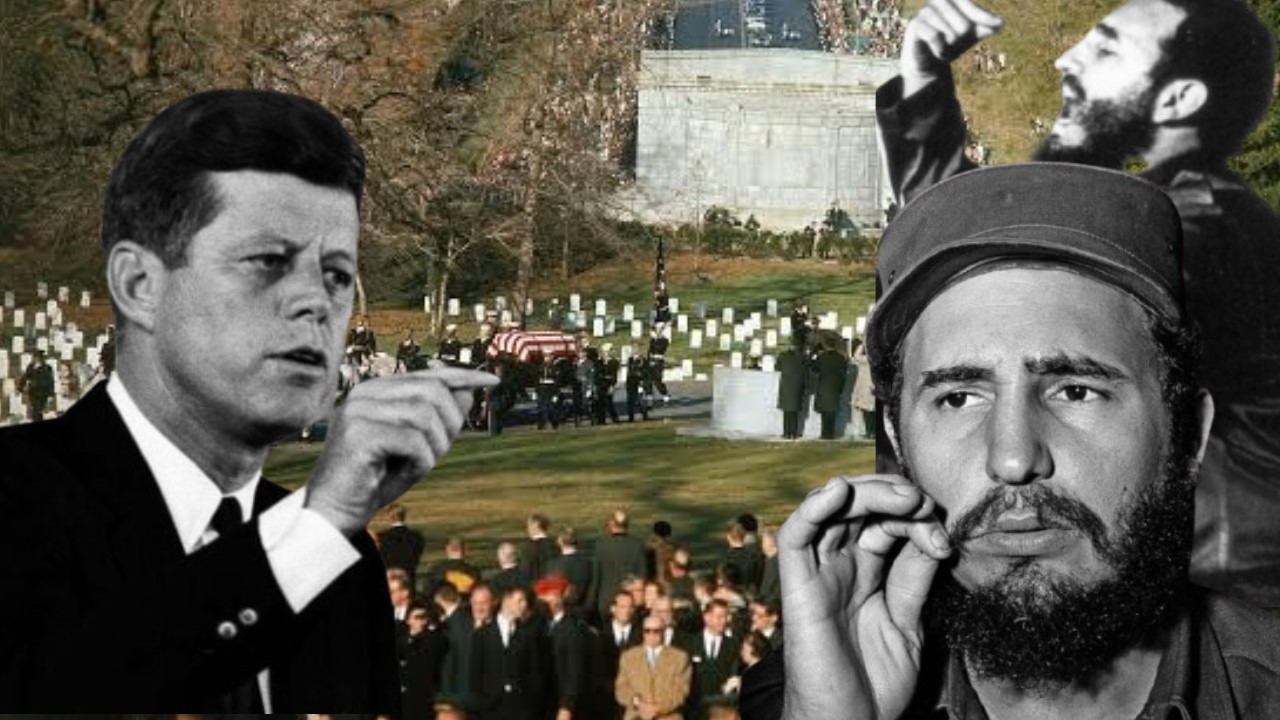
As the reports became increasingly serious, the Cuban leader recognized that the consequences could extend far beyond Washington.
Kennedy’s death threatened to transform Cuba’s relationship with the United States at an exceptionally delicate diplomatic moment.
What made Castro’s reaction remarkable was the existence of secret contacts between the two governments.
For months, intermediaries had been exploring whether the Cold War adversaries could begin discussing a less confrontational relationship.
Those contacts remained largely unknown to the American public and were politically sensitive within both countries.
The possibility of dialogue existed alongside continuing American intelligence operations directed against Castro’s government.
Kennedy’s assassination abruptly interrupted an initiative that had not yet developed into formal peace negotiations.
The story reveals a little-known dimension of the final months of Kennedy’s presidency.
It also raises a consequential historical question: Could the United States and Cuba have moved toward reconciliation?
The answer remains uncertain, but the diplomatic contacts themselves are supported by contemporary accounts and declassified records.
To understand their significance, it is necessary to return to the confrontation that defined Kennedy’s early presidency.
When Kennedy entered the White House in January 1961, relations between Washington and Havana were already deeply hostile.
Castro’s revolutionary government had overthrown Cuban dictator Fulgencio Batista in January 1959.
The revolution transformed Cuba’s political system and challenged longstanding American economic and strategic influence on the island.
As Castro consolidated power, his government nationalized property and developed increasingly close relationships with the Soviet Union.
American officials viewed those developments as threats to regional security and Washington’s position in the Western Hemisphere.
The Eisenhower administration had already approved covert efforts intended to undermine Castro’s government.
Kennedy inherited preparations for an invasion involving Cuban exiles trained and supported by American intelligence.
In April 1961, the operation culminated in the disastrous Bay of Pigs invasion.
The invading force failed to overthrow Castro, and Cuban government troops quickly defeated the operation.
The failure damaged Kennedy’s international reputation while strengthening Castro’s position inside Cuba.
It also reinforced the Cuban leadership’s belief that the United States remained committed to removing the revolutionary government.
The confrontation subsequently intensified as Cuba developed closer military and political ties with Moscow.
In October 1962, American reconnaissance photographs revealed Soviet nuclear missile installations under construction on Cuban territory.
Kennedy responded by announcing a naval quarantine and demanding the removal of the missiles.
For thirteen days, the world confronted the possibility of nuclear war between the United States and Soviet Union.
Castro played an important role in the crisis, although the decisive negotiations occurred primarily between Washington and Moscow.
Soviet leader Nikita Khrushchev eventually agreed to withdraw the missiles in exchange for American assurances concerning Cuba.
The settlement also involved a confidential American commitment to remove Jupiter missiles from Turkey.
The crisis ended without nuclear war, but it exposed serious disagreements between Castro and his Soviet allies.
The Cuban leader resented aspects of the settlement, particularly the limited role his government played in negotiations.
His dissatisfaction complicated the assumption that Havana would always follow Moscow’s diplomatic preferences.
For American officials, the crisis demonstrated the dangers of allowing Cuba to become a platform for Soviet strategic weapons.
For Castro, it demonstrated the risks of depending upon a superpower whose priorities did not always match Cuba’s interests.
These competing concerns created a narrow opportunity for diplomatic exploration during 1963.
Neither government had abandoned its fundamental political commitments or forgotten the conflicts of the previous years.
Nevertheless, some officials began considering whether limited communication might reduce the danger of another confrontation.
An important figure in this process was Lisa Howard, an American journalist working for ABC News.
Howard interviewed Castro in April 1963 and emerged convinced that the Cuban leader was interested in communication with Washington.
Her reporting and subsequent conversations helped bring the possibility of dialogue to the attention of American officials.
Howard’s involvement was unusual because she operated outside the formal diplomatic institutions responsible for American foreign policy.
Her journalistic access nevertheless allowed her to communicate with individuals who were difficult for American officials to approach.
She became an intermediary between people exploring the possibility of improved relations.
The Kennedy administration considered the information while continuing to evaluate Cuba through the broader framework of Cold War strategy.
McGeorge Bundy, the president’s national security adviser, became involved in discussions concerning possible diplomatic contacts.
Another important participant was William Attwood, a former journalist serving with the United States mission to the United Nations.
Attwood possessed experience in international affairs and relationships that made him useful for unofficial communication.
His role involved exploring contacts with Cuban representatives while avoiding the appearance of formal diplomatic negotiations.
The Cuban ambassador to the United Nations, Carlos Lechuga, became one of the principal figures on Havana’s side.
Through these intermediaries, the two governments began examining whether a meaningful conversation could be established.
The initiative was sensitive because Washington and Havana remained adversaries with sharply conflicting political interests.
American officials were particularly concerned about Cuba’s military relationship with the Soviet Union.
Kennedy was unwilling to accept an arrangement that simply preserved Cuba as a strategic extension of Soviet power.
Castro, meanwhile, was determined to protect the independence and survival of his revolutionary government.
Any potential settlement would therefore require addressing fundamental disagreements concerning security, sovereignty, and international alignment.
The discussions remained exploratory, and neither side had committed itself to a specific agreement.
That distinction is essential because later accounts sometimes portray the contacts as evidence that peace was imminent.
The historical record supports a more cautious conclusion: Both sides were testing whether dialogue might become possible.
By November 1963, the initiative had developed enough to involve additional communication between presidential advisers and Cuban representatives.
Declassified records discussed by historians describe contacts involving Bundy, Attwood, Lechuga, and Cuban official René Vallejo.
The exchanges suggested that Castro was willing to consider a direct or indirect conversation with American representatives.
However, significant uncertainty remained concerning the conditions under which either government would participate.
The administration also had to consider the domestic political consequences of appearing conciliatory toward Castro.
Cuba remained deeply unpopular among influential American political groups, particularly opponents of the revolutionary government.
The Bay of Pigs failure and missile crisis had made the island a central issue in American national security debates.
Kennedy therefore had reasons to approach any diplomatic opening cautiously and without extensive publicity.
Castro faced corresponding concerns about maintaining revolutionary legitimacy and avoiding the appearance of surrendering to Washington.
The resulting contacts were deliberately discreet, involving individuals whose activities could remain separate from formal diplomatic recognition.
Into this environment entered Jean Daniel, a French journalist whose conversations with both leaders became historically significant.
Daniel was associated with L’Express and contributed reporting to American publications, including The New Republic.
Before traveling to Cuba, he arranged a meeting with Kennedy in Washington.
The president understood that Daniel expected to speak with Castro during his forthcoming visit.
According to Daniel’s later published account, Kennedy used their conversation to discuss the complicated history of American-Cuban relations.
He acknowledged that American conduct before the Cuban Revolution had contributed to grievances against the United States.
The discussion included the legacy of the Batista dictatorship and Washington’s earlier relationship with the Cuban government.
Kennedy nevertheless emphasized that Cuba’s alignment with the Soviet Union presented a major obstacle to improved relations.
The distinction was important because it suggested that ideological differences alone might not make coexistence impossible.
American strategic concerns centered particularly upon Soviet influence and the potential military consequences of that relationship.
Daniel understood that the conversation carried significance beyond an ordinary presidential interview.
He was traveling to Cuba with information that Castro would likely consider a meaningful indication of Kennedy’s thinking.
However, Daniel was not a formally accredited diplomatic envoy empowered to negotiate an agreement.
His role was closer to that of an unofficial messenger communicating impressions and political possibilities.
This arrangement allowed the administration to explore Castro’s response without making a public diplomatic commitment.
It also reflected the importance of journalists and private intermediaries during periods of restricted official communication.
Daniel subsequently traveled to Cuba and obtained an opportunity to speak directly with Castro.
Their conversations occurred during the final days before Kennedy’s assassination.
Daniel described the American president’s comments and the possibility that Washington might reconsider aspects of its Cuba policy.
Castro reportedly listened with considerable interest and interpreted the communication as a possible opening.
According to Daniel’s account, Castro suggested that Kennedy might become one of America’s greatest presidents.
The remark reflected the Cuban leader’s belief that Kennedy could potentially recognize the possibility of coexistence.
It was a striking assessment from a revolutionary leader who had survived an American-backed invasion.
Only a year earlier, the two governments had been central participants in the most dangerous nuclear confrontation of the Cold War.
Now, Castro was considering whether Kennedy might be capable of pursuing a different relationship.
The apparent contradiction illustrates how diplomatic interests can evolve even while ideological disagreements remain profound.
Castro did not abandon communism, and Kennedy did not accept the Cuban government’s political system.
Both leaders nevertheless had reasons to avoid another crisis capable of threatening their countries’ survival.
For Cuba, improved relations could potentially reduce economic pressure and the threat of American military intervention.
For Washington, a less confrontational relationship might weaken Cuba’s dependence upon Soviet strategic support.
Those possibilities were significant, but neither government had resolved the fundamental questions standing in the way.
The discussions remained at an early stage when Daniel met Castro again on November 22, 1963.
They were together in Cuba when reports began arriving concerning the shooting of President Kennedy.
Daniel’s contemporary account describes Castro receiving information and reacting with concern about the president’s condition.
At first, the reports were incomplete, leaving uncertainty about whether Kennedy would survive.
Castro reportedly considered the possibility that surviving an assassination attempt could strengthen Kennedy’s political standing.
The discussion changed dramatically as confirmation of the president’s death reached them.
Daniel described Castro repeating that the news was bad and recognizing that the political situation had fundamentally changed.
The reaction was remarkable because Kennedy had been one of the Cuban government’s most powerful international adversaries.
Castro’s response nevertheless reflected the possibility that the American president had become important to a diplomatic opening.
Kennedy’s death eliminated the individual whose administration had begun exploring those unofficial contacts.
It also introduced uncertainty concerning the priorities of the new American president, Lyndon B. Johnson.
Castro had another immediate concern: Cuba might be accused of involvement in the assassination.
Daniel reported that the Cuban leader feared American officials would attempt to connect Havana with the killing.
The concern was not entirely surprising given the hostility surrounding the two countries’ relationship.
It became more politically sensitive as information emerged about the man accused of shooting Kennedy.
Lee Harvey Oswald had publicly expressed support for Castro’s government and participated in pro-Cuban political activity.
During 1963, he distributed Fair Play for Cuba Committee materials in New Orleans.
He also traveled to Mexico City, where he contacted Cuban and Soviet diplomatic facilities.
Those activities became important subjects of investigation after Kennedy’s assassination.
Investigators examined whether Oswald’s political associations had any connection to the killing.
The existence of pro-Castro activity, however, did not itself establish that Oswald acted on behalf of Havana.
Political sympathy and operational direction are fundamentally different matters requiring separate forms of evidence.
Castro publicly denied Cuban involvement and challenged suggestions that his government had ordered the assassination.
His government maintained that killing Kennedy would have served no useful Cuban political purpose.
The existence of diplomatic contacts offered one reason why Castro might have regarded Kennedy’s death as damaging.
Nevertheless, an assertion about political incentives cannot independently prove or disprove responsibility for an assassination.
The relevant historical investigations must be evaluated according to their evidence rather than assumptions about possible motives.
The Warren Commission concluded that Oswald fired the shots that killed Kennedy and found no evidence of a foreign-directed conspiracy.
The House Select Committee on Assassinations later examined additional intelligence information and disputed aspects of earlier investigative work.
Its findings contributed to continuing debates about the assassination, including questions involving intelligence agencies and Oswald’s activities.
However, the committee did not establish that Castro’s government ordered Kennedy’s murder.
The relationship between Oswald’s political interests and his actions remains a subject of historical discussion.
Daniel’s account is important because it provides contemporary testimony concerning Castro’s reaction rather than a retrospective conspiracy theory.
His description appeared shortly after the assassination, allowing historians to examine statements recorded near the time of the events.
That proximity does not make every recollected word automatically exact, but it strengthens the account’s historical relevance.
The Cuban leader’s reaction also needs to be considered alongside American intelligence activities occurring during the same period.
Despite the tentative diplomatic contacts, the CIA continued pursuing operations intended to undermine Castro’s government.
One particularly controversial effort involved Cuban official Rolando Cubela, associated with the CIA operation known as AMLASH.
The operation included discussions concerning the possibility of eliminating Castro.
The House Select Committee on Assassinations later examined these activities and their relationship to the broader intelligence environment.
Records indicate that a significant contact involving Cubela occurred on the day Kennedy was assassinated.
The coincidence has attracted considerable attention because it demonstrates the contradictory directions of American policy toward Cuba.
While presidential advisers explored the possibility of communication, intelligence personnel pursued hostile covert activities.
These efforts were not necessarily coordinated, and their participants did not all possess the same information.
The existence of simultaneous diplomatic and covert operations illustrates the fragmented nature of Cold War decision-making.
It does not establish that the CIA caused Kennedy’s assassination or that the Cuban government retaliated.
Those conclusions would require evidence beyond the coincidence of timing and the existence of hostile operations.
Nevertheless, the contradiction is historically important because it reveals the risks surrounding secret diplomacy.
A government attempting to explore reconciliation while continuing covert attacks can undermine its own negotiating credibility.
Castro had reasons to question whether American diplomatic overtures represented a genuine change in policy.
Kennedy, meanwhile, faced an intelligence and security establishment deeply involved in longstanding efforts against the Cuban government.
The resulting environment made trust difficult even when both leaders recognized possible benefits from communication.
Historians have consequently examined whether Kennedy’s final months reflected a meaningful change in his approach to Cuba.
Some emphasize his growing interest in reducing Cold War tensions following the Cuban Missile Crisis.
Others argue that his willingness to communicate did not represent abandonment of established American strategic objectives.
Both interpretations recognize that the administration continued viewing Soviet influence in Cuba as a serious concern.
The secret contacts therefore represented a possible adjustment in tactics rather than a completed reversal of American policy.
Kennedy’s assassination prevented historians from observing how the initiative might have developed under his leadership.
After Dallas, the diplomatic channel did not disappear immediately.
Attwood continued communicating with Cuban representatives during the transition to the Johnson administration.
The surviving records indicate that some participants still considered further discussions possible in early December 1963.
However, the political circumstances had changed dramatically following Kennedy’s death.
Johnson inherited a presidency facing national mourning, urgent domestic responsibilities, and significant international uncertainty.
He also inherited the existing American commitment to isolating Castro’s government.
The new administration did not pursue the tentative diplomatic opening with the same apparent interest.
Accounts of internal discussions describe Johnson’s response to the initiative as unenthusiastic.
The exploratory contacts gradually lost momentum, and no major diplomatic breakthrough followed.
Washington and Havana remained adversaries throughout the remainder of the decade.
The broader Cold War continued shaping American policy toward Cuba long after Kennedy’s assassination.
Economic restrictions, intelligence operations, diplomatic hostility, and regional political conflicts remained central features of the relationship.
The possibility explored during the final months of 1963 therefore became a historical example of diplomacy interrupted before resolution.
Its significance became clearer as government records and firsthand accounts received greater attention.
Jean Daniel published descriptions of his conversations with Kennedy and Castro in The New Republic during December 1963.
Those reports provided early public evidence that communication had been occurring between the adversaries.
Later archival research expanded understanding of the contacts involving Howard, Attwood, Bundy, and Cuban officials.
Documents held by the John F. Kennedy Presidential Library became important resources for reconstructing the initiative.
The National Security Archive at George Washington University also helped publicize declassified material concerning American-Cuban relations.
Research by Peter Kornbluh and other historians examined how the two governments approached possible dialogue.
Their work demonstrated that the initiative involved more than an isolated conversation between a journalist and two political leaders.
It included communications among officials who were exploring possible channels for future negotiations.
The documentary record nevertheless remains insufficient to establish that a formal agreement was close to completion.
No evidence demonstrates that Kennedy and Castro had resolved their disagreements over Soviet military ties or American intervention.
Nor can historians know whether domestic political opposition would have prevented Kennedy from pursuing substantial concessions.
The approaching 1964 presidential election would likely have complicated any public effort to normalize relations.
Kennedy had to consider the reactions of Congress, Cuban exile organizations, and voters concerned about communist expansion.
Castro likewise faced pressure to defend the revolution’s sovereignty and preserve its relationship with Moscow.
Any successful negotiation would have required difficult compromises from both governments.
The fact that intermediaries were talking does not establish that those compromises would have been politically achievable.
Nevertheless, the initiative represented an important departure from the exclusively confrontational relationship commonly associated with the period.
It showed that Kennedy’s administration was willing to consider alternatives to isolation and covert pressure.
It also demonstrated that Castro could entertain discussions with Washington despite the hostility created by earlier American actions.
The two leaders remained ideological opponents, but their interests were not necessarily incompatible in every area.
Avoiding nuclear confrontation offered an obvious shared objective after the terrifying events of October 1962.
Reducing the possibility of military intervention could also have benefited both countries.
For Cuba, improved security might have reduced the need for extensive Soviet military support.
For Washington, a less dependent Cuba could have weakened Moscow’s strategic position in the Caribbean.
Those potential advantages help explain why exploratory communication became possible despite deep mutual suspicion.
Castro later discussed Kennedy’s assassination and the possibility of improved relations in interviews with international journalists.
During a 1977 conversation with Barbara Walters, he addressed aspects of his relationship with the American president.
His retrospective comments contributed to public interest in the idea that the assassination interrupted a possible diplomatic transformation.
Such later statements should be read alongside contemporary records because memories and political narratives can change over time.
Castro had reasons to emphasize his willingness to negotiate and reject allegations concerning Cuban involvement in Kennedy’s death.
That does not invalidate his statements, but it makes independent corroboration especially important.
Daniel’s contemporary reporting and the documented diplomatic contacts provide meaningful support for the existence of the opening.
They do not establish that Castro and Kennedy had become political allies or were preparing an immediate settlement.
The distinction matters because the story has sometimes been presented as evidence of a nearly completed peace agreement.
The available evidence instead supports a cautious diplomatic exploration involving substantial uncertainty.
The assassination ended Kennedy’s ability to determine whether that exploration would become an official policy initiative.
It also deprived Castro of a potential negotiating partner whose intentions he had only recently begun evaluating.
The timing was extraordinary because the news reached Castro during a conversation directly related to Kennedy’s diplomatic message.
For Daniel, the experience connected two historically significant events within a single afternoon.
He had carried the American president’s comments to Havana and witnessed Castro reacting to the president’s death.
His reporting therefore offered a rare perspective on the intersection of diplomacy and political violence.
The scene also challenged the assumption that hostility between governments necessarily produces satisfaction when an adversary dies.
Castro’s reported concern reflected the uncertainty created by losing a leader who might have offered new possibilities.
The reaction was not proof of friendship, nor did it erase the serious conflicts separating Cuba and the United States.
It demonstrated that political adversaries can recognize the potential value of negotiation even during intense confrontation.
That possibility is one of the most important historical lessons emerging from the final months of Kennedy’s presidency.
The Cold War is often remembered through military crises, ideological declarations, and dramatic confrontations between competing systems.
Yet its history also contains discreet conversations, indirect messages, and attempts to avoid conflicts that might become catastrophic.
The Kennedy-Castro contacts belonged to that less visible diplomatic history.
Their secrecy reflected the political risks involved in acknowledging any willingness to negotiate.
Their existence revealed that public confrontation did not necessarily eliminate private consideration of compromise.
Their interruption demonstrated how quickly political violence can transform international relationships.
Kennedy’s assassination did not automatically make reconciliation impossible, but it removed the president who had authorized exploratory communication.
Johnson’s administration subsequently chose not to advance the initiative into sustained negotiations.
The relationship remained hostile for decades, although later American administrations periodically pursued limited contacts and diplomatic adjustments.
Those subsequent developments demonstrate that the underlying questions of sovereignty, security, and coexistence did not disappear.
They also illustrate why the events of November 1963 continue attracting historical interest.
The episode presents a compelling counterfactual: What might have happened if Kennedy had survived Dallas?
Perhaps the exploratory contacts would have developed into formal negotiations addressing American security concerns and Cuban independence.
Perhaps domestic political opposition, intelligence operations, or Soviet-Cuban relations would have prevented any meaningful agreement.
Both outcomes remain plausible because the negotiations had not progressed far enough to establish a clear trajectory.
Responsible historical analysis must therefore resist portraying an unrealized possibility as an inevitable future.
The evidence establishes diplomatic interest, unofficial communication, and Castro’s reported reaction to Kennedy’s assassination.
It does not establish that peace was guaranteed or that either leader had abandoned fundamental strategic commitments.
The assassination remains a tragedy with consequences extending far beyond the immediate transfer of presidential power.
It also interrupted an uncertain diplomatic experiment that might have influenced relations between the United States and Cuba.
For Castro, the news arrived at a moment when communication with Washington appeared possible for the first time in years.
For Daniel, the lunch became an extraordinary firsthand encounter with history as it unfolded.
For historians, the episode offers documentary evidence that Cold War diplomacy was more complicated than public rhetoric suggested.
And for the broader understanding of Kennedy’s presidency, it reveals an important initiative overshadowed by the events in Dallas.
On November 22, 1963, Castro did not receive news of Kennedy’s death as a distant observer.
He heard it while discussing the possibility of changing the relationship between their two governments.
According to the journalist sitting beside him, the Cuban leader recognized immediately that the political situation had changed.
The secret contacts would survive briefly, but they would not produce the reconciliation some participants had begun imagining.
What disappeared was not a completed peace agreement, but the opportunity to discover whether one could be negotiated.
That distinction makes the story historically meaningful without requiring speculation about conspiracies or predetermined diplomatic outcomes.
Two governments that had nearly confronted nuclear catastrophe were cautiously examining whether communication could offer another path.
One president was assassinated before the effort could develop, leaving the other leader confronting an uncertain future.
The moment captured by Jean Daniel remains a reminder that history can turn before possibilities become decisions.
And sometimes the most consequential diplomatic stories are those that never reach the negotiating table.


