How A Quiet Accountant Used Al Capone’s Money Trail To Destroy America’s Most Feared Gangster
Al Capone survived bullets, gang wars, assassins, police raids, political enemies, and years of federal attention.
What finally destroyed him was paper.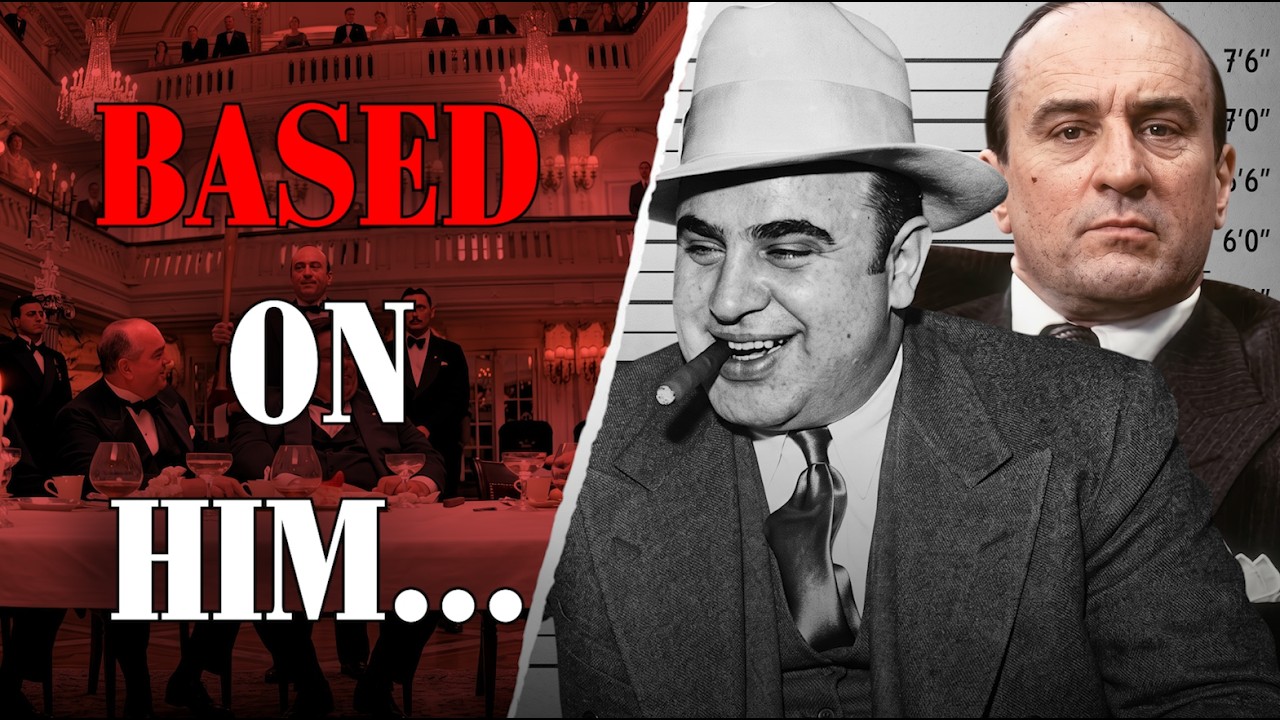
Not a machine gun hidden beneath an overcoat.
Not a rival gangster waiting outside a Chicago restaurant.
Not Eliot Ness kicking down a brewery door.
Instead, one of America’s most feared criminal bosses was slowly cornered by investigators who followed bank deposits, gambling records, wire transfers, witnesses, and unexplained income until the government could prove something Capone believed he had successfully hidden.
He was making enormous amounts of money.
And he was not paying federal income tax on it.
The popular version of Capone’s downfall sometimes describes a single mysterious accountant discovering a secret ledger that instantly destroyed the Chicago Outfit.
The real story was more complicated.
There really was a quiet federal investigator named Frank J. Wilson who became central to the tax investigation.
There really were ledgers, bank records, financial fragments, witnesses, and seemingly insignificant pieces of paper.
But surviving federal records show that Wilson was part of a broader Treasury investigation involving numerous agents rather than a lone genius who suddenly opened one suppressed book.
The Internal Revenue Service still preserves original Capone investigative documents through its Freedom of Information Act archive, including Wilson’s own reports and correspondence.
Those documents reveal something more remarkable than the legend.
Federal investigators defeated Capone by reconstructing a financial life he had deliberately designed to leave almost no conventional financial trail.
Capone understood violence.
He understood bribery.
He understood intimidation.
He understood how to surround himself with layers of subordinates who could absorb blame.
What he underestimated was arithmetic.
By the end of the 1920s, Alphonse Gabriel Capone had become the most recognizable gangster in the United States.
Prohibition had transformed organized crime.
The federal ban on producing and selling alcoholic beverages created an enormous black market.
Capone’s Chicago organization profited from bootlegging, gambling, prostitution, and other rackets while violent competition helped turn the city into an international symbol of gang warfare.
Capone was not merely a criminal hiding in alleys.
He became a celebrity.
He wore expensive suits.
He gave interviews.
He presented himself as a businessman serving public demand.
He cultivated an image of generosity.
Yet behind that public persona stood an organization associated with corruption, intimidation, and lethal violence.
Local prosecution repeatedly proved difficult.
Witnesses could disappear.
People could become suddenly unable to remember what they had seen.
Police corruption complicated investigations.
Businesses connected to organized crime were frequently structured so that the boss never appeared officially responsible.
The federal government therefore needed another path.
Treasury investigators began examining whether Capone and other Chicago gangsters could be prosecuted for failing to pay income taxes.
The legal foundation had become stronger after the Supreme Court established that illegally earned income was still taxable.
That meant a gangster could not simply argue that income from crime existed outside the tax system.
Money was money.
Income remained income.
And failure to report it could become a federal crime.
The investigation did not begin with Frank Wilson alone.
An IRS historical document describing the Capone inquiry says Internal Revenue Agent W. C. Hodgins initially worked the case with other investigators, including N. E. Tessman and A. A. Martin.
They analyzed bank remittance sheets and deposit slips from the Pinkert State Bank covering several years.
They compiled lists of checks.
They studied endorsements.
They interviewed witnesses.
They gathered what the document called every possible scrap of evidence that might eventually support prosecution.
Then, in May 1930, additional federal agents were assigned to the investigation.
Among them was Special Agent Frank J. Wilson.
From that point, according to the IRS record, Wilson took charge of an intensive effort to develop the financial case against Capone.
Wilson did not resemble the popular image of the gangster hunter.
He did not become famous by carrying a Thompson submachine gun through Chicago.
His battlefield consisted of documents.
Numbers.
Names.
Transactions.
Bank records.
Witness statements.
And tiny financial connections whose significance might not become obvious until months later.
That was precisely what made him dangerous to Capone.
The gangster had constructed his financial life to resist conventional accounting.
Wilson’s later federal report explained just how difficult the case was.
Capone had no conventional bank account investigators could simply subpoena.
He kept virtually no personal business records.
He avoided buying property directly in his own name.
Much of his financial activity occurred in cash.
Occasionally money moved through Western Union or by check, but those transactions were exceptions.
As Wilson later summarized, the government had to establish the case largely through circumstantial evidence and testimony from people who had dealt with Capone or his organization.
This was forensic accounting before the phrase became familiar to the public.
Investigators had to build a financial portrait from fragments.
A payment here.
A hotel bill there.
A wire transfer.
A gambling record.
A witness who had delivered cash.
A statement from someone who had managed one of the organization’s operations.
One financial clue might prove almost nothing by itself.
Dozens could begin forming a pattern.
Hundreds could become a prosecution.
This is where the legend of the mysterious ledger contains a kernel of truth.
Records associated with gambling operations helped investigators connect income to Capone’s organization.
The challenge was not simply finding numbers.
Investigators had to show that the numbers represented profits and then connect those profits to Capone personally.
That meant locating the people who understood what the records meant.
It also meant persuading frightened witnesses to cooperate against one of the most feared men in America.
Federal agents gradually accumulated enough evidence to argue that Capone had received substantial taxable income while failing to file returns or pay what he owed.
Wilson’s later report noted that Capone had never filed tax returns for the years covered by the indictment and had paid no tax on the income the government said he earned.
The investigation demonstrated a fundamental weakness in Capone’s defensive strategy.
His avoidance of formal ownership had protected him against some conventional criminal investigations.
But it also created suspicious contradictions.
Capone publicly lived like a wealthy man.
He spent heavily.
He traveled.
He maintained an expensive lifestyle.
Yet on paper, he often appeared almost financially invisible.
The government did not need to prove that every dollar came from one specific illegal act.
It needed to establish taxable income and deliberate failure to report it.
That was a different kind of weapon.
Capone apparently realized the danger only after federal prosecutors had already moved close enough to strike.
On June 16, 1931, he initially pleaded guilty to tax evasion and Prohibition-related charges.
Capone then publicly boasted that he expected a relatively short sentence based on what he believed was an agreement with prosecutors.
The federal judge had other ideas.
Judge James H. Wilkerson made clear that he was not obligated to accept such an arrangement.
Capone withdrew his guilty plea.
The case headed toward trial.
Another famous episode followed.
Capone’s organization was widely believed capable of bribery and intimidation.
Before jury selection, authorities became concerned that the jury pool could have been compromised.
Wilkerson responded by unexpectedly switching the prospective jurors with those assigned to another case.
The move helped neutralize any attempt to manipulate the panel.
Capone suddenly faced something he had spent years avoiding.
A courtroom he did not control.
The federal government presented evidence of income, spending, payments, and admissions.
The prosecution did not need to prove Capone personally pulled a trigger.
It did not need to solve every murder attributed to Chicago’s gang wars.
It needed to convince jurors that he had earned taxable income and intentionally failed to report it.
On October 17, 1931, the jury returned its verdict.
Capone was convicted on several tax-evasion counts.
The FBI’s historical account states that the conviction became official on October 18, and on November 24 Capone received an extraordinary sentence for a tax case: eleven years in federal prison.
He was also fined $50,000, ordered to pay court costs, and faced more than $215,000 in back taxes plus interest.
The gangster who had survived Chicago’s violent underworld had been defeated by federal tax law.
But prison did something prosecutors and rival gunmen had never managed to accomplish.
It removed Capone from the machinery that made him powerful.
He initially entered the federal penitentiary in Atlanta.
Even there, however, authorities became concerned that Capone’s wealth and reputation could still purchase privileges.
In August 1934, the federal government transferred him to the newly opened Alcatraz Federal Penitentiary in San Francisco Bay.
Alcatraz had been designed for prisoners the government considered particularly difficult to control.
Its isolation was part of the punishment.
The ocean separated inmates from the networks that had sustained them.
For Capone, that separation was devastating.
The man who had once commanded politicians, gangsters, bartenders, gamblers, drivers, gunmen, and businessmen became simply another federal prisoner.
At Alcatraz he was known as Prisoner 85.
The transformation had symbolic power.
Chicago’s former kingpin no longer controlled access to restaurants or speakeasies.
He followed prison schedules.
He performed assigned work.
He spent time reading and playing music.
He could not easily summon lieutenants or manipulate city officials.
His empire continued without him, but his personal reign had effectively ended.
Then a second enemy began destroying him.
Syphilis.
Capone had contracted the disease years earlier and apparently never received effective early treatment.
Before antibiotics transformed medicine, untreated syphilis could eventually invade the nervous system.
Neurosyphilis could cause cognitive deterioration, personality changes, confusion, memory problems, and severe psychiatric symptoms.
By the time Capone was imprisoned, doctors recognized that the infection had progressed dangerously.
The FBI’s own historical archive states that syphilis ultimately left him too mentally ill to resume his former criminal activities.
At Alcatraz, his decline became increasingly obvious.
Historical accounts describe periods when Capone remained lucid.
At other times, his behavior became erratic.
Prison physicians attempted treatments available before penicillin became widely effective.
One approach involved deliberately infecting patients with malaria.
The theory was that high fever might kill the syphilis bacteria.
The treatment was dangerous.
According to historical accounts of Capone’s imprisonment, malaria therapy nearly killed him.
The irony was brutal.
Capone had spent years building a reputation around control.
Control over territory.
Control over people.
Control over money.
Control over fear.
Now he was losing control over his own mind.
By January 1939, his condition had deteriorated badly.
He was transferred away from Alcatraz.
FBI records say Capone had suffered from paresis associated with advanced syphilis and was seriously ill when he left the island prison system.
His federal imprisonment formally ended later that year.
On November 16, 1939, Capone was released after serving seven years, six months, and fifteen days, according to the FBI’s official history.
But the man who walked free was no longer the underworld ruler who had entered prison.
He returned eventually to his Palm Island estate in Florida.
There would be no triumphant reclamation of Chicago.
No rebuilt empire.
No second reign.
Capone’s physical and neurological condition made that impossible.
By the 1940s, penicillin had become available, and Capone became one of the civilians who received the drug for syphilis.
But treatment came too late to reverse the neurological destruction already caused by the infection.
His final years were quiet compared with the chaos of his criminal career.
He spent time fishing.
Playing cards.
Living with relatives.
Receiving medical care.
His name remained legendary, but his operational power was gone.
In January 1947, Capone suffered a stroke.
His health deteriorated further.
Pneumonia followed.
On January 25, 1947, Al Capone died at his Florida estate.
He was 48 years old.
The dramatic caption suggesting “suppressed federal audit ledgers” therefore contains both truth and exaggeration.
There absolutely were federal investigative records.
There absolutely were financial documents, bank materials, witness statements, gambling records, and investigative reports.
Frank Wilson absolutely played a major role.
And documents connected with his investigation are preserved today by the IRS.
But they are not evidence of a newly discovered secret archive.
The IRS has publicly listed Capone-related FOIA materials for years, including Wilson’s December 21, 1933 report and correspondence from the 1931 investigation.
The more historically accurate description is arguably even more compelling.
The federal government did not need a magical hidden ledger.
Investigators created a case from fragments that Capone believed could never be assembled.
The gangster’s entire defensive system depended upon separation.
Separate himself from formal ownership.
Separate himself from written records.
Separate himself from crimes committed by subordinates.
Separate money from obvious sources.
Separate orders from consequences.
Frank Wilson and the Treasury investigators reversed that process.
They connected.
A check to a person.
A person to a business.
A business to income.
Income to Capone.
Capone to spending.
Spending to undeclared wealth.
One connection rarely mattered.
The accumulation mattered.
That is why Capone’s downfall remains one of the most famous financial investigations in American history.
Violence had made him powerful.
Fear had protected him.
Corruption had insulated him.
Cash had concealed him.
But money also left traces.
Even criminals who avoid banks have expenses.
They pay people.
They move cash.
They gamble.
They purchase services.
They send money.
They talk to associates.
They leave behind human witnesses.
A financial investigator does not necessarily need one confession.
Sometimes the pattern becomes the confession.
The FBI’s official history emphasizes that Capone’s downfall resulted from cooperation among federal, state, and local authorities rather than a single heroic figure.
That point matters.
Eliot Ness and the Untouchables became famous in popular culture.
Frank Wilson became famous in tax-enforcement history.
Prosecutors mattered.
Treasury officials mattered.
Witnesses mattered.
Judges mattered.
The combined pressure finally eliminated the aura of immunity surrounding Capone.
Yet Wilson’s role remains especially symbolic because of the nature of the weapon he used.
Capone had spent his life surrounded by men with guns.
Wilson attacked with numbers.
The gangster knew how to answer violence.
He could employ more violence.
He knew how to answer intimidation.
He could intimidate harder.
He knew how to answer political opposition.
He could buy influence.
But a carefully reconstructed income calculation was harder to shoot.
A bank record could not be frightened.
A wire transfer could not conveniently forget what happened.
A ledger did not care how many gunmen stood outside.
That was the weakness the government eventually exploited.
Capone’s story therefore ended through two forces he could not command.
Accounting and disease.
The first took away his freedom.
The second took away much of what remained of the man himself.
By the time death arrived in 1947, the empire that had made him famous had long since moved beyond him.
The man who once appeared untouchable had spent years as a prisoner, then years as a severely ill former gangster living behind the gates of a Florida estate.
His downfall was not a cinematic gunfight.
It was slower.
Investigators collected scraps of paper.
They followed transactions.
They found witnesses.
They established income.
A jury convicted him.
A judge sentenced him.
Alcatraz separated him from his organization.
And untreated syphilis finished a destruction that federal accountants had begun.
The legend says Al Capone ruled Chicago with fear.
The historical record shows something more revealing.
In the end, the man who made millions from an empire built outside the law discovered that even an underworld king could not escape the numbers forever.


