CHRISTA PIKE WOKE UP AND ASKED, “WHERE AM I?” — NOW TENNESSEE FACES A SECOND EXECUTION BATTLE
Christa Pike was expected to die on September 30, but instead of leaving the execution chamber in a body bag, the Tennessee death-row inmate was taken away in an ambulance and rushed to a hospital after surviving two lethal doses of execution drugs.
For days, her condition remained critical.
Her lawyers feared the worst.
Then, on Monday night, they believed Pike was brain dead and expected doctors to remove her life support the following day.
But Tuesday morning brought a development that shocked everyone around her.
Christa Pike woke up.
And according to her attorneys, the first words she reportedly said were, “Where am I and who are you?”
The woman Tennessee had attempted to execute was suddenly conscious and speaking.
But waking up did not mean she was recovering normally.
Her lawyers say Pike remains deeply confused about what happened, asking questions about her legal team and even about Colleen Slemmer’s family, the family of the woman whose murder placed Pike on death row three decades ago.
She is reportedly aware that the state attempted to execute her, although her attorneys have cautioned that they do not yet know exactly what she remembers from the execution itself.
And while Pike can now speak, her physical condition remains extremely serious.
Her lawyers say she has a blood clot in one arm.
She has pneumonia.
She cannot yet swallow and has been unable to eat.
She cannot move either arm.
Both arms and hands are described as tremendously swollen, with one attorney comparing the swelling he witnessed to something almost impossible to comprehend.
Her lawyers say they do not yet know how much function she will eventually regain.
And they say the psychological consequences may be just as difficult to understand.
Pike spent decades on death row knowing that one day the state intended to kill her.
Then, on September 30, that moment finally arrived.
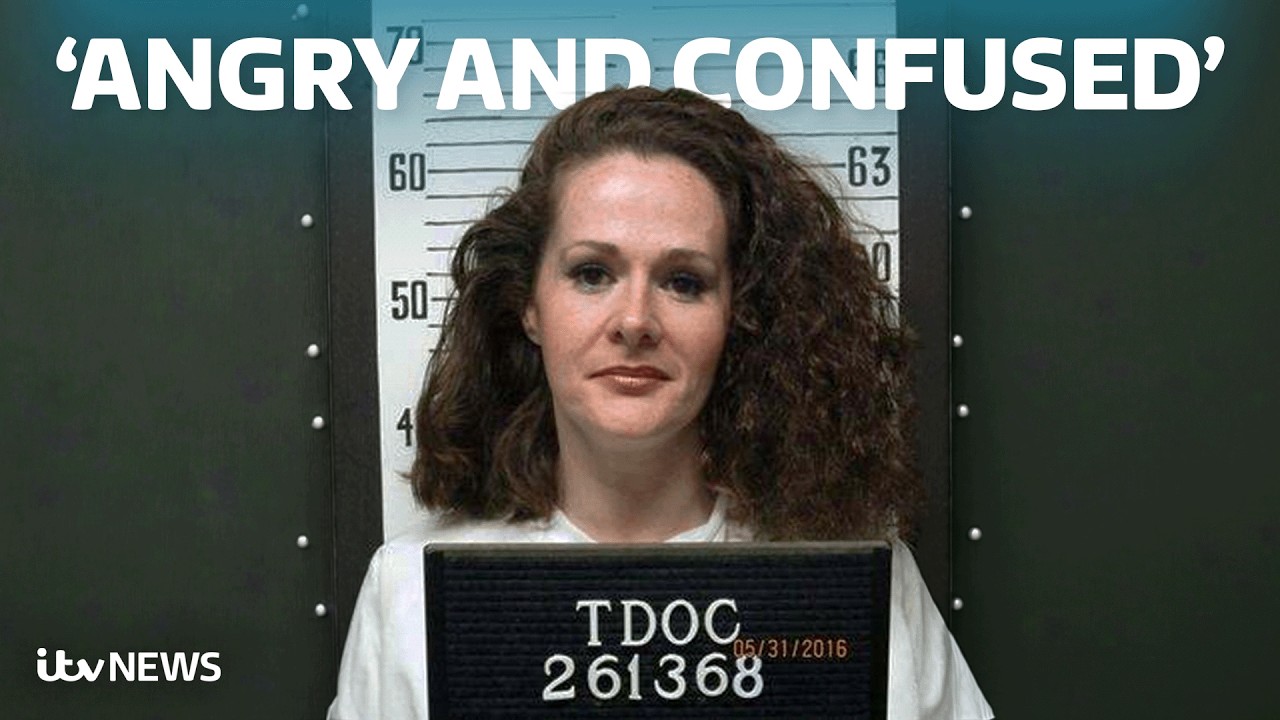
According to her legal team, she remained calm and cooperative while the execution team spent approximately an hour attempting to establish intravenous access.
Her attorneys say she was polite as medical personnel repeatedly tried to access a vein.
Then came the drugs.
According to the defense, Pike experienced the effects of pentobarbital before the execution failed.
She was eventually taken from the death chamber to a hospital, where she was intubated and placed on life support.
And now her lawyers are asking a question that reaches far beyond Pike herself.
What exactly happened inside that execution chamber?
A Tennessee judge has ordered the state to preserve evidence connected to the September 30 execution.
That includes recordings and other materials that could help investigators determine why the procedure failed.
The lawyers say they are not yet demanding that Tennessee hand everything over.
For now, they want the evidence preserved.
Video recordings.
Audio recordings.
Execution records.
Medical information.
Training records.
Notes.
The materials surrounding the drugs and the procedure.
Everything that could eventually help reconstruct what happened.
One attorney described the hearing as only the first step in what could become a long legal battle.
The defense says it wants Pike’s lawyers, independent experts and ultimately the public to understand what really happened rather than simply accepting the state’s account.
That demand for transparency has become one of the central themes of the case.
Tennessee officials have maintained that the execution was conducted according to protocol.
But Pike’s lawyers argue that the state has not provided enough information to explain why two lethal doses failed to kill her.
And they say that matters enormously if Tennessee ever considers trying again.
Because some voices in Tennessee are already calling for another execution.
One Tennessee official said the state should still carry out Pike’s sentence and indicated that officials would consider the available alternatives before deciding what happens next.
That could mean another lethal injection.
It could mean a different execution method.
And it could place Tennessee at the center of an extraordinary constitutional fight.
Pike’s lawyers, meanwhile, are asking Governor Bill Lee to commute her death sentence to life imprisonment without parole.
They say that after everything Pike has endured, another execution attempt would be unjustifiable.
Their argument is not simply about what happened on September 30.
It is about what happened throughout Pike’s life and what happened during the decades she spent incarcerated.
Her lawyers describe Pike as a survivor of childhood sexual abuse, rape, physical abuse and a suicide attempt when she was young.
They also point to more than two decades of solitary confinement.
Then came the failed execution.
The defense says the state had been warned that problems could occur.
They argue that the concerns surrounding Pike’s medical condition and intravenous access were raised before the execution.
And now, they say, the very complications they feared have become part of Pike’s medical reality.
But the state’s position remains fundamentally different.
Tennessee has not agreed to commute Pike’s sentence.
And officials have not ruled out another execution attempt.
For now, however, the state has paused executions until at least 2027.
That means Pike has time.
Her lawyers have time to investigate.
Doctors have time to treat her.
Courts have time to examine the evidence.
And Tennessee has time to decide whether it is prepared to enter territory no state wants to navigate.
Because the central legal question is unprecedented.
Can a government attempt to execute the same person twice after the first attempt fails?
Pike’s attorneys believe the answer should ultimately be no.
Legal experts have suggested that they could argue the state has already carried out its punishment to the extent possible, and that allowing another attempt could raise serious constitutional concerns.
But there is no simple answer.
The United States has dealt with botched executions before.
There have been executions in which prison officials struggled to establish intravenous access.
There have been cases where procedures were delayed or abandoned.
But Pike’s situation is different because she received lethal drugs, survived, and was transported to a hospital where she remained alive long enough to regain consciousness and speak.
That creates an extraordinary legal problem.
If the state attempted to execute her and failed, was the sentence merely unsuccessful?
Or did the state already impose the punishment and fail only to produce death?
The answer could determine whether Pike remains on death row, receives clemency, or eventually faces another execution date.
And the question becomes even more complicated when her medical condition is considered.
Pike currently has a blood clot.
She has pneumonia.
She cannot swallow.
She cannot move her arms.
Her hands and arms remain severely swollen.
Her lawyers say they have no idea what permanent damage she may suffer.
They also say the psychological consequences have barely begun to be understood.
Pike woke in a hospital surrounded by medical personnel after expecting to die.
She reportedly had a breathing tube down her throat.
She was restrained.
She was confused.
And she was trying to understand what had happened.
One of the most striking details from her lawyers is that Pike asked about the people involved in her case and about Colleen Slemmer’s family.
That detail brings the story back to where it began.
Thirty years ago, Pike was convicted of murdering Slemmer, a fellow Job Corps student.
Pike was 18 years old.
Slemmer was 19.
Pike’s then-boyfriend, Tadaryl Ship, was 17.
The murder was exceptionally brutal.
Pike was convicted of first-degree murder and sentenced to death.
Ship was also convicted and received a life sentence.
The crime involved a prolonged attack, and Ship later acknowledged carving an inverted pentagram into Slemmer’s chest.
The case became infamous, particularly because of the teenagers’ alleged interest in Satanism and the extraordinary brutality of the killing.
Pike remained on death row for approximately three decades.
Her appeals continued.
Her lawyers repeatedly challenged aspects of her conviction, sentence and conditions of confinement.
Eventually, however, the legal process reached its final stages.
And Tennessee scheduled Pike’s execution.
On September 30, the state finally attempted to carry out the sentence.
But the execution did not end with Pike’s death.
It ended with an ambulance.
Then a hospital.
Then life support.
Then a night when her lawyers believed she was brain dead.
And finally, a Tuesday morning when she opened her eyes and began talking.
That single moment transformed the case.
Before September 30, the central question was when Christa Pike would die.
After September 30, the question became whether Tennessee could ever legally attempt to kill her again.
And now another question has entered the debate.
How much suffering is enough?
That is the question Pike’s attorneys are repeatedly putting before Governor Lee.
They argue that Pike has already endured childhood abuse, rape, physical abuse, decades of incarceration and solitary confinement, and now what they describe as the catastrophic consequences of a failed execution.
They say Tennessee should stop here.
But the state has its own obligation to the sentence imposed for Colleen Slemmer’s murder.
That means two competing narratives now exist side by side.
For Slemmer’s family, the death sentence represents the punishment imposed for a horrific murder.
For Pike’s defense team, the failed execution represents a new constitutional crisis and an additional punishment that they argue should never have happened.
Between those positions stands Christa Pike herself.
Alive.
Hospitalized.
Confused.
Injured.
And waiting to find out what happens next.
Her lawyers say she deserves answers about what was done to her.
They also say the people of Tennessee deserve those answers.
That is why the preservation order matters.
The recordings matter.
The execution records matter.
The medical evidence matters.
Because before anyone can seriously debate a second execution, they first have to understand why the first one failed.
And that investigation has only just begun.
The defense says the September 30 execution was not simply an unfortunate accident.
They argue that the risks had been identified beforehand.
The state disputes the defense’s characterization and maintains that it followed its established procedures.
Those competing claims will now have to be tested through evidence and litigation.
And there may be another case watching closely.
According to the report, another Texas death-row inmate was scheduled to face lethal injection shortly after the Tennessee hearing.
His attorneys were reportedly using the Pike case to argue that his own execution should not proceed.
That means the consequences of what happened to Pike may extend far beyond Tennessee.
Her case could become part of a national debate over lethal injection, transparency, medical risks and the constitutional limits of capital punishment.
Ten more executions were reportedly scheduled across the United States during the remainder of the year mentioned in the broadcast, including lethal injections and a firing-squad execution.
Now every one of those cases exists against the backdrop of what happened in Tennessee.
But for Christa Pike, this is no longer a national debate.
It is personal.
She was supposed to die.
She survived.
She woke up and asked where she was.
She asked who the people around her were.
She learned that the state had tried to execute her.
And now she is facing a future that nobody can yet define.
Her lawyers are asking for clemency.
The state is preserving evidence.
Doctors are fighting to stabilize her.
The courts are beginning to examine what happened.
And Tennessee is left with a question it has never had to answer in quite this way before.
After two lethal doses failed to kill Christa Pike, will the state attempt a third time—or will the woman who survived her own execution finally leave death row alive?
Christa Pike was expected to die on September 30, but instead of leaving the execution chamber in a body bag, the Tennessee death-row inmate was taken away in an ambulance and rushed to a hospital after surviving two lethal doses of execution drugs.
For days, her condition remained critical.
Her lawyers feared the worst.
Then, on Monday night, they believed Pike was brain dead and expected doctors to remove her life support the following day.
But Tuesday morning brought a development that shocked everyone around her.
Christa Pike woke up.
And according to her attorneys, the first words she reportedly said were, “Where am I and who are you?”
The woman Tennessee had attempted to execute was suddenly conscious and speaking.
But waking up did not mean she was recovering normally.
Her lawyers say Pike remains deeply confused about what happened, asking questions about her legal team and even about Colleen Slemmer’s family, the family of the woman whose murder placed Pike on death row three decades ago.
She is reportedly aware that the state attempted to execute her, although her attorneys have cautioned that they do not yet know exactly what she remembers from the execution itself.
And while Pike can now speak, her physical condition remains extremely serious.
Her lawyers say she has a blood clot in one arm.
She has pneumonia.
She cannot yet swallow and has been unable to eat.
She cannot move either arm.
Both arms and hands are described as tremendously swollen, with one attorney comparing the swelling he witnessed to something almost impossible to comprehend.
Her lawyers say they do not yet know how much function she will eventually regain.
And they say the psychological consequences may be just as difficult to understand.
Pike spent decades on death row knowing that one day the state intended to kill her.
Then, on September 30, that moment finally arrived.
According to her legal team, she remained calm and cooperative while the execution team spent approximately an hour attempting to establish intravenous access.
Her attorneys say she was polite as medical personnel repeatedly tried to access a vein.
Then came the drugs.
According to the defense, Pike experienced the effects of pentobarbital before the execution failed.
She was eventually taken from the death chamber to a hospital, where she was intubated and placed on life support.
And now her lawyers are asking a question that reaches far beyond Pike herself.
What exactly happened inside that execution chamber?
A Tennessee judge has ordered the state to preserve evidence connected to the September 30 execution.
That includes recordings and other materials that could help investigators determine why the procedure failed.
The lawyers say they are not yet demanding that Tennessee hand everything over.
For now, they want the evidence preserved.
Video recordings.
Audio recordings.
Execution records.
Medical information.
Training records.
Notes.
The materials surrounding the drugs and the procedure.
Everything that could eventually help reconstruct what happened.
One attorney described the hearing as only the first step in what could become a long legal battle.
The defense says it wants Pike’s lawyers, independent experts and ultimately the public to understand what really happened rather than simply accepting the state’s account.
That demand for transparency has become one of the central themes of the case.
Tennessee officials have maintained that the execution was conducted according to protocol.
But Pike’s lawyers argue that the state has not provided enough information to explain why two lethal doses failed to kill her.
And they say that matters enormously if Tennessee ever considers trying again.
Because some voices in Tennessee are already calling for another execution.
One Tennessee official said the state should still carry out Pike’s sentence and indicated that officials would consider the available alternatives before deciding what happens next.
That could mean another lethal injection.
It could mean a different execution method.
And it could place Tennessee at the center of an extraordinary constitutional fight.
Pike’s lawyers, meanwhile, are asking Governor Bill Lee to commute her death sentence to life imprisonment without parole.
They say that after everything Pike has endured, another execution attempt would be unjustifiable.
Their argument is not simply about what happened on September 30.
It is about what happened throughout Pike’s life and what happened during the decades she spent incarcerated.
Her lawyers describe Pike as a survivor of childhood sexual abuse, rape, physical abuse and a suicide attempt when she was young.
They also point to more than two decades of solitary confinement.
Then came the failed execution.
The defense says the state had been warned that problems could occur.
They argue that the concerns surrounding Pike’s medical condition and intravenous access were raised before the execution.
And now, they say, the very complications they feared have become part of Pike’s medical reality.
But the state’s position remains fundamentally different.
Tennessee has not agreed to commute Pike’s sentence.
And officials have not ruled out another execution attempt.
For now, however, the state has paused executions until at least 2027.
That means Pike has time.
Her lawyers have time to investigate.
Doctors have time to treat her.
Courts have time to examine the evidence.
And Tennessee has time to decide whether it is prepared to enter territory no state wants to navigate.
Because the central legal question is unprecedented.
Can a government attempt to execute the same person twice after the first attempt fails?
Pike’s attorneys believe the answer should ultimately be no.
Legal experts have suggested that they could argue the state has already carried out its punishment to the extent possible, and that allowing another attempt could raise serious constitutional concerns.
But there is no simple answer.
The United States has dealt with botched executions before.
There have been executions in which prison officials struggled to establish intravenous access.
There have been cases where procedures were delayed or abandoned.
But Pike’s situation is different because she received lethal drugs, survived, and was transported to a hospital where she remained alive long enough to regain consciousness and speak.
That creates an extraordinary legal problem.
If the state attempted to execute her and failed, was the sentence merely unsuccessful?
Or did the state already impose the punishment and fail only to produce death?
The answer could determine whether Pike remains on death row, receives clemency, or eventually faces another execution date.
And the question becomes even more complicated when her medical condition is considered.
Pike currently has a blood clot.
She has pneumonia.
She cannot swallow.
She cannot move her arms.
Her hands and arms remain severely swollen.
Her lawyers say they have no idea what permanent damage she may suffer.
They also say the psychological consequences have barely begun to be understood.
Pike woke in a hospital surrounded by medical personnel after expecting to die.
She reportedly had a breathing tube down her throat.
She was restrained.
She was confused.
And she was trying to understand what had happened.
One of the most striking details from her lawyers is that Pike asked about the people involved in her case and about Colleen Slemmer’s family.
That detail brings the story back to where it began.
Thirty years ago, Pike was convicted of murdering Slemmer, a fellow Job Corps student.
Pike was 18 years old.
Slemmer was 19.
Pike’s then-boyfriend, Tadaryl Ship, was 17.
The murder was exceptionally brutal.
Pike was convicted of first-degree murder and sentenced to death.
Ship was also convicted and received a life sentence.
The crime involved a prolonged attack, and Ship later acknowledged carving an inverted pentagram into Slemmer’s chest.
The case became infamous, particularly because of the teenagers’ alleged interest in Satanism and the extraordinary brutality of the killing.
Pike remained on death row for approximately three decades.
Her appeals continued.
Her lawyers repeatedly challenged aspects of her conviction, sentence and conditions of confinement.
Eventually, however, the legal process reached its final stages.
And Tennessee scheduled Pike’s execution.
On September 30, the state finally attempted to carry out the sentence.
But the execution did not end with Pike’s death.
It ended with an ambulance.
Then a hospital.
Then life support.
Then a night when her lawyers believed she was brain dead.
And finally, a Tuesday morning when she opened her eyes and began talking.
That single moment transformed the case.
Before September 30, the central question was when Christa Pike would die.
After September 30, the question became whether Tennessee could ever legally attempt to kill her again.
And now another question has entered the debate.
How much suffering is enough?
That is the question Pike’s attorneys are repeatedly putting before Governor Lee.
They argue that Pike has already endured childhood abuse, rape, physical abuse, decades of incarceration and solitary confinement, and now what they describe as the catastrophic consequences of a failed execution.
They say Tennessee should stop here.
But the state has its own obligation to the sentence imposed for Colleen Slemmer’s murder.
That means two competing narratives now exist side by side.
For Slemmer’s family, the death sentence represents the punishment imposed for a horrific murder.
For Pike’s defense team, the failed execution represents a new constitutional crisis and an additional punishment that they argue should never have happened.
Between those positions stands Christa Pike herself.
Alive.
Hospitalized.
Confused.
Injured.
And waiting to find out what happens next.
Her lawyers say she deserves answers about what was done to her.
They also say the people of Tennessee deserve those answers.
That is why the preservation order matters.
The recordings matter.
The execution records matter.
The medical evidence matters.
Because before anyone can seriously debate a second execution, they first have to understand why the first one failed.
And that investigation has only just begun.
The defense says the September 30 execution was not simply an unfortunate accident.
They argue that the risks had been identified beforehand.
The state disputes the defense’s characterization and maintains that it followed its established procedures.
Those competing claims will now have to be tested through evidence and litigation.
And there may be another case watching closely.
According to the report, another Texas death-row inmate was scheduled to face lethal injection shortly after the Tennessee hearing.
His attorneys were reportedly using the Pike case to argue that his own execution should not proceed.
That means the consequences of what happened to Pike may extend far beyond Tennessee.
Her case could become part of a national debate over lethal injection, transparency, medical risks and the constitutional limits of capital punishment.
Ten more executions were reportedly scheduled across the United States during the remainder of the year mentioned in the broadcast, including lethal injections and a firing-squad execution.
Now every one of those cases exists against the backdrop of what happened in Tennessee.
But for Christa Pike, this is no longer a national debate.
It is personal.
She was supposed to die.
She survived.
She woke up and asked where she was.
She asked who the people around her were.
She learned that the state had tried to execute her.
And now she is facing a future that nobody can yet define.
Her lawyers are asking for clemency.
The state is preserving evidence.
Doctors are fighting to stabilize her.
The courts are beginning to examine what happened.
And Tennessee is left with a question it has never had to answer in quite this way before.
After two lethal doses failed to kill Christa Pike, will the state attempt a third time—or will the woman who survived her own execution finally leave death row alive?


