CHRISTA PIKE WOKE UP AND ASKED, “WHERE AM I?” — NOW HER LAWYERS ARE FIGHTING OVER WHAT HAPPENS NEXT
For nearly a week, almost nothing was known about Christa Pike’s condition after Tennessee’s failed execution attempt.
She had been placed on life support after surviving two rounds of lethal injection, and her legal team had struggled to obtain even basic information about whether she was conscious.
Then everything changed.
According to her attorneys, Pike woke up and began speaking.
The first words her team understood her to say were simple but devastatingly revealing.
“Where am I?”
Then:
“Who are you?”
Those questions were followed by something more complicated.
Confusion.
Pike reportedly wanted to know what had happened.
She asked about members of her legal team.
She asked about other people.
And, according to her attorneys, she asked about Colleen Slemmer’s family.
Her lawyers described her as angry and confused by everything surrounding her.
For a woman who had spent days unconscious and dependent on a ventilator after an execution that was supposed to end her life, the return of speech was an extraordinary development.
But waking up did not mean recovering.
Far from it.
Her attorneys say Pike remains seriously ill.
She reportedly has a blood clot in one arm.
She has pneumonia.
She cannot yet swallow, meaning she has not been able to eat normally.
She cannot move either arm.
Both arms and both hands remain tremendously swollen.
And doctors still do not know how much function she will eventually regain.
That uncertainty may be one of the most important facts in the entire case.
Because the question is no longer simply whether Christa Pike survived.
She did.
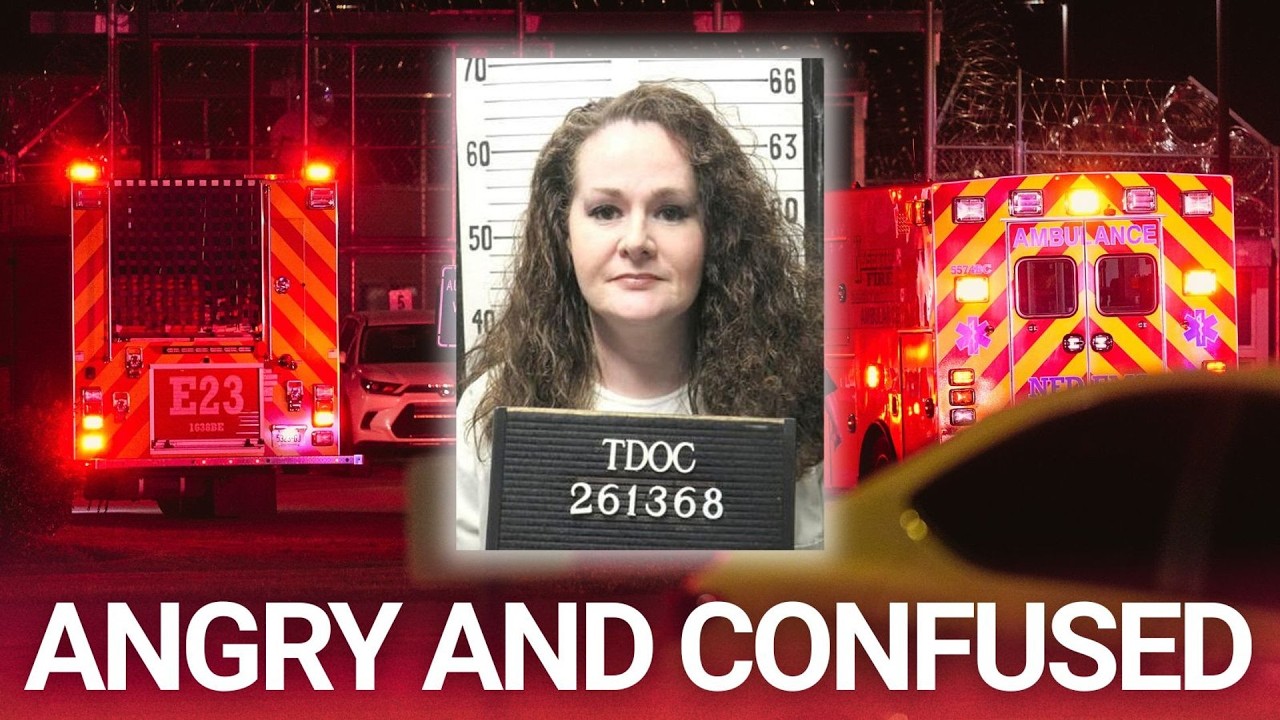
The question is what condition she will ultimately be left in.
And behind that medical question is an even larger legal one.
What happens when the state tries to execute someone, fails, and that person wakes up days later?
Pike’s attorneys released a statement nearly a week after the failed execution saying that she was conscious, speaking and still receiving critical medical care.
They described her recovery as “medically unprecedented.”
But that phrase needs to be understood carefully.
It came from her attorneys, not from her treating doctors or the hospital.
The hospital has not publicly confirmed that Pike’s recovery is medically unprecedented.
What can be established from the statement is that Pike survived the two lethal-injection attempts, spent days on life support, suffered severe injuries to both arms, and eventually regained consciousness and the ability to speak.
Her prognosis remains unclear.
Her lawyers say they expect a long recovery.
And despite the severity of her injuries, they say she remains handcuffed and shackled to her hospital bed.
That detail has become part of the growing controversy surrounding what happens next.
Because Pike is no longer inside an execution chamber.
She is inside a hospital.
She is a critically ill prisoner receiving medical treatment.
And her attorneys are now fighting for greater access to her.
They want to speak with her.
They want to understand what she remembers.
They want to know what she can communicate about the execution.
And they want to preserve every piece of evidence that could explain how Tennessee’s procedure failed.
That is why a court order concerning evidence preservation has become so important.
Pike’s lawyers argued that they could not simply trust the state to preserve everything relevant to the failed execution.
Their concern was not limited to one syringe or one IV line.
They wanted the materials connected to the execution protected so that independent investigators and courts could eventually determine what happened inside the execution chamber.
The dispute itself reveals how little is currently known.
Tennessee says its protocol was followed.
Pike’s attorneys argue that something went seriously wrong.
And without access to the physical evidence, medical records, equipment and other materials from that night, answering the question may become much harder.
That is especially important because Pike’s condition may provide clues.
Her lawyers say both arms and hands are severely swollen.
She reportedly cannot move them.
She has a blood clot.
And she has not yet regained the ability to swallow.
Those medical consequences could eventually become central evidence in determining whether the lethal-injection drugs entered her bloodstream as intended.
But there is still no definitive public account explaining exactly what happened.
Then there is the question that has been hanging over Tennessee since the moment Pike survived.
Will the state try again?
CNN reporter Ryan Young described the issue as one of the biggest questions surrounding the case.
Pike’s attorneys are asking Governor Bill Lee not to move forward with another execution.
The governor has already announced that Tennessee will conduct no further executions for the remainder of the year while the state investigates what happened.
That decision matters because Pike’s case is not the only failed execution attempt Tennessee has experienced in 2026.
Earlier in the year, the state also abandoned an execution after medical personnel struggled to establish the necessary intravenous access.
Now Tennessee has two failed execution attempts in the same year.
And Pike’s attorneys are arguing that her case requires particularly careful scrutiny because they had warned beforehand about the difficulty of accessing her veins.
The state’s investigation is therefore facing two separate questions.
What happened during Pike’s execution?
And what does that failure mean for Tennessee’s execution system?
Those questions cannot necessarily be answered by simply repeating that officials followed the existing protocol.
If the protocol was followed and the prisoner still survived two rounds of lethal injection, investigators have to examine why.
If the protocol was not followed correctly, investigators have to determine where and why the process broke down.
Either way, something happened that the system was not prepared to resolve publicly.
And now Pike herself may eventually become one of the most important witnesses.
For days, she could not speak.
Now she can.
But her attorneys say she remains cognitively confused.
She is trying to reconstruct what happened.
She is asking questions.
She wants to know where she is.
She wants to know who the people around her are.
She wants information about her legal team.
And she has reportedly asked about the family of the woman she was convicted of killing.
That last detail is particularly striking because the execution was supposed to close a story that began more than 31 years ago.
Instead, it has reopened almost every major question surrounding the case.
Colleen Slemmer’s family still wants justice for a murder committed in 1995.
Pike’s attorneys are now focused on her medical condition and legal rights.
Tennessee officials are conducting an investigation.
And the courts are being asked to determine what evidence must be preserved and what legal consequences follow from an execution that did not accomplish what it was designed to accomplish.
For Pike, however, none of those questions can be separated from her physical condition.
She woke up.
She spoke.
But she is not recovered.
She cannot yet swallow.
She cannot move her arms.
She has pneumonia.
She has a blood clot.
Her hands and arms remain severely swollen.
And doctors still cannot say how much function she will regain.
That means the next chapter of this case may not happen in an execution chamber or courtroom.
It may happen in a hospital room.
And for the first time in decades, Christa Pike herself may be able to participate in the story.
The woman Tennessee attempted to execute is now reportedly asking the most basic question imaginable.
“Where am I?”
The answer is a hospital in Nashville.
But the larger answer is much harder.
She is in the middle of a legal, medical and constitutional battle that has not ended.
And this time, she may be awake to hear every question being asked about what happened to her.
The state wants answers.
Her attorneys want evidence.
The victim’s family wants justice.
And Christa Pike, still recovering from an execution that failed twice, is now reportedly trying to understand what happened to her.
The execution was supposed to be the final chapter.
Instead, she opened her eyes.
And the next chapter has only just begun.


