The Kennedy family has represented American political power for generations, but its history also contains deeply personal conflicts.
Behind the celebrated presidential legacy stands another remarkable story involving twin brothers, a bitter divorce, and religious controversy.
Joseph P. Kennedy III and Matthew Rauch Kennedy were born into a dynasty shaped by political ambition and tragedy.
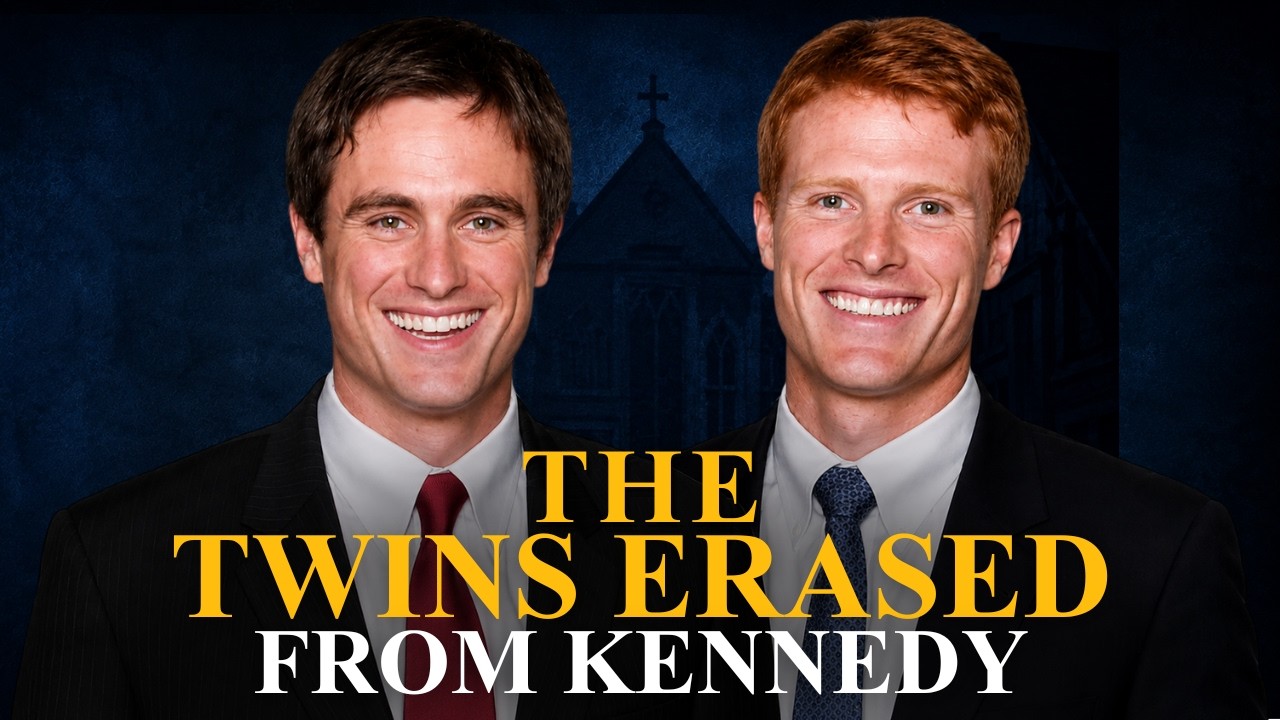
Their father was Joseph P. Kennedy II, the eldest son of Robert F. Kennedy and Ethel Kennedy.
Their mother, Sheila Rauch Kennedy, came from a prominent Philadelphia family with its own traditions of wealth and service.
When their parents’ marriage collapsed, the twins became connected to a dispute extending far beyond ordinary divorce proceedings.
Their father’s attempt to obtain a Catholic annulment generated years of controversy and eventually reached the Vatican’s appellate tribunal.
The conflict raised questions about marriage, religious authority, personal dignity, and the consequences of belonging to America’s famous dynasty.
It also revealed how two brothers sharing nearly identical family circumstances could pursue remarkably different professional and personal lives.
One eventually entered Congress, continuing the political tradition established by his grandfather and other prominent Kennedy family members.
The other pursued business and finance, maintaining a considerably lower public profile while exploring opportunities outside electoral politics.
Their contrasting paths offer an unusual perspective on the Kennedy legacy and its continuing evolution in modern American society.
Sheila Brewster Rauch was born in 1949 and grew up within the prosperous social environment of suburban Philadelphia.
Her father, Louis Rauch, was associated with the Philadelphia Saving Fund Society, an influential institution within the city’s financial history.
Her upbringing emphasized education, social responsibility, and the expectations accompanying membership in a prominent professional family.
Sheila attended Radcliffe College, where she encountered the intellectual and political debates transforming American universities during the 1960s.
Her education helped develop interests in public service, independent thinking, and the responsibilities accompanying economic and social privilege.
Those qualities would become important during the legal and religious disputes that later defined her public reputation.
Joseph P. Kennedy II entered the world on September 24, 1952, carrying one of America’s most recognizable surnames.
He was the eldest child of Robert F. Kennedy, who served as attorney general and later became a senator.
His mother, Ethel Kennedy, presided over a large household whose family traditions emphasized competition, loyalty, faith, and service.
The Kennedy children grew up surrounded by political discussions, prominent visitors, and the extraordinary expectations associated with their name.
Their family gatherings at Hickory Hill and Hyannis Port became enduring symbols of America’s most celebrated political dynasty.
Yet those privileged surroundings could not protect the children from the devastating violence that marked their family’s history.
On June 5, 1968, Robert F. Kennedy was shot while campaigning for the Democratic presidential nomination in California.
He died the following day, leaving Ethel Kennedy to raise their children while the nation mourned another assassination.
Joseph Kennedy II was fifteen years old when his father’s death fundamentally changed his family’s circumstances and future.
The tragedy followed President John F. Kennedy’s assassination in Dallas less than five years earlier, intensifying national grief.
For the surviving Kennedy children, these events transformed public political history into profoundly personal experiences of loss.
Joseph eventually developed an interest in public service, community assistance, and the practical challenges facing economically disadvantaged families.
His professional activities included work addressing energy affordability, an issue that would become central to his public identity.
He later established Citizens Energy Corporation, an organization associated with programs intended to help households manage energy expenses.
Those initiatives connected his work to the Kennedy family’s broader tradition of public advocacy and community-oriented political engagement.
During the late 1970s, Joseph Kennedy and Sheila Rauch developed a relationship that brought together two prominent American families.
Their marriage took place on February 3, 1979, beginning a partnership that initially appeared to offer stability.
Sheila entered a household with unusual public visibility, longstanding political traditions, and strong expectations concerning family loyalty.
The transition required balancing her own background and ambitions against the demands accompanying her husband’s influential family connections.
On October 4, 1980, Sheila gave birth to fraternal twin boys, Matthew Rauch Kennedy and Joseph Patrick Kennedy III.
Their arrival continued the Kennedy family line through the eldest son of the late senator Robert F. Kennedy.
The brothers inherited a surname associated with presidential history, public service, political ambition, and repeated national tragedy.
Their childhood unfolded during a period when their father’s professional and political responsibilities were becoming increasingly demanding.
Joseph Kennedy II pursued public office while maintaining his involvement in charitable and energy-related initiatives serving American communities.
In 1986, he successfully campaigned for a congressional seat in Massachusetts previously associated with his uncle John F. Kennedy.
His victory returned another member of the Kennedy family to Congress and attracted significant national media attention.
Sheila supported the campaign while raising their young sons and adjusting to the demands of congressional family life.
The election strengthened Joseph’s political position but also increased the public responsibilities surrounding his marriage and household.
Washington’s political environment brought demanding schedules, extensive travel, fundraising obligations, and constant scrutiny from journalists and constituents.
Those pressures became part of a relationship that Sheila later described as increasingly difficult and emotionally distressing.
Her subsequent accounts alleged controlling behavior and serious conflict, claims that formed an important part of their divorce controversy.
These descriptions reflected Sheila’s perspective and should be distinguished from independently established findings concerning every disputed marital incident.
By the early 1990s, the marriage had deteriorated sufficiently that the couple separated and pursued a divorce.
Their separation affected the twins during childhood, creating new family arrangements while their father’s political career continued.
The marriage legally ended in 1991, but the conflict surrounding its religious status would continue for years.
Joseph subsequently developed a relationship with Beth Kelly, who had worked within his congressional professional environment and staff.
He sought recognition of his first marriage’s invalidity under Catholic canon law before entering another church-recognized marriage.
The request created a controversy because Sheila strongly opposed the argument that their original marriage had been invalid.
Catholic annulment proceedings differ fundamentally from civil divorce, involving determinations about the validity of consent when marriage began.
A declaration of nullity does not mean a marriage’s shared experiences, children, or historical existence are literally erased.
Nor does Catholic teaching automatically consider children illegitimate when their parents’ marriage is subsequently declared canonically invalid.
Nevertheless, Sheila regarded the process as a profound challenge to her personal history and the dignity of her marriage.
Her objections centered on the suggestion that a relationship lasting years could be declared invalid through church proceedings.
The dispute became especially painful because the couple had raised two children and maintained a publicly recognized family.
In 1993, Joseph sought an annulment through Catholic authorities, beginning proceedings that would attract considerable national attention.
His petition reportedly involved questions concerning his capacity to enter a valid marriage under the church’s requirements.
Sheila disputed that characterization and argued that the marriage had been genuine despite its eventual breakdown and difficulties.
The disagreement placed their private relationship within an ecclesiastical legal system unfamiliar to many observers outside Catholic institutions.
Church tribunals evaluate whether valid marital consent existed at the wedding rather than whether the marriage later succeeded.
This distinction became central to the controversy because the parties disagreed about the meaning of their original commitment.
Sheila believed the proceedings threatened to invalidate important aspects of her identity and the family’s shared history.
Joseph pursued a different interpretation through the religious procedures available to Catholics seeking recognition of another marriage.
The case developed into a public debate about church authority, marriage law, and the treatment of former spouses.
Sheila refused to accept the initial proceedings as the final judgment concerning the validity of their relationship.
Her resistance attracted attention because the dispute involved a politically influential family and a highly visible congressional figure.
The twins were growing older while these disagreements continued, making the controversy part of their adolescent family environment.
However, the precise emotional effects on either brother cannot be established solely through public accounts of the proceedings.
Their later professional decisions should not automatically be interpreted as direct consequences of their parents’ divorce or annulment dispute.
In 1997, Sheila published Shattered Faith, a book examining her marriage and her experience challenging the Catholic annulment process.
The publication brought her perspective to a national audience and intensified discussion about ecclesiastical procedures and institutional fairness.
She described experiences that she believed demonstrated serious problems in the handling of marriage cases within church tribunals.
The book also presented allegations concerning her former husband’s behavior, which became part of the broader public controversy.
Its publication marked a significant development because Sheila transformed a private religious dispute into a wider institutional debate.
The initial annulment ruling favored Joseph’s petition, but Sheila continued pursuing the available avenues of canonical appeal.
Her determination eventually brought the case before the Roman Rota, the Catholic Church’s principal appellate tribunal in Rome.
The Roman Rota possesses authority to review marriage cases and examine whether earlier ecclesiastical judgments were legally justified.
Sheila’s appeal challenged the original finding and sought recognition that her marriage had been valid from its beginning.
The process extended across several years, demonstrating the complexity and potential duration of contested Catholic marriage proceedings.
In 2005, the Roman Rota overturned the earlier annulment, representing a significant development in Sheila’s prolonged legal challenge.
The decision recognized the validity of the original marriage, reversing the previous ecclesiastical conclusion reached in Boston.
Sheila later said she learned of the outcome in 2007, after years spent pursuing the church appeal.
The ruling represented an important personal victory because it supported her longstanding position regarding the marriage’s canonical validity.
It also demonstrated that initial tribunal decisions could be reviewed and overturned within the Catholic judicial system.
For observers, the case became an unusual example of an individual challenging an influential former spouse through religious courts.
The controversy should not be interpreted as determining the twins’ legitimacy, which Catholic canon law protects independently of annulment outcomes.
Instead, the central issue concerned the validity of their parents’ marriage and the procedures used to evaluate it.
The brothers had already begun developing separate interests and ambitions while their mother’s legal challenge remained unresolved abroad.
Joseph P. Kennedy III increasingly followed a path associated with public service, education, law, and eventually electoral politics.
Matthew Rauch Kennedy pursued a less publicly visible professional direction, eventually emphasizing business, finance, and private-sector activities instead.
Their contrasting careers reflected different opportunities available to individuals carrying a surname associated with generations of American political history.
Joseph attended Buckingham Browne and Nichols School in Cambridge, Massachusetts, an institution known for demanding academics and extracurricular activities.
He participated in athletics, including lacrosse, while developing interests that would later influence his approach to public service.
He subsequently enrolled at Stanford University, studying management science and engineering within a program emphasizing analytical and organizational skills.
The academic background distinguished him from the traditional political science and history pathways often associated with aspiring politicians.
He graduated in 2003 and soon pursued an experience that placed him outside his family’s familiar political environment.
Joseph joined the Peace Corps and served in the Dominican Republic from 2004 until 2006, working with communities.
His assignment involved supporting local economic development and ecotourism initiatives in the country’s northern Puerto Plata region.
One project concerned tourism associated with the Twenty-Seven Waterfalls of Damajagua, an attraction supporting local guides and businesses.
His work helped develop community-based opportunities intended to increase the economic benefits available to residents participating in tourism.
The experience provided direct exposure to development challenges involving employment, local entrepreneurship, and the distribution of tourism revenue.
It also reflected the Kennedy family’s longstanding emphasis on service, although Joseph pursued it outside American electoral politics.
After returning to the United States, he enrolled at Harvard Law School and continued developing his professional interests.
His legal education included involvement in programs assisting individuals facing financial difficulties and challenges within the justice system.
The Harvard Legal Aid Bureau offered opportunities to work with clients confronting housing, employment, and other civil legal problems.
Those experiences coincided with the broader financial crisis, when foreclosure and economic insecurity became major national concerns.
During law school, Joseph met Lauren Birchfield, another student whose interests included public policy and legal advocacy.
Their relationship developed while both pursued demanding academic and professional responsibilities in the highly competitive Harvard environment.
After graduation, Joseph worked as an assistant district attorney, gaining experience within Massachusetts criminal justice and prosecution systems.
His assignments included positions on Cape Cod and in Middlesex County, where he handled responsibilities involving criminal cases.
The prosecutorial experience provided practical exposure to courtroom procedures, legal decision-making, and the everyday administration of criminal justice.
These credentials helped establish an independent professional record before he sought election to the United States Congress.
In 2012, longtime Massachusetts Congressman Barney Frank announced his retirement, creating an opportunity in the state’s Fourth Congressional District.
Joseph Kennedy III entered the race, presenting himself as a candidate combining family tradition with contemporary professional experience.
His campaign attracted national attention because another Kennedy was seeking federal office in the family’s home state.
The contest also provided an opportunity to evaluate whether the Kennedy surname retained its longstanding electoral appeal.
Joseph won the election and entered Congress in January 2013, continuing his family’s extensive history of federal service.
He was thirty-two years old when he began representing a district encompassing communities across southeastern and suburban Massachusetts.
His congressional agenda included economic opportunity, workforce development, health care, education, and issues affecting middle-class families nationally.
He also advocated policies intended to improve access to mental health treatment and strengthen protections for vulnerable individuals.
These priorities reflected a combination of traditional Democratic positions and his professional experience working with economically disadvantaged communities.
In December 2012, Joseph married Lauren Birchfield, beginning another chapter of family life alongside his emerging congressional career.
The couple later welcomed two children, Eleanor and James, while balancing parenting responsibilities with public service and professional obligations.
His growing national profile eventually positioned him among younger Democratic politicians considered capable of assuming broader leadership roles.
In January 2018, Democratic leaders selected Kennedy to deliver their response to President Donald Trump’s State of the Union.
He spoke from a vocational high school in Fall River, Massachusetts, emphasizing economic dignity and opportunities for working Americans.
The setting reinforced his interest in technical education, employment preparation, and the economic challenges facing industrial communities.
His speech attracted national attention and strengthened speculation about his potential future within the Democratic Party’s leadership structure.
Some political observers viewed him as a possible candidate for higher office, including a future Senate campaign.
However, national visibility did not guarantee that his family’s historical political influence would translate into continued electoral success.
In 2019, Kennedy announced his challenge to incumbent Massachusetts Senator Ed Markey in the Democratic primary election.
The decision created a closely watched contest between an established progressive senator and a younger member of the Kennedy dynasty.
Markey had developed a strong national reputation for environmental policy, particularly through his association with the Green New Deal.
His partnership with Representative Alexandria Ocasio-Cortez strengthened support among progressive activists and younger Democratic voters across the country.
Kennedy entered the race emphasizing generational change, political engagement, and the need for energetic representation within the Senate.
The campaign quickly became a debate about experience, progressive priorities, institutional power, and the continuing appeal of political families.
Markey’s supporters argued that his legislative record and environmental leadership offered stronger reasons for retaining his Senate seat.
Kennedy’s supporters emphasized his public service experience, communication skills, and potential to expand political participation among Massachusetts voters.
The race demonstrated that the Kennedy name remained recognizable but no longer guaranteed electoral success against established Democratic incumbents.
On September 1, 2020, Markey defeated Kennedy in the Democratic primary, ending his attempt to enter the Senate.
The result attracted national attention because it represented a significant defeat for a member of Massachusetts’s celebrated political family.
For Kennedy, the outcome interrupted a promising electoral trajectory that had previously included repeated victories in congressional contests.
It also illustrated the changing political environment in which progressive policy credentials could outweigh established family recognition among voters.
His defeat did not end his involvement in public service, but it required reconsidering the available professional opportunities.
After leaving Congress, he established the Groundwork Project, an initiative supporting grassroots organizing and community-based political engagement efforts.
The organization reflected his interest in strengthening local political participation beyond the traditional structure of federal electoral campaigns.
In December 2022, President Joe Biden appointed Kennedy United States Special Envoy to Northern Ireland for Economic Affairs.
The appointment connected his professional interests to economic development, investment opportunities, and the region’s continuing peace process.
Northern Ireland’s economy has long been influenced by political stability, cross-border relationships, investment conditions, and access to employment.
Kennedy’s assignment emphasized economic opportunities that could reinforce the benefits of peace and encourage sustained private-sector investment.
The role also carried symbolic significance because the Kennedy family maintained longstanding cultural and political connections with Ireland.
His great-grandfather Joseph P. Kennedy Sr. had served as American ambassador to the United Kingdom before World War II.
President John F. Kennedy’s celebrated 1963 visit to Ireland also remained an important part of the family’s history.
Joseph Kennedy III’s appointment therefore connected a contemporary economic assignment with generations of Irish-American political relationships and diplomacy.
He served in the role through the end of 2024, working outside the electoral office he previously occupied.
The assignment demonstrated how political experience could support international economic initiatives without requiring another campaign for elected office.
Meanwhile, Matthew Rauch Kennedy pursued a different professional path, maintaining considerably less public visibility than his twin brother.
Matt’s career has been associated with business and investment activities rather than a sustained effort to seek political office.
He studied at Harvard Business School, developing expertise relevant to corporate management, financial decision-making, and investment strategy.
His educational direction contrasted with Joseph’s legal training, although both brothers pursued demanding academic and professional opportunities.
Matthew also participated in political work during Barack Obama’s 2008 presidential campaign, gaining exposure to national electoral operations.
That experience connected him temporarily with the family tradition of political engagement without establishing a long-term electoral career.
He subsequently pursued private-sector opportunities, including activities associated with investment and economic development rather than legislative responsibilities.
The supplied accounts describe interests involving sustainable energy, impact investing, and projects intended to produce measurable social benefits.
Such investment strategies seek financial returns while considering environmental or social outcomes, although individual projects require separate evaluation.
Impact investing has attracted growing attention from institutions seeking to connect capital allocation with sustainability and community development.
Its applications include renewable energy, affordable housing, infrastructure improvements, and businesses addressing environmental or economic challenges in communities.
Matthew’s professional interests therefore offer a possible connection between private finance and the family’s historical commitment to service.
However, the precise details of his investment activities are less extensively documented than his brother’s public political career.
That limitation makes it inappropriate to attribute specific achievements or personal motivations without independently verifiable supporting evidence available publicly.
Matthew’s lower public profile has nevertheless become a distinguishing feature of discussions comparing the Kennedy twin brothers’ careers.
Where Joseph sought elected office and national political visibility, Matthew developed professional interests primarily outside public electoral competition.
The contrast does not establish that either brother consciously rejected or embraced family expectations for particular psychological reasons.
Those interpretations may be compelling narrative devices, but they cannot substitute for direct statements or reliable biographical documentation.
Both brothers inherited substantial public associations through their father and grandfather, yet their professional opportunities were not identical.
Joseph’s political career required regular public appearances, campaign fundraising, media interviews, and direct accountability to constituents and voters.
Matthew’s business activities generally involved different professional relationships and did not require the same degree of continuous public exposure.
Their different career choices demonstrate the variety of paths available to later generations of a politically prominent American family.
The contrast also challenges the assumption that every Kennedy descendant must seek office to participate in public service.
Economic development, charitable initiatives, legal advocacy, and private investment can influence communities without relying exclusively upon electoral politics.
The brothers’ professional histories therefore reflect different ways individuals may engage with issues associated with their family’s public reputation.
Their mother’s prolonged annulment dispute remains another important element connecting their childhood history with broader questions of institutional power.
Sheila Rauch Kennedy’s legal challenge became notable because it involved both an influential political family and the Catholic Church.
Her successful appeal demonstrated that ecclesiastical decisions could be contested through established procedures even after an initial adverse ruling.
The Vatican decision did not reverse the couple’s civil divorce or require them to resume their marital relationship.
Instead, it addressed whether their marriage had been valid according to Catholic canon law when they exchanged consent.
That distinction is essential because the public controversy sometimes confused religious annulment with the legal dissolution of marriage.
Civil divorce terminates a legally recognized marriage, while Catholic nullity proceedings examine whether valid sacramental consent originally existed.
The Roman Rota’s ruling supported Sheila’s position that the original marriage had been valid under church law.
For Sheila, the outcome represented recognition of an important part of her personal and religious history after years.
The case also encouraged broader discussion about the rights of spouses participating in complicated ecclesiastical marriage proceedings and appeals.
Its significance extended beyond the Kennedy family because similar questions affect Catholics seeking annulments throughout the wider church.
The controversy demonstrated how religious institutions must balance established doctrine with procedural fairness and the experiences of individuals.
It also illustrated the challenges facing families when private marital disputes become intertwined with public reputation and institutional authority.
The twins’ later professional achievements occurred against this background, but neither man’s life can be reduced to parental conflict.
Joseph developed an independent record in community service, law, Congress, and international economic engagement during his professional career.
Matthew pursued education and professional opportunities that generally attracted less national attention than those of his politically active brother.
Both paths demonstrate that family heritage can influence public expectations without determining every individual’s professional choices or priorities.
The Kennedy dynasty has long been associated with public office, charitable activity, and the emotional consequences of national tragedy.
Its history includes assassinations, aviation disasters, political controversies, and intense scrutiny of marriages and personal relationships over generations.
Those events have encouraged popular references to a Kennedy curse, although the phrase describes mythology rather than demonstrable causation.
Tragedies involving prominent families receive extensive coverage, making their experiences appear unusually concentrated within the public historical record.
The term can obscure the ordinary personal challenges and varied achievements experienced by individual members of the extended family.
For Joseph and Matthew Kennedy, the more useful question concerns how their professional choices reflect changing opportunities and expectations.
Joseph’s defeat in the 2020 Senate primary demonstrated the limits of inherited political recognition within contemporary Democratic politics.
Voters evaluated his candidacy alongside Markey’s legislative experience, environmental priorities, and support among influential progressive political organizations.
The outcome suggested that established family names must compete with policy positions and political coalitions rather than replace them.
Joseph’s subsequent economic diplomacy also illustrated how public service can continue after electoral setbacks and changing career circumstances.
His Northern Ireland assignment connected economic opportunity with the broader goal of maintaining peace and strengthening regional institutions.
Matthew’s professional direction similarly suggested that individuals from political families can pursue influence through business rather than government.
Private investment carries its own responsibilities, including financial accountability, risk management, and the evaluation of measurable economic outcomes.
Projects associated with sustainability or social impact require careful scrutiny to determine whether promised benefits are actually achieved.
These considerations distinguish meaningful economic engagement from symbolic associations with charitable causes or prominent family traditions alone.
Neither brother’s professional history should be romanticized as a complete solution to the pressures associated with political inheritance.
Their careers contain achievements, uncertainties, and choices that deserve examination on their own terms rather than through family mythology.
The same principle applies to Sheila Rauch Kennedy, whose public identity became closely associated with her annulment challenge.
Her legal persistence demonstrated determination, but her life and accomplishments extend beyond the conflict with her former husband.
The publication of Shattered Faith brought her perspective into national debate while exposing deeply personal experiences to public scrutiny.
Her appeal to the Roman Rota ultimately produced a ruling supporting the validity of the marriage she defended.
That outcome remains an important chapter in the history of contested Catholic annulments involving prominent American public figures.
It also underscores the distinction between religious recognition and the personal realities experienced during an unsuccessful marriage and divorce.
The couple’s children remained members of both families throughout the controversy, regardless of ecclesiastical proceedings or public interpretations.
The twins’ identities were never dependent upon a church tribunal declaring their parents’ marriage valid or invalid afterward.
Their subsequent lives illustrate how family relationships continue beyond legal decisions, religious disputes, and highly publicized personal conflicts.
As adults, Joseph and Matthew developed distinct careers while retaining connections to an unusually prominent American political heritage.
Their story therefore offers a broader perspective on the evolving meaning of the Kennedy name in contemporary society today.
Earlier generations established a public image closely associated with presidential leadership, electoral success, and dramatic national political events.
Later generations have encountered a more fragmented political environment where inherited prestige competes with changing expectations and priorities.
Joseph’s electoral defeat and subsequent diplomatic service illustrate adaptation within that environment rather than a simple dynastic decline.
Matthew’s business career demonstrates another route, although its comparatively private nature limits detailed conclusions about his professional impact.
Together, their experiences challenge the assumption that a shared surname necessarily produces identical ambitions, opportunities, or public identities.
The Kennedy family remains historically significant, but its members continue making individual choices that cannot be explained by ancestry alone.
The annulment dispute also remains significant because it shows how deeply personal disagreements can raise wider institutional questions.
Sheila’s challenge concerned her own marriage, yet it generated discussion about religious procedure, fairness, and individual participation rights.
The eventual Vatican ruling demonstrated that established institutions possess mechanisms for reconsidering decisions when appellate challenges are successful.
For observers interested in family history, the case illustrates the importance of separating documented outcomes from emotionally compelling interpretations.
The marriage ended through civil divorce, while the later religious proceedings addressed a distinct question concerning canonical validity.
Those two facts can coexist without suggesting that the twins’ identities or family relationships were somehow legally erased.
Understanding that distinction provides a more accurate account than narratives portraying the annulment as literally eliminating their existence.
The brothers were born into a famous family, experienced their parents’ separation, and eventually developed their own professional directions.
One entered Congress and later pursued economic diplomacy, while the other established a career outside sustained electoral politics.
Their mother’s prolonged challenge resulted in a significant ecclesiastical ruling that became part of their family’s documented history.
These events remain compelling without requiring speculative claims about private emotions or the precise motivations behind career decisions.
The broader lesson concerns the relationship between inherited expectations and individual agency within families possessing extraordinary public visibility.
A famous surname can provide opportunities, attract scrutiny, and create assumptions that individuals must negotiate throughout their lives.
It cannot guarantee electoral victories, determine personal values, or establish the meaning of every professional and family decision.
Joseph P. Kennedy III and Matthew Rauch Kennedy demonstrate that distinction through careers reflecting different interests and responsibilities.
Sheila Rauch Kennedy’s experience adds another dimension, showing how one individual challenged a consequential institutional decision through appeal.
Their combined history reveals a family story shaped by conflict, public service, legal persistence, and changing political circumstances.
It also encourages a more grounded understanding of the Kennedy legacy beyond familiar narratives of glamour and tragedy.
The dynasty’s historical influence remains substantial, but its future cannot be understood solely through the achievements of earlier generations.
Later descendants operate within different political, economic, and cultural conditions requiring choices suited to their own circumstances and ambitions.
For Joseph, those choices have included elected office, community organizing, and international economic work after a difficult electoral defeat.
For Matthew, they have included business education, political campaign experience, and a professional life with comparatively limited public visibility.
For Sheila, the defining public controversy involved defending her understanding of a marriage against an initial ecclesiastical judgment.
The Vatican’s reversal became an important conclusion to that legal dispute, though it could not undo the divorce.
These different experiences show how members of one family can encounter distinct institutions while pursuing their own objectives.
The Kennedy twins’ story ultimately concerns more than a famous surname, a bitter divorce, or an extraordinary church appeal.
It concerns the continuing effort to establish independent identities while living within a family whose history remains nationally significant.
Their lives demonstrate that public service can take different forms, and that inherited reputation does not determine personal destiny.
The Kennedy name continues attracting attention, but the individuals carrying it remain responsible for defining their own paths.


