For years, Mary Richardson Kennedy appeared to have the kind of life that American society magazines loved to celebrate. She was an accomplished designer, the wife of environmental attorney Robert F. Kennedy Jr., the mother of four children, and a member of one of the most famous political families in the United States. Their home in Bedford, New York, was admired for its environmentally conscious design, while their marriage appeared to unite professional talent, public service, wealth, and family tradition.
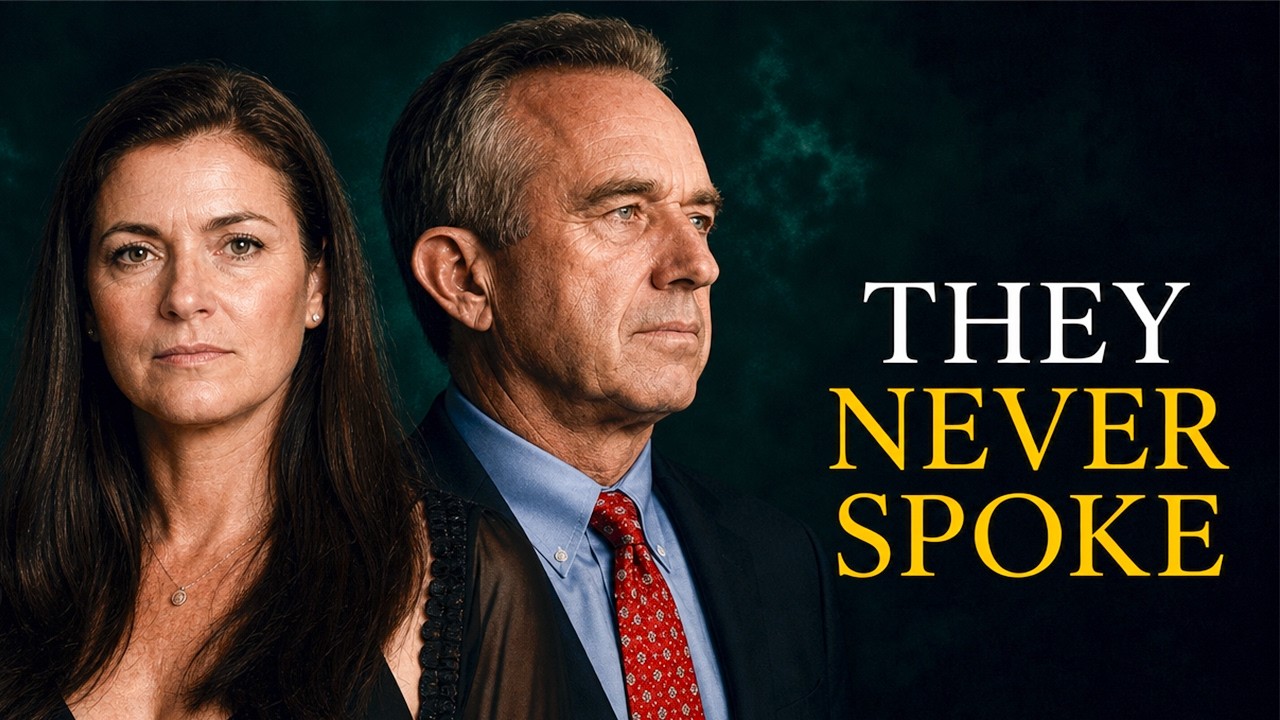
But behind that image, the marriage was deteriorating. Financial disagreements, allegations of infidelity, substance-use problems, mental health struggles, and an increasingly bitter divorce transformed the couple’s private lives into a public controversy.
On May 16, 2012, Mary was found dead at the family’s Bedford property. She was fifty-two years old. The medical examiner ruled her death a suicide.
What followed intensified an already painful family tragedy. A disputed affidavit from the divorce proceedings became public, Mary’s relatives challenged the portrayal of her marriage, and her remains were later moved to another burial plot without her siblings being consulted, according to their accounts.
The conflict left behind competing narratives about a woman whose life had been intertwined with the Kennedy family since adolescence. Understanding that story requires looking beyond the final months of her marriage to the years when Mary Richardson first entered the family’s world.
Mary Kathleen Richardson was born on October 4, 1959, into a large Irish Catholic family. She was one of seven children and grew up in an environment where education, family relationships, and religious traditions were important.
Her father died while she was young, an experience that people close to her later described as a significant loss. During adolescence, Mary attended the Putney School in Vermont, where she developed a friendship that would change the course of her life.
Her roommate was Kerry Kennedy, daughter of Robert F. Kennedy and Ethel Kennedy.
Through Kerry, Mary became closely acquainted with the Kennedy family. She visited their homes, participated in gatherings, and developed relationships with relatives whose names were already familiar throughout American politics.
The friendship gave her an unusually intimate view of a family that most Americans knew only through newspapers, television, and political history.
Mary was not an outsider suddenly introduced to the Kennedys through marriage. She had spent much of her youth and early adulthood within their social circle.
That connection eventually brought her closer to Kerry’s brother, Robert F. Kennedy Jr.
According to later accounts from friends and biographers, Mary had admired him since her teenage years. The precise evolution of their relationship is less fully documented, but their familiarity long preceded their eventual marriage.
Mary also developed a substantial professional identity of her own.
She pursued design and architecture-related work, establishing herself in New York’s creative community. Her career included work with Parish-Hadley, the influential decorating firm associated with some of America’s most prestigious interiors.
The firm’s history included work connected to Jacqueline Kennedy’s restoration of the White House, giving Mary’s professional environment another indirect link to the family she knew personally.
Colleagues regarded her as talented and detail-oriented. She possessed a strong interest in design, materials, and the relationship between buildings and their surroundings.
Those interests would later become central to the public identity of her marriage.
Meanwhile, Robert F. Kennedy Jr. was building a career that combined his family’s political legacy with environmental advocacy.
His early adulthood had included serious personal difficulties.
In 1983, he was arrested on a heroin possession charge following an incident during air travel. He subsequently entered treatment and became involved in environmental work through court-ordered community service.
That experience helped introduce him to organizations working to protect the Hudson River.
Over time, he became a prominent environmental attorney and advocate, associated with Riverkeeper and legal campaigns against pollution.
By the early 1990s, he had developed a reputation as a determined environmental campaigner.
He was also married.
In 1982, Kennedy had married Emily Ruth Black, with whom he had two children. Their marriage eventually deteriorated, and the couple divorced in 1994.
Mary and Kennedy became romantically involved during the final period of that first marriage.
Mary was pregnant before his divorce from Emily was finalized.
On April 15, 1994, Mary Richardson and Robert F. Kennedy Jr. married aboard a research vessel on the Hudson River.
The setting reflected Kennedy’s environmental work and created a distinctive alternative to the grand ceremonies often associated with his family.
Mary was approximately six months pregnant at the time.
Their first child, Conor, was born that July.
Three more children followed: Kyra in 1995, Finn in 1997, and Aidan in 2001.
For a time, their growing family appeared to embody a new generation of Kennedy domestic life.
They spent time at family gatherings and became associated with environmental causes, charitable activities, and the social traditions of the Kennedy circle.
Mary’s professional interests increasingly intersected with her husband’s public work.
The couple established a home in Bedford, an affluent community in Westchester County, New York.
Mary became deeply involved in creating and improving the property, drawing upon her design experience and her interest in environmentally responsible construction.
The residence attracted attention for its green building features, including energy-efficient systems and sustainable materials.
It became an example of how environmental principles could be incorporated into an upscale family home.
Mary’s contribution was substantial.
The project reflected her aesthetic judgment, practical planning, and professional knowledge.
The couple’s public image benefited from the apparent harmony between their careers.
Kennedy challenged environmental polluters through litigation and advocacy, while Mary demonstrated sustainable principles through residential design.
Together, they appeared to offer a model of environmental commitment extending from public activism into private life.
Mary was also involved in charitable initiatives.
She helped establish the Food Allergy Initiative, reflecting her concern about the medical needs of children with serious allergies, including those within her own family.
Her charitable work expanded her identity beyond the role of a political spouse.
Yet the family’s outward stability concealed serious difficulties.
Accounts published after Mary’s death described longstanding marital tensions, including allegations of Kennedy’s infidelity.
One particularly controversial source emerged in 2013, when the New York Post published excerpts from a journal attributed to Kennedy.
The newspaper reported that the journal contained coded references to numerous extramarital encounters during 2001.
Kennedy did not publicly authenticate the material, and the precise meaning and reliability of the reported entries remain matters requiring caution.
Nevertheless, the publication intensified scrutiny of his personal conduct during the marriage.
Friends and relatives offered different perspectives on what Mary knew and how the relationship affected her.
Some accounts described a woman deeply hurt by alleged infidelities and the emotional demands of remaining within the Kennedy family.
Others emphasized her own difficulties with depression, alcohol, and periods of instability.
These competing descriptions became central to the public debate after her death.
The marriage was not simply a private relationship between two individuals. It existed within a powerful family network involving political connections, social expectations, considerable wealth, and public recognition.
That environment offered opportunities but could also complicate efforts to establish independence when relationships deteriorated.
Mary’s professional work had become closely associated with the Bedford home and the couple’s environmental identity.
As the marriage weakened, the home remained one of the most visible expressions of what they had built together.
By the late 2000s, reports described increasing marital conflict.
The couple reportedly pursued counseling, but their difficulties continued.
Mary experienced significant mental health and substance-use challenges, according to accounts from people close to her and later court records.
Those struggles deserve to be understood as serious health concerns rather than reduced to evidence of personal failure.
At the same time, they became part of the increasingly adversarial legal dispute surrounding the marriage.
On May 12, 2010, Robert F. Kennedy Jr. filed for divorce.
Three days later, Mary was arrested in Bedford on a drunken-driving charge.
She faced another driving-related arrest later that year, involving allegations concerning prescription medication.
The incidents generated extensive media attention because of the Kennedy family name.
They also became relevant to questions about parenting and custody.
The couple’s divorce proceedings involved disputes over their four children and the circumstances under which each parent would care for them.
Friends of Mary later told journalists that she had been deeply distressed by the divorce filing.
Some described her as continuing to hope for reconciliation even as the legal process advanced.
Others recalled periods when she sought treatment and appeared determined to stabilize her life.
The accounts suggest that her circumstances changed over time and cannot be reduced to a single continuous decline.
Her financial position also became a point of controversy.
Reporting based on interviews with Mary’s relatives and friends alleged that access to money and credit had been restricted during the divorce proceedings.
Her family argued that those restrictions increased her vulnerability and left her dependent upon arrangements controlled by her estranged husband.
The precise financial circumstances were contested, and the public record does not establish every allegation.
What is clear is that the divorce involved substantial disagreement over resources, parenting, and the future of the family home.
For Mary, the stakes were unusually high.
The Bedford property represented years of professional and personal investment.
Her children were central to her life.
Her social relationships had long overlapped with the Kennedy family.
The breakdown of the marriage therefore threatened several important parts of her identity at once.
In September 2011, Kennedy submitted an affidavit during the custody proceedings.
The document, reported to be approximately sixty pages long, described allegations concerning Mary’s behavior and mental health.
It included claims about incidents of anger, instability, and conduct Kennedy believed affected the children’s welfare.
Those allegations were presented in the context of adversarial litigation.
They were not independent medical findings, and their inclusion in a sworn statement did not establish that every characterization was accurate or complete.
Mary’s relatives later disputed the affidavit’s overall portrayal of her.
They argued that it emphasized her most difficult moments while failing to acknowledge the circumstances surrounding her distress.
The document would become especially controversial after her death.
Another painful development involved Kennedy’s relationship with actress Cheryl Hines.
The precise timeline of their romantic involvement during Kennedy’s separation from Mary has been described differently in published accounts.
By the final period of Mary’s life, the relationship had become a source of public discussion.
Friends later suggested that Mary’s awareness of her estranged husband’s new relationship contributed to her emotional distress.
Such accounts describe their perceptions, but they cannot establish a direct causal explanation for her death.
Suicide is complex, and it would be misleading to attribute Mary’s death to any single relationship, legal filing, or financial dispute.
By the spring of 2012, the divorce remained unresolved.
Mary was living at the Bedford property, while the custody dispute continued.
People close to her described alternating periods of hope, distress, and concern about her well-being.
Her siblings remained involved in supporting her and later expressed frustration about what they believed had happened during the marriage.
On May 16, 2012, Mary Richardson Kennedy was found dead in a barn on the Bedford property.
The Westchester County medical examiner determined that she had died by suicide.
Her death brought immediate national attention.
The public reaction reflected both the tragedy itself and the extraordinary prominence of the Kennedy name.
News reports revisited her design career, charitable work, marriage, and recent legal difficulties.
Friends remembered her creativity, generosity, and commitment to her children.
Others discussed the mental health struggles that had become increasingly visible during the divorce.
The medical examiner’s findings did not resolve the broader disputes about the marriage.
Mary’s relatives continued to argue that the public portrayal of her life had become unfairly dominated by her difficulties.
Her funeral was held at St. Patrick’s Church in Bedford.
Members of the Kennedy family attended, along with relatives and friends from different periods of Mary’s life.
Robert F. Kennedy Jr. delivered a eulogy in which he spoke about her qualities and the challenges she had experienced.
The service was intended to honor her memory, but the tensions between the families soon became public.
One of the most controversial developments involved the custody affidavit.
After Mary’s death, details of Kennedy’s sworn statement appeared in national media coverage, including reporting by Newsweek and The Daily Beast.
The material described allegations concerning her behavior during the marriage.
Because Mary had died, she could no longer respond directly to the claims.
Her relatives strongly criticized the publication and characterization of the document.
They argued that the affidavit presented a damaging and one-sided account of a woman who had been experiencing serious difficulties.
The Richardson family described the coverage as an attack on Mary’s character after her death.
The source responsible for disclosing the material was not publicly established.
Without reliable evidence identifying the person who provided it, responsibility for the disclosure cannot fairly be assigned to a particular individual.
Nevertheless, the publication intensified the conflict over how Mary would be remembered.
Kennedy’s allegations and the Richardson family’s objections represented sharply different perspectives.
The legal document emphasized concerns about Mary’s conduct and parenting.
Her relatives emphasized the marital circumstances, emotional suffering, and financial pressures they believed had contributed to her decline.
Neither account alone can provide a complete history of the marriage.
The dispute also demonstrated how private family conflict can become particularly destructive when court documents enter public circulation.
Allegations developed for custody proceedings were suddenly being interpreted by readers who lacked access to the full evidentiary record.
Mary’s mental health became a subject of public debate rather than a private medical matter.
For her relatives, that exposure was especially painful because she could no longer explain her own experiences.
The conflict did not end with the funeral.
Mary was initially buried at St. Francis Xavier Cemetery in Centerville, Massachusetts, near the Kennedy family’s Cape Cod community.
Several weeks later, her remains were exhumed and reburied in another section of the same cemetery.
Contemporary reporting described the new location as approximately seven hundred feet from the original grave.
Her siblings said they had not been consulted before the move.
The Richardson family expressed anger and distress over the decision.
They regarded the relocation as another example of their exclusion from important decisions concerning Mary’s memory.
The reasons offered for the reburial involved cemetery and family burial arrangements.
But the dispute quickly acquired a significance extending beyond practical questions about grave placement.
For Mary’s relatives, the issue concerned respect, communication, and the right to participate in decisions about their sister.
For the public, it became another unsettling chapter in an already tragic story.
The image of a woman’s grave being moved only weeks after her funeral attracted widespread attention.
It also reinforced the impression that the two families were deeply divided.
The Richardson and Kennedy families had shared close personal connections for decades.
Mary’s friendship with Kerry Kennedy had begun during adolescence.
She had spent much of her life attending family events and developing relationships with Kennedy relatives.
Her marriage had further intertwined their lives.
Yet the aftermath of her death produced a bitter disagreement over her treatment, her legal circumstances, and the narrative surrounding her final years.
Public reporting described a serious rupture between the families.
The full extent of their private relationships afterward is not completely documented, and broad claims that every relative permanently severed contact would go beyond the available evidence.
Still, the public conflict was unmistakable.
In August 2014, Robert F. Kennedy Jr. married Cheryl Hines at the Kennedy family compound in Hyannis Port.
The wedding attracted considerable media attention.
For observers who remembered Mary’s death only two years earlier, the event renewed interest in Kennedy’s previous marriage.
His public life continued through environmental advocacy, political activity, and eventually a presidential campaign.
Mary’s story, however, remained closely associated with the circumstances of her death.
In 2013, the publication of the journal excerpts attributed to Kennedy had already introduced new allegations concerning his conduct during their marriage.
Later biographies and investigative accounts examined those allegations alongside the custody dispute and statements from Mary’s relatives.
Jerry Oppenheimer’s writing about the Kennedy family and Maureen Callahan’s 2024 book Ask Not contributed to renewed scrutiny of the family’s treatment of women.
Callahan’s account placed Mary’s experience within a broader critical interpretation of Kennedy family history.
That interpretation attracted attention, but it should be understood as an author’s argument rather than an uncontested historical verdict.
The book emphasized patterns of unequal power, public image management, and the difficulties faced by women whose personal lives became entangled with prominent Kennedy men.
Mary’s marriage provided one of its most emotionally charged examples.
The renewed attention coincided with Robert F. Kennedy Jr.’s return to national political prominence.
His presidential campaign brought his biography, family relationships, and past controversies under intensified examination.
Journalists revisited Mary’s death, the divorce proceedings, and the competing accounts of their marriage.
For many readers, the renewed coverage offered a different perspective from the reporting published immediately after her death.
Rather than viewing Mary primarily through allegations concerning addiction and instability, some accounts placed greater emphasis on her professional accomplishments, family relationships, and the pressures surrounding her divorce.
That shift did not eliminate the evidence of her health difficulties.
Nor did it establish that every accusation against her husband was true.
It did, however, encourage a broader examination of the circumstances in which the marriage ended.
Mary Richardson Kennedy had been more than the estranged wife of a prominent political figure.
She was an accomplished designer whose work reflected serious professional skill.
Her involvement in sustainable architecture connected environmental principles with practical residential design.
Her charitable activities reflected concern for children and families confronting serious medical conditions.
She was also a mother whose relationship with her children formed a central part of her life.
Those aspects of her identity deserve attention independent of the legal and personal disputes that dominated her final years.
At the same time, an accurate account cannot ignore her mental health struggles or the difficulties documented during the divorce.
Acknowledging those experiences does not diminish her professional achievements or reduce her humanity.
People can experience serious psychiatric illness while also being talented, loving, and capable of meaningful contributions.
They can make harmful decisions while also suffering harm.
They can be involved in complicated relationships in which different participants offer conflicting accounts of what happened.
The challenge for historians and journalists is to avoid transforming that complexity into a simplified story of innocence and guilt.
Mary’s death became the subject of intense public interpretation partly because so many aspects of her life were connected to powerful institutions.
Her husband belonged to a famous political family.
Their marriage involved substantial financial resources.
Their legal dispute concerned children and property.
Their social world included influential people with access to national media.
After her death, those institutions helped shape the information available to the public.
The affidavit became one source.
Statements from her siblings became another.
Journalistic investigations, memoirs, and biographies added further perspectives.
Each source has limitations.
A custody affidavit is written to support a legal position.
Family recollections can be affected by grief, loyalty, and personal experience.
Leaked journals require careful authentication and interpretation.
Biographies depend upon the reliability of interviews, documents, and the author’s analytical choices.
An accurate account must distinguish established events from allegations and interpretations.
The dates of the marriage, divorce filing, arrests, death, funeral, and reburial are matters of public record.
The precise emotional dynamics of the marriage are more difficult to reconstruct.
The question of what might have prevented Mary’s death cannot be answered definitively.
Mental health crises arise through combinations of circumstances, and retrospective accounts rarely capture every factor.
Assigning responsibility for a suicide to one person would oversimplify both the medical realities and the surviving evidence.
But uncertainty about causation does not make the documented disputes irrelevant.
The financial allegations, custody proceedings, and conflict between the families remain important parts of the history.
They help explain why Mary’s death generated such prolonged controversy.
The Bedford house is perhaps the most enduring physical symbol of that story.
It represented Mary’s professional interests and the environmental values the couple publicly shared.
Its design demonstrated the possibilities of sustainable residential construction.
It also became the location of the final chapter of a marriage that had once seemed inseparable from the Kennedy family’s modern identity.
That contrast gives the property a significance beyond architecture.
The same home celebrated in design coverage became associated with grief, legal conflict, and unanswered questions.
Yet Mary’s contribution to the house should not be remembered only because of the tragedy that occurred there.
Her work deserves recognition on its own terms.
She brought knowledge, imagination, and commitment to a project that attracted admiration for its environmental features.
She helped demonstrate that sustainable design could be incorporated into a sophisticated family residence.
Her achievements reflected years of professional development preceding her marriage.
The story of Mary Richardson Kennedy is therefore about more than the collapse of a prominent relationship.
It is also about the difficulty of maintaining an independent identity when professional, social, and family life become closely connected to a powerful spouse.
It is about the ways divorce can expose unequal resources and competing claims about private behavior.
It is about the vulnerability of people experiencing mental health difficulties during adversarial legal proceedings.
And it is about the struggle to preserve a person’s full identity after death, when others are left to describe experiences the person can no longer explain.
Mary’s relatives sought to ensure that she would be remembered for more than the allegations contained in court documents.
They spoke about her talents, relationships, and the suffering they believed had been insufficiently understood.
Kennedy’s legal statements presented a different account emphasizing his concerns about her conduct and the children’s welfare.
The historical record contains both perspectives.
Neither should be treated as automatically complete.
Fourteen years after Mary’s death, the controversy surrounding her marriage remains part of the broader public discussion about the Kennedy family.
The passage of time has produced additional reporting and competing interpretations, but it has not resolved every private disagreement.
What remains clear is that Mary lived a life of considerable accomplishment before becoming the subject of national tragedy.
She entered the Kennedy family’s world as a teenager, built a professional career, married Robert F. Kennedy Jr., raised four children, and contributed to environmental and charitable projects.
Her final years were marked by serious personal and legal difficulties.
Her death brought grief to her children, siblings, friends, and others who knew her.
The disputes that followed revealed how differently the people closest to her understood the marriage.
The reburial controversy added another painful dimension, transforming even the location of her grave into a matter of public disagreement.
For many observers, that episode remains one of the most troubling details in the aftermath.
But Mary’s legacy should not be defined exclusively by the decisions others made after she died.
It also belongs to the work she completed, the relationships she formed, and the life she lived before the marriage became a public conflict.
The image of Mary Richardson Kennedy standing beside her husband in their environmentally designed Bedford home once represented an apparently successful partnership.
The later history revealed a far more complicated reality.
Behind the photographs were personal struggles, conflicting loyalties, and legal disputes that the public could not see.
The tragedy of her death made those hidden tensions impossible to ignore.
Today, her story remains a reminder that the public image of a celebrated family can reveal only a fraction of the lives unfolding behind it.
Mary Richardson Kennedy was an architect of spaces, a mother, a charitable advocate, and a woman whose life intersected with one of America’s most powerful political dynasties.
The disputes surrounding her death remain part of her history, but they are not the entirety of it.
Her memory deserves something more complete than the competing accusations that followed her final days.
It deserves recognition of her achievements, compassion for her struggles, and an understanding that no single court document, family statement, or sensational headline can capture the whole of a human life.


