Donald Trump has repeatedly described his older brother Freddy as the reason he never developed a drinking habit.
It is a deeply personal story, one that transforms family tragedy into a lesson about discipline and survival.
But behind that familiar account lies a far more complicated history involving inheritance, ambition, addiction, and extraordinary wealth.
Freddy Trump was once expected to inherit the business empire that eventually helped make his younger brother famous.
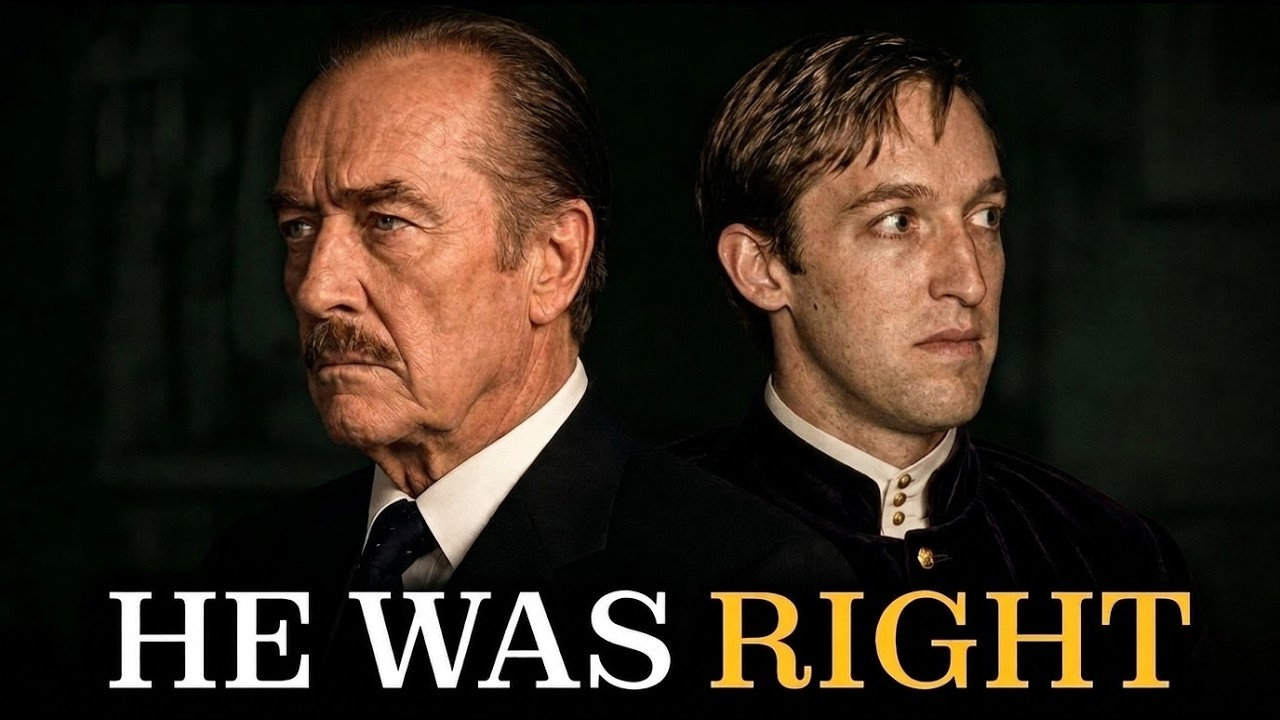
He was the firstborn son, the family namesake, and the presumed successor to his father’s growing real estate operation.
Yet by his early thirties, Freddy had lost his position, abandoned aviation, and returned to his childhood bedroom.
He eventually died at forty-two, leaving behind two children whose inheritance would become the subject of bitter litigation.
Decades later, documents connected to that legal dispute helped expose the financial arrangements supporting Donald Trump’s wealth.
The resulting revelations transformed a forgotten family tragedy into an important chapter of modern American political and financial history.
At the center stood Fred Trump Sr., a businessman whose understanding of family loyalty was inseparable from commercial success.
His expectations were demanding, and the consequences for children who failed to satisfy them could be deeply personal.
Freddy’s story begins with a family enterprise that had already survived one devastating loss before he was born.
Fred Trump’s father, Friedrich Trump, died during the influenza pandemic of 1918, leaving property and financial responsibilities behind.
His widow, Elizabeth, helped preserve the family’s real estate interests while their young son developed his construction ambitions.
By 1927, the family business operated under the name E. Trump and Son, reflecting Elizabeth’s central financial role.
That early experience shaped Fred Sr.’s conviction that commercial survival required discipline, relentless work, and careful financial control.
Over subsequent decades, he built thousands of apartments throughout Brooklyn and Queens, frequently using government-supported housing programs.
His fortune grew through construction, property management, rental income, and an ability to navigate complicated public financing arrangements.
Fred Sr. became known for monitoring expenses closely, visiting properties personally, and demanding unwavering attention to operational details.
He viewed business management as a permanent obligation rather than a career someone could casually abandon for personal satisfaction.
Within that environment, his eldest son inherited expectations extending far beyond ordinary parental hopes for professional achievement.
Fred Trump Jr., commonly known as Freddy, was born in October 1938 into a family already accumulating considerable wealth.
He possessed an outgoing personality that distinguished him from his more reserved and relentlessly business-focused father.
Friends and relatives frequently remembered Freddy as charming, humorous, sociable, and capable of making people comfortable almost immediately.
Those qualities helped him build friendships, but they were not necessarily the characteristics his father valued most.
Fred Sr. prized toughness, financial discipline, competitive instincts, and the ability to maintain control under difficult circumstances.
The difference between father and son gradually became one of the defining tensions inside the Trump household.
Freddy attended Lehigh University, where he developed interests that suggested an independent future beyond managing apartment buildings.
He enjoyed boating, fishing, flying, and the freedom associated with operating machinery far from the family’s properties.
Aviation particularly appealed to him because it combined technical competence, personal responsibility, and opportunities for travel.
For someone expected to spend his adulthood overseeing rental apartments, flying offered an entirely different professional identity.
His father, however, had already imagined a future in which Freddy would eventually direct the family enterprise.
The family’s real estate operation represented decades of accumulated wealth, making succession an important commercial and emotional question.
Freddy graduated from college in 1960 and entered the business, apparently beginning the career his father envisioned.
He worked from the company’s Brooklyn headquarters, where financial decisions and property management operations were closely supervised.
At first, his position appeared promising because Fred Sr. was overseeing one of his most ambitious developments.
Trump Village, a large apartment complex in Coney Island, represented a major expansion of the family’s housing interests.
Freddy received responsibilities within the operation and was introduced as someone expected to assume increasing authority.
But holding a title did not necessarily mean possessing the freedom to make important financial decisions independently.
According to later family accounts, disagreements emerged over management methods, contractor expenses, and acceptable levels of operational spending.
One frequently discussed episode involved replacing windows at Trump Village, where Freddy reportedly favored hiring an outside contractor.
His father allegedly preferred a cheaper approach involving internal labor and more limited expenditures across the development.
The disagreement illustrated conflicting attitudes toward management, with Freddy emphasizing practical execution and Fred Sr. emphasizing cost control.
Although the precise conversations remain difficult to verify, the broader conflict appears consistently across family recollections.
Freddy wanted meaningful responsibility, while his father expected unquestioning adherence to methods developed over decades of business experience.
That difference became increasingly difficult to reconcile because neither man appeared willing to abandon his preferred approach.
Meanwhile, another son was growing into the competitive environment that Freddy increasingly found uncomfortable and restrictive.
Donald Trump, born in 1946, was considerably younger but developed a relationship with his father centered on ambition.
As a teenager, Donald attended New York Military Academy, where discipline and competitive achievement were strongly emphasized.
His subsequent career would eventually carry the Trump name from outer-borough apartment developments into Manhattan’s commercial real estate market.
Freddy, however, increasingly looked toward a future that did not require competing for authority inside the family business.
In August 1962, he married Linda Clapp, a flight attendant whose background differed from the family’s established social environment.
Their marriage represented an important personal commitment, but accounts suggest his parents did not enthusiastically embrace the relationship.
The couple eventually had two children, Fred Trump III and Mary Trump, who would later become prominent family critics.
Freddy also pursued commercial aviation, qualifying for a profession that demanded substantial technical knowledge and personal discipline.
He joined Trans World Airlines, commonly known as TWA, and worked as a commercial airline pilot.
The position offered professional independence and an identity that existed beyond the Trump family’s substantial financial influence.
Commercial aviation during the 1960s carried considerable prestige, especially as jet travel transformed international transportation and business.
Pilots operated sophisticated aircraft, completed demanding training, and accepted responsibility for passengers traveling across enormous distances.
For Freddy, the cockpit represented a legitimate professional achievement rather than a temporary escape from responsibility.
His father reportedly regarded the occupation very differently, questioning why his heir would work for an airline.
The description of pilots as glorified chauffeurs became one of the most enduring anecdotes surrounding their troubled relationship.
Whether delivered as criticism or ridicule, the remark conveyed a powerful message about the family’s hierarchy of acceptable careers.
Managing property was considered worthy of the Trump name, while flying passengers appeared beneath the designated successor.
Donald Trump later acknowledged that he had also pressured his brother about remaining in the aviation profession.
In a 2016 interview with The New York Times, Donald expressed regret about his earlier treatment of Freddy.
That admission is significant because it came directly from the younger brother who eventually assumed the family’s business ambitions.
It also demonstrates that Freddy faced criticism from multiple relatives while attempting to establish his own career.
Freddy eventually left aviation, although the exact relationship between family pressure, personal confidence, and alcohol remains disputed.
Some accounts emphasize growing drinking problems, while others describe the damaging effects of criticism and professional uncertainty.
The available record does not establish a single cause for his departure from the airline industry.
What is clear is that losing his aviation career represented a devastating turning point in his adult life.
He returned to the family business without regaining the authority or standing he had previously expected.
His personal circumstances deteriorated further as alcohol dependence increasingly affected his relationships, health, and ability to maintain stability.
The distinction matters because family pressure alone cannot adequately explain the complex progression of substance dependence.
Alcoholism can damage marriages, professional opportunities, physical health, and personal relationships regardless of the circumstances surrounding its development.
Freddy’s marriage eventually ended in divorce, leaving him facing profound uncertainty about his future and family responsibilities.
By his early thirties, he had returned to his parents’ home after losing much of his independence.
The contrast with his earlier ambitions was striking, especially considering the enormous wealth controlled by his father.
Instead of directing major developments, Freddy reportedly performed maintenance work and collected rents at properties owned by the family.
Such responsibilities were legitimate work, but represented a dramatic reduction from the executive future once envisioned for him.
The eldest son had become an employee with limited authority inside the very enterprise he was expected to inherit.
That arrangement also reinforced his financial dependence upon relatives who increasingly viewed his personal difficulties as professional failures.
According to later accounts, Fred Sr. frequently judged his children through standards emphasizing strength, performance, and competitive success.
Freddy’s struggles placed him outside those standards, while Donald increasingly represented the ambitious successor his father admired.
The family’s internal hierarchy therefore changed without necessarily requiring a formal announcement or complete personal separation.
Freddy remained connected to the family business, but the prospects of eventually leading it appeared increasingly remote.
Donald, meanwhile, began expanding into Manhattan real estate with substantial financial and institutional support from his father.
The difference between the brothers’ trajectories became more pronounced as one gained influence while the other lost independence.
Freddy reportedly spent time in Florida, pursuing boating and other activities that had once brought him considerable happiness.
Those periods suggested that his interests and personality remained connected to experiences outside the family’s commercial environment.
Yet returning to independent professional life became increasingly difficult as his health and personal circumstances deteriorated.
Alcohol dependence created recurring challenges, even during periods when Freddy reportedly attempted to stop drinking.
His children later remembered affectionate moments, including fishing trips and occasions when their father displayed his characteristic humor.
Those recollections complicate any portrayal of Freddy as merely an unsuccessful businessman or an example of personal weakness.
He was also a father, brother, friend, and technically skilled individual whose life contained achievements beyond family expectations.
That broader identity became increasingly important after his death, when public accounts often reduced him to his alcoholism.
By his late thirties, years of heavy drinking had reportedly contributed to serious medical problems and repeated hospitalizations.
On September 26, 1981, Fred Trump Jr. died at forty-two, leaving his children without their father.
His death became a defining event in Donald Trump’s personal narrative, particularly regarding alcohol and tobacco.
Donald has repeatedly explained that observing Freddy’s struggles convinced him to avoid drinking, smoking, and recreational drugs.
That lesson may have been deeply meaningful, and Donald has publicly expressed regret about pressuring his brother.
Nevertheless, Freddy’s life contained substantially more than the cautionary message repeatedly attached to his memory.
The circumstances of his final hours have also become controversial through accounts published by his daughter, Mary Trump.
She described a painful family environment and alleged that relatives failed to respond compassionately during Freddy’s final crisis.
Other family members have challenged aspects of her broader account, making some private details difficult to establish independently.
Those disagreements should not obscure the central historical facts surrounding Freddy’s illness, declining circumstances, and premature death.
His passing left two children whose future relationship with the family fortune would become increasingly contentious.
For years, the Trump family continued expanding and transferring wealth through businesses, trusts, partnerships, and other financial arrangements.
Fred Sr. remained a powerful figure in the family’s financial affairs long after his eldest son’s death.
His estate planning eventually created the dispute that would bring Freddy’s descendants into direct conflict with surviving relatives.
In 1991, Fred Sr. signed a will establishing arrangements for distributing his wealth among family members.
The document reportedly provided Freddy’s children with substantially smaller interests than they believed their father’s family branch deserved.
Fred Sr. was elderly when the will was executed, and his later cognitive decline became central to subsequent litigation.
Freddy’s children would argue that their grandfather lacked sufficient capacity and had been improperly influenced during estate planning.
Those allegations were disputed, and the underlying legal questions were never conclusively resolved through a final trial judgment.
The inheritance dispute nevertheless exposed profound disagreements about fairness, family status, and the distribution of accumulated wealth.
Fred Sr. died in June 1999, bringing decades of closely controlled financial arrangements into a new legal phase.
The following year, Freddy’s children challenged aspects of the estate arrangements in New York Surrogate’s Court.
Fred Trump III and Mary Trump argued that their branch had been treated unfairly compared with surviving relatives.
Their challenge created an unusually public conflict within a family known for protecting financial information and internal relationships.
The dispute became especially controversial because Fred III had a young son requiring substantial medical care.
His son William was born with serious disabilities and needed continuing treatment, assistance, and specialized support.
According to reporting and subsequent family accounts, medical coverage connected with the family’s arrangements was terminated during litigation.
The timing generated criticism because William’s medical needs were substantial and the inheritance dispute remained unresolved.
Donald Trump publicly acknowledged the connection between the lawsuit and the family’s decision regarding coverage.
The episode intensified questions about how financial disputes could affect vulnerable relatives dependent upon family-controlled resources.
Coverage was eventually restored, and the inheritance litigation ended through a settlement reached in 2001.
The agreement included confidentiality provisions that limited public access to the precise terms negotiated between family members.
For years afterward, the dispute appeared to have ended without fundamentally changing the public narrative surrounding Trump’s wealth.
That narrative portrayed Donald as a self-made businessman who transformed relatively modest family assistance into extraordinary commercial success.
His father was often described as a successful outer-borough developer whose contribution to Donald’s fortune had been limited.
But extensive financial reporting eventually revealed a much more complicated history of wealth transfers between generations.
In October 2018, The New York Times published a major investigation examining the Trump family’s financial arrangements.
Reporters David Barstow, Susanne Craig, and Russ Buettner analyzed extensive records involving taxes, property valuations, loans, and partnerships.
Their investigation challenged the public image of Donald Trump’s fortune as primarily the product of independent business achievement.
The reporting concluded that Donald had received enormous financial benefits from his father’s wealth throughout his life.
Those benefits reportedly included direct transfers, favorable loans, business arrangements, and ownership interests established during childhood.
The investigation estimated that Donald received the equivalent of at least $413 million in contemporary purchasing power.
That figure referred to the investigation’s inflation-adjusted estimate, rather than a single payment or independently earned business income.
The reporting also examined arrangements that investigators described as potentially designed to minimize taxes and transfer family wealth.
Among those arrangements was All County Building Supply and Maintenance, a company involved in transactions with family properties.
The investigation questioned whether such transactions inflated expenses while transferring financial benefits to Fred Sr.’s children.
It also raised concerns about property valuations and the methods used to calculate estate and gift taxes.
These findings were based on documentary analysis, although particular interpretations and allegations remained contested by the Trump family.
The investigation received the Pulitzer Prize for Explanatory Reporting in 2019, underscoring its significance within American investigative journalism.
Perhaps the most remarkable element was the role played by documents preserved through the earlier family inheritance dispute.
Mary Trump subsequently confirmed that she had supplied confidential family financial records to journalists investigating the family’s wealth.
Those records had originated from legal proceedings connected to the dispute over her grandfather’s estate.
Materials produced during litigation survived long after the family believed the controversy had been resolved through settlement.
Their eventual disclosure helped journalists reconstruct transactions that had previously remained outside meaningful public examination.
The daughter of the family’s displaced eldest son had therefore become instrumental in challenging its most celebrated financial narrative.
That reversal carried particular historical significance because Freddy himself had never achieved comparable control over the family enterprise.
His daughter, however, possessed records capable of revealing how financial power had actually moved between generations.
The documents demonstrated the importance of examining inheritance systems rather than accepting simplified stories of individual entrepreneurial success.
They also connected Freddy’s personal history with broader questions about taxation, inherited privilege, and concentrated family wealth.
Mary Trump expanded her public criticism in 2020 through her memoir Too Much and Never Enough.
The book described the family’s internal relationships and offered her interpretation of the psychological pressures surrounding its business culture.
Her professional background as a psychologist informed those interpretations, although personal experience also shaped her perspective.
The Trump family disputed aspects of her account and attempted to prevent publication through litigation over confidentiality obligations.
A New York appellate court ultimately allowed the book’s publication, enabling Mary to present her allegations publicly.
The memoir became a major commercial success, attracting attention to Freddy’s experiences and the family’s private history.
Nevertheless, distinguishing documentary evidence from personal recollection remains essential when evaluating allegations involving conversations and motivations.
Financial records can establish transactions and ownership arrangements, but they cannot automatically prove every psychological interpretation.
Similarly, recollections of family conflict may illuminate emotional experiences without independently resolving every disputed historical detail.
That distinction is especially important because the story involves both documented financial arrangements and deeply contested personal relationships.
Mary’s account portrays Freddy as someone whose temperament and ambitions conflicted with the family business’s competitive expectations.
Other accounts emphasize his alcoholism and the difficulties that substance dependence created for his relatives and employers.
Neither perspective alone provides a complete explanation for the collapse of his professional and personal life.
His younger brother has acknowledged pressuring him about aviation, while also describing genuine affection and regret.
Those statements support a more complicated portrait than either total family indifference or a purely innocent victim narrative.
Freddy made consequential personal decisions, but those decisions occurred within a family environment carrying unusually powerful expectations.
His children eventually followed different paths in responding to their experiences within the wider Trump family.
Mary pursued public commentary, writing, and the disclosure of financial information concerning the family’s wealth.
Fred Trump III became increasingly involved in disability advocacy, influenced by the needs of his son William.
His work drew attention to the challenges facing families caring for children with serious developmental and medical disabilities.
In 2024, Fred III published All in the Family, offering his own account of relationships within the dynasty.
The memoir included disputed allegations about remarks Donald allegedly made concerning people with severe disabilities.
Donald Trump’s representatives rejected those allegations, and the reported private conversations remain contested rather than independently established facts.
The controversy nevertheless extended public examination of how the family understood vulnerability, dependence, and personal responsibility.
Those questions echoed themes already present in Freddy’s life, particularly the tension between achievement and perceived weakness.
Fred Sr.’s business philosophy emphasized productivity and resilience, qualities that could become harsh standards when applied to family relationships.
Freddy’s alcoholism made those standards especially difficult to satisfy as his health and professional circumstances deteriorated.
Yet evaluating him exclusively through financial performance would ignore the human complexity of his achievements, relationships, and struggles.
He had successfully entered commercial aviation, a profession requiring skills that his father’s real estate business did not demand.
He had established friendships, married, raised children, and pursued interests that reflected an independent personality.
His failure to inherit the company therefore should not automatically be interpreted as evidence of personal inadequacy.
Instead, it raises questions about the expectations imposed upon children born into businesses that dominate family identity.
In such environments, succession may appear less like an opportunity than an obligation inherited before personal ambitions emerge.
A child who rejects that obligation can be viewed as rejecting the family’s history and economic security.
Freddy’s preference for flying challenged an assumption that his professional future belonged inside the family enterprise.
His father’s disapproval, as described in multiple accounts, reflected that fundamental disagreement about responsibility and acceptable ambition.
The consequences became more severe as Freddy’s dependence on alcohol undermined his ability to maintain independence.
His return to the family business reinforced an imbalance of authority that had existed since his early adulthood.
Meanwhile, Donald increasingly demonstrated the competitive instincts and commercial ambition that his father appeared to reward.
The succession effectively shifted toward the younger son, transforming the family’s future and its eventual public identity.
Donald would become internationally famous, enter presidential politics, and repeatedly describe Freddy’s death as a formative personal lesson.
That account contains a recognizable truth about the lasting influence of witnessing a loved one’s addiction.
But it also leaves substantial room for examining the pressures Freddy experienced before his death.
His story was not simply about drinking, just as the family’s financial history was not simply about entrepreneurship.
Both involved complex relationships between personal choice, inherited advantage, family authority, and the distribution of resources.
The later inheritance dispute made those relationships visible in a way Freddy himself could never have anticipated.
His children challenged their position within the family fortune and preserved records that subsequently informed landmark investigative reporting.
The resulting disclosures changed public understanding of how wealth had been accumulated, managed, and transferred within the Trump family.
They also ensured that Freddy’s descendants would remain part of the historical conversation surrounding the family’s economic legacy.
The irony is considerable because the son once expected to inherit the enterprise became increasingly peripheral during his lifetime.
Yet his descendants eventually helped expose financial arrangements central to understanding the enterprise’s development and influence.
Their actions did not erase Freddy’s struggles, but they complicated a narrative that had long defined him through failure.
The broader story offers a cautionary example of how family businesses can shape identities far beyond employment.
Financial power can provide extraordinary opportunities while simultaneously creating dependence, expectations, and disputes over who deserves authority.
Fred Sr. built an enormously successful real estate operation, but commercial achievement did not guarantee harmony among his children.
Freddy sought an independent professional identity and ultimately experienced a decline that family wealth could not prevent.
Donald inherited greater business influence and later transformed the family name into a powerful political brand.
Their contrasting experiences demonstrate how siblings can occupy radically different positions within the same system of privilege.
One became the public symbol of success, while the other became a recurring warning about addiction and lost potential.
But neither identity fully captures the complicated human histories that produced those outcomes over several decades.
Freddy’s life deserves attention beyond its usefulness as an explanation for his younger brother’s personal habits.
He was a capable pilot, a charismatic individual, a struggling father, and someone whose ambitions diverged from family expectations.
His death was tragic, but the years preceding it reveal equally important questions about independence, belonging, and dignity.
The inheritance battles that followed also demonstrate how unresolved family conflicts can survive across generations through legal and financial structures.
Those conflicts eventually produced evidence challenging assumptions about one of America’s most recognizable business and political families.
For historians, the challenge remains separating verifiable transactions and documented statements from disputed memories and retrospective psychological interpretations.
For the public, the challenge is recognizing that family success stories often conceal complicated relationships beneath their polished surfaces.
Fred Trump Jr. did not inherit the empire he was once expected to lead, nor escape its influence.
His children, however, helped bring its financial history into public view through litigation, documentation, advocacy, and personal testimony.
That outcome transformed a largely forgotten family member into a central figure in understanding the Trump dynasty.
The final lesson is not that Freddy was simply destroyed by ambition or that his choices alone determined everything.
It is that personal vulnerability and family expectations can interact in ways that profoundly shape an individual’s future.
The Trump family accumulated extraordinary wealth, but Freddy’s experience shows that financial abundance cannot resolve every human conflict.
His story ultimately concerns a man seeking independence, a father demanding succession, and descendants questioning the resulting inheritance.
And decades after his death, the records preserved by those descendants ensured his family’s history could no longer remain simple.


