John Gotti’s Commission Power Play Collided With Vincent Gigante’s Cold Refusal and Deadly Mafia Rules
John Gotti’s Commission Power Play Collided With Vincent Gigante’s Cold Refusal and Deadly Mafia Rules
John Gotti could command a room, dominate a sidewalk, and turn a courthouse entrance into theater.
Vincent “The Chin” Gigante built his power by doing almost the exact opposite.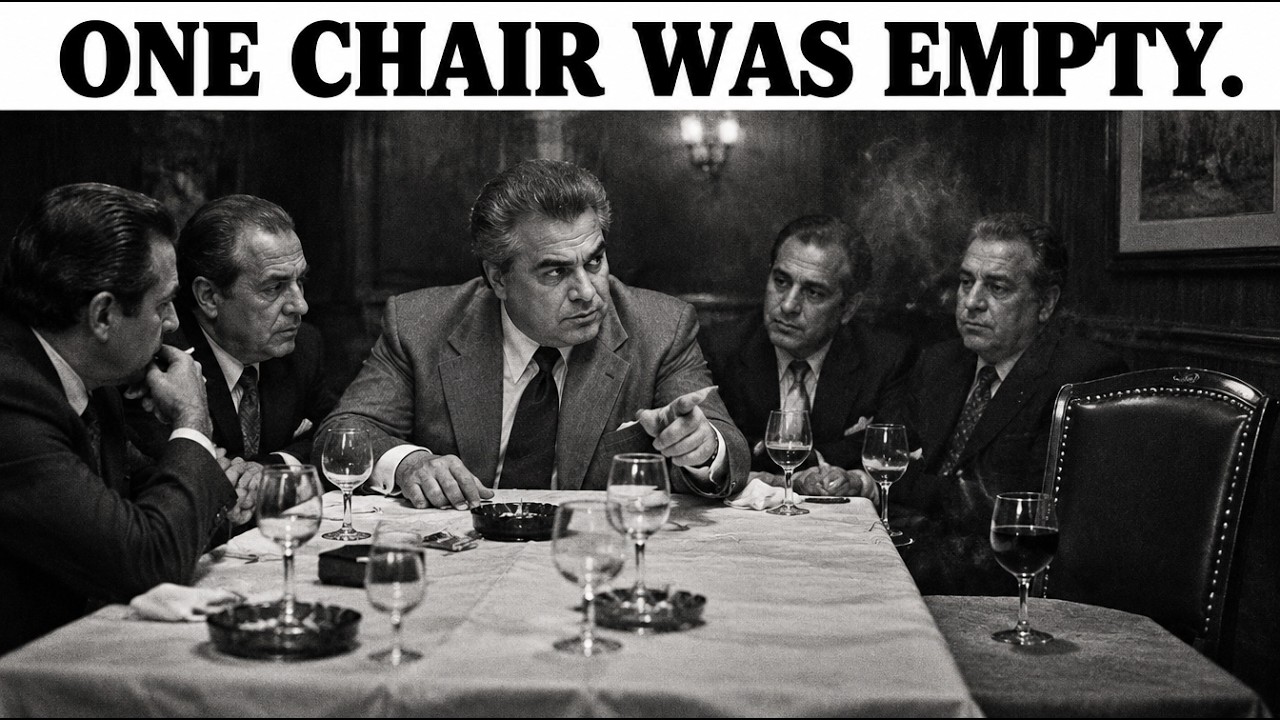
Where Gotti cultivated visibility, Gigante cultivated absence.
Where Gotti spoke loudly, Gigante often communicated through intermediaries.
Where the Gambino boss embraced the image of New York’s most recognizable mobster, the Genovese leader spent years constructing an elaborate public appearance of mental illness while quietly exercising enormous influence behind the scenes.
That contrast is one reason stories about Gotti summoning Mafia leaders and being deliberately snubbed by a shadowy rival have survived for decades.
There was unquestionably hostility between them.
There were also genuine Mafia rules, Commission politics, murder conspiracies, secret meetings, couriers, and federal recordings.
But the dramatic claim that a newly released federal wiretap captures Gotti exploding during a summit because Gigante refused to appear requires an important distinction.
Federal records strongly support the underlying power struggle.
They do not authenticate the specific “phantom kingpin refusal tape” now circulating in sensational versions of the story.
The deeper history begins with Paul Castellano.
Castellano controlled the Gambino crime family until December 16, 1985, when gunmen murdered him and his underboss Thomas Bilotti outside Sparks Steak House in Manhattan.
Sammy “The Bull” Gravano later testified that he and Gotti had spent months preparing the assassination.
According to Gravano, Gotti watched from nearby as the shooters attacked Castellano and Bilotti.
The killing transformed New York’s underworld.
It also violated one of organized crime’s most consequential internal rules.
A Mafia boss was not supposed to be killed without approval from the Commission, the governing body through which major New York families attempted to resolve disputes and regulate major acts of violence.
Gravano later testified explicitly about that rule.
Asked what punishment followed the unauthorized killing of a boss, he answered that the penalty was death.
Gotti nevertheless emerged from the assassination as Gambino boss.
His elevation gave him tremendous power.
It also placed a target on him.
For Vincent Gigante, the issue was not simply personal dislike.
The government’s later case against Gigante described the Castellano assassination as an unsanctioned attack on the Mafia’s governing order.
The Justice Department stated that Gigante, as Genovese boss, participated in a conspiracy to murder Gotti because Gotti had arranged the killing of Castellano without obtaining Commission permission.
Federal court records went even further.
Evidence introduced in the Gigante case indicated that Commission members agreed the people responsible for killing Castellano had to be identified and punished.
Once Gotti, his brother Gene, and Gravano were connected to the conspiracy, plans were developed to kill members of the Gotti faction.
A federal jury ultimately found the conspiracy to murder Gotti proven as a racketeering predicate, even though one standalone conspiracy count was later dismissed because of statute-of-limitations issues.
That is the real reason Gigante’s attitude toward Gotti carried such menace.
He was not merely another boss refusing to attend a social gathering.
He represented a faction of organized crime that regarded Gotti’s rise as the product of an unsanctioned regicide.
The famous image of Gotti as the “Teflon Don” can obscure how precarious his position actually was.
To the public, Gotti looked almost untouchable.
He wore expensive suits.
He cultivated journalists.
He smiled for cameras outside courtrooms.
He had beaten major prosecutions before finally being convicted in 1992.
Inside organized crime, however, celebrity did not erase the consequences of Castellano’s murder.
Gigante’s methods made the threat especially difficult to read.
According to FBI material, Gigante ran the Genovese family while maintaining an elaborate performance of mental instability.
Former Genovese soldier Vincent Cafaro told investigators that Gigante controlled the family from behind the scenes while behaving publicly as though he were mentally ill.
He became famous for wandering through Greenwich Village wearing a bathrobe and appearing confused.
The behavior helped produce the nickname “the Odd Father.”
But prosecutors later convinced juries that the performance concealed a functioning Mafia boss.
Gigante was also intensely cautious about meetings and surveillance.
Gravano testified during Gigante’s 1997 trial that “Chin” avoided gatherings with senior organized-crime leaders because he feared being photographed or recorded.
Gravano said he had seen Gigante attend only one major meeting of New York’s crime families.
According to that account, Gigante even appeared there wearing a bathrobe.
That detail helps explain why stories portraying him as the missing figure at Gotti’s attempted show-of-force sound plausible.
Gigante’s absence could itself communicate power.
He did not need to stand beside Gotti for photographs.
He did not need reporters to recognize him.
He did not need to demonstrate authority by commanding attention.
Avoiding a meeting could protect him from surveillance while also forcing others to deal with him through intermediaries.
The Genovese family developed extraordinary precautions around its boss.
Testimony indicated that members sometimes avoided even saying Gigante’s nickname.
Instead, they allegedly referred to him indirectly as “the guy” while touching their chins.
The purpose was simple: reduce the usefulness of electronic surveillance.
That strategy contrasted dramatically with Gotti.
Gotti became one of the FBI’s greatest electronic-surveillance targets.
Agents eventually placed court-authorized microphones around locations he used for meetings.
Recordings from the Ravenite Social Club and associated locations became devastating evidence.
The FBI describes electronic surveillance, combined with investigative work and Gravano’s cooperation, as central to the case that finally sent Gotti to prison for life.
Some authentic Gotti recordings show exactly how personally he could respond when subordinates ignored his commands.
One widely reported tape captured Gotti discussing a mobster who had refused to answer a summons.
Gotti’s reaction was lethal.
The Washington Post later quoted him saying the man would die because he had refused to come when called.
That statement concerned an underling, not Gigante.
But it illustrates why a refusal from a fellow boss would have carried extraordinary symbolic weight in Gotti’s world.
Gotti expected obedience from people beneath him.
Gigante was not beneath him.
That was the problem.
The Commission system theoretically placed family bosses on a shared institutional plane.
No single boss simply ruled every other New York family.
Gotti may have possessed enormous fame and influence, but the Genovese family remained one of the most powerful organized-crime organizations in the country.
The FBI later described it as perhaps the nation’s most powerful crime family.
Gigante therefore had no reason to behave like a Gambino subordinate summoned to Gotti’s headquarters.
Federal evidence even shows that Gotti and Gravano sometimes recognized the limits of their authority.
One recorded discussion introduced in later litigation involved Gotti and Gravano talking about using a Genovese member in a murder plot involving Corky Vastola.
They understood that permission from Gigante was required.
Gigante reportedly refused.
According to Justice Department material summarizing the litigation, the government argued that the fact his refusal was obeyed demonstrated his authority within La Cosa Nostra.
That documented refusal is especially significant.
It shows that Gigante genuinely could say no to Gotti.
It also demonstrates why later storytellers could turn the relationship into an archetypal conflict between two completely different Mafia personalities.
Gotti was the public king.
Gigante was the invisible veto.
And behind the political disagreements was the possibility of assassination.
The murderous consequences of the Castellano dispute became clearer years later.
At Gigante’s federal trial, witnesses described efforts to punish the Gambino faction.
Authorities ultimately established that the plot against Gotti existed.
Gigante was convicted of racketeering and murder-conspiracy offenses in 1997.
The jury specifically found involvement in the plot to kill Gotti as part of the racketeering case.
Gotti escaped that particular Mafia assassination partly because federal authorities intervened first.
He was arrested in December 1990.
In 1992, he was convicted on 13 counts, including racketeering and the Castellano and Bilotti murders.
The man who had repeatedly escaped major prosecutions was sentenced to life without parole.
Gigante’s campaign therefore never reached the ending its participants allegedly intended.
The government removed Gotti before his Mafia rivals did.
That twist adds another layer to the legend.
The mob boss portrayed publicly as fearless and dominant was being hunted simultaneously by law enforcement and other mob leaders.
Yet the viral claim of a grand summit where every “underworld titan” gathered while Gigante deliberately refused to appear cannot currently be treated as a verified archival event.
There were Commission meetings.
There were Gotti tapes.
There were Gigante refusals.
There were couriers and intermediaries.
There was a proven conspiracy to kill Gotti.
But those separate facts should not automatically be fused into one supposedly authenticated recording.
No federal source located here identifies a newly released summit recording containing the exact confrontation described in the viral caption.
The FBI’s Gotti archive contains extensive investigative material.
Federal prosecutors used numerous recordings against him.
Gigante’s cases also produced extensive testimony concerning Commission politics.
Yet none of the reviewed government records authenticates a ten-second clip in which Gotti explodes after receiving a courier-delivered refusal from Gigante during a gathering of all Five Families.
That does not make the underlying rivalry imaginary.
It means the evidence must be described accurately.
The most historically grounded version is more complex.
Gotti broke a fundamental Mafia rule by arranging Castellano’s death without Commission permission.
Gigante considered that violation serious enough to participate in plans to have Gotti killed.
Gigante deliberately avoided unnecessary meetings and electronic surveillance.
He possessed enough authority that Gotti’s faction sometimes sought his permission for interfamily actions.
And there is documented evidence that Gigante could refuse such requests.
Meanwhile, Gotti’s own willingness to talk in supposedly secure surroundings helped federal agents build the recordings that ultimately contributed to destroying him.
The contrast is almost cinematic.
Gotti appeared invincible because everybody could see him.
Gigante appeared weak or unstable because he tried to make sure nobody could see the real man at all.
For years, outsiders underestimated the quiet boss.
Inside the Mafia, prosecutors argued, almost nobody did.
Even Gotti had to reckon with him.
Their personalities represented two competing models of underworld power.
Gotti believed fear could be amplified through visibility.
He transformed himself into a symbol.
Crowds gathered outside courtrooms.
Newspapers chronicled his suits.
Television cameras waited for his arrival.
His nickname became part of American popular culture.
Gigante practiced concealment.
He delegated.
He limited exposure.
He used acting bosses and intermediaries.
He attempted to make investigators question whether he was mentally competent enough even to stand trial.
His strange behavior worked for years.
But ultimately the strategy failed.
Federal investigators developed evidence that he had been directing Genovese operations while maintaining the appearance of incapacity.
He was convicted in 1997.
Later, prosecutors accused him of continuing to run the family from prison.
In 2003 he pleaded guilty to obstruction of justice, effectively acknowledging that his supposed incompetence had been part of a deception.
He died in federal custody in 2005.
Gotti had already died in federal prison three years earlier.
Neither ultimately escaped the government.
But their conflict left one of the clearest examples of how internal Mafia law could become more dangerous than public rivalry.
The Castellano assassination made Gotti famous.
It also gave powerful enemies a justification to kill him.
The rule Gotti violated was not ceremonial.
According to testimony and federal records, unauthorized murder of a boss threatened the entire Commission system.
If one captain could simply kill his boss and assume control, every family hierarchy became vulnerable.
Punishing Gotti therefore served more than revenge.
From the Commission’s perspective, it defended the system itself.
That is why Gigante’s opposition carried a different weight from ordinary jealousy.
He could see Gotti’s rise as a challenge to institutional Mafia authority.
The Justice Department’s own account directly links the murder conspiracy to Gotti’s failure to obtain Commission permission before killing Castellano.
In that context, describing Gotti as “marked meat” captures the danger surrounding him, but it should be recognized as dramatic language rather than an authenticated Gigante quotation.
No verified archival recording reviewed here contains those exact words.
Similarly, no confirmed federal transcript establishes that Gigante sent an “ice-cold refusal” through couriers at the specific summit described online.
What federal evidence does establish is enough.
Gigante resisted Gotti’s authority.
He had his own power base.
He could refuse Gambino requests.
He avoided meetings and recordings.
And he participated in a conspiracy whose intended target was John Gotti himself.
The story therefore does not need a fabricated summit tape to be remarkable.
The real humiliation for Gotti was structural.
He had taken the Gambino throne through spectacular violence and emerged as America’s most famous mob boss.
Yet fame could not make Vincent Gigante obey him.
Gotti controlled the Gambino family.
He did not control the Genovese family.
He could demand loyalty from his crews.
He could not simply command another boss.
And after Castellano’s murder, the man Gotti could not command was allegedly helping organize his death.
There is an irony in how history preserved the two men.
Gotti left behind a huge electronic footprint.
His voice survived on federal recordings.
His threats became courtroom evidence.
His conversations helped prosecutors describe the inner mechanics of the Gambino family.
Gigante spent years trying to prevent exactly that outcome.
He restricted meetings.
He communicated cautiously.
His associates avoided saying his name.
He hid power beneath an image of instability.
Federal agents eventually pierced that disguise, but the strategy allowed him to remain difficult to prosecute for years.
That difference may be the closest thing to the ultimate insult in their rivalry.
Gotti wanted everyone to recognize that he was the boss.
Gigante understood that real power sometimes depended on ensuring almost nobody could prove it.
So when modern retellings describe a phantom kingpin refusing to kneel before the Teflon Don, they are dramatizing a relationship grounded in a genuine historical conflict.
The Commission politics were real.
The feud was real.
The murder plot was real.
Gigante’s extraordinary secrecy was real.
And Gotti’s anger at people who ignored his summons is preserved on authentic federal tapes.
But the viral “leaked mob summit wiretap” tying all those elements into one explosive confrontation remains unverified.
The actual federal record delivers a colder conclusion.
John Gotti murdered his way to the top of the Gambino family.
Vincent Gigante never accepted that this made Gotti king of New York.
And while Gotti was busy becoming the most famous gangster in America, one of the most secretive bosses in the country was helping build a conspiracy designed to make sure his reign ended permanently.


