Deadwood, Dakota Territory, 1876, looked rough from the street, but what happened behind certain doors was far worse.
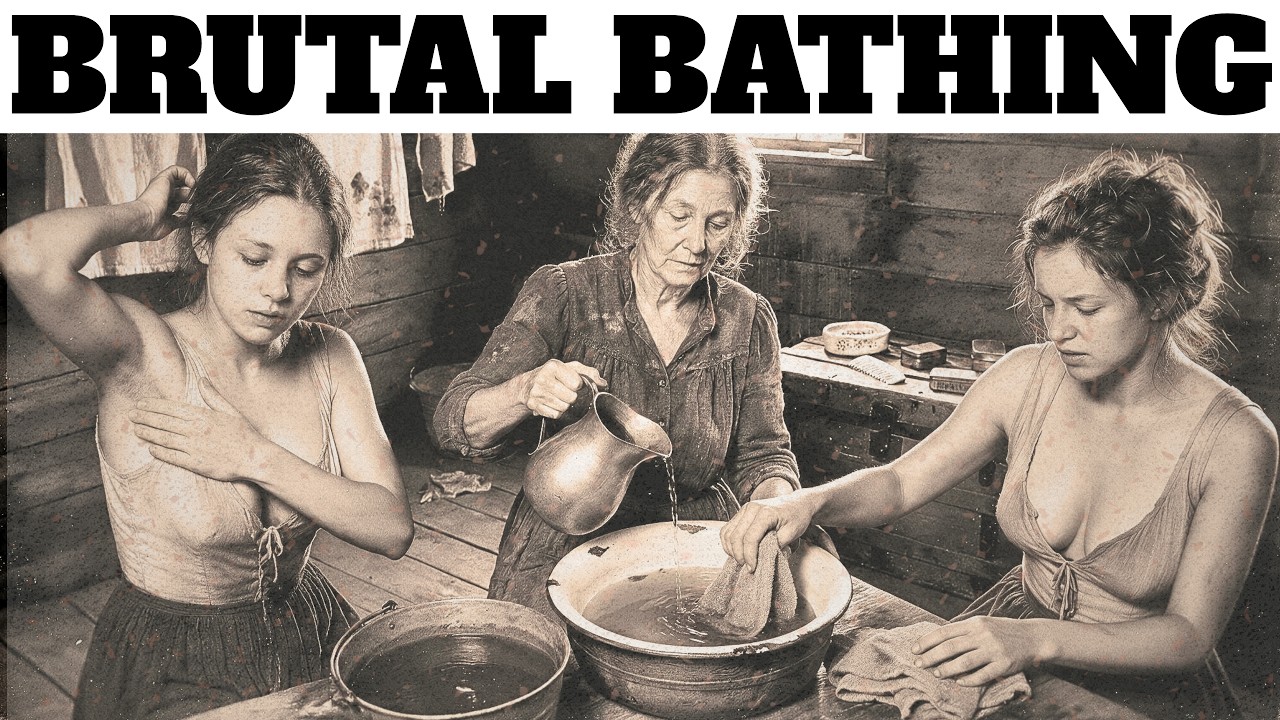
At the end of one narrow hallway sat a tin basin filled with water already gray from repeated use.
One rag moved from customer to customer, while the same water remained untouched for hours inside the crowded building.
That basin was not merely a convenience.
For many frontier brothels, it was practically the entire hygiene system.
Hollywood later filled these rooms with candlelight, polished furniture, scented perfume, and spotless white linens.
The historical record points toward something harsher: smoke, sweat, chamber pots, corrosive chemicals, vermin, disease, and dangerously limited water.
What follows are twenty disturbing realities hidden beneath the romantic image of the Wild West brothel.
20. Perfume Was Often Hiding Something
The most expensive houses tried hardest to create the illusion of elegance.
Mattie Silks operated one of Denver’s most famous parlor houses during the nineteenth century.
Her establishment reportedly included carpets, curtains, music, and expensive decoration designed to impress wealthy customers.
Yet even luxurious houses struggled against the heavy mixture of odors that accumulated during a long night.
Coal-oil lamps polluted the air while bodies crowded small rooms without reliable ventilation.
Chamber pots remained nearby, water was expensive to carry, and regular bathing could not always happen.
Perfume was therefore more than decoration.
It helped disguise an environment no amount of silk curtains could completely transform.
19. Lice Combs Were Essential Equipment
Frontier customers did not arrive freshly bathed after comfortable office jobs.
Many came directly from mines, cattle yards, rail camps, or dusty construction sites.
Some had spent twelve hours sweating underground before walking into a brothel.
Lice and other parasites traveled easily inside clothing, hair, blankets, hats, and beards.
A fine-toothed comb could therefore sit beside a bed as naturally as a candle or drinking cup.
It was not an eccentric accessory.
It was a defensive tool against men who might not have touched clean water since sunrise.
18. Mattresses Could Be Alive With Bedbugs
Cheap mattresses were often stuffed with straw, prairie grass, or cornhusks.
Once insects entered those materials, eliminating them became extremely difficult.
The mattress could not simply be machine-washed, disinfected, or replaced without significant expense.
Burning it and purchasing another was usually the most effective solution.
For poor workers, however, replacement might cost more than an entire week’s income.
Kerosene was sometimes poured into seams in an attempt to drive the insects away.
Some bugs died.
Others survived and quickly returned.
The result was a brutal calculation of poverty.
When cleanliness cost more than survival, people learned to live with infestation.
17. The Chamber Pot Was the Plumbing
Some red-light districts had no running water and no sewer connection.
Many cramped rooms also lacked private outhouses.
The only practical toilet might be a ceramic or metal pot stored beneath the bed.
In better establishments, servants emptied them regularly.
In poorer rooms, the same pot could serve a long procession of customers before finally being carried outside.
Waste might then be dumped into an alley, ditch, or nearby open area.
Town officials sometimes received complaints about unbearable odors.
Complaints were recorded.
Infrastructure often remained unchanged.
16. The Soap Could Damage the Skin
Frontier soap was frequently made from wood ash and animal fat.
Lye soap could remove grease from cooking equipment.
Repeated use on human skin was far less forgiving.
Women attempting to wash themselves constantly could develop painful cracks across their hands.
Skin around the nails split.
Knuckles became raw.
Deeper fissures formed between fingers.
The irony was cruel.
The cleanser used to prevent infection could create broken skin that made infection easier.
The women trying hardest to remain clean could physically injure themselves through the effort.
15. The Room Itself Made Cleanliness Nearly Impossible
A frontier “crib” could be astonishingly small.
Some measured only about six feet by eight feet.
Inside might be a narrow bed, one chair, a lamp, and little else.
Windows were not guaranteed.
Ventilation could consist of gaps between boards.
During summer, the room became suffocating.
During winter, several rooms might depend upon one shared stove.
The same tiny space served as bedroom, workplace, dining area, washroom, and temporary shelter.
Poor hygiene was not always caused by indifference.
Sometimes the architecture itself made proper hygiene almost impossible.
14. Reusable Sponges Could Spread Contamination
Nineteenth-century household guides sometimes recommended sponges soaked in various liquids as contraceptive measures.
The sponge was inserted, removed, rinsed, and used again.
That process sounds troubling enough.
On the frontier, shortages made it worse.
Supplies could take months to arrive.
Sponges might be reused repeatedly or even shared.
Sterilization was unavailable.
Clean water was frequently scarce.
A woman attempting to protect herself could therefore be using an object contaminated by earlier use.
The “careful” option could still expose her to considerable danger.
13. The Washbasin Could Become the Dirtiest Object in the Room
Hollywood often shows a beautiful porcelain pitcher and basin beside the bed.
Reality could be very different.
In cheaper establishments, one metal basin might serve several rooms or even an entire floor.
Water was hauled manually from a creek, pump, or well.
Changing it after every customer required time and labor few establishments wanted to spend.
The same cloth could be rinsed repeatedly.
The basin gradually filled with dirt and bodily contamination.
Modern audiences recognize immediately how dangerous shared contaminated water and cloth could become.
The object meant to symbolize cleanliness could instead help move infection from one person to another.
That contradiction may be one of the darkest ironies of frontier hygiene.
12. Harsh Chemical Douching Was Considered Protective
Women were encouraged to use chemical rinses long before modern medical science understood their consequences.
Solutions could include vinegar, alum, carbolic preparations, and other irritating substances.
Some were strong enough to damage sensitive tissue.
The logic seemed simple at the time.
If a chemical burned, people assumed it must be killing whatever caused disease.
Instead, repeated exposure could create irritation, scarring, and chronic pain.
Damaged tissue might then become more vulnerable to infection.
Women following contemporary advice could unknowingly make their health worse.
11. Mercury Was Medicine
Mercury compounds were commonly used against syphilis during much of the nineteenth century.
This was not limited to wandering salesmen or fringe practitioners.
Licensed physicians prescribed mercury in pills, ointments, and other preparations.
The side effects could be severe.
Patients experienced drooling, tremors, tooth loss, and damage to internal organs.
Disturbingly, some symptoms of poisoning could be interpreted as evidence that treatment was succeeding.
Disease and toxicity could therefore progress together.
The patient might deteriorate while everyone believed the medicine was working.
10. Medical Inspections Could Be More About Money Than Health
St. Louis attempted to regulate prostitution through mandatory examinations during the 1870s.
On paper, regular health inspections sounded progressive.
In practice, the system contained obvious financial conflicts.
Women paid inspection fees.
Doctors depended upon city contracts.
Certificates could therefore become part of a revenue structure rather than a guarantee of health.
Other frontier towns had even less oversight.
A customer often had no reliable information about the woman he visited.
She had equally little knowledge about him.
The risk flowed in both directions.
9. Opium Became Pain Relief for Women Medicine Ignored
Some women lived with chronic pain caused by infection, injuries, or harsh treatments.
Respectable doctors could refuse to examine them because of social stigma.
Laudanum offered an accessible alternative.
The mixture of opium and alcohol could be purchased without modern prescription controls.
It temporarily softened pain.
It also carried an enormous risk of dependence and overdose.
For many women, drug use was not originally recreational.
It began because effective medical treatment was unavailable or socially denied.
Records sometimes hid these women behind vague occupations such as “seamstress” or “boarder.”
Even in death, the truth could disappear behind polite language.
8. Silver Nitrate Treatment Was Brutal
Gonorrhea treatment could involve silver nitrate solutions applied directly to infected tissue.
Metal syringes were used without modern anesthesia or sterile technique.
For women, treatment could become especially invasive.
Mail-order medical kits allowed individuals to perform procedures on themselves.
Imagine that reality clearly.
A caustic chemical.
A metal instrument.
Little training.
Dirty water.
No reliable sterilization.
No meaningful pain control.
That was sometimes considered better than simply allowing infection to progress.
7. Poverty Allowed No Time for the Body
Lower-paid women often rented their rooms by the day.
If they stopped working, income stopped immediately.
Rent did not.
Food still cost money.
A single missed night could create financial disaster.
Two missed nights might mean losing the room entirely.
This economic pressure left little space for sickness, injury, menstruation, or physical recovery.
The frontier economy did not care what the body required.
Every hour of rest could become another debt.
6. Dangerous Herbal Remedies Were Used to End Pregnancies
Pennyroyal, tansy, and other herbs appeared in traditional preparations associated with ending pregnancy.
Some of these substances could be highly toxic.
The difference between an intended dose and a dangerous dose might be frighteningly small.
Women drank strong preparations because safer alternatives were limited or nonexistent.
Some survived.
Others developed poisoning or organ failure.
Official records might simply describe the death as “complications.”
One vague word could hide an entire tragedy.
5. Unsterile Procedures Could Become Deadly
When herbal methods failed, some women sought surgical intervention.
Sterilization standards varied dramatically.
An instrument might be boiled.
It might merely be wiped clean.
Internal procedures performed under such conditions carried serious infection risks.
Frontier medical records do not provide a complete mortality picture.
What survives suggests the danger was substantial.
A woman reaching that point had often already exhausted every other option she believed available.
The choice was rarely casual.
It was usually made after fear, poverty, and desperation had closed almost every other door.
4. Children Could Vanish From the Historical Record
Census records occasionally show children living at addresses associated with brothels.
Years later, some disappear from official documents entirely.
A few entered institutions.
Others may have been informally placed with families.
Many cannot be traced confidently.
Their mothers appear in court ledgers because fines generated revenue.
Their children often appear nowhere.
That contrast says something disturbing about what frontier governments considered worth recording.
Money received careful documentation.
Vulnerable children frequently did not.
3. Syphilis Could Destroy the Body Years Later
Untreated syphilis could progress for decades.
The later stages were horrifying.
Damage could affect skin, bone, cartilage, the nervous system, and eventually the brain.
Neurosyphilis might bring memory loss, personality changes, paralysis, or blindness.
A woman infected during her youth could develop devastating symptoms many years later.
By then, the town that had once profited from her labor might simply treat her decline as someone else’s problem.
The consequences were not hidden.
People saw them.
They simply learned to look away.
2. Many Women Were Buried Without Names
Frontier cemeteries contained sections reserved for people considered poor, unwanted, or socially unacceptable.
Sex workers were often buried there.
Markers might be crude wooden boards.
Some had no marker at all.
As towns expanded, burial grounds were moved, leveled, paved, or forgotten.
A woman might contribute fines to a city treasury for years.
After death, the same city could bury her in the cheapest available soil.
Within a generation, even the location of her grave might disappear.
The final indignity was anonymity.
1. The Greatest Hygiene Failure Was the System
The worst truth was not one dirty room or one negligent owner.
It was the structure surrounding the entire industry.
Frontier governments often collected money from red-light districts through fines, fees, and licenses.
That revenue could support local administration and public projects.
Yet infrastructure inside those same districts remained neglected.
Clean water service could be limited or denied.
Sanitation remained poor.
The contradiction is difficult to ignore.
Officials accepted money produced by the district while withholding resources that could have reduced disease inside it.
Women were blamed for unsanitary conditions they had little power to change.
Then, when illness damaged or killed them, society replaced them and continued collecting money.
But even that may not be the most unsettling detail.
Return again to the washbasin.
That ordinary metal bowl captured almost everything wrong with the system.
It was supposed to represent cleanliness.
Instead, the same dirty water could remain for hours.
The cloth was repeatedly reused.
The basin passed from person to person without anyone understanding exactly what microorganisms were moving with it.
Hollywood later transformed that grim object into something beautiful.
The tin became porcelain.
The gray water became crystal clear.
The dirty cloth became folded white linen.
The entire room suddenly looked civilized.
That visual lie survived for generations.
Western movies turned brothels into glamorous rooms filled with red velvet, champagne, beautiful dresses, polished wood, and soft lighting.
They rarely showed cracked hands from lye soap.
They avoided infested mattresses.
They ignored chamber pots sitting beneath beds.
They did not linger on painful medical treatments or poisoned women shaking from mercury exposure.
They certainly did not show a metal basin filled with water used repeatedly throughout one long night.
That basin may have been more historically revealing than any revolver hanging from a cowboy’s belt.
It exposed an environment built around scarcity.
Scarcity of water.
Scarcity of medical care.
Scarcity of social protection.
Scarcity of choices.
Behind the romantic mythology were women trying to survive inside a system that demanded cleanliness while denying them its basic requirements.
Cities could collect their money every month while refusing to provide the infrastructure necessary to protect their health.
Medical science offered mercury, harsh chemicals, invasive procedures, and treatments that sometimes caused new injuries.
Poverty prevented adequate rest.
Social stigma prevented access to respectable physicians.
When women died, records could reduce them to aliases, vague occupations, or anonymous graves.
The mythology survived because the truth was uncomfortable.
An elegant parlor house made good entertainment.
A room filled with gray wash water, chemical burns, insects, and economic desperation did not.
Yet history becomes meaningful precisely when we stop looking only at what photographs, films, and legends wanted us to see.
The women inside those buildings were not decorative characters standing beside saloon doors.
They lived inside real bodies affected by disease, exhaustion, violence, poverty, and the medicine of their era.
Some attempted every available method to remain clean.
Their hands cracked from the effort.
Some followed medical advice faithfully.
The advice harmed them.
Some paid local authorities month after month.
Those authorities still refused them clean water.
Then, once they disappeared, the towns preserved the money more carefully than their names.
Today, turning a faucet produces clean water so easily that most people barely notice the miracle.
For many women on the nineteenth-century frontier, clean water could determine whether infection remained manageable or became life-changing.
The most disgusting truth about Wild West brothel hygiene was therefore not simply that these places were dirty.
It was that many women were trapped inside conditions where true cleanliness was structurally difficult, expensive, or impossible.
The towns collected the fines.
The rooms collected the smoke.
The basins collected the dirt.
And the women collected the consequences.
Somewhere beneath modern streets in places once famous for saloons, mining camps, and frontier legends, forgotten graves may still remain.
Inside them are women whose real names were never carefully preserved.
They used the water available to them.
They followed the medical advice available to them.
They survived as long as they could inside a system that gave them remarkably little protection.
Hollywood remembered the silk curtains.
History should remember the gray water.


