Seven days after John F. Kennedy was assassinated in Dallas, Jacqueline Kennedy summoned journalist Theodore H. White to Hyannis Port during a rainstorm.
The young widow was only thirty-four years old.
Her husband had been buried four days earlier.
The country was still struggling to comprehend the violent disappearance of its president.
Yet during the approximately four-hour conversation that followed, Jacqueline Kennedy was not simply remembering her husband.
She was helping decide how millions of Americans would remember him.
White was an accomplished journalist who had won a Pulitzer Prize and written extensively about Kennedy’s 1960 presidential campaign.
According to the transcript underlying this account, Jackie spoke deliberately about a theme she wanted included in White’s forthcoming Life magazine article.
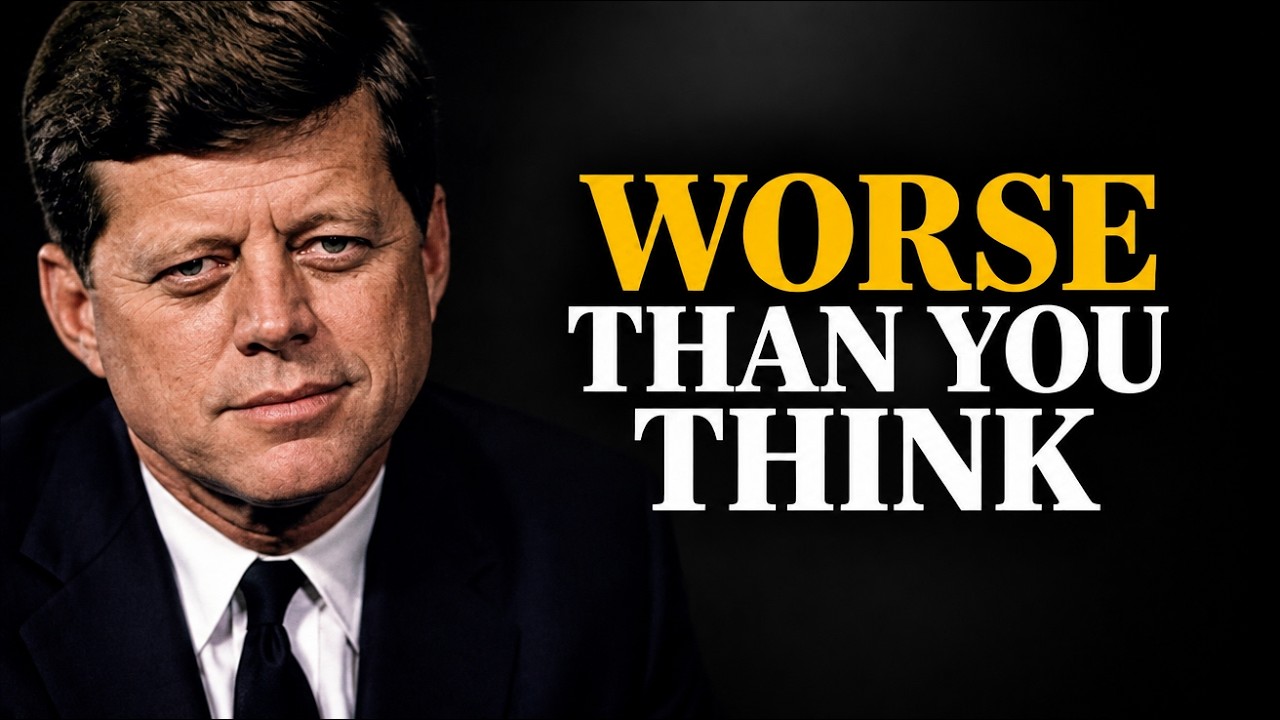
At night, she said, her husband had sometimes listened to the original Broadway cast recording of Camelot.
She drew White’s attention to its famous idea of a brief, shining moment.
She wanted that image connected to Kennedy.
White wrote while the magazine held its presses.
When editors questioned whether the Camelot framing was overly sentimental, Jackie reportedly remained nearby while White argued by telephone that it should stay.
It stayed.
And one of the most enduring myths surrounding an American presidency was born.
But decades later, when White’s notes became available, they offered a more complicated picture of the grieving widow.
Jackie had not merely been talking spontaneously.
She was selecting.
She knew what she wanted emphasized.
She knew what she wanted omitted.
And according to the source, that ability to control presentation was not something she suddenly discovered after November 22, 1963.
She had been learning it throughout her life.
To understand the marriage behind Camelot, the story has to begin long before Dallas.
Jacqueline Bouvier grew up surrounded by wealth, social position, instability, and the uncomfortable knowledge that appearances could conceal serious private problems.
Her father, John Vernou Bouvier III, known as “Black Jack,” possessed considerable charm but struggled financially and drank heavily.
Her parents’ marriage collapsed publicly.
Jacqueline was eleven when her mother obtained a divorce in 1940.
Her mother later married Hugh D. Auchincloss Jr., bringing Jacqueline into another affluent household.
The result was an unusual education in security and appearances.
She could live inside magnificent houses without actually owning them.
She could move among wealthy families without possessing an independent fortune comparable to theirs.
And she could continue loving an unreliable father despite understanding perfectly well how unreliable he could be.
That emotional contradiction would become important later.
By adulthood, Jacqueline had learned that affection and disappointment did not necessarily cancel each other.
A person could love someone while recognizing his failures.
She had also learned something about controlling stories.
Before marrying Kennedy, Jacqueline worked for the Washington Times-Herald as its “Inquiring Camera Girl.”
She photographed people, asked questions and helped transform their responses into material suitable for publication.
It was hardly the most prestigious journalism job in Washington.
But it taught her something valuable.
Presentation mattered.
Selection mattered.
A photograph could create an impression.
A caption could shape how that photograph was understood.
By 1951, Jacqueline Bouvier was twenty-one, educated, socially sophisticated, fluent in French and comfortable in elite circles.
Then she met John F. Kennedy.
The introduction came through Charles and Martha Bartlett at a Georgetown dinner party.
Kennedy was already a congressman from Massachusetts preparing for a Senate campaign.
He was ambitious, politically talented and part of a family whose patriarch had ambitions extending considerably beyond the Senate.
The courtship that followed was not remembered by everyone around them as an uncomplicated romance.
Kennedy was frequently campaigning.
Telephone calls could arrive late or not at all.
Jacqueline herself was briefly engaged to another man before that relationship ended.
After Kennedy won his Senate race, their relationship became more serious.
Their engagement was announced in 1953.
For Kennedy, marriage solved an increasingly obvious political problem.
He was thirty-six and still publicly associated with bachelorhood.
His father, Joseph P. Kennedy, was already thinking strategically about his son’s national future.
A sophisticated Catholic wife from Jacqueline’s social background offered enormous political advantages.
She softened Kennedy’s playboy image.
She brought cultural sophistication.
She possessed the social credentials the wealthy Kennedy family still sometimes lacked within older northeastern circles.
And she photographed beautifully.
But the arrangement benefited Jacqueline too.
Kennedy offered wealth, status, influence and entry into one of America’s most ambitious political families.
The attraction between them appears to have been real.
So were the practical advantages.
Those realities could exist simultaneously.
They married on September 12, 1953, at St. Mary’s Church in Newport, Rhode Island.
The wedding was enormous.
Hundreds attended the church ceremony, while the reception at Hammersmith Farm drew an even larger gathering.
Outside, crowds assembled to see the couple.
The event functioned almost as much like a public spectacle as a private wedding.
One detail from that day later acquired its own historical significance.
Jackie’s celebrated ivory silk wedding gown was created by African American designer Ann Lowe.
According to Lowe’s later account, a flood in her workroom shortly before the wedding destroyed the original gown and several bridesmaids’ dresses.
She and her staff rebuilt them under enormous pressure.
Yet Lowe received little public recognition at the time.
The beautiful image became famous.
The woman responsible for creating a central part of that image remained largely invisible.
It was an unintended metaphor for much of what followed.
Behind the polished surface of the Kennedy marriage existed people, arrangements and realities the public rarely saw.
The early marriage placed Jackie inside an extraordinarily close family system.
The Kennedys vacationed together, competed together and operated politically together.
Joseph Kennedy remained deeply involved in family finances.
John Kennedy himself had grown up with little need to manage ordinary household money.
Jackie entered a world where her husband’s political future frequently seemed to organize everything around it.
She also entered a marriage with a seriously ill man.
Kennedy’s public image emphasized youth, vigor and physical energy.
Privately, his health was far more complicated.
His back problems were severe.
More importantly, he suffered from adrenal insufficiency associated with Addison’s disease.
The condition was not something the Kennedy political operation wanted voters discussing.
In 1954, Kennedy underwent dangerous spinal surgery.
Complications followed.
He developed an infection and became critically ill.
A priest administered last rites.
During the long recovery, Jackie stayed beside him.
She read to him.
She helped him.
She assisted with work connected to the project that became Profiles in Courage.
Whatever strategic considerations existed inside their marriage, those months resist an entirely cynical interpretation.
She was caring for a dangerously sick husband.
Then Kennedy recovered.
And the problems resumed.
Accounts from friends and associates repeatedly described Kennedy as pursuing other women throughout the 1950s.
The transcript itself makes an important evidentiary distinction here.
The overall pattern is repeatedly attested across independent recollections.
Individual stories from those early years are often much harder to verify.
That distinction matters.
The historical record supports a pattern more strongly than every sensational anecdote later attached to Kennedy’s name.
For Jackie, however, another crisis soon overshadowed almost everything else.
In August 1956, while she was pregnant, Kennedy attended the Democratic National Convention and made an unsuccessful bid for the vice-presidential nomination.
Afterward, he traveled to Europe.
Jackie went into the hospital in Newport.
Their daughter was stillborn.
She had intended to call her Arabella.
Kennedy was away aboard a yacht in the Mediterranean.
Robert Kennedy handled much of the immediate crisis.
The core facts are devastating without embellishment.
Jackie had lost a child.
Her husband was not there.
Accounts later claimed that Kennedy initially hesitated about returning home and was warned that failing to return would destroy his political career.
That specific conversation relies substantially upon later recollections and should be treated accordingly.
What is established is that Kennedy was absent when the stillbirth occurred.
For years afterward, another story circulated claiming Joseph Kennedy offered Jackie one million dollars to remain married.
The transcript correctly warns that this dramatic story lacks documentary support.
There is no need to use it.
Better evidence indicates something quieter.
The marriage entered a serious period of strain.
Jackie spent time away.
Friends remembered real questions about whether the relationship would survive.
Yet she stayed.
In 1957, the couple purchased a Georgetown house.
Later that year, Caroline Kennedy was born.
Their family finally had a healthy child.
By then Jackie had also experienced another loss.
Her father, Black Jack Bouvier, died in 1957.
She organized his funeral.
She chose the flowers, music and atmosphere.
Years before America watched her orchestrate a presidential funeral, Jackie was already demonstrating the ability to turn grief into carefully designed ritual.
Then came the presidency.
During Kennedy’s 1960 campaign, Jackie became enormously valuable politically.
She was pregnant and eventually restricted from extensive travel, but she still contributed.
She wrote the syndicated “Campaign Wife” column.
She answered correspondence.
She recorded campaign material in several languages.
Her sophistication helped the Kennedy campaign communicate with constituencies few political spouses could reach so naturally.
The marriage had become an extraordinarily effective political partnership.
At the same time, another concealment was occurring.
Kennedy’s health became a campaign issue.
Political opponents raised questions about Addison’s disease.
The Kennedy operation publicly denied the diagnosis in ways later medical disclosures would make difficult to reconcile with the full reality.
Decades afterward, researchers allowed access to Kennedy’s medical records found evidence of extensive treatment.
His medications included corticosteroids and other drugs addressing numerous medical problems.
He also received treatments from Dr. Max Jacobson, a physician later notorious for injections containing amphetamines.
Jackie knew her husband was seriously ill.
She had watched him nearly die.
Yet there is no evidence in the supplied source that she publicly challenged the family’s presentation of Kennedy as healthy.
The concealment was larger than one spouse.
It had become part of the political operation surrounding him.
After Kennedy narrowly defeated Richard Nixon, Jackie prepared to become First Lady.
Seventeen days after election day, she went into premature labor.
John F. Kennedy Jr. was delivered by emergency Caesarean section.
Jackie spent approximately two weeks hospitalized.
Soon afterward, she entered the White House as one of the most photographed women in the world.
She quickly discovered something important.
If she could not fully control the marriage, she could create an independent sphere of authority inside the presidency.
The White House itself became her first major project.
Jackie believed the executive mansion lacked sufficient historical authenticity.
She assembled experts.
She established a Fine Arts Committee.
She helped bring professional curatorial standards into the White House.
She searched for historically important furnishings.
She supported creation of the White House Historical Association.
The project was often treated publicly as decoration.
It was more significant than that.
Jackie was building an institution and simultaneously creating a public identity independent of her husband’s electoral politics.
That identity became unmistakable during the Kennedys’ 1961 visit to Paris.
Jackie spoke French.
She understood European culture and history.
French audiences and journalists responded enthusiastically.
Kennedy famously joked that he was the man who had accompanied Jacqueline Kennedy to Paris.
It was charming.
It was also recognition of her independent diplomatic value.
In February 1962, that value became even more obvious.
Jackie conducted a televised tour of the restored White House.
Tens of millions of Americans watched.
The program earned an honorary Emmy.
She was no longer simply the president’s glamorous wife.
She had a subject.
She had expertise.
She had her own relationship with the public.
And increasingly, she had distance.
Jackie spent significant periods outside Washington, particularly in Virginia horse country.
She valued privacy for herself and her children.
She disliked many ceremonial obligations.
She loved riding.
But distance may also have protected her from parts of her husband’s private life.
By the White House years, evidence surrounding Kennedy’s extramarital behavior becomes stronger.
One particularly significant source was Barbara Gamarekian, a White House press-office staffer whose oral history was recorded for the Kennedy Library shortly after the assassination.
Her account described young women associated with the White House staff who traveled with the presidential party and spent time swimming with Kennedy.
One of those women later identified herself publicly.
Mimi Beardsley Alford was nineteen when she began working as a White House intern in 1962.
Nearly fifty years later, she published a memoir describing a sexual relationship with Kennedy that continued for roughly eighteen months.
Her account described not simply Kennedy but an environment around him that facilitated access and protected secrecy.
That is important.
The story of Kennedy’s private life is not simply a story about one charismatic president successfully deceiving everyone around him.
People knew.
Staff knew portions of it.
Friends knew portions of it.
Some reporters knew enough to understand the general pattern.
The political culture of the period simply operated under different rules concerning politicians’ private lives.
The transcript argues that Jackie understood the overall shape of her husband’s behavior even if she could not possibly have known every individual woman.
That is a more defensible claim than pretending there is documentary proof she knew every specific relationship.
Her behavior increasingly suggests accommodation rather than ignorance.
One famous moment came on May 19, 1962.
Marilyn Monroe appeared at Madison Square Garden and performed “Happy Birthday” for Kennedy before an enormous audience.
Jackie did not attend.
She was in Virginia participating in a horse show.
The meaning of that absence has been interpreted endlessly.
What can be established is simpler.
She had been invited.
She chose not to go.
And while one of the most provocative public moments associated with her husband unfolded before thousands of people and television cameras, Jackie Kennedy was somewhere else.
Other relationships presented dangers beyond embarrassment.
Judith Campbell Exner had connections not only to Kennedy but also to organized-crime figure Sam Giancana.
White House telephone records documented numerous contacts between Campbell and the president’s office.
The situation was particularly sensitive because Giancana existed at the intersection of organized crime, CIA operations against Fidel Castro and Robert Kennedy’s aggressive campaign against the Mafia.
Later claims made by Exner became increasingly dramatic and are not all corroborated.
The documented telephone contacts, however, require no embellishment.
Another politically explosive case involved Ellen Rometsch, an East German woman circulating within Washington’s social world.
Federal authorities developed concerns about Rometsch and potential intelligence implications surrounding her relationships with politically connected men.
She left the United States in 1963.
As congressional investigators examined another Washington scandal involving Bobby Baker, there was concern that Rometsch’s name—and potentially Kennedy’s—could surface.
The transcript portrays the resulting containment effort as extending far beyond an ordinary marital secret.
The FBI was involved.
The Justice Department was involved.
Senate leaders became aware of sensitive information.
The Washington press culture also helped maintain boundaries around politicians’ private behavior.
By this point, protecting Kennedy’s public image was not merely a matter of Jackie ignoring an unfaithful husband.
It existed inside a much larger political and institutional system.
Then something changed.
In August 1963, Jackie gave birth prematurely to Patrick Bouvier Kennedy.
The baby suffered from severe respiratory problems.
Kennedy remained close to his son during the desperate effort to save him.
Patrick died thirty-nine hours after birth.
Kennedy returned to Jackie and personally told her their son was dead.
Witnesses remembered him crying.
When Jackie left the hospital, photographers captured the couple holding hands.
Friends and staff later described a noticeable change in their relationship during the final months of Kennedy’s life.
This evidence should not be exaggerated into a perfect reconciliation.
Nobody can know whether the change would have lasted.
But multiple people close to the couple believed the death of Patrick brought them emotionally closer.
Only about three months remained.
In October, Jackie traveled aboard Aristotle Onassis’s yacht in the Mediterranean with her sister.
The trip generated criticism.
Robert Kennedy reportedly disliked the political optics intensely.
Yet shortly after Jackie returned, she agreed to accompany her husband on something she had largely avoided during his presidency.
A domestic political trip.
Texas.
They left Washington on November 21, 1963.
Jackie’s presence was politically valuable because crowds wanted to see her as much as they wanted to see the president.
At Love Field in Dallas the following morning, she received red roses.
She wore a pink suit with navy trim.
Kennedy had reportedly encouraged her to wear it.
At approximately 12:30 p.m., everything changed.
What Jackie did afterward became perhaps the clearest demonstration of her understanding of imagery, memory and political symbolism.
At Parkland Hospital, aboard Air Force One and during the flight back to Washington, she remained in the bloodstained pink suit.
People encouraged her to change.
She refused.
Lady Bird Johnson later recorded Jackie explaining that she wanted people to see what had been done to Jack.
The statement matters because it reveals something beyond shock.
Jackie understood the audience.
She understood the photograph.
She understood what an image could communicate when words failed.
Standing beside Lyndon Johnson as he took the presidential oath, Jackie transformed the bloodstained suit into visual evidence of national trauma.
Then she began designing the funeral.
She looked toward Abraham Lincoln.
People were sent to research Lincoln’s 1865 funeral arrangements.
She wanted the procession.
She wanted military ritual.
She wanted the riderless horse.
She wanted the muffled drums.
She wanted foreign leaders walking through Washington.
She chose Arlington National Cemetery rather than allowing Kennedy to disappear exclusively into the Kennedy family’s Massachusetts world.
She requested an eternal flame.
Within days, a young widow had helped create one of the most visually powerful state funerals in modern American history.
Then came Theodore White.
On November 29, Jackie began constructing the language that would accompany the images.
She told White about Camelot.
She directed him toward the idea of Kennedy’s presidency as a brilliant, fleeting moment.
When the magazine’s editors resisted the metaphor, it survived.
The December 1963 Life article helped permanently connect Kennedy with Camelot.
What disappeared from that story is equally important.
There was no Addison’s disease.
There were no disputed medical statements.
There was no complicated pharmaceutical regimen.
There was no Mimi Beardsley Alford.
No Judith Campbell Exner.
No Ellen Rometsch.
No Mediterranean yacht during the stillbirth crisis.
No staff facilitating private encounters.
No machinery protecting a president’s personal vulnerabilities.
Jackie selected the frame.
That does not necessarily mean she invented the love.
The final months of the marriage contain evidence of genuine tenderness.
The death of Patrick appears to have changed something between them.
Jackie had endured a complicated marriage for a decade and was entitled to possess memories that were not reducible to betrayal.
But public memory was something different.
She understood that immediately.
After Kennedy’s death, Jackie continued exercising extraordinary control over material surrounding the family.
Her oral-history interviews with historian Arthur Schlesinger Jr. remained sealed for decades.
The Kennedy family contested material produced by former nanny Maud Shaw.
Most famously, Jackie and Robert Kennedy selected William Manchester to write an authorized account of the assassination.
When Manchester produced a manuscript Jackie considered too revealing, the conflict became legal.
She sued to prevent publication in its original form.
Material was removed.
Again and again, the pattern repeated.
Access.
Selection.
Control.
Silence.
Even the pink suit followed that pattern.
It was preserved rather than cleaned.
Eventually it entered the National Archives.
Yet restrictions were imposed preventing public display for generations.
The object Jackie had deliberately worn so Americans could “see” what happened became an object Americans themselves could not freely see afterward.
Show them.
Then control what they see.
Jackie never wrote the comprehensive memoir that could have answered countless questions about her marriage.
After marrying Aristotle Onassis in 1968, she built another life.
Later she worked seriously as a book editor in New York.
She maintained professional employment and participated in the publication of numerous books.
But she largely refused to explain John Kennedy publicly.
That silence became one of her most powerful decisions.
Because without Jackie offering another version, the version created during that rainy conversation with Theodore White remained extraordinarily resilient.
Camelot survived.
The handsome young president.
The elegant First Lady.
The small children.
The White House dinners.
Paris.
The restored mansion.
The rocking chair.
The sailboat.
The funeral drums.
The eternal flame.
All were real.
But they were not the whole reality.
Behind those images was a president with serious concealed health problems.
There was a marriage repeatedly tested by absence, loss and credible evidence of infidelity.
There were political aides and institutions operating within a culture that protected presidential privacy far more aggressively than would be imaginable today.
There were moments when personal vulnerability threatened to become political vulnerability.
And beside Kennedy throughout much of it was a woman who appears to have understood considerably more than the public realized.
That may be the most important correction to the simplistic version of Jacqueline Kennedy’s story.
She was neither merely the deceived wife nor simply the cynical architect of a false marriage.
The evidence supports something more complicated.
She could love Kennedy and understand his failures simultaneously.
She could be hurt by his behavior and still recognize the extraordinary political world their marriage had created.
She could protect her children while protecting the presidency.
She could seek distance while continuing to perform public partnership when circumstances required it.
And after Kennedy’s death, she could decide that the best part of their story deserved to become the part history remembered first.
The source’s most provocative claim is therefore not that John F. Kennedy possessed a secret private life.
Much of that has been discussed publicly for decades.
The more interesting story concerns Jacqueline Kennedy.
How much did she understand?
Why did she stay?
And why, after having witnessed the contradictions firsthand, did she create such a luminous public memory of the man she lost?
There is no single answer.
Catholicism mattered.
Children mattered.
Money and security mattered.
Politics mattered.
The Kennedy family’s enormous institutional power mattered.
Jackie’s own growing influence mattered.
Love probably mattered too.
Reducing her decision to any one of those forces makes the marriage easier to explain but less historically convincing.
By 1963, she was no longer simply the young woman who had married into the Kennedy machine ten years earlier.
She had created her own authority.
She had transformed the White House.
She had become an international celebrity.
She had established private spaces away from the Kennedy family compound.
She had survived miscarriages, a stillbirth and the death of an infant son.
And she had learned exactly how much power could reside in controlling what the public saw.
Dallas gave that ability its most terrible purpose.
The bloodstained suit created one image.
The funeral created another.
The eternal flame created another.
Then one word completed the architecture.
Camelot.
The brilliance of that word was not that it described every day of Kennedy’s presidency or marriage accurately.
It was that it provided Americans with a way to remember something suddenly and violently lost.
Jackie understood the difference between history and memory.
History accumulates contradictions.
Memory selects.
History asks what happened.
Memory asks what should remain.
During those four hours with Theodore White, Jacqueline Kennedy helped answer the second question before historians had even begun answering the first.
Decades of documents, memoirs, oral histories and medical records would eventually complicate the beautiful picture.
They would reveal illnesses once concealed.
They would expose relationships once protected.
They would show political machinery operating behind supposedly private secrets.
They would make the Kennedy marriage far less simple than the photographs suggested.
But none of those revelations completely destroyed Camelot.
Perhaps that is Jackie Kennedy’s most extraordinary achievement.
She could not control what historians eventually discovered about her husband.
She could not permanently hide every contradiction inside their marriage.
She could not prevent witnesses from speaking or archives from eventually opening.
But she understood something about history before almost everyone around her did.
The first story people accept often becomes the story every later revelation must fight against.
Seven days after Dallas, with a magazine holding its presses and a journalist sitting before her, Jacqueline Kennedy got there first.
John F. Kennedy may have lived a double life.
But the evidence presented in this source suggests Jackie was far from the last person to understand that reality.
She may instead have been the person who understood most clearly what the public could know, what it could not know, and what it would ultimately remember.


