Christa Pike’s Lawyer Describes Failed Execution Horror, but Secret Deposition Audio Remains Unverified in Tennessee
Christa Pike’s attorney has publicly described scenes from Tennessee’s failed execution that are disturbing enough without the addition of an alleged secret deposition recording.
The needle attempts were real.
The visible distress was real.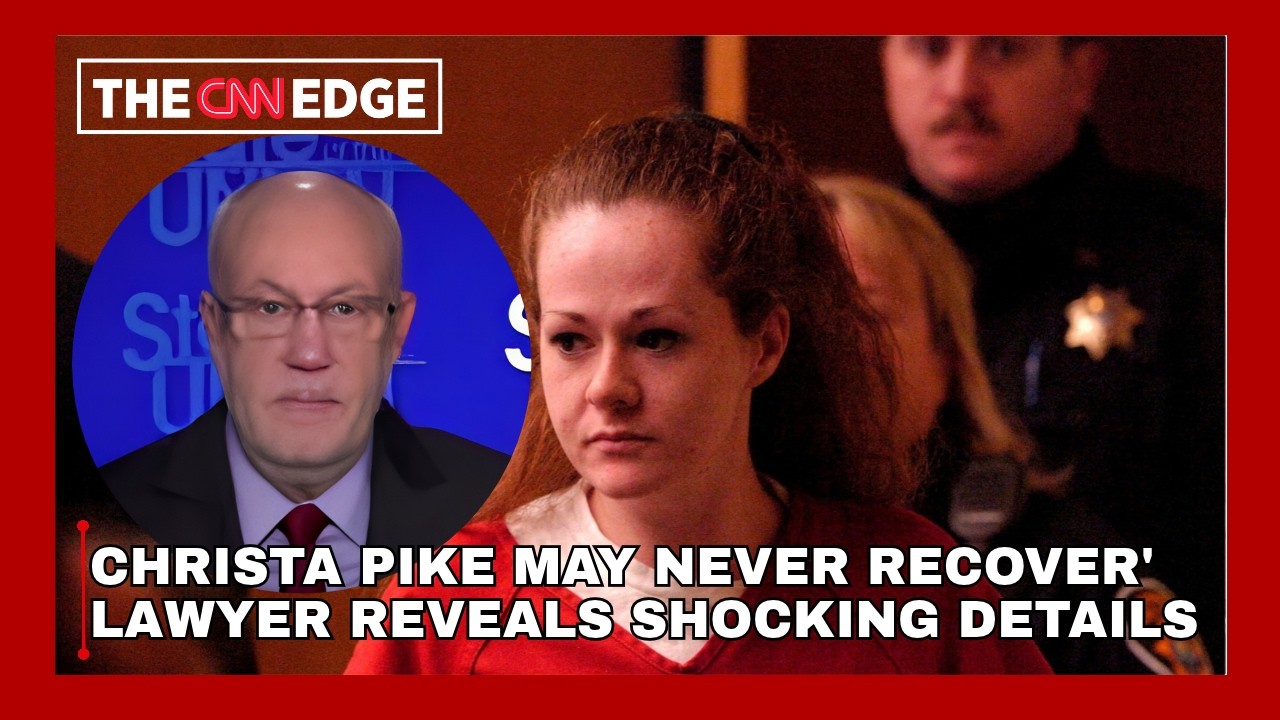
Pike’s complaint that her arm felt as though it might “burst open” was heard by witnesses.
The curtains really were repeatedly closed.
Her lawyers really did lose sight of what state officials were doing inside the chamber.
And Pike ultimately left Riverbend Maximum Security Institution alive in an ambulance after two administrations of pentobarbital failed to kill her.
But the newest viral version adds another layer.
It says Pike’s lawyer was secretly recorded during a sealed deposition.
It claims the recording captures him describing Pike’s “horrifying final words” while her veins burst.
It then alleges execution personnel committed an unidentified, off-the-books act the instant witnesses lost their view.
No authenticated recording or transcript establishing those claims has surfaced.
What has surfaced is already extraordinary.
Attorney Randy Spivey was one of the people watching Tennessee attempt to execute Pike on September 30.
He later provided detailed public descriptions of what he saw.
According to Spivey, the execution team struggled extensively to establish intravenous access.
He said Pike repeatedly tried to help them.
At one point, she suggested they try higher on her shoulder.
Spivey said he counted at least seven needle attempts.
He also described seeing one needle removed from Pike’s arm apparently bent sharply.
That observation has been reported by multiple outlets.
Those details matter because Pike’s lawyers had warned before the execution that intravenous access could be difficult.
They said Pike had a lifelong blood condition and had repeatedly experienced problems with blood draws.
The defense argued that those issues created an elevated risk of complications during lethal injection.
After the execution failed, her attorneys said their fears had effectively become reality.
Once the lethal injection procedure began, Pike started reporting unusual sensations in her arm.
At approximately 7:34 p.m., according to the witness timeline, she said her arm felt as though it was about to burst open.
She also described intense throbbing.
Three minutes later, witnesses saw her take four pronounced breaths powerful enough to visibly raise her body from the gurney.
At approximately 7:39 p.m., she lifted her head and looked toward the IV.
Those were not secret observations.
Media witnesses saw them.
Lawyers saw them.
Their accounts were reported almost immediately after the execution attempt.
The phrase about Pike’s arm “bursting open” is therefore genuine as a reported statement.
But that does not mean her vein literally exploded in the dramatic manner suggested by some viral posts.
Pike’s legal team has alleged that the IV lines were improperly positioned or that her veins failed.
They say some or all of the pentobarbital apparently entered surrounding body tissue rather than circulating properly through her bloodstream.
That phenomenon is medically known as infiltration or extravasation.
Her attorneys say the result was extensive swelling, burns and blistering to both arms.
Defense-retained anesthesiologist Dr. Joel Zivot has said pentobarbital is caustic when it enters surrounding tissue.
He has argued that the injuries described by Pike’s attorneys are consistent with drug infiltration.
That theory could help explain both why the pentobarbital caused severe localized injuries and why it failed to produce the rapid death the state expected.
But Tennessee has not yet issued a final technical explanation.
That is crucial.
The Department of Correction said immediately after the failed execution that it had followed every step of the state’s lawful execution protocol.
Its September 30 statement also said the protocol did not permit additional procedures beyond those already performed.
Pike was then transported to an off-site medical facility.
Pike’s attorneys sharply dispute the state’s claim.
In an emergency filing, they accused execution personnel of showing reckless disregard for basic medical practice.
They alleged the team failed to realize the IV lines were not correctly positioned and continued administering pentobarbital despite signs that the drug was not reaching Pike’s bloodstream properly.
That dispute is now one of the central questions facing Tennessee.
Did the execution team actually comply with the written protocol?
Did it recognize signs of infiltration?
Should the procedure have been stopped earlier?
Was the backup dose administered through compromised access?
What medical assessment occurred when Pike remained alive?
And what exactly happened during the periods when the curtains were closed?
Those questions are real.
They also explain why the curtain closures have become so controversial.
Witnesses reported that the viewing curtains were closed repeatedly.
At approximately 7:46 p.m., the curtain closed.
It reopened several minutes later.
Pike was still alive.
Witnesses continued seeing movement and hearing sounds.
Later, shortly after 8 p.m., the curtain closed again.
This time, it stayed closed while witnesses heard Pike breathing and snoring for an extended period.
Spivey later summarized the problem plainly.
No one outside the chamber knew what was happening behind that curtain.
He said Pike’s legal team could not determine whether she had begun receiving medical treatment during the period witnesses were blocked from seeing her.
Spivey then tried to contact other members of the legal team and seek emergency intervention.
That documented uncertainty is important.
It is also where the newest viral narrative inserts the phrase “off-the-books act.”
But uncertainty is not evidence of a secret act.
The public record currently establishes that witnesses lost visual access.
It establishes that Pike remained alive.
It establishes that the legal team did not know what officials were doing.
It does not establish that execution personnel performed an unauthorized hidden procedure.
An independent investigation has now been ordered specifically because those questions remain unanswered.
Governor Bill Lee requested that the Tennessee Attorney General’s Office retain former U.S. Attorney Ed Stanton to conduct the review.
The investigation is supposed to determine whether the protocol was followed and whether further recommendations are necessary to ensure the protocol remains lawful and effective.
Stanton is not new to Tennessee’s execution system.
He previously conducted the state’s 2022 review of lethal injection procedures.
That earlier investigation led Tennessee to substantially rewrite its protocol before executions resumed.
The fact that he has now been brought back underscores the seriousness of the Pike failure.
There has also been a significant personnel development.
On October 6, reporting said Tennessee Department of Correction Commissioner Frank Strada was resigning as scrutiny over Pike’s failed execution intensified.
People reported that Pike remained unconscious and critically ill as news of Strada’s resignation emerged.
That resignation will inevitably fuel speculation about responsibility.
But a resignation is not proof of a cover-up.
It does not by itself establish criminal wrongdoing.
And it does not authenticate the alleged deposition recording.
Determining whether state officials violated policy, ignored medical warnings or concealed information requires the evidence now being preserved and reviewed.
Pike’s attorneys have already moved aggressively to protect that evidence.
Their emergency filing asks Tennessee to preserve materials related to the execution attempt.
That could include medical documentation, execution logs, drug records, communications, IV equipment, photographs and other materials capable of reconstructing exactly what occurred.
That evidence-preservation motion is real.
A secret deposition recording is something different.
I found no credible current reporting identifying a deposition in which Spivey or another Pike lawyer secretly gave testimony matching the viral description.
There is no docket reference.
No authenticated audio file.
No transcript identified by page and case number.
No recording released by a court.
And no major outlet reports reviewing such a tape.
Spivey has spoken publicly.
He has given interviews.
He spoke to NPR after the execution.
He described his uncertainty about Pike’s condition and said doctors were trying to deal with the chemicals in her body before assessing lasting effects.
Those comments were on the record, not leaked from a sealed chamber.
His most forceful criticism was also public.
Spivey said the procedure had not merely been inefficient.
He called it cruel, torturous and predictable.
He argued that the defense had warned Tennessee that Pike’s medical issues could make the lethal injection dangerous.
Those are documented remarks.
The viral caption therefore does not need a secret deposition to establish that Pike’s attorney was horrified.
He has already said so publicly.
Another exaggeration involves Pike’s “final words.”
Pike did not die.
So statements made during the execution cannot accurately be called her final words.
Before the drugs took effect, she reportedly spoke about going in peace.
Later, she complained about her arm.
Those are among the most important statements witnesses recorded.
But she survived the procedure and was taken to a hospital.
Calling any of those comments her literal final words is misleading.
The medical aftermath also makes clear that this was not a routine execution interrupted by a minor technical failure.
Pike’s attorneys say she was unconscious and on a ventilator two days afterward.
They described her as critically ill.
They reported burns, swelling and blisters on her arms.
Doctors were attempting to manage the effects of the pentobarbital while determining whether she suffered permanent injuries.
As of the newest reporting, Pike still had not regained consciousness.
Her attorney Stephen Ferrell said her long-term prognosis remained uncertain and that doctors did not yet know what lasting cognitive or physical effects she might face.
That means claims of confirmed permanent paralysis, brain death or irreversible neurological destruction still go beyond the public medical record.
The situation is grave.
The final outcome is unknown.
Tennessee’s response has also expanded beyond Pike’s individual case.
Governor Lee halted the remaining scheduled execution of 2026 while the independent review proceeds.
The failure has reopened questions about the reliability of Tennessee’s single-drug pentobarbital protocol and about how much medical competence should be required in execution procedures.
The Death Penalty Information Center described the Pike episode as part of a broader pattern of troubled executions involving IV access.
Its reporting notes that Pike remained alive long after Tennessee began the procedure and after both pentobarbital administrations.
That broader context matters.
The central scandal is not an unverified hot microphone.
It is that a state attempted to carry out a death sentence using a protocol it said was lawful and reliable, yet the prisoner remained alive after receiving the full sequence authorized by that protocol.
The state itself then said no further procedure was permitted.
That is extraordinary.
According to TDOC’s own September 30 advisory, the execution protocol “does not allow for additional procedures beyond what was carried out.”
That technical limitation appears to explain why officials could not simply administer another round once the first and backup procedures failed.
The decision did not make Pike permanently immune from future execution.
But it ended the September 30 procedure.
What happens legally after she recovers, if she recovers, will almost certainly become the subject of extensive litigation.
Her lawyers have already urged the state to commute her sentence rather than attempting to execute her again.
The Eighth Amendment will be central.
Her attorneys can argue that another attempt would create an unconstitutional risk of severe suffering given what happened the first time.
The state may argue that a properly corrected procedure remains legally available.
Those questions have not been finally resolved.
Neither has the question of individual responsibility inside Riverbend.
That is precisely why the independent review matters.
The most responsible breakdown of the viral claim is therefore clear.
Pike’s lawyer witnessed numerous IV attempts.
Supported.
He said one needle appeared badly bent.
Supported.
Pike said her arm felt as though it might burst open.
Supported by witness reporting.
She experienced severe throbbing and visible distress.
Supported.
The curtains were repeatedly closed.
Verified.
Her legal team did not know what was happening during portions of those closures.
Verified through Spivey’s account.
Two doses of pentobarbital failed to kill her.
Verified.
Pike was ultimately transported to a hospital alive.
Verified.
Her attorneys allege faulty IV placement allowed pentobarbital to enter surrounding tissue.
Verified as a defense allegation.
Her arms were described as swollen, burned and blistered.
Verified as her attorneys’ description.
The state says its protocol was followed.
Verified as Tennessee’s official position.
An independent investigation is now examining that assertion.
Verified.
TDOC Commissioner Frank Strada has now announced his resignation.
Reported October 6.
A secret deposition recording captures Pike’s attorney describing an unauthorized hidden act.
Not authenticated.
Executioners deliberately performed an “off-the-books” procedure after closing the curtains.
Not established.
A forbidden hot-mic recording exists and is being erased by state agents.
No credible evidence currently supports that claim.
The documented story is already severe enough.
Tennessee attempted to execute Christa Pike.
Her lawyers had warned officials about the difficulty of obtaining reliable IV access.
The execution team reportedly punctured her repeatedly.
She complained that her arm felt ready to burst.
She remained alive after both authorized pentobarbital administrations.
Officials repeatedly blocked witnesses’ view.
Her lawyers desperately sought outside intervention.
And Pike was eventually removed from Riverbend alive and taken for emergency medical care.
Nearly a week later, she remains critically ill and unconscious according to the latest reporting, Tennessee’s corrections commissioner is leaving his post, and the state has brought in an outside investigator to determine what happened.
Those facts raise serious questions about transparency, medical judgment, execution protocol and state accountability.
But they still do not authenticate a secret deposition tape.
Until an original recording, court-filed transcript or independently verified source emerges, the alleged “forbidden testimony” and mysterious off-the-books act should be treated as unverified claims rather than established facts.


