For approximately 50 minutes, Stephen Hail sat in darkness.
The curtain separating the media witness room from Tennessee’s execution chamber was closed.
Electronic devices were prohibited.
The reporters could barely see their notebooks.
They could not see Christa Pike.
But they could still hear her.
Breathing.
Snoring.
Occasionally, sounds from behind the curtain suggested that people were moving in and out of the chamber.
Nobody in the witness room appeared to know exactly what was happening.
And according to Hail, one fact seemed impossible to misunderstand.
Christa Pike was still alive.
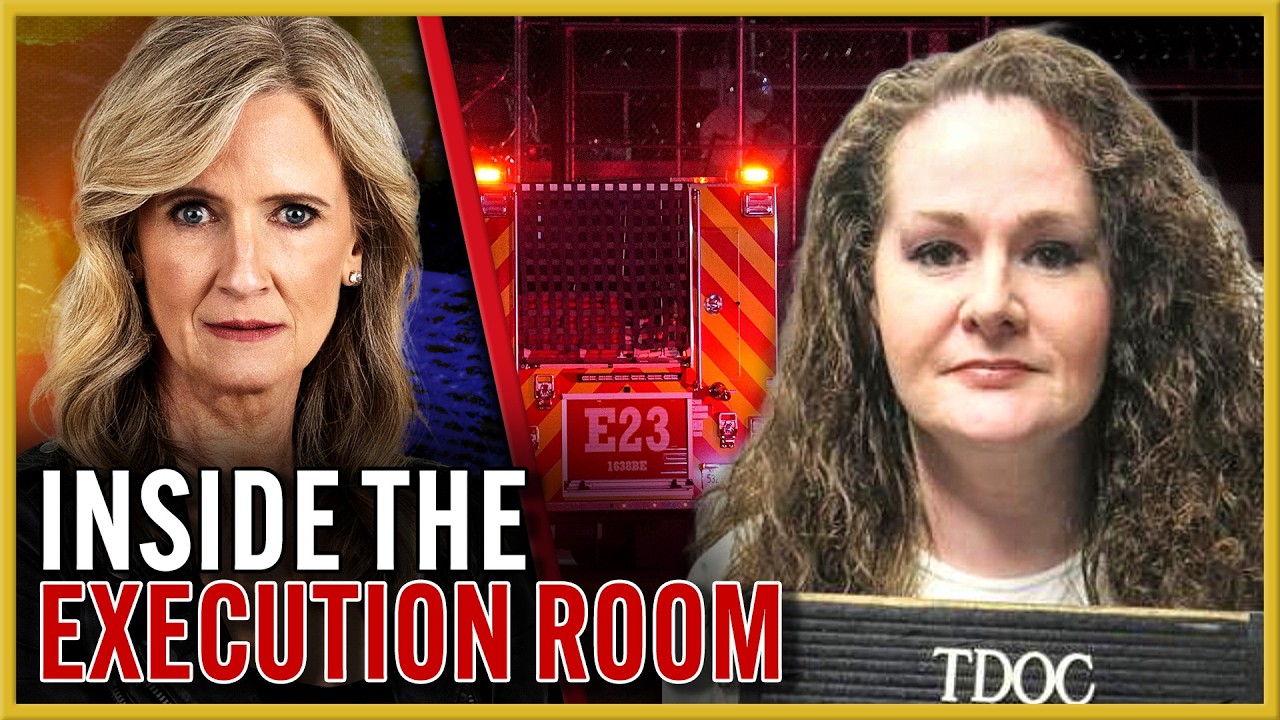
Hail, a Nashville Banner journalist who had previously witnessed executions, described the extraordinary experience in an interview after Tennessee’s attempt to execute Pike for the 1995 murder of 19-year-old Colleen Slemmer.
His account provides a rare window into what media witnesses could—and could not—observe as the procedure departed from what they expected.
Perhaps the most important part of his testimony is the limitation he repeatedly acknowledges.
Hail could describe what he saw.
He could describe what he heard.
He could compare those observations with previous executions he had witnessed.
But when the curtain was closed, he could not tell the public what officials were doing inside.
That absence of visibility became one of the defining features of the night.
A Long Day of Waiting
The execution had originally been scheduled for 10:00 a.m.
But litigation disrupted the timetable.
Hail and the other media witnesses arrived at the prison and then waited as courts considered whether the execution could proceed.
Eventually, according to Hail’s account, word came that the stay had been lifted.
The media witnesses were inside a conference room normally used for parole matters.
Even there, information was limited.
Prison communications officials moved in and out trying to obtain updates.
Then the message came.
The execution was going forward.
It was already approaching evening.
After another wait, Hail and the other designated reporters were escorted into the witness room overlooking the execution chamber.
They sat down.
The curtain remained closed.
And they waited again.
The Reporters Could Hear the IV Preparation — But Could Not See It
Hail said the witnesses spent roughly an hour in the room before the curtain finally opened.
During that period, they could hear activity inside the chamber.
They believed execution personnel were attempting to establish intravenous access in Pike’s arms.
But they could not watch it.
That distinction became crucial later.
Hail said he occasionally heard sounds that might have been Pike crying.
He could hear voices.
He knew preparations were happening.
But he could not independently verify precisely what personnel were doing.
That limitation is one reason Hail discussed an ongoing transparency dispute involving media access.
His news organization and other outlets, he said, were involved in litigation seeking greater visibility into IV placement during executions.
The reason became especially obvious that night.
Afterward, Pike’s attorneys would make claims about difficulties establishing IV access.
Hail could report that something appeared to be happening behind the curtain.
He could not personally confirm the details.
Then the Curtain Opened
Eventually, the witness-room lights went dark.
A microphone check occurred inside the chamber.
The curtain opened.
Pike was strapped to the execution gurney.
Her spiritual adviser stood nearby.
Two prison officials were also inside, including the warden and another high-ranking official.
Hail and the other media witnesses viewed Pike primarily from her right side.
Colleen Slemmer’s relatives were also present at the prison, according to Hail, but they watched from a separate witness room with a different viewing angle.
Before the procedure progressed, Pike was given an opportunity to make a final statement.
Hail paraphrased her words.
She spoke about leaving the world with love.
She referred both to people who hated her and people who had supported her.
She said she was at peace.
Then Pike and her spiritual adviser began repeating a prayer or mantra.
“May you be at peace.”
They repeated the words.
Pike eventually turned toward the witness-room window and directed similar words toward the people behind the glass.
Then she and her adviser began singing softly together.
For a time, the scene resembled the beginning of other executions Hail had witnessed.
Then things began to change.
The Strange Signal of the Rock
Hail described one of the night’s most surreal details.
A hand appeared through what looked like a small opening or trap door in the wall.
It placed a small object resembling a rock onto a shelf.
Hail was careful about terminology.
He called it a rock because that was what it looked like.
He did not claim to know precisely what the object was.
Based on previous executions and his understanding of Tennessee’s protocol, however, he believed its placement served as a signal indicating that administration of the first dose had been completed.
Normally, a waiting period would follow.
The condemned prisoner would become unresponsive.
The curtain would eventually close.
Officials would check the prisoner.
If death had occurred, a time of death would be announced.
But Pike was still talking.
That immediately struck Hail as unusual.
“Is It Supposed to Happen Like This?”
According to Hail, Pike continued communicating after the point when he expected sedation to have become apparent.
She spoke to her spiritual adviser.
She moved.
And before the rock-like object had appeared, Hail heard Pike complain that her arm was burning.
At one point, she reportedly asked prison officials something to the effect of whether the process was supposed to feel this way.
For Hail, that stood out.
He had witnessed lethal injections before.
People sometimes prayed.
Some sang hymns.
But he said he had never previously watched someone interact so extensively with the people inside the chamber during this stage of an execution.
Pike also moved her feet repeatedly.
At times, according to Hail, the movement became strong enough that the sheet covering her began slipping.
A prison official walked over and repositioned it.
Something did not look normal.
But Hail could not see the IV insertion points closely enough to determine why.
What Hail Could Not See Matters as Much as What He Saw
Pike’s lawyers later discussed discoloration and injuries involving her arms.
Hail was asked whether he personally saw those changes.
He said he did not.
He could see Pike’s arm.
He could see IV tubing.
But his position was not close enough for him to clearly examine the insertion site or identify a specific IV problem.
That is an important limitation.
His account supports what he personally observed:
Pike complained of burning.
She continued talking.
She moved repeatedly.
The procedure appeared unusual compared with executions he had previously witnessed.
But Hail did not claim that he personally saw the medical cause.
That remains a separate question.
Pike Became Quiet — But She Was Still Breathing
Eventually, Pike stopped talking as much.
Her eyes closed.
Hail heard what he described as snoring.
That sound itself did not initially strike him as extraordinary.
He had heard similar heavy breathing during other lethal injections as prisoners became unconscious.
But Pike’s movements later became more concerning.
According to Hail, there were moments when she appeared to struggle for breath.
He described her as lifting against the restraints on the gurney.
He also heard grunts or other sounds that suggested possible distress.
Again, Hail was cautious.
He could describe what the movements looked like.
He could not medically diagnose what they meant.
Then the curtain closed.
That was when the confusion intensified.
The Curtain Closed While Witnesses Could Still Hear Pike Breathing
Hail said the witnesses could still hear Pike breathing when officials closed the curtain.
That immediately seemed wrong to them.
The purpose of closing the curtain under the expected procedure would normally be connected to checking the prisoner before a declaration of death.
But the witnesses did not need someone to tell them Pike was alive.
They could hear her.
Her spiritual adviser was removed.
Then, after a period of uncertainty, the adviser was brought back.
The curtain opened again.
Pike was still breathing.
At that point, Hail and the other witnesses believed officials were moving toward a second administration of pentobarbital.
But here again, Hail carefully distinguished observation from inference.
Nobody formally announced to the media witnesses that the second dose had begun.
They inferred it from what they saw and from their understanding of the protocol.
Then the unusual rock signal appeared again.
A Second Round Appeared to Begin
Hail watched the strange signaling sequence repeat.
The object was removed.
Later, it was placed back on the shelf.
Because Tennessee’s protocol contemplated another round if the first administration failed to produce the intended result, the witnesses concluded that a second round was apparently being administered.
For a moment, although the execution was clearly abnormal, the process still seemed to be operating within a contingency contemplated by the protocol.
Then they waited.
The curtain closed again.
And once again, Pike could still be heard breathing.
The witnesses heard her spiritual adviser tell Pike’s attorney that she was still alive.
At that point, the reporters began asking prison officials questions.
Why was the curtain closed?
Could it be reopened?
They had been selected to witness what happened.
Pike was still alive.
Why could they no longer see her?
According to Hail, the officials sitting with them did not know.
The communications director left the room seeking information.
She returned without an answer.
Hail described what followed with two words.
“Quietly chaotic.”
Fifty Minutes in the Dark
There was no dramatic stampede through the witness room.
No obvious public emergency unfolding in front of the reporters.
Instead, uncertainty took over.
Pike’s attorney repeatedly left and returned.
Hail later learned that the lawyer had been attempting to gain access to a telephone so co-counsel outside the prison could seek judicial intervention.
But the reporters did not know that while it was happening.
They knew only what their senses told them.
The room was dark.
The curtain was closed.
And Christa Pike was still breathing on the other side.
Hail estimated that the witnesses remained like that for approximately 50 minutes.
They heard breathing.
Snoring.
Doors occasionally opening and closing.
Activity they could not see.
They had no phones.
No smartwatches.
No flashlights.
They were attempting to document one of the most consequential events imaginable while barely able to see the paper in front of them.
One reporter had been permitted to keep a basic digital watch.
Whenever a door opened and enough light entered the room, he would check the time and tell the others.
The detail almost sounds symbolic.
But Hail emphasized that it was literal.
The journalists were in the dark.
“Still Alive”
Hail still had the notebook issued to him by the Tennessee Department of Correction when he later gave the interview.
Looking through his notes, one pattern stood out.
A time.
Then a notation.
Still alive.
Another time.
Still breathing.
The reporters were trying to establish a timeline while visibility had effectively disappeared.
Eventually, the warden’s voice came through the microphone.
The witnesses were instructed to leave.
But Pike was still alive.
Hail said they could still hear her.
Even after the execution-chamber microphone was cut, breathing and snoring remained audible through the door as the reporters were escorted away.
They left the witness room knowing that Tennessee had not executed Christa Pike.
But they did not yet understand what would happen next.
The Reporters Walked Out Asking Each Other the Same Thing
As they were led away, Hail said the journalists essentially kept confirming the same observation with one another.
She was still alive.
Right?
They all heard it.
They had all experienced the same strange ending.
But because their phones had been removed and they had been isolated inside the prison, they did not know what reporters outside already knew.
Once outside, they learned that Pike’s lawyers had been attempting to stop the execution through the courts.
Then came another surreal moment.
Emergency vehicles appeared.
An Ambulance Arrived at the Prison
The media witnesses emerged from the prison into an area where television cameras and reporters had gathered.
They began describing what they had seen.
Then attention shifted toward the road.
A fire truck.
An ambulance.
Emergency lights.
Hail and the others stopped.
They watched.
According to his account, they did not personally see Pike being placed into the ambulance.
But they later understood that she had been transported for emergency medical treatment.
The ambulance departed with sirens activated.
For a journalist who had entered the prison expecting to witness an execution, the sight crystallized how dramatically the procedure had departed from its intended outcome.
The Small Details Stayed With Him
Afterward, Hail was asked what remained in his mind.
Surprisingly, it was not only the largest moments.
It was the smaller ones.
Sitting in darkness.
Hearing Pike breathe.
Hearing the snoring.
Hearing what sounded like struggling breaths from a room he could no longer see.
Those sensory fragments stayed with him.
Then there was another almost absurd detail.
The warden’s radio battery.
The execution day had lasted so long that the batteries in prison officials’ communication equipment had apparently been running down.
During the execution, with Pike strapped to the gurney, the warden’s radio began chirping because its battery was dying.
It was mundane.
Almost ridiculous.
Yet that was precisely why Hail remembered it.
An ordinary electronic warning sound cutting through an extraordinary scene.
For him, it reinforced the surreal nature of what he had witnessed.
The Biggest Story May Be What Witnesses Were Prevented From Seeing
Hail’s account inevitably raises questions about transparency.
Media witnesses exist partly because executions are acts carried out by the state.
Independent observers provide the public with an account of what happens inside a place most citizens will never enter.
But what happens when those witnesses cannot observe the most disputed moments?
Hail could not watch the IV placement.
He could not determine why Pike complained of burning.
He could not closely inspect the injection sites.
And during approximately 50 minutes of uncertainty, he could not see Pike at all.
That leaves a significant gap between what the state did and what independent witnesses could verify.
It also explains why Hail’s language matters.
He does not claim to know what happened simply because he was present.
Instead, he repeatedly says when he does not know.
He presumed drugs were flowing.
He interpreted the rock as a signal.
He believed a second administration was occurring.
He heard Pike.
He watched her movements.
But when the curtain closed, his visual account stopped.
That is precisely the point.
Colleen Slemmer’s Family Was There Too
There is another part of the night that cannot disappear behind the extraordinary circumstances surrounding Pike.
Colleen Slemmer’s family was inside the prison.
According to Hail, Colleen’s mother and other relatives watched from a separate witness room.
They had already lived with the case for more than three decades.
They entered the prison expecting to witness the sentence carried out.
Instead, they became witnesses to another chapter in a legal process that had already consumed 31 years.
Hail acknowledged that reality when discussing how difficult the story is to report.
There is intense public curiosity about a failed execution.
The details are unusual.
Some are disturbing.
Some are almost surreal.
That creates a danger that coverage becomes fascinated with the spectacle while the victim disappears.
Hail expressed concern about feeding that kind of lurid interest.
His job, he said in substance, was to report what happened directly and carefully.
That is also the most responsible way to understand his testimony.
What Stephen Hail Actually Establishes
His eyewitness account does not establish why the execution failed.
It does not medically prove that an IV infiltrated.
It does not independently establish how many needle attempts occurred.
It does not tell us exactly what officials did during the 50 minutes when the curtain was closed.
It does not prove what happened to the pentobarbital after administration.
Those questions require other evidence.
Medical records.
Execution logs.
Physical equipment.
Drug records.
Official photographs.
Testimony from execution personnel.
Potential expert analysis.
But Hail does establish something important from his own perspective.
He heard Pike complain that her arm was burning.
He watched her remain communicative beyond the point he expected.
He saw significant movement.
He later heard breathing and snoring.
He witnessed the curtain close while she was still audibly alive.
He believed the administration process was repeated.
He then spent roughly 50 minutes unable to see what was happening.
And when Tennessee finally ordered the witnesses out, Christa Pike was still breathing.
“We Should Be Able to See What’s Going On”
That may ultimately become one of the most consequential statements in Hail’s interview.
The reporters were not demanding access because they wanted spectacle.
They were there because they had been selected to witness a state execution.
Once the procedure went wrong, transparency arguably became more important, not less.
Yet that was precisely when their view disappeared.
The curtain came down.
The lights remained off.
And the people tasked with independently describing the event could only listen.
Breathing.
Snoring.
Doors.
Occasional movement.
Nearly 50 minutes of uncertainty.
Then an instruction to leave.
Outside, emergency vehicles arrived.
The execution was over.
Christa Pike was alive.
And the reporters who had been brought into the prison to witness what happened walked out carrying perhaps the most important unanswered question of the entire night:
What happened when they could no longer see?


