Christa Pike Remains Unconscious as Tennessee Prison Chief Resigns While Sabotage Claims Remain Unproven Today
Christa Pike remained critically ill and unconscious on a ventilator as Tennessee entered a widening political and legal reckoning over the failed execution that left the death-row prisoner alive after two doses of pentobarbital.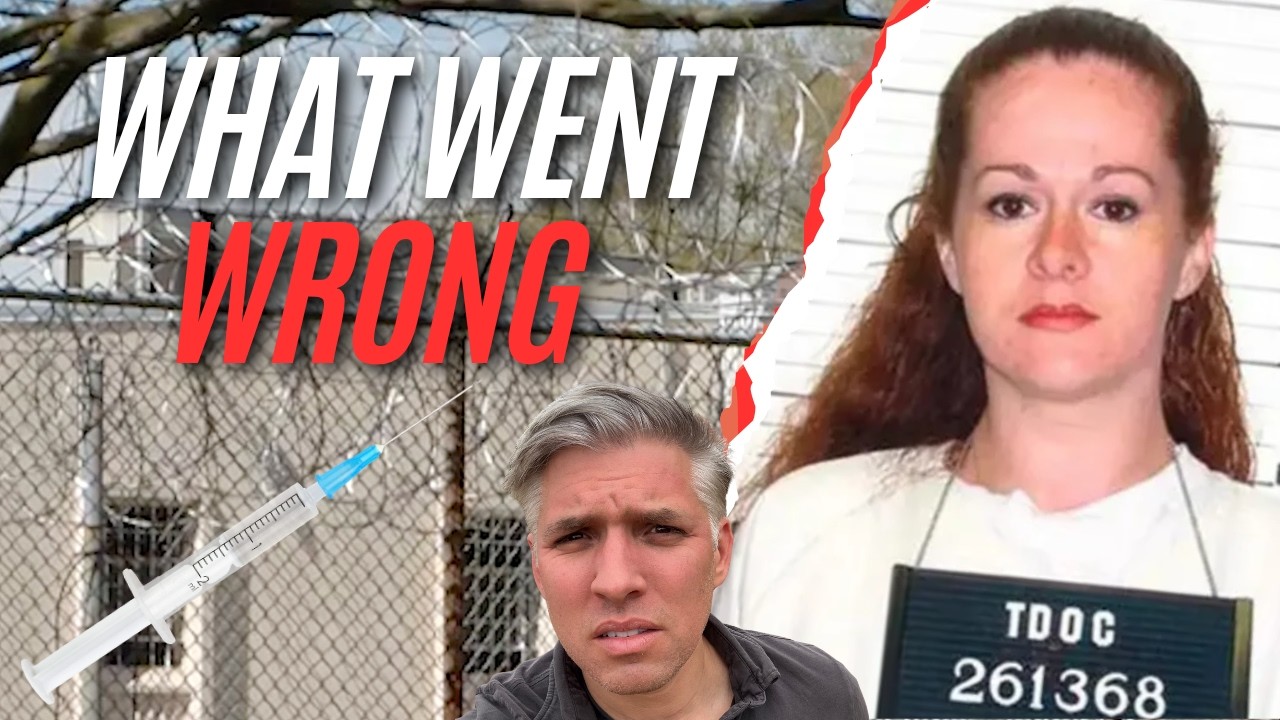
Five days after the September 30 execution attempt, Pike’s attorney Stephen Ferrell said she had not regained consciousness to his knowledge.
Her long-term neurological condition remained unknown.
“We don’t know what the prognosis is,” Ferrell told CNN, adding that Pike might not fully recover and that questions about her future competency could arise if she survives.
That uncertainty is critical because some of the most explosive stories now circulating online claim doctors have already determined Pike’s brain will never recover.
No such medical conclusion has been publicly documented.
There is no released MRI establishing irreversible brain destruction.
There is no public neurological report declaring permanent loss of consciousness.
There is no statement from a treating physician saying Pike has suffered irreversible cerebral injury.
Her attorney’s latest position is much more cautious.
He says the prognosis is unknown.
Pike may recover.
She may suffer lasting cognitive or physical impairment.
Or her condition could remain extremely serious.
The public medical evidence does not yet answer those questions.
What is established is that Pike survived an execution procedure that Tennessee expected to end her life.
Execution personnel administered two sets of pentobarbital.
Neither killed her.
Witnesses heard Pike complain about severe pain in her arm.
They later heard prolonged breathing and snoring after officials closed the execution chamber curtains.
She was eventually transported alive to a Nashville-area hospital.
Her attorneys say the aftermath was severe.
They reported that Pike’s arms were swollen, burned and blistered after the procedure.
Their central theory is that the IV lines were improperly positioned or otherwise failed, causing the caustic pentobarbital to enter surrounding tissue instead of flowing adequately into her bloodstream.
Reuters reported that Pike’s lawyers attributed the failure to improperly placed intravenous access, complicated by her small veins and thrombocytosis.
That theory has enormous implications.
It could help explain both why the pentobarbital caused extensive arm injuries and why two drug administrations failed to produce death.
But it remains different from the claim that somebody deliberately sabotaged Pike’s IV lines.
No credible evidence currently establishes intentional sabotage.
No execution-team member has confessed to deliberately damaging the lines.
No investigator has announced evidence that someone purposely positioned the IVs incorrectly.
No criminal charge alleges deliberate interference.
No authenticated communication orders staff to make the execution fail.
The evidence currently points to possible procedural failure, inadequate IV placement, insufficient training, or other operational problems that are now under investigation.
Those possibilities are serious.
They are not synonymous with sabotage.
That distinction has become particularly important because Tennessee’s prison leadership is undergoing a major shake-up.
Department of Correction Commissioner Frank Strada announced that he will step down this month following the execution failure.
Governor Bill Lee announced the departure as an independent investigation began examining whether Tennessee followed its own procedures.
Strada said he continued to believe the department had carried out its responsibilities according to the established protocol.
He nevertheless said stepping aside was in the best interests of Tennesseans while the independent review moves forward.
That resignation is real.
It is one of the most significant consequences of the Pike execution failure so far.
But describing Strada as a disgraced “prison chief” whose hidden record proves deliberate sabotage goes beyond the available evidence.
There are legitimate questions about his history.
Before leading Tennessee’s prison system, Strada worked in Arizona corrections.
During Arizona’s 2022 resumption of executions, medical teams had difficulties establishing IV access in multiple cases.
Associated Press reporting cited problems during the executions of Clarence Dixon, Frank Atwood and Murray Hooper.
In Dixon’s case, the team had difficulty finding a vein and ultimately used an incision near the groin.
Atwood’s IV was eventually placed in his hand after difficulties elsewhere.
During Hooper’s execution, one attempted line failed and another was reportedly inserted into his femoral artery.
Those episodes are now receiving renewed attention.
CNN also reported that Strada had overseen executions in Arizona where IV access produced concern before he later became Tennessee’s corrections commissioner.
But history of problematic IV placement is not evidence that Strada ordered Pike’s lines sabotaged.
A separate and potentially more consequential issue involves Tennessee’s execution protocol itself.
Federal Public Defender attorney Kit Thomas told WSMV that Tennessee’s older protocol required IV-team members to practice setting intravenous lines.
According to Thomas, that requirement disappeared after Strada arrived.
Thomas argues that the change is now relevant because Tennessee experienced two failed execution attempts involving IV difficulties during 2026.
That is a concrete allegation worth investigating.
If the independent review confirms that Tennessee eliminated meaningful IV practice requirements, investigators will have to determine why.
They will also have to establish whether execution-team training remained adequate.
Those questions concern policy, preparation and competence.
They still do not establish intentional sabotage.
Tennessee’s first major execution failure this year occurred in May during the planned execution of Tony Carruthers.
Officials established one IV but could not successfully place the required secondary line, and the execution was stopped.
Governor Lee later ordered that officials wait at least a year before another attempt involving Carruthers.
Then came Pike.
Her lawyers had warned before September 30 that intravenous access could prove particularly difficult.
The Guardian reported that attorneys cited Pike’s compromised veins and argued beforehand that the procedure might be difficult and potentially cruel.
The warnings drew on both Pike’s medical situation and Tennessee’s earlier problems establishing IV access.
Pike herself reportedly feared exactly this type of outcome.
People reported that she had expressed concern before the execution about the possibility of a botched procedure involving her veins.
Those fears became significant after witnesses watched execution personnel spend an unusually long period preparing the IV access and later heard Pike complaining of intense arm pain.
The execution then unfolded publicly before witnesses.
Associated Press reporting reconstructed the procedure minute by minute.
Pike remained alive after the first drug administration.
Witnesses heard breathing and snoring.
A second dose was administered.
She still did not die.
Her attorney eventually demanded medical intervention.
Emergency vehicles arrived and Pike was removed from Riverbend Maximum Security Institution shortly before 9 p.m.
Those events have placed the state’s execution procedures under scrutiny from both supporters and opponents of capital punishment.
Governor Lee described what happened as deeply disturbing.
He called off the remaining execution scheduled for 2026 and requested an independent review.
Former U.S. Attorney Ed Stanton was retained to lead that review.
Stanton previously investigated Tennessee’s execution procedures after earlier problems in 2022, and his recommendations contributed to rewriting the state’s protocol.
The new review has a specific mandate.
It will determine whether Tennessee followed the protocol during Pike’s execution attempt.
It will also consider whether further changes are necessary to keep the procedure lawful and effective.
That investigation is likely to examine far more than the drugs themselves.
Investigators may need to study training standards.
IV insertion attempts.
Drug preparation.
Execution-team qualifications.
Monitoring procedures.
Communication between officials.
The decision to administer the second dose.
The timing of medical intervention.
And whether warning signs of IV infiltration were recognized early enough.
Those questions could eventually establish negligence or procedural violations.
They could potentially support constitutional litigation.
They could expose broader failures inside Tennessee’s death-penalty system.
But none currently proves a deliberate plan to sabotage Pike’s execution.
The viral claim that federal marshals are “closing in” on prison officials is also unsupported.
No credible report reviewed here says U.S. marshals have been dispatched to arrest or surround Tennessee prison leadership.
No federal indictment has been announced.
No criminal warrant against Strada or Riverbend leadership has been reported.
No Department of Justice announcement identifies prison officials as criminal targets.
The federal legal dimensions of the Pike case are substantial because her execution generated constitutional litigation.
But constitutional litigation and a federal criminal raid are entirely different things.
Pike’s lawyers have filed emergency proceedings seeking preservation of evidence from the execution.
They argue that the procedure may have violated the Eighth Amendment prohibition against cruel and unusual punishment.
Their filing accused execution personnel of incompetence and “deliberate indifference” to Pike’s medical needs.
“Deliberate indifference” is important legal terminology.
It does not automatically mean deliberate sabotage.
In constitutional litigation, deliberate indifference can describe conscious disregard of a serious risk.
A plaintiff does not necessarily have to prove that officials intentionally wanted the injury to occur.
That legal distinction is easy to lose when allegations are transformed into viral language.
Pike’s lawyers are also asking Lee to commute her death sentence to life imprisonment.
Ferrell told CNN that, at a minimum, the governor should commute the sentence following what Pike experienced.
He argued that she had already spent more than three decades incarcerated and had now endured an attempted execution that failed.
The state has not publicly agreed.
Nor has Tennessee announced another execution date.
Pike’s legal future is therefore unresolved.
So is her medical future.
Her attorneys say she remains critically ill.
She has not regained consciousness to Ferrell’s knowledge.
She remains mechanically ventilated.
And doctors have been working to clear pentobarbital from her body.
That reality is already severe enough without claiming that hospital staff know her brain will “never recover.”
Ferrell himself explicitly said the opposite in terms of certainty.
“We don’t know what the prognosis is,” he said.
That means irreversible brain damage remains possible but unconfirmed.
The same evidentiary problem affects the alleged emergency-ward wiretap.
No authenticated recording has emerged of “state handlers” whispering that Pike’s brain is permanently destroyed.
No original audio file has been publicly verified.
No hospital employee has authenticated such a conversation.
No complete recording with provenance has surfaced.
No credible news organization reports possessing the supposed tape.
The viral wording therefore cannot be treated as a genuine leaked conversation.
The promised “sealed ICU incident logs” are similarly unsupported.
Pike’s hospital records would contain highly sensitive medical information.
The public reporting available now comes largely from court filings and statements by her legal team.
No authenticated ICU log proving sabotage has been published.
No neurological report confirming irreversible injury has appeared.
No clinical record identifies intentional manipulation of IV lines.
What does exist is an evidence-preservation dispute.
That matters because records generated during the execution could eventually become central to the investigation and litigation.
Execution logs.
IV records.
Drug documentation.
Training records.
Internal communications.
Medical observations.
Video or audio, if any exists.
Those materials could help determine whether Tennessee simply failed technically or ignored obvious warning signs.
They could also show whether the written protocol itself was inadequate.
But until investigators review them, the most serious allegations remain allegations.
Strada’s resignation makes those questions more urgent.
His departure is not proof of criminal wrongdoing.
The joint statement from Strada and Lee said he was stepping aside so the independent inquiry could proceed.
The governor is expected to appoint an interim commissioner after Strada formally leaves later this month.
Critics argue that simply replacing one official will not fix the underlying problem.
Pike’s legal team described the execution failure as systemic rather than the responsibility of one individual.
They said Strada’s departure “does nothing to help Christa now” and called for investigation of Tennessee’s wider capital-punishment system.
That systemic argument has gained additional momentum because Pike’s execution was not Tennessee’s first recent problem.
The state halted executions in 2022 after discovering failures to comply with its own procedures.
Executions later resumed under a substantially revised protocol.
Tennessee then moved to a single-drug pentobarbital method.
Yet 2026 produced another stopped execution in May and Pike’s unprecedented survival in September.
Those events have already prompted lawmakers to discuss whether Tennessee should reconsider how executions are carried out.
Associated Press reported October 5 that Republican legislative leaders are considering broader execution options after the Pike failure.
Tennessee law already permits electrocution under certain circumstances, and lawmakers have expressed openness to examining additional methods.
That political debate is significant.
But again, it does not establish the existence of a criminal conspiracy surrounding Pike.
The evidence presently supports institutional failure and serious unanswered questions.
It does not establish sabotage.
The strongest factual breakdown as of October 6 is therefore narrower than the viral caption.
Pike remains alive.
Verified.
She remains hospitalized.
Verified.
She is unconscious and on a ventilator.
Verified through her attorney’s latest statements.
Her long-term neurological prognosis is unknown.
Verified.
Her attorneys say she suffered swollen, burned and blistered arms.
Verified as their account.
They believe pentobarbital infiltrated surrounding tissue because of failed IV placement.
Verified as their allegation.
Tennessee administered two doses.
Verified.
Both failed to kill her.
Verified.
Commissioner Frank Strada is stepping down.
Verified.
Strada previously held a senior role during Arizona executions involving IV difficulties.
Verified.
A federal defender says Tennessee removed an IV-practice requirement after Strada arrived.
Verified as that attorney’s claim.
Governor Bill Lee has halted the remaining execution scheduled for 2026.
Verified.
Ed Stanton is conducting an independent review.
Verified.
Pike’s brain has been medically declared incapable of recovery.
Not established.
A treating doctor has confirmed permanent brain death or irreversible neurological devastation.
Not established.
Execution personnel deliberately sabotaged her IV lines.
No credible evidence currently establishes that.
Strada or the Riverbend warden ordered sabotage.
Not established.
A hidden history proves the IV failure was intentional.
Not established.
Federal marshals are closing in on prison leadership.
Not verified.
A secret emergency-ward wiretap contains confessions from state officials.
Not authenticated.
A sealed ICU log proves deliberate sabotage.
No credible current evidence.
The actual scandal is already substantial.
Tennessee attempted to execute Christa Pike.
The state gave her two doses of pentobarbital.
She survived.
She suffered severe physical complications.
She has remained unconscious and dependent on a ventilator.
The commissioner responsible for Tennessee’s correctional system is resigning.
The governor has stopped further executions for the year.
And an independent investigator is now examining whether the state followed the very protocol that was supposed to prevent such an outcome.
Those are documented facts.
Whether the investigation eventually identifies negligence, inadequate training, protocol violations or deeper institutional failures remains to be determined.
What the evidence does not currently establish is a deliberate plot to sabotage Pike’s execution or a secret confession that her brain can never recover.
For now, Tennessee has a failed execution, a critically ill prisoner, a departing corrections commissioner and an execution system once again under investigation.
That is already a crisis without adding a wiretap that has never been authenticated.


