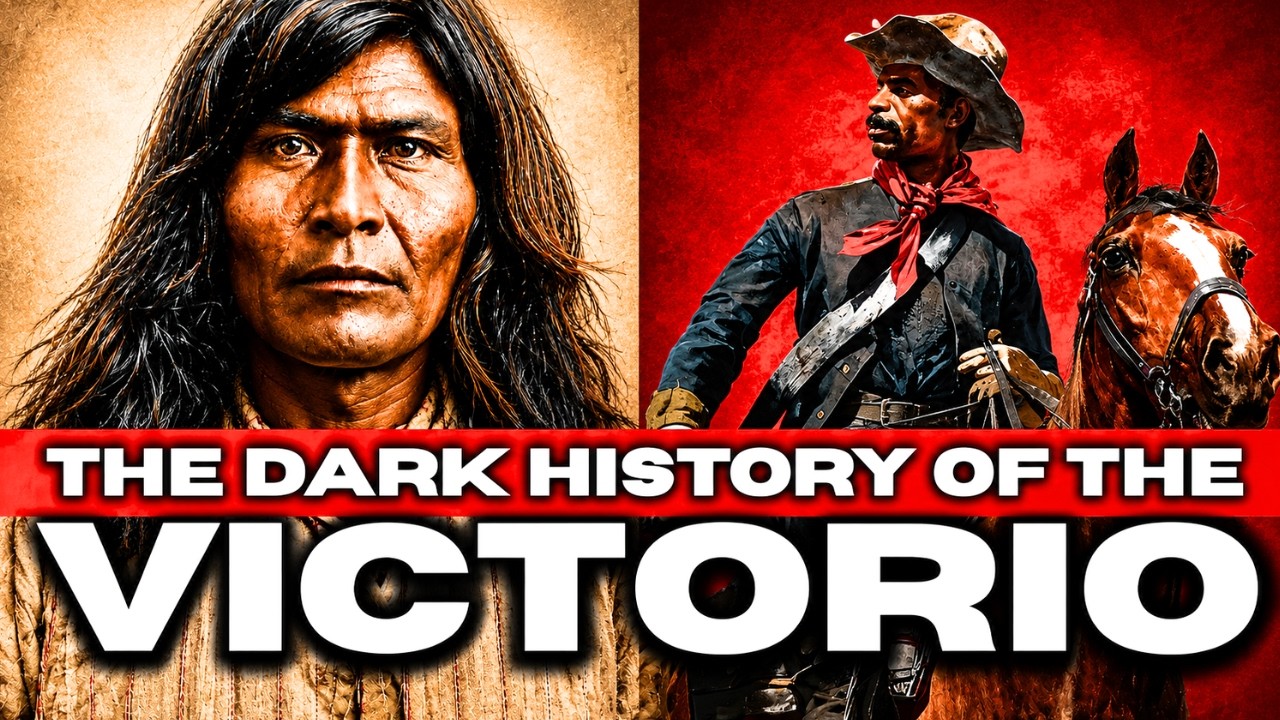
The story of the Apache resistance in the American Southwest cannot be told without confronting its most formidable figure, a leader whose strategic genius and unyielding resolve made him a legend among his people and a specter to his adversaries. In September 1879, deep within the recesses of Lasanimas Canyon in southwestern New Mexico, two troops of the 9th US Cavalry—the renowned Black cavalrymen known as the Buffalo Soldiers—found themselves locked in a ferocious firefight with sixty Apache warriors. They had been lured into an ambush and were now fighting for their lives. Surrounded on all sides, Apache warriors seemed to appear out of nowhere, firing volleys from their rifles before disappearing in an instant. As bullets filled the air, whipping past the cavalrymen’s ears like a swarm of angry wasps, the soldiers were forced to dismount and seek cover. The Apache began systematically targeting their horses, leaving the animals floundering on the canyon floor. The pitiable cries of the horses were drowned out only by the din of gunfire and war cries. For a moment, even the experienced men of the 9th Cavalry wondered if they had descended into hell itself.

Soon, however, a glimmer of hope appeared in the form of reinforcements. Two more companies from the 9th Cavalry had heard the gunfire from a few miles away and poured into the canyon in an effort to drive the Apache away from their fellow soldiers. But they too had underestimated the strength and precision of the Apache ambush. Soon these cavalrymen found their horses falling victim to Apache bullets as they hunkered down next to their cohorts behind the boulders and scrub brush that covered the canyon floor. Though these were veteran soldiers fighting under veteran officers, they had all fallen victim to a classic, perfectly executed Apache ambush. But this was not just any Apache ambush. This was the masterwork of the Apache’s greatest chief, the man whom the vaunted Buffalo Soldiers had been sent to the vast expanses of New Mexico’s canyon lands to apprehend. Ever since his escape from the reservation a few weeks earlier, he had proven to be not only a terror upon local homesteads and ranches but also as elusive as a desert mirage. He was known to his people as a selfless, unflappable leader. He was known to the Mexicans as a terror, a once peaceable leader who now sat ready to sweep down from the hills and terrorize their haciendas at will. And to the Americans, he was known as a specter, an enigmatic force of great power capable of not only great feats of courage but in garnering the unflappable loyalty of his people. His name was Victorio, and this was his war.
Victorio had been born sometime between 1820 and 1825. Some accounts claimed that he was in fact Mexican by birth, kidnapped by the Apache as a child from the tiny frontier town of Hacienda del Carmen in northern Mexico. These accounts hold that he was baptized under the name Francisco Sedrio Jr. before being taken by a raiding party of Apache warriors. However, Apache accounts themselves, taken from those who knew Victorio, hold that he was born near the modern-day town of Truth or Consequences, New Mexico. In either case, Victorio had been raised among the Chihenne, or Red Paint People. The Apache tribe itself is composed of a collection of autonomous tribal bands including the Chiricahua, the Jicarilla, the Lipan, the Mescalero, the Mimbreno, the Salinero, the Plains, and the Western Apache. The Chihenne comprise the largest subgroup of the Chiricahua, inhabiting the Black Range Mountains of western New Mexico. In addition to the Chihenne, three other small subgroups compose the Chiricahua. They are the Chokonen, inhabitants of the Chiricahua and Dragoon mountains of Arizona; the Bedonkohe, inhabitants of the Mogollon and Tularosa mountain ranges as well as the valleys of the Gila River; and the Nednhi, who make their homes in the Sierra Madre mountain range of northern Mexico.

Descended from Athabaskan-speaking ancestors who migrated south along the eastern side of the Rockies, the Chiricahua and the Chihenne especially had retained their preference for mountainous regions, making their home amid the pine forests, rivers, and hot springs that proliferate the Black Range. It was here that Victorio had come of age, climbing the steep mountainsides, navigating its deep canyons, soaking in its storied hot springs, and swimming in its frigid rivers. Though the Chihenne did not operate as a singular entity themselves, instead generally separating into extended family-based bands that made small camps within a general vicinity known as a rancheria, they reared their children in the same time-honored tradition as did all Apache. The world of the Apache was full of spirits, magic, medicine, and mysticism. It abounded in signs and prophecies, with medicinal plants and ceremonies providing cures for ailments and maladies of all kinds. The mountains and valleys that surrounded them were abundant with black bear, bald eagles, cougar, coyote, spotted owl, elk, white-tailed deer, wild turkey, beaver, desert bighorn sheep, Sonoran pronghorn, and Mexican grey wolf, all of which held significant spiritual powers. But even amid such natural beauty and abundance, the Apache also lived in a world in which danger lurked near every corner. Thus, their warrior culture took precedence over all else. Over the years, a specialized and stratified training system had been developed in order to produce the warriors the tribe depended upon. In preparation for their lives as hunters and fighting men, Victorio and his fellow young Apache boys would be subject to daily physical training that included lifting and carrying stones and logs, wrestling, target shooting with bow and arrow, and perhaps most famously, long runs up the nearby mountainsides, completed with a mouthful of water used to promote nasal breathing and careful pacing. Competitions were frequent, with wagers being placed on the outcomes of foot races, shooting contests, and grappling matches. A premium was placed on developing strength, stamina, and stoicism—traits that would prove invaluable in defending their lands from their ever-present enemies: the youths, the Comanche, the Navajo, the Mexicans, and of course, the United States Army.
By the time an Apache boy reached the age of twelve or thirteen, his father would be responsible for seeking out a diyan, a specialized warrior trainer who would formally instruct the young man in the ways of fighting, tracking, scouting, and stealth. By the time they reached their mid to late teens, Victorio and for that matter any Apache warrior could not only shoot, fight, and ride, they could navigate their surrounding territories for days in complete stealth and without maps of any kind. And they could do so while leaving no trace of their presence. They knew not only the origins and paths of every river in the area but at what times of year the rains would bring flash floods into the canyons or the fires would consume the pine-strewn hillsides. This elusiveness made it difficult to locate the Apache, much less to fight them. Their contact with the Spanish had been limited for years due in large part to the Spanish inability to discern exactly who they were and exactly where they lived. They had found it difficult to communicate with the Apache, though a fruitful trade network between the two parties would eventually come to fruition. They had also found it difficult to consolidate the Apache, making negotiations with formally recognized Apache authorities a difficult, if not impossible task to accomplish given the decentralized nature of the tribe. Finally, they had found controlling the Apache to be an outright impossibility. Intermittent periods of peace and prosperity were separated by periods of ruthless warfare as the Apache raided farmsteads, missions, and presidios. The violence was so intense that for a time it shut down the Spanish silver mining efforts in the area entirely. One hundred years before Victorio’s War, one of the most significant developments in the region’s history would set the stage for the conflicts to come.

The arrival of Mexican independence in 1821 brought a fundamental shift in the relationship between the Apache and the new government. Unlike the Spanish, who had maintained a complex system of treaties, gifts, and military pressure, the newly independent Mexico struggled to maintain control over its northern frontier. The Apache, particularly the Chihenne and other Chiricahua bands, took advantage of this power vacuum to expand their territory and influence. Victorio emerged as a prominent leader during this period, known for his tactical brilliance and his ability to unite disparate Apache bands against common enemies. His reputation grew as a warrior who could lead successful raids and then vanish into the rugged terrain that he knew so intimately. By the 1840s and 1850s, Victorio had become one of the most respected war chiefs among the Chihenne, second perhaps only to the legendary Mangas Coloradas, his father-in-law and the paramount chief of the Chiricahua. Together with Mangas Coloradas and other leaders such as Cochise, Victorio fought to preserve Apache autonomy against the encroaching forces of Mexico and, increasingly, the United States. The Treaty of Guadalupe Hidalgo in 1848, which ended the Mexican-American War, transferred vast territories to the United States, including the homelands of the Apache. This would prove to be a turning point, as American settlers, miners, and military forces began to pour into the region, setting the stage for the final, desperate struggle that would define Victorio’s legacy.
The 1860s brought both personal tragedy and escalating conflict for Victorio. In 1863, Mangas Coloradas was captured and killed by American forces under circumstances that many Apache considered treacherous. The death of his father-in-law and mentor deeply affected Victorio, hardening his resolve to resist American expansion. The Civil War years saw Apache warriors, including Victorio, engage in numerous skirmishes with both Union and Confederate forces, though the Apache generally viewed both sides as equally threatening to their way of life. Following the Civil War, the United States turned its full attention to the so-called “Indian problem” in the West. The establishment of reservations and the forced relocation of Apache bands became official policy. Victorio, like many Apache leaders, was pressured to accept reservation life, but the terms were often unacceptable—lands that were poor for farming or grazing, inadequate supplies, and constant threats from hostile settlers and corrupt Indian agents. In 1870, Victorio and his people were moved to the Ojo Caliente Reservation in New Mexico, near the hot springs that had long been part of their ancestral territory. For a time, life on the reservation was relatively peaceful, though tensions simmered beneath the surface.

The peace would not last. In 1877, the United States government decided to consolidate Apache bands onto a single reservation at San Carlos in Arizona, a barren and inhospitable tract of land that the Apache considered unfit for habitation. Victorio and his people were forcibly removed from Ojo Caliente and marched to San Carlos, a journey of hundreds of miles that resulted in the deaths of many Chihenne from disease, exposure, and starvation. The conditions at San Carlos were deplorable, with inadequate food, corrupt officials, and constant surveillance by the military. Victorio pleaded with government officials to allow his people to return to their homeland, but his requests were repeatedly denied. In September 1877, Victorio and a group of followers escaped from San Carlos and returned to New Mexico, hoping to live in peace on their ancestral lands. For a brief period, they managed to avoid confrontation, but the military was determined to force them back to the reservation. In the fall of 1879, Victorio made the decision to resist, and the Apache Wars entered their most intense phase yet. For over a year, Victorio and his warriors—never numbering more than a few hundred—fought a brilliant guerrilla campaign against the United States and Mexican armies. They moved with incredible speed and stealth, striking at isolated settlements, military outposts, and supply trains before disappearing into the mountains. The ambush at Lasanimas Canyon was just one of many engagements that demonstrated Victorio’s tactical genius. His ability to anticipate enemy movements, to use the terrain to his advantage, and to inspire absolute loyalty among his followers made him one of the most dangerous adversaries the United States Army had ever faced.
Victorio’s campaign became a legend on both sides of the border. The Mexican government, alarmed by his raids into Chihuahua and Sonora, cooperated with the United States in an unprecedented joint effort to capture or kill him. Despite their combined resources, the two armies repeatedly failed to corner the elusive chief. Victorio’s warriors, many of them women and children who had been displaced by the reservation system, fought with a desperation born of knowing that surrender meant the end of their way of life. The Apache leader’s strategic brilliance was matched by his humanity—he often released captives unharmed and avoided unnecessary bloodshed when possible, though the pressures of war sometimes led to brutal reprisals on both sides. As the months wore on, however, the relentless pursuit began to take its toll. Supplies of ammunition and food dwindled, and the constant movement made it impossible to rest or tend to the wounded. Some of Victorio’s followers began to surrender, and the ranks of his warriors grew thin. Yet he refused to give up, leading his people deeper into the rugged Sierra Madre of northern Mexico, where he hoped to find refuge and perhaps negotiate a lasting peace.

The end came in October 1880. On October 14, Mexican forces under Colonel Joaquin Terrazas, guided by Apache scouts who had been coerced or bribed into service, cornered Victorio and his remaining followers in the Tres Castillos Mountains of Chihuahua. The battle was brief and devastating. Victorio, along with most of his warriors, was killed. Some accounts claim he took his own life rather than be captured; others say he was shot by a Mexican soldier. His death marked the end of the most significant Apache resistance campaign of the era, though sporadic fighting would continue for several more years under other leaders. The legacy of Victorio, however, would endure. He was not merely a warrior but a diplomat, a strategist, and a leader who commanded the respect of both his people and his enemies. His story reflects the broader tragedy of the Apache Wars—the collision of two incompatible ways of life, the broken promises of the United States government, and the resilience of a people who fought to preserve their culture and autonomy against overwhelming odds. Today, Victorio is remembered as one of the greatest leaders in Apache history, a symbol of resistance and dignity whose name continues to inspire those who study the history of the American Southwest.


