Tennessee Prison Chief Resigns as Christa Pike Remains Unconscious After Failed Execution—but No Leaked Chamber Panic Audio Has Been Verified
Tennessee’s capital punishment system is facing one of its most serious crises in years after Christa Pike survived the state’s attempt to execute her and remained unconscious on a ventilator days later.
The fallout has now reached the highest levels of Tennessee’s prison system.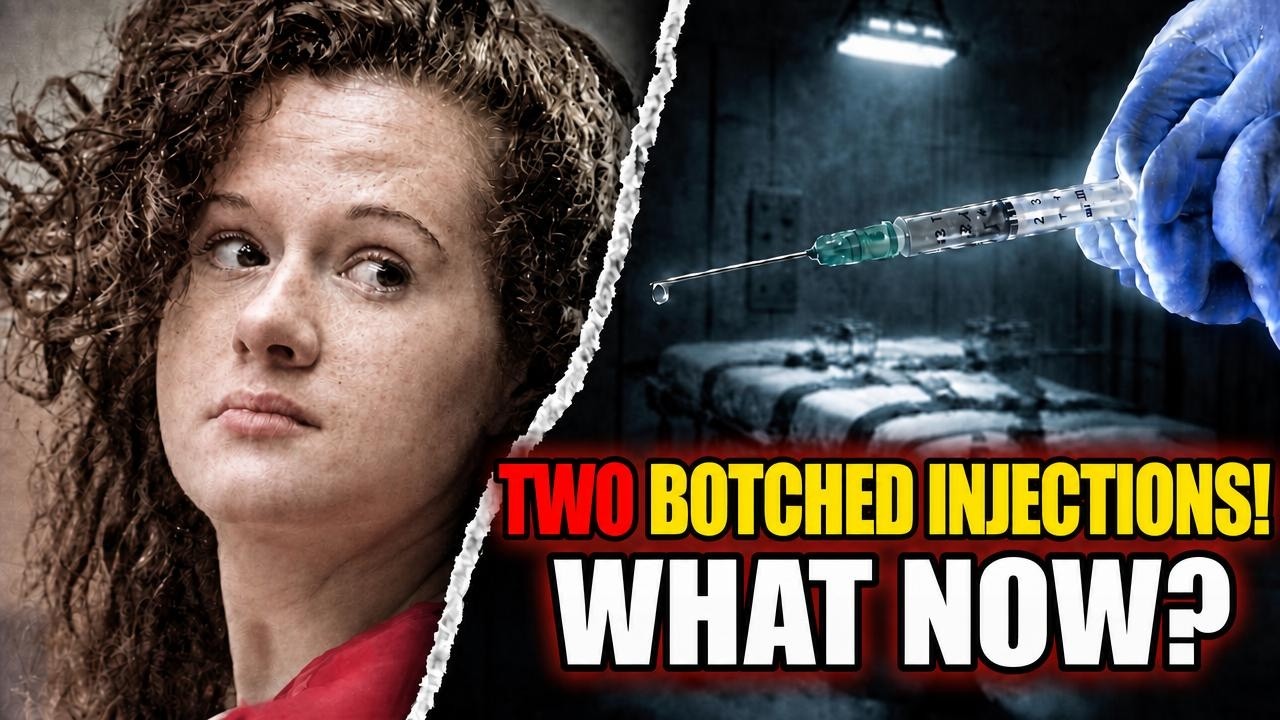
Frank Strada, commissioner of the Tennessee Department of Correction, has announced that he will resign.
Governor Bill Lee has halted the state’s remaining executions for 2026.
An independent review has been ordered.
And Pike remains hospitalized while doctors try to understand the full consequences of the two massive doses of pentobarbital administered during the failed procedure.
Those developments are real.
But several dramatic claims now circulating online go beyond the evidence.
There is no authenticated recording of medical personnel screaming inside the execution chamber.
There is no verified leaked audio in which staff admit that Pike’s IV lines “blew out.”
There is no confirmed recording of prison officials panicking while the drugs failed.
And there is no publicly released sealed incident report proving a cover-up.
The documented story is already extraordinary.
Pike entered Riverbend Maximum Security Institution’s execution chamber on September 30 expecting Tennessee to carry out her death sentence.
She had been convicted and sentenced to death for the 1995 murder of 19-year-old Colleen Slemmer.
Tennessee planned to execute Pike using its single-drug pentobarbital protocol.
The procedure did not work as intended.
Witnesses reported that execution staff appeared to administer the first set of pentobarbital.
Pike remained alive.
A second backup set was then administered.
She still did not die.
That distinction is important.
Some viral accounts describe Pike as having survived “multiple execution attempts.”
That wording can create the impression that Tennessee strapped Pike down on separate occasions and tried repeatedly to kill her.
That did not happen.
There was one execution proceeding.
Within that proceeding, the state used two drug sets authorized by its protocol.
The first failed to produce death.
The backup set also failed.
After that, Tennessee’s written protocol did not specify another procedure.
WSMV reviewed the state’s 2025 execution protocol and found that it provides instructions for an initial drug set and then a second backup set.
It does not explain what officials should do if the inmate remains alive after both.
That procedural gap became decisive.
TDOC later said the protocol did not authorize additional procedures beyond what had already been performed.
The execution was stopped.
Pike remained alive.
Witnesses described hearing her breathe and snore for a prolonged period after the drugs had been administered.
Those sounds were among the clearest signs that the execution had failed.
Media witnesses said nothing about the procedure felt normal.
One reporter who had observed several Tennessee executions said Pike’s execution was unlike anything she had seen before.
The medical concerns became even more serious after Pike was taken to a Nashville-area hospital.
Her attorneys said she arrived with both arms swollen, burned and blistered.
They allege that execution staff had difficulty establishing IV access and that the pentobarbital did not remain properly inside her veins.
Instead, they believe the caustic drug infiltrated surrounding tissue.
That theory has become one of the central questions in the investigation.
Pike’s attorneys had warned before the execution that intravenous access could be unusually difficult.
They cited her small veins and thrombocytosis, a blood disorder affecting platelet levels.
They argued that those conditions created a significant risk that lethal injection would become prolonged and painful.
The defense says those warnings were not adequately addressed.
Tennessee officials initially maintained that the execution team followed the state’s written protocol.
Governor Bill Lee said shortly afterward that, as far as the state knew at that point, TDOC personnel had followed the prescribed steps.
But he also said the outcome was unacceptable and required answers.
That apparent contradiction is now at the center of the investigation.
It is possible for employees to follow a written protocol while still producing a catastrophic result if the protocol itself is inadequate.
That is why the distinction between procedural compliance and medical success matters.
Tennessee’s protocol assumed that two sets of pentobarbital would be sufficient.
It had no meaningful plan for the scenario that occurred.
Pike remained alive after both.
The system reached the end of its written instructions.
Then everything stopped.
The political and administrative consequences followed quickly.
Lee ordered an independent review.
He halted the remaining executions scheduled for 2026.
The governor said Tennessee needed to understand why the execution produced an outcome the state had not seen before.
Then came the biggest personnel change.
Frank Strada announced that he would resign as commissioner of the Tennessee Department of Correction.
Reuters reported that Strada would leave his position during October.
In a statement, Strada said that although he believed his department’s personnel had followed protocol, stepping aside was “in the best interest of Tennesseans” while the independent review proceeded.
That is different from saying he was forcibly removed.
There is currently no credible evidence that Lee fired Strada.
There is no dismissal order.
There is no public termination letter.
There is no statement saying Strada was forced out against his will.
The available evidence describes a resignation accepted by the governor.
Lee publicly thanked Strada for his service and said he appreciated his willingness to put the state’s interests first.
That language does not rule out political pressure behind the scenes.
High-profile resignations often occur under enormous institutional pressure.
But pressure should not be transformed into a documented firing unless evidence supports it.
As of October 5, Strada’s resignation is confirmed.
A forced purge is not.
The state has also selected an outside figure to review the execution.
Former U.S. Attorney Ed Stanton has been tapped to lead the independent review into what happened.
That investigation could become crucial.
It may determine whether the IV problems resulted from staff error, protocol deficiencies, inadequate training, medical complications, or some combination of those factors.
It may also examine why Pike’s known vascular issues did not prevent Tennessee from proceeding.
The investigation could look at the number of IV attempts.
It could examine catheter placement.
It could review drug administration records.
It could examine whether the backup set was administered through compromised access.
It could examine communications between execution staff and supervisors.
It could review training sessions.
And it could determine whether the state had any emergency plan once Pike survived both authorized drug sets.
Until that review is completed, several of the most dramatic claims remain allegations.
The first involves so-called “IV blowouts.”
Pike’s lawyers say the IVs may have been improperly placed or her veins may have collapsed.
They allege this caused pentobarbital to enter surrounding tissue instead of reaching the bloodstream efficiently.
A defense-retained anesthesiologist has said that such infiltration could explain Pike’s burns and why the execution failed.
That is medically plausible.
It is not yet the final official finding.
No independent state report has concluded definitively that both IV lines “blew out.”
The investigation is still ongoing.
The second exaggerated claim concerns “toxic internal damage.”
Pike clearly suffered serious injuries.
Her attorneys describe burns, swelling and blistering in both arms.
She has remained unconscious.
She requires mechanical ventilation.
Her lawyer said on October 5 that she still had not regained consciousness.
Those facts support the conclusion that her condition is severe.
But the full extent of any internal-organ injury remains unknown.
No complete ICU record has been made public.
No final neurological prognosis has been released.
No treating physician has publicly detailed permanent liver, kidney, cardiac or brain damage.
The phrase “toxic internal damage” therefore needs qualification.
Pentobarbital entered Pike’s body.
It caused serious medical consequences.
But the exact internal injuries have not yet been fully disclosed.
The third claim concerns Pike’s level of consciousness.
AP’s October 5 update is significant.
Attorney Stephen Ferrell said Pike had not regained consciousness since the failed execution.
She remained on a ventilator.
Her future prognosis was still uncertain.
That means earlier speculation that Pike had awakened, spoken, screamed in a prison cell or given interviews is inconsistent with the latest documented timeline.
She remains hospitalized.
She has not returned to ordinary death-row custody.
She is not documented as sitting in a prison isolation cell.
She is not documented as communicating with guards.
She is not documented as making new statements.
The latest credible information says she remains unconscious.
That matters because several viral narratives describe elaborate conversations occurring after the execution.
Those stories conflict with the current medical record described by her attorney.
The fourth unsupported claim is the alleged leaked chamber audio.
Witnesses did hear Pike through the execution-room microphone during the procedure.
They reported her breathing.
They reported snoring.
They reported distress.
Some witnesses heard her complain about severe pressure in her arm.
Those observations are documented.
But that does not mean an official chamber audio recording has leaked.
A live microphone feed and an archived audio file are two different things.
No authenticated original recording has been publicly released.
No major news organization has published a hidden audio file of medical personnel screaming.
No audio metadata has been verified.
No execution-team member has authenticated such a recording.
No court filing reviewed so far cites a leaked panic tape.
The claim that “medical personnel were screaming” therefore remains unsupported.
Witnesses could not see everything happening.
The curtains closed during parts of the procedure.
That lack of visibility has itself become part of the controversy.
But an inability to observe staff does not prove panic.
It simply means the public still does not know precisely what happened behind the curtain.
That is one reason Pike’s attorneys have sought preservation of all execution-related evidence.
They want Tennessee to preserve documentation that could reveal exactly what happened.
The preservation request reportedly covers materials connected to the execution attempt.
That could include drug records.
IV records.
Staff logs.
Communications.
Training materials.
Photographs.
Medical records.
And potentially any electronic recordings if they exist.
But asking that evidence be preserved does not mean the defense already possesses a secret incident report.
Nor does it prove there is a hidden chamber audio file.
Those documents may or may not exist.
The investigation will determine what records were created.
The phrase “sealed death-house procedural incident report” currently appears to be an unsupported embellishment.
No authenticated report matching that description has been released.
No court docket has publicly identified such a document.
No named source has supplied it.
The most important verified institutional development is Strada’s resignation.
The timing is impossible to ignore.
Pike’s execution failed September 30.
She was hospitalized.
Lee suspended executions.
Then, within days, the commissioner responsible for Tennessee’s prison system announced he would step aside.
That creates legitimate questions about accountability.
But Strada’s own explanation matters.
He said he still believes TDOC employees followed proper protocol.
He said his resignation would allow the independent review to proceed without interference.
That leaves two competing interpretations.
Pike’s legal team argues the execution exposed profound systemic failures.
TDOC maintains that staff followed the existing protocol.
Both positions can coexist temporarily because the investigation has not yet determined exactly what caused the failure.
That is the unresolved question.
Did individuals make mistakes?
Was the protocol itself inadequate?
Were Pike’s medical risks underestimated?
Was the IV team insufficiently prepared?
Did the execution team fail to recognize infiltration?
Did administrators push forward despite warning signs?
Or did multiple failures occur simultaneously?
The public does not yet have definitive answers.
The state’s previous problems make the situation even more serious.
Earlier in 2026, Tennessee had another failed execution attempt involving Tony Carruthers.
That procedure was abandoned after medical personnel could not establish IV access after an extended period.
That history matters because Pike’s attorneys had explicitly raised vein-access concerns beforehand.
The question now is whether Tennessee learned enough from the earlier failure.
Pike’s team argues it did not.
The independent review will have to examine that.
Pike’s survival also exposes a major weakness in Tennessee’s protocol.
The written system assumed that if the first pentobarbital set failed, the backup set would work.
There was no third step.
No additional authorized dose.
No alternative method.
No contingency procedure.
Once Pike remained alive after the second set, prison personnel were operating outside the circumstances contemplated by the manual.
That procedural hole is perhaps more significant than any alleged leaked recording.
It is documented.
It is visible in the protocol itself.
And it helps explain why officials ultimately stopped.
TDOC said the protocol did not permit additional procedures.
That does not automatically make Pike legally immune from another future execution.
But it explains why officials did not simply administer a third round that night.
Lee’s statewide pause now prevents another Tennessee execution during the remainder of 2026.
That includes Pike.
There is no new execution date.
There is no order preparing her for another immediate attempt.
The state is investigating what happened first.
Pike’s lawyers meanwhile want her death sentence commuted to life imprisonment.
Ferrell has argued that what she already experienced should matter in any future decision.
He also says her unknown medical prognosis could raise additional legal questions if she survives.
Those questions could eventually include competency.
They could include Eighth Amendment challenges.
They could include litigation over whether another attempt would expose her to unconstitutional pain.
But those issues remain unresolved.
The latest medical update does not even establish whether Pike will regain consciousness.
AP reported October 5 that she still had not.
That uncertainty makes the current moment radically different from the original execution schedule.
Tennessee now has to deal with a condemned prisoner who survived two authorized administrations of the state’s lethal drug and remains critically ill.
It has to investigate why.
It has to determine whether its protocol remains viable.
It has to replace or temporarily cover the leadership of its corrections department.
And it has to decide how to handle future death sentences after halting executions for the rest of the year.
That is an institutional crisis by any ordinary definition.
But it should still be described accurately.
Frank Strada is resigning.
Verified.
He will leave his position during October.
Verified.
He said stepping aside was in Tennessee’s best interest during the independent review.
Verified.
Governor Bill Lee halted Tennessee executions for the remainder of 2026.
Verified.
An independent review has been ordered.
Verified.
Former U.S. Attorney Ed Stanton has been chosen to lead that review.
Verified.
Pike received two sets of pentobarbital during one execution attempt.
Verified.
She survived both.
Verified.
She remains unconscious.
Verified as her attorney’s latest statement.
She remains on a ventilator.
Verified as her attorney’s latest statement.
Her arms were reportedly swollen, burned and blistered.
Verified as the defense’s court-filed description.
Her lawyers allege the IVs were improperly placed or failed.
Verified as their allegation.
Pentobarbital may have infiltrated surrounding tissue.
Supported as the defense theory and medical-expert assessment.
Both IV lines have been officially proven to have catastrophically “blown out.”
Not yet established by an independent final investigation.
Medical personnel screamed in panic during the execution.
Not verified.
A chamber recording captures those screams.
Not authenticated.
A hidden procedural report proves a cover-up.
Not verified.
Strada was forcibly fired by the governor.
Not established.
Tennessee’s death penalty has been permanently abolished.
False.
Executions are paused for the remainder of 2026 while the state investigates.
Pike survived multiple separate executions.
Misleading.
She survived two drug administrations within a single execution attempt.
That factual version is already dramatic.
Tennessee attempted to execute Christa Pike.
The state administered the full drug sequence authorized by its written protocol.
She did not die.
She suffered severe injuries.
She has remained unconscious on mechanical ventilation.
The governor stopped every remaining execution for the year.
And within days, the commissioner overseeing Tennessee’s prison system announced that he would resign.
Those facts do not require a secret wiretap or a hidden panic tape to demonstrate how badly the execution went wrong.
The real scandal is already in the public record.
What remains unknown is exactly why it happened—and whether Tennessee’s independent review will ultimately blame individual execution staff, the IV procedure, the written protocol, senior management, or a combination of all four.


