In September 1987, Star Trek attempted something that could easily have failed.
The original Enterprise was gone.
Captain Kirk was gone.
Spock was gone.
And television audiences were being asked to accept an entirely new crew carrying one of science fiction’s most famous names.
What followed became something much larger than a sequel.
Star Trek: The Next Generation built its own universe, its own philosophy and its own family.
Captain Jean-Luc Picard led with intelligence rather than swagger.
William Riker brought confidence and instinct.
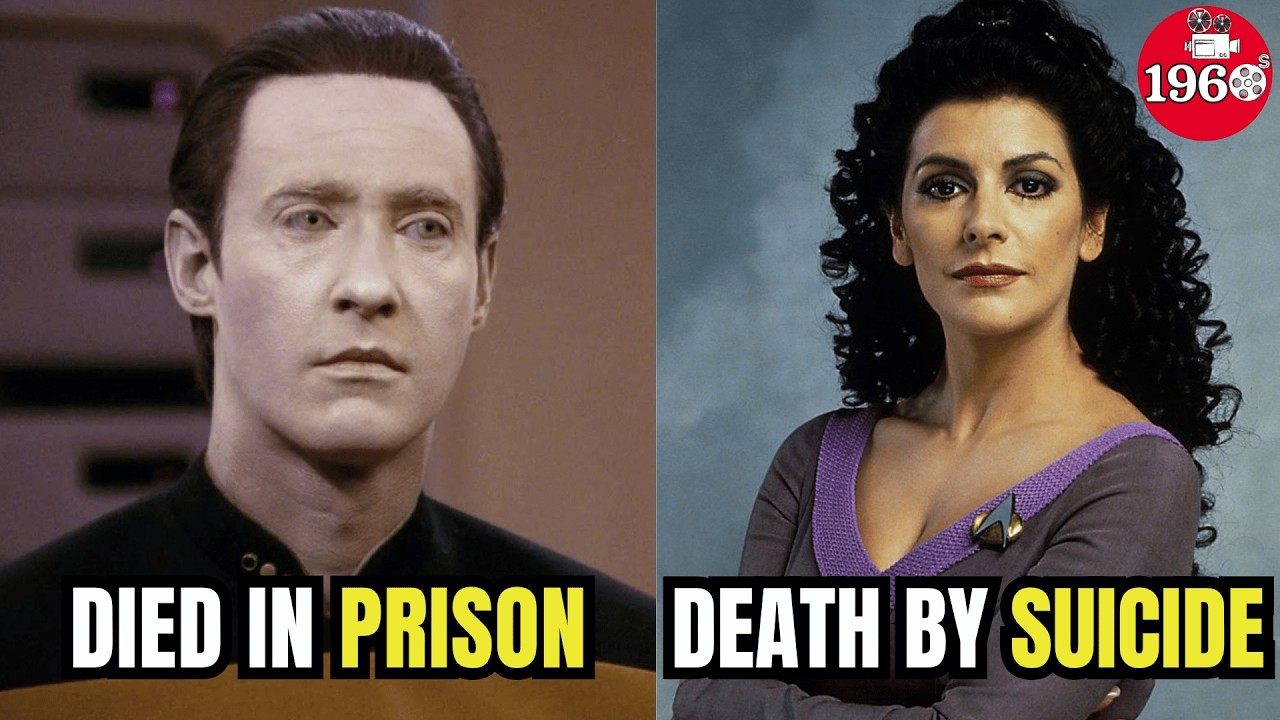
Data wanted to understand humanity.
Worf struggled between two cultures.
Geordi La Forge saw possibilities others could not.
Beverly Crusher brought compassion to medicine.
Deanna Troi made emotional understanding part of command.
And around them came Wesley Crusher, Miles O’Brien, Guinan, Tasha Yar, Ro Laren, Q, Reginald Barclay and dozens of other characters who made the Enterprise-D feel less like a television set and more like a living community.
Nearly four decades later, those faces remain frozen in the future.
But the actors behind them continued moving through time.
Some became international stars.
Some became directors.
Some left acting.
Some returned to Star Trek decades later.
And a few beloved members of this extended Enterprise family are sadly no longer here.
Patrick Stewart was not the obvious choice to become the next great Star Trek captain.
That may be exactly why Jean-Luc Picard worked.
When The Next Generation premiered in 1987, Stewart was 47.
He was a classically trained Shakespearean actor with years of stage experience, not the conventional image of an American television action hero.
Picard was equally unconventional.
He did not need to dominate every room physically.
He listened.
He considered.
He debated.
He questioned orders when conscience demanded it.
And when violence became necessary, it often felt like the failure of every option he had attempted before it.
Stewart turned intelligence into authority.
His voice could make a speech about duty, morality or humanity feel as urgent as a space battle.
That distinction was essential.
The Next Generation could never survive by simply creating another Captain Kirk.
Picard needed to be something else.
He was.
After seven seasons, Stewart continued playing Picard in feature films and eventually returned decades later in Star Trek: Picard.
That return changed the character.
Audiences were no longer watching the seemingly unshakable captain of the Enterprise.
They were watching an older man confront mortality, regret, friendship and the consequences of decisions made long ago.
Outside Star Trek, Stewart achieved another extraordinary level of recognition as Professor Charles Xavier in the X-Men franchise.
Few actors become permanently associated with one major genre character.
Patrick Stewart became identified with two.
The source places him at 86 in 2026.
Picard endures because Stewart proved leadership did not have to be loud.
Sometimes the strongest person in the room is the one willing to think before saying, “Engage.”
Jonathan Frakes entered the series looking much closer to the traditional television hero.
William T. Riker was confident.
Athletic.
Charming.
Ambitious.
And apparently destined to command his own starship.
As Picard’s Number One, Riker could lead dangerous away missions while the captain remained aboard the Enterprise.
But his importance grew far beyond that function.
Riker could challenge Picard without undermining him.
That created one of the series’ strongest professional relationships.
Their loyalty came from trust rather than competition.
His long relationship with Deanna Troi added another dimension.
Their connection evolved slowly across years, giving both characters an emotional history larger than a conventional television romance.
Yet Jonathan Frakes’s greatest transformation happened somewhere viewers could not initially see.
Behind the camera.
Frakes began directing episodes of The Next Generation.
Then more.
Eventually he directed Star Trek: First Contact and Star Trek: Insurrection and continued directing television across the franchise.
The actor playing a Starfleet commander gradually became one of the real people helping steer Star Trek itself.
He later returned as Riker, allowing audiences to meet the character again as an older husband, father and leader.
The source places Jonathan Frakes at 74 in 2026.
Riker may have spent years waiting for his own command.
Frakes ultimately found something even larger.
He helped command the storytelling.
LeVar Burton arrived with an extraordinary career already behind him.
Roots had made him nationally recognizable.
Then The Next Generation gave him Geordi La Forge.
Geordi’s blindness was not written simply as a limitation.
His VISOR allowed him to perceive information beyond ordinary human vision.
That idea captured something central to Star Trek.
Technology did not erase difference.
It expanded possibility.
As chief engineer, Geordi became the person everyone wanted near the warp core when something went catastrophically wrong.
But Burton also gave him warmth.
Curiosity.
Enthusiasm.
And friendship.
His relationship with Data became especially important.
Data spent years trying to understand human behavior.
Geordi simply treated him as a friend.
That made their relationship one of the show’s emotional anchors.
Outside Star Trek, Burton became inseparable from another cultural institution: Reading Rainbow.
That created a remarkable career.
Roots.
Reading Rainbow.
Star Trek.
History, literacy and science fiction all became connected to the same performer.
The source places Burton at 69 in 2026.
Geordi remains beloved because Burton made brilliance feel approachable.
The smartest engineer in the room could still be kind.
Michael Dorn’s Worf carried one of the franchise’s longest and richest identity struggles.
He was Klingon.
He was Starfleet.
And those two identities did not always agree.
Worf believed deeply in honor and Klingon tradition.
Yet he had been shaped by humans and trained within Federation values.
That conflict gave Dorn far more to play than physical strength.
Worf could defeat enemies.
The more difficult battles involved himself.
What does loyalty mean when two cultures demand different things?
What does honor mean when tradition becomes destructive?
How does someone become a good Klingon, good Starfleet officer, good friend and good father when those roles sometimes contradict one another?
Dorn’s absolute seriousness also produced unexpected comedy.
Worf rarely tried to be funny.
That was why he often was.
His journey eventually expanded beyond The Next Generation into Deep Space Nine and later Star Trek: Picard.
The source places Michael Dorn at 73 in 2026.
Worf became one of Star Trek’s greatest warriors.
Yet his most interesting conflicts could not be solved with a bat’leth.
Gates McFadden gave the Enterprise its medical conscience.
Dr. Beverly Crusher was a physician, officer, mother and widow.
That combination mattered.
She was not simply waiting in sickbay for another injured crew member.
Beverly could confront Picard when medicine and command came into conflict.
A captain might think strategically.
Crusher had to think about the living person affected by that strategy.
Her relationship with Wesley brought family life directly aboard the Enterprise.
Her unresolved history with Picard added another layer.
Their connection was built on affection, loss, duty and hesitation rather than an easy romance.
McFadden’s own background in theater, choreography and work connected with Jim Henson Productions also gave her an unusual creative path before Star Trek.
She later returned for the films and eventually Star Trek: Picard.
The source places her at 77 in 2026.
Crusher represented strength without aggression.
She could challenge a captain without needing his chair.
Then there was a cast member audiences often heard without seeing.
Majel Barrett became, quite literally, part of the sound of Star Trek.
Her voice as the Enterprise computer was calm.
Neutral.
Efficient.
Always present.
A few words could immediately place the audience aboard a Federation starship.
But Barrett’s history with Star Trek extended much further.
She had been there from the franchise’s earliest days.
She appeared in the original pilot.
She played Nurse Christine Chapel.
She later became the flamboyant Lwaxana Troi.
And across multiple Star Trek productions, her computer voice became an almost architectural part of the universe.
She was also Gene Roddenberry’s wife and became affectionately known as the First Lady of Star Trek.
Majel Barrett died in 2008 at the age of 76 after leukemia, according to the source.
Many actors leave behind a famous character.
Barrett left behind part of what the future sounded like.
Wil Wheaton was only 15 when The Next Generation began.
That made Wesley Crusher different from almost everyone around him.
He was a teenager surrounded by accomplished Starfleet officers.
He was brilliant.
Sometimes extraordinarily brilliant.
And that intelligence created expectations.
Wesley became one of the show’s most debated characters during its original run.
Some viewers connected with him.
Others found him frustrating.
But viewed decades later, another theme becomes clearer.
Pressure.
What happens when a child is repeatedly told he is extraordinary?
What happens when everyone already imagines the future he should have?
Wesley’s eventual journey became partly about deciding whether he had to become the person everyone expected.
Wheaton himself later built a very different adult public identity as a writer, host, actor and prominent voice in pop culture.
The source also notes that he has spoken openly about personal struggles and healing.
It places him at 54 in 2026.
Wesley now feels less like simply the controversial young prodigy.
He feels like a character about the burden of potential.
Colm Meaney achieved something remarkable with Miles O’Brien.
He made an ordinary man essential to an extraordinary future.
O’Brien was not captain.
He was not an android.
He did not possess godlike powers.
He was a working officer.
He operated the transporter.
He fixed things.
He got frustrated.
He went home.
Then he returned to work.
That normality became his strength.
Meaney gave O’Brien a blue-collar texture rarely seen in the polished Starfleet environment.
When the character later expanded dramatically on Deep Space Nine, audiences saw marriage, fatherhood, war trauma, exhaustion and duty become central to his life.
Outside Star Trek, Meaney built a substantial career in film and television.
The source places him at 73 in 2026.
O’Brien proved that heroism does not always require the captain’s chair.
Sometimes heroism means being exhausted and still showing up for your shift.
Denise Crosby’s Tasha Yar represents one of The Next Generation’s great unfinished possibilities.
Tasha was tough because her past had taught her that safety could disappear.
Starfleet offered structure after chaos.
As security chief, she appeared capable of becoming a major part of the Enterprise family.
Then she died.
Her abrupt death in “Skin of Evil” shocked viewers precisely because so much of the character still felt unexplored.
But Denise Crosby did not disappear from Star Trek.
She returned through the celebrated alternate-timeline story “Yesterday’s Enterprise.”
She also played Sela, Tasha’s half-Romulan daughter.
And through the documentary Trekkies, Crosby developed another relationship with the franchise by exploring its extraordinary fandom.
The source places her at 68 in 2026.
Tasha remains memorable partly because audiences never got enough time with her.
Whoopi Goldberg did not need Star Trek.
By the time she appeared as Guinan, she was already a major star.
That made her decision to join the franchise especially meaningful.
Guinan did not command the Enterprise.
She served drinks in Ten Forward.
Yet Picard listened to her.
That said everything.
Guinan understood people.
She noticed what they avoided saying.
She seemed to carry knowledge accumulated across a life far longer and stranger than anyone completely understood.
Goldberg played that mystery quietly.
Guinan did not need to explain everything.
The suggestion that she knew more was often enough.
The source also connects Goldberg’s love of Star Trek to Nichelle Nichols and Uhura, giving her participation a generational significance.
Goldberg eventually achieved EGOT status and built a career spanning film, television, comedy and hosting.
She later returned as Guinan in Star Trek: Picard.
The source places her at 71 in 2026.
Guinan had no captain’s rank.
She did not need one.
Sometimes Picard needed someone who could hear what even he was afraid to say.
Diana Muldaur faced an almost impossible introduction.
Dr. Katherine Pulaski arrived during the second season after Beverly Crusher was gone.
Viewers immediately compared them.
Pulaski was not Beverly.
That was the point.
She was older.
Sharper.
More direct.
Sometimes abrasive.
Her early skepticism toward Data’s personhood made her especially controversial.
But that conflict also created development.
Pulaski gradually learned.
Her attitude changed.
Respect grew where dismissal had existed.
Muldaur already had connections to the original Star Trek and later stepped away from acting after a broader television career.
The source places her at 88 in 2026.
Pulaski remains debated because she was never designed to make everyone comfortable.
Patti Yasutake’s Nurse Alyssa Ogawa occupied a much quieter place aboard the Enterprise.
That was precisely why she mattered.
Ogawa helped sickbay feel like a workplace.
She was reliable.
Professional.
Warm.
Present.
Supporting characters like her gave the ship scale.
The Enterprise did not function because seven famous officers did everything.
Thousands of people lived and worked aboard it.
Ogawa represented them.
Yasutake brought enough personality to the role that audiences remembered her even without huge storylines.
She died in 2024 at the age of 70.
Rewatching her appearances now carries another sadness.
The character was never supposed to dominate the Enterprise.
She helped make it feel alive.
Michelle Forbes arrived as Ensign Ro Laren and immediately disturbed Starfleet’s comfortable image of itself.
Ro was Bajoran.
Angry.
Suspicious of authority.
And unwilling to pretend institutions always deserved trust.
That made her fascinating.
Starfleet represented enormous ideals.
Ro forced viewers to consider whether a good institution could still fail individuals.
Her history also helped introduce Bajoran trauma and politics that would become enormously important to Deep Space Nine.
Eventually, her loyalties became impossible to reconcile.
Starfleet demanded one thing.
Her conscience demanded another.
She chose the Maquis.
Forbes later built a career around similarly complex characters in productions including Battlestar Galactica, The Killing, True Blood and Homicide: Life on the Street.
She eventually returned to Star Trek as Ro decades later.
The source places Michelle Forbes at 61 in 2026.
Ro remains powerful because her anger was never meaningless.
It came from history.
Rosalind Chao’s Keiko O’Brien gave Star Trek something science fiction sometimes forgets.
Domestic life.
Keiko had her own career as a botanist.
She was not simply Miles O’Brien’s wife.
Their marriage involved love, compromise, frustration, career decisions and children.
In other words, the future had not magically solved relationships.
Their family life became even more important on Deep Space Nine.
While enormous political and military events unfolded around them, the O’Briens still had to decide how to raise children and balance two lives.
Chao also built a substantial career outside Star Trek, including work associated in the source with The Joy Luck Club, Mulan and What Dreams May Come.
The source places her at 69 in 2026.
Keiko helped make the future feel like somewhere people actually lived.
John de Lancie’s Q could do almost anything.
That should have made him boring.
Instead, it made him hilarious and dangerous.
Q could alter reality.
Move people through time.
Create impossible tests.
Humiliate Picard.
Threaten humanity.
Then behave as though the entire catastrophe were entertainment.
De Lancie understood that Q worked best when arrogance became theatrical.
But underneath the comedy were serious questions.
Q repeatedly challenged humanity’s belief in its own progress.
Picard believed in reason, ethics and discipline.
Q could rewrite the rules whenever he wanted.
Their encounters therefore became arguments about whether humanity deserved the confidence Starfleet placed in it.
Q later appeared across multiple Star Trek series and eventually returned in Star Trek: Picard.
The source places John de Lancie at 78 in 2026.
Q could have been merely omnipotent.
De Lancie gave omnipotence a personality.
Brian Bonsall’s Alexander Rozhenko exposed a weakness Worf could never defeat through strength.
Fatherhood.
Worf understood rules.
Tradition.
Discipline.
Honor.
Alexander did not naturally want the life his father imagined for him.
That created pain.
A parent may believe a tradition is valuable.
The child still has to decide whether it belongs to them.
Bonsall played Alexander as someone caught between identities he had not chosen.
He later left regular acting and moved into music.
The source places him at 45 in 2026.
Alexander mattered because he forced one of Star Trek’s toughest warriors to confront a problem that could not be punched.
Dwight Schultz’s Reginald Barclay challenged another assumption about Starfleet.
What if the future still contained anxiety?
What if someone brilliant still felt uncomfortable around other people?
Barclay was intelligent.
Creative.
Capable.
And deeply insecure.
On a ship filled with people who often appeared impossibly competent, he could look overwhelmed simply entering a room.
Schultz made that funny without reducing the character to a joke.
Barclay’s struggles with confidence and social connection gave Star Trek an unusually personal form of conflict.
Technology had improved.
Human insecurity had not disappeared.
His later role in Voyager’s Pathfinder storyline gave the character an especially satisfying development.
The anxious engineer who struggled to connect with people eventually helped reconnect a starship stranded across the galaxy.
The source places Schultz at 79 in 2026.
Barclay carried one of Star Trek’s gentlest messages.
You do not have to become fearless before you are allowed to matter.
Brent Spiner faced perhaps the strangest acting challenge in the cast.
How do you make an emotionless android emotionally compelling?
Data was stronger than humans.
Faster.
More intelligent.
More precise.
Yet the things he wanted most were things ordinary people barely noticed.
Humor.
Love.
Embarrassment.
Friendship.
Grief.
The contradictions of human behavior fascinated him.
Spiner played Data with extraordinary restraint.
Too mechanical and the audience would feel nothing.
Too emotional and the entire concept would collapse.
Instead, small movements mattered.
A pause.
A tilt of the head.
A carefully delivered sentence.
His friendship with Geordi humanized him without changing what he was.
His relationship with Picard opened larger questions about rights and personhood.
Could an artificial being be a person?
Who had the authority to decide?
Data eventually continued through the films and returned in Star Trek: Picard.
The source places Brent Spiner at 77 in 2026.
Data’s greatest achievement may be that an android helped millions of viewers think differently about being human.
Marina Sirtis gave Starfleet another kind of intelligence.
Deanna Troi understood emotion.
That sounds obvious now.
Within the Enterprise command structure, it was quietly radical.
Troi’s empathy suggested fear, grief, anger and uncertainty were not inconveniences to suppress.
They were information.
Early episodes did not always know what to do with her.
But as the series developed, Troi became increasingly important to the emotional architecture of the crew.
Her relationship with Riker carried years of history.
Her friendship with Beverly created warmth beyond the bridge.
Her connection with Picard allowed him to confront truths command discipline might otherwise bury.
Sirtis made empathy feel professional rather than weak.
She continued returning to Troi across films and later Star Trek productions.
The source places Marina Sirtis at 71 in 2026.
Troi represented one of The Next Generation’s most optimistic predictions.
Perhaps a more advanced society would not only build faster starships.
Perhaps it would finally understand that emotional health deserved serious attention.
That may explain why Star Trek: The Next Generation still feels powerful almost four decades later.
The technology has aged.
The effects have changed.
The actors have grown older.
Some are gone.
But the central questions have not disappeared.
What makes someone human?
When should conscience override orders?
Can two cultures coexist inside one person?
Does intelligence matter without compassion?
Can technology improve life without defining it?
Can humanity become more powerful without becoming less humane?
The Enterprise-D traveled across the galaxy.
But its most memorable journeys were often inward.
Patrick Stewart made intelligence heroic.
Jonathan Frakes turned a first officer into a filmmaking legacy.
LeVar Burton made curiosity warm.
Michael Dorn transformed a warrior into a study of identity.
Gates McFadden gave medicine a conscience.
Marina Sirtis made empathy part of leadership.
Brent Spiner used an android to explore humanity.
Colm Meaney made ordinary work heroic.
Whoopi Goldberg gave wisdom a quiet seat in Ten Forward.
And performers like Majel Barrett and Patti Yasutake are now gone, leaving voices and faces permanently preserved inside the universe they helped create.
Time did something no Starfleet technology could prevent.
It carried everyone forward.
Yet switch on an old episode and suddenly the years disappear.
Picard is in his chair.
Riker is beside him.
Data is studying another human contradiction.
Worf is standing at tactical.
Geordi is trying to save the ship.
Beverly is in sickbay.
Troi understands what nobody has said aloud.
And somewhere nearby, the computer is waiting for a command.
The Enterprise is moving again.
And the future still feels possible.


