In 1984, a group of recruits who looked almost completely unqualified to wear police uniforms walked through the gates of an academy—and became comedy legends.
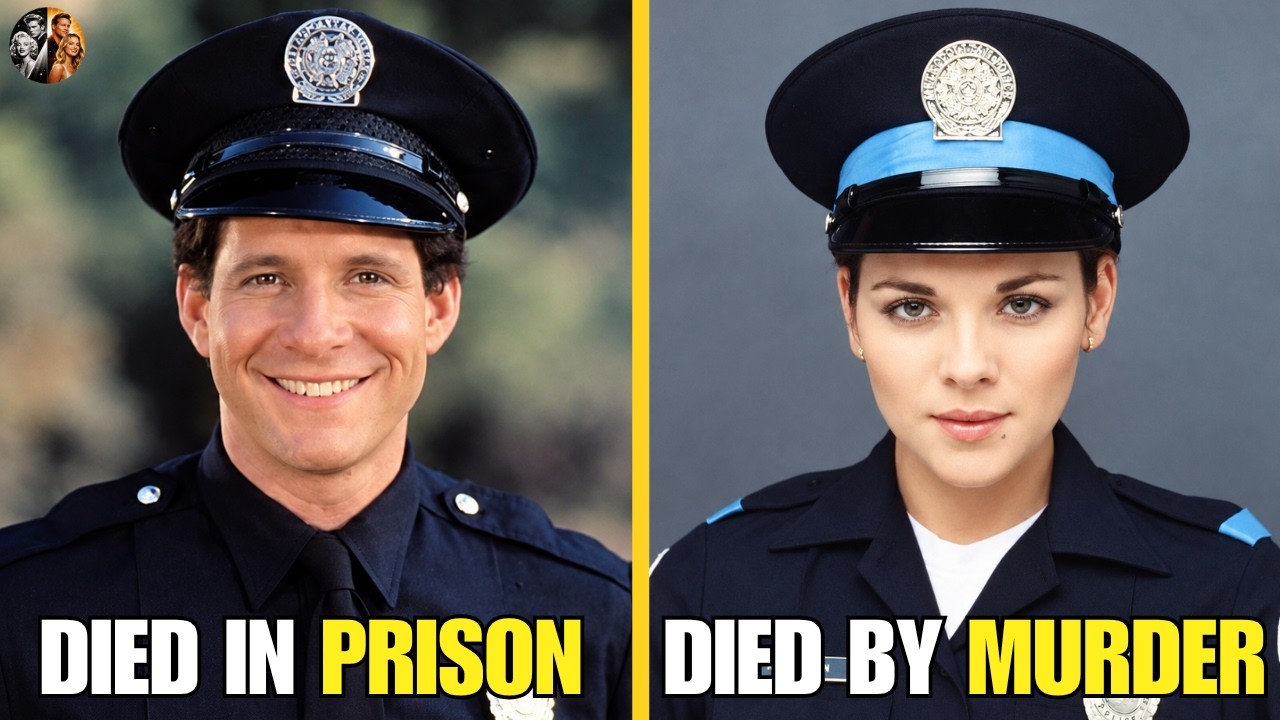
There was Carey Mahoney, the charming troublemaker who never seemed capable of taking authority seriously.
Larvell Jones could turn his mouth into a police siren, machine, musical instrument or almost anything else he wanted.
Moses Hightower was enormous, intimidating and surprisingly gentle.
Eugene Tackleberry seemed to believe that every problem in life could be solved with more firepower.
Laverne Hooks barely spoke above a whisper—until suddenly she didn’t.
Debbie Callahan could silence a room with one look.
Lieutenant Harris desperately wanted discipline.
Commandant Lassard seemed blissfully unaware of half the chaos occurring around him.
Douglas Fackler could cause a disaster without even realizing he had done anything.
And Karen Thompson gave Mahoney something he had not expected to find at the academy: romance.
Police Academy became a surprise box-office phenomenon and launched a franchise that ultimately produced seven theatrical films.
More than four decades later, however, looking back at the original cast brings very different emotions.
Some of its stars are still performing.
Others moved away from Hollywood.
Several became associated with characters even bigger than the ones they played here.
And some of the actors responsible for the franchise’s most unforgettable laughs are sadly no longer alive.
Here is what happened to 10 memorable faces from Police Academy.
Leslie Easterbrook was in her thirties when she became Sergeant Debbie Callahan.
Callahan did not need Mahoney’s jokes or Harris’s screaming.
Her presence did most of the work.
She was physically imposing, confident and completely comfortable intimidating recruits who thought they could survive the academy by treating everything as a joke.
That made her the perfect counterweight to the chaos around her.
Before Police Academy, Easterbrook was already familiar to television audiences through Laverne & Shirley, where she played Rhonda Lee.
But Callahan gave her a completely different screen identity.
The character proved popular enough for Easterbrook to return repeatedly as the franchise expanded through the 1980s and 1990s.
Years later, she demonstrated a very different side of her acting career through darker genre films, including Rob Zombie’s The Devil’s Rejects and Halloween.
Her personal life also went through a painful change when her husband, writer and producer Dan Wilcox, died in 2024.
In 2026, Easterbrook is 77.
More than 40 years after the original film, Callahan remains one of the easiest Police Academy characters to recognize.
The uniform.
The stare.
The posture.
The unmistakable sense that the recruits had better stop laughing before she reached them.
Then there was Moses Hightower.
Bubba Smith did not need special effects to make Hightower look intimidating.
At 6 feet 7 inches tall, the former professional football player towered over much of the cast.
But the joke was that Hightower’s personality rarely matched what people expected from his enormous physical presence.
He was quiet.
Kind.
Patient.
And immensely strong.
One of the original film’s most memorable sequences involves Hightower learning to drive.
He had never driven before joining the academy.
Mahoney attempted to teach him.
The result was exactly the kind of controlled disaster Police Academy did best.
Smith had already experienced an extraordinary career before Hollywood.
He had been a major football star and played in the NFL, including with the Baltimore Colts. He was part of the Colts team that won Super Bowl V.
After football, his size, personality and screen presence made acting a natural second career.
Hightower became his signature role.
Smith returned through much of the Police Academy franchise and continued appearing in movies, television programs and commercials.
Then came the sad news.
Bubba Smith died in August 2011 at the age of 66.
The Los Angeles County coroner later attributed his death to acute intoxication from the weight-loss drug phentermine, with heart disease and other factors also noted.
His death closed the story of one of Police Academy’s most distinctive performers.
But Hightower survives onscreen exactly as audiences remember him—the biggest man in the room and often one of the gentlest.
Michael Winslow brought something to Police Academy that virtually nobody else could duplicate.
Larvell Jones did not need equipment to create sound effects.
He was the equipment.
Sirens.
Engines.
Guns.
Radios.
Musical sounds.
Electronic noises.
Jones could transform an ordinary scene simply by opening his mouth.
Winslow’s extraordinary vocal ability earned him the nickname “The Man of 10,000 Sound Effects.”
Unlike many performers whose franchise characters depended heavily on writers, Winslow carried an unusual advantage.
The talent was actually his.
That meant he could perform it anywhere.
Police Academy simply gave millions of people their first major exposure to it.
Winslow became one of the franchise’s most consistent stars, appearing throughout all seven original films.
He also appeared in Mel Brooks’s Spaceballs and continued performing his sound effects in live shows.
Behind the comedy, his life included tragedy.
His first wife, Belinda Church, died in 1993, leaving Winslow to help raise their children.
He continued performing but placed significant attention on his family.
Decades after the first Police Academy, a new generation encountered him when he appeared on America’s Got Talent.
The remarkable thing was how instantly recognizable the talent remained.
Close your eyes and the human being disappears.
Suddenly there is a machine in the room.
Then another.
Then a siren.
Then something that should not possibly be coming from one person’s mouth.
In 2026, Winslow is 68.
Jones may have been a fictional cadet, but the ability that made him famous was completely real.
David Graf took the franchise in another direction.
Eugene Tackleberry loved weapons.
Not casually.
Not sensibly.
Tackleberry approached firearms with the enthusiasm other people might reserve for their favorite hobby, sports team or first love.
Everything was tactical.
Everything could become a threat.
And almost every threat seemed to require dramatically more firepower than necessary.
The character could easily have become exhausting.
Graf made him strangely lovable.
Tackleberry was not cynical.
He was sincere.
He genuinely believed in what he was doing.
That seriousness made the absurdity funnier.
Graf became one of the franchise’s most dependable performers and appeared as Tackleberry throughout all seven Police Academy movies.
Outside the series, he built a long list of television credits and appeared in projects including The Brady Bunch Movie and The West Wing.
He also became involved with issues affecting actors through the Screen Actors Guild.
Then his life ended suddenly.
In April 2001, Graf was attending a family wedding in Arizona when he suffered a heart attack.
He died nine days before what would have been his 51st birthday.
He was only 50.
For fans, that makes revisiting Tackleberry bittersweet.
The character remains permanently energetic.
Permanently enthusiastic.
Permanently ready for a situation requiring vastly more ammunition than anyone else thinks necessary.
Graf never got the chance to grow old alongside him.
Marion Ramsey created comedy through the exact opposite approach.
Laverne Hooks seemed almost too quiet for police work.
Her voice could be so soft that people had to strain to hear her.
She appeared shy.
Gentle.
Almost invisible.
Then someone pushed too far.
And Hooks exploded.
That sudden transformation became her signature.
The whisper disappeared.
A booming command took its place.
The joke worked repeatedly because Ramsey made the contrast so extreme.
Hooks did not need to dominate every scene.
She waited.
Then came the moment.
Before Police Academy, Ramsey had worked on stage, including Broadway productions.
The franchise gave her international recognition.
She returned for several sequels and continued working in television and film afterward.
Ramsey was also involved with charitable causes, including work connected to HIV/AIDS awareness and support.
Her later acting appearances became less frequent.
She died in January 2021 at the age of 73.
Police Academy contained many louder characters.
Yet Hooks remains one of the most fondly remembered.
Sometimes the quietest person in the room delivered the biggest laugh.
G.W. Bailey had the unenviable job of playing a man audiences were supposed to enjoy seeing frustrated.
Lieutenant Thaddeus Harris wanted order.
Mahoney existed to destroy it.
Harris wanted the academy taken seriously.
The recruits seemed determined to turn his life into a nightmare.
Every prank pushed him closer to explosion.
Every failure intensified his anger.
And Bailey understood exactly how to make that anger funny.
Harris became one of the great exasperated authority figures of 1980s comedy.
Bailey already had significant television experience before Police Academy, including his memorable work on MAS*H.
And unlike actors who struggled to escape a famous comedy character, Bailey later found another major chapter on television.
He played Louie Provenza on The Closer and continued the role on Major Crimes.
That gave him longevity across very different television eras.
Away from acting, Bailey became deeply associated with the Sunshine Kids Foundation, an organization supporting children with cancer.
His involvement eventually became an important part of his life beyond entertainment.
Born in 1944, Bailey is 82 in 2026.
Harris may have spent Police Academy trying desperately to get rid of Mahoney and his friends.
Four decades later, his furious reactions remain part of what made them so funny.
At the other end of the academy’s command structure stood Commandant Eric Lassard.
George Gaynes played him with an almost magical ability to remain detached from the insanity around him.
Lassard was technically in charge.
That did not necessarily mean he understood what was happening.
He could wander into chaos with a calm expression while everyone around him struggled to contain disaster.
Gaynes brought decades of life experience to the character.
His own story had begun far from Hollywood.
He was born in Helsinki in 1917 and had European roots that made his path to American television unusually international.
During World War II, he served with the Royal Netherlands Navy.
Before becoming widely known as an actor, he also pursued singing and stage work.
Then television and film brought him to a much larger audience.
Police Academy made Lassard internationally recognizable.
Gaynes appeared in all seven films.
But another generation knew him for an entirely different role: Henry Warnimont on Punky Brewster.
That character revealed a warmer and more paternal side of his screen persona.
Gaynes eventually retired from acting.
He died in February 2016 at the extraordinary age of 98.
Few Police Academy cast members had traveled a longer road before arriving at the academy.
Then there was Douglas Fackler.
Bruce Mahler turned accidents into a character trait.
Fackler did not have to deliberately cause trouble.
Trouble simply developed around him.
Something fell.
Something broke.
A chain reaction began.
And Fackler often seemed only vaguely aware that he had started it.
Physical comedy was essential to the original Police Academy formula, and Mahler’s character gave the filmmakers a perfect excuse to turn ordinary situations into escalating disasters.
Mahler returned for several sequels.
But Police Academy was only one part of an unusual career.
He had appeared in the sketch-comedy series Fridays and later took roles in other films and television programs.
Horror fans may remember him from Friday the 13th: The Final Chapter.
Seinfeld viewers may recognize him as Rabbi Glickman, whose attempts at advice were not always as confidential as people expected.
Eventually, Mahler largely moved away from regular screen acting and focused on other creative work, including writing and producing.
Born in 1950, he is 76 in 2026.
Fackler remains a perfect reminder of the original movie’s style.
Sometimes the filmmakers did not need a complicated joke.
They simply needed Fackler to touch something.
Then everything could go wrong.
But the face at the center of the original Police Academy was Steve Guttenberg.
Carey Mahoney was not someone who dreamed of becoming a police officer.
Quite the opposite.
He was a troublemaker who ended up at the academy because of circumstances that made training preferable to the alternative.
His plan was simple.
Get thrown out.
The problem was that he was not allowed to quit.
So Mahoney tried to make himself impossible to keep.
Naturally, things did not go according to plan.
Guttenberg gave Mahoney the charm required to make the character work.
Mahoney could be irresponsible without becoming unpleasant.
He could manipulate people and still seem likable.
He could challenge Harris while making audiences root for him.
And beneath the jokes, he gradually developed genuine loyalty toward the other recruits.
Police Academy became a huge commercial success.
For Guttenberg, it arrived during an extraordinary period.
Cocoon followed.
Then Short Circuit.
Then Three Men and a Baby.
For several years, Guttenberg seemed almost inseparable from mainstream 1980s Hollywood comedy.
He continued acting after that peak, appearing in television, film and independent projects.
But his life away from the screen eventually produced another important story.
Guttenberg became closely involved in caring for his father during his father’s illness.
He later wrote about the experience in his memoir Time to Thank.
It presented a very different side of the actor audiences associated with Mahoney’s mischievous grin.
Born in 1958, Guttenberg is 68 in 2026.
He remains active and has never treated Police Academy as an embarrassment from his past.
For fans, that matters.
Mahoney helped turn him into one of the most recognizable comedy stars of his generation.
Finally, there is Kim Cattrall.
Long before Samantha Jones transformed her into a global television icon, Cattrall was Karen Thompson.
Karen entered the academy from a more privileged background than many of the recruits.
She was looking for something different.
Something exciting.
And she quickly became Mahoney’s principal romantic interest.
Cattrall was only in the first Police Academy movie, but her later career makes her one of the most recognizable performers ever associated with the franchise.
The 1980s brought films including Big Trouble in Little China and Mannequin.
Then, in 1998, came Sex and the City.
Samantha Jones changed everything.
Confident, sexually independent, funny and fiercely loyal, Samantha became one of television’s defining characters.
Cattrall won a Golden Globe and received multiple Emmy nominations for the role.
Decades later, audiences still connect her instantly with Samantha.
Her more recent television work has included How I Met Your Father and Glamorous.
Her personal life also entered a new chapter.
Cattrall had been in a long relationship with Russell Thomas, whom she met in 2016.
In December 2025, the couple married in London in a small ceremony attended by a limited group of family and friends.
Now 70, Cattrall has traveled perhaps the greatest distance in public perception from her Police Academy character.
Karen Thompson was one early role.
Samantha Jones became a cultural phenomenon.
But look back at the 1984 movie and there she is—decades before Sex and the City—standing beside Mahoney at the beginning of a very different comedy franchise.
That is what makes revisiting Police Academy in 2026 surprisingly emotional.
The movie itself has not aged.
Hightower is still standing there.
Hooks is still whispering.
Tackleberry is still thinking about weapons.
Jones is still making impossible sounds.
Harris is still furious.
Lassard is still somehow in charge.
Fackler is still accidentally destroying something.
Callahan still intimidates everyone.
Karen is still watching Mahoney.
And Mahoney still has that grin.
But outside the movie, more than 40 years have passed.
Bubba Smith is gone.
David Graf is gone.
Marion Ramsey is gone.
George Gaynes is gone.
Other cast members have reached their seventies and eighties.
Careers changed.
Families changed.
Hollywood changed.
The world that produced Police Academy changed.
What survived was the strange chemistry of that original group.
The movie worked because none of these recruits seemed as though they belonged together.
One was enormous and gentle.
One barely spoke.
One could imitate almost any sound.
One loved weapons far too much.
One caused accidents.
One wanted to cause trouble.
Their differences were the joke.
Eventually, they also became the reason the group worked.
That formula was repeated through sequel after sequel, but 1984 was where audiences encountered them for the first time.
Police Academy was ridiculous.
It was chaotic.
It was proudly unserious.
And more than four decades later, its original recruits remain frozen in the moment before anyone knew just how famous they were about to become.


