Everyone remembers Lee Marvin as the growling, white-haired icon of American tough-guy cinema, the man who won an Oscar for playing a drunk gunslinger and spent three decades convincing audiences he was exactly as hard as the characters he portrayed.
But almost nobody remembers the young woman who married him a full year before he ever appeared in a film.
Her name was Betty Ebling, and in a memoir published decades later, she finally broke her silence about the years of trauma she says she endured inside a marriage that looked glamorous from the outside and felt like a slow unraveling from within.
Her account offers a rare window into the private cost of a public legend, and into a war that followed a man home long before anyone had a name for what he was carrying.
Betty Ebling was born in 1928 and grew up the kind of restless, capable young woman who did not wait around for life to happen to her.
At sixteen, she left the small river town where she had been raised and moved to Los Angeles to live with her father, a gambler and car salesman by trade.
By the time she finished college, she had already landed a job most young women of her era could only dream about: working as a nanny for Joan Crawford’s children at the exact height of Crawford’s fame.
That position placed her close enough to the machinery of old Hollywood to see precisely how strange and unforgiving it could be to the people living inside it.
She had trained as a singer and was pursuing a career in music when she met a struggling young actor named Lee Marvin.
By her own account in the memoir she eventually wrote, the courtship that followed moved with the kind of speed that looks romantic in the moment and reckless in hindsight.
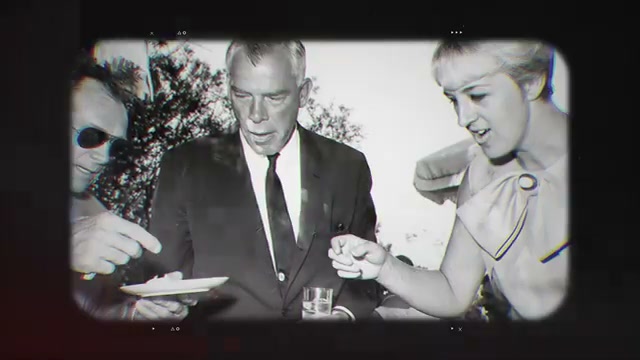
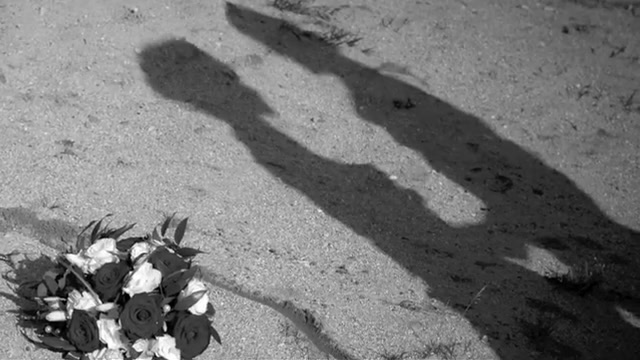
The two drove to Las Vegas and married there in a whirlwind. Betty Ebling became Mrs. Lee Marvin in February 1951, a full year before her new husband would land his first credited film role.
She was twenty-two years old. She had no way of knowing, standing before whatever chapel or courthouse clerk performed the ceremony, that she was marrying a man whose nervous system had already been rewired by a Pacific island most Americans could not have located on a map seven years before she ever met him, and that she would spend the next decade and a half discovering exactly what that meant, one incident at a time.
To understand what Betty Ebling walked into, it helps to look first at what had already happened to her husband long before she knew him, because none of it was hidden or invented after the fact.
Lee Marvin enlisted in the United States Marine Corps in August 1942 at the age of eighteen, trained as a scout sniper with the Fourth Marine Division, and went on to take part in twenty-one separate amphibious landings against Japanese-held islands across the Pacific.
That is an almost unthinkable number of assaults for one young man to survive, even before his war reached its worst day.
That day came on June 18, 1944, during the fight for Mount Tapochau on Saipan, when Marvin’s company, I Company of the 24th Marines, was caught in the open by Japanese machine-gun fire while pushing up the mountain.
In the space of roughly fifteen minutes, a unit of 247 men was reduced to six who could still stand. Marvin was one of them, and only barely.
A machine-gun round tore through his lower back and severed his sciatic nerve, and a sniper’s bullet caught him in the foot as he went down.
The wounds were serious enough that doctors gave him real reason to doubt he would ever walk again.
He spent the next thirteen months moving through naval hospitals, undergoing surgery after surgery on a nerve that never fully recovered, and he was ultimately given a medical discharge with the rank of private first class because the Marine Corps had no further use for a body that damaged
. He carried a limp for the rest of his life.
He also carried, though there was no clinical language yet available to describe it, the psychological residue of having watched almost every man he served beside die in a quarter of an hour on a mountainside, a fact that would resurface for decades afterward in ways that had nothing to do with his leg.
There was no diagnosis for this in 1945. There was no diagnosis for it in 1951 either, when Betty Ebling married him.
The term post-traumatic stress disorder would not enter the American Psychiatric Association’s diagnostic manual until 1980, thirty-six years after Saipan and seven years before Marvin’s own death, which meant that for the entire fifteen years of their marriage, whatever was happening inside her husband had no official name at all.
What existed instead was a young actor with prematurely white hair, a bad limp he had learned to disguise on camera, and a relationship with alcohol that would come to define the household Betty Ebling was raising four children inside.
Marvin’s acting career, once it began, moved fast, and it moved in a direction that placed enormous strain on an already fragile marriage almost immediately.
He built his early reputation playing heavies and war veterans in a string of films that drew directly on the very combat experience that had wounded him, with television and film producers discovering, much as Audie Murphy’s studio had a few years earlier with a different war, that a genuine combat veteran brought an unteachable authenticity to a uniform that no amount of rehearsal could fake.
Marvin became close friends during this period with Marlon Brando, close enough that Brando personally babysat the Marvins’ first child, a son named Christopher, born in November 1952.
That detail reads today almost like a piece of Hollywood trivia, but it also captures something true about the world Betty Ebling was raising a family inside: a world of famous, unpredictable men constantly moving through her living room while she managed the actual daily business of the household.
Three more children followed, Courtney, Cynthia, and finally Claudia in 1958, and by every outward account, Betty Ebling was for most of the outside world exactly what the era expected of her, a gracious hostess and a steady presence at premieres and parties, the woman standing beside an increasingly famous man in photographs that gave no hint of what was happening once the cameras were gone.
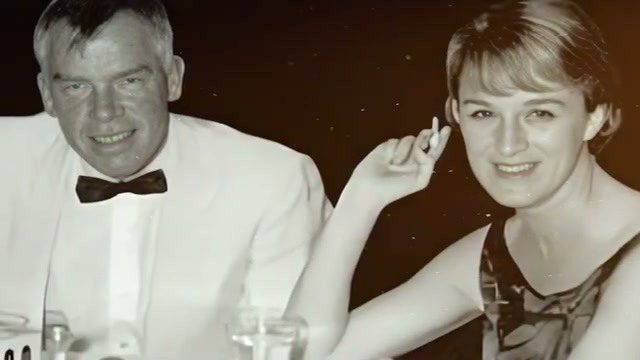
What was happening, according to the account she eventually gave in her own memoir decades later, was a marriage steadily worn down by her husband’s drinking and by behavior she would later describe plainly as abuse.
She wrote of police pulling Marvin over repeatedly for driving drunk during these years and simply letting him go with a warning and an autograph rather than an arrest, a small but telling detail about how completely fame could insulate a dangerous pattern from any actual consequence.
It is worth being precise about what this account is and is not.
It comes to us primarily through Betty Ebling’s own later writing and through interviews she gave across the years that followed, rather than through police reports or court filings from the marriage itself, and Marvin never addressed her specific claims of abuse in any surviving public statement of his own.
That does not make the account untrue.
It means it should be understood for exactly what it is: one woman’s testimony, offered late, about a period of her life that no one else was rushing to document.
The marriage finally ended in divorce in 1967, and by then the pattern of drinking and volatility that she described had become, in her telling, simply the texture of daily life.
What makes her story resonate beyond one famous marriage is the timing of it.
She was describing, in plain language and without a clinical vocabulary, the same constellation of symptoms that would eventually be recognized as post-traumatic stress disorder, and she was describing them a decade before the condition had a name.
The man she married had survived a massacre on a Pacific mountainside, and the man she lived with for fifteen years was still fighting that battle every night, with no language, no treatment, and no framework to explain it to anyone, least of all to himself.
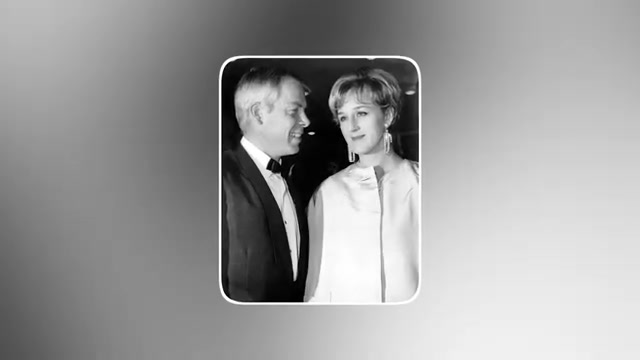
Lee Marvin went on to win his Oscar, to become a legend, and to be remembered as one of the great screen presences of his generation.
Betty Ebling went on to live a life largely outside the spotlight, remembered mainly as a footnote in the biography of a famous man.
Her memoir, published under a title that sounds almost cheerful, quietly describes years of drinking and violence from a husband who came home from the Pacific carrying something no one yet had a name for. That is the part of the story that tends to get lost.
The record shows a decorated veteran who was wounded in body and mind, and it also shows a young woman who married him before either of them understood what they were walking into
. Her account does not diminish his service or his talent.
It simply adds the piece that fame tends to erase: the person standing beside the icon, holding the household together, absorbing the aftershocks of a war that ended for the country in 1945 but never entirely ended for the man who came home from it.
Betty Ebling’s decision to finally speak, decades later, ensures that her side of the story survives alongside his legend, a reminder that behind every celebrated career there is often a quieter story of endurance that no award ceremony ever acknowledges.


