One voice.
Two words about religion.
And one takeout order.
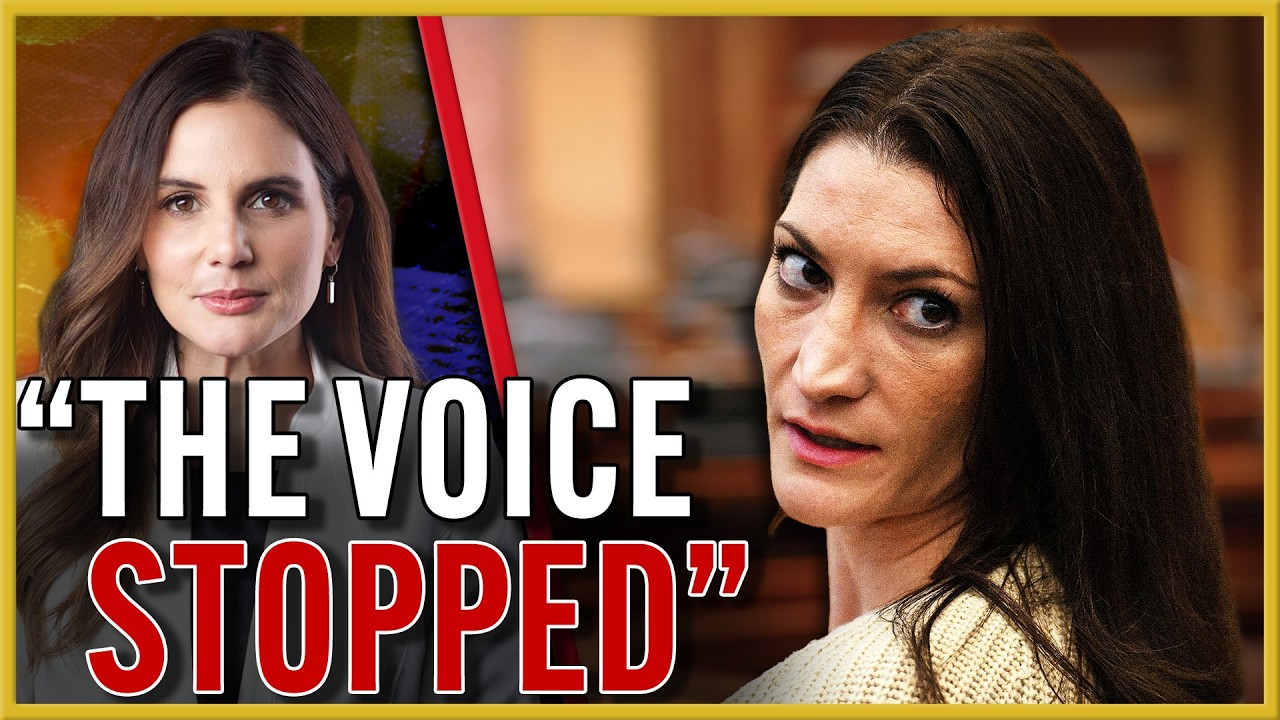
After weeks of testimony in the Lindsay Clancy trial, those seemingly disconnected details could become some of the most important pieces the jury carries into deliberations.
The central question is not simply whether Clancy caused the deaths of her three children on January 24, 2023.
The source frames the approaching decision around criminal responsibility and her mental condition at the time.
And as the evidence neared its end, three disputes emerged that could push jurors toward dramatically different interpretations of the same events.
The first is the voice Clancy said she heard.
The second is the prosecution’s repeated reference to Catholic teaching and “mortal sin,” which became serious enough for the defense to seek a mistrial.
The third is the trip Clancy’s husband, Patrick, made for takeout and medication—a trip prosecutors can frame as evidence of planning, while the defense can portray it as ordinary family behavior that looks suspicious only in hindsight.
Criminal defense attorney and former prosecutor Jack Rice believes those competing interpretations could divide the jury.
He even predicted a hung jury.
But that is Rice’s opinion, not a verdict and not evidence.
What matters is why he believes the jury could split.
And that begins with the voice.
Prosecution rebuttal witness Dr. Gregory Stoff, a forensic psychiatrist, focused on something he considered unusual.
According to the source, Clancy had not previously reported hearing this particular voice.
Then, on the day her children died, she allegedly heard one.
The voice told her to kill them.
Afterward, according to the testimony discussed in the source, the voice stopped.
For the prosecution, that timing potentially creates a powerful argument.
Why did the voice appear at precisely the moment of the killings?
Why had it apparently not been reported to her physicians before?
Why did it disappear afterward?
Rice described the Commonwealth’s possible framing succinctly.
Treat the voice in isolation.
It happened once.
It existed for a limited period.
There was apparently nothing identical immediately before or afterward.
If jurors accept that framing, the voice could become something they scrutinize rather than something they automatically accept as proof of a psychotic state.
It could lead them to ask whether Clancy accurately remembered the experience.
Or whether her description evolved afterward.
Rice went further when discussing the prosecution’s theory.
Could jurors wonder whether she made it up?
That is not an established fact.
The source does not prove the voice was fabricated.
It is one possible inference Rice believes prosecutors could invite jurors to consider.
The defense has a radically different way to frame exactly the same evidence.
Do not isolate the voice.
Zoom out.
Look at the months before January 24.
Look at Clancy’s reported mental-health deterioration.
Her desperation.
Her suicidal ideation.
Her treatment history.
Her statements before the deaths.
Her statements afterward.
Her conversations with mental-health professionals and a member of the clergy.
Under that interpretation, the voice does not need to have existed for months to matter.
It could represent the culmination of a broader psychiatric deterioration.
Rice described it metaphorically as the loudest point at the end of a much longer decline.
That difference in framing is enormous.
Prosecution:
The voice suddenly appeared when Clancy needed a justification.
Defense:
The voice was the acute manifestation of an illness that had already been worsening.
Same alleged voice.
Two completely different narratives.
And jurors will have to decide what significance, if any, it deserves.
The source also notes an important evidentiary complication.
Clancy apparently did not report this voice to her physicians before January 24.
That could help the Commonwealth.
But absence of a prior report does not by itself prove fabrication.
If the voice first appeared that day, there obviously would have been nothing identical to report earlier.
The jury therefore faces a problem that appears repeatedly throughout this trial.
Evidence that can be interpreted in more than one direction.
Rice believes that is precisely where reasonable doubt becomes important.
He argued that criminal trials should not be treated as a simple contest in which jurors decide which story they like slightly more.
The burden belongs to the Commonwealth.
For Rice, if two reasonable interpretations remain possible on a legally essential question, uncertainty matters.
That is his legal analysis as a defense attorney and former prosecutor.
The judge’s instructions—not Rice’s television commentary—will govern what the jury actually must decide.
But his observation helps explain why the voice could become so important.
It sits directly at the intersection of psychiatric evidence and criminal intent.
Then came the second controversy.
“Mortal sin.”
The phrase appeared more than once.
The prosecution raised Catholic beliefs while questioning Patrick Clancy’s mother.
She was asked whether she was an active member of the Catholic Church.
Then came a reference to murder as a mortal sin.
Later, according to the source, Commonwealth forensic psychologist Dr. Halburn discussed Clancy’s reported expectation that she and her children would be together in heaven with God.
He noted her Catholic upbringing.
Then suicide and mortal sin entered the testimony.
That was enough for the defense.
Attorney Kevin Reddington sought a mistrial.
The judge denied it.
But the judge also reprimanded the Commonwealth and instructed the jury to disregard the mortal-sin comments.
Legally, that should matter.
Jurors are expected to follow the court’s instructions.
If the judge tells them not to consider something, they are not supposed to use it during deliberations.
Psychologically, however, the problem is more complicated.
Once jurors hear something, can they truly erase it?
Rice used the familiar courtroom expression:
You cannot unring the bell.
His concern is not simply that religion is controversial.
His argument is that invoking mortal sin risks shifting the jury’s focus away from the legal questions it is supposed to answer.
A criminal jury is not deciding whether Clancy committed a sin under Catholic doctrine.
It is not deciding whether suicide or murder violates a juror’s personal religious beliefs.
It is deciding the case under Massachusetts law and under the instructions given by the judge.
Rice argued that introducing mortal sin can distort that process.
Instead of asking whether the Commonwealth met its legal burden, a juror could begin asking a theological question.
What would a genuinely devout Catholic believe?
Would someone expecting heaven behave this way?
Would a person who understood Catholic teaching have believed suicide would reunite her with her children?
Those questions may sound relevant to someone’s state of mind.
But they also carry enormous potential for prejudice because jurors bring their own religious backgrounds into the courtroom.
A Catholic juror may hear “mortal sin” differently from a Protestant juror.
A nonreligious juror may hear it differently still.
That is part of why Rice viewed the issue as dangerous.
He also suggested it could become an appellate argument if there were ultimately a conviction.
Again, that is his analysis.
No appellate court in this source has ruled that the comments require a new trial.
The trial judge did the opposite of granting a mistrial.
The request was denied.
The jury was instructed to disregard the comments.
Rice himself acknowledged that the judge’s corrective instruction could be considered sufficient to protect Clancy’s rights.
So the mortal-sin controversy should not be overstated.
The defense objected.
The judge responded.
The trial continued.
But the episode could still matter in a subtler way.
Jurors heard it.
And now they must not use it.
That sounds simple on paper.
Inside a deliberation room, it may be more difficult.
Then there is the third issue.
Takeout.
On an ordinary evening, deciding where to order dinner would be almost meaningless.
In this trial, prosecutors can ask the jury to see it as part of a timeline.
According to the discussion in the source, prosecution expert Dr. Stoff considered aspects of the restaurant decision significant.
Patrick Clancy reportedly told him the family had not previously gotten takeout from 3V.
Evidence also involved Clancy looking at the distance between the family’s home and the restaurant.
The psychiatrist said what he saw in the records did not match the sequence Clancy later described to him.
That discrepancy matters because Patrick was outside the house when the children were attacked.
If jurors believe Clancy deliberately selected a restaurant based on its distance from home, the Commonwealth can argue that the choice helped create time alone with the children.
The pharmacy trip adds another layer.
Patrick also went to CVS for medication.
Together, the restaurant and pharmacy stops could be presented as extending the amount of time he would be away.
Under the prosecution’s interpretation, those details can look like planning.
But once again, the defense has another explanation.
According to the source, one of the children had been experiencing stomach problems.
Patrick had previously testified about that issue.
Going to CVS therefore had an ordinary explanation.
The restaurant decision can be viewed similarly.
Families choose takeout.
People check locations.
People decide what food they want.
They send texts.
They change plans.
Events that appear ominous after a tragedy may have looked completely routine before it happened.
Rice used a broader analogy.
When people read history backward, events often appear inevitable.
Thousands of ordinary decisions become a neat chain leading toward an outcome everyone already knows.
But the people making those decisions did not necessarily know where the chain would end.
That is the danger of hindsight.
The prosecution can say:
She checked the restaurant.
She knew the distance.
She sent Patrick away.
He also went to CVS.
She was left alone with the children.
Then the killings occurred.
The defense can say:
The family needed dinner.
A child needed medication.
Patrick went out.
Ordinary events later became suspicious because everyone now knows what happened while he was gone.
Again, the jury sees the same sequence.
The meaning changes depending on the lens.
There is another complication.
According to the source, when Stoff later interviewed Clancy, her description of the takeout decision did not fully align with what he found in the records.
That creates another question.
Was she being deceptive?
Was she remembering incorrectly?
Or had years simply blurred the details of an otherwise ordinary decision?
The source does not answer that.
Rice emphasized that these forensic interviews occurred years after the deaths.
Memory can become imperfect with time.
But the prosecution is entitled to point to inconsistencies it believes matter.
The defense is entitled to explain why those inconsistencies may not prove planning.
That is the battle.
And Rice questioned whether Stoff risked going too far when interpreting the restaurant and pharmacy decisions.
As a trial lawyer, Rice said he wants expert witnesses to appear above the fight rather than becoming advocates for one side.
He worried that when an expert begins interpreting everyday logistical decisions as evidence supporting one party’s narrative, jurors may begin seeing the witness as an advocate rather than an objective specialist.
That is Rice’s assessment of the testimony.
It does not establish that Stoff was biased.
It does not establish that his testimony was improper.
It describes how a defense attorney might attack the weight jurors should give it.
The same caution applies to Rice himself.
He is not a neutral judicial authority.
He is a criminal defense lawyer and former prosecutor offering analysis.
And as the interview continued, his own view of the case became unmistakable.
He believes there is reasonable doubt.
He said he thinks the result should be not guilty.
Yet when asked what he actually predicts the jury will do, he gave a different answer.
Hung jury.
Why?
Emotion.
Rice described seeing the children’s clothing displayed in court.
Footy pajamas.
He said the sight affected him deeply as the father of four children.
He believes jurors may experience something similar.
Some may look at the deaths of three children and reach an emotional line they cannot cross.
Whatever psychiatric evidence they hear, Rice believes some jurors may insist that Clancy must be held responsible.
Others may react just as strongly in the opposite direction.
They may focus on evidence of mental illness and deterioration before January 24 and conclude that criminal responsibility was not proven.
Those jurors may refuse to move too.
Two groups.
Two interpretations.
Neither willing to surrender.
That is why Rice predicted a hung jury.
But predictions about juries are inherently uncertain.
The jury had not delivered the result at the point reflected in this source.
Nobody outside the deliberation room could know what jurors would ultimately decide.
And Rice’s personal belief that the case should end in a not-guilty finding does not tell us what the law requires.
The jury will receive that law from the judge.
Still, his explanation captures the extraordinary difficulty of the case.
There is little emotional distance available.
Three children died.
Their mother is on trial.
The defense does not ask jurors to treat those deaths as insignificant.
The central dispute is about Clancy’s mental state and criminal responsibility.
That makes psychiatric evidence unusually powerful.
But psychiatric evidence rarely arrives in the simple form jurors might prefer.
There is no single brain scan that answers the ultimate legal question.
Instead, jurors hear experts.
Medical histories.
Statements.
Behavior.
Timelines.
Conflicting interpretations.
And details that can look completely different depending on what a juror already believes about Clancy’s state of mind.
The voice is the clearest example.
If a juror believes Clancy had been deteriorating psychologically for months, a sudden commanding voice may appear consistent with that decline.
If a juror believes she was capable of planning and understood exactly what she was doing, the timing of the voice may appear suspicious.
The takeout decision works the same way.
If a juror begins from the premise of planning, checking the restaurant’s distance can look calculated.
If a juror begins from the premise of severe mental deterioration without a carefully organized murder plan, the restaurant can look like an ordinary choice transformed by hindsight.
Even the religious controversy reflects the same struggle.
The Commonwealth appears to have viewed Clancy’s beliefs about death, heaven and reunion with her children as potentially relevant to her thinking.
The defense saw the mortal-sin references as prejudicial enough to demand a mistrial.
The judge drew a line.
The jury was told to disregard them.
All three issues therefore converge on one problem.
Interpretation.
What did Clancy believe?
What did she understand?
What was happening inside her mind?
What was planned?
What was illness?
And which inferences can the Commonwealth prove to the legal standard required?
Rice also pushed back against a broader prosecution narrative as he understood it.
He argued that the Commonwealth had difficulty establishing a conventional motive.
He pointed to evidence of Clancy interacting lovingly with her children shortly before their deaths, including building snowmen.
He also disputed suggestions that her subsequent suicide attempt was not genuine.
The source discusses evidence of severe injuries and a medical emergency after Clancy went out a window.
Rice uses those facts to argue that a simplistic narrative of a calculating mother faking a suicide attempt does not fit the evidence as he sees it.
That is his advocacy.
The prosecution’s actual case must be judged from the evidence and arguments presented in court, not solely through Rice’s characterization of them.
But his question is one jurors may confront emotionally even if motive is not itself a required element.
Why?
Why would a mother who loved her children kill them?
For the defense, severe mental illness provides the answer.
For the Commonwealth, the issue is whether the evidence legally excuses or alters criminal responsibility.
A jury cannot resolve the case simply by saying the events are incomprehensible.
It must apply the law.
Rice repeatedly returned to that distinction.
Jurors have personal morals.
Religious beliefs.
Experiences with mental illness.
Experiences as parents.
Experiences with medication.
Experiences with suicide.
Experiences with loss.
But the legal system asks them to put those experiences behind a narrower lens.
Can they follow the judge’s instructions?
Can they evaluate the evidence?
Can they apply the burden of proof?
Can they distinguish sympathy from legal responsibility?
That becomes especially difficult in a case where almost every major piece of evidence carries enormous emotional weight.
A child’s pajamas are not merely fabric when jurors know the child is dead.
A mother’s medical records are not merely clinical documents when jurors know what happened afterward.
A text about takeout is not merely a dinner plan when it precedes three deaths.
And a reported voice is not merely a psychiatric symptom when it allegedly gave a command to kill.
That is why these three issues may follow the jury into deliberations.
Not because they automatically decide the case.
Because each forces jurors to choose between competing interpretations.
The voice asks whether an apparently sudden symptom supports psychosis or creates suspicion.
The mortal-sin controversy asks whether jurors can separate religious concepts they already heard from the legal standard they are required to apply.
The restaurant asks whether ordinary behavior became evidence of planning—or whether hindsight makes ordinary behavior look planned.
Rice believes the divisions are too deep for unanimity.
He predicted a hung jury.
He also said that if uncertainty remains between reasonable competing explanations, he personally believes the proper result should be not guilty under the applicable burden.
But jurors are not required to share Jack Rice’s analysis.
They are not deciding the case on television.
They sat through the evidence.
They observed the witnesses.
They will receive the judge’s instructions.
And they—not commentators—must decide whether the Commonwealth has met its burden on the question at the heart of the trial.
That is why the smallest details now feel so large.
A voice that allegedly appeared and disappeared.
Two words—”mortal sin”—that the judge told jurors to disregard.
A restaurant choice and a pharmacy trip that can be interpreted either as calculation or everyday family logistics.
Three details.
Three arguments.
Three opportunities for the same evidence to lead different jurors toward completely different conclusions.
And when the courtroom doors finally close behind them, the jury will have to decide which interpretation survives.


