The Secret Political War: Why Harry S. Truman and Dwight D. Eisenhower’s Relationship Deteriorated From Mutual Respect Into Bitter Hostility
The standard historical narrative of the American twentieth century often paints post-World War II Washington as an era of grand bipartisan unity, where statesmen set aside partisan differences to build the modern global order. Yet behind the polished veneer of the White House and the Pentagon, one of the most consequential and bitter feuds in presidential history quietly unfolded between two towering figures: Harry S. Truman and Dwight D. Eisenhower. While they initially maintained a cordial, mentor-protege dynamic as commander-in-chief and five-star general, their relationship eventually soured into deep-seated animosity. The real reasons behind their mutual disdain were not rooted in petty personal slights, but in a profound clash of political philosophies, military egos, and the betrayal over who would inherit the future of the American presidency.
1. The 1948 Betrayal: When Eisenhower Refused the Democratic Nomination
The foundational fracture in their relationship occurred in 1948, long before Eisenhower entered electoral politics. Facing a seemingly unwinnable re-election campaign against Thomas Dewey, a desperate President Truman tried to convince General Eisenhower—then a national hero fresh off his triumph as Supreme Commander of the Allied Expeditionary Force—to run as the Democratic presidential nominee, with Truman stepping aside as his running mate or endorsing him entirely.
Eisenhower flatly and publicly rejected the offer, refusing to tie his reputation to the struggling Democratic administration. Truman felt deeply used and abandoned, believing that Eisenhower was putting his own pristine, non-partisan reputation above the needs of the country and the party that had elevated him. When Eisenhower later wrote in his memoirs that Truman had practically begged him to take the Democratic nomination, Truman was privately incensed, viewing it as a self-serving distortion of history.
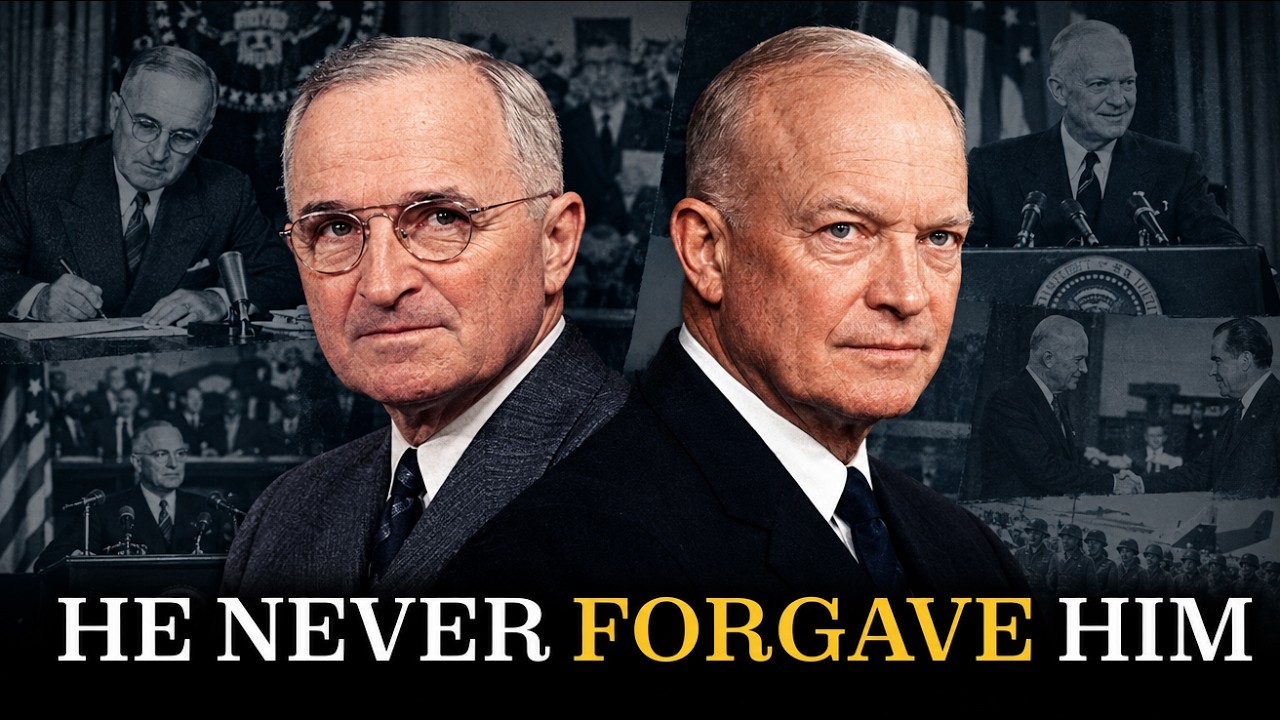
2. The Partisan Betrayal: Eisenhower’s Decision to Run as a Republican
The true point of no return came in 1952. Truman had personally overseen Eisenhower’s appointment as the first Supreme Allied Commander of NATO, believing Eisenhower was a political moderate aligned with his internationalist vision. However, when the 1952 election cycle arrived, Eisenhower chose to seek the presidency as a Republican, aligning himself directly with the conservative wing of the GOP—including politicians like Senator Joseph McCarthy and isolationist figures whom Truman utterly despised.
Truman took Eisenhower’s presidential run as a personal betrayal of his administration’s legacy, particularly regarding foreign policy and the handling of the Korean War. During the 1952 campaign, Truman unleashed blistering verbal attacks on the campaign trail, accusing Eisenhower of moral cowardice for refusing to defend General George Marshall (Truman’s close friend and former Secretary of State) from McCarthy’s vicious communist-subversion smears. Eisenhower, who deeply valued military honor and decorum, was profoundly wounded and angered by Truman’s public assaults, resolving never to forgive the man he viewed as unpresidential and small-minded.
3. The Bitter Transition and Public Feuding
The animosity boiled over during the presidential transition in late 1952 and early 1953. The handover of power was famously icy, marked by mutual disrespect. During a visit to the White House, Truman attempted to lecture Eisenhower on the intricacies of the presidency and foreign affairs, while Eisenhower, accustomed to absolute command as a general, bristled at Truman’s blunt, partisan lecturing.
Following Eisenhower’s inauguration, the feud continued to play out in public view for decades. Truman frequently criticized Eisenhower’s administration as weak, slow-moving, and overly reliant on corporate executives, famously dismissing Eisenhower’s management style by saying, “He’ll sit right here and he’ll say, ‘Do this! Do that!’ And nothing will happen.” Eisenhower, meanwhile, privately viewed Truman as a vulgar, small-town politician lacking the dignity and statesmanship required of the office.
Ultimately, the hostility between Harry Truman and Dwight Eisenhower was a clash of two titan egos shaped by immense historical responsibility. Truman saw Eisenhower as an ungrateful opportunist who abandoned democratic principles for partisan gain, while Eisenhower saw Truman as a bitter, partisan brawler who weaponized the presidency for petty political fights. Their quiet war remains one of the most fascinating psychological undercurrents of America’s Cold War era.


