Something has changed around the Mica Miller case.
People are talking.
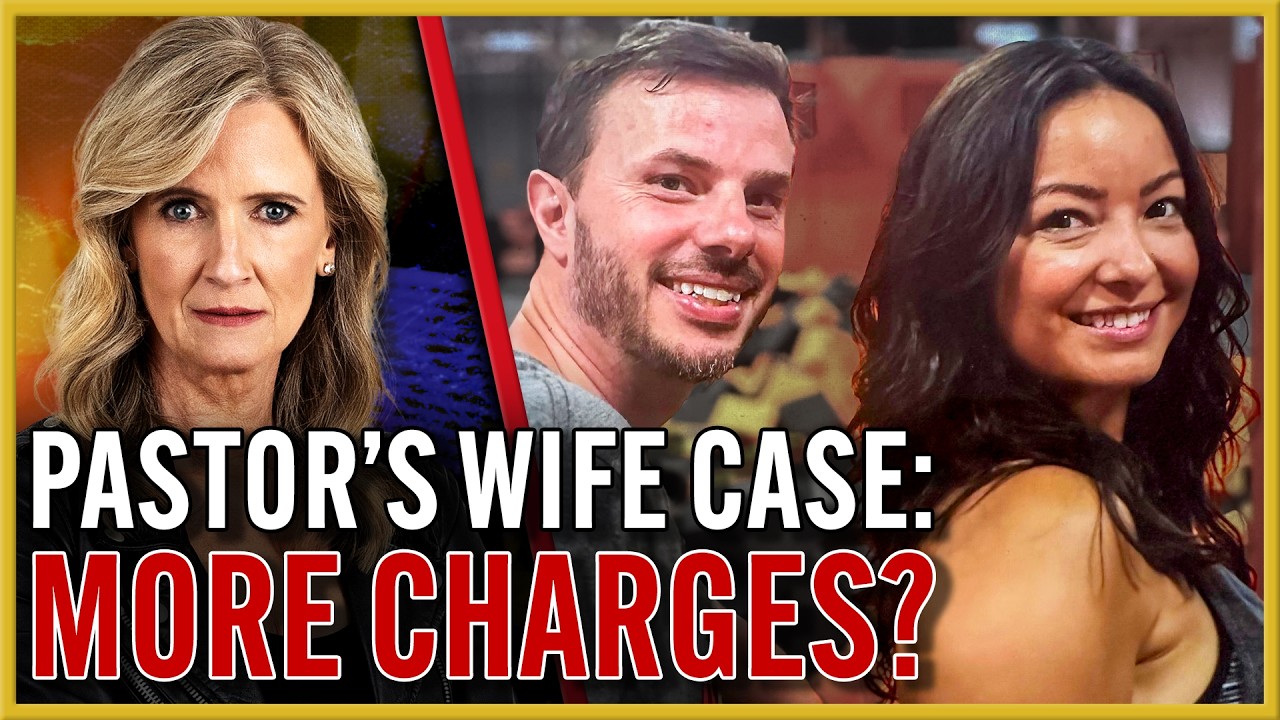
People who, according to content creator Robbie Harvey, once hesitated to speak publicly are now contacting him.
Some are asking how to reach the FBI.
Others, he says, have already spoken with federal investigators.
And still others are waiting.
Waiting for the criminal case against John-Paul “JP” Miller to move forward.
Waiting for the right moment.
Waiting until they feel safe enough to tell publicly what they say they know.
Harvey believes those voices could become important.
He believes additional charges may eventually emerge.
He believes the story is far from finished.
But there is an essential distinction at the center of everything he says:
Robbie Harvey does not know what federal prosecutors are going to do.
He is not part of the prosecution team.
He does not know what charges, if any, investigators may be considering beyond the current federal case.
And JP Miller has not been charged with causing Mica Miller’s death.
Today, Miller faces federal allegations that include cyberstalking Mica and making false statements to investigators.
He has pleaded not guilty and denies the allegations against him.
According to the supplied interview, his trial has now been delayed until January 2027.
That is the established legal case.
Everything beyond it requires much more careful language.
Mica Miller was 30 when she died in North Carolina in April 2024.
She had been married to JP Miller, pastor of Solid Rock Church in South Carolina.
After her death, Miller stood before his congregation and made an announcement.
His wife had died.
He described her death as self-induced.
That church announcement spread quickly online.
It also reached Robbie Harvey.
Harvey says he initially reacted the same way many viewers did.
Something about the announcement struck him as unusual.
He posted about it.
Then messages began arriving.
Friends.
Family members.
People claiming to have information.
Witnesses.
According to Harvey, his inbox suddenly filled with people telling him there was more behind the public story.
At first, he says, some of the allegations seemed almost impossible to believe.
So he kept looking.
Over time, Harvey became one of the most visible independent voices covering the case.
But that visibility came with a complication.
He stopped being merely an outside observer.
He developed relationships with Mica’s friends and relatives.
He says he communicated with people connected to Solid Rock Church.
He says he met witnesses face-to-face.
And he says Miller himself eventually began contacting him and his family.
That history matters when evaluating Harvey’s interview.
He has sources.
He also has strong opinions.
He openly dislikes Miller.
He says the dispute became personal.
Therefore his factual claims should be evaluated individually rather than treating every conclusion he reaches as established fact.
The most immediate development is the federal prosecution.
Harvey had expected the case to move sooner.
Instead, according to the interview, proceedings have been continued and the trial is now expected in January 2027.
Harvey interprets that delay negatively.
He characterizes Miller as avoiding accountability.
He even predicts that prosecutors will eventually bring more charges.
But then comes the crucial admission.
When asked directly whether he knows additional charges are coming, Harvey says no.
He is not privy to what federal prosecutors are investigating.
His belief comes from something else.
Harvey says he knows federal investigators have interviewed people whose allegations, as he understands them, are not directly about Mica’s death or the abuse allegations surrounding her.
That is what makes him believe investigators may be looking more broadly.
It is evidence of investigative activity as described by Harvey.
It is not evidence that another indictment has already been decided.
The difference is enormous.
Federal investigators routinely interview witnesses without filing charges based on every allegation they examine.
An open investigation does not guarantee prosecution.
A witness interview does not establish guilt.
And Harvey’s expectation that “a lot more charges” will come is precisely what he calls it himself:
His opinion.
Still, something appears to be bringing new people forward.
The interview repeatedly references renewed attention following a Netflix documentary.
Harvey says people contacted him afterward asking how they could reach the FBI.
He describes what he calls a “flood” of new witnesses and alleged victims.
His advice to them, he says, is straightforward.
Go to the FBI first.
He is willing to listen.
He is willing to hear their stories off the record.
But he tells people that law enforcement—not a content creator—should be their first destination if they possess potentially relevant evidence.
That may become one of the most consequential effects of renewed public attention.
True-crime documentaries do not determine guilt.
They are not courts.
They do not possess subpoena power.
They do not replace investigators.
But publicity can cause previously silent witnesses to reconsider whether they want to speak.
Harvey says that is happening now.
Some of the people contacting him, he says, were previously afraid.
Now that fear is changing.
One example discussed in the interview is Sam Rickman.
Harvey says he had communicated privately with Rickman long before Rickman began speaking publicly.
According to Harvey, Rickman initially kept information private partly because of concerns involving Miller and his family.
Harvey says others followed similar paths.
He also mentions Pastor Pam and additional people featured in the documentary.
His description is of a gradual erosion of silence.
Not one dramatic moment.
Not one documentary suddenly causing everyone to speak.
Instead, one person speaks.
Then another.
Then another.
People see that others survived speaking publicly.
And the fear becomes weaker.
Harvey describes this change in highly personal language.
He says Miller has “lost his grip” over people.
That is Harvey’s characterization.
It is not a judicial finding about Miller’s relationships with every witness.
But Harvey says he has watched the shift happen.
People who once spoke only privately now appear publicly.
Others, he says, have information but intend to wait until after Miller’s trial.
Harvey claims he has met some of them face-to-face.
He says he has heard their allegations.
He says he has seen some supporting material.
He does not reveal all of it.
That makes those claims impossible to independently evaluate from the interview alone.
And it means the responsible conclusion is not:
Secret evidence proves new crimes.
It is:
Harvey says additional witnesses exist and that some have information they are not yet ready to disclose publicly.
Whether that information produces charges will depend on investigators and prosecutors.
Not Harvey.
Not social media.
Not a documentary audience.
Then the interview expands into another death.
Chris Skinner.
Skinner was the husband of Susie Skinner, who later married JP Miller.
According to Harvey, Chris Skinner’s death had been classified as an accidental drowning.
Harvey says the case was subsequently reopened and that when he contacted the coroner’s office, he was told it remained open.
He uses that fact to support his belief that additional developments are coming.
But from there, the conversation becomes much more speculative.
Harvey discusses surveillance footage.
He repeats allegations from friends and family about Skinner’s care.
He says some people believe Skinner may have been psychologically pushed toward taking his own life.
Harvey immediately acknowledges:
“I don’t know.”
That acknowledgment is essential.
An open death investigation does not prove homicide.
A reopened case does not prove that another person caused the death.
Concerns expressed by relatives or friends are not forensic findings.
And the source provides no basis for accusing Susie Skinner, JP Miller or anyone else of causing Chris Skinner’s death.
The legitimate news point is much narrower:
Harvey says he contacted the relevant office and was told the previously ruled accidental drowning remained under renewed investigation.
Everything beyond that remains allegation, theory or unanswered question in this source.
The same caution applies to another serious category of allegations raised during the interview.
Harvey says he has spoken with multiple people who allege sexual abuse by JP Miller when they were children.
He says two have filed civil lawsuits as Jane Does.
He says he has spoken with those women and others making similar allegations.
Miller, the interview emphasizes, denies the allegations.
Those civil claims deserve to be reported as claims.
Not verdicts.
The existence of multiple accusers can be newsworthy.
The filing of a civil lawsuit is verifiable legal activity.
Neither automatically establishes that the underlying allegations are true.
That determination belongs to the appropriate legal process.
Harvey’s emotional response to the allegations is obvious.
But his emotional certainty cannot substitute for adjudication.
Then the conversation returns to Mica.
And this is where the interview becomes most sensitive.
Her final days.
Her final drive.
The pawn shop.
The firearm.
The state park.
The 911 call.
The fisherman.
The water.
Surveillance footage.
A truck.
Missing or disputed evidence.
And the persistent belief among some of Mica’s friends and relatives that the official account does not explain everything they observed.
Here, the distinction between questions and evidence becomes absolutely critical.
Mica died at Lumber River State Park in North Carolina.
The interview repeatedly challenges aspects of the investigation.
But it also explicitly acknowledges that JP Miller has not been charged in connection with her death.
Harvey himself eventually says he does not believe Miller was physically near Mica when she died.
That statement sharply limits some of the more dramatic speculation surrounding the case.
The unresolved question for Harvey is not simply:
Was JP Miller there?
He says he does not believe he was.
His concern is broader.
What was happening around Mica in the hours before her death?
And was someone monitoring or influencing her movements?
Harvey begins with Mica’s final days.
According to his account, she had recently served Miller with divorce papers.
She also had a future court date related to a restraining-order matter.
Harvey says she went out with friends after the papers were served.
He describes her as sad but also making future plans.
Saturday.
Sunday.
Monday.
Tuesday.
He says he has spoken with people connected to plans on those days.
That becomes important to people questioning what happened because they interpret future plans as inconsistent with suicide.
But future plans alone cannot establish that someone was not suicidal.
People in acute crisis can still make appointments, work, socialize and discuss future events.
The existence of future plans is context.
It is not a definitive psychological test.
Harvey then describes surveillance footage of Mica leaving her apartment.
People who knew her, he says, thought she appeared normal.
Later, at Dick’s Pawn Shop, they believed she appeared different.
Timid.
Afraid.
Again, this is interpretation of video behavior by people who knew her.
It is not proof that another person threatened her between those locations.
But it creates the interval Harvey finds most compelling.
What happened between the apartment and the pawn shop?
Mica obtained a firearm from the pawn shop.
Her divorce attorney, Regina Ward, is described in the interview as believing the weapon was for self-protection.
That is Ward’s interpretation.
It does not establish Mica’s intent.
Harvey says he has been particularly interested in whether Mica communicated with anyone immediately before obtaining the firearm.
He says he does not have an answer.
Her friends and relatives suspect she did.
The interview also references statements attributed to Miller indicating that he contacted Mica several times that day.
Again, the existence of contact and the content of contact are different things.
Without the messages themselves, one cannot responsibly claim what those communications caused Mica to think or do.
Then comes the truck.
This is perhaps the easiest part of the interview to sensationalize and therefore one of the most important to handle carefully.
Harvey says surveillance footage outside the pawn shop shows a truck entering and quickly backing out.
He believes the behavior is suspicious.
He believes the truck may have been checking whether Mica’s car was there.
He says the vehicle looked similar to one associated with Miller.
But Harvey does not establish who was driving it.
He does not establish that the truck belonged to Miller.
He does not establish that it followed Mica all the way to the state park.
And moments later, Harvey himself says he does not believe Miller was anywhere near Mica when she died.
Therefore the correct statement is:
A truck visible on surveillance footage has raised questions for Harvey and others.
Not:
JP Miller followed Mica.
The source does not establish that.
Another statement has generated similar suspicion.
According to Harvey, Miller later told one of Mica’s friends that he had seen she was traveling north and thought she might be visiting that friend.
Harvey asks how Miller could have known the direction Mica was traveling.
He interprets that as potentially significant.
But the source does not provide enough underlying evidence to determine what Miller meant, what information he had access to or whether the quotation is complete.
It remains an investigative question rather than proof of tracking.
That same discipline has to be applied to the 911 call.
Harvey says some of Mica’s friends and relatives do not believe the voice is hers.
Others, he says, think it may be her but believe something sounds wrong.
The interview then introduces artificial intelligence.
Harvey says Mica had previously told people Miller used AI to harass others.
From that, some people appear to question whether the 911 call could have been manipulated.
But the source provides no forensic voice analysis establishing that the emergency call was AI-generated.
It provides no authenticated technical evidence demonstrating manipulation.
And Harvey himself ultimately says:
“I don’t know if that’s her in the 911 call or not.”
That is the appropriate endpoint based on this source.
Questions exist.
The interview does not answer them.
Then there is Johnny Jacobs, the fisherman discussed in the interview.
Harvey questions his actions.
According to the account, Jacobs reported hearing a woman crying and then a gunshot.
Harvey says Jacobs subsequently encountered Mica’s belongings, took them and left the immediate area.
Harvey finds that behavior suspicious.
He questions why Jacobs was not arrested.
But suspicion about behavior is not evidence that Jacobs harmed Mica.
The interview does not establish that.
Nor does it establish that investigators had probable cause to arrest him.
The source then discusses the location where Mica’s body was recovered relative to other evidence.
Harvey says he personally visited the park and does not understand how the body could have moved as described.
He references water depth and distance.
But he acknowledges uncertainty about the exact distance.
He is not presented as a hydrologist, forensic pathologist or water-recovery expert.
His observations can explain why he remains skeptical.
They cannot replace forensic analysis.
The interview also raises a drone.
Harvey says footage was accidentally not recorded or was lost.
He describes that as lost evidence.
Again, the underlying investigative records would be necessary to establish precisely what happened.
But the broader complaint is clear.
Harvey believes investigators failed to preserve or pursue information that could have helped resolve questions raised by Mica’s family and friends.
He also says multiple witnesses contacted law enforcement with information they believed contradicted suicide.
One category involved statements Mica allegedly made before her death.
“If I end up dead, he did it.”
“I want to live.”
Statements like those are emotionally powerful.
They can also be legally and evidentially complicated.
A person’s fear before death may be highly relevant context.
It does not independently prove who caused the death.
The interview does not establish that every statement was authenticated, when each was made, precisely what prompted it or how investigators evaluated it.
Harvey’s complaint is that witnesses felt they were not adequately contacted or heard.
That is a legitimate allegation about the investigation.
It is not itself proof of homicide.
Then comes one of the strangest details.
One witness reportedly heard one gunshot.
Another reportedly heard two.
Harvey treats the discrepancy as potentially important.
The host immediately acknowledges an innocent explanation is possible.
A person could test-fire a gun and then fire again.
That exchange is valuable because it demonstrates exactly how ambiguous evidence should be approached.
Two reported shots do not automatically mean two shooters.
One reported shot does not automatically invalidate another witness.
Witness perception is imperfect.
Distance matters.
Timing matters.
Sound behaves differently across terrain and water.
A proper reconstruction would require the original statements, locations, timing, physical evidence and forensic findings.
The interview does not contain enough information to resolve that discrepancy.
So it remains exactly that.
A discrepancy.
Harvey nevertheless reaches a strong personal conclusion.
He says he believes Mica was being followed that day.
He says he believes she was being stalked.
Then he acknowledges he cannot say whether Mica fired the fatal shot or someone else did.
He criticizes the Robeson County Sheriff’s Office’s investigation.
And finally he offers his broadest opinion:
Even if Mica did fire the gun herself, he believes JP Miller bears responsibility for her death.
That is Harvey’s moral and causal judgment.
It is not the legal status of the case.
JP Miller has not been charged with causing Mica Miller’s death.
No court finding cited in this source establishes that he caused her death.
The federal charges concern separate alleged conduct, including cyberstalking and false statements.
Those charges are serious.
Miller denies them and has pleaded not guilty.
The distinction cannot disappear simply because an interview subject strongly believes a broader theory.
The current cyberstalking case does, however, provide an important framework for understanding Mica’s final months.
Harvey describes allegations that Mica repeatedly changed telephone numbers and living arrangements.
He says she restricted her social circle because she feared people were providing Miller with new contact information.
The interview references slashed tires.
An explicit photograph allegedly posted online.
Repeated calls.
According to the source, federal prosecutors allege dozens of no-caller-ID calls occurred during a single day.
Harvey says Miller previously acknowledged certain contacts and conduct publicly or in communications.
The precise criminal significance of those facts will be litigated.
The government has charged Miller.
Miller has pleaded not guilty.
A jury—not Harvey, not a documentary and not social media—will ultimately determine whether prosecutors prove the charged offenses beyond a reasonable doubt if the case reaches trial.
That trial is why January 2027 now matters.
It is also why some witnesses may remain quiet until then.
Harvey says people are waiting.
Some do not want publicity.
Some have given information privately.
Some, he says, are ready to speak once the trial is over.
Whether their information concerns charged conduct, potential additional crimes, civil allegations or simply personal experiences with Miller is not always clear from the interview.
That ambiguity matters.
“A lot more witnesses” does not automatically mean “a lot more criminal charges.”
The criminal justice system requires evidence tied to specific offenses.
Prosecutors must evaluate credibility.
Corroboration.
Statutes of limitation.
Jurisdiction.
Intent.
Admissibility.
And whether evidence can establish each element beyond a reasonable doubt.
A dramatic allegation on camera may never become a criminal count.
A quiet witness nobody knows about may become critical.
Until prosecutors act, nobody outside that process should pretend to know which is which.
That includes Harvey.
And, to his credit, when directly pressed, he admits he does not know what federal prosecutors are doing.
His confidence comes from what he has personally heard.
The government’s case will have to come from what it can prove.
That distinction may define the next phase of the Mica Miller story.
For two years, much of the case has existed in parallel worlds.
One world is official.
Mica died.
Her death received an official determination.
JP Miller was not charged with causing it.
Federal investigators later pursued separate allegations.
Miller was indicted on federal charges.
He pleaded not guilty.
The trial moved toward 2027.
The other world consists of questions.
Friends who say Mica was afraid.
Family members who question her final movements.
A truck on surveillance footage.
Disputed interpretations of a 911 call.
Questions about a fisherman.
Questions about water and distance.
Questions about drone footage.
Claims of tracking.
Other alleged victims.
A reopened drowning investigation involving another person.
Witnesses who say they have not yet told their stories publicly.
Some of those questions may eventually produce evidence.
Some may not.
Some may have innocent explanations.
Some may prove significant.
The danger is treating unanswered questions as solved crimes simply because they fit a compelling narrative.
That would be unfair to everyone involved.
It would also make it harder to recognize genuinely significant evidence when it appears.
Harvey’s interview is most valuable not because it proves a secret theory.
It doesn’t.
It is valuable because it shows why the case remains active in the public mind despite the absence of a murder charge.
People connected to Mica continue to speak.
Federal prosecutors have brought a separate criminal case.
Harvey says investigators have interviewed people beyond the immediate circumstances of Mica’s death.
Civil allegations exist.
Chris Skinner’s death, according to Harvey’s communication with officials, remains under renewed examination.
And some witnesses are apparently waiting for the federal trial before saying more publicly.
That creates anticipation.
It does not create certainty.
Perhaps the most revealing part of Harvey’s interview comes near the end, when he stops discussing surveillance footage and investigations and simply describes Mica.
He never knew her.
Everything he knows about her personally came after her death.
Through friends.
Family.
Stories.
One story stayed with him.
An older man approached Harvey at a benefit event.
The man said Mica had recently served him at the restaurant where she worked.
She was friendly.
Curious.
She discovered that he was a magician.
She asked him to show her a trick.
Then she wanted him to teach her.
They planned to meet.
It is an ordinary story.
That is precisely why it matters.
True-crime cases reduce people.
A woman becomes “the pastor’s wife.”
Then “the woman from the 911 call.”
Then “the woman at the pawn shop.”
Then a surveillance image.
Then a death investigation.
Then a documentary.
Then a hashtag.
But before any of that, Mica Miller was a person moving through ordinary days.
Working.
Talking.
Making plans.
Meeting strangers.
Wanting to learn a magic trick.
Whatever the federal prosecution ultimately proves or fails to prove, that part should not disappear beneath theories about her death.
Neither should the presumption of innocence owed to a defendant facing criminal charges.
Those two principles can coexist.
Mica’s experiences deserve serious investigation.
Witnesses deserve to be heard.
Federal allegations deserve to be examined in court.
Claims involving other people deserve corroboration before they become accusations.
And JP Miller is entitled to contest the charges against him.
That is where the case stands.
Not with proof that additional charges are coming.
Not with proof that a mysterious truck belonged to a particular person.
Not with proof that Mica’s 911 call was artificial intelligence.
Not with proof that someone else fired the gun.
But also not with silence.
According to Robbie Harvey, people who once stayed quiet are now talking.
Some have contacted the FBI.
Others may speak after the trial.
Harvey believes the public has only seen the beginning.
Maybe investigators will eventually bring additional charges.
Maybe they will not.
That decision belongs to prosecutors and ultimately, if charges are filed, to the courts.
For now, the most consequential fact may be simpler.
The federal case against JP Miller has not ended.
His trial has moved to January 2027.
He has pleaded not guilty.
He has not been charged in connection with Mica Miller’s death.
And behind that existing prosecution, Robbie Harvey says more people are finally willing to tell investigators what they know.
What those accounts can actually prove is the part of this story that has not been written yet.


